
REVIEW · MARRAKECH
5 Days Desert Trekking from Marrakech
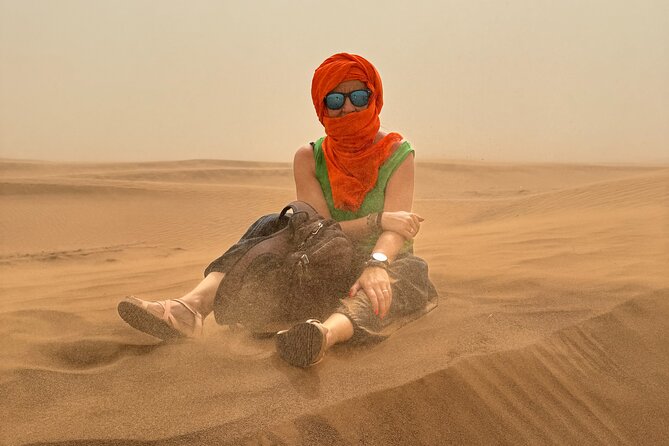
Desert silence is the real luxury here. This five-day journey links Marrakech with the M’Hamid desert by way of the High Atlas, Ait Benhaddou, the Draa Valley, camel trails, and dune camps near the Algerian border. I especially like the slow camel-supported trek and the chance to spend several nights in simple desert camps rather than rushing through the Sahara in one evening.
I also like the personal feel of a private trip, with local guides such as Abdellah, Abdul, Chef, and Said involved in different parts of the experience. The main drawback is the long road travel on the first and last days, plus about seven hours of walking on each full trekking day. You need a moderate fitness level and a willingness to trade comfort for quiet, open desert.
The desert experience in six useful points
- Five days from Marrakech to M’Hamid and back, with four nights in tents.
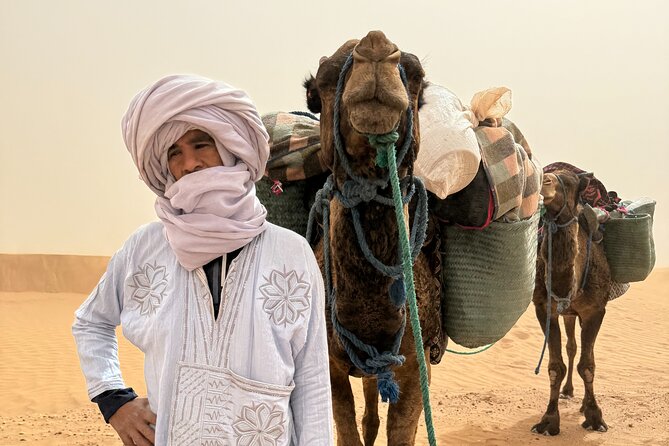
- Three main days on foot, supported by camels and a nomad guide.
- Ait Benhaddou, Tamnougalte, the High Atlas, and the Draa Valley add culture and scenery before the desert walking begins.
- Erg Zahar is the visual high point, with golden dunes near the Algerian border.
- Meals, tea, transport, camels, guides, and camp accommodation are included, but two roadside lunches are extra.
- The private format suits couples, families, and friends who want a flexible local experience rather than a large coach tour.
Crossing the High Atlas from Marrakech
Your pickup begins in Marrakech, with departure from the Hôtel Ali on Rue Moulay Ismail or an arranged hotel or riad pickup. Day one is a long travel day, but it is not merely a transfer. The road climbs toward the Tichka Pass at 2,260 meters, where the views open across rugged mountains, valleys, and scattered Berber villages.
The scenery changes often. You move from the red tones around Marrakech into higher mountain country, then toward the dry southern side of the Atlas. The route is a good reminder that Morocco is not one single visual experience. In a few hours, you pass from city streets to mountain roads, fortified villages, palm-lined river country, and finally the edge of the Sahara.
The mountain road can take patience. The itinerary gives about five hours for the first stretch, although the full day includes several stops and much more driving. If winding roads affect you, bring water, light snacks, and any medication you normally use. This is not the sort of tour where you spend the first afternoon relaxing beside a pool.
A few more treks around Marrakech worth a look
- Combined Tour: Atlas Mountains Trek and Sahara Desert 5 days Tour
★ 5.0 · 23 reviews - 5-day Jebel M’goun trek
★ 5.0 · 2 reviews - Annapurna base camp trek 5 Days
★ 5.0 · 252 reviews
Tamnougalte and Ait Benhaddou add real variety
The route includes stops at Tamnougalte and Ait Benhaddou, two kasbah sites that help put the desert journey into context. A kasbah is a fortified residence or settlement, often built from earth-colored material that blends into the surrounding terrain.
Ait Benhaddou is the better-known stop. This UNESCO World Heritage site dates to the 16th century and has also appeared in major film productions. Its fame brings more attention, but the visit still gives you a strong sense of the old caravan routes that once crossed southern Morocco.
Tamnougalte offers another look at the fortified architecture of the Draa region. The value of these stops is not only visual. They show why the route through the Atlas and Draa Valley mattered for trade, movement, and settlement long before modern roads carried visitors south.
The day continues through the Draa River Valley, lined with date palms, before reaching Zagora, known for its dates. From there, you continue toward M’Hamid, the desert gateway. Dinner and the first night are spent in a standard nomadic-style camp.
Day two: palm groves, tamarisk shade, and Sidi Naji
After breakfast, the walking portion begins near M’Hamid. You travel on foot with a guide and camel caravan, heading first toward a palm grove. The camels carry equipment and supplies, which means you are not expected to haul all your own camping gear across the sand.
Lunch is served in the shade of tamarisk trees. That detail matters. The desert is not a featureless sea of sand, and shade can make a major difference during a long walking day. After lunch and a rest, you continue toward the sanctuary of Sidi Naji.
Sidi Naji is associated with a local marabout, or holy man, and the site carries religious and local cultural meaning. It is one of the more interesting parts of the trek because it connects the physical route with stories, customs, and the people who have lived in this region for generations.
The walking time is listed at about seven hours. That does not necessarily mean seven hours of nonstop walking, since the day includes food, breaks, and the visit to Sidi Naji. Still, you should think of this as a proper hiking day, not a short stroll between photo stops.
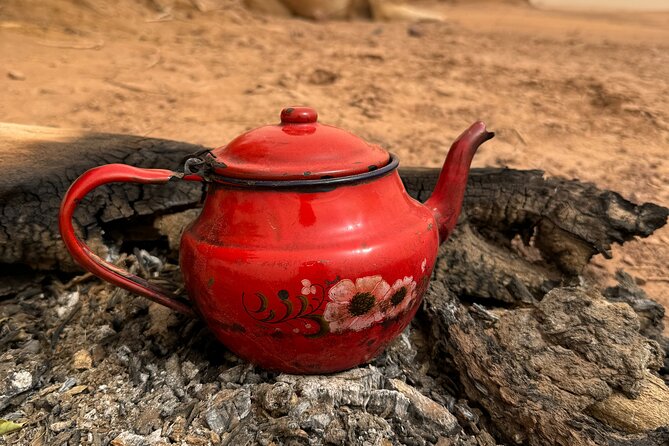
The camp is set at the foot of the dunes. Evening is deliberately simple: dinner, open sky, and quiet. The description of a star-filled night is one of the strongest reasons to choose this trip. In a remote desert camp, the lack of city noise becomes part of the experience.
Day three: walking toward the golden dunes of Erg Zahar
Day three heads toward Erg Zahar, one of the main attractions of the route. After roughly four hours of walking, the dunes become more pronounced, with golden sand and distant mountains widening the view. The route approaches the Algerian border, adding a sense of remoteness without turning the trip into a border excursion.
Erg Zahar is likely to be the most memorable section if your picture of the Sahara includes high, sweeping dunes. The area is also a good place to appreciate how much the desert changes with light. Morning, afternoon, and sunset bring different colors and shadows across the sand.
The camp is set near the dunes, with time to rest before gathering around the campfire. I appreciate that the schedule leaves room for doing very little. A desert trek should not feel like a race to collect landmarks. Sitting by the fire or simply watching the light fade can be as valuable as another formal stop.
You should also be realistic about camp conditions. Four nights in tents are included, but this is described as a nomadic standard camp, not a luxury desert resort. The appeal is the setting and the local character. If you require hotel-style facilities every night, this will feel basic.
Same trailhead, a longer or shorter day out:
- Marrakesh: 2-Day Mt. Toubkal Trek with 1-Night Stay & Meals
★ 4.7 · 795 reviews - Marrakech: 2-Day Atlas Mountains Trek with Village Stay
★ 4.8 · 717 reviews - From Marrakech: 3-Day Mount Toubkal Climbing Trek
★ 4.7 · 597 reviews - From Marrakesh: 2-Day Mount Toubkal Trek
★ 4.7 · 591 reviews
Day four: tamarisk trees and the Draa Valley
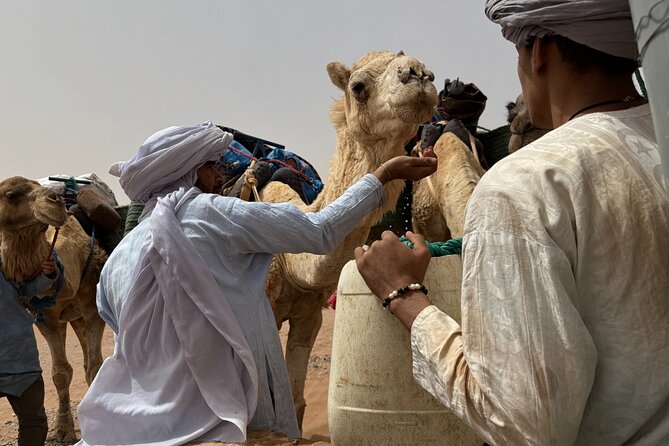
After the night at Erg Zahar, the route continues toward Kraat Jamal. You pass through Lahdybat, where lunch is served, and continue among tamarisk trees. The path brings you back into the wider Draa Valley, with the final night spent in the desert.
This day helps prevent the trek from becoming only a dune experience. The desert includes sandy stretches, dry open ground, trees, valley routes, and traces of settlement. The tamarisk trees are especially important because they show how plant life survives in a place that can appear empty at first glance.
The guides explain the local ecosystem, small water sources, oases, wildlife, and the traditional nomadic way of life. You learn how people and animals adapt to limited water, harsh heat, and long distances between settlements. The educational side of the trip is a real strength, especially if you want more than camel photographs and a campfire.
Again, allow about seven hours for the day. Wear clothing that covers you from strong sun, use high-factor sunscreen, and keep water close. Comfortable walking shoes are more useful than fashionable sandals. A scarf or similar covering can also help with sun and wind, although the supplied information does not specify which personal equipment is provided.
Day five: the long return to Marrakech
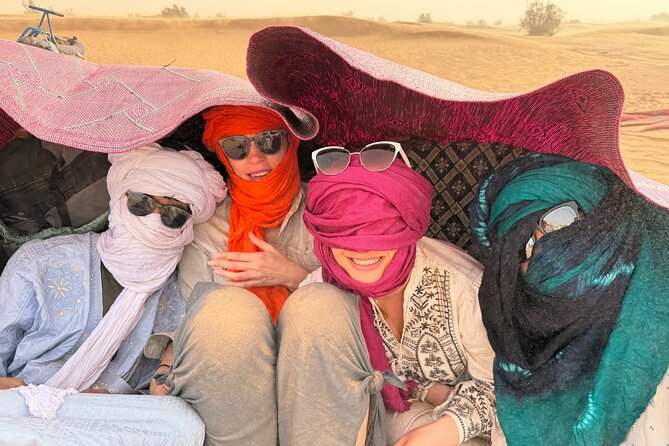
The last day is mostly about getting back to Marrakech. A vehicle returns you to the city, with arrival at the riad expected around 6 PM. The drive is listed at about nine hours, so this is another demanding transport day.
The return route gives you time to think back over the trek, but it leaves little room for extra sightseeing in Marrakech that evening. If you have a flight or a fixed dinner reservation, do not schedule it too tightly. The stated arrival time is useful, but mountain roads and long-distance driving can be tiring.
This final transfer is the price of reaching the more remote M’Hamid desert from Marrakech in a five-day trip. A shorter tour might involve less walking, but it would not offer the same three-night desert progression from palm groves to dunes and valley country.
What the $569.33 price includes
At $569.33 per person, the price has solid value if you use the included services. It covers four nights in tents, private transport, camels, a professional nomad guide, a driver-guide, local taxes, tea or coffee, vegetarian food, three lunches, four breakfasts, and four dinners.
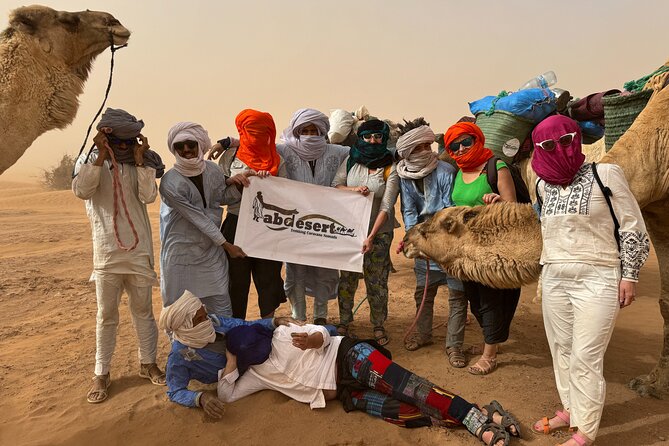
The private format is important. You are not joining a large group with strangers or following a rigid coach schedule. Your own group participates, which can make the long drives and walking days easier to manage. The company can also coordinate directly with you, and Abdellah has been praised for helping with arrangements before departure and during the trip.
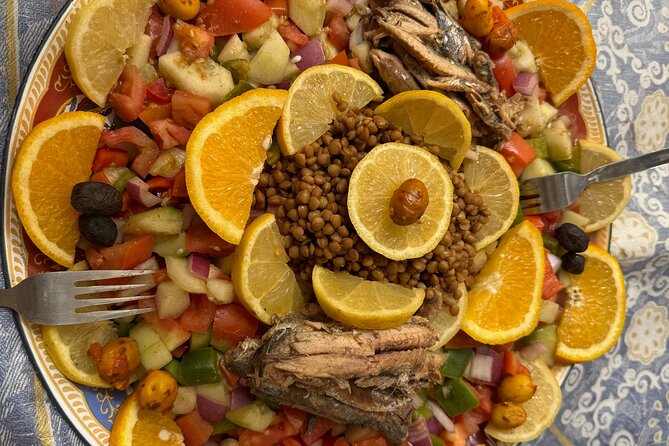
Two lunches on the road are not included. Budget for those separately, along with tips. The information describes the food as vegetarian, so confirm the meal arrangements before you go if anyone in your group has allergies, dietary restrictions, or specific food needs.
At this price, the strongest value comes from the combination of transport, guiding, meals, camel support, and camping. Booking each part separately would take time and would be harder to arrange from Marrakech. The tradeoff is that you are paying for a basic desert camp and a demanding itinerary, not a polished luxury package.
The people make the difference
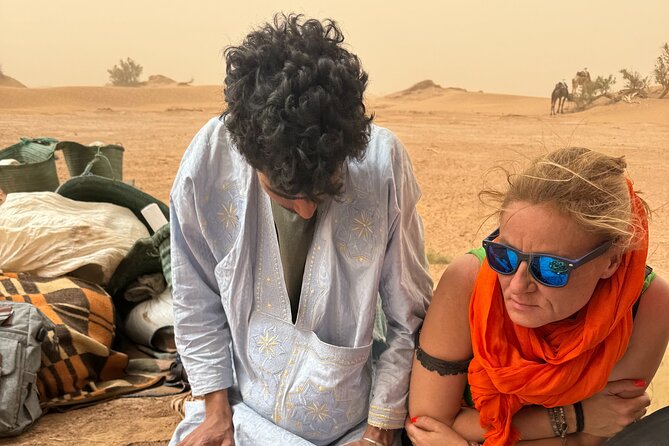
The personal service is one of the most praised parts of this experience. Abdellah, associated with Sahara Vibe, is described as helpful with planning and easy to contact. Abdul is also repeatedly singled out for kindness, friendliness, and careful attention during the trek.
Chef and Said are named in connection with one successful trip, while other feedback praises the wider family-run team. I would treat this as a good sign that the experience depends heavily on local staff rather than an anonymous subcontractor.
The guides do more than lead you from one camp to the next. They explain desert life, local customs, plants, wildlife, and the nomadic traditions of the region. That human connection gives the route more meaning. You are not simply crossing sand; you are learning how people have made a life in a difficult environment.
Communication and booking may feel informal. Direct contact through WhatsApp and an advance payment through PayPal have been part of the process for some customers. That can feel less polished than a large international booking system, but it also reflects the small-business character of the operation. Keep written confirmation of your dates, pickup point, inclusions, and payment details.
Who should choose this trek?
I would recommend it to you if you want a genuine desert trip with several nights away from cities, enjoy walking, and prefer personal guiding to a large organized group. It is especially well suited to friends, couples, and families who want a private arrangement.
You should be comfortable with:
- Around seven hours of activity on the main trekking days
- A nine-hour return drive to Marrakech
- Four nights in tents
- Basic desert conditions
- Vegetarian meals as part of the included food
- Strong sun, dry air, and long periods outdoors
The tour is not advertised as fully accessible, though most people with moderate physical fitness can participate. If you have mobility, medical, or accessibility concerns, contact the provider directly and reference booking code 328217P1 before paying.
The tour operates daily between the stated opening dates, from 9 AM to 5 PM according to the supplied operating information. Your actual pickup is early on day one, so confirm the precise time and location in advance.
Booking, cancellation, and practical planning
Free cancellation is available if you cancel at least 24 hours before the local start time. Cancellation within 24 hours is not refundable, and changes inside that period are not accepted.
Bring light, breathable clothing, a warm layer for desert evenings, sturdy walking shoes, sun protection, personal toiletries, and enough drinking water for the day. The exact camp facilities are not specified, so pack with basic camping conditions in mind rather than assuming hotel amenities.
I would also leave space in your schedule after returning to Marrakech. Reaching the city around 6 PM after a long drive sounds manageable, but you may want a quiet evening rather than another planned activity.
Should you book the 5-day Sahara trek?
Book it if you want the slow, local side of the Sahara, with camels, desert camps, long walks, and guides who can explain the culture behind the scenery. The route has more substance than a quick sunset camel ride, and the private setup gives it a friendly, family-run feel.
Skip it if you dislike long drives, basic tents, or several hours of walking in sun and sand. For the right person, the $569.33 cost is fair because it includes transport from Marrakech, accommodation, food, camels, and guiding across five demanding days. For the wrong person, the same features may feel tiring rather than adventurous.
FAQ
How long does the desert trekking tour last?
The experience lasts approximately five days, beginning and ending in Marrakech.
Where does the tour start?
Pickup is offered in Marrakech. The listed meeting point is Hôtel Ali, Rue Moulay Ismail, Marrakech 40000, Morocco.
Where does the tour end?
The activity ends back at the meeting point in Marrakech, with arrival expected around 6 PM on day five.
How many nights are spent in tents?
The tour includes four nights of accommodation in tents, including a nomadic-style camp near M’Hamid.
Are camels included?
Yes. Camels and a camel caravan accompany the trekking portion of the journey.
Are meals included?
Breakfast for four days, dinner for four days, three lunches, coffee or tea, and vegetarian food are included. Two lunches during the road journey are not included.
How physically demanding is the tour?
You need a moderate level of physical fitness. The main desert trekking days are listed at about seven hours each, and the final drive back to Marrakech takes about nine hours.
Can I cancel for a refund?
You can receive a full refund if you cancel at least 24 hours before the experience begins. Cancellations or changes made less than 24 hours before the start time are not refunded or accepted.
Recently added around Marrakech
- Berber villages trek Day trip★ 5.0 · 12 reviews
- 2 Days Trek to Atlas Mountains berber villages★ 5.0 · 25 reviews
- Day Trekking Atlas Mountains★ 4.5 · 10 reviews
- two days valley trek in the Atlas mountains★ 4.5 · 2 reviews
- Trekking 8 days in the Moroccan desert from Marrakech★ 5.0 · 4 reviews
- 2 days Toubkal adventure Trek★ 5.0 · 5 reviews
- Mount Toubkal Trek: 2-Day Adventure★ 5.0 · 26 reviews
- Toubkal Ascent Trek – Atlas Mountains – 2 days (Private Trek)★ 5.0 · 8 reviews
5-Day Experiences, compared.
Kathmandu to Annapurna Base Camp (ABC) 5-Day Trek
Read our review →
Machu Picchu: 5-Day Salkantay Trek with Panoramic Train
Read our review →
Kathmandu/Pokhara: 5-Day Annapurna Base Camp (ABC) Trek
Read our review →
5-Day Pearl of Africa Chimps and Gorilla Trekking Safari
Read our review →Browse the lists this tour appears in