
REVIEW · MARRAKECH
Trekking 8 days in the Moroccan desert from Marrakech
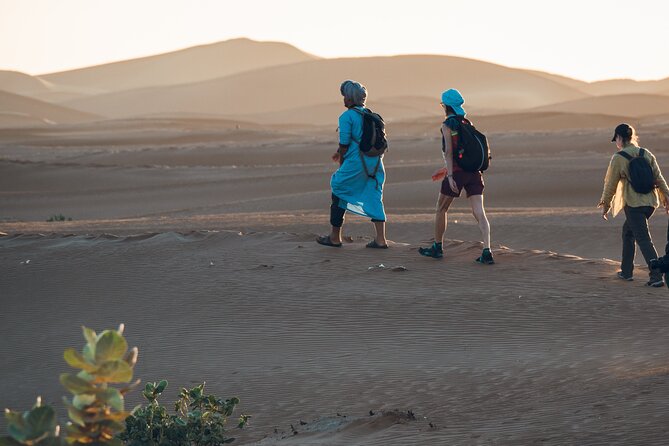
The desert changes every day here. This eight-day journey leaves Marrakech behind for the Mhasser Canyon, stony desert, oasis country, and the giant dunes of Erg Chegaga. I like the combination of moderate walking and real desert travel: your bags move by camel, meals are cooked from local ingredients, and you sleep first in simple nomadic camps, then in a more comfortable fixed bivouac.
I also like the human scale of the trip. The group is limited to 12 people, and the walking pace can be adjusted to suit the group. Tea and dried-fruit breaks have helped less athletic walkers keep going. The main drawback is the amount of time spent on the road, especially at the beginning and end. This is not an eight-day stay entirely on foot in the dunes.
The price is $763.46 per person. That is a substantial sum, but it covers private transportation, a desert team, tents and mattresses, seven breakfasts, seven dinners, and four lunches. You still pay for some lunches, tips, personal expenses, and hiking gear, so budget beyond the headline price.
Key points to know before you book
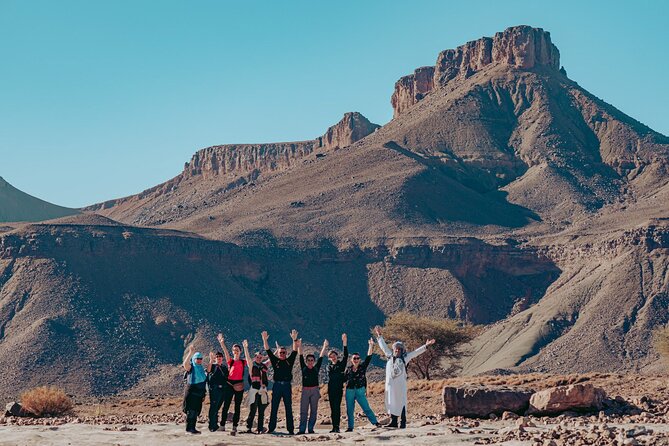
- The Mhasser Canyon is an early highlight: Its mineral colors provide a strong contrast to the open desert that follows.
- You walk about six moderate hours daily: The pace is intended for beginners and occasional walkers with reasonable fitness.
- Camels carry your luggage: You can focus on walking rather than hauling a large pack from camp to camp.
- Erg Chegaga provides the big finish: The final stay includes a fixed bivouac, camel riding, and a climb up the highest dune.
- Meals are part of the desert rhythm: Seven breakfasts and dinners are included, with fresh local products and traditional cooking.
- The group stays fairly small: A maximum of 12 people allows the guide and desert team to respond to the group’s pace.
From Marrakech across the Atlas to Ouarzazate
Your journey begins with reception and a transfer from Marrakech airport. The published meeting point is Jemaa el-Fnaa in central Marrakech, and the activity returns there at the end. If you plan to arrive in Ouarzazate instead, you need to consult the operator, since that is offered as an alternative arrival point.
The first day is mostly about getting into position. The route crosses the Atlas Mountains and passes Berber villages before reaching Ouarzazate. This is a useful transition from city to desert, but it is also a long travel day. The schedule gives 12 hours to the first stage, so do not picture a leisurely Marrakech morning followed by a quick transfer.
Ouarzazate is used as a stopping point rather than the main focus of the trip. On the second day, lunch is free and not included. You should carry money for this meal and for personal purchases. The road itself helps explain the geography of the trip: high mountain country gives way to the dry southern region, and then to Zagora and the desert beyond.
The long road days are a fair trade for reaching the less developed desert areas southwest of Zagora. Still, you should be comfortable sitting in private transport for extended periods. If you want a short city break in Ouarzazate, the return journey offers one, with free time in town or rest at a hotel or riad with a swimming pool.
A few more treks around Marrakech worth a look
- Marrakesh: 2-Day Mt. Toubkal Trek with 1-Night Stay & Meals
★ 4.7 · 795 reviews - Marrakech: 2-Day Atlas Mountains Trek with Village Stay
★ 4.8 · 717 reviews - From Marrakech: 3-Day Mount Toubkal Climbing Trek
★ 4.7 · 597 reviews
Zagora and the mineral walls of Mhasser Canyon
The trek begins in earnest beyond the last foothills of Djebel Bani, southwest of Zagora. This is where the trip starts to feel different from a standard desert excursion. Instead of heading directly to the sand, you pass through the Mhasser Canyon, known for its striking mineral decoration.
The canyon gives you a strong opening walk. The rock and mineral colors make the first full desert stage more varied than a simple march across flat sand. You will want to keep your camera ready, but do not let photography turn the walk into a stop-start affair. The day is built around roughly six hours of moderate walking.
That distance matters. Six hours is not an extreme trekking schedule, but it is still a full day outdoors. Heat, wind, loose stone, and the dryness of the air can make a moderate route feel more demanding than it looks on paper. The trip is aimed at beginners and occasional walkers, yet you should have a moderate level of fitness and be ready to walk for several consecutive days.
The group’s pace is adapted to its ability. One useful detail is the regular use of tea and dried fruit as simple energy stops. Those pauses are not fancy, but they fit the setting and give the group a chance to regroup.
Walking the stony reg toward Erg Chegaga
After the canyon, the route crosses a stony desert, or reg, on the way to the dunes of Chegaga. This is an important point for setting expectations. The Moroccan desert is not made only of rolling golden sand. Much of your walking takes place over hard, rocky ground, with the scenery changing gradually rather than offering a new spectacle every few minutes.
The reward is variety. The route includes open stone country, oases, wells, nomadic camps, and the possibility of seeing gazelles, dromedaries, or fennecs. The description does not promise wildlife sightings, so treat them as a welcome possibility rather than a planned part of the schedule.
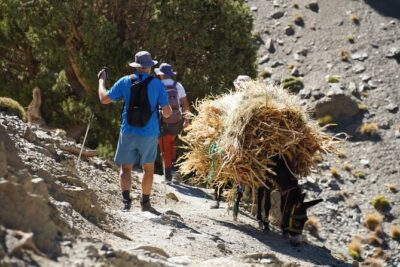
Your bags are transported by camel from one bivouac to the next. That makes a real difference. You can carry a daypack with water, sun protection, and personal essentials instead of walking under a large trekking load. Keep anything you need during the day with you, since the main luggage will be moving separately.
A native desert team and a guide accompany the group. That arrangement matters here because the value of the trip comes from moving through the desert rather than simply arriving at a camp by vehicle. You see how wells and oases fit into life in a dry region, and you have a chance to learn about nomadic ways of living while moving at walking pace.
Sleeping under a nomadic camp roof
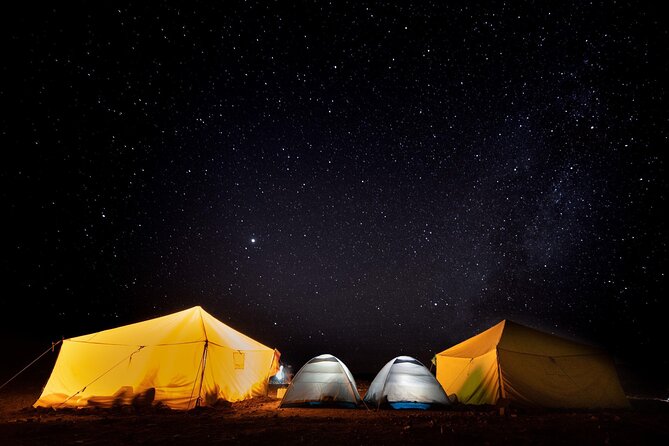
At the end of one walking day, the team sets up a nomadic camp. This is the more basic side of the trip and part of its appeal. Tents and mattresses are provided, but you should not expect the services of a city hotel. Personal comfort depends heavily on your packing, especially warm layers, sun protection, and suitable hiking gear.
The contrast between moving camp and fixed camp is one of the best parts of the schedule. A mobile camp gives you the feeling of traveling through the desert, not simply touring it. The evening is tied to the route you walked that day, and the camp moves on afterward.
Food is another practical strength. Seven dinners and seven breakfasts are included, and the cooking uses fresh local products and traditional dishes. A previous family group praised the food prepared in the desert, while another group found the meals enjoyable even during stormy conditions. That does not mean every menu item will suit every diet, so raise dietary needs before departure rather than waiting until camp.
Lunch is included on four days, not all eight. Lunches in Ouarzazate and on the road back from the desert are specifically free meals, so keep cash available. You should also plan for personal expenses and tips, neither of which is included.
Same trailhead, a longer or shorter day out:
- From Marrakesh: 2-Day Mount Toubkal Trek
★ 4.7 · 591 reviews - From Marrakech: Atlas Mountains Summit Trek
★ 4.9 · 228 reviews - Summiting and Hiking the Atlas Mountains Day Trek from Marrakech
★ 5.0 · 131 reviews - From Marrakech: Private Tour to Oasis and Trekking in the Desert of Erg Chigaga
★ 5.0 · 115 reviews
Arriving at the fixed Erg Chegaga bivouac
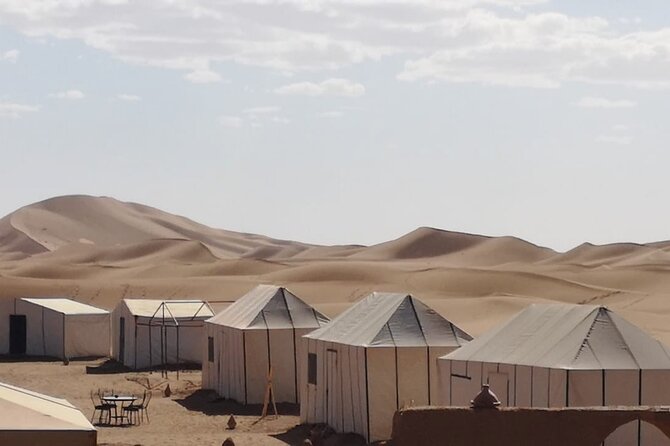
The fixed Nomademoi bivouac in Erg Chegaga gives the trek its change of pace. After the walking stages, you arrive at a permanent camp in the dunes. Dinner and the night are spent in a traditional caidal tent, giving you a more comfortable base without removing the desert setting.
This is the point where the trip shifts from endurance to pleasure. You have already crossed the canyon and reg, followed the route toward the dunes, and slept in a moving camp. Now you can enjoy the sand with less pressure to cover ground.
The fixed bivouac has been described as calm and restful, which is exactly what you want after several walking days. Do not confuse comfort with luxury. The supplied information confirms tents, mattresses, meals, and a swimming pool at the Ouarzazate accommodation, but it does not promise hotel-style facilities at the desert camp.
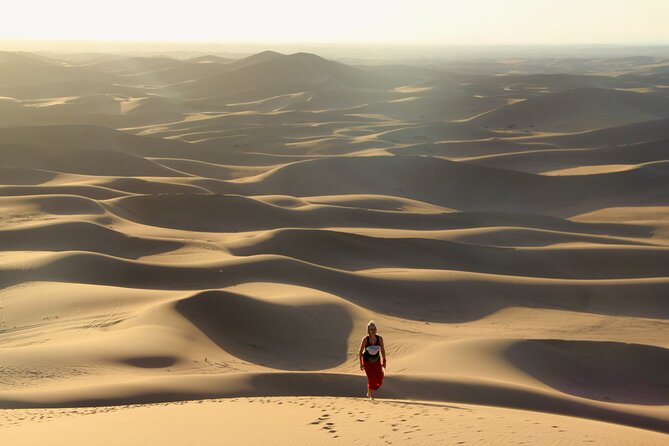
The big visual reward is Erg Chegaga itself. The dunes are the main stage for the final desert night, and climbing the highest dune gives you a broad view over the surrounding sand. Go slowly. The climb is optional in practical terms, and the loose sand can make a short-looking ascent surprisingly tiring.
A free afternoon with camels, music, and stars
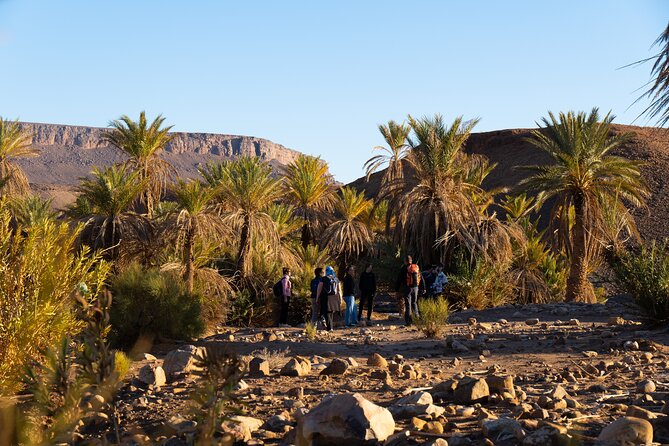
The day at the fixed bivouac is deliberately unhurried. After breakfast, you have free time. In the afternoon, you can rest, take a camel ride, or climb the highest dune in Erg Chegaga.
That free time improves the trip. An eight-day trek with six hours of walking on many days could become a relentless schedule. This pause lets you enjoy the camp without watching the clock. If you prefer a quiet afternoon, you can rest rather than add another activity.
The traditional evening around the fire includes songs and music. It is a simple, fitting finish to the desert section. After dark, the camp becomes a good place to look at the stars, since the final night is spent in the dunes under the Moroccan sky.
A storm is always a possibility in an exposed desert setting. The organization has handled difficult weather before, but you should still pack for changing conditions. Lightweight layers, a warm evening layer, closed walking shoes, sun protection, and a water bottle are sensible basics. Hiking gear is not included, so you are responsible for arriving prepared.
Leaving the desert by the Iriki Lake track
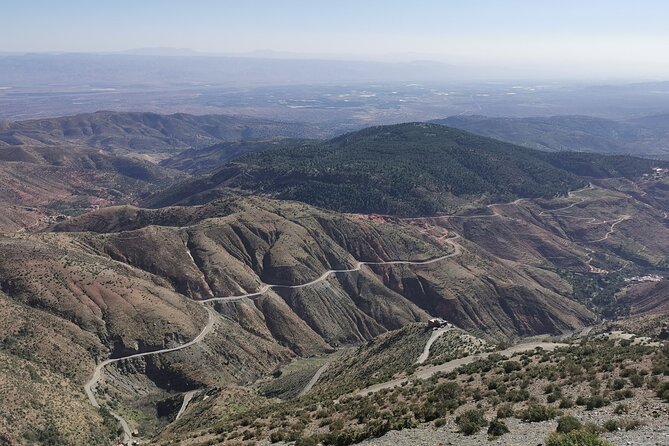
After breakfast, the route leaves the dunes by the Iriki Lake track toward Foum Zguid. This is another long transition rather than a walking day. You then continue to Ouarzazate, arriving in the early afternoon.
Lunch on the road is not included. The schedule allows free time in Ouarzazate afterward, either to rest at the hotel or riad with a swimming pool or to explore the town. This stop is useful after the desert, when a shower, a bed, and a slower afternoon will feel well earned.
The next morning, you return to Marrakech and arrive in the early afternoon. Airport transfer is included at the end, according to the schedule. Since arrival and departure details can affect the timing, confirm the exact pickup arrangements after booking, especially if your flight does not match the planned return.
What the $763.46 price really covers
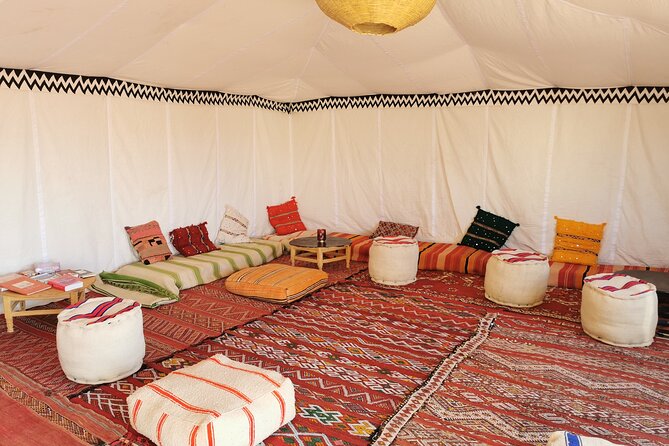
At $763.46 per person, this is not a bargain day trip. It is a multi-day desert operation with transport from Marrakech, a guide, a local support team, camel transport for bags, camping equipment, meals, and accommodation in both moving and fixed camps.
The value is strongest if you want an organized route through several types of desert scenery. Arranging private transfers, camp logistics, meals, camel support, and the return route yourself would take time and would not necessarily produce a smoother trip. The small maximum group size also helps justify the cost.
The price is less attractive if you mainly want a quick visit to the dunes. You spend considerable time on the road, and four lunches are not included. Add money for tips, personal expenses, hiking gear, and the two listed road lunches.
The practical booking terms are fairly strict. You can cancel for a full refund at least six full days before the start time. Cancellation two to six full days before departure brings a 50 percent refund, while cancellation less than two full days before departure brings no refund. The trip also needs a minimum number of people, so a cancellation by the operator for that reason brings a different date, another experience, or a full refund.
Who will enjoy this desert trek most
I would choose this trip if you want more than a quick camel ride and you are curious about how desert travel works. It suits beginners and occasional walkers who can manage about six moderate hours of walking per day and who like a steady group pace.
It is also a good match for friends or families who want shared time outdoors. The pace has been adapted for mixed abilities, and a family group that included children aged six, seven, and ten completed a shorter trek with the team. That example does not guarantee that every child will enjoy the full eight-day route, so families should judge the daily walking and road transfers carefully.
You may want a different plan if you dislike rough camping, long vehicle transfers, or uncertainty about weather. The trip is not built around luxury or a fixed hotel bed each night. Its appeal comes from moving through remote country, accepting basic camps, and earning the comfort of the final bivouac.
Should you book this Moroccan desert trek?
Book it if you want a gradual, well-supported introduction to the Sahara, with real walking, camel-carried luggage, local food, changing scenery, and two very different types of desert camp. The highest dune at Erg Chegaga, the Mhasser Canyon, and the evening music around the fire give the trip a clear rhythm.
Think twice if you have limited walking fitness or only a few days in Morocco. The route begins and ends with substantial road travel, some lunches cost extra, and the desert camps are not a substitute for a resort. For the right person, though, the price buys far more than sand and a sunset. It buys a carefully arranged way to cross the desert at human speed.
FAQ
Where does the trek start and finish?
The listed meeting point is Jemaa el-Fnaa in Marrakesh. The activity ends back at the meeting point, with airport transfer provided at the end.
How long is the experience?
The experience lasts approximately eight days, beginning with arrival and transfer from Marrakech and ending with a return to Marrakech in the early afternoon on day eight.
How much walking is involved each day?
The trek includes approximately six hours of moderate walking per day. A moderate level of physical fitness is required.
Are bags carried during the trek?
Yes. Camels transport your bags from one bivouac to the next, so you do not need to carry your main luggage throughout the walking stages.
What meals are included?
Seven breakfasts, seven dinners, and four lunches are included. Lunch in Ouarzazate and lunch on the road back from the desert are not included.
Is camping equipment provided?
A tent and mattress are provided. Hiking gear is not included, so you need to bring your own suitable equipment.
How large is the group?
The maximum group size is 12 people. Confirmation is sent within 48 hours of booking, subject to availability.
Recently added around Marrakech
- Berber villages trek Day trip★ 5.0 · 12 reviews
- 2 Days Trek to Atlas Mountains berber villages★ 5.0 · 25 reviews
- Day Trekking Atlas Mountains★ 4.5 · 10 reviews
- two days valley trek in the Atlas mountains★ 4.5 · 2 reviews
- 2 days Toubkal adventure Trek★ 5.0 · 5 reviews
- Mount Toubkal Trek: 2-Day Adventure★ 5.0 · 26 reviews
- Trekking and Hiking in Morocco 2 Day trek in Atlas Mountains Berber villages★ 5.0 · 10 reviews
- Toubkal Ascent Trek – Atlas Mountains – 2 days (Private Trek)★ 5.0 · 8 reviews
Marrakech Trekking Tours, compared.
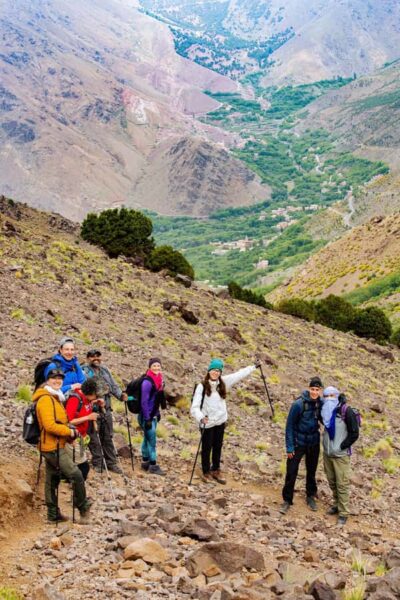
2-Day Mt. Toubkal Trek with 1-Night Stay & Meals
Read our review →
Summiting and Hiking the Atlas Mountains Day Trek from Marrakech
Read our review →
Private Tour to Oasis and Trekking in the Desert of Erg Chigaga
Read our review →
Browse the lists this tour appears in