
REVIEW · MARRAKECH
5-day Jebel M’goun trek
Morocco’s quieter high mountain test begins here. The 5-day Jebel M’goun trek takes you from Marrakech into the Central High Atlas, across the Ait Bougmez Valley, and toward 4,071-meter Jebel M’goun, Morocco’s second-highest peak. I like the route for its big mountain scenery and its small-group, private format, which lets your own party set the pace with the guide.
I also like the human side of the trip: muleteers carry the tents and equipment, cooks prepare the meals, and you pass through areas still used by nomadic families. The drawback is clear: this is a demanding mountain trek, not a gentle walking holiday. The third day reaches about 22 kilometers with roughly nine hours of walking, so you need solid fitness and comfort with long uphill and downhill stretches.
Key points before you book
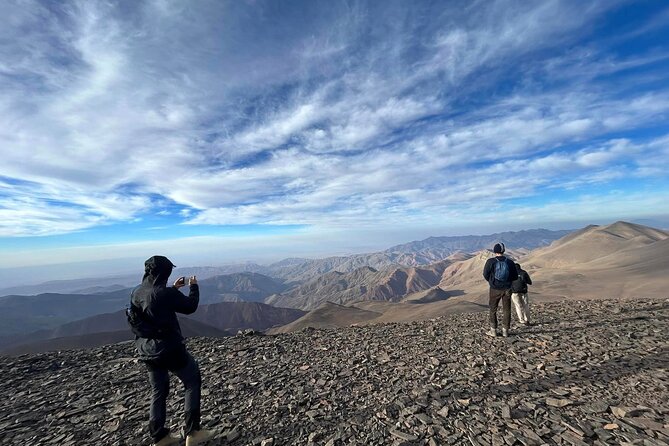
- 4,071-meter Jebel M’goun: The route reaches the massif around Morocco’s second-highest peak, with broad views toward the Draa and Dades valleys.
- Ait Bougmez start: The trek begins in a peaceful High Atlas valley rather than at a crowded resort or city trailhead.
- Three nights under canvas: You sleep in tents for the first three nights, then spend the fourth night in a local guesthouse in Timit.
- Serious third day: Expect about 9 hours on foot, 22 kilometers, 1,200 meters of ascent, and 1,470 meters of descent.
- Ouzoud Waterfalls finish: The final day combines a drive, a waterfall visit, lunch, and a return to Marrakech around 4 p.m.
- Helpful named guides: Hassan and Abdoe are specifically associated with strong guiding, safety checks, food, camping support, and clear booking contact.
Why Jebel M’goun is worth the effort
Jebel M’goun offers a different mountain experience from Morocco’s better-known Toubkal routes. At 4,071 meters, it is the country’s second-highest peak, but the route begins in the Ait Bougmez Valley, a quieter part of the Central High Atlas. You get mountain scale without spending the whole trip around one famous trailhead.
I like the way the route changes character from day to day. It starts with a valley and mule team, moves onto high passes and a nomad-used plateau, then follows a long ridge and descent through open mountain country. The final walking day returns you to village life before the tour finishes with Ouzoud Waterfalls.
This is not a trip for ticking off viewpoints from a vehicle. You earn the views with repeated climbs, loose high-country walking, long descents, and nights in tents. The payoff comes in the scale of the M’goun range and the distant views toward the Draa and Dades valleys.
The private setup matters here. Only your own group participates, so the guide can respond to your pace and condition more easily than on a large scheduled departure. That does not make the trek easy, but it can make a hard day feel more manageable.
A few more treks around Marrakech worth a look
- Combined Tour: Atlas Mountains Trek and Sahara Desert 5 days Tour
★ 5.0 · 23 reviews - 5 Days Desert Trekking from Marrakech
★ 5.0 · 16 reviews - Annapurna base camp trek 5 Days
★ 5.0 · 252 reviews
Day 1: From Marrakech to Ait Bougmez and Ikkis N’Arous
The first day is mostly a transfer, but it sets up the entire trek. You leave Marrakech at 8:30 a.m. and drive toward Azilal, the small town described as the gateway to the mountains. The drive takes about five hours and includes the climb to Tizi N’Tirghist pass at 2,900 meters.
From the pass, you continue toward the Ait Bougmez Valley. This is a useful transition from city travel to mountain travel. The valley is described as peaceful, and it gives you a first look at the rural setting before the harder walking begins.
After lunch, you meet the muleteers and begin walking up the small Arous Valley. The first stage covers about 8 kilometers and takes roughly two hours, with around 500 meters of ascent. Your overnight camp is near the sheepfolds of Ikkis N’Arous pasture.
This is a sensible opening day. You do not begin with a punishing climb after the long transfer, but you still gain height and sleep at altitude. The practical catch is that the day is not short overall. Five hours in a vehicle followed by two hours on foot can leave you tired before the main mountain work begins.
Meals are included, as are the tent arrangements and support from the mule team. Drinking water is not included, so you need to budget for it and clarify how water will be handled before setting out.
Day 2: Tarkedit Pass at 3,400 meters
Day two brings the first major climb. You walk toward Tarkedit Pass, reaching about 3,400 meters. The route includes several stops for views across the M’goun range and toward the 4,068-meter summit area.
The figures give you a good sense of the work involved: about six hours of walking, 13 kilometers, 1,100 meters of ascent, and 500 meters of descent. This is a full mountain day, but it is shorter than the following stage.
After the pass, you descend for about two hours to the Tarkedit plateau. The plateau is used by nomads, which gives this part of the route a stronger connection to present-day mountain life. You are not just passing through empty high country. Families and herders use these uplands as part of their seasonal routine.
You sleep in tents again. The combination of a high pass and an open plateau can make the day feel exposed, so your clothing and sleep system matter. The tour does not provide personal equipment, so your own warm layers, suitable boots, and camping needs are your responsibility.
The altitude is also worth taking seriously. The itinerary calls for moderate physical fitness, but the numbers point to something more demanding than moderate sightseeing. You are climbing above 3,000 meters and must still walk for hours afterward.
Day 3: The long ridge and the heart of the trek
Day three is the hardest stage and the main reason to book this route. You climb toward the ridge, with the M’goun summit and the wider massif opening out around you. From the high ground, the views reach toward the Draa and Dades valleys.
The day involves approximately 9 hours of walking, 22 kilometers, 1,200 meters of ascent, and 1,470 meters of descent. Those numbers deserve more attention than the attractive summit photos. The descent is especially large, and tired legs can make downhill walking just as taxing as the climb.
The route is described as a ridge stage with panoramic views of the M’goun massif. A strong guiding team is valuable here. Abdoe is specifically praised for repeatedly checking that the group was safe and well, while Hassan is associated with a successful version of the trek and careful support from the mule and cooking team.
You should treat this as the day that decides if the trip suits you. If you regularly walk long mountain days and can handle steep elevation changes, it may be the high point of the trip. If your fitness is only occasional, the distance and descent could overwhelm the enjoyment.
The reward is not only a high point. It is the change in scale. Valley routes and passes give way to wide views across several mountain regions. After the long descent, you camp again, likely grateful for a hot meal and a dry place to rest.
Same trailhead, a longer or shorter day out:
- Marrakesh: 2-Day Mt. Toubkal Trek with 1-Night Stay & Meals
★ 4.7 · 795 reviews - Marrakech: 2-Day Atlas Mountains Trek with Village Stay
★ 4.8 · 717 reviews - From Marrakech: 3-Day Mount Toubkal Climbing Trek
★ 4.7 · 597 reviews - From Marrakesh: 2-Day Mount Toubkal Trek
★ 4.7 · 591 reviews
Day 4: Nomad country, Bouberden Pass, and Timit
The fourth day shifts the emphasis from high ridges to people and villages. You may meet nomadic families with their herds as you head toward Bouberden Pass at about 3,100 meters.
The pass gives you another view of the surrounding mountains, this time with a look back toward M’goun. That backward view is a nice detail. On a trek, you often spend so much time looking ahead that it is easy to miss the country you have already crossed.
This day covers about 21 kilometers and six hours of walking. You climb around 500 meters, then descend roughly 1,350 meters to the Ait Bougmez Valley. Lunch is planned near a juniper tree before another two-hour descent to the village of Timit.
The contrast with the previous day should be welcome. You are still working hard, but the route brings you down from the high mountain zone and toward a settled valley. The night in a local guesthouse is a practical comfort after three nights in tents.
That village stay also helps the trip feel less like a sealed expedition. You have mountain camps, muleteers, a meal near a tree, a nomad-used pass, and then a local lodging in Timit. Those changes are part of the experience and add more meaning than sleeping in the same kind of accommodation every night.
Day 5: Ouzoud Waterfalls and the drive back
The final day is a road day with a worthwhile stop. You drive to Azilal, visit Ouzoud Waterfalls, eat lunch at a small local restaurant nearby, and continue to Marrakech.
The total drive is about five hours, with an expected arrival around 4 p.m. That timing makes the day useful for anyone with onward plans, though I would still avoid scheduling a flight or nonrefundable connection too tightly.
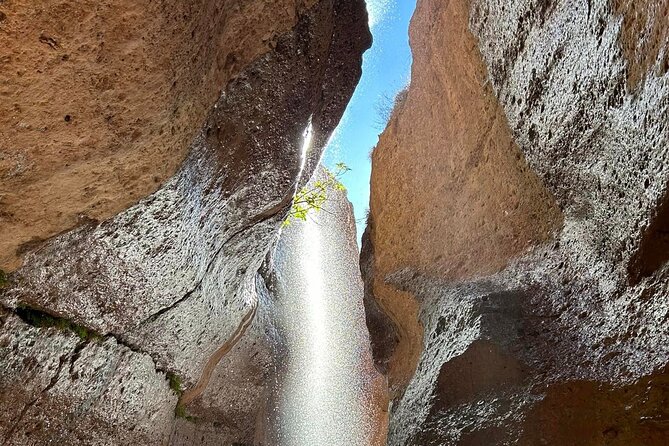
Ouzoud Waterfalls are a smart finish because they add a major natural attraction without requiring another hard walking stage. After four days of mountain effort, a stop beside falling water and a local lunch provide a gentler ending.
The final day also shows the limits of the itinerary. You do not finish the trek and immediately find yourself back in Marrakech. You still have a long road journey, so expect a full day even though the walking is over.
Meals, camping, and the role of the mule team
Breakfast, lunch, and dinner are listed for all five days. That is important on a route with long walking stages, since carrying five days of food yourself would add a lot of weight.
The muleteers carry the tents and equipment, according to the practical details connected with the trip. You still need to bring your personal equipment and drinking water is not included. Ask for clear guidance before departure about the amount of water to carry and how refills are handled.
The cooking team is another strong part of the setup. The named support team includes Mohammed and Mohammed in connection with tent and cooking duties. That means your guide is not trying to lead, cook, and manage every camp task alone.
You sleep in tents on the first three nights and in a local guesthouse in Timit on the fourth. No Marrakech accommodation is included, and neither are Marrakech meals. Plan for those costs before comparing the total price with other mountain packages.
What the $704.74 price really covers
At $704.74 per person, this is not a cheap walking excursion. The value depends on how much you would otherwise need to arrange yourself.
The price covers the five-day route, private participation for your own group, meals during the trip, mountain transport connected with the itinerary, mule support, tents, a guide, and the return to Marrakech. It also includes the Ouzoud Waterfalls stop, which would otherwise require a separate outing.
For a demanding five-day route in a remote mountain area, the support structure is a meaningful part of the cost. You are not only paying for a path to the summit area. You are paying for transport from Marrakech, food, camp logistics, muleteers, guiding, and the effort required to connect several valleys and passes.
The price does not cover travel insurance, Marrakech accommodation or meals, drinking water, tips, or personal equipment. Those exclusions can add up, especially if you need to buy trekking clothing or camping gear.
I would judge the price favorably if you value a private departure and want the logistics handled by a local team. It is less attractive if you already have mountain equipment, transport, and guiding arranged independently.
Who should book this trek
I would recommend this trip to you if you:
- Can handle six to nine hours of walking on mountain terrain
- Are comfortable with 1,100 to 1,200 meters of ascent in a day
- Can manage long descents, including up to 1,470 meters on day three
- Want high mountain views without choosing the more familiar Toubkal setting
- Like a mix of tent camping, village lodging, mule support, and local meals
- Prefer a private group rather than joining a large departure
I would be cautious if you have limited hiking experience, dislike camping, or want a relaxed holiday with short walks. The phrase moderate physical fitness should not disguise the real numbers. This is a serious trek with altitude, long distances, and several demanding days in a row.
The guide quality is central to the experience. Hassan and Abdoe are the names associated with strong support, careful safety attention, and good communication. Booking contact by WhatsApp was described as smooth, which is useful for confirming practical details before you leave Marrakech.
Booking details worth checking
Pickup is offered, and the stated start time is 8:30 a.m. The activity is private, and confirmation is received when you book. Service animals are allowed, and the starting area is near public transportation.
You can cancel for a full refund up to 24 hours before the start time. Changes or cancellations inside that 24-hour window are not accepted for a refund. Poor weather or failure to reach the minimum number of participants can lead to a new date, another experience, or a full refund.
The route requires suitable weather, so keep some flexibility in your plans. Travel insurance is not included and is especially worth considering for a high-altitude trek.
Should you book the 5-day Jebel M’goun trek?
Book it if you want a demanding High Atlas route with real mountain mileage, tent camps, mule support, nomad country, and a strong finish at Ouzoud Waterfalls. The private format and guide support make the $704.74 cost easier to justify, especially if you are traveling with friends or family.
Skip it if you want a soft adventure or if day three sounds unreasonable. The 22-kilometer stage, high passes, and long descents are the honest test. For fit walkers who want more than a quick mountain photo, this route offers a rewarding and varied five days.
FAQ
Where does the Jebel M’goun trek start?
The experience begins with pickup in Marrakech at 8:30 a.m. The route then travels toward Azilal and the Ait Bougmez Valley in the Central High Atlas.
How long does the trek last?
The experience lasts approximately five days.
How high is Jebel M’goun?
Jebel M’goun reaches about 4,071 meters above sea level. The itinerary also refers to a summit height of 4,068 meters.
Is the tour private?
Yes. Only your own group participates in the activity.
How physically difficult is the route?
You should have a moderate level of physical fitness. The hardest stage involves about nine hours of walking, 22 kilometers, 1,200 meters of ascent, and 1,470 meters of descent.
Where do you sleep during the trek?
You sleep in tents during the first three nights. The fourth night is in a local guesthouse in the village of Timit.
Are meals included?
Breakfast, lunch, and dinner are included for all five days. Meals and accommodation in Marrakech are not included.
Is drinking water included?
No. Drinking water is not included in the price.
Is personal equipment provided?
No. You must provide your own personal equipment.
Does the tour visit Ouzoud Waterfalls?
Yes. On the fifth day, the route includes a visit to Ouzoud Waterfalls, lunch at a nearby local restaurant, and a return to Marrakech planned for around 4 p.m.
Recently added around Marrakech
- Berber villages trek Day trip★ 5.0 · 12 reviews
- two days valley trek in the Atlas mountains★ 4.5 · 2 reviews
- 2 Days Trek to Atlas Mountains berber villages★ 5.0 · 25 reviews
- Day Trekking Atlas Mountains★ 4.5 · 10 reviews
- Trekking 8 days in the Moroccan desert from Marrakech★ 5.0 · 4 reviews
- 2 days Toubkal adventure Trek★ 5.0 · 5 reviews
- Mount Toubkal Trek: 2-Day Adventure★ 5.0 · 26 reviews
- Toubkal Ascent Trek – Atlas Mountains – 2 days (Private Trek)★ 5.0 · 8 reviews
5-Day Experiences, compared.
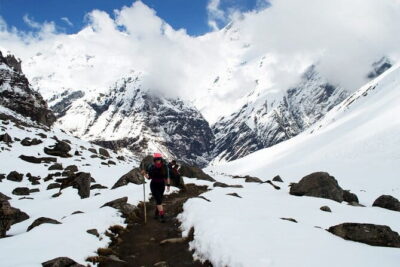
Kathmandu to Annapurna Base Camp (ABC) 5-Day Trek
Read our review →
Machu Picchu: 5-Day Salkantay Trek with Panoramic Train
Read our review →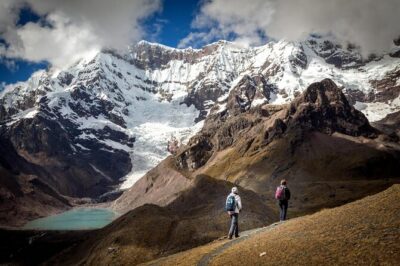
Kathmandu/Pokhara: 5-Day Annapurna Base Camp (ABC) Trek
Read our review →
5-Day Pearl of Africa Chimps and Gorilla Trekking Safari
Read our review →Browse the lists this tour appears in