
REVIEW · SAPA
2D1N Buffalo trek by Hmong Sister House and Trekking
Sapa gets more rewarding when you leave town. This two-day trek follows Hmong paths through Hau Thao, forest, rice terraces, ethnic villages, and a buffalo house where Zizi’s mother lives. I like the small private setting and the chance to spend the night with a Hmong family rather than simply pass through a village.
I also like the personal side of the guiding. Guide Li has been praised for sharing stories about her childhood and how Hmong life has changed, while the route was created by Zizi. The main consideration is physical: the trek requires moderate fitness, and the published plan gives no exact mileage or elevation gain.
Key points to know before booking
- The buffalo house is the heart of the trip: You stay at the home used by Hmong families to care for their livestock high in the mountains.
- The route avoids the usual short walks: You pass through Hmong villages, forest, rice paddies, a Red Dao village, and a waterfall over two days.
- Guide Li adds a personal voice: She can connect the walk with her own childhood and present-day Hmong life.
- Your morning starts at Zizi’s homestay: A pickup from the bus station, luggage storage, hot shower, and breakfast are included before the trek.
- The $110 price buys more than walking time: It includes a private activity, local guiding, meals described in the plan, overnight family lodging, and transport from the bus station.
- The route can be adjusted: The trek may be customized on request, which is useful if you need a different pace or plan.
Why this Sapa trek feels different
Many Sapa walks give you a few hours among rice terraces before returning to town. This one asks for more time and effort, but it also gives you a closer look at how upland families live and work.
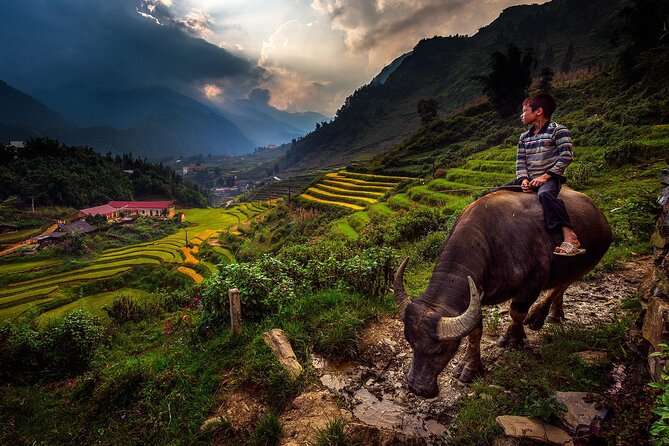
The route follows the pattern of Hmong life in the mountains. You walk through villages, see animals living close to homes, climb through forest, and reach the buffalo house where livestock care is part of the daily routine. That is more meaningful than treating the buffalo as a photo prop.
I especially like that the overnight stop is tied to a real family home. Zizi’s mother lives there, and the house is part of the working rhythm of the area. You are not staying in a polished hotel that happens to have a mountain view. You are staying in a family setting connected to farming and animal care.
That also means you should keep your expectations practical. The description does not promise private rooms, hotel-style facilities, or a detailed list of comforts. The value comes from the setting and personal contact, not luxury.
The private format is another advantage. Only your group takes part, so the walk can feel more relaxed than a large departure with a fixed pace. Ask about the exact route and walking times before you set out, especially since the published details do not give a full distance or elevation profile.
More Two-Day Treks in Sapa:
- EXPLORE SAPA: 2D1N TREKKING & HMONG CULTURE WITH DINH
★ 4.9 · 191 reviews - Sa Pa: 2-Day Trekking Trip with Ethnic Minority Homestay
★ 4.7 · 145 reviews - Sapa : 2-Day Trek & Heartwarming Homestay with an Ethnic Family
★ 5.0 · 143 reviews
The early start at Zizi’s homestay
The day begins with pickup at about 7:00 in the morning from the bus station. You are brought to Zizi’s homestay in Ta Van, where you can leave your luggage.
This is a useful arrangement if you arrive in Sapa by overnight bus. Instead of carrying a large bag up mountain paths, you can keep only what you need for one night. The included hot shower is also welcome after a bus ride, and breakfast gives you a proper start before walking.
Breakfast is cooked by Zizi. That small detail matters because it sets the tone for the trip: local food, local homes, and a guide team connected to the area. It also gives you time to organize your gear before the trek begins.
The meeting point is Hmong Sister House and Trekking in Ta Van, Muong Hoa, Sa Pa, Lao Cai. The activity ends back at the meeting point. Confirm the pickup arrangement when you book, since the listed pickup detail refers specifically to the bus station at around 7:00.
Day 1: Hau Thao villages, forest paths, and buffalo care
The first walking section begins from Hau Thao village. From there, you move through villages where you can see traditional Hmong life in this mountainous part of northern Vietnam.
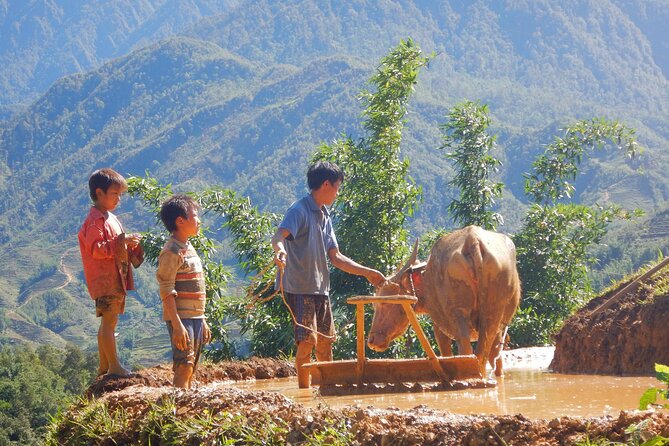
The route is not presented as a quick viewpoint walk. You are there to notice the ordinary details: homes, livestock, farming, and the way people share space with animals. The plan specifically mentions seeing many animals living alongside local residents. That makes the walk feel connected to daily life rather than arranged only for scenery.
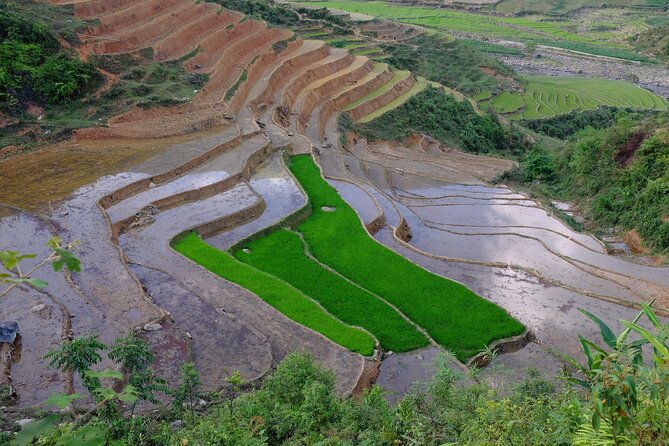
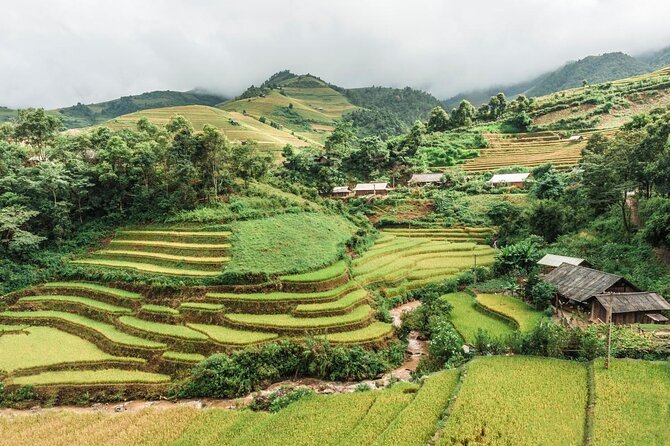
You will also pass rice terraces and forest. The terraces show how much work is needed to grow food on steep ground, while the forest section changes the mood of the walk. Expect a route that rises into the mountains rather than staying on a flat village road.
Lunch is prepared by the guide. This is a practical benefit, since you do not need to leave the trail to find a restaurant. The exact menu is not specified, so ask in advance about food preferences or restrictions if that matters to you.
The most distinctive part of Day 1 is the climb toward the buffalo house. The trek follows paths used by Hmong people who walk into the forest and mountains to care for their livestock. You are seeing the reason for the route, not just following a scenic loop.
The buffalo house is where Zizi’s mother lives. Spending the night here gives the trip its strongest sense of place. You can understand the connection between the family, the animals, the forest, and the high mountain fields in a way a short stop cannot provide.
The overnight stay will suit you if you value contact with local life more than polished facilities. It may not suit you if you need a private hotel room, predictable amenities, or a carefully timed evening program. The available information does not specify sleeping arrangements, so ask before departure.
What guide Li adds to the walk
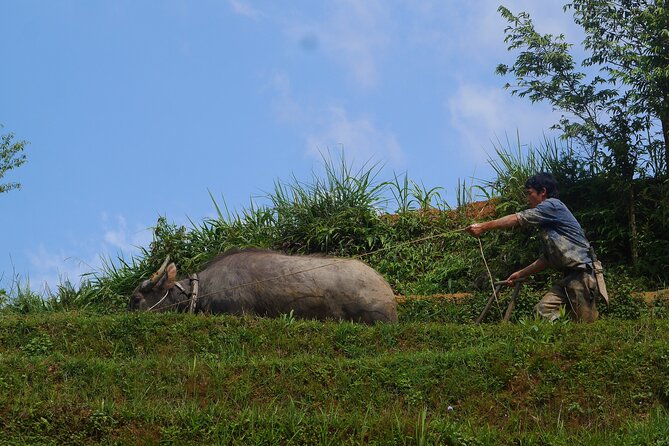
The guide can make or break a village trek. Here, Li is praised for telling stories about her own childhood and explaining how Hmong people, including herself, lived in the past and live today.
That personal connection is important. You are not simply looking at clothing, houses, fields, or animals from the outside. You have someone who can help explain the meaning behind what you see and connect it with lived experience.
The guide is a local English-speaking Hmong woman. That gives you a better chance to ask direct questions about family life, work, changing customs, and the mountain communities along the route.
Still, the depth of conversation will depend on your group and guide on the day. Go ready to ask questions. Simple, respectful curiosity usually leads to a better exchange than treating the walk as a moving photo stop.
The tour was created by Zizi, which also suggests that the route is not just a standard town-to-village circuit. The description calls it an off-the-beaten-path trek, but you should take that as a general guide rather than a promise of untouched wilderness. You will still be walking through inhabited villages and working farmland.
A few more treks around Sapa worth a look
- Sa Pa: Muong Hoa Valley Trek and Local Ethnic Villages
★ 4.6 · 864 reviews - Sapa: Eco Adventure Terrace Fields and Local Villages Trek
★ 4.9 · 636 reviews - Number one top rated ethical cultural trekking and homestay by ETHOS
★ 5.0 · 456 reviews - From Sapa: 1-Day Guided Trek to Lao Chai & Ta Van with Lunch
★ 4.9 · 416 reviews
Day 2: Sunrise, rice fields, Red Dao culture, and a waterfall
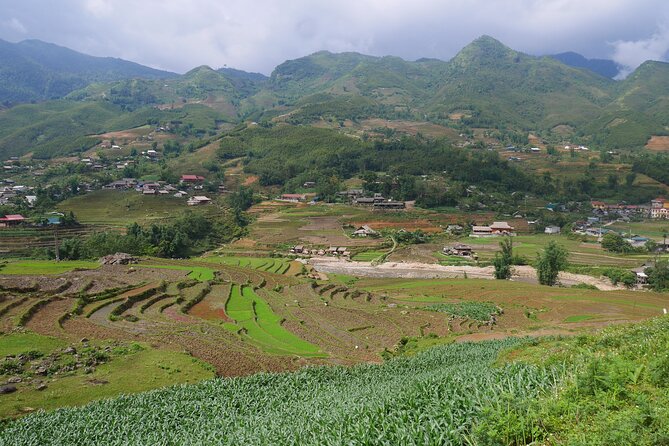
The second morning begins slowly with sunrise and breakfast. That is a pleasant change from a rushed early departure. You have time to wake up, eat, and say goodbye to the family before heading downhill.
The descent gives you a different view of the same mountain world. Farmers are already working in the rice fields in the morning, so this part of the route brings you close to the work that supports village life.
The plan then takes you to a Red Dao village. This adds a second ethnic community to the trek and broadens the experience beyond a single cultural perspective. Sapa is home to several ethnic groups, and seeing both Hmong and Red Dao communities helps you understand that the area is not culturally uniform.
The details available for the Red Dao stop are brief, so do not expect a formal museum visit or a scheduled cultural performance. The value is in walking into another village and noticing how the setting and community differ from the Hmong areas you have already passed.
A waterfall is also part of the second day. It gives the route a natural highlight after the more human focus of farms and villages. Since the full walking time is not provided, ask how far the waterfall is from the other stops and how much uphill or downhill walking remains.
Day 2 finishes by trekking down and returning to the meeting point in Ta Van. The downhill sections may feel easier for some people, but descents can be hard on knees and ankles. Good shoes matter more than fashionable trekking clothes.
What the $110 price includes in real value
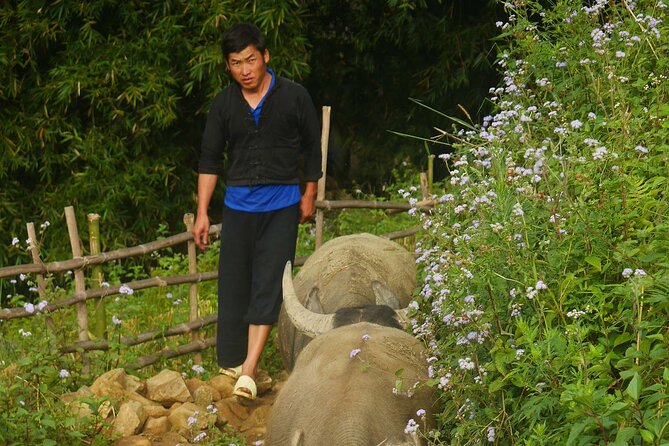
At $110 per person, this is not the cheapest way to see Sapa. The price makes more sense when you count the full package: bus station pickup, luggage storage at the homestay, a hot shower, breakfast before walking, local guiding, lunch prepared by the guide, family accommodation, a second breakfast, and the private format.
The private arrangement is especially useful for couples, families, or a small group of friends. You are not sharing the route with a large mixed group, and the trek can be customized on request. That may help if one person walks more slowly or if your group wants more time for conversation.
The strongest value is the overnight stay. A short Sapa walk can show you terraces and villages, but this trip gives you an evening and morning in a family setting linked to buffalo care. You pay for access and context, not just transport between scenic points.
The price is less attractive if you mainly want photographs from rice terraces and do not care about staying with a family. In that case, a shorter trek may offer enough. You should also ask what meals and sleeping arrangements are included in practical terms, because the description does not give a full room or menu breakdown.
The trip is booked an average of 85 days ahead, which suggests that planning early is sensible. This is particularly useful if you want a certain date or need a customized route.
Fitness, clothing, and what to clarify
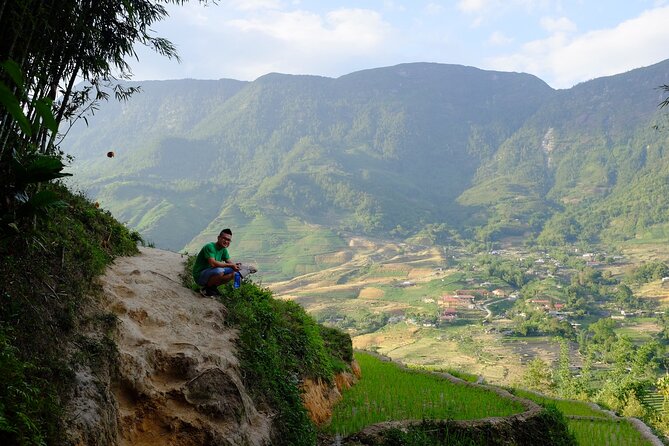
You need a moderate level of physical fitness. The route goes through mountain villages, forest, rice terraces, and a high buffalo house before descending the next day. The exact trail length, steepest sections, and walking hours are not listed, so request those details before paying.
Pack lightly for the overnight stay and leave larger luggage at Zizi’s homestay. Wear shoes with reliable grip. You should also bring clothing suitable for changing mountain weather, though the provider may cancel or reschedule if conditions become poor.
The experience requires good weather. If poor weather causes cancellation, you are offered a different date or a full refund. For your own cancellation, you receive a full refund if you cancel at least 24 hours before the start time. Changes or cancellations inside that window are not refunded.
Service animals are allowed. The activity is private, but the available information does not give a specific maximum group size. Ask how many people your private booking can include if that affects your decision.
Who should choose the Buffalo Trek?
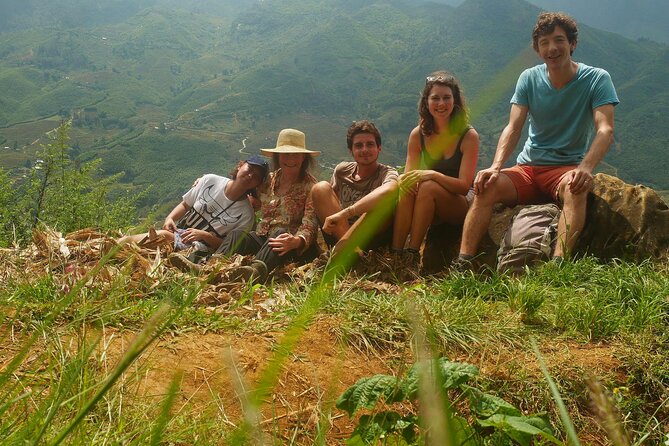
I would choose this trek if you want Sapa to be more than a series of viewpoints. It suits you if you enjoy walking, family homestays, local food, and conversations about daily life.
It is also a good choice for anyone who wants a guide with a personal connection to the area. Li’s stories about her childhood and Hmong life may be the most memorable part of the trip, especially if you ask thoughtful questions and allow time for conversation.
Families and small groups may appreciate the private format and the option to request a different route. The activity can also work well for people arriving by bus, since the morning pickup and luggage drop-off simplify the first few hours.
I would hesitate if you have limited mobility, dislike uneven mountain paths, or need exact walking distances before booking. The moderate fitness requirement is clear, but the lack of detailed mileage and elevation information means you should make direct inquiries if those facts are important.
Final verdict: book it for connection, not comfort
I recommend the 2D1N Buffalo Trek if your priority is local contact and a less routine route through Sapa. The Hmong villages, buffalo house, family overnight stay, Red Dao village, rice fields, and waterfall give the two days a strong sense of purpose.
Book it when you want a private, personal walk and are comfortable with basic family accommodation. Skip it in favor of a shorter outing if you mainly want easy scenery or hotel comforts. Before confirming, ask for the exact walking distance, elevation changes, sleeping setup, and meal details. With those points clear, the $110 price offers solid value for a genuine two-day mountain experience.
FAQ
Where does the 2D1N Buffalo Trek begin?
The meeting point is Hmong Sister House and Trekking in Ta Van, Muong Hoa, Sa Pa, Lao Cai, Vietnam.
Is pickup available?
Yes. The plan includes pickup from the bus station at around 7:00 in the morning on Day 1.
Where can I leave my luggage?
You can leave your luggage at Zizi’s homestay before starting the trek.
Is breakfast included?
Yes. The first breakfast is prepared by Zizi before the trek. Day 2 also begins with breakfast at the family stay.
Is lunch included?
Lunch on Day 1 is prepared by the guide.
Is this a private tour?
Yes. Only your group participates in the activity.
How fit do I need to be?
You should have a moderate level of physical fitness because the route includes mountain villages, forest, rice terraces, an uphill trek to the buffalo house, and a descent on the second day.
What happens if bad weather cancels the trek?
If poor weather causes cancellation, you are offered a different date or a full refund. You can also cancel for a full refund up to 24 hours before the start time.
Recently added around Sapa
- Soob Sapa Trekking Tour★ 4.3 · 3 reviews
- Sapa Trekking – Waterfalls And H’mong Villages★ 5.0 · 2 reviews
- Sapa Trekking Private Tour With Ethnic Female Tour Guide★ 4.9 · 24 reviews
- Sapa: Trekking Through Terraced Rice Fields & Valley 1 Day★ 4.8 · 4 reviews
- Sapa: Y Linh Ho – Lao Chai, and Ta Van Trekking Day Tour★ 5.0 · 25 reviews
- Sapa Trekking Guide Francophone 2 days – 1 night★ 5.0 · 2 reviews
- Sapa: Ta Phin Village Trek with Lunch and Bathing Experience★ 4.7 · 13 reviews
- Sapa small groupe activities: 1 Day trek – Meet the locals★ 4.7 · 3 reviews
Sapa Trekking Tours, compared.
Muong Hoa Valley Trek and Local Ethnic Villages
Read our review →
Eco Adventure Terrace Fields and Local Villages Trek
Read our review →
Number one top rated ethical cultural trekking and homestay by ETHOS
Read our review →
1-Day Guided Trek to Lao Chai & Ta Van with Lunch
Read our review →
Sapa 1 Day Long Trek: Trek to Hau Thao and Sa Seng Villages
Read our review →
Explore Sapa by TrekkingAdventures, Mountain,Rice fields
Read our review →
EXPLORE SAPA: 2D1N TREKKING & HMONG CULTURE WITH DINH
Read our review →Browse the lists this tour appears in