
REVIEW · MOSHI
Best 5 Days Kilimanjaro Bike Trek Tour via Marangu Kilema Route
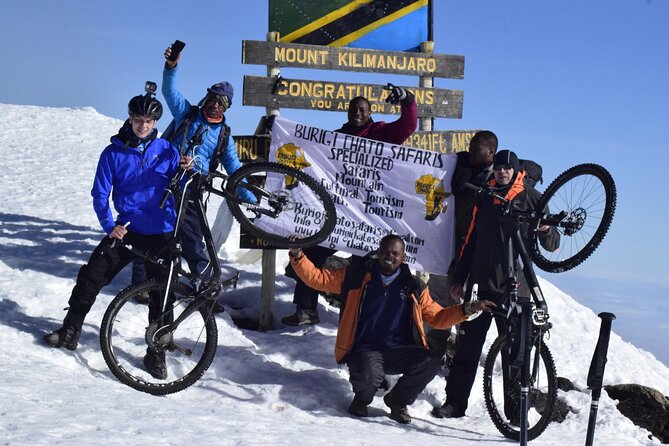
A bicycle can reach Africa’s highest summit. This five-day Kilimanjaro trip uses the Kilema Route, the mountain’s dedicated cycling approach, and combines long rides with the final walking and riding push to Uhuru Peak. I like the unusual challenge and the steady schedule, which gives you time to adjust to altitude instead of racing upward.
I also like that an experienced guide rides with you on the route, while porters carry equipment and meet you higher on the mountain. The main caution is simple: this is not a normal cycling holiday. The summit section is cold, steep, physically tiring, and partly completed on foot, so your fitness and bike choice matter greatly.
Key points to know before booking
- Kilema is Kilimanjaro’s mountain-bike route: You ride from Kilema Gate toward Horombo, then continue through the high alpine zone.
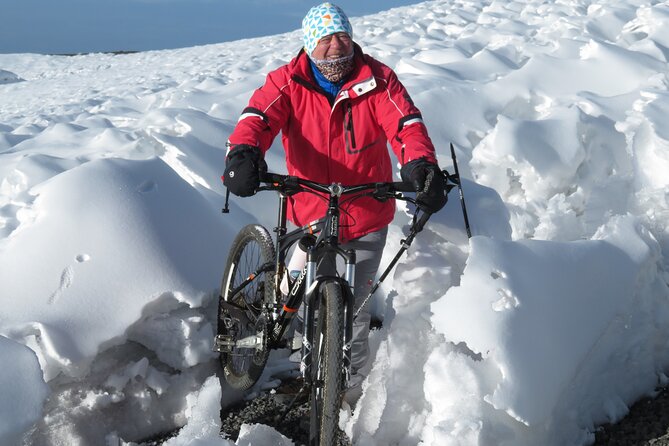
- The summit is a mixed bike and hiking challenge: You carry or use the bike for sections near Gilman’s Point, Uhuru Peak, Stella Point, and the descent.
- Five days means a demanding schedule: The plan includes long days, an early summit start, and roughly ten hours on summit day.
- Mountain-bike hire costs extra: The trip includes transfers, guides, meals, taxes, and porters, but not the bicycle itself.
- The route changes character quickly: You pass from rainforest to alpine desert and then the icecap zone near the summit.
- This suits strong, experienced cyclists: A sturdy bike, spare parts, and comfort with rough stone trails are important.
Why the Kilema Route is different
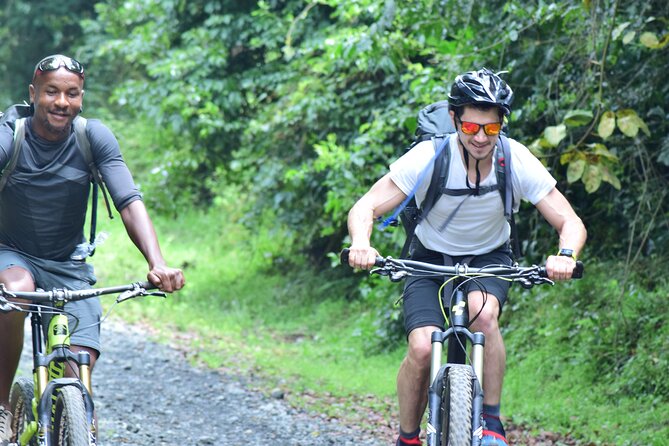
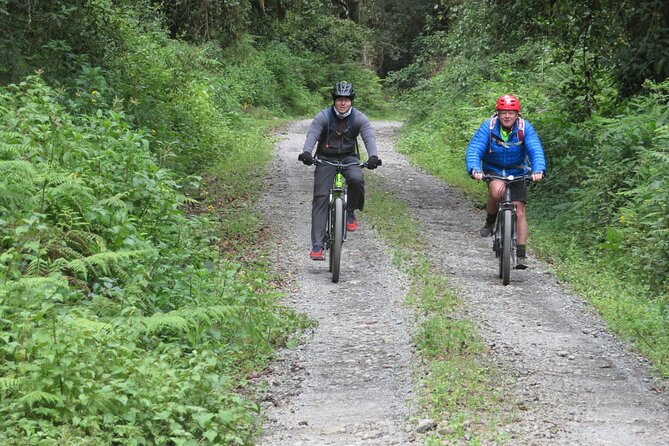
Most people picture Kilimanjaro as a walking climb. The Kilema Route changes that rhythm. Instead of walking every step from the lower gate, you begin on a mountain bike and ride a rough 19-kilometre route toward the high huts.
The trip starts near Marangu, on the mountain’s southeastern side. After registration at Marangu Gate, your vehicle takes you to Kilema Gate at about 1,950 metres. From there, the cycling begins.
This route is not a smooth road dressed up as an adventure. You should expect small stones, steep stretches, rough surfaces, and sections where walking your bike makes more sense than riding it. The guide rides with you, which is useful when the trail becomes confusing or when you need help judging the safest line.
The special appeal is the sense of earning each change in altitude under your own power. You are not simply being driven closer to the summit. You pedal through changing plant zones, then trade the lower mountain bike trails for a high-altitude climb.
More Kilimanjaro Climbs in Moshi
- Best Kilimanjaro Adventure 7 days Machame route Trekking
★ 5.0 · 42 reviews - Kilimanjaro 7 Day Private Trekking Experience
★ 5.0 · 40 reviews - 6 Days Machame Route Kilimanjaro Climbing Trekking Tour
★ 5.0 · 34 reviews
Day 1: Marangu Gate to Horombo by bike
Your day begins at 8:00 am with a guide and a transfer from the meeting point. The drive to Marangu Gate takes about 45 minutes and passes through Marangu village, located on the lower slopes of Kilimanjaro.
At Marangu Gate, everyone must register with the park office. This is also where the formal mountain process begins, so keep your passport or required registration information ready as directed by the operator. After registration, the vehicle continues to Kilema Gate.
Before riding, check your day pack carefully. It should contain drinking water, your packed lunch, extra clothing, and anything you may need during the day. You also make a final inspection of the bicycle. That check is more important than it sounds. A loose fitting or weak tire becomes a bigger problem once you are far from the gate.
The first route section covers about 16 kilometres from Kilema Gate to Horombo Hut. The planned cycling time is around six hours. Your guide rides a mountain bike too, rather than simply following in a vehicle, which gives the day a proper group-riding feel.
The attraction here is the gradual change in surroundings. You leave the lower slopes and begin moving into the mountain environment, with the ride providing a more active view of the route than a standard trek. The drawback is that the first day may feel longer than the distance suggests because altitude and rough ground slow your pace.
Horombo is your base for the night. You will likely be ready for food, dry clothing, and rest rather than extra sightseeing. Keep your evening quiet. The point of this stage is not to prove how fast you can climb, but to give your body time to adjust.
Day 2: Alpine desert riding toward Mawenzi Hut
After breakfast, you ride through the alpine desert zone. The plan covers about 10 kilometres and lasts roughly five hours. About 90 percent of the day is intended for cycling, making this the most consistently bike-focused part of the trip.
The route takes you toward Mawenzi Hut before returning to Horombo Hut. Mawenzi is one of Kilimanjaro’s dramatic volcanic peaks, and riding in this high, dry zone gives you a strong sense that the mountain has changed from the forested slopes below.
Expect small stones and uneven ground. A mountain bike built for rough terrain is not a luxury here. One published account specifically advises using a bike suited to serious riding and expecting the possibility of a flat tire. That is good practical advice, even if your operator supplies repair support.
This day has two benefits. First, it gives you more time at altitude before the summit attempt. Second, it lets you ride in a relatively open setting without the pressure of the final climb.
You return to Horombo rather than sleeping higher. That means another night at the same hut and less daily packing, but it also means the trip does not follow a simple straight line upward. The return is part of the acclimatization plan.
Day 3: Horombo to Kibo Hut
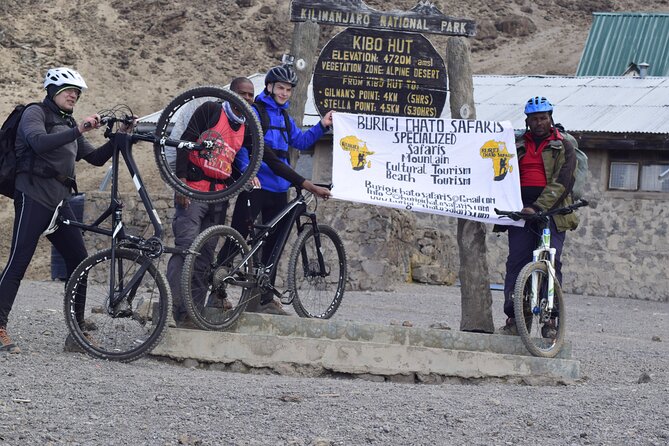
Day three starts early. After breakfast, pack your duffel bag and meet the guide for the ride toward Kibo Hut. The day covers about 10 kilometres and lasts around six hours.
The first three kilometres are described as less suitable for riding. After that, the final seven kilometres to Kibo Hut offer a better biking trail. This is a useful detail because it sets realistic expectations: the route is not a continuous pedal from hut to hut.
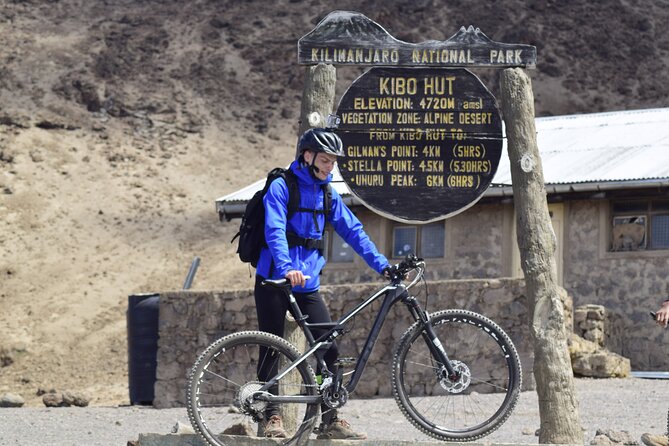
Kibo Hut sits in the barren alpine desert. The accommodation is a stone building with bunk beds for up to 60 climbers. It is a basic mountain stop, not a comfortable hotel, and you should organize your clothing and equipment before trying to sleep.
The summit is still about 1,195 metres above Kibo. That figure explains why the afternoon should be used carefully. After lunch, the schedule allows time to rest. Around 4:00 pm, depending on how you feel, you may hike part of the summit path to get familiar with the route before the night climb.
This orientation walk can be useful, but do not treat it as a sightseeing stroll. You have a summit attempt ahead and need to protect your energy. Prepare thermal clothing, gloves, headlamp equipment if required, water, and any personal climbing gear before lying down.
The main challenge is the schedule. You arrive at Kibo, rest for only part of the day, then prepare for a very early summit start. If you need a slower acclimatization plan, ask the operator before booking because this five-day itinerary is clearly demanding.
Same trailhead, a longer or shorter day out:
- Kilimanjaro Trekking 7Days 6Night Lemosho Route
★ 5.0 · 23 reviews - 8 Day Kilimanjaro Trek via Lemosho Route
★ 5.0 · 17 reviews - Top 6 Days Mt. Kilimanjaro Bike trek Tour by Marangu-Kilema Route
★ 5.0 · 15 reviews - 6 Days Mount Kilimanjaro Trek Marangu Route
★ 5.0 · 15 reviews
Day 4: Gilman’s Point, Uhuru Peak, and the long return
Summit day begins at about 4:00 am. You start up a zigzag trail on a long scree slope. After roughly two hours, you reach Hans Meyer’s Cave, where the gradient becomes steeper.
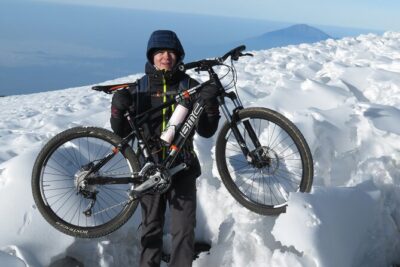
The route continues for about three more hours to Gilman’s Point. At this stage, the bike is handled by porters. That detail matters. The final approach is not a normal cycling climb, and you should be ready to hike slowly over steep, loose ground before riding again.
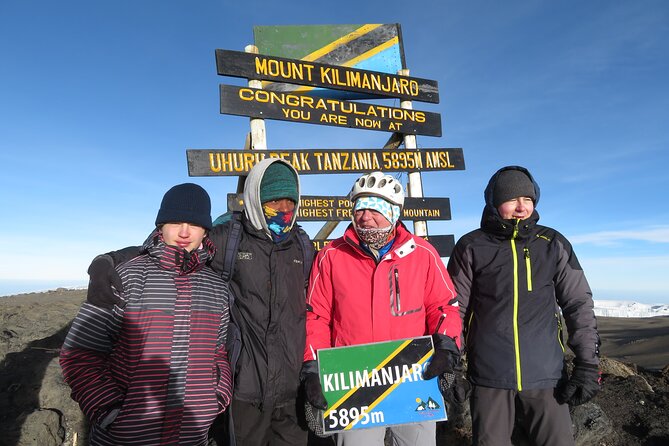
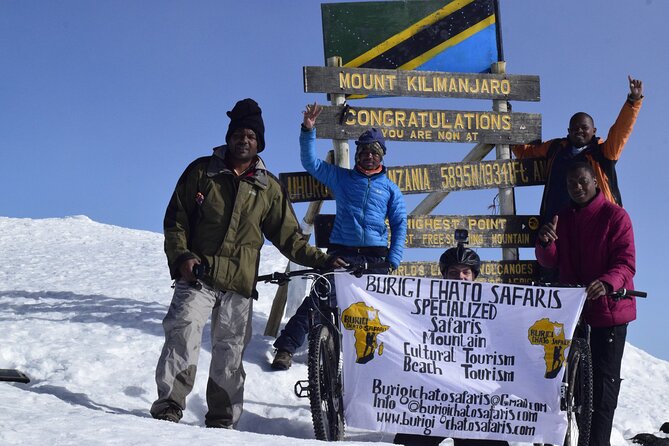
From Gilman’s Point, you take the bike and ride toward Uhuru Peak, Kilimanjaro’s 5,895-metre summit. The plan allows a short stop for photographs before you ride down toward Stella Point.
This is the most unusual part of the trip, but also the section that needs the clearest expectations. You are not riding continuously from Kibo Hut to the summit. You hike the steepest section, use porters to manage the bike, then ride where the conditions and your strength allow.
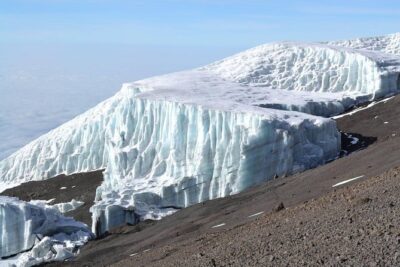
The summit zone is cold, exposed, and physically taxing. The itinerary describes the area from Kibo to Uhuru as mostly alpine desert with icecap, while the descent toward Horombo remains in the high alpine zone. Bring clothing for warmth rather than relying on the movement of cycling to keep you comfortable.
After Stella Point, you return toward Kibo and then continue down to Horombo after lunch. The full day is listed at about ten hours. That makes it the hardest day by a wide margin. A successful summit depends as much on pacing and hydration as it does on cycling ability.
The final ride to Horombo may feel satisfying, but fatigue can affect braking, balance, and judgment. Take the descent conservatively. One of the practical tips associated with this trip is not to ride too fast, especially on a rough trail and after a sleepless summit night.
Day 5: Riding back through the mountain zones
After breakfast, you make the final ride down to Kilema Gate. This section crosses the alpine zone and rainforest before returning to the gate. The listed riding time is about two hours, though the overall timing will depend on the group and the transfer arrangements.
The descent gives you a different view of the route. Ground that felt steep on the way up may now pass quickly, and the shift from dry high-altitude vegetation to rainforest makes a clear closing chapter for the trip.
At Kilema Gate, you transfer to Marangu Gate to check out. From there, transport takes you back to your hotel in Moshi. The package includes private gate transfers, airport pickup and drop-off, but you should confirm the exact airport transfer arrangements when you book.
This final day is short compared with summit day, but it is still worth keeping your schedule flexible. A mountain itinerary can run late, and tired legs may make even a short transfer feel long.
Bikes, porters, and what you must supply
The tour includes an experienced guide, porters, park fees and other taxes, meals on the mountain, and private transportation for the listed transfers. It does not include mountain-bike hire.
That omission affects the real price. The advertised rate is $3,292 per person, but you still need to pay for or arrange the bike, personal climbing equipment, flights, visa, and medical insurance. Hotel accommodation before and after the climb can be booked either directly by you or through the operator, so check whether your quoted package includes those nights.
For the bicycle, prioritize reliability over speed. You need a mountain bike that can handle rough stone and steep, uneven trails. Carry or arrange access to spare tubes, tire tools, and basic repair equipment. A flat tire on an ordinary recreational bike can turn an ambitious day into a rescue problem.
Personal equipment also matters. The summit section requires thermal clothing, and the itinerary specifically tells you to prepare warm gear before the final ascent. You should also confirm the required footwear, head protection, gloves, and lighting before departure, since personal climbing gear is not included.
Is $3,292 a fair price?
The price is high, but it covers more than a day ride. You are paying for five days on Kilimanjaro, park access, a guide, porters, meals, private gate transfers, and airport transportation. The service also includes breakfast four times, lunch five times, and dinner four times.
The value depends on what you already own. If you bring a suitable bike and climbing equipment, the package provides a fairly complete mountain arrangement. If you must hire a bike, purchase technical clothing, arrange hotel nights, and pay for flights and insurance, your total cost will be noticeably higher.
I would compare the operator’s exact inclusions before paying. Ask about the bike standard, repair support, porter arrangements, hotel nights, and whether airport pickup applies to your arrival and departure dates. A cheap bike or unclear summit support is not a saving on this mountain.
The group limit is listed as 200 people, which is a very large maximum. That does not mean your particular departure will contain 200 cyclists, but I would ask about the expected group size. A smaller cycling group may make pacing and guide communication easier.
Who should choose this Kilimanjaro bike trek?
This trip is best for a fit cyclist who wants a serious mountain challenge rather than a relaxed ride. Previous mountain biking experience will help, especially on loose stone, steep sections, and long descents.
It also suits someone who likes a mixed adventure. You must be comfortable hiking, carrying a day pack, sleeping in basic hut accommodation, waking around 4:00 am, and spending about ten hours on summit day.
The trip may not suit a casual cyclist, a person with limited mountain experience, or anyone hoping to pedal all the way to the top. The final ascent is partly on foot, and altitude affects everyone differently.
The advertised minimum is moderate physical fitness, but I would prepare above that level. The itinerary includes several long days, substantial altitude gain, and a summit push after resting only at Kibo Hut. Good preparation will make the experience safer and more enjoyable.
Practical booking details and cancellation
Pickup is offered, mobile tickets are available, and group discounts may be offered. Confirmation is provided at booking. Service animals are allowed, although the high-altitude route itself remains a physically demanding mountain environment.
You can cancel up to 24 hours before the local start time for a full refund. Changes or cancellations inside that period are not accepted for a refund, and poor weather may lead to a different date or a full refund.
Ask questions before booking rather than after arrival. The most important points are the bicycle, the expected group size, hotel arrangements, personal gear, and how porters handle the bike during the summit section.
FAQ
How long does the Kilimanjaro bike trek take?
The planned duration is five days, although the experience may be offered as a five or six-day climb depending on the arrangements and acclimatization needs.
Where does the cycling begin?
After registration at Marangu Gate, you transfer to Kilema Gate at about 1,950 metres. The first major cycling section runs from Kilema Gate toward Horombo Hut.
How far do you cycle on the first day?
The first route section is about 16 kilometres from Kilema Gate to Horombo Hut and takes around six hours.
Do you ride a bicycle all the way to Uhuru Peak?
No. You hike the steep summit section toward Gilman’s Point, while porters handle the bicycle. You then use the bike for the planned section toward Uhuru Peak and on parts of the descent where conditions allow.
Is a mountain bike included?
No. Mountain-trekking bike hire is not included in the listed price. You must arrange or pay for the bicycle separately.
What meals are included?
The package includes five lunches, four dinners, and four breakfasts.
Is airport transportation included?
Private airport pickup and drop-off are listed as included, along with private gate transfers. Confirm the timing and airport details with the operator when booking.
Should you book this Kilimanjaro cycling challenge?
Book it if you want a demanding, unusual way to reach Kilimanjaro’s summit and you already have solid cycling fitness. The Kilema Route offers something a standard trek cannot: long stretches of riding through changing mountain zones, followed by a true high-altitude summit effort.
Do not book it simply because the word bike makes the climb sound easier. You will still hike steep scree, sleep at basic huts, face cold summit conditions, and complete a ten-hour summit day. Before committing, confirm the bicycle arrangement and repair plan, then budget for gear, insurance, flights, visa, and possible hotel costs.
For a fit cyclist with realistic expectations, the price buys a memorable and genuinely different Kilimanjaro experience. For a casual rider, a slower walking route with more acclimatization time may be the wiser choice.
More 5-Day Experiences in Moshi
- 5 Days Kilimanjaro Trekking – Marangu Route
★ 5.0 · 6 reviews - 5 Days | 4 Nights Kilimanjaro Marangu Route Trekking
★ 5.0 · 2 reviews - Annapurna base camp trek 5 Days
★ 5.0 · 252 reviews - Kathmandu to Annapurna Base Camp (ABC) 5-Day Trek
★ 5.0 · 102 reviews
More Cycling Trips in Moshi
- Cruising- Kayaking- Cycling- Trekking 3D/2N from Cat Ba in less tourist areas.
★ 5.0 · 119 reviews - 07 Day: Inca Jungle Adventure with Mountain Bike, Rafting, Zipline & Trek
★ 5.0 · 36 reviews - Rent a Trekking bike: Full Day 24 hours
★ 5.0 · 34 reviews - Pu Luong 3-Day Adventure: Trekking, Cycling & Local Cooking Class
★ 5.0 · 26 reviews
Recently added around Moshi
- Mt Kilimanjaro Trek, 6 Days – Umbwe Route★ 5.0 · 4 reviews
- 7 Day Trek To The Roof Of Africa Kilimanjaro via Machame Route★ 5.0 · 5 reviews
- Mount Kilimanjaro Trek 7-Days: Lemosho Route★ 5.0 · 2 reviews
- 8 Day Kilimanjaro Trek via Lemosho Route★ 5.0 · 17 reviews
- 6-Day Kilimanjaro Machame Route – A Stunning Trek to Uhuru Peak★ 5.0 · 7 reviews
- 7-Days Tour Mount Kilimanjaro Trekking via Machame Route★ 5.0 · 2 reviews
- Trek To Mount Kilimanjaro★ 5.0 · 12 reviews
- Unforgettable 8 Days Lemosho Route Trekking on Kilimanjaro★ 5.0 · 4 reviews
Kilimanjaro Climbs, compared.
8-Day Small-group Lemosho Kilimanjaro Summit Trekking
Read our review →
Best Kilimanjaro Adventure 7 days Machame route Trekking
Read our review →
Kilimanjaro 7 Day Private Trekking Experience
Read our review →
6 Days Machame Route Kilimanjaro Climbing Trekking Tour
Read our review →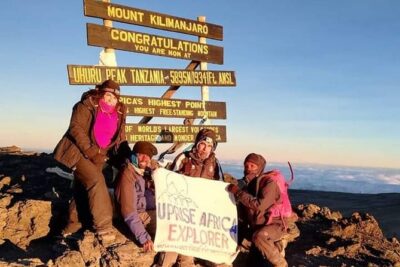
Kilimanjaro Trekking 7Days 6Night Lemosho Route
Read our review →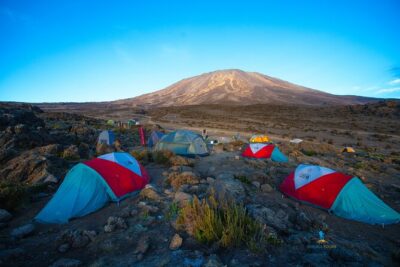
Top 6 Days Mt. Kilimanjaro Bike trek Tour by Marangu-Kilema Route
Read our review →Browse the lists this tour appears in