
REVIEW · MOSHI
5 Days Kilimanjaro Trekking – Marangu Route
Africa’s highest summit demands more than good shoes. This five-day Marangu Route trek gives you a direct path to Uhuru Peak, with rainforest, open moorland, volcanic scenery, and the stark upper slopes of Kilimanjaro. I like the private format and the practical hut accommodation, which keeps the price at $1,460 per person easier to assess.
I also like the steady pace and strong attention from the guides, cooks, and porters. Food has been praised highly, and guides have slowed down or adjusted the pace when needed. The main concern is the schedule: five days is short for acclimatization, even with the extra night at Horombo, so altitude can make this a demanding choice.
Key points to know before booking
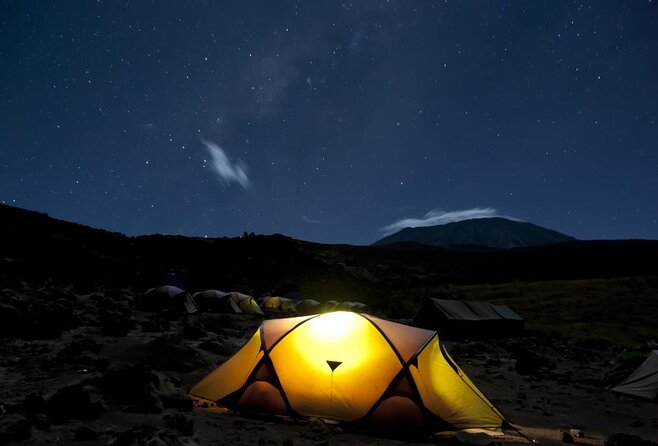
- Marangu is the hut route: You sleep in mountain huts rather than tents for all four nights.
- The summit attempt starts around midnight to 2 a.m.: Expect a long, cold night followed by a full descent.
- Horombo’s extra night matters: The optional day trek to Zebra Rocks or Mawenzi Tarn helps your body adjust to altitude.
- You reach Uhuru Peak at 5,895 meters: The final ascent includes steep scree or snow and a demanding return to Horombo.
- Food and crew care are major strengths: The cook, guides, and porters receive especially warm praise, with Alex and Godfrey named as guides on one trip.
- The price includes the main essentials: Park fees, four nights, lunch, guide service, private transport, and hotel pickup and drop-off are included.
Why the Marangu Route appeals to first-time climbers
The Marangu Route is often called the Coca Cola Route, a nickname that suggests an easier climb compared with other Kilimanjaro routes. That description needs a little care. The path is considered more straightforward, but Kilimanjaro remains a high-altitude mountain, and the summit day is physically serious.
What makes Marangu different is its hut system. You sleep in established mountain huts instead of camping in tents, which may appeal to you if you prefer a roof, a bed, and a simpler night routine. The route also follows the same path up and down, so you do not get the variety of a loop route.
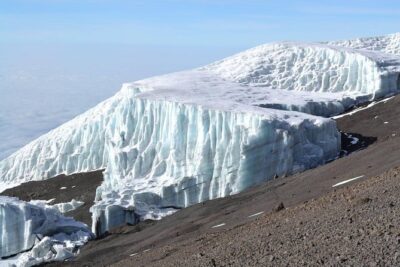
The setting changes quickly. At the lower levels, you walk through rainforest. Higher up, the trees give way to open moorland, giant senecio plants, lobelias, and wide views of Mawenzi and Kibo. Near the summit, the scenery becomes sparse and severe, with scree, snow, volcanic rock, and broad views from the crater rim.
This is a private tour, so only your group participates. That gives you more control over walking speed and rest stops than a large shared departure. It also lets the guide focus on your group’s condition, an important advantage when altitude symptoms begin.
More Kilimanjaro Climbs in Moshi
- Best Kilimanjaro Adventure 7 days Machame route Trekking
★ 5.0 · 42 reviews - Kilimanjaro 7 Day Private Trekking Experience
★ 5.0 · 40 reviews - 6 Days Machame Route Kilimanjaro Climbing Trekking Tour
★ 5.0 · 34 reviews
Day 1: From Marangu Gate into the rainforest
Your day begins with pickup from the airport or your accommodation. The vehicle takes you to the Marangu starting gate, where the mountain formalities begin before you set off on foot.
The first section leads through lush rainforest. This is a pleasant introduction to Kilimanjaro, but wet conditions are possible, so keep rain protection easy to reach. The route can be muddy, especially on the lower descent later in the trip, and gaiters can be useful.
The provided schedule groups the first day under the general climb description and does not give a separate hut arrival time or walking distance. You should ask the operator to confirm your exact first-day timing before departure, especially if you are being collected from the airport.
The mountain itself has three major volcanic centers: Shira, Mawenzi, and Kibo. Kibo is the snow-capped summit cone, rising to 5,895 meters. As you walk, the vegetation changes are more than a scenic bonus. They show how quickly temperature, moisture, and air change with elevation.
Day 2: Mandara Hut to Horombo at 3,700 meters
The trek from Mandara Hut to Horombo Hut takes about three to four hours. After roughly 15 minutes, the rainforest begins to thin, and you move onto open moorland.
This is one of the most rewarding sections of the route because the views open up. Mawenzi and Kibo become visible, and you may see giant senecio and lobelias, plants that give the high moorland an unmistakable Kilimanjaro character.
Horombo sits at about 3,700 meters. That number matters. You may notice the altitude through a headache, shortness of breath, tired legs, or a slower walking rhythm. The sensible approach is to tell your guide exactly how you feel instead of trying to impress anyone.
The guide team receives strong praise for patience and pacing. That is useful here, since a slow, measured walk is more important than proving how fast you can cover the trail. The food also receives repeated approval, which can make a real difference when you need to keep eating despite fatigue.
Day 3: The Horombo acclimatization day
This day starts and ends at Horombo, making it optional in the schedule but important for acclimatization. You can rest at camp, or take a day trek to Zebra Rocks at about 4,200 meters and Mawenzi Tarn Hut at about 4,300 meters.
I would treat this day as a major part of the climb, not spare time. The extra movement at altitude can help you prepare for the summit attempt, while returning to the same hut avoids packing and moving on a day when your body is still adjusting.
Zebra Rocks and Mawenzi Tarn offer a different feel from the lower rainforest and moorland. The route lets you gain height during the day, then sleep lower at Horombo. The schedule does not promise a particular activity beyond these options, so your guide will likely help decide based on weather and how you are feeling.
If you have a headache or feel unwell, rest may be the better choice. The tour requires a moderate level of physical fitness, but fitness alone does not remove the effects of altitude. This is the point where honest communication with the guide matters most.
Same trailhead, a longer or shorter day out:
- Kilimanjaro Trekking 7Days 6Night Lemosho Route
★ 5.0 · 23 reviews - 8 Day Kilimanjaro Trek via Lemosho Route
★ 5.0 · 17 reviews - Top 6 Days Mt. Kilimanjaro Bike trek Tour by Marangu-Kilema Route
★ 5.0 · 15 reviews - 6 Days Mount Kilimanjaro Trek Marangu Route
★ 5.0 · 15 reviews
Day 4: The midnight push to Uhuru Peak
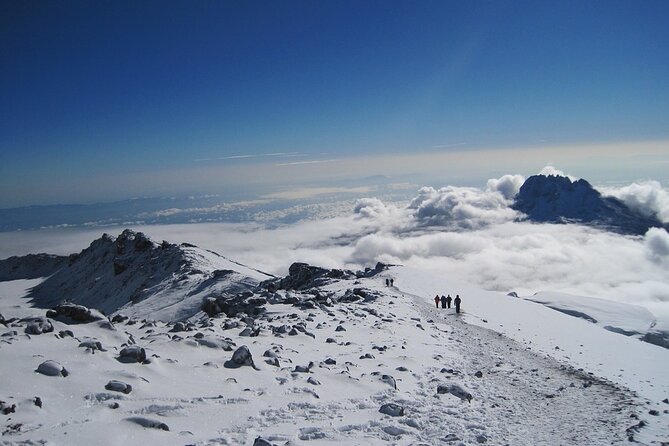
Summit day begins very early, usually between midnight and 2 a.m. You climb steep scree or snow toward Gilman’s Point on the crater rim. The listed schedule gives this section four to five hours, followed by another one to two hours to Uhuru Peak.
The information provided lists Gilman’s Point at 18,640 feet and Uhuru Peak at 19,340 feet, or 5,895 meters. The figures for Gilman’s Point are presented as 5,861 meters, so you may want to confirm the exact route details with the operator before setting out. The important point is that you are climbing to the crater rim, then continuing to Africa’s highest point.
The final approach is slow and tiring. Loose scree can make each step feel inefficient, and cold conditions are likely at this height. Keep warm clothing and rain gear accessible rather than buried in your bag.
At Uhuru Peak, you have time for photographs before beginning the descent. The views are described as remarkable, but summit weather can change, and your time at the top may depend on your condition and the guide’s judgment.
The descent does not finish the day. You return to Kibo for lunch and a rest, then continue down to Horombo for dinner and overnight. The schedule gives three to four hours for this return section, but your actual timing can vary with pace, weather, and fatigue.
This is the hardest day by far. The positive side is that the route has a clear goal and a strong support team. The drawback is the compressed schedule. You summit and descend a very long way in one day, so you need to arrive rested and take the pace seriously.
Day 5: Through moorland and rainforest to Marangu Gate
After breakfast at Horombo, you descend through moorland toward Mandara Hut, at about 2,700 meters. From there, the trail returns through the rainforest to Marangu Gate, at roughly 1,830 meters.
The lower trail may be wet and muddy. Gaiters and trekking poles are specifically useful here, and you should keep rain gear close even if the morning looks dry. By the time you reach the lower forest, shorts and a T-shirt may be comfortable, but warmer clothing should remain within reach because mountain conditions can shift.
A vehicle waits at the gate. The schedule includes a hot lunch before the drive back to Moshi or Arusha, or an airport drop-off if you are flying out the same day. I would be cautious about booking a tight flight connection, since the descent and drive can take longer than expected.
The final day gives you a satisfying change in scenery, but it is still a walking day. Tired knees can make downhill travel harder than expected, especially after the summit push.
What the $1,460 price includes
At $1,460 per person, this is not a budget day trip, but Kilimanjaro costs quickly add up because the package covers a multi-day national park climb and a support crew.
The price includes:
- Four nights of accommodation
- All fees and taxes
- Lunch
- A professional guide
- Hotel pickup and drop-off
- A private tour
The package also includes the main route structure and mountain support described in the program. Alcoholic drinks and souvenir photographs cost extra, so you should not expect every personal purchase to be covered.
The strongest value comes from the private setup and the crew support. A private group gives you a more personal pace, while the guide, cook, and porters handle important parts of the mountain routine. Food quality has been singled out as better than expected, and the crew has been praised for a good walking pace and caring service.
The price does not remove the need for preparation. You still need suitable clothing and personal gear, and you should confirm exactly what equipment, meals, and airport services are included for your booking.
The guides, food, and porter team
The human side of a Kilimanjaro trip can shape the whole result. On one trip, the guides were Alex and Godfrey. The crew also includes cooks and porters, and the strongest praise centers on patient guides, good meals, and attentive support.
The guides have been described as willing to slow down when needed, while still maintaining a useful pace. That balance matters more than speed. You want enough progress each day without wasting energy before summit night.
The food is another clear positive. Reports describe it as excellent, even better than food some people are used to at home. Vegetarian meals are available if requested in advance, and you should give the operator any dietary requirements when booking.
The service also appears suited to small private groups. One group of four reached Uhuru Peak, while another couple completed the route with guides Alex and Godfrey. These details do not guarantee the same result for every group, but they show the value of a crew that stays involved throughout the climb.
Who should choose this five-day climb?
I would recommend this trek to you if you want:
- A direct route to Uhuru Peak
- Hut accommodation instead of tent camping
- A private trip with your own group
- A route with rainforest, moorland, and volcanic scenery
- Support from a guide, cook, and porter team
- An operator that can provide hotel pickup and airport drop-off
I would think twice if you want a relaxed mountain schedule with plenty of altitude adjustment. The extra Horombo day helps, but five days is still a compact program for a climb to 5,895 meters.
You should also be comfortable walking for several hours on uneven ground and handling a long summit day that begins in the middle of the night. The tour lists moderate physical fitness as a requirement, which is a fair warning rather than a minor note.
Practical details that can save you trouble
The tour operates in all weather conditions, so pack for rain, cold, mud, and changing temperatures. Keep warm layers, waterproof clothing, and useful small items accessible rather than packed at the bottom of your luggage.
Confirm your pickup location and airport plans before the climb. Pickup is offered from your accommodation or the airport, and the final day may include a transfer to Moshi, Arusha, or the airport.
Child pricing applies only when the child shares with two paying adults. Children must be accompanied by an adult, and the moderate fitness requirement should be taken seriously.
Booking around six weeks ahead is sensible. The typical booking lead time is 42 days, and the trip requires a minimum number of participants. You can cancel for a full refund up to 24 hours before the start time, but late cancellations and last-minute changes are not accepted.
Should you book the Marangu Route?
I would book this tour if you value hut accommodation, a private group, caring crew support, and a straightforward route to the summit. The praised food, patient pacing, and personal attention add real value to a physically demanding trip.
I would not choose it simply because it is called the easier route. The summit day is long, altitude is unpredictable, and five days leaves less room than a longer climb. If you prepare well, communicate clearly with your guide, and use the Horombo acclimatization day wisely, this can be a strong-value way to attempt Kilimanjaro.
FAQ
How long is the Kilimanjaro Marangu Route tour?
The tour lasts approximately five days and includes four nights of accommodation.
Where does the tour begin?
You can be picked up from the airport or your accommodation and driven to the Marangu starting gate.
What accommodation is provided?
The tour includes four nights of accommodation in mountain huts along the route.
Is the Horombo acclimatization day required?
The day at Horombo is described as optional, but it is important for acclimatization and can improve your chances of reaching the summit.
What is included in the price?
The price includes four nights of accommodation, all fees and taxes, lunch, a professional guide, hotel pickup and drop-off, and a private tour.
Can I cancel for a full refund?
Yes. You can cancel at least 24 hours before the experience start time for a full refund. Cancellations or changes made less than 24 hours before the start time are not accepted.
More 5-Day Experiences in Moshi
- Best 5 Days Kilimanjaro Bike Trek Tour via Marangu Kilema Route
★ 5.0 · 9 reviews - 5 Days | 4 Nights Kilimanjaro Marangu Route Trekking
★ 5.0 · 2 reviews - Annapurna base camp trek 5 Days
★ 5.0 · 252 reviews - Kathmandu to Annapurna Base Camp (ABC) 5-Day Trek
★ 5.0 · 102 reviews
Recently added around Moshi
- Mt Kilimanjaro Trek, 6 Days – Umbwe Route★ 5.0 · 4 reviews
- 7 Day Trek To The Roof Of Africa Kilimanjaro via Machame Route★ 5.0 · 5 reviews
- Mount Kilimanjaro Trek 7-Days: Lemosho Route★ 5.0 · 2 reviews
- 8 Day Kilimanjaro Trek via Lemosho Route★ 5.0 · 17 reviews
- 6-Day Kilimanjaro Machame Route – A Stunning Trek to Uhuru Peak★ 5.0 · 7 reviews
- 7-Days Tour Mount Kilimanjaro Trekking via Machame Route★ 5.0 · 2 reviews
- Trek To Mount Kilimanjaro★ 5.0 · 12 reviews
- Unforgettable 8 Days Lemosho Route Trekking on Kilimanjaro★ 5.0 · 4 reviews
Kilimanjaro Climbs, compared.
8-Day Small-group Lemosho Kilimanjaro Summit Trekking
Read our review →
Best Kilimanjaro Adventure 7 days Machame route Trekking
Read our review →
Kilimanjaro 7 Day Private Trekking Experience
Read our review →
6 Days Machame Route Kilimanjaro Climbing Trekking Tour
Read our review →
Kilimanjaro Trekking 7Days 6Night Lemosho Route
Read our review →
Top 6 Days Mt. Kilimanjaro Bike trek Tour by Marangu-Kilema Route
Read our review →Browse the lists this tour appears in