
REVIEW · LUANG PRABANG
Luang Prabang: 3-Day Cultural Remote Trek With Homestay
Remote Laos starts beyond the river. This three-day trek trades Luang Prabang’s cafés for Hmong and Khmu villages, jungle paths, rice fields, and homestays where daily life follows the sun. I like the rare access to places that see very few foreign visitors, and I like the chance to travel with guides such as Aroun or Chan, who explain local customs, plants, animals, and village life along the way.
The trade-off is comfort. Homestays are clean and basic, with simple toilets and washing facilities, limited electricity, and no dependable way to charge camera batteries. The walking is moderate on paper but can feel tough in heat or rain, especially on the six to seven hour mountain day.
What Makes This Trek Different
- Two nights in remote mountain villages: You stay in Hmong and mixed Hmong-Khmu communities rather than returning to Luang Prabang each evening.
- Local trails instead of marked tourist paths: The route follows tracks villagers use between homes, rice farms, streams, and mountain fields.
- A real homestay experience: Meals, sleeping arrangements, toilets, and washing facilities are simple, giving you a close look at rural life.
- A long final hike with wide views: The third day reaches mountain tops above the villages and remote Lao countryside.
- A strong cultural focus: Your guide helps explain schools, homes, farming, rituals, plants, animals, and village customs.
- A small-group or private format: You can choose a private trip or a small group, with optional hotel pickup and return.
Why This Three-Day Trek Is Worth Considering
At $360 per person, this is not a budget day trip. But the price covers transportation, boat crossings, three days of guiding, meals, village fees, permits, and homestay accommodation. It also pays for access to remote communities that would be difficult to reach on your own.
I see the value in the time spent away from the usual Luang Prabang circuit. You are not simply looking at mountain villages from a road. You cross rivers, walk through rice paddies, sleep in village homes, and spend enough time in one place to notice how the community works.
The cultural access is the main reason to book. A guide such as Aroun can explain the differences between Hmong and Khmu life, while Chan has been praised for explaining customs, rituals, plants, and animals. That kind of interpretation matters here. Without it, a village visit could become a quick walk past unfamiliar houses. With it, you can better understand what you are seeing.
The experience also asks a fair amount from you. You need to carry only a small bag, walk for several hours each day, and accept that the village facilities are not designed for comfort-focused holidays. If your ideal trip includes hot showers, strong Wi-Fi, and a soft bed every night, this is the wrong choice.
More Homestay Treks in Laos:
- The Wild Explorer – 3 days forest trek with homestay and camping
★ 4.5 · 22 reviews - Nalan Trail Kmu Ethnic Experience – 2days forest trek with homestay.
★ 5.0 · 21 reviews - Hunter Trails, 3 days difficult trekking with Camping & Homestay
★ 5.0 · 15 reviews
Day One: From the Mekong to a Hmong Village
The morning begins at the Tiger Trail Travel office on the same street as Villa Maly hotel. You meet at 8:20 a.m. for an 8:45 departure. Hotel pickup is available if you prefer not to find the office, and the operator returns you to your hotel on the third day.
Before leaving, you store extra luggage and keep only what you need for the trek. This is more than a minor packing tip. You will walk on uneven trails for hours, so a light bag makes the whole trip easier. Bring comfortable shoes, weather-appropriate clothing, insect repellent, a change of clothes, and water shoes.
The drive heads north along the Mekong River and then follows the Nam Xeuang River for about an hour and a half. You then cross by local boat to reach the trailhead. The boat crossing is practical, but it also marks the shift from Luang Prabang transport routes to a much quieter part of the province.
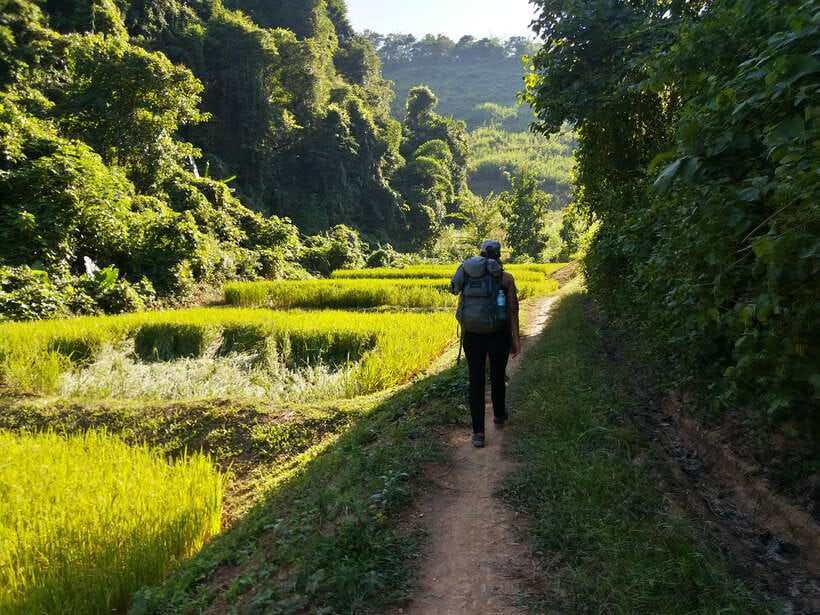
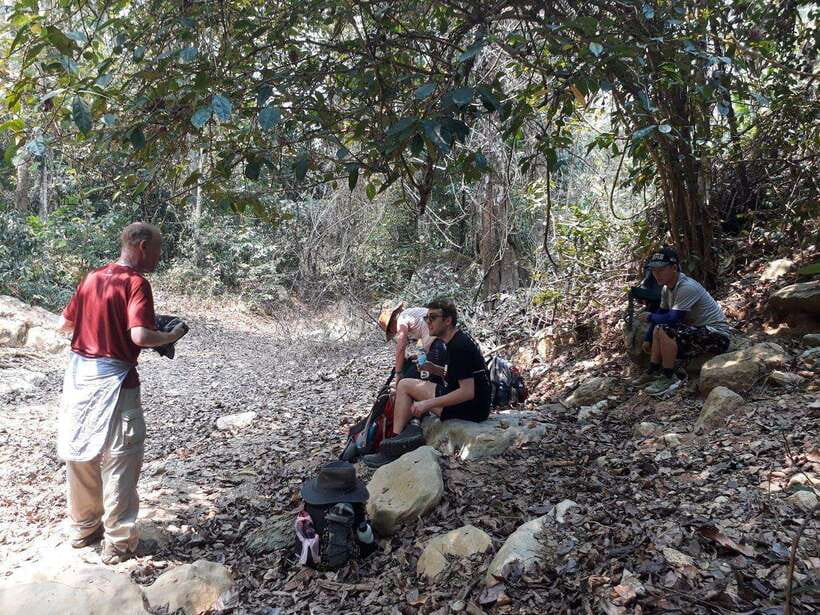
The first walk lasts about four to five hours and follows medium-grade trails through rice paddies and jungle. These are routes used by local villagers to travel between remote communities. You should expect changing ground and a steady pace rather than a polished walking path.
The rice paddies give you a useful view of mountain farming. The route also shows why village life here depends on movement between homes, fields, streams, and higher slopes. This is not a scenic walk separated from local life. The trails serve a purpose.
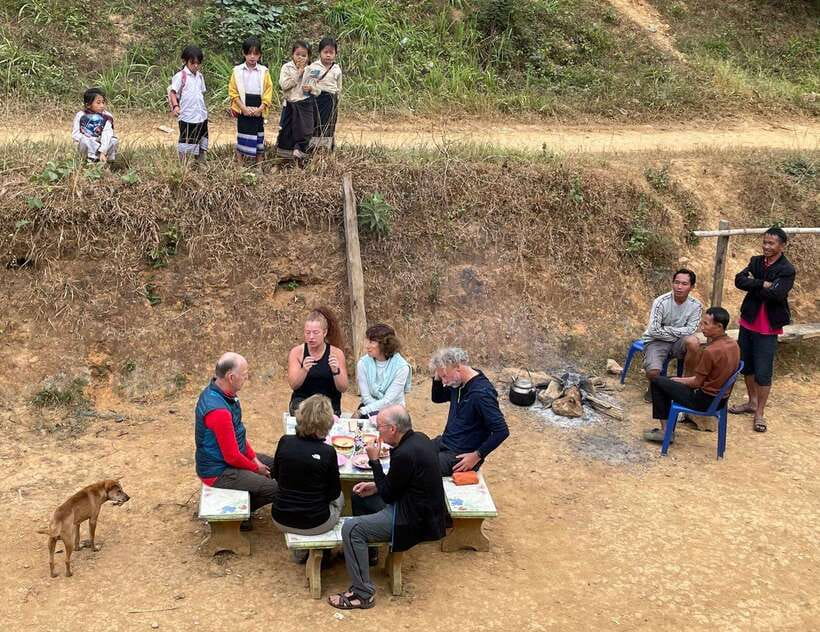
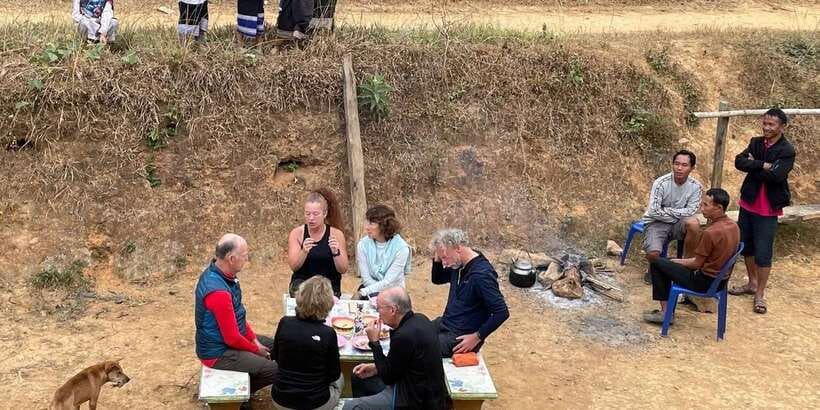
By evening, you reach a Hmong village and settle into a homestay. Conditions are basic but described as comfortable, and the point is contact with local life rather than hotel-style service. Your guide and a Hmong family prepare dinner together.
That meal is one of the trip’s strongest moments. You are not eating at a restaurant built for visitors, and you are not rushing back to town after a short village stop. The evening gives you time to meet local people and notice the pace of the community.
Do keep expectations realistic. Remote villages may have no standard electricity supply, with solar panels providing limited power. You should not count on charging your phone or camera. A power bank is a sensible addition, even though it is not listed as required equipment.
Day Two: Streams, Schools, and a Larger Village
Day two begins with the sounds and activity of Hmong village life. Breakfast is prepared by your guide, and the morning starts without the usual hotel routine of elevators, traffic, and buffet counters.
The second walk is about four hours, making it the shortest hiking day. The route follows valley streams toward a large, remote village shared by Hmong and Khmu residents. Mountains surround the valley, and the setting gives you a stronger sense of how isolated these communities can be.
You arrive in the middle of the afternoon, leaving time to explore. That extra time is important. The village is described as expansive, with schools, homes, and other parts of community life to see. Your guide helps you move through the village respectfully and explains what you are looking at.
A school visit can be especially useful because it shows more than a traditional house or rice field. It points to the practical concerns of a living community, including education and the organization of village life. You are not visiting a preserved museum. People live and work here.
The mix of Hmong and Khmu residents also gives the trip more cultural range. Your guide can help explain differences in customs and daily practices, but you should approach the visit with humility. Ask before photographing people, homes, or ceremonies, and follow your guide’s advice.
The evening is set aside for rest before the hardest day. There is no need to force extra activity. You will want your legs and feet in good shape for the mountain-top route ahead.
One memorable possibility is being present during a local celebration. A New Year visit allowed one pair to share food with the community, drink lao lao and Beerlao, listen to music, and dance. That kind of event cannot be promised, but it shows why spending the night matters. Staying longer creates room for unplanned contact that a short daytime excursion would miss.
Day Three: Mountain Tops and the Nam Xeuang River
The final day is the physical test. The hike lasts six to seven hours and climbs toward mountain tops with broad views over the villages and remote Lao countryside.
I would treat this as a serious walking day, even though the overall trek is described as medium grade. Heat can make the route much harder. One account described some sections as demanding at around 37 degrees Celsius, so start with enough water and use the cooler parts of the day well.
The route follows the trails local residents use to reach steep, high rice fields. That detail gives the walk a practical purpose. You are seeing how farmers reach difficult plots, not simply taking a viewpoint walk designed for sightseeing.
Along the way, you pass a Hmong mountain village before descending toward the Nam Xeuang River. The views from above are the visual reward, but the best part is the connection between the scenery and the work required to live there. Rice fields on steep slopes look very different when you understand the walking needed to tend them.
At the river, the trek ends. You may be able to swim there before the return journey, so water shoes and a change of clothes are useful. The drive back to Luang Prabang takes about an hour and a half.
That final swim can feel like a small luxury after the longest walk. It is also a good reminder that this trip ends in a practical way: tired legs, a river, a road, and a return to town.
More Three-Day Treks in Laos:
- Nam Ha NPA 3 Day Wildlife Jungle Camp and Village Homestay Trek
★ 5.0 · 11 reviews - Luang Prabang: Nong Khiaw 3-Day Trekking & camping, Homstay
★ 5.0 · 9 reviews - Sapa 3 Days 2 Nights Trekking Tour (1 Night In Ta Van Village, 1 Night In Hotel)
★ 5.0 · 699 reviews - 3-Day Trekking Adventure of Sapa from Hanoi – Stay Ta Van Village
★ 5.0 · 611 reviews
Homestay Conditions: Simple Means Simple
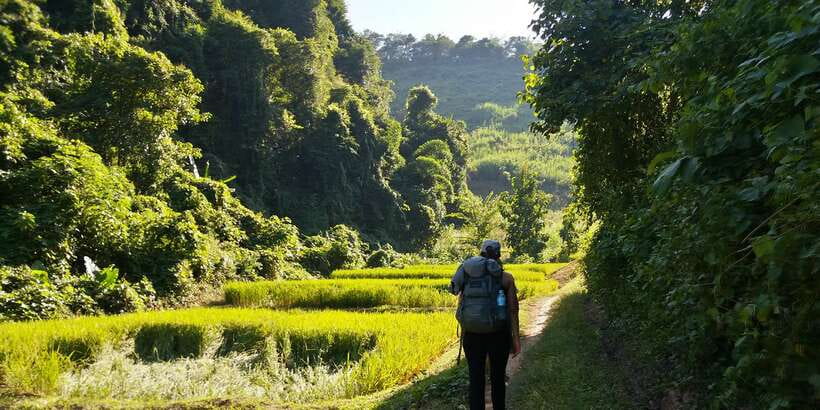
The homestays are central to the trip, but you should know what you are accepting. The accommodation is described as homestay-type lodging with basic comfort. Facilities may include very simple toilets and washing areas, and there is no promise of hotel plumbing or a private bathroom.
There is also no electricity for charging camera batteries during the trek. Solar panels may provide some village power, but you should plan as if charging will not be available. Take a power bank, keep electronics protected from rain, and consider using your phone camera sparingly.
Pack light, but do not pack too lightly. Comfortable shoes are essential, and water shoes help at the river. Bring dry clothing for the evenings, insect repellent, and layers suited to the weather. The trip runs in rain or shine, and wet conditions make the trails slower and harder.
This is also not the place for a rigid schedule. Rain can add time to the walks, and village life does not operate on a city timetable. You will enjoy the trip more if you allow the guide to set a sensible pace.
The Guide Makes the Difference
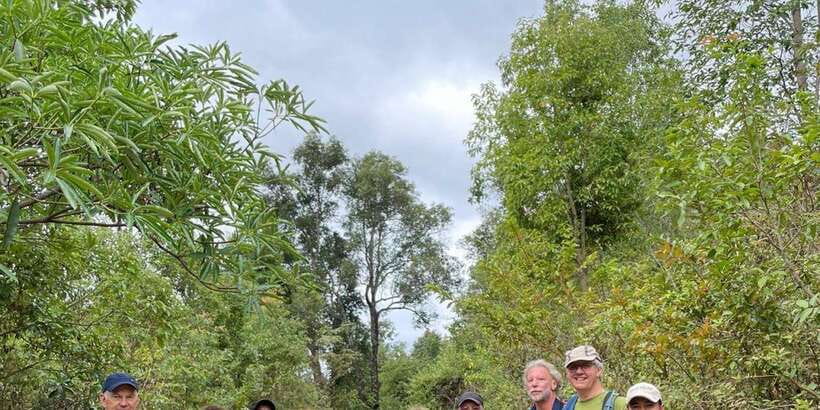
A good guide is especially important on a remote trek. The guide handles the route, boat crossings, village introductions, meals, and cultural explanations. Just as important, the guide helps you understand how to behave in homes and community spaces.
Aroun is specifically praised for explaining nature and culture, and for making a remote village visit especially engaging. Chan is praised for his explanations of different mountain communities, rituals, plants, and animals. Guide availability can vary, so you should not assume either person will lead your departure, but these examples show the level of interpretation this trip can offer.
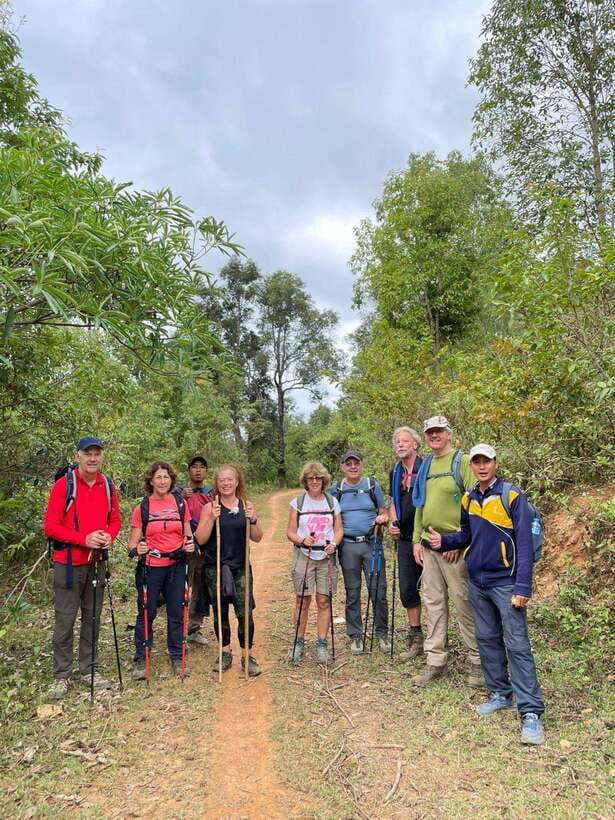
The language listed is English. Private and small-group options are available. A smaller group should make village visits and conversations easier, while a private trip gives you more control over pace and stops. The exact group size should be confirmed when booking.
Who Will Enjoy This and Who Should Skip It
I would recommend this trek to you if you want rural contact, long walks, and a real break from Luang Prabang’s tourist center. It suits hikers who are comfortable with heat, mud, simple sleeping arrangements, and uncertain weather.
It is also a good fit if you care more about time in a community than polished attractions. The most rewarding parts are likely to be dinner with a Hmong family, a morning of village activity, the chance to see schools and farms, and the conversations made possible by staying overnight.
I would not recommend it if you have limited mobility or are pregnant. The activity is not suitable for people with mobility impairments, and the three days include several hours of walking each day, with a six to seven hour mountain route on day three.
You should also think carefully if you dislike basic sanitation or need regular access to electricity. The lack of charging, simple toilets, and basic washing facilities are not minor details here. They shape the trip.
Price, Timing, and Practical Value
The $360 price includes transport, boat crossings, meals described in the schedule, an English-speaking guide, taxes, permits, village fees, and homestay accommodation. Specialty drinks cost extra.
For me, the price makes sense if you would otherwise spend money on several separate activities around Luang Prabang. Here, transport, guiding, accommodation, meals, and access to remote villages are bundled into one organized trip. The value is strongest for people who want an experience that would be difficult to arrange independently.
The trip also offers free cancellation up to 24 hours before departure and a reserve-now, pay-later option. Those policies are useful if your Laos plans are still changing, but the more important decision is personal: are you willing to trade comfort for access?
Should You Book This Trek?
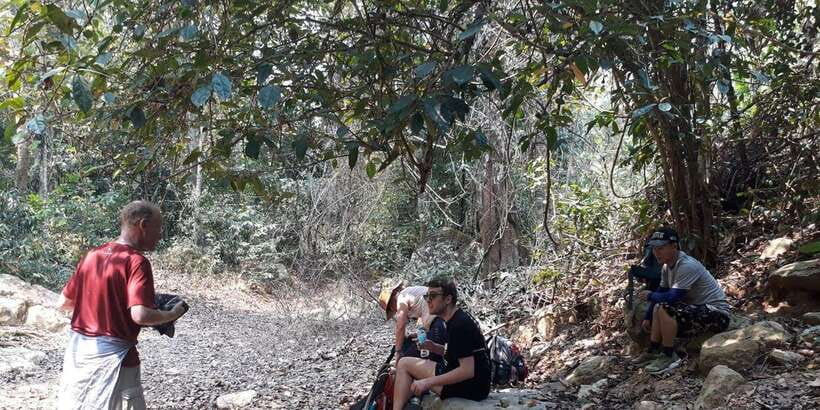
Book it if you want remote village life, serious walking, and genuine cultural contact rather than a comfortable sightseeing loop. The two overnight stays, local trails, mountain farms, and long final hike give the trip more substance than a quick village excursion.
Skip it if you need dependable electricity, private facilities, or an easy walking schedule. For the right person, $360 buys three days of mountain life and a rare chance to stay in communities far from the usual route. For the wrong person, the same simplicity will feel like a hardship.
FAQ
Where does the trek meet in Luang Prabang?
You meet at the Tiger Trail Travel office on the same street as Villa Maly hotel. The meeting time is 8:20 a.m. for an 8:45 a.m. departure. Optional hotel pickup is available.
How long is the walking each day?
Day one includes four to five hours of medium-grade walking. Day two lasts about four hours. Day three is the longest, with six to seven hours of hiking to mountain tops and down to the Nam Xeuang River.
Where do you sleep during the trek?
You stay in homestay-type accommodation in remote Hmong and mixed Hmong-Khmu villages. Conditions are basic but comfortable, with simple toilets and washing facilities.
Is electricity available during the trek?
There is no electricity for charging camera batteries for the duration of the trip. Some villages use solar panels, but you should bring a power bank and plan not to charge your devices.
What should you bring?
Bring comfortable shoes, a change of clothes, insect repellent, water shoes, and clothing suited to the weather. Keeping your luggage light is important because you carry what you need during the walks.
Does the trek operate in bad weather?
The trek takes place rain or shine. Rainy-season conditions can make the trails more challenging and may increase the time needed for the walks.
Recently added around Laos
- Day Trek to Kuangsi Waterfall and Bear Sanctuary – Luang Prabang full day tour★ 5.0 · 9 reviews
- Trek to Tad Sae Waterfalls, Local Village★ 4.5 · 2 reviews
- The Ultimate Hiker’s Choice – 5 days forest trek with homestay and camping★ 5.0 · 8 reviews
- 2 Days Multi Adventure in Nam Ha NPA: Trek and Kayak★ 5.0 · 2 reviews
- Nalan Trail and Khmu Tribe: 2 Days Trek in Nam Ha NPA★ 5.0 · 5 reviews
- 2 Days Treking,Lao+hmong+khmu,Waterfall and Kayaking At NongKhiaw★ 5.0 · 2 reviews
- Nong Khiaw: 2-Day Trekking,Hmong village,Home Stay&Kayaking★ 4.9 · 17 reviews
- Luang Prabang Trekking LongLao to Kuang si falls full day★ 4.7 · 7 reviews
Homestay & Village Treks, compared.
Number one top rated ethical cultural trekking and homestay by ETHOS
Read our review →
2-Day Sa Pa Ethnic Homestay Tour & Trek with Limousine Bus
Read our review →
Sapa 3 Day 2 Night Trekking With Hotel & Homestay
Read our review →
Sapa 2 Days 1 Night Overnight At Local Homestay
Read our review →
2-Day Trekking Trip with Ethnic Minority Homestay
Read our review →
2-Day Trek & Heartwarming Homestay with an Ethnic Family
Read our review →Browse the lists this tour appears in