
REVIEW · RISHIKESH
5 Days Kedarkantha Trek
Big views reward steady legs. This five-day Kedarkantha trek takes you from Dehradun through Mussoorie, Sankri, frozen Juda Ka Talab, and up to a 3,429-meter Himalayan summit. I like the all-in-one setup, with transport, meals, tents, guides, cooking staff, safety equipment, and forest fees covered. I also like the human touch: guides such as Rocky, Kamesh, Megha, Sonu, Aarya, and Arjun are repeatedly praised for staying close to the group and helping people reach the top.
The main caution is simple: this is not an effortless beginner walk. The altitude, snow, long first-day drive, sharp climbs, and early summit push demand moderate fitness. At $120 per person, the package offers strong value, but personal luggage, insurance, medicines, tips, and some transport costs remain your responsibility.
Five things to know before you book
- A long road to Sankri: Day one includes roughly 12 hours from Dehradun, with Mussoorie, Kempty Falls, the Yamuna valley, Mori, and the Tons River along the way.
- Two nights at high altitude: You camp near Juda Ka Talab and then at the Kedarkantha base camp, which sits at about 3,429 meters.
- The summit is the prize: Kedarkantha gives you wide views toward Uttarakhand peaks, the Chaainsheel Pass, the Kailash ranges of Himachal, and Har Ki Dun.
- Practical camping support: Sleeping bags, mattresses, crampons, toilet tents, kitchen tents, meals, first-aid supplies, and portable oxygen are included.
- Good for a private group: A customized group can be arranged, but it must contain at least six people. The maximum group size is 25.
- Cold-weather reality: Snow and freezing conditions make the trek beautiful, but also tougher than the easy label sometimes suggests.
The real value of the $120 package
The price is unusually useful because it covers the expensive and awkward parts of a Himalayan trek. You get transport from Dehradun to Sankri and back, a guide, cook, support staff, camping equipment, three nights in alpine tents, one night in a guesthouse, and most meals.
That matters because hiring or buying cold-weather gear alone can quickly change the cost of a short trek. The package also includes crampons, sleeping bags, mattresses, tables, stools, kitchen tents, and toilet tents with portable toilet seats. A mule carries the listed camping equipment, so you are not asking your own legs to haul the kitchen and sleeping arrangements uphill.
The price does not cover everything. A mule for personal luggage costs INR 500 per bag per day. Personal medicine, tips, phone calls, adventure insurance, and costs caused by bad weather or medical problems are also excluded. You will need to arrange accommodation on the final day if you do not continue home, with suggested hotel prices ranging from INR 1,600 to INR 3,000 per room.
For a five-day trek with transport and meals included, I consider the price good. Just do not read $120 as the final cost of every possible need.
A few more treks around India worth a look
- Annapurna base camp trek 5 Days
★ 5.0 · 252 reviews - Kathmandu to Annapurna Base Camp (ABC) 5-Day Trek
★ 5.0 · 102 reviews - Machu Picchu: 5-Day Salkantay Trek with Panoramic Train
★ 5.0 · 79 reviews
Day one: Dehradun to Sankri by the scenic mountain road
The trip begins at Prince Chowk in Dehradun. The stated start time is 12:00 am, so confirm the exact pickup arrangement before you arrive. The drive to Sankri takes about 12 hours, making this the least active but most tiring day.
The road passes through Mussoorie and includes a stop at Kempty Falls. You then follow the Yamuna valley, with a breakfast stop overlooking the river. This is a fine way to break up the journey, though you should expect a full day inside the vehicle.
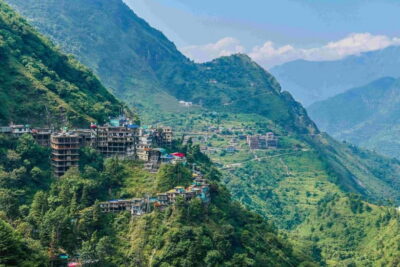
After Mori, the setting changes. Forests line the route beside the Tons River, known for rafting and kayaking rapids. At Netwar, you reach the gateway to Govind Wildlife Sanctuary. Sankri arrives by early evening at an altitude of 1,920 meters.
I like this route because it gives you a proper sense of moving from city life into the mountains. You are not simply dropped beside a trailhead. The road itself introduces the rivers, forests, villages, and mountain valleys that shape the trek.
The drawback is the length. If you dislike long road journeys, day one may feel harder than expected. Keep water, snacks, personal medicine, and a light layer close by rather than buried in luggage.
You spend the night in a guesthouse on a triple-sharing basis. That is practical rather than luxurious, and it gives you a bed before the trail begins.
Day two: Sankri to Juda Ka Talab through pine and maple forest
After breakfast, you walk from Sankri toward Juda Ka Talab. The stated distance is about 4 kilometers, usually taking two to three hours, although the climb can feel more demanding than the numbers suggest.
The trail begins near village life. You may see children heading to school and local women starting their daily work. The route crosses toward Saud before entering the forest. I like this early section because it feels connected to everyday life rather than sealed off as a resort-style activity.
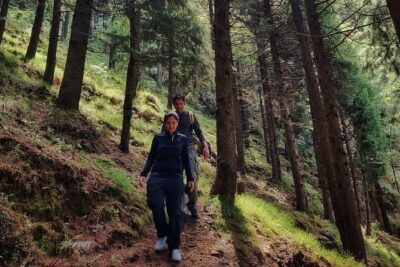
Once inside the pine and maple forest, the path climbs sharply to a ridge. The ridge then becomes wider and more even. Dense trees block much of the sun, making the walk cooler and more comfortable than an exposed slope.
Juda Ka Talab sits at about 2,774 meters. In winter, the lake freezes and the camp can receive heavy snow. This is where the trek begins to feel properly alpine. Your evening is built around a tent, cold air, and a setting that changes greatly with the season.
The short distance is friendly for a first trekking day, but do not rush. The increase in altitude matters more than the mileage. Walk at a steady pace, drink regularly, and let your guide know early if you feel unwell.
The camping equipment is supplied, including sleeping bags and mattresses. A portable toilet seat is also provided. That may sound like a minor detail, but it makes a difference at a snowy camp where ordinary facilities are limited.
Day three: Juda Ka Talab to the Kedarkantha base camp
The third day covers about 3 kilometers and takes around two to three hours. You continue through dense pine forest, pass a meadow with shepherds’ huts, and climb toward the Kedarkantha base camp.
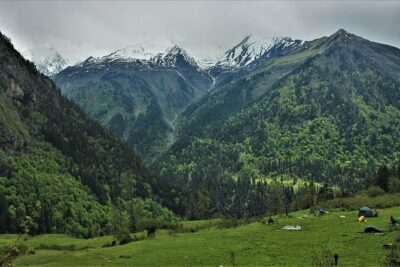
The forest section is one of the most attractive parts of the route. The trail is described as especially appealing to photographers and nature lovers, and that makes sense. The mix of dark trees, open meadow, mountain air, and possible snow gives you plenty to look at without needing a grand viewpoint every few minutes.
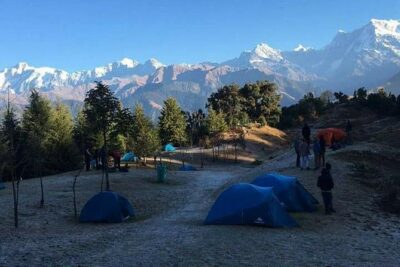
The base camp sits at roughly 3,429 meters. The air is colder here, and the camp can feel colder than the summit because there is less insulation around the site. That detail is worth remembering when packing. A summit day may be physically harder, but the base camp can be the place where cold affects you most at night.
From camp, you can see several Uttarakhand peaks. The view begins before the summit, which helps make the overnight stay feel worthwhile rather than just functional.
This is a short walking day, but altitude again changes the effort. You may arrive with time to rest, take photographs, and prepare for the summit. Use that time wisely. Eat, drink, organize your layers, and avoid treating the afternoon as a race around camp.
The package includes lunch, dinner, breakfast, and camp support, although the exact meal schedule should be confirmed with the operator. Food quality receives strong praise, with repeated approval for warm meals even in very cold conditions. That is one of the better reasons to choose an organized service here: a hot meal at altitude is not a small luxury.
Same trailhead, a longer or shorter day out:
- Half day trekking (munnar valley Trekking & Tours )
★ 5.0 · 310 reviews - Nag Tibba 2 Days Trek (Pantwari to Pantwari)
★ 5.0 · 274 reviews - Bhrigu Lake and Alpine Meadow Trek
★ 5.0 · 121 reviews - Har Ki dun Trek by Himalaya Shelter
★ 5.0 · 102 reviews
Day four: Kedarkantha summit and the return to Juda Ka Talab
Summit day is the heart of the trip. The walk from base camp to the top is not long in distance, but the altitude, cold, snow, and steep sections make it the most demanding part.
At the summit, a stone arrangement with a Trishul points toward the sky. The top reaches about 3,800 meters, although the supplied itinerary gives the base camp altitude rather than a separate summit altitude. From here, you can see across Uttarakhand toward the Chaainsheel Pass and the Kailash ranges of Himachal. Har Ki Dun valley is also visible below.
The 360-degree view is the reward for every slow step. On clear days, this is the kind of mountain top where you will want to stop taking photographs for a moment and simply look around.
Kedarkantha means the throat of Lord Shiva. Local legend connects the peak with the original site intended for the Kedarnath temple. The story says Lord Shiva, disguised as a cow, hid from the Pandavas, and the place became linked with his throat. The legend adds a spiritual layer to the summit without taking anything away from the physical achievement.
The summit section is listed as about two hours, but treat that as an approximate walking time rather than a promise. Snow and weather can change the pace. Crampons are included, which is important on icy sections, but they do not remove the need for careful footing.
After the summit, you return to Juda Ka Talab for another night. This makes day four a long and tiring day, even though the listed summit walk is short. Your guide’s role matters here. Names including Aarya, Arjun, Rocky, Kamesh, Bharadwaj, Sonu, Megha, and Surender Rana receive particular praise for support, encouragement, and keeping people together.
I would pay close attention to the guide on summit day. A supportive guide can help with pacing, rest stops, equipment, and the decision to turn around if conditions become unsafe. The operator also carries a first-aid kit with an oximeter and portable oxygen cylinder, which provides useful safety support, but it is not a substitute for proper acclimatization or travel insurance.
Day five: Back to Dehradun
The final day returns you to Dehradun by road. You follow the same attractive route, with the forest gradually giving way to wider roads and city traffic.
After several days of walking, this drive may feel long. Still, the changing scenery gives the journey a satisfying closing chapter. You move from snowy camps and pine forest back toward the meeting point at Prince Chowk.
Accommodation on the last night is not included. If your onward travel does not begin immediately, budget for a hotel. The suggested range is INR 1,600 to INR 3,000 per room.
Food, tents, guides, and comfort in the cold
The strongest part of the service is its practical support. You are not expected to arrange the camp kitchen, carry shared equipment, or figure out toilet facilities in the snow.
The package includes:
- A professional guide, cook, and support staff
- Sleeping bags and mattresses
- Alpine tents on a twin-sharing basis for three nights
- A triple-sharing guesthouse night in Sankri
- Kitchen and common tents
- Toilet tents with portable seats
- Tables and stools for camp use
- Crampons
- First-aid supplies, an oximeter, and a portable oxygen cylinder
- Mule support for the shared camping equipment
Food receives especially warm praise. The supplied feedback repeatedly points to good meals, warm water, and staff who keep serving food in very cold conditions. One practical note is that a lunch box for packed meals is not included. You should also avoid assuming that every personal item will be supplied simply because the camp equipment is covered.
The tent arrangements are comfortable by trekking standards, but you are still sleeping at altitude in winter conditions. A cozy tent is not a heated hotel room. Pack warm layers and be ready for basic facilities.
Who this Kedarkantha trek suits best
This trek suits you if you want a guided Himalayan snow experience without arranging every detail yourself. It is particularly useful for first-time Himalayan trekkers who are willing to train and accept basic camp life.
It also works well for a group of friends or family members. A customized group is possible with at least six people, and the maximum group size is 25. A smaller private group may give you more control over pace and camp routines, while a larger group can bring more social energy but may require patience.
You should have moderate physical fitness. The trek is often described as suitable for beginners, but the actual demands include altitude, cold, uneven ground, steep climbs, and a summit day. Start preparing with regular walking, stair climbing, and uphill exercise before arrival.
This is less suitable if you want a relaxed mountain holiday, private hotel rooms, or a short transfer from the airport to a scenic camp. The first and last road journeys are long, and the camping is basic by design.
Booking details, group size, and cancellation rules
The activity starts and ends at Prince Chowk in Dehradun, not in central Rishikesh, despite Rishikesh being given as the general location. Confirm this point carefully before booking flights or trains.
Confirmation is provided at booking, and the activity is near public transportation. The group can contain up to 25 people. A minimum number is required, and a customized group must have at least six people.
The cancellation terms are strict close to departure. Cancel at least six full days before the start for a full refund. A cancellation two to six full days before the start receives a 50 percent refund, while cancellation less than two full days before departure is nonrefundable. Poor weather or failure to meet the minimum group size may lead to a new date, another experience, or a full refund.
Should you book the Kedarkantha trek?
I would book this trek if you want a well-supported snow trek at a reasonable price and you are ready for real physical effort. The included transport, equipment, meals, guides, safety kit, and mule support remove much of the planning burden.
I would not book it casually just because it is marketed as beginner-friendly. The road days are long, the base camp is cold, and the summit can be tough. Come prepared, confirm the Dehradun meeting details, insure yourself, and budget for personal luggage and the final night.
For a prepared walker, this is a strong introduction to Himalayan trekking. The frozen lake, pine forest, snowy camps, and wide summit views give you the memorable parts, while the support team handles much of the difficult logistics.
FAQ
Where does the Kedarkantha trek start and finish?
It starts and finishes at Prince Chowk, Dehradun, Uttarakhand. Transport to Sankri is provided on day one, and the return drive to Dehradun is included on the final day.
How long does the trek last?
The experience lasts approximately five days. The itinerary includes one day driving to Sankri, three trekking and camping days with the summit attempt, and a final day returning to Dehradun.
What accommodation is included?
You receive one night in a triple-sharing guesthouse in Sankri and three nights in twin-sharing alpine tents. Accommodation on the final day is not included.
Are meals included?
Yes. The package includes four breakfasts, three lunches, and four dinners. A lunch box for packed meals is not included.
Is personal luggage carried by mule?
Mules carry the included camping equipment. Personal luggage can be carried by mule for an additional cost of INR 500 per bag per day.
What happens if bad weather cancels the trek?
If poor weather causes cancellation, you are offered a different date or a full refund. A minimum number of participants is also required, and cancellation for that reason gives you the option of another date or experience, or a full refund.
Recently added around India
- Prashar Lake Trek★ 5.0 · 7 reviews
- Jogini Waterfall Trek from Manali★ 5.0 · 2 reviews
- Kasol + Kheerganga Trek 3D/2N, all inclusive with BanBanjara★ 3.5 · 3 reviews
- 8 Days Markha Valley Trek: Shared Tour with Meals Included★ 5.0 · 3 reviews
- Ladakh One Day Trek- Gyamtsa to Phyang Village★ 5.0 · 4 reviews
- Ladakh Sham Valley Trek★ 5.0 · 7 reviews
- 1 Day Activity Adventure Trekking Kerala★ 5.0 · 5 reviews
- Kolukkumalai Trekking with Night stay in Tent★ 5.0 · 2 reviews
Rishikesh Trekking Tours, compared.
Browse the lists this tour appears in