
REVIEW · MOSHI
8 Day Kilimanjaro Trek via Lemosho Route
Kilimanjaro rewards patience. Soraka Tours’ Lemosho trek takes you from rainforest to alpine desert, with quieter trails, careful acclimatization, strong mountain support, and a sunrise summit attempt on Uhuru Peak. I like the gradual route profile and the serious attention to health, including twice-daily oxygen checks and guides trained as Wilderness First Responders. I also like that meals, tents, transport, and park fees are bundled into one price. The main drawback is simple: the summit day can last 14 to 16 hours, and this is a demanding high-altitude climb, not a casual walk.
The trip is advertised as an eight-day trek, but the full program takes about 10 days. You arrive in Moshi on day one, climb for eight days including the summit push, then return to the hotel and airport on the final day. The price is $3,450 per person, which is a substantial sum, but it covers many costly pieces that can be awkward to arrange independently.
Key points to know before booking
- Lemosho begins at 7,824 feet: You start in thick rainforest before climbing through moorland, high desert, and volcanic terrain.
- The itinerary uses high-and-low acclimatization: Day five climbs to Lava Tower at 15,091 feet, then descends to sleep at Barranco.
- Summit day is the real test: You leave Barafu in the early morning, reach Uhuru Peak at 19,340 feet, and descend to Mweka Camp in 14 to 16 hours.
- The safety plan is unusually clear: Guides are certified Wilderness First Responders, and the team conducts two daily health checks with an oximeter.
- Meals suit several diets: Vegetarian, gluten-free, halal, and kosher meal plans can be arranged.
- The price includes the major logistics: Park, rescue, and camping fees, airport transfers, hotel nights, mountain meals, tents, mats, and ground transport are included.
Why Lemosho is worth the extra days
Kilimanjaro has several routes, and Lemosho is prized for its slower start and varied scenery. You do not rush straight toward the upper mountain. Instead, the route begins at Lemosho Gate and winds through rainforest before reaching the Shira Plateau.
That gradual change matters. At altitude, the strongest person in the group is not always the person who reaches the summit. A slower ascent gives your body more time to adjust, and the itinerary includes a particularly useful high-climb, low-sleep day. You climb above 15,000 feet at Lava Tower, then sleep at about 12,959 feet in Barranco Camp.
I also like the variety packed into this route. You move through lush forest, open highland, rocky volcanic ground, and the pale alpine desert near the summit. The mountain does not look the same from one day to the next, which helps keep the long walking hours interesting.
The tradeoff is time. You need to reserve roughly 10 days for the full program, plus international flights and any extra time you want in Tanzania. This is not the right trip for someone hoping to squeeze Kilimanjaro into a long weekend.
More Kilimanjaro Climbs in Moshi
- Best Kilimanjaro Adventure 7 days Machame route Trekking
★ 5.0 · 42 reviews - Kilimanjaro 7 Day Private Trekking Experience
★ 5.0 · 40 reviews - 6 Days Machame Route Kilimanjaro Climbing Trekking Tour
★ 5.0 · 34 reviews
Moshi arrival and the first night
Your first day is deliberately easy. Soraka Tours collects you at Kilimanjaro International Airport and takes you to a hotel in Moshi, with accommodation at Kili Wonders Hotel or a similar property.
A pre-climb briefing takes place before the mountain portion begins. This is important because it gives you a chance to check equipment, ask questions, and understand the rhythm of the trek before you leave town. The two hotel nights, including breakfast, are part of the package.
Lunch and dinner at the hotel are not included, so you should budget for those meals. Alcohol is also excluded. That is a small cost beside the price of the climb, but it is worth knowing before you arrive.
Day two: rainforest from Lemosho Gate to Mti Mkubwa
The climb starts at Lemosho Gate, at 7,824 feet. From here, you walk through lush rainforest to Mti Mkubwa Camp, at 9,251 feet.
The first hiking day takes about three to four hours. That is a manageable introduction, though you should not mistake the short distance for an easy holiday walk. The trail is already rising, and the forest can feel damp and uneven.
This is one of the most appealing parts of Lemosho. You begin among dense vegetation rather than on a bare, crowded trail. The route gives you time to settle into the group’s pace, get used to carrying your day pack, and learn how the mountain crew operates.
Your porters carry the larger equipment, while you carry only your day pack. Pack that small bag carefully. It needs to hold the items you may want during the day, while everything else travels ahead with the support crew.
Day three: above the forest at Shira 1
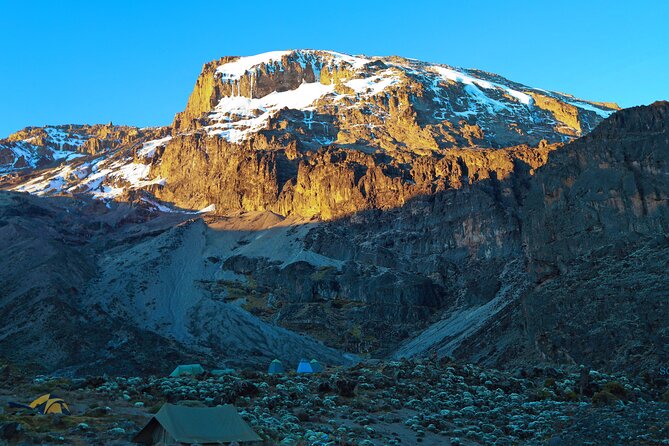
From Mti Mkubwa, you hike to Shira 1 Camp at 11,499 feet. The route takes about five to six hours and gradually moves above the forest line.
This is where the mountain begins to feel more open. Vegetation becomes lower and less dense, and the air feels thinner. The climb is not yet the hardest section, but the elevation gain is noticeable.
The pace is important here. Soraka’s guides have more than a decade of climbing experience each, and the best use of that experience is not speed. It is setting a pace that lets you keep walking without exhausting yourself too early.
The distance and altitude can affect people differently. You may feel fine at the start and more tired by camp. Take the guide’s instructions seriously, drink regularly, and speak up if you feel unwell.
Same trailhead, a longer or shorter day out:
- Kilimanjaro Trekking 7Days 6Night Lemosho Route
★ 5.0 · 23 reviews - Top 6 Days Mt. Kilimanjaro Bike trek Tour by Marangu-Kilema Route
★ 5.0 · 15 reviews - 6 Days Mount Kilimanjaro Trek Marangu Route
★ 5.0 · 15 reviews - Kilimanjaro Trek 7 Days – Machame Route
★ 5.0 · 13 reviews
Day four: crossing the Shira Plateau
Day four runs from Shira 1 to Shira 2 Camp, at 12,598 feet. The walk takes approximately four to five hours and crosses the Shira Plateau.
This day brings a noticeable shift in scenery. You are now in a high-altitude setting with less vegetation and a broad, open feel. The changing climate zones are one of the route’s strongest features, and this section makes that clear.
The distance is moderate, but the elevation keeps the day from feeling effortless. I would treat it as an acclimatization day, not a sightseeing stroll. The mountain may look calm here, but your body is working harder than it would at low altitude.
Sleeping at Shira 2 also helps prepare you for the more serious days ahead. You are gaining height in measured steps rather than making one enormous jump toward the summit.
Day five: Lava Tower and Barranco Camp
This is the most carefully designed acclimatization day of the trek. You climb from Shira 2 to Lava Tower, reaching 15,091 feet, then descend to Barranco Camp at 12,959 feet.
The hiking time is about six to seven hours. The route exposes you to a higher altitude during the day, but you sleep lower than your highest point. That high-climb, low-sleep pattern is one of the most valuable features of the itinerary.
You should expect this day to feel harder than the previous ones. The altitude may bring headache, nausea, tiredness, or shortness of breath. The crew performs two health checks daily using an oximeter and specific questions about how you feel. That does not remove the risk of altitude illness, but it gives the guides a regular way to monitor changes.
The company supplies emergency oxygen and a medical kit. Those are useful safeguards, but they are not a substitute for travel insurance and mountaineering insurance, both of which are strongly recommended.
Barranco Camp is also a psychological turning point. You have now seen the upper mountain up close, and the next days involve steeper terrain and a more serious effort.
Day six: the Barranco Wall to Karanga
From Barranco Camp, you climb the famous Barranco Wall and continue to Karanga Camp, at 13,106 feet. The walking time is about four to five hours.
The wall sounds intimidating, but the key issue is not technical climbing equipment. It is careful movement on steep, rocky ground. You should follow the guide’s pace, keep your hands available for balance, and avoid trying to hurry past slower sections.
This is a shorter day than the Lava Tower day, which gives you useful recovery time. Even so, the route continues upward, and fatigue has a way of accumulating. Good guides matter here because they can help you choose a steady line and keep the group together.
Karanga is the last camp before the final approach to Barafu. You are close to the summit schedule now, so use the afternoon and evening to rest, organize your summit clothes, and prepare your day pack.
Day seven: Barafu Camp and the final preparation
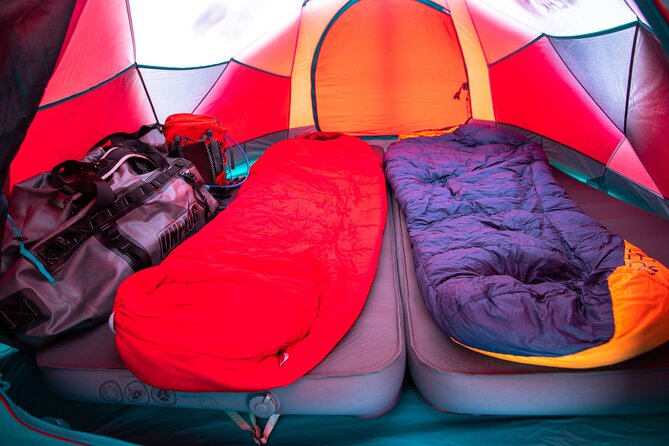
The walk from Karanga to Barafu Camp takes about four to five hours. Barafu sits at 15,223 feet and serves as the launching point for the summit attempt.
This is not a long day by distance, but it can feel demanding because the air is thin and the next departure comes early. You should not expect a full night of sleep before the summit. The schedule requires you to rest as much as possible, eat, and get your gear ready.
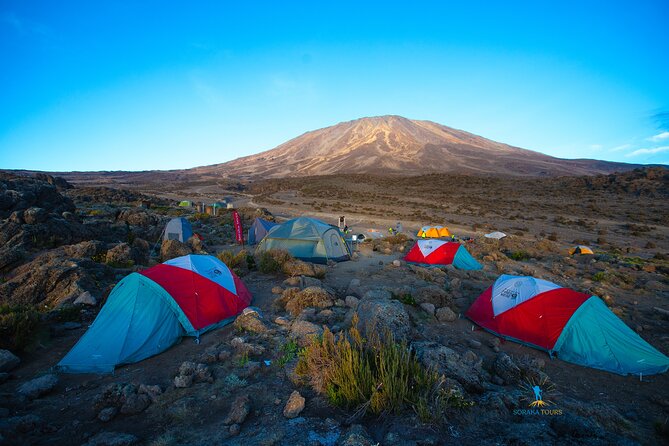
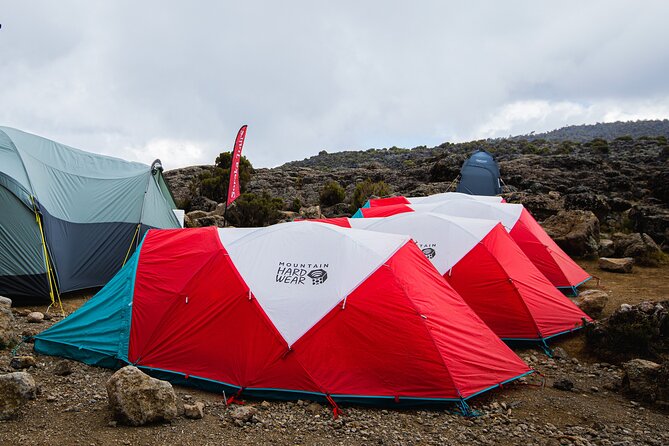
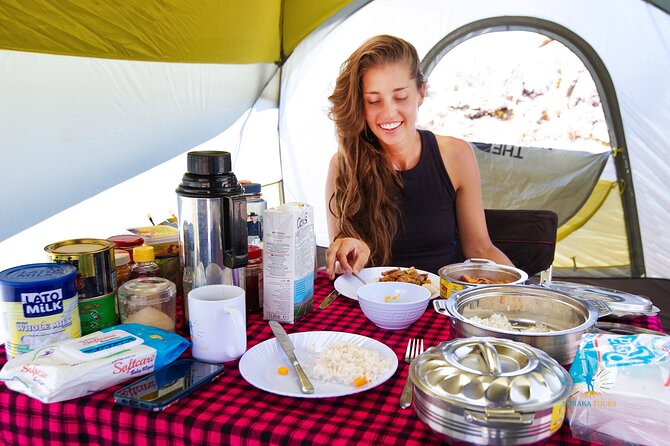
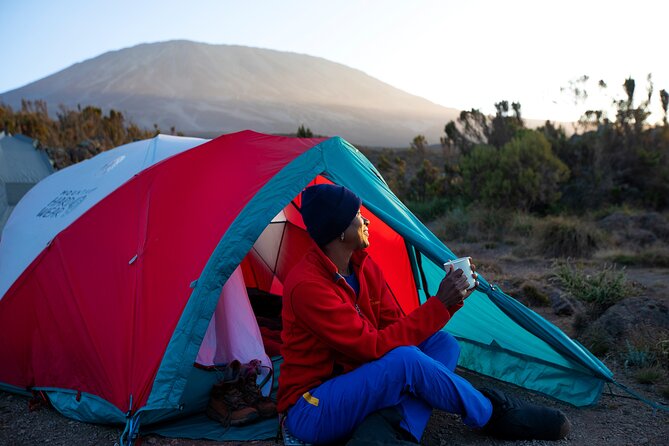
The company provides four-season Mountain Hardware tents, with two people per tent. Single tent accommodation is available for an extra charge. Warm sleeping mats and a dining tent with tables, chairs, and cutlery are included, so you are not simply sleeping on bare ground and eating from your lap.
The tented setup is a useful comfort on a long climb. Still, keep expectations realistic. This is mountain camping at high altitude, not a hotel room. The added structure helps, but cold, wind, and interrupted sleep remain part of the experience.
Day eight: Uhuru Peak and the long descent
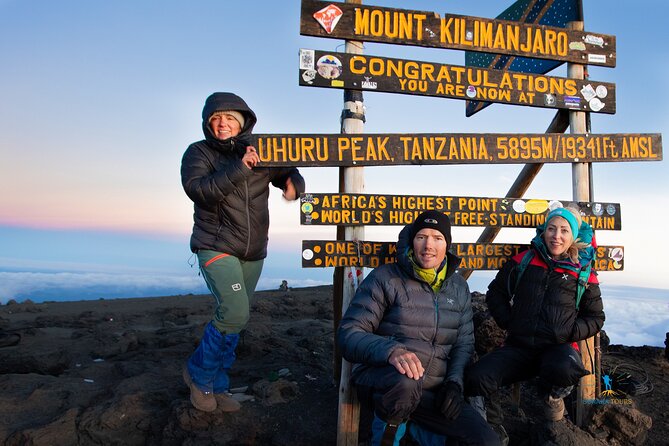
Summit day begins in the early morning at Barafu. You climb toward Uhuru Peak, at 19,340 feet, then descend all the way to Mweka Camp.
The total hiking time is listed at 14 to 16 hours. This is the day that demands the most from your legs, lungs, and concentration. You climb in darkness, reach the summit, spend a short time at the top, and then descend for many hours.
The reward is the summit view and the sense of completing Africa’s highest mountain. But the summit is not the only goal. Returning safely is just as important, and your guides should make decisions based on health and conditions rather than pressure to reach the top.
The supplied equipment includes emergency oxygen and a medical kit, while the guides bring experience and regular health monitoring. Even with this support, summit success cannot be guaranteed. Altitude affects people unpredictably, and turning around can be the correct decision.
The descent to Mweka Camp is welcome but tiring. Your knees and feet may feel the strain after the long ascent, so poles can be useful if you bring them. Personal climbing equipment, hiking boots, and sleeping bags are not included in the price, so you need to arrange those before departure.
Day nine: Mweka Gate and the return to Moshi
You descend from Mweka Camp to Mweka Gate, then return to the hotel for another night.
This final mountain morning is much shorter than summit day, but it still requires care. After several days at altitude, even a downhill walk can feel awkward. At the gate, the mountain portion ends and ground transportation takes you back to Moshi.
The extra hotel night is welcome. You can shower, sleep in a proper bed, and recover before your airport transfer. Breakfast is included at the hotel, but lunch and dinner are not.
What the $3,450 price really covers
At $3,450 per person, this is not a budget climb. The price becomes easier to judge when you look at what is included:
- Kilimanjaro National Park fees, including rescue and camping fees
- Airport pickup and drop-off at Kilimanjaro International Airport
- Ground transportation
- Two hotel nights in Moshi, with breakfast
- Mountain tents shared by two people
- Warm sleeping mats
- Three freshly prepared meals each mountain day
- Dining tent, tables, chairs, and cutlery
- Emergency oxygen and a medical kit
- Twice-daily health checks
- Certified Wilderness First Responder guides
- A professional climbing crew
That package reduces the number of separate arrangements you need to make. Park fees alone are a major part of a Kilimanjaro climb, and transport, food, porters, hotel rooms, and camping equipment add up quickly.
The strongest value comes from the operational support. A chef prepares three meals daily, and dietary plans can include vegetarian, gluten-free, halal, and kosher food. On a long climb, reliable meals are not a minor luxury. They help you maintain energy when appetite and altitude make eating harder.
Tips for the mountain staff are not included. You also pay separately for flights, visas, personal equipment, insurance, alcohol, and hotel lunches and dinners. Ask for current guidance on tipping before you go, since it is an important part of your final budget.
The people behind the climb
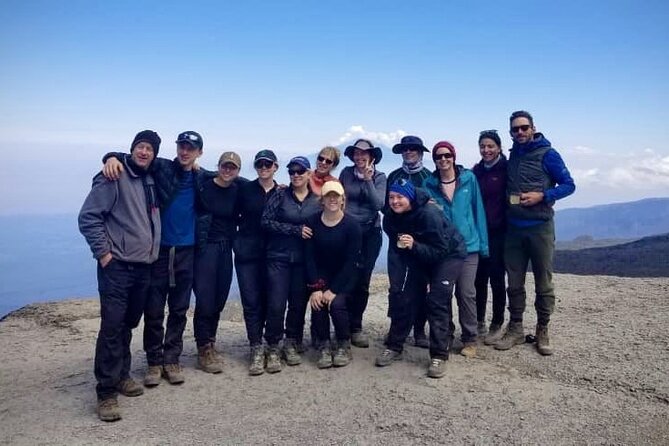
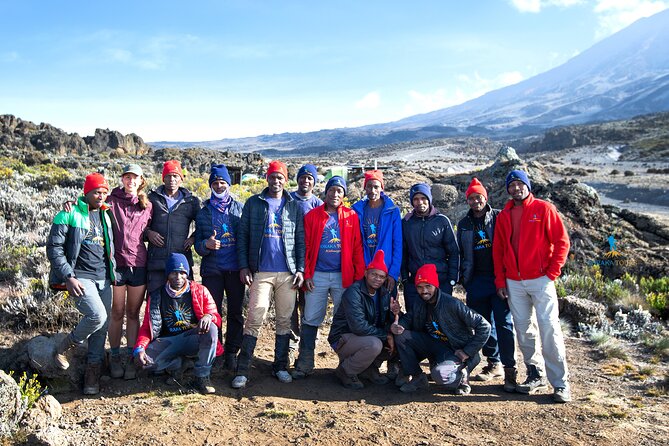
The most praised part of this program is the crew. The guides named in the supplied material include Baraka, Baltazar, and other Soraka team members. Baraka and Baltazar are described as warm, experienced leaders who share information about the mountain while keeping the group supported.
The company’s co-founder Sophia Naiditch is also involved in the operation and pre-trip communication. That matters if you are climbing from abroad and want help before landing in Tanzania.
The crew’s role goes beyond carrying bags and pointing out the trail. They prepare food, manage tents, monitor health, move equipment, and help maintain morale during difficult hours. Fair wages for the mountain crew, as set by KINPA, are also stated as part of the operation.
You should still ask how many guides and porters will be assigned to your group. The activity is private, meaning only your group participates, but the supplied information does not state a maximum group size.
Who should choose this Kilimanjaro trek?
I would recommend this route to someone who wants a supported, carefully paced climb and values scenery over the shortest possible itinerary. It suits people who are comfortable spending several nights in tents and walking for many hours at altitude.
You need a strong level of physical fitness. You do not need to be a technical mountaineer based on the information provided, but you do need to prepare for steep trails, cold conditions, limited sleep, and a 14 to 16-hour summit day.
This is also a good choice for people who want clear safety procedures. The daily oxygen checks, Wilderness First Responder guides, emergency oxygen, medical kit, and rescue fees give the trip a serious structure.
I would think twice if you dislike camping, have limited time, or are looking for a low-cost holiday. I would also avoid treating the summit as guaranteed. A responsible operator can improve your chances, but no company can control altitude, weather, or your health.
Should you book the Lemosho route with Soraka Tours?
I would book this trek if I wanted a well-supported Lemosho climb with meals, transport, accommodation, park fees, and health checks handled in one package. The crew support, food, and safety attention are the strongest reasons to consider it.
Before paying, confirm the current departure date, group size, equipment checklist, single-tent cost, tipping guidance, and the exact hotel. Also confirm what happens if a guide recommends that you stop for health reasons.
Choose this experience if you want to take the mountain seriously and have enough time for a gradual ascent. Skip it if you want a quick, inexpensive excursion. For a first Kilimanjaro climb, the route plan and strong support package make the $3,450 price reasonable, provided you budget separately for insurance, personal gear, visas, flights, and tips.
FAQ
How long does the complete Kilimanjaro experience take?
The full program takes approximately 10 days. It includes arrival and hotel time in Moshi, eight days connected with the mountain trek, a return night in Moshi, and airport drop-off.
What altitude does Uhuru Peak reach?
Uhuru Peak reaches 19,340 feet. The summit attempt begins from Barafu Camp, which is at 15,223 feet.
Is airport transportation included?
Yes. Pickup and drop-off at Kilimanjaro International Airport are included, along with other ground transportation during the program.
Are meals included?
Three freshly prepared meals each day on the mountain are included. Hotel breakfast is included during the two hotel nights, while hotel lunch and dinner are not included.
Can dietary requirements be accommodated?
Yes. Vegetarian, gluten-free, halal, and kosher meal plans can be accommodated.
Is camping equipment included?
Four-season Mountain Hardware tents, shared by two people, dining equipment, and warm sleeping mats are included. Sleeping bags, hiking boots, and other personal climbing equipment are not included.
What happens if I need to cancel?
You can receive a full refund if you cancel at least 24 hours before the experience start time. Cancellations or changes made less than 24 hours before the start time are not accepted for a refund.
Recently added around Moshi
- Mt Kilimanjaro Trek, 6 Days – Umbwe Route★ 5.0 · 4 reviews
- 7 Day Trek To The Roof Of Africa Kilimanjaro via Machame Route★ 5.0 · 5 reviews
- Mount Kilimanjaro Trek 7-Days: Lemosho Route★ 5.0 · 2 reviews
- 6-Day Kilimanjaro Machame Route – A Stunning Trek to Uhuru Peak★ 5.0 · 7 reviews
- 7-Days Tour Mount Kilimanjaro Trekking via Machame Route★ 5.0 · 2 reviews
- Trek To Mount Kilimanjaro★ 5.0 · 12 reviews
- Unforgettable 8 Days Lemosho Route Trekking on Kilimanjaro★ 5.0 · 4 reviews
- 6-Day Rongai Route Trek in Mount Kilimanjaro★ 5.0 · 8 reviews
Kilimanjaro Climbs, compared.
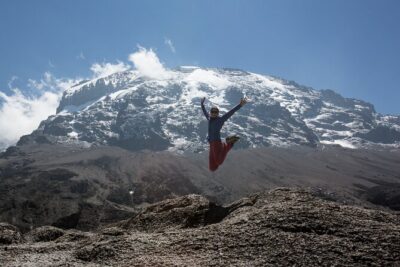
8-Day Small-group Lemosho Kilimanjaro Summit Trekking
Read our review →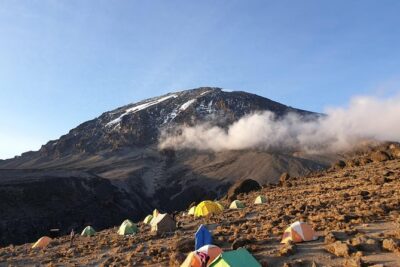
Best Kilimanjaro Adventure 7 days Machame route Trekking
Read our review →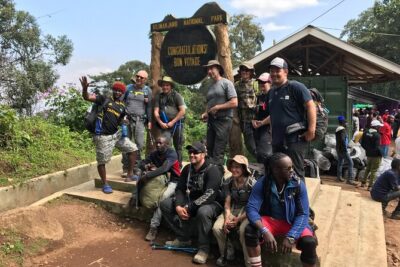
Kilimanjaro 7 Day Private Trekking Experience
Read our review →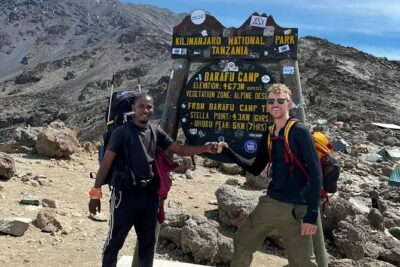
6 Days Machame Route Kilimanjaro Climbing Trekking Tour
Read our review →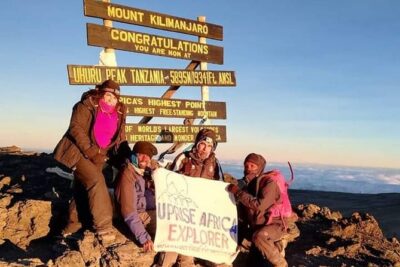
Kilimanjaro Trekking 7Days 6Night Lemosho Route
Read our review →
Top 6 Days Mt. Kilimanjaro Bike trek Tour by Marangu-Kilema Route
Read our review →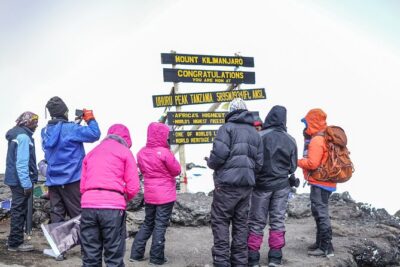
Browse the lists this tour appears in