
REVIEW · MOSHI
Kilimanjaro Trekking 7Days 6Night Lemosho Route
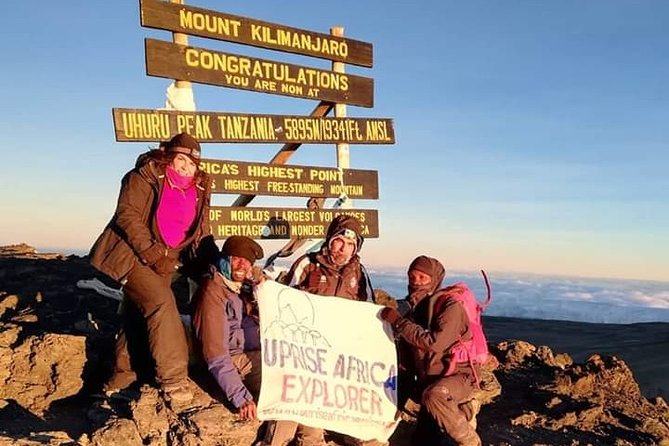
Africa’s highest summit demands patience. This seven-day Kilimanjaro climb follows the Lemosho Route, a scenic approach with fewer climbers, changing ecological zones, and a gradual start through forest before reaching the high volcanic slopes. Uprise Africa Explorer organizes the trek for groups of up to 10, with guides, park fees, camping equipment, meals, and transport arrangements included or offered.
I like the small group size, since it gives your guides more time to watch your pace and respond when altitude begins to bite. I also like the route itself: the moorland, Shira Ridge, Barranco Wall, and South Circuit offer more variety than a simple uphill march. The main caution is that this is a demanding climb, and the published itinerary has missing or repeated details for Days 3 and 6, so you should confirm the exact schedule before paying.
Key points to know before you book
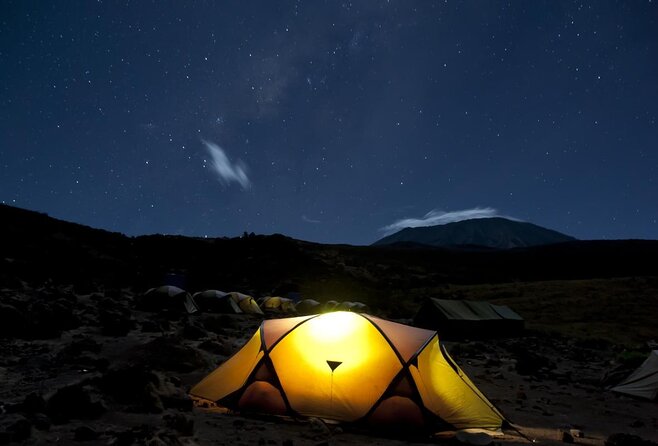
- Lemosho begins in remote western forest: Your first walking day is short, but the drive to Londorossi Park Gate takes about three hours from Moshi.
- The route reaches 3,850 meters by Day 2: Shira 2 Camp gives you early high-altitude exposure, though the long eight-hour hike can feel demanding.
- Barranco Wall is the route’s hands-on section: You climb a steep ridge before dropping into Karanga Valley.
- The summit schedule needs confirmation: Day 6 is not fully described in the supplied program, even though it is clearly intended to be the summit day.
- Meals and park costs are covered: The package includes all listed fees, seven lunches, six breakfasts, and six dinners.
- Uprise Africa Explorer receives strong praise for its mountain team: Guides named in the feedback include Francis, Sanga, Nguma, Peter, Kissima, and Innocent, while cook Schabari is singled out for his mountain meals.
Why Lemosho is worth the extra effort
Kilimanjaro is not a technical climbing trip in the usual mountaineering sense, but it is still a serious high-altitude trek. The mountain rises from warm lower slopes to cold summit conditions, and you cross several climate zones in only a week.
Lemosho is a good choice if you want scenery and a quieter start. The route is described as more scenic than Marangu, though tougher too. That tradeoff matters. You spend more time walking through open high country and around the mountain’s southern circuit, but you also face longer days and a steep summit push.
The first section feels less like a crowded mountain road and more like an approach through wild country. An armed park ranger joins the first forest section because buffalo, elephant, and other wildlife may be present. Sightings are not guaranteed, but the possibility adds a different character to the opening day.
More Kilimanjaro Climbs in Moshi
- Best Kilimanjaro Adventure 7 days Machame route Trekking
★ 5.0 · 42 reviews - Kilimanjaro 7 Day Private Trekking Experience
★ 5.0 · 40 reviews - 6 Days Machame Route Kilimanjaro Climbing Trekking Tour
★ 5.0 · 34 reviews
Day 1: Moshi to Mti Mkubwa Camp
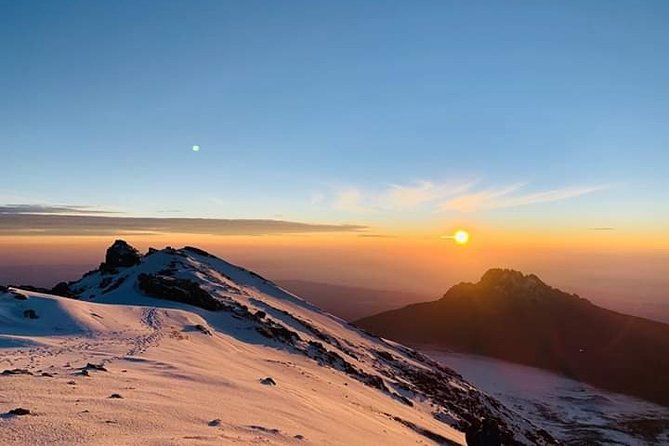
The day begins with a briefing and a gear check. This is a useful step, not a formality. Your guides can spot missing clothing, unsuitable footwear, or equipment that will become a problem higher up.
From Moshi, you drive for roughly three hours to Londorossi Park Gate. After registration, you begin walking with a park ranger through forest toward Mti Mkubwa Camp at 2,650 meters.
The walking itself is short, about two to three hours over six kilometers. That makes Day 1 a gentle physical beginning, but the long road transfer means it is not a lazy morning. You are also moving into a forest zone where the path may feel damp, shaded, and less open than later sections.
I like this opening because it gives your body time to begin adjusting. You are not thrown straight into a huge mileage day. Still, keep your expectations sensible. Wildlife is possible, not promised, and the real reward is the gradual change from the lower mountain to the high moorland.
Day 2: Shira Ridge and the first high camp
Day 2 is much longer, with seven to eight hours of walking over about 16 kilometers. The trail steepens as it leaves the forest and enters giant heather moorland.
This is one of the route’s most scenic days. Heather grows among volcanic rock formations, streams cut across the trail, and the mountain begins to feel wide and exposed. From Shira Ridge, you may see Uhuru Peak if the clouds cooperate. The Northern Icefields can also come into view on the western side of Kilimanjaro.
You finish at Shira 2 Camp, at approximately 3,850 meters. Reaching that altitude this early gives you useful exposure for acclimatization, but it also makes this a demanding day. The distance is not extreme by ordinary hiking standards, yet altitude changes the calculation. Walk slowly, drink as directed by your guide, and resist the urge to race ahead simply because the trail looks manageable.
This is where a small group helps. A guide can keep the pace steady rather than allowing the strongest walker to set the rhythm for everyone else.
Day 3: Confirm the missing middle section
The supplied itinerary repeats the first two days under Day 3 and does not clearly state the camp, distance, or walking time for this part of the trip. That is the biggest planning weakness in the program as presented.
A seven-day Lemosho climb normally needs a carefully structured middle section to help with acclimatization before the summit push. However, I would not fill in the missing details with guesswork. Ask Uprise Africa Explorer for the exact Day 3 route, camp elevation, distance, and expected walking time.
This is also the right point to ask how the six nights are divided between camps. The package is clearly intended to include six nights on the mountain, but the published text does not show every overnight stop in a clean sequence.
Same trailhead, a longer or shorter day out:
- 8 Day Kilimanjaro Trek via Lemosho Route
★ 5.0 · 17 reviews - Top 6 Days Mt. Kilimanjaro Bike trek Tour by Marangu-Kilema Route
★ 5.0 · 15 reviews - 6 Days Mount Kilimanjaro Trek Marangu Route
★ 5.0 · 15 reviews - Kilimanjaro Trek 7 Days – Machame Route
★ 5.0 · 13 reviews
Day 4: Barranco Wall and Karanga Valley
Day 4 covers about three to four hours and five kilometers, but this is not necessarily an easy day. You leave Barranco Camp and climb the Barranco Wall, a steep ridge rising to roughly 4,250 meters.
The climb to the top takes about an hour and a half. You do not need a technical climbing background based on the information provided, but you do need a steady head and willingness to use your hands at times on the steep sections. The route then levels out before descending into Karanga Valley at about 4,050 meters.
This up-and-down profile is typical of mountain acclimatization. You gain height, lose some of it, then sleep at a higher camp. It can feel inefficient when your legs are tired, but the changing elevations are part of the route’s design.
Karanga Camp connects with the Mweka Trail, which is important for the later descent. The short distance on paper can fool you. The Barranco Wall is the main event, and the effort is more about steepness and altitude than mileage.
Day 5: Barafu Camp and the final preparation
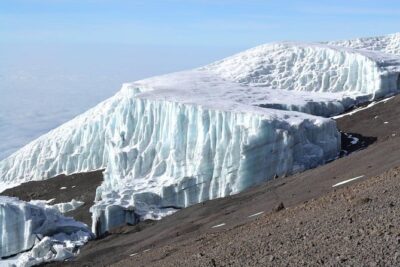
The walk to Barafu Camp takes about three to four hours over roughly four kilometers. You continue upward and complete the South Circuit, with views of the summit and glaciers from different angles.
Barafu means ice in Swahili, and the camp is the launch point for the summit section. The supplied information says you set up camp with views toward the summit. At this stage, the trip changes mood. The earlier days are about reaching new zones and enjoying the mountain. Barafu is about conserving energy for the hardest part.
Do not judge Day 5 by its short distance. You are climbing to a high camp, and the altitude can make a modest walk feel slow. Use the afternoon to rest, organize clothing, and check your headlamp, water, gloves, and summit layers. The program does not list a detailed summit departure time, so ask for that before you go.
Day 6: The summit day that needs a clear briefing
Day 6 is listed with five hours of activity, but the description is incomplete and does not explain the summit route, summit timing, or overnight plan. Since the trip is promoted as a climb to Uhuru Peak, this is almost certainly the central summit section, but you should have the operator confirm exactly what happens.
Summit day is where fitness, weather, pacing, and altitude all meet. You may be walking in darkness or cold conditions, but the available information does not give enough detail to state a departure time. Ask whether the program includes the ascent to Uhuru Peak, the descent to a lower camp, and the location of that night’s accommodation.
This missing information does not automatically make the trip poor. It does mean you should not rely on the short five-hour figure as a realistic picture of summit day. Request the full written schedule, including the approximate summit elevation, descent camp, and total walking time.
Day 7: Mweka descent and certificates
The final day begins at about 3,090 meters and continues downhill for three to four hours over 10 kilometers to Mweka Park Gate.
After reaching the gate, you receive your summit certificates, then meet the vehicle for the drive back to your hotel. The descent is usually a welcome change after the high mountain, but downhill walking can be hard on knees and tired feet. Trekking poles may be useful, though the supplied information does not state whether they are provided.
The return to Moshi also gives you a sharp contrast: from cold mountain camps to a hotel, shower, and ordinary road travel in a single day.
What the $3,000 price covers
At $3,000 per person, this is not a budget walk. The value depends on how much support you want and what is included in your final booking confirmation.
The package includes all fees and taxes, Kilimanjaro trekking, seven lunches, six breakfasts, and six dinners. It also states that camping equipment is included, and the tour summary says pickup is offered. Several published comments describe airport pickup and drop-off as part of their arrangements, but I would still confirm this in writing because the formal inclusion list is less specific.
A seven-day climb also means you are paying for a full mountain crew, permits, camps, food, transport, and logistical planning. The short daily descriptions do not show every cost behind the trip. That is why the price cannot be judged against a simple day-hike rate.
Ask whether sleeping bags, trekking poles, airport transfers, hotel nights, tips, and bottled drinks are included or charged separately. One published comment specifically recommends renting summit gear from the company, which suggests that some cold-weather equipment may be available as an add-on rather than automatically included.
The Tanzania visa is not included. The listed cost is $50 or $100 for American residents, payable on arrival at the airport. Check the applicable amount for your nationality before departure.
The mountain team and the human side
The strongest theme in the available feedback is the crew. Guides are repeatedly described as friendly, supportive, and organized, with particular praise for Francis, Sanga, Nguma, Peter, Kissima, and Innocent.
One solo climber, aged 67, completed the seven-day Lemosho route with the company. That does not mean the climb is easy or suitable for everyone of that age, but it does suggest that the team has experience adjusting support to different abilities.
The food also receives unusually strong praise. Cook Schabari is named for producing excellent meals on the mountain, and several comments highlight the quality of the cooking. This matters more than it may sound. After long days at altitude, a hot, reliable meal can make the difference between feeling restored and simply feeling depleted.
The crew includes guides, porters, and a cook. The published feedback is warm about their help and positive attitude. You should still ask how tipping is handled and how many crew members will be assigned to your group. Those details are not included in the supplied program.
Group size, timing, and who should choose it
The maximum group size is 10 people. That is small enough for closer contact with the guides, while still giving you company on long walking days.
The stated start time is 11:00 a.m. The first day also includes the three-hour drive to the gate, so confirm whether 11:00 a.m. means hotel pickup, the briefing, or departure from Moshi. Pickup is offered, but the exact arrangement is not spelled out.
This trip suits you if you want:
- A scenic route with fewer climbers
- A full seven-day climb rather than a rushed schedule
- A locally operated company in Moshi
- Meals, park costs, and camping arrangements handled for you
- A small group with direct guide support
- A route that includes forest, moorland, volcanic rock, ridges, valleys, and glacier views
It may not suit you if you want a simple itinerary with every hour and camp clearly listed before booking. The missing Day 3 and Day 6 details are worth resolving. It also may not suit anyone looking for a relaxed holiday. This is a high-altitude trek with long days and a demanding summit section.
Most participants can take part according to the supplied information, but the trip still requires a good level of walking fitness. The operator specifically describes it as suitable for most people, not effortless for everyone.
Booking advice and cancellation terms
Confirmation is provided at booking, and the maximum group size is 10. Because the summit schedule is not fully shown, request the complete day-by-day program before final payment.
The cancellation terms are strict close to departure. You can receive a full refund if you cancel at least six full days before the start time. Cancellation two to six full days ahead allows a 50 percent refund, while cancellation less than two full days before departure receives no refund.
If bad weather forces cancellation, you are offered another date or a full refund. Cutoff times use local Tanzanian time, so keep that in mind when making changes from another country.
Should you book the Lemosho trek?
I would consider this a strong choice if scenery, a smaller group, and attentive mountain support matter more to you than the lowest possible price. The route gives you a gradual forest start, open Shira highlands, the Barranco Wall, the South Circuit, and a proper seven-day schedule.
The company’s best qualities appear to be its guides, porters, cook, and personal service. The main thing holding me back from an unqualified recommendation is not the route or the crew. It is the incomplete itinerary.
Before booking, get written answers about Day 3, summit day on Day 6, sleeping bags, transfers, tips, hotel nights, and the exact summit descent plan. If those details are clear and the inclusions match your needs, $3,000 can be reasonable for a supported Kilimanjaro climb with meals, permits, camping, and a team handling the hard logistics.
FAQ
How long is the Kilimanjaro Lemosho trek?
The experience lasts approximately seven days and six nights.
What is the maximum group size?
The maximum group size is 10 people.
What is included in the price?
The package includes all fees and taxes, Kilimanjaro trekking, seven lunches, six breakfasts, and six dinners. Camping equipment is also described as included.
Is airport pickup available?
Pickup is offered. Published feedback also describes airport pickup and drop-off as included in some arrangements, so confirm the exact transfer details before booking.
Is the Tanzania visa included?
No. The listed visa cost is $50 or $100 for American residents per person on arrival at the airport.
What time does the experience start?
The stated start time is 11:00 a.m.
What happens if bad weather cancels the climb?
You will be offered a different date or a full refund if poor weather causes the experience to be canceled.
More 7-Day Experiences in Moshi
- 7-Day Kilimanjaro Trekking Tour via Machame Route
★ 5.0 · 12 reviews - Machame Route 7-Day Private Kilimanjaro Trek
★ 5.0 · 9 reviews - 7 Days Kilimanjaro Trekking Machame Route
★ 5.0 · 8 reviews - 7 Day Trek To The Roof Of Africa Kilimanjaro via Machame Route
★ 5.0 · 5 reviews
Recently added around Moshi
- Mt Kilimanjaro Trek, 6 Days – Umbwe Route★ 5.0 · 4 reviews
- Mount Kilimanjaro Trek 7-Days: Lemosho Route★ 5.0 · 2 reviews
- 7 Day Trek To The Roof Of Africa Kilimanjaro via Machame Route★ 5.0 · 5 reviews
- 8 Day Kilimanjaro Trek via Lemosho Route★ 5.0 · 17 reviews
- 6-Day Kilimanjaro Machame Route – A Stunning Trek to Uhuru Peak★ 5.0 · 7 reviews
- 7-Days Tour Mount Kilimanjaro Trekking via Machame Route★ 5.0 · 2 reviews
- Trek To Mount Kilimanjaro★ 5.0 · 12 reviews
- Unforgettable 8 Days Lemosho Route Trekking on Kilimanjaro★ 5.0 · 4 reviews
Kilimanjaro Climbs, compared.
8-Day Small-group Lemosho Kilimanjaro Summit Trekking
Read our review →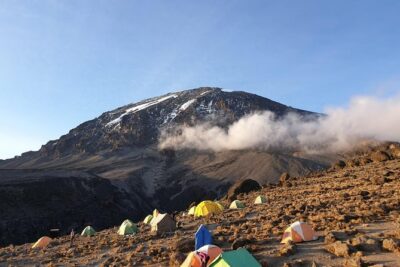
Best Kilimanjaro Adventure 7 days Machame route Trekking
Read our review →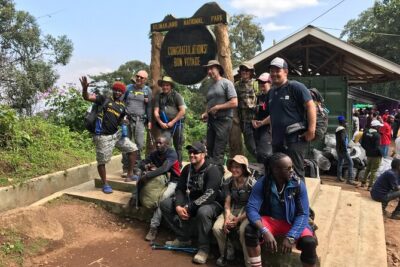
Kilimanjaro 7 Day Private Trekking Experience
Read our review →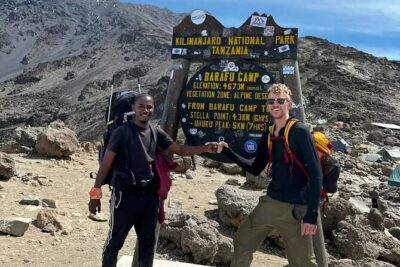
6 Days Machame Route Kilimanjaro Climbing Trekking Tour
Read our review →
Top 6 Days Mt. Kilimanjaro Bike trek Tour by Marangu-Kilema Route
Read our review →
Browse the lists this tour appears in