
REVIEW · MOSHI
Kilimanjaro Trek 6 Days Marangu Route
Kilimanjaro rewards steady feet. This private Marangu Route climb is appealing because you sleep in mountain huts instead of tents and have a full crew handling meals, supplies, guiding, and camp work. I also like the clear support package: park fees, hut fees, rescue fees, transfers, meals, and one hotel night before and after the trek are included. The main drawback is the pace. The basic route takes five days, and the summit day is long and punishing. I would strongly consider the optional sixth day for acclimatization.
This is a serious high-altitude climb, not a casual walk. You need moderate fitness, patience, and a willingness to move slowly when the air thins. The private format means only your group takes part, which can make the pace and daily routine more personal. Guides Robert and Donovan have been praised for motivation and support, while the wider Kilitwende team has earned credit for caring service without being pushy.
Key points to know before booking
- Huts replace tents: The Marangu Route is the only Kilimanjaro route in this program with shared hut accommodation.
- The summit day is the test: Expect a midnight start, a long ascent to Uhuru Peak, and about 27 kilometers of walking that day.
- An extra acclimatization day matters: The six-day option gives your body more time at altitude and should be considered carefully.
- Your crew does the heavy work: Guides, assistant guides, a cook, and porters handle the practical side of the climb.
- The price covers major park costs: At $1,846.16 per person, the package includes permits, hut fees, rescue fees, transfers, meals, and hotel nights.
- Plan for extra costs: Tips, missing gear, sleeping bags, duffle bags, boots, walking sticks, drinks at the Moshi hotel, insurance, visas, and flights are not included.
Why the Marangu Route suits some climbers
Marangu is often called the hut route, and that detail changes the feel of the trip. You sleep in shared huts rather than carrying a tent or spending each night under canvas. For many people, that is a real comfort after several hours of walking.
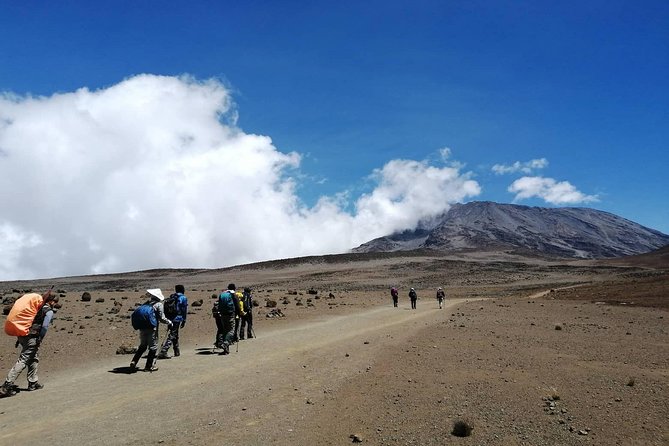
The route also has a familiar rhythm. You climb through forest, moorland, alpine desert, scree, and snow near the summit. Each zone feels different, so the route gives you a strong sense of Kilimanjaro changing as you gain height.
The trade-off is that Marangu uses the same general trail for the ascent and descent. You will not have the variety of a route that climbs one side of the mountain and descends another. Still, the huts, straightforward route, and lower camping burden make it a sensible choice for people who value basic shelter and a simpler setup.
The huts are shared, so do not expect a private room. The availability of mineral water, soft drinks, chocolates, and beer for purchase at the camps is useful, but those purchases are extra. The same applies to hotel drinks and meals outside the climbing package.
More Kilimanjaro Climbs in Moshi
- Best Kilimanjaro Adventure 7 days Machame route Trekking
★ 5.0 · 42 reviews - Kilimanjaro 7 Day Private Trekking Experience
★ 5.0 · 40 reviews - 6 Days Machame Route Kilimanjaro Climbing Trekking Tour
★ 5.0 · 34 reviews
Day 1: Marangu Gate to Mandara Hut
Your morning begins with a briefing and a transfer from Moshi toward Marangu Gate. The drive takes about 45 minutes, and the stated start time is 8:30 am. At the gate, registration and park formalities take place before you begin walking.
The first day covers about 12 kilometers in roughly five hours. You gain around 720 meters and walk through montane forest toward Mandara Hut. This is a good opening stage because the climb is demanding without being the hardest part of the route.
Carry a small daypack with items you may need during the walk. The practical list includes a camera, an extra layer, skin oil, and a rain jacket. Keep those things close rather than buried in luggage carried by a porter.
The forest can feel cool and damp, and the steady uphill grade sets the tone for the week. Do not race this section. A comfortable pace now helps you save energy for the much higher ground later.
The package includes bottled water on the first day, with water boiled and filtered on the mountain afterward. That is useful, since hydration becomes more important as you climb. Your cook prepares three meals a day during the trek, so you are not left trying to manage food while tired.
Day 2: Mandara Hut to Horombo Hut
Day two takes you around 15 kilometers and about six hours. You gain approximately 1,020 meters as the route leaves the forest and enters moorland.
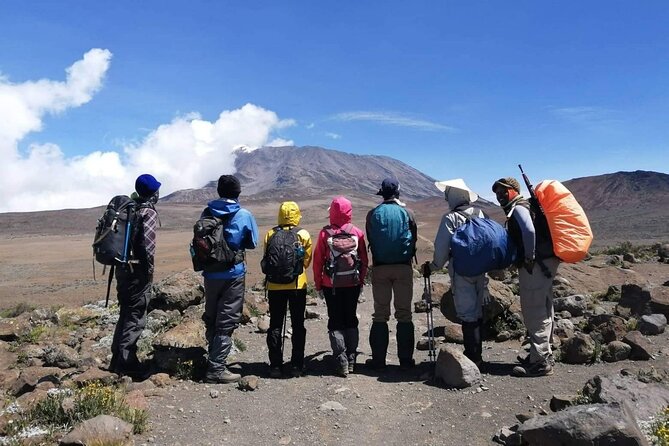
The trail first passes through a short forest section, then heads around the base of Maundi Crater. The suggested detour to the crater rim is worth serious consideration. From there, you may see toward Kibo Crater, and clear conditions can reveal the glaciers higher up.
This is the sort of small side trip that gives the day more character. It is also an extra effort, so ask your guide about timing and your energy level before committing. You do not want a photo stop to turn into a needless strain.
Horombo Hut is higher and more exposed than Mandara. The air begins to feel thinner, and the gain in elevation is substantial. Pay attention to how you feel, and tell the guide early if you develop a headache, nausea, unusual tiredness, or trouble walking steadily.
The route notes refer to Kilimanjaro moorland and its distinctive plant life. Even if you are not a plant expert, you will notice the change from dense forest to open, rougher ground. This change also makes the weather feel less sheltered.
Day 3: Horombo Hut toward Kibo
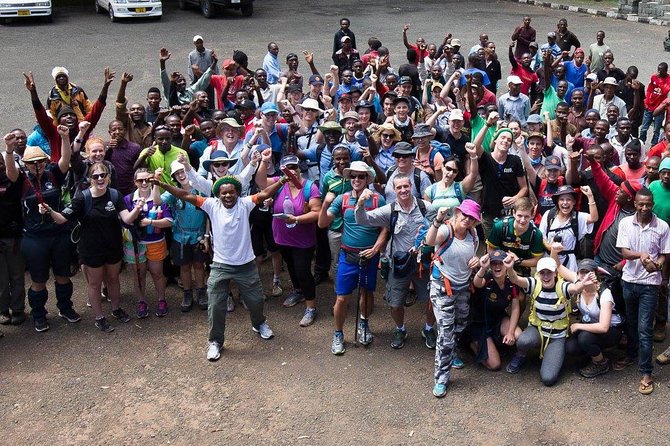
The third day covers another 15 kilometers in about six hours, with roughly 980 meters of ascent. The habitat shifts into alpine desert, and the climb becomes more demanding as oxygen levels drop.
You can choose between two trails toward the Saddle, the high area between Mawenzi and Kibo. The lower route is described as easier and passes the last watering point. This is an important practical detail. Fill your water supply before leaving, since the next watering point is back at Horombo during the descent.
From here, pole pole, meaning slowly, is the right approach. The goal is not to prove how fast you can walk. It is to arrive at the summit night with enough strength and a body that has had time to adjust.
The Saddle is a stark section of the climb. Vegetation becomes scarce, and the distance between major resting points feels more serious. Keep eating small amounts and drinking often, even if altitude reduces your appetite.
This is also where the six-day option becomes valuable. An extra acclimatization day can give you more time to adjust before summit night. The supplied program says this option significantly improves your chances of reaching the top, but no itinerary can guarantee a summit. Altitude affects people differently, and your guide has the final say on safety decisions.
Same trailhead, a longer or shorter day out:
- Kilimanjaro Trekking 7Days 6Night Lemosho Route
★ 5.0 · 23 reviews - 8 Day Kilimanjaro Trek via Lemosho Route
★ 5.0 · 17 reviews - Top 6 Days Mt. Kilimanjaro Bike trek Tour by Marangu-Kilema Route
★ 5.0 · 15 reviews - 6 Days Mount Kilimanjaro Trek Marangu Route
★ 5.0 · 15 reviews
Day 4: The midnight push to Uhuru Peak
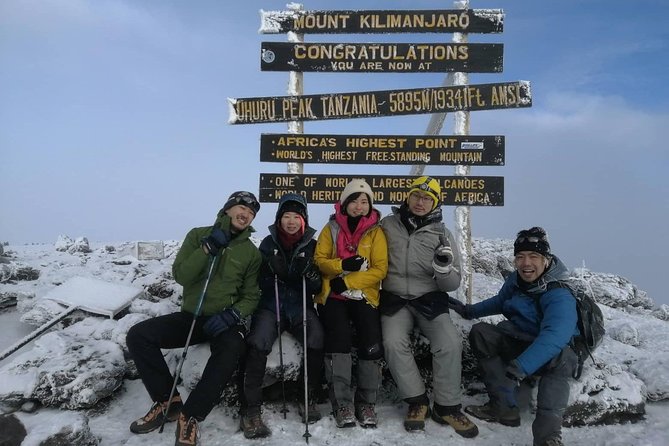
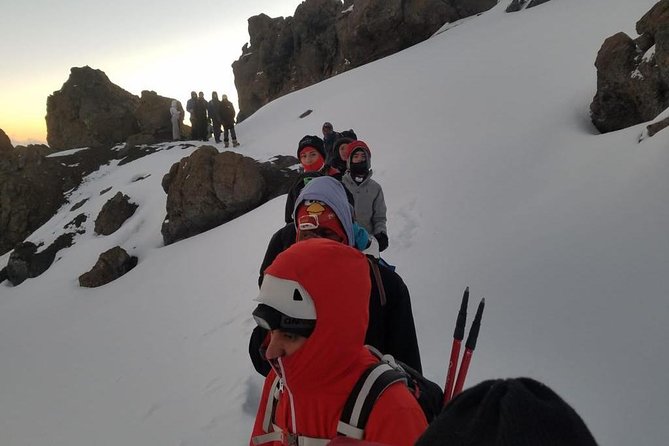
Summit day is the heart of the trek and the part you need to respect most. You wake shortly before midnight, then begin climbing over rocky ground toward Hans Meyer Cave at about 5,150 meters.
The day is listed at approximately 27 kilometers and ten hours, with about 1,195 meters of ascent followed by 2,175 meters of descent. That figure tells you more than any sales language could. You are not simply walking up to a viewpoint and returning to breakfast.
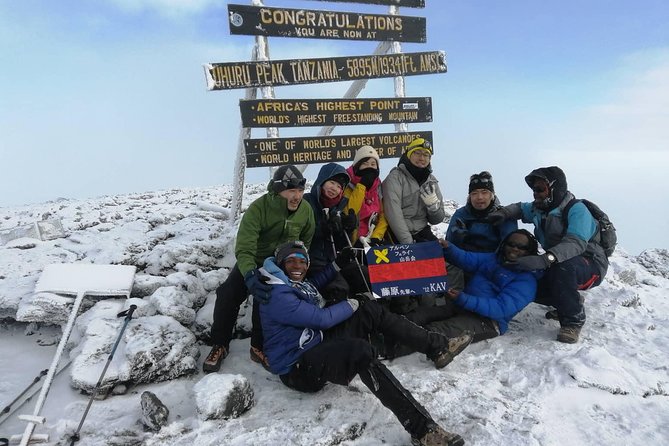
The route to Gillman’s Point at roughly 5,680 meters is steep and stony. The instructions wisely emphasize moving slowly and carefully. After Gillman’s Point, you may walk through snow for about two hours before reaching Uhuru Peak, the highest point on Kilimanjaro.
The summit approach can be cold, dark, and tiring. Your clothing system matters. Bring the layers you need for the night, keep a rain jacket available, and make sure your boots are suitable for long, uneven walking. Missing gear can be rented in Moshi, including sleeping bags, duffle bags, hiking boots, and walking sticks.
The summit certificate depends on your high point. Gillman’s Point earns a green certificate, while reaching Uhuru Peak earns a gold certificate. That distinction is useful because it recognizes a successful high-altitude effort even if your body cannot safely continue to the final summit.
After the summit, the descent is not a victory lap. Your knees and feet will already be tired, and the route back toward the huts still requires care. A guide, assistant guide, and crew support can make a major difference here, but you still need to communicate honestly about your condition.
Day 5: Horombo, Mandara, and the Marangu Gate
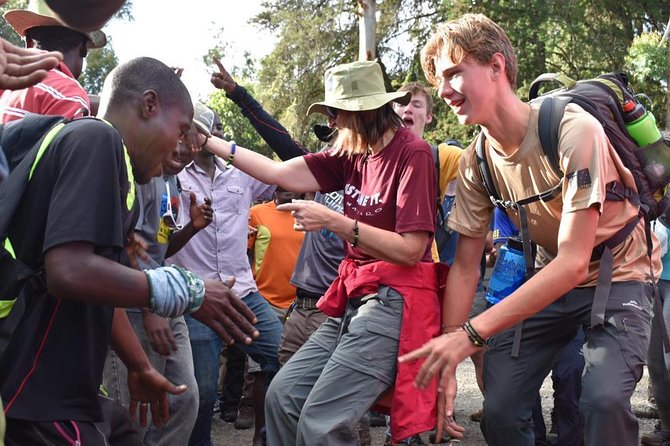
The final day is a long descent of about 27 kilometers. You lose roughly 1,740 meters and pass through moorland and rainforest before reaching Marangu Gate.
The stated walking time is about six hours, though the full day can feel longer after summit night. Expect your legs to be tired, particularly on uneven or downhill sections. Walking poles are not included, but they can be rented for $10 according to the supplied rates.
At the gate, you sign the register and receive your certificate. Then a road transfer takes you back to your Moshi hotel, where the included post-trek night gives you a proper bed and time for a hot shower.
That hotel night is easy to overlook when comparing prices. It gives the trip a clean ending instead of sending you straight from the mountain into a flight or another long transfer. The package also includes a hotel night before the trek, with bed and breakfast.
What the $1,846.16 price really covers
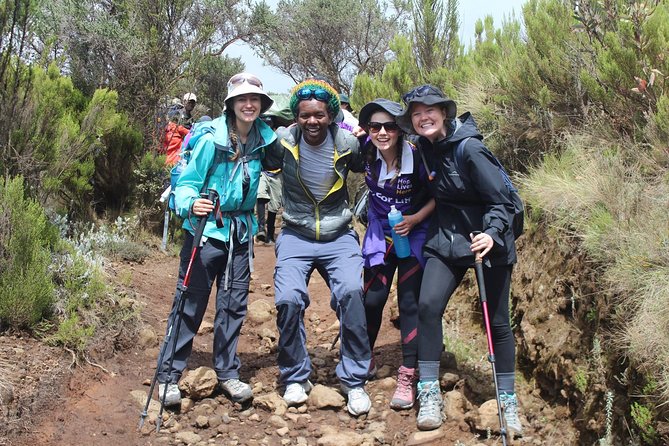
The price is not a simple guiding fee. It includes the major costs that make a Kilimanjaro climb possible: park entry fees, Marangu hut fees, forest fees, rescue fees, and 18 percent VAT on tour services.
You also receive expert guides, assistant guides, a cook, and porters. Meals are included during the climb, with four dinners, four breakfasts, and five lunches listed in the package. Transfers to and from the mountain gates are covered as well.
The stated fair wages for the crew are an important part of the cost. You still need to budget tips for guides, porters, cooks, and assistant guides, since gratuities are not included.
Extra rental costs can add up:
- Sleeping bag: $40
- Duffle bag: $35
- Hiking boots: $40
- Walking sticks: $10
You also pay for personal travel documents, visa costs, insurance, camera equipment, international or domestic flights, laundry, and meals or drinks at the Moshi hotel. Mineral water, soft drinks, chocolates, and beer available at camps are also purchases rather than part of the package.
For a private climb with a full crew, permits, huts, meals, rescue fees, transfers, and two hotel nights, the price offers solid value. It is less attractive if you already own all your gear and are comparing it with a larger shared group. The private format is most useful if you want your own group, personalized attention, and less need to adapt to strangers.
The crew and the private format
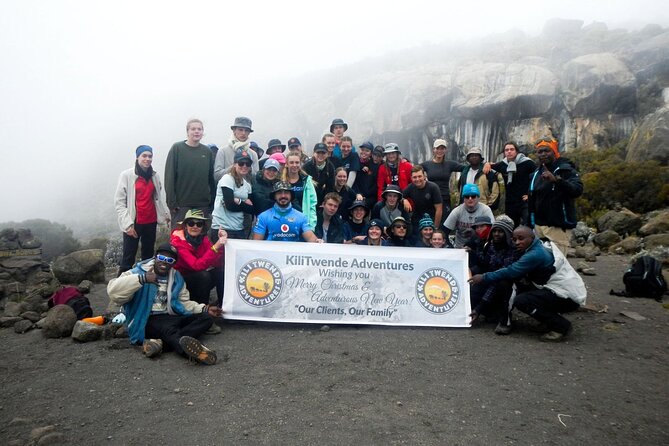
The human side of this climb matters. Kilitwende Adventures provides guides, assistant guides, porters, and a cook, so you are not managing every task yourself. The service has been described as caring but not overbearing, which is exactly the right balance on a demanding climb.
Guides Robert and Donovan have been praised for motivation and support during a climb with a parent and adult child. That detail matters because encouragement is not just a pleasant extra on summit day. It can help you keep a steady rhythm when the cold, altitude, and fatigue begin to pile up.
The private setup also gives your group more control over pace and communication. It does not remove the physical challenge, and it does not guarantee that everyone reaches Uhuru Peak. It does mean the trip is designed around your party rather than a larger mixed group.
The company is Tanzanian, and direct local operation can be useful when you need equipment, transfers, or last-minute practical help in Moshi. The supplied feedback also points to the company having its own vehicles, bags, and dedicated staff.
Who should book this Kilimanjaro climb?
I would recommend it to a person with moderate physical fitness who wants a guided climb with organized support and hut accommodation. It also suits a private family group, a pair of friends, or a small party that values personal attention.
The Marangu Route is a good match if you prefer huts to tents. It is less suitable if you want a quieter route with different ascent and descent scenery, or if you dislike shared sleeping quarters.
The five-day schedule demands more from your body than the six-day option. If your budget and schedule allow it, I would choose the extra acclimatization day. You will still work hard, but the additional time can make the high-altitude transition more manageable.
Do not book this as a light holiday with a scenic summit walk. The route includes long days, high altitude, cold conditions, rough ground, and a midnight start. You should be ready to carry a daypack, follow guide instructions, and accept that reaching Gillman’s Point may be the responsible stopping point.
Free cancellation is available if you cancel at least 24 hours before the local start time. Changes or cancellations inside that window are not accepted for a refund.
Should you book the Marangu Route?
Book this climb if hut sleeping, a private group, local crew support, and a well-covered package matter more to you than having a short or easy mountain holiday. The combination of guides, porters, cook, park costs, meals, transfers, rescue fees, and hotel nights gives the $1,846.16 price a credible value.
Before paying, confirm whether you are booking the five-day schedule or the optional six-day acclimatization version. I would choose six days when possible, then arrive with suitable layers, good footwear, insurance, and realistic expectations about summit day.
This is a strong option for a first Kilimanjaro attempt if you want organized support without giving up a private trip. It is not the right choice for anyone seeking comfort without effort. Kilimanjaro gives you huts, meals, and a capable crew, but you still have to climb the mountain.
FAQ
How long is the Kilimanjaro Marangu Route climb?
The standard itinerary takes five days. An optional extra day can be added for acclimatization, creating a six-day itinerary.
Where does the trek begin?
The climb begins at Marangu Gate, reached by a transfer from Moshi of about 45 minutes.
What time does the experience start?
The listed start time is 8:30 am.
Is hotel accommodation included?
Yes. One hotel night before and one hotel night after the trek are included on a bed and breakfast basis.
Do I sleep in a tent?
No. The Marangu Route uses shared hut accommodation. It is the only route in this program with hut stays.
Are meals included during the climb?
Yes. Three meals a day are included during the climb. The package lists four dinners, four breakfasts, and five lunches.
Is drinking water included?
Bottled water is included on the first day. Water is boiled and filtered on the mountain afterward.
Is equipment included?
Personal gear is not included, but missing items may be rented in Moshi. Listed rental prices include $40 for a sleeping bag, $35 for a duffle bag, $40 for hiking boots, and $10 for walking sticks.
Are tips included in the price?
No. Tips for porters, guides, the cook, and assistant guides are not included.
What happens if I do not reach Uhuru Peak?
You may still receive a certificate for reaching Gillman’s Point. A green certificate is given for Gillman’s Point, while a gold certificate is given for reaching Uhuru Peak.
More 6-Day Experiences in Moshi
- 6-Day Rongai Route Trek in Mount Kilimanjaro
★ 5.0 · 8 reviews - 6-Day Kilimanjaro Machame Route – A Stunning Trek to Uhuru Peak
★ 5.0 · 7 reviews - 6 Days Kilimanjaro Trekking – Machame Route
★ 5.0 · 6 reviews - 6 Days MARANGU ROUTE (Kilimanjaro Trekk)
★ 5.0 · 5 reviews
Recently added around Moshi
- Mt Kilimanjaro Trek, 6 Days – Umbwe Route★ 5.0 · 4 reviews
- 7 Day Trek To The Roof Of Africa Kilimanjaro via Machame Route★ 5.0 · 5 reviews
- Mount Kilimanjaro Trek 7-Days: Lemosho Route★ 5.0 · 2 reviews
- 8 Day Kilimanjaro Trek via Lemosho Route★ 5.0 · 17 reviews
- 6-Day Kilimanjaro Machame Route – A Stunning Trek to Uhuru Peak★ 5.0 · 7 reviews
- 7-Days Tour Mount Kilimanjaro Trekking via Machame Route★ 5.0 · 2 reviews
- Trek To Mount Kilimanjaro★ 5.0 · 12 reviews
- Unforgettable 8 Days Lemosho Route Trekking on Kilimanjaro★ 5.0 · 4 reviews
Kilimanjaro Climbs, compared.
8-Day Small-group Lemosho Kilimanjaro Summit Trekking
Read our review →
Best Kilimanjaro Adventure 7 days Machame route Trekking
Read our review →
Kilimanjaro 7 Day Private Trekking Experience
Read our review →
6 Days Machame Route Kilimanjaro Climbing Trekking Tour
Read our review →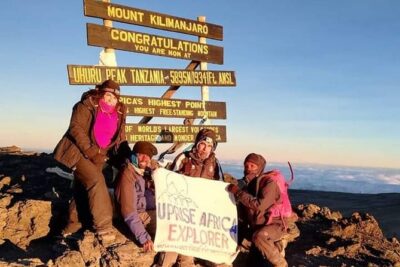
Kilimanjaro Trekking 7Days 6Night Lemosho Route
Read our review →
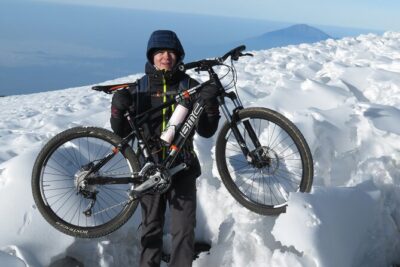
Top 6 Days Mt. Kilimanjaro Bike trek Tour by Marangu-Kilema Route
Read our review →Browse the lists this tour appears in