

REVIEW · JAPAN
Trekking Tour to Faith, Ancient Paths and the Falls from Hitachi
Japan’s quiet side begins by the sea. This two-day escape from Hitachi combines Pacific views, forest paths, and ancient faith with an onsen stay, local food, and Fukuroda Falls. I like the peaceful pace and the way the route connects rural places that are easy to miss on a standard Japan trip.
I also like that the tour is private, so your guide can adjust the walking plan to your pace, fitness, and the weather. The main drawback is the physical demand: the full route covers about 10.5 kilometers, with 759 meters of ascent and 761 meters of descent, plus roughly eight hours of walking.
Key points to know before booking
- A seaside start: Meet at JR Hitachi Station, where the station itself offers views toward the Pacific Ocean.
- Faith and local life: Visit Oiwa Shrine and Gyokurenji Temple, including an explanation from the temple’s abbot.
- A real mountain walk: Expect 10.5 kilometers of total walking and nearly 760 meters of climbing.
- A restorative overnight stay: Nakanoya provides an onsen stay with dinner and breakfast included.
- Ibaraki’s famous waterfall: Fukuroda Falls is the visual highlight on day two.
- A local-train finish: Ride from Hitachi-Daigo Station to Mito along the Kuji River route.
Why this Ibaraki route feels different from Tokyo
Ibaraki Prefecture is close enough to Tokyo for a short break, yet it feels far removed from the capital’s crowds and bright lights. The journey begins at Hitachi Station, about two hours from Tokyo by rail, and then moves through shrines, temple paths, mountain routes, hot springs, and small-town streets.
That variety is the real strength here. You are not simply walking from one scenic viewpoint to another. You are seeing how faith, food, rail travel, and rural life fit together in one corner of Japan.
The tour also avoids the feeling of a rushed day trip. You spend the night in the area, eat local food, and start the second morning close to the next section of the route. That matters. A long trip from Tokyo, a major hike, and a waterfall visit would be tiring in one day. Spreading it across two days gives the experience room to breathe.
The price is $833.05 per person, which is a serious amount for a two-day outing. Still, it includes accommodation, dinner, breakfast, lunch, guides, transport during the tour, luggage transfer, accident insurance, and the train from Hitachi-Daigo to Mito. Since this is a private experience, the cost may make more sense for a small group that values a custom pace and a guide’s attention.
A few more treks around Japan worth a look
- Okinawa Jungle Trails & Waterfalls – Private Yanbaru Tour
★ 5.0 · 43 reviews - Sawanobori River Trekking Tour
★ 5.0 · 30 reviews - Private Local Hiking to enjoy the nature and culture of Mt.Fuji
★ 5.0 · 22 reviews
Starting at Hitachi Station beside the Pacific
The meeting point is JR Hitachi Station at 10:00 a.m. The station is more than a place to gather. It has a seaside setting and views of the Pacific Ocean, giving you an immediate sense that this trip will not follow the usual Tokyo, Kyoto, and Osaka route.
You have 15 minutes here before moving on. That is enough time to meet your guide, get organized, and take in the setting, but not enough for a long station visit. Arrive ready to walk, with comfortable footwear and any personal drinks you want for the day.
The railway connection is useful for independent visitors. You do not need to arrange a separate transfer from Tokyo to a remote pickup point. At the end, you finish at Mito Station, also near public transport, rather than being returned to Hitachi.
That one-way design is practical, but it also means you should plan your next hotel or train connection from Mito. The tour ends at the station gates, where you say goodbye to your guide.
Oiwa Shrine and the spiritual side of the route
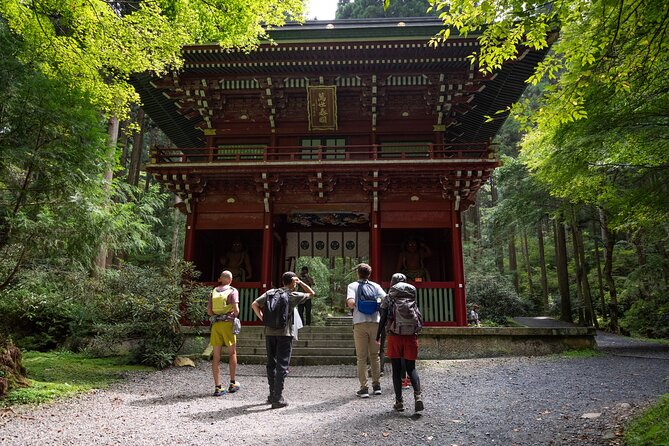
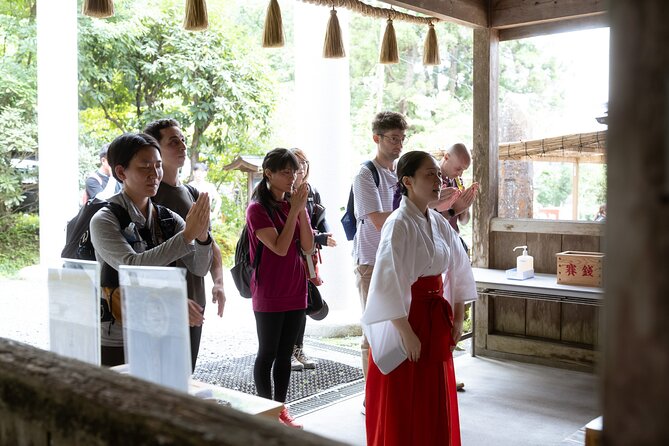
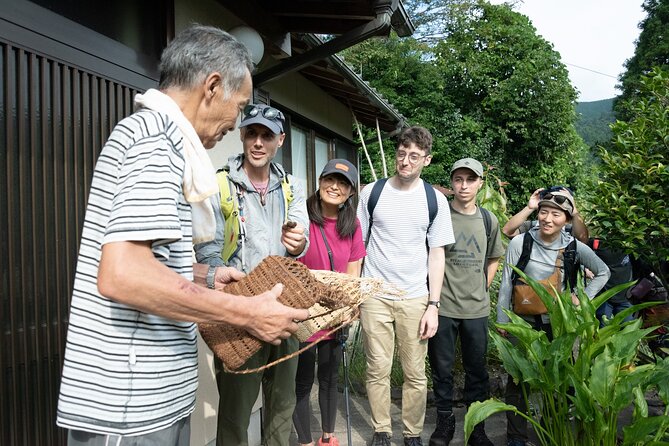
Oiwa Shrine is one of the most meaningful stops. Faith has been practiced here since ancient times, and the visit gives you a direct introduction to Japanese religious customs rather than a quick photo stop at a famous city temple.
The planned visit lasts about 40 minutes. You walk around the shrine grounds and receive a special blessing. The setting is surrounded by forest, so the visit feels tied to the natural world as much as to formal religious buildings.
I like this part of the route because it asks you to slow down before the main walking begins. Japan’s shrines can be easy to treat as scenic backdrops, especially when you are trying to fit several attractions into a tight schedule. Here, the shrine is part of the purpose of the trip.
Your guide can also help explain how the site fits into local faith and custom. You should approach the stop with respect and allow time for quiet observation. This is not a theatrical cultural show. It is a place of worship.
Gyokurenji Temple and the old paths
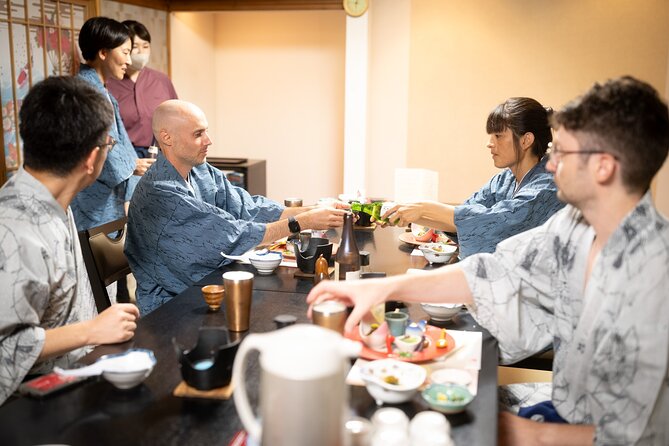
After Oiwa Shrine, the route continues toward Gyokurenji Temple. The walk follows what is described as both living and ancient paths, with opportunities to meet local people along the way.
That wording matters. The route is not only a marked recreation trail built for visitors. It passes through places where daily life continues, and the temple visit adds a human voice to the history of the area.
At Gyokurenji, the abbot explains the temple’s history and beliefs. This is one of the most distinctive parts of the tour because you are hearing about the temple directly from its religious leader rather than reading a short sign and moving on.
The scheduled temple visit lasts about 40 minutes. It should appeal to you if you enjoy culture in a personal setting, especially if you want more than major tourist sights. If your main goal is fast walking or dramatic views, this pause may feel slow. That is part of the tradeoff.
The walking total for the entire trip is about 10.5 kilometers, but the day-by-day breakdown is not fully specified. Expect a proper hike rather than a gentle countryside stroll. The tour asks for moderate physical fitness, and the combined ascent and descent make that requirement important.
Same trailhead, a longer or shorter day out:
- Frozen fall trekking
★ 5.0 · 21 reviews - 3hours Primeval Forest and Stunning Views of Cliff Trekking Tour
★ 5.0 · 20 reviews - Mt. Inunaki Trekking and Goma Prayer Experience in Osaka
★ 5.0 · 8 reviews - Iriomote’s Adventure: Pinaisara Falls Canoe and Trekking Tour
★ 5.0 · 7 reviews
Nakanoya: an onsen night with meals included
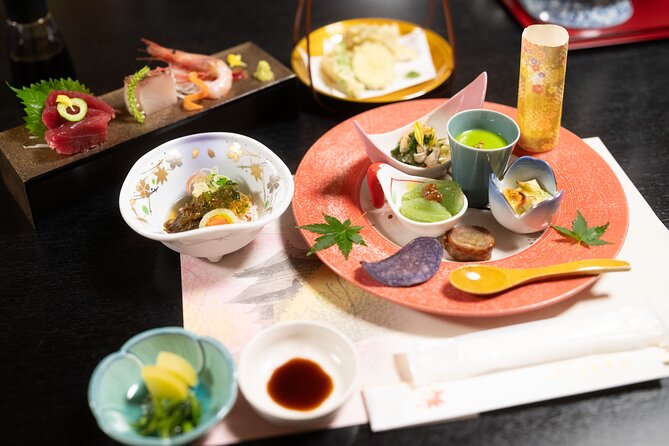
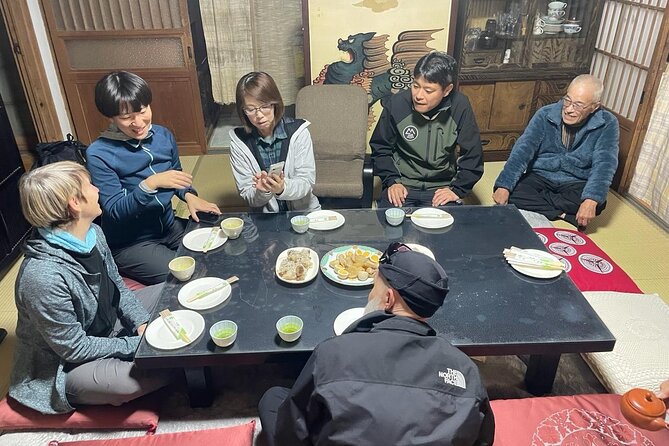
The first day ends at Nakanoya, where you stay in an onsen accommodation. Dinner and breakfast are included, along with the lodging itself.
This overnight stay is more than a convenient bed between activities. After walking forest paths and climbing through rural terrain, soaking in hot spring water gives your legs a chance to recover. The exact bathing facilities and room arrangements are not specified, so you should confirm any particular accommodation needs before booking.
Dinner and breakfast are also included, which simplifies the evening. You do not need to search for a restaurant after a full day outdoors. Lunch is included as well, while personal snacks, drinks, and shopping are your responsibility.
Luggage transfer is included, a useful detail for a two-day walking trip. You can carry what you need for the trail without hauling every item you brought from Tokyo. Keep essentials with you, including medication, weather protection, and anything needed during the hike.
The onsen stay is a strong part of the value calculation. If you compare the cost only with a guided walk, $833.05 feels steep. If you include private guiding, meals, accommodation, transport, luggage handling, insurance, and a full second day, the price becomes easier to understand.
Fukuroda Falls on the second morning
The second day begins at Nakanoya and continues to Fukuroda Falls, one of Japan’s three most famous waterfalls. The planned visit lasts about an hour.
The falls are the trip’s clearest natural showpiece. After the quieter shrine and temple visits, Fukuroda brings a change of scale, with water cascading through a dramatic mountain setting. The route lets you walk to see the falls rather than simply stopping at a roadside viewpoint.
The exact viewing conditions depend on the weather and season. Rain can change the force of the water, while poor weather can also make paths slippery or lead the guide to alter the route. The operator says the experience is canceled when more than 2 millimeters of precipitation is expected, so this is not a trip to book casually during a wet forecast.
Even with only about an hour scheduled at the falls, allow yourself to enjoy the contrast between the rushing water and the quieter walking sections. You are not spending an entire day at a large attraction complex. The waterfall is one part of a broader rural journey.
The Kuji River train ride to Mito
After Fukuroda Falls, you travel to Hitachi-Daigo Station and board a local train with your guide. The train fare from Hitachi-Daigo to Mito is included.
This is a fitting finish. Instead of returning by a private vehicle on the same road, you use local rail and follow the Kuji River route through mountain scenery. The train ride gives your legs a break while keeping the trip connected to everyday life in Ibaraki.
The planned stop at Hitachi-Daigo Station is 15 minutes. Mito Station is the final stop, also with a 15-minute schedule in the outline. The tour ends at the station gates, so you should have your onward plans ready before the train arrives.
For me, this local-train section adds value because it makes the trip feel like travel through Japan rather than a private sightseeing bubble. You see the countryside from the train and finish in a city with transport links for the next stage of your trip.
Walking demands, weather rules, and flexibility
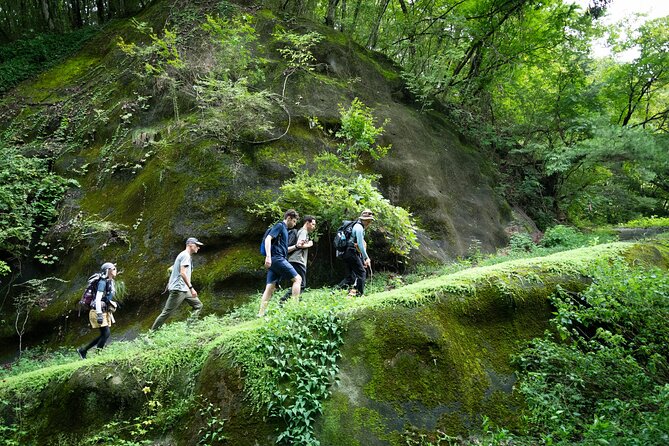
The numbers deserve close attention. The total walking distance is about 10.5 kilometers, with 759 meters of ascent and 761 meters of descent. Total walking time is listed as eight hours.
That is a demanding amount of movement across two days. You do not need to be an expert hiker, but you should be comfortable with hills, uneven paths, and sustained walking. Good shoes are essential. The tour is not a fit for someone who wants only short walks between vehicle stops.
The itinerary can be adjusted according to your physical condition, experience, and the weather on the day. The guide can also change the course if necessary. This flexibility is especially useful for a private group, since the route does not have to suit a large mixed party.
At the same time, flexibility does not remove the basic physical challenge. Tell the operator about your ability and concerns before the start. The guide’s judgment may also affect the route for safety reasons.
The experience requires good weather. If it is canceled because of poor conditions, you are offered another date or a full refund. You can cancel for a full refund up to three full days before the start time. Cancellations or changes made later are not accepted for a refund, and all cut-off times use local Japanese time.
Who will get the most from this private tour
I would recommend this experience to you if you want several sides of rural Japan in one trip:
- You enjoy hiking but also want shrines, temples, food, and rail travel.
- You prefer a private guide rather than a large group.
- You want a quieter alternative to Japan’s most visited cities.
- You appreciate local religious sites and are comfortable treating them respectfully.
- You like having accommodation, meals, luggage transfer, and transport arranged together.
- You can handle eight hours of total walking across the route.
It may not suit you if you have limited mobility, dislike hills, or want a relaxed sightseeing schedule with little physical effort. It is also a poor choice for a tightly planned Japan itinerary if you cannot accept weather-related changes.
The tour has only two published ratings, both at the top level, so the sample is small. Still, the praise points in the same direction: the quiet, relatively untouched character of Ibaraki and the sense of physical and mental calm created by the views, shrine, forest, and mountains.
One personal detail gives the trip extra character. A guide named Miyuki was praised for being warm and energetic, and for serving hot tea on a snowy mountain peak. That detail suggests the guiding can include thoughtful touches in difficult weather, though you should not assume the same conditions or exact moment on your date.
Should you book the Hitachi to Mito route?
Book it if you want a private, active escape that combines nature and tradition without leaving Japan’s main rail network. The best parts are the Pacific-facing start, Oiwa Shrine, the abbot’s explanation at Gyokurenji, the onsen night, Fukuroda Falls, and the local train ride to Mito.
The price is high, but the package includes nearly every major cost during the two days. For two or more people traveling together, group discounts may improve the value, though the exact discount is not stated.
Before paying, check the weather, confirm that the walking distance suits you, and ask about any accommodation needs. If you can accept the physical effort and the possibility of a changed route, this is a strong choice for seeing an understated side of Japan.
FAQ
How long is the tour?
The experience lasts approximately two days.
Where does the tour begin?
It begins at Hitachi Station on the JR Joban Line in Hitachi, Ibaraki Prefecture.
What time does the tour start?
The meeting time is 10:00 a.m.
Where does the tour end?
It ends at the gates of Mito Station.
How much walking is involved?
The total walking distance is about 10.5 kilometers, with 759 meters of ascent, 761 meters of descent, and approximately eight hours of walking time.
Is the tour suitable for every fitness level?
No. A moderate level of physical fitness is required because the route includes substantial walking, climbing, and descending.
Is accommodation included?
Yes. The overnight stay at Nakanoya is included.
Are meals included?
Yes. Dinner, breakfast, and lunch are included. Personal drinks, snacks, and other food during the trek are not included.
Is transportation included?
Yes. Transport during the tour is included, as is the train fare from Hitachi-Daigo Station to Mito Station.
What happens if the weather is bad?
The experience may be canceled when more than 2 millimeters of precipitation is expected. If poor weather causes cancellation, you can choose another date or receive a full refund.
Recently added around Japan
- Ninja Trekking half-day tour at Mt.Daimonji Kyoto★ 5.0 · 6 reviews
- Relax and refresh in Karuizawa Forest! Shinanoji down trekking around two people★ 4.0 · 2 reviews
- Mt. Inunaki Trekking and Goma Prayer Experience in Osaka★ 5.0 · 8 reviews
- Mt. Inunaki Trekking and Hot Springs in Izumisano, Osaka★ 5.0 · 3 reviews
- Matt Canyon River Trekking Nishiwaga Town, Iwate Prefecture★ 5.0 · 4 reviews
- Iriomote’s Adventure: Pinaisara Falls Canoe and Trekking Tour★ 5.0 · 7 reviews
- 3hours Primeval Forest and Stunning Views of Cliff Trekking Tour★ 5.0 · 20 reviews
- Shizuoka : Mt Fuji Secret Canyon River Trekking★ 5.0 · 6 reviews
Japan Trekking Tours, compared.
Okinawa Jungle Trails & Waterfalls – Private Yanbaru Tour
Read our review →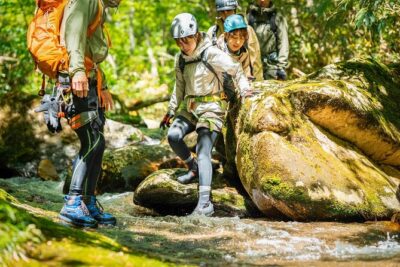
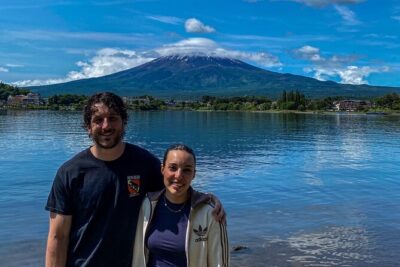
Private Local Hiking to enjoy the nature and culture of Mt.Fuji
Read our review →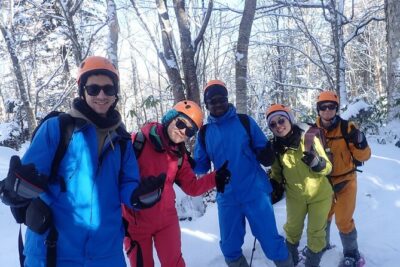
3hours Primeval Forest and Stunning Views of Cliff Trekking Tour
Read our review →
Mt. Inunaki Trekking and Goma Prayer Experience in Osaka
Read our review →
Iriomote’s Adventure: Pinaisara Falls Canoe and Trekking Tour
Read our review →
Browse the lists this tour appears in