
REVIEW · JAPAN
Iriomote’s Adventure: Pinaisara Falls Canoe and Trekking Tour
Jungle, water, and one great waterfall view. Iriomote’s Pinaisara Falls tour pairs a quiet canoe ride with a forest trek to both the top and base of one of the island’s best-known natural sights. I like the small maximum group of seven and the chance to learn about local plants and wildlife from an English-speaking guide. The main drawback is that the six-hour outing depends on good weather and requires enough fitness for a forest hike.
I also like the careful access rules. Pinaisara Falls sits inside a UNESCO World Heritage site, and daily visits are limited to 200 people, helping keep the setting from feeling overrun. You meet at Uehara Port at 9 a.m., return there at the end, and can expect a focused day outdoors rather than a loose sightseeing trip.
Key points to know before booking
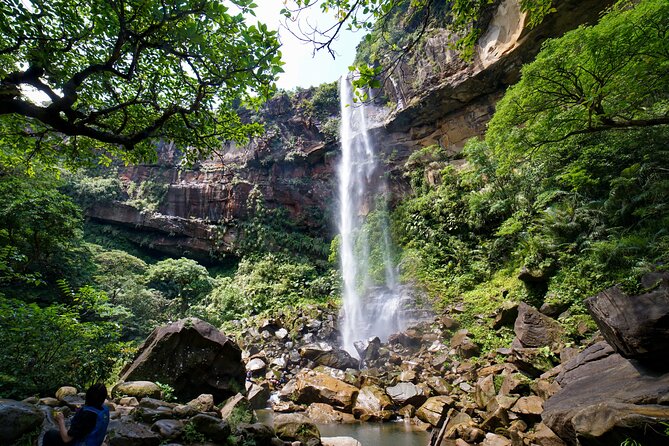
- Two ways to reach Pinaisara Falls: Paddle by canoe, then walk through subtropical forest to see both the waterfall’s upper viewpoint and its base.
- Small groups matter: The maximum group size is seven, which gives you more room to ask questions and keep pace with the guide.
- Guides add real value: Hiro and Uno are praised for their friendly manner and explanations of Iriomote, Yaeyama, Okinawa, plants, animals, and local nature.
- Built for an Ishigaki day trip: The tour begins and ends at Uehara Port, making it practical for people crossing from Ishigaki Island.
- Six hours outdoors: This is a substantial half-day in the forest, not a quick photo stop at a roadside waterfall.
- Book with weather in mind: Poor conditions can lead to a new date or a full refund, but late cancellations are not refundable.
Why Pinaisara Falls makes a strong day outdoors
Pinaisara Falls is not reached by simply parking near an overlook. The route combines paddling and walking, so the journey is part of the appeal. You first travel by canoe through the island’s watery environment, then continue on foot into the subtropical forest.
That combination gives the day a pleasing change of pace. The canoe section should feel calm and measured, while the trek adds effort and a closer look at the forest. You are not just being driven to a viewpoint, taking a picture, and leaving five minutes later.
The waterfall itself can be visited from two angles. The route includes the top of Pinaisara Falls, where the view is described as especially striking, and the base, which gives you a different sense of the water and surrounding forest. Seeing both makes the tour feel more complete than a walk to one lookout.
Pinaisara Falls is also inside a UNESCO World Heritage setting. That designation does not make the walk easier, but it explains why access is managed carefully. A daily limit of 200 people helps protect the area and improves your chance of having a peaceful day in nature.
More Kayak Trips in Japan:
- DALAT: Trekking Pinhatt & Sup/Kayaking Tuyen Lam Lake Tour
★ 5.0 · 119 reviews - Cruising- Kayaking- Cycling- Trekking 3D/2N from Cat Ba in less tourist areas.
★ 5.0 · 119 reviews - Bali Jungle Trekking and Lake Canoeing Tour
★ 5.0 · 84 reviews
Starting at Uehara Port at 9 a.m.
The meeting point is Uehara Port, listed at Uehara, Taketomi, Yaeyama District, Okinawa. The activity starts at 9 a.m. and finishes back at the same meeting point.
This matters if you are planning the day around boats, accommodation, or onward transport. The tour is designed with day trips from Ishigaki Island in mind, and pickup is offered, though the supplied details identify Uehara Port as the start point. Confirm the exact pickup arrangement when booking, especially if you are not already staying near the port.
A morning start is sensible for a six-hour outing. You will have the main part of the day for the canoe and trek, with a clear end point rather than an open-ended return. Since the trip takes place outdoors and requires good weather, it is wise not to schedule a tight connection immediately afterward.
The group limit is seven people. That is small enough for the guide to keep an eye on the group and answer questions without turning every stop into a queue. It also makes a difference on a forest trail, where a large line of people can take away from the quiet.
The canoe approach to the falls
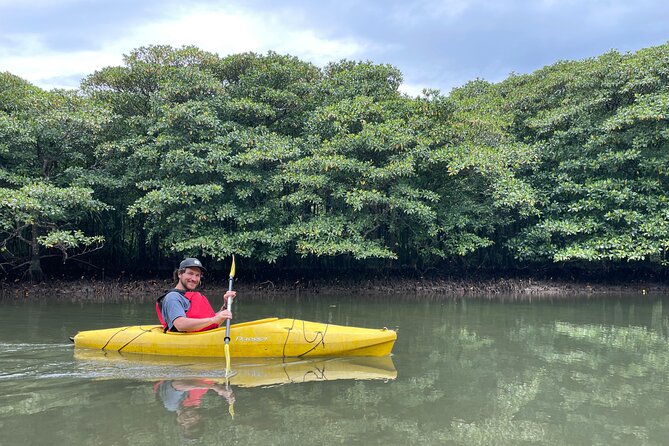
The first major part of the outing is the canoe ride. The tour description calls it canoeing, while some trip descriptions refer to a mangrove kayak outing. The practical point is the same: you reach the waterfall by paddlecraft before continuing on foot.
This water section gives you a gentler introduction to Iriomote’s wild side. Instead of beginning with a demanding walk, you move through the waterways before entering the forest. That makes the tour feel like a connected route rather than two unrelated activities.
The canoe ride is also valuable for anyone interested in the island’s plant and animal life. The guides are praised for explaining local flora, fauna, and wildlife, and the water route offers another setting for those conversations. Hiro is described as friendly and informative, while Uno is praised for being easy to talk with and happy to explain Iriomote, Yaeyama, Okinawa, and Japan more broadly.
Do not choose this trip if you want a purely passive sightseeing cruise. You are taking part in an outdoor activity, and the paddling is one reason the tour takes about six hours. The supplied information does not give a precise canoe duration, so the full schedule may vary with conditions and the group’s pace.
Walking through Iriomote’s subtropical forest
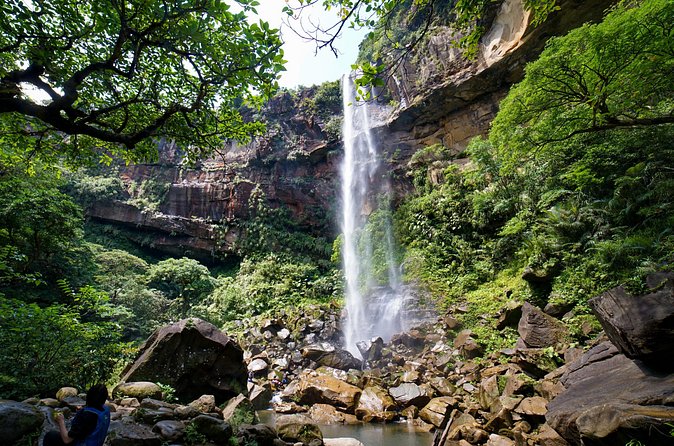
After the canoe section, you continue on foot. The forest trek is what gives the outing its sense of adventure, but it is also the part that requires the most preparation.
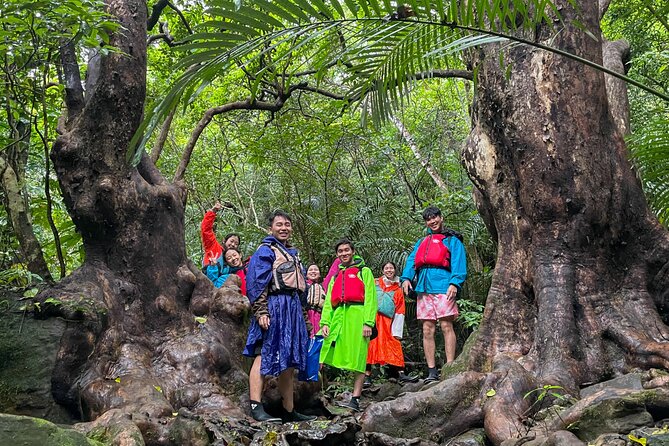
The details do not provide a trail length, elevation gain, or exact hiking time. You should therefore avoid treating this as a fully measured easy walk. Most people can participate, according to the activity information, but the day still involves trekking through a subtropical forest.
The guide’s role is important here. A good guide does more than point toward the waterfall. Hiro and Uno are both described as attentive, friendly, and willing to explain what you are seeing. One guide is praised for patience, while another is described as flexible and responsive to requests. That can make the walk more comfortable for a mixed group with different interests and walking speeds.
You will likely get more from the forest if you slow down and listen. The value is not only reaching Pinaisara Falls. It is learning how the island’s plants, animals, and waterways connect. This is one reason the small group size matters: you have a better chance to ask about something you notice rather than simply following a guide at a distance.
Still, this is not the right pick for anyone who wants no physical activity. The tour combines canoeing and trekking, and you need to be comfortable spending much of the day outside. The information says most people can participate, but it does not promise an effortless route.
A few more treks around Japan worth a look
- Okinawa Jungle Trails & Waterfalls – Private Yanbaru Tour
★ 5.0 · 43 reviews - Sawanobori River Trekking Tour
★ 5.0 · 30 reviews - Private Local Hiking to enjoy the nature and culture of Mt.Fuji
★ 5.0 · 22 reviews - Frozen fall trekking
★ 5.0 · 21 reviews
Reaching the top of Pinaisara Falls
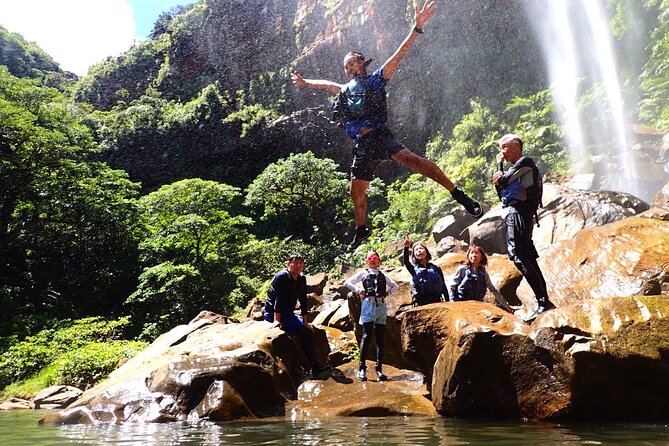
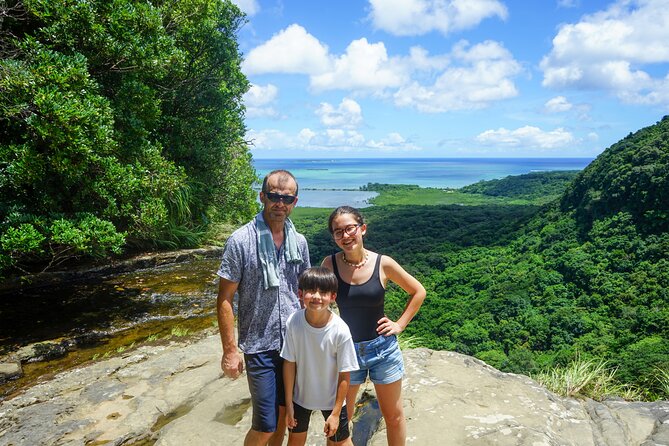
The upper section is one of the tour’s main rewards. The view from the top of the waterfall has been singled out as stunning, and it gives you a broad sense of the surrounding setting after the forest walk.
A viewpoint at the top changes how you understand the falls. From above, you can appreciate the drop and the wider surroundings. It is also the natural place to pause, catch your breath, and take photographs.
This part may be especially satisfying if you want a strong visual payoff for the effort of getting there. The tour does not simply bring you to the base and turn around. You get the elevated view as well as the closer look later in the route.
The word top should not be taken as a promise of a particular type of platform or developed lookout. The supplied details do not describe railings, facilities, benches, or a built trail. Expect a nature-based stop rather than a polished attraction with extensive visitor infrastructure.
Seeing the base from a closer angle
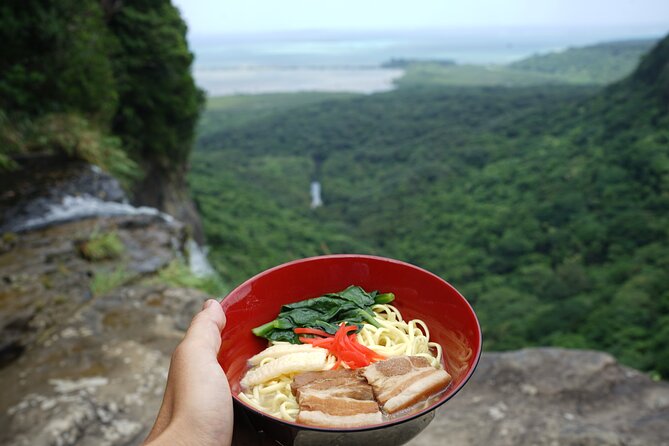
The base of Pinaisara Falls gives the outing a second, more intimate stop. After seeing the waterfall from above, you get closer to the falling water and the forest around it.
This two-part route is one of the strongest reasons to consider the tour. Many waterfall trips are built around one viewpoint. Here, the top and base offer different photographs and different impressions, so the day feels more substantial.
Your guide can also help you notice details that are easy to miss. The descriptions of the guiding emphasize plants, wildlife, and the wider ecology of Iriomote, not just basic directions. If you have questions, guides such as Uno are described as approachable, and Hiro is praised for explaining the island’s nature in a clear and friendly way.
The exact conditions at the base will depend on weather. The tour requires good weather, and poor conditions may lead to cancellation or a new date. That policy is sensible for a forest and waterfall route, but it means you should keep some flexibility in your plans.
What the guides add to the day
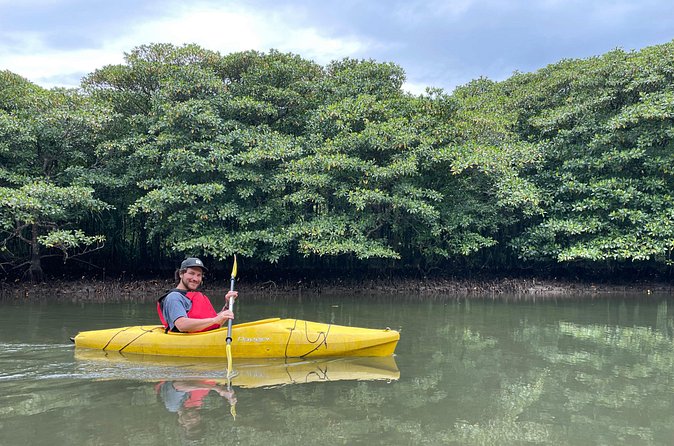
The guiding is the most consistently praised part of this experience. The comments describe guides as friendly, patient, dedicated, easy to interact with, and well informed about Iriomote’s natural world.
That combination matters. A guide who knows the plants but is hard to approach is less useful than someone who can explain things clearly and keep the mood relaxed. Uno is described as easy-going and open to questions. Hiro is praised for being friendly and for explaining the island’s nature in detail.
The tour offers English-speaking guides, which is a major help for international visitors. You are not left to interpret the trail, the local environment, and safety instructions on your own.
Guides are not interchangeable, and the information does not guarantee that you will be assigned Hiro or Uno. Their names are useful examples of the standard of guiding associated with this outing, not a promise of a particular person on your date.
The best way to get value from the guide is to ask questions. You can ask about plants, wildlife, Iriomote, Yaeyama, or Okinawa more generally. The small group makes that kind of conversation more realistic than it would be on a crowded coach excursion.
Is $110.76 a fair price?
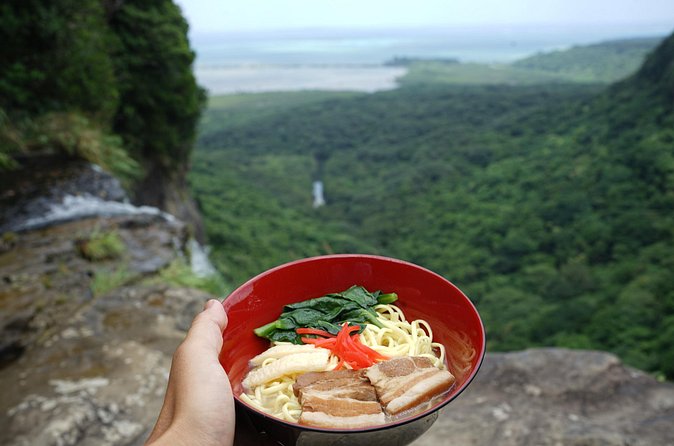
At $110.76 per person, this is not the cheapest way to spend a day on Iriomote. The price needs to be judged against what is included: roughly six hours, a canoe approach, a forest trek, access to both the top and base of Pinaisara Falls, and an English-speaking guide.
I think the price is reasonable if you want a guided nature outing and are arriving from Ishigaki. The tour saves you from planning the route alone and gives you access to a place described as requiring a licensed guide. The small maximum group of seven also adds value, since you are paying for a more personal outing rather than a large organized group.
The value is weaker if you only want a quick waterfall photo or if you already have a way to explore Iriomote with a guide. In that case, six hours may feel longer than necessary. You are paying for the full combination of transport by canoe, trekking, interpretation, and managed access.
The daily limit of 200 visitors also helps explain why a guided trip can be worthwhile. Pinaisara Falls is not presented as a casual stop where you simply arrive and wander in. The guided format fits the protected setting.
Who should book this Pinaisara Falls tour?
I would recommend this tour to you if you want to see Iriomote through its waterways and forest rather than from a vehicle. It suits people who enjoy a moderate outdoor day, small groups, nature photography, and questions about plants and animals.
It is especially practical for a day trip from Ishigaki Island. The Uehara Port meeting point and return arrangement give the day a clear structure, though you should check the transport timing carefully before booking.
This is also a good choice if you prefer a guide who can adapt to your interests. The feedback about Hiro and Uno points to a relaxed style, patience, and willingness to explain more than just the route.
You may want to choose something else if you dislike paddling, forest trekking, or weather-dependent plans. The activity details do not provide an exact trail difficulty, walking distance, or canoe duration, so anyone with specific mobility or fitness concerns should ask the operator before committing.
The tour is limited to seven people, but it is not described as a private trip by default. Private tours can be arranged, which may be worth considering if you want more control over the pace or have a group with particular needs.
Booking, weather, and cancellation advice
Confirmation is sent within 48 hours of booking, subject to availability. The tour is booked about 48 days ahead on average, so planning early makes sense, particularly if you have fixed dates on Ishigaki or Iriomote.
Free cancellation is available up to 24 hours before the local start time. If you cancel less than 24 hours before departure, you do not receive a refund, and changes made inside that period are not accepted.
Weather can alter the plan. If the operator cancels because conditions are poor, you are offered another date or a full refund. Since this is a canoe and forest activity, that is a useful safeguard, but you should avoid placing it on the final possible day of a short island stay.
FAQ
Where does the tour start?
The tour starts at Uehara Port, listed at Uehara, Taketomi, Yaeyama District, Okinawa.
What time does the tour begin?
The start time is 9 a.m.
How long does the experience last?
The tour lasts approximately six hours.
Does the tour return to Uehara Port?
Yes. The activity ends back at the meeting point.
What does the tour include?
The route includes a canoe ride, a trek through the subtropical forest, and visits to both the top and base of Pinaisara Falls.
How many people can join?
The maximum group size is seven people.
What happens if the weather is poor?
The experience requires good weather. If it is canceled because of poor conditions, you can choose another date or receive a full refund.
Should you book it?
Book this tour if you want a full nature day with paddling, forest walking, two waterfall viewpoints, and a guide who can explain Iriomote beyond the postcard view. The strongest reasons are the small group, English-language guiding, and the chance to see Pinaisara Falls from both top and base.
At $110.76, it is best value for visitors who would rather have a well-organized route than arrange the details alone. Just allow six hours, prepare for an active outing, and keep your schedule flexible for weather. If that sounds like your kind of day, this is a well-balanced way to experience Iriomote’s wild side.
Recently added around Japan
- Ninja Trekking half-day tour at Mt.Daimonji Kyoto★ 5.0 · 6 reviews
- Relax and refresh in Karuizawa Forest! Shinanoji down trekking around two people★ 4.0 · 2 reviews
- Mt. Inunaki Trekking and Goma Prayer Experience in Osaka★ 5.0 · 8 reviews
- Mt. Inunaki Trekking and Hot Springs in Izumisano, Osaka★ 5.0 · 3 reviews
- Matt Canyon River Trekking Nishiwaga Town, Iwate Prefecture★ 5.0 · 4 reviews
- Trekking Tour to Faith, Ancient Paths and the Falls from Hitachi★ 5.0 · 2 reviews
- 3hours Primeval Forest and Stunning Views of Cliff Trekking Tour★ 5.0 · 20 reviews
- Shizuoka : Mt Fuji Secret Canyon River Trekking★ 5.0 · 6 reviews
Japan Trekking Tours, compared.
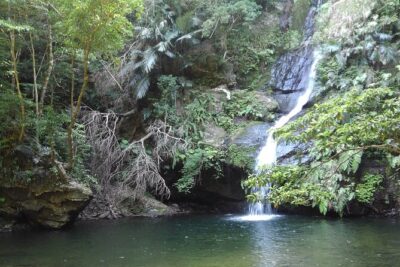
Okinawa Jungle Trails & Waterfalls – Private Yanbaru Tour
Read our review →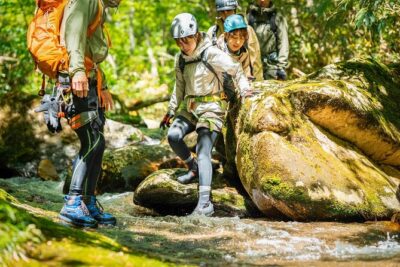

Private Local Hiking to enjoy the nature and culture of Mt.Fuji
Read our review →
3hours Primeval Forest and Stunning Views of Cliff Trekking Tour
Read our review →
Mt. Inunaki Trekking and Goma Prayer Experience in Osaka
Read our review →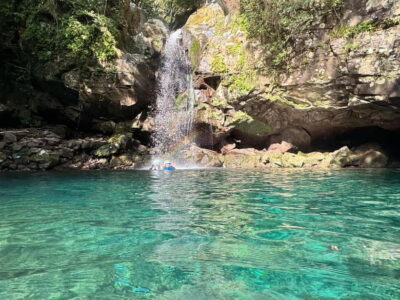
Ninja Trekking half-day tour at Mt.Daimonji Kyoto
Read our review →Browse the lists this tour appears in