

REVIEW · JAPAN
Private Local Hiking to enjoy the nature and culture of Mt.Fuji
Fuji reveals itself beyond the postcard. This private nature and culture outing pairs an ancient shrine, quiet Lake Saiko, a lava cave, and a forest hike with local guide Yuki, who has climbed Mt. Fuji more than 40 times. I like the personal scale of the tour and the way it connects scenery with local beliefs. I also like the simple finish: Yoshida Udon followed by tea in a Japanese garden.
The main consideration is weather. Fuji views are never guaranteed, and the tour requires good conditions. Pickup is also limited to people staying in Kawaguchiko or Fujiyoshida, or those who can reach those areas independently.
Key points at a glance
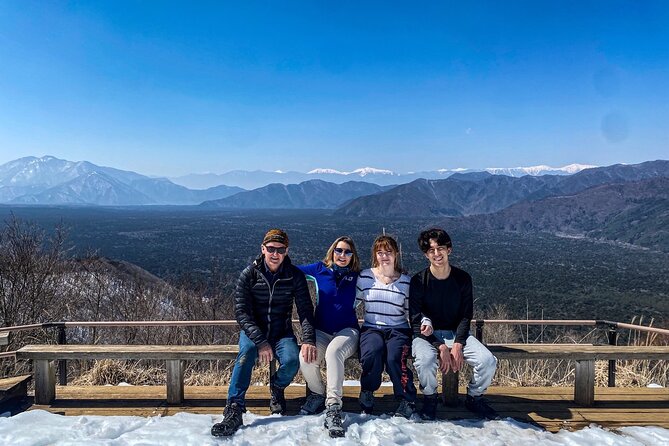
- A private tour with Yuki: Only your group takes part, giving the guide room to adjust the pace and share local stories.
- A moderate Sankodai hike: The climb takes about an hour upward, with a shorter return, and suits outdoor beginners who are comfortable walking on a mountain trail.
- More than a Fuji viewpoint: You visit Fuji Omuro Sengen Shrine, Lake Saiko, Aokigahara Forest, and the Ryugudoketsu lava cave.
- Free outdoor equipment: Trekking shoes, poles, rainwear, and gloves are supplied, a useful benefit if you did not pack hiking gear.
- Local food and tea included in the rhythm of the day: Yoshida Udon costs about 1,000 yen, while matcha and a Japanese sweet cost an optional 1,000 yen.
- Best for a flexible half-day: The experience lasts about five to six hours and begins at 9:00 am.
A private Fuji outing with more substance
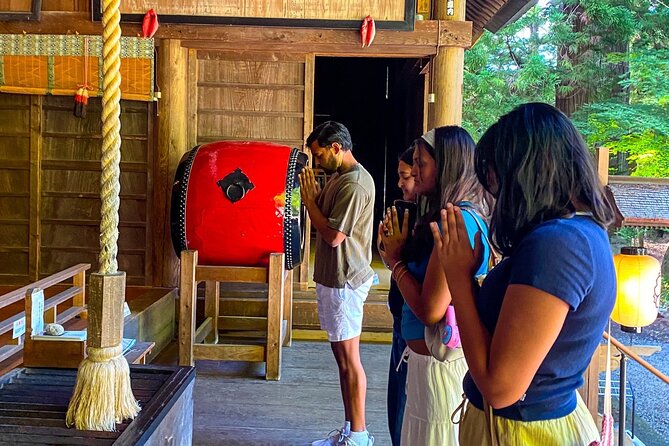
This tour gives you a different way to experience the Mt. Fuji area. Instead of spending the whole day circling crowded photo stops, you move through places tied to worship, volcanic activity, forests, and local food.
The day is led by Yuki, a certified mountain guide and licensed local hunter. His background matters here. He has climbed Mt. Fuji more than 40 times, and the experience is shaped around the mountain as a living part of local culture, not just a famous peak to photograph.
I especially like the private format. Your group is the only group on the activity, so the outing can feel more relaxed than a large coach tour. Feedback about Yuki repeatedly highlights his patience, useful explanations, and willingness to spend extra time when needed. He has also brought coffee, tea, chocolate, and snacks for the summit break on some outings.
The tour costs $131.38 per person. That is not the cheapest way to see the Fuji Five Lakes, but the price includes private transport, a guide, and a useful set of hiking equipment. You still pay separately for lunch, insurance, and optional matcha, so keep those extras in mind when calculating the total.
A few more treks around Japan worth a look
- Okinawa Jungle Trails & Waterfalls – Private Yanbaru Tour
★ 5.0 · 43 reviews - Sawanobori River Trekking Tour
★ 5.0 · 30 reviews - Frozen fall trekking
★ 5.0 · 21 reviews
Starting near Kawaguchiko and Fujiyoshida
The pickup detail is important. Pickup is available only if you are already staying in the Kawaguchiko or Fujiyoshida area, or if you can make your own way there. This is not a broad regional pickup service from anywhere in the Tokyo area.
The start time is 9:00 am, and the full experience lasts roughly five to six hours. That makes it a practical choice for a morning and early afternoon, but you should avoid booking another fixed activity too close afterward. One helpful detail from past outings is that Yuki has sometimes dropped people at the starting point of a later tour, but you should treat that as a possible courtesy rather than a guaranteed service.
Private transportation is included. That makes a real difference around the Fuji Five Lakes, where several sites are spread out and public transport can take time. You get from the shrine to the lakes, forest, cave, trail, restaurant, and garden without having to organize each connection yourself.
Fuji Omuro Sengen Shrine and the mountain’s spiritual side
The first major stop is Fuji Omuro Sengen Shrine, an ancient place linked to Mt. Fuji worship. Its story is tied to one of the mountain’s largest eruptions. Local ancestors built the shrine in the hope of calming the eruption, and worship of Mt. Fuji grew from that relationship with the volcano.
You have about 15 minutes here, with no admission charge. That is enough time for a focused visit rather than a long temple tour. I would use this stop to listen closely to Yuki, since the cultural meaning is the point. Without an explanation, a shrine can look like a quick photo stop. With context, it helps explain why Mt. Fuji has been treated as a sacred force as well as a natural wonder.
The short visit also keeps the day moving. This is a hiking tour first, not a full shrine-focused excursion, so do not expect a long period for independent exploration.
Lake Saiko, a quieter companion to Kawaguchiko
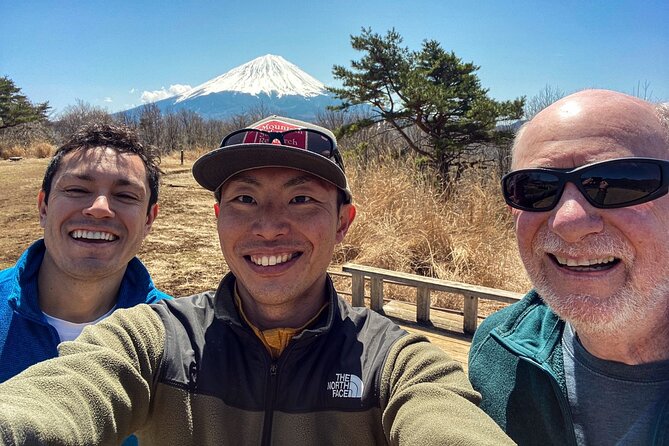
Lake Kawaguchiko is the best-known of the Fuji Five Lakes, and its combination of water and mountain draws a large crowd. Lake Saiko offers a calmer contrast.
The lake stop takes about 10 minutes, but the view is worthwhile when Fuji is visible. You may get the best sense of the area here by comparing the two lakes. Kawaguchiko is the famous gateway, while Saiko feels more peaceful and less built up in the supplied description.
The tour also makes a general stop where you can see Fuji from the trail on a clear day. Keep your expectations realistic. Mt. Fuji often hides behind cloud, and a mountain tour cannot control visibility. The scenery remains worthwhile in poor conditions, but the signature views are most rewarding on a clear morning.
Same trailhead, a longer or shorter day out:
- 3hours Primeval Forest and Stunning Views of Cliff Trekking Tour
★ 5.0 · 20 reviews - Mt. Inunaki Trekking and Goma Prayer Experience in Osaka
★ 5.0 · 8 reviews - Iriomote’s Adventure: Pinaisara Falls Canoe and Trekking Tour
★ 5.0 · 7 reviews - Ninja Trekking half-day tour at Mt.Daimonji Kyoto
★ 5.0 · 6 reviews
Aokigahara Forest and the marks of an eruption
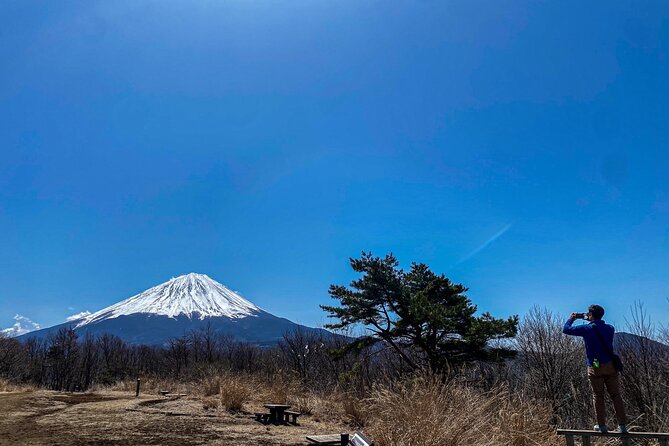
Aokigahara is known locally as Jukai, or the sea of trees. The name comes from the way the forest appears to stretch like a sea when viewed from above.
Its origin is volcanic. A major Mt. Fuji eruption about 1,200 years ago helped create the forest area. This gives the walk a strong sense of cause and effect: the mountain erupted, the lava shaped the ground, and trees later took root across it.
You spend about 15 minutes at this stop. It is not presented as a long forest trek, but as a place to understand the scale and origin of the area. That makes it a good companion to the lava cave visit. One shows the forest that grew after volcanic activity; the other lets you consider what that activity left beneath the surface.
Aokigahara carries a serious reputation, but this tour focuses on its natural and volcanic setting. Yuki’s local knowledge can help keep the stop grounded in the area’s actual geography and traditions.
The Ryugudoketsu lava cave and old mountain beliefs
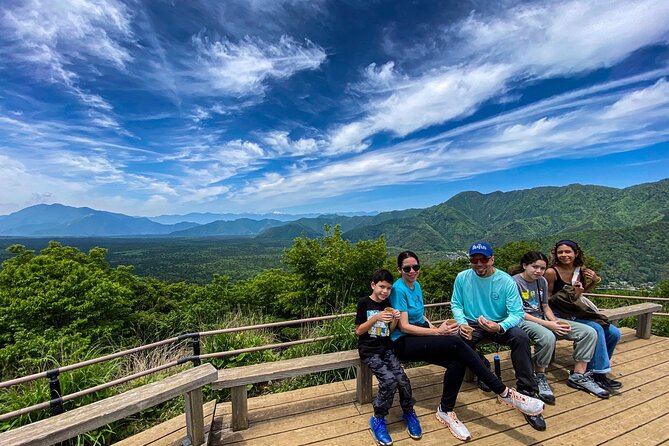
At the entrance to Ryugudoketsu, you visit a sacred cave connected with Mt. Fuji worship. People once came here to pray to the goddess of Mt. Fuji before climbing the mountain. They believed the cave’s interior represented the inside of the goddess, which gave the site a strong spiritual role.
The stop lasts about 30 minutes. It adds a physical sense of the volcano that a distant view cannot provide. You are not simply looking at Fuji from across a lake. You are considering the underground spaces and volcanic remains created by the mountain.
The information provided does not give cave conditions, surface details, or a precise distance inside. For that reason, you should follow Yuki’s instructions and avoid assuming this is a long cave expedition. It is one part of a varied day, not a separate caving activity.
Climbing Sankodai for the big view
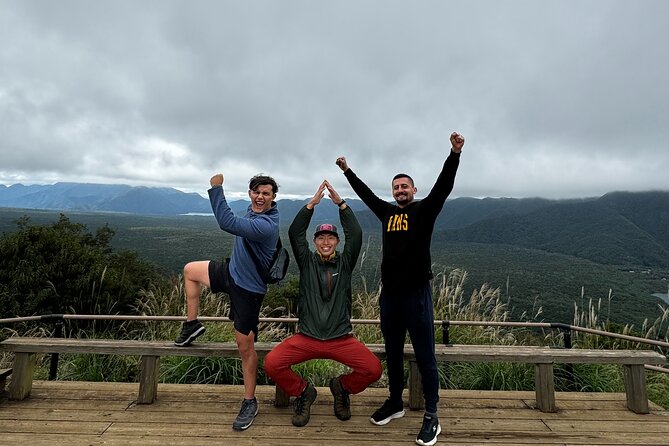
The main physical section is the hike to Sankodai. The full climb and return is described as moderate and suitable for outdoor beginners. The uphill portion takes about an hour, while the descent is shorter in the general description. One outing took around two hours round trip with a break at the top, so allow roughly that amount of time rather than treating the timing as exact.
At the viewpoint, you can see Mt. Fuji, Lake Saiko, and the sea of trees at once. This is the visual reward of the day. The view combines the mountain, water, and forest in a single frame, giving you a clearer sense of how the Fuji area fits together.
The trail is not presented as a technical climb, and free trekking shoes and poles are available. Rain jackets, rain pants, and gloves can also be borrowed. That equipment is particularly helpful for visitors who want to hike but did not bring a full set of outdoor clothing.
Still, moderate does not mean effortless. You should be ready for an uphill walk and changing weather. Comfortable clothes and a willingness to walk for about two hours will serve you better than relying on the word beginner alone. If conditions are cloudy, the hike remains a forest outing, but the high viewpoint may not deliver the famous Fuji view.
Yuki’s approach seems to add warmth to this part of the day. At the top, he has brought tea, coffee, chocolate, and snacks for a break. Small touches like that matter on a private hike, especially when you have time to stop and enjoy the view rather than rush straight back down.
Yoshida Udon in a local restaurant
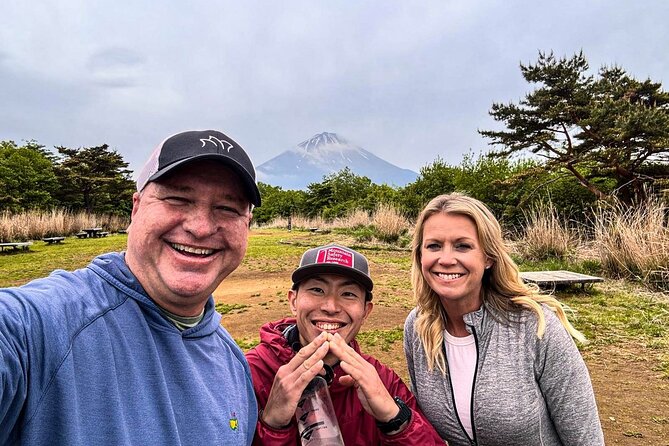
After the trail, the tour turns to food. Yuki takes you to a local restaurant for Yoshida Udon, a signature dish of the area. Lunch is not included, but the expected cost is about 1,000 yen per person.
This is a useful part of the experience because it gives the day a local center. You are not simply returning to your hotel after a viewpoint. You are sitting down for a regional meal, with the guide choosing a place that can be difficult for a first-time visitor to find independently.
The restaurant stop lasts about 30 minutes. That is enough for a straightforward meal, though not a long dining experience. If you want a leisurely lunch or have strict dietary needs, ask for details before booking, since the available information does not specify the menu beyond Yoshida Udon.
Japanese garden and optional matcha
The final stop is Fujisan Onsen Hotel Kaneyamaen in Fujiyoshida. The hotel is described as one of the city’s oldest and has a large Japanese garden open to the public.
You have about 30 minutes here. It is a gentle finish after the hike, with time to sit in the garden and slow down. You can also order matcha with a Japanese sweet for an optional 1,000 yen per person. If you prefer not to spend more, you can simply enjoy the garden.
I like this ending because it changes the mood. The day begins with sacred sites and volcanic terrain, reaches its high point on a mountain trail, and ends with tea and a garden. It gives you a more rounded impression of the region than a simple drive between photo stops.
What the $131.38 price includes
The price is easiest to judge by looking at what you would otherwise need to arrange. You receive:
- Private transportation
- A certified guide
- Trekking shoes
- Trekking poles
- Rain jackets and pants
- Gloves
Lunch, insurance, and optional matcha are extra. Lunch adds about 1,000 yen, and matcha with a sweet adds another 1,000 yen if you choose it.
For a solo visitor, the cost may feel high compared with a standard sightseeing bus. For a small private group, the value improves because the transport and guide fee are shared while the group keeps a personal schedule. The gear rental also saves you from buying or packing equipment for one moderate hike.
The strongest value comes from the combination of activities. You are not paying only for a walk. The day includes cultural interpretation, local transport, a volcanic site, a lake, a mountain viewpoint, regional food, and a garden visit.
Who should book this Fuji hike
I would recommend this experience if you want more than the standard Kawaguchiko photo stop. It suits you especially well if you value local stories, prefer a private group, and want a moderate hike rather than a full climb of Mt. Fuji.
It is also a good fit if you have limited hiking equipment. The supplied shoes, poles, rainwear, and gloves remove much of the preparation burden.
Families and mixed-ability groups may appreciate the private format, since the pace can be more personal. The activity says most people can participate, but the trail still requires an uphill walk. Anyone with mobility limits or concerns about mountain walking should ask for more detail before reserving.
This is not the right choice if your main goal is a guaranteed Fuji photograph. Cloud can cover the mountain, and the tour requires suitable weather. It is also not ideal if you want a long, unhurried meal or a full-day cultural tour with extended time at each shrine and garden.
Booking, cancellations, and weather
Confirmation is provided at booking, and the activity is private, with only your group taking part. Free cancellation is available if you cancel at least 24 hours before the 9:00 am start time. Cancellations or changes made within 24 hours are not accepted for a refund.
The tour may be canceled in poor weather. In that case, you are offered another date or a full refund. This policy is sensible for a mountain outing, but it means you should keep some flexibility in your Fuji schedule if possible.
Should you book it?
Book this tour if you want a personal introduction to Mt. Fuji that joins nature, belief, food, and a moderate walk in one well-shaped day. Yuki’s guiding, the free equipment, and the private transport make the $131.38 price easier to justify, especially for a small group.
Skip it if you need a guaranteed clear view, cannot manage an uphill trail, or want every meal and extra included. For the right visitor, though, this is a thoughtful way to see the Fuji area beyond its famous postcard angle.
FAQ
Where does the tour take place?
The experience takes place around Fujikawaguchiko and Fujiyoshida, at the foot of Mt. Fuji. Stops include Fuji Omuro Sengen Shrine, Lake Saiko, Aokigahara Forest, Ryugudoketsu, Sankodai, a local restaurant, and Fujisan Onsen Hotel Kaneyamaen.
What time does the tour start?
The tour starts at 9:00 am.
How long does the experience last?
The experience lasts approximately five to six hours.
Is pickup available?
Pickup is available only for people already staying in the Kawaguchiko or Fujiyoshida area, or for those who can reach those areas independently.
Is this a private tour?
Yes. Only your group takes part in the activity.
Is hiking equipment provided?
Yes. Trekking shoes, trekking poles, rain jackets and pants, and gloves are available at no extra charge.
How difficult is the hike?
The trail is described as moderate and suitable for outdoor beginners. The uphill walk to Sankodai takes about an hour, and the return is shorter. The complete hike may take around two hours with a break.
Is lunch included?
No. Yoshida Udon costs about 1,000 yen per person.
Can I cancel for a full refund?
Yes, if you cancel at least 24 hours before the experience start time. If poor weather causes the tour to be canceled, you are offered a different date or a full refund.
Recently added around Japan
- Ninja Trekking half-day tour at Mt.Daimonji Kyoto★ 5.0 · 6 reviews
- Relax and refresh in Karuizawa Forest! Shinanoji down trekking around two people★ 4.0 · 2 reviews
- Mt. Inunaki Trekking and Goma Prayer Experience in Osaka★ 5.0 · 8 reviews
- Mt. Inunaki Trekking and Hot Springs in Izumisano, Osaka★ 5.0 · 3 reviews
- Matt Canyon River Trekking Nishiwaga Town, Iwate Prefecture★ 5.0 · 4 reviews
- Trekking Tour to Faith, Ancient Paths and the Falls from Hitachi★ 5.0 · 2 reviews
- Iriomote’s Adventure: Pinaisara Falls Canoe and Trekking Tour★ 5.0 · 7 reviews
- 3hours Primeval Forest and Stunning Views of Cliff Trekking Tour★ 5.0 · 20 reviews
Japan Trekking Tours, compared.
Okinawa Jungle Trails & Waterfalls – Private Yanbaru Tour
Read our review →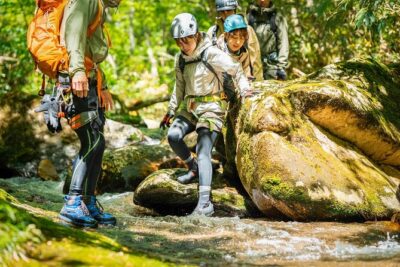
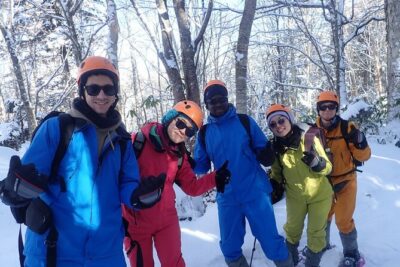
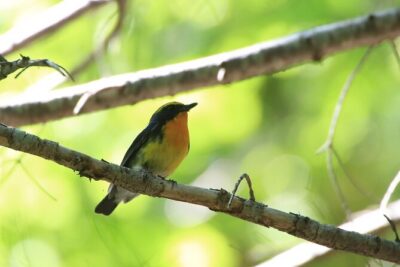
3hours Primeval Forest and Stunning Views of Cliff Trekking Tour
Read our review →
Mt. Inunaki Trekking and Goma Prayer Experience in Osaka
Read our review →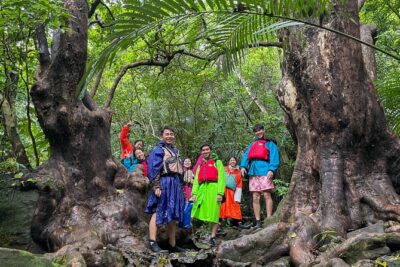
Iriomote’s Adventure: Pinaisara Falls Canoe and Trekking Tour
Read our review →
Ninja Trekking half-day tour at Mt.Daimonji Kyoto
Read our review →Browse the lists this tour appears in