
REVIEW · CUSCO
4-Day Lares Trek to Machu Picchu
Trade the crowded trail for high Andean silence. This four-day route from Cusco reaches Machu Picchu by way of the quieter Lares Valley, where you walk past alpine lakes, snowy peaks, small Quechua communities, and old Inca sites. I like the chance to see a less-touristed side of Peru, and I like that the price includes guides, meals, camping equipment, transfers, the train, and a hotel in Aguas Calientes.
The main catch is altitude. You will climb to about 14,000 feet, or 4,400 meters, and one traveler named Tim found walking difficult at the higher elevations, even with strong support from guide Edgar. This is not a gentle sightseeing holiday. You need solid fitness, proper clothing, and time in Cusco to adjust before starting.
Key points to know before booking
- The highest pass reaches nearly 14,000 feet: Altitude, not distance, is the main challenge.
- The Lares route feels quieter and more local: You pass small Quechua villages, family farms, lakes, and remote valleys rather than walking with large crowds.
- Camping is mixed with comfort: You sleep in mountain tents for two nights, then use a hotel in Aguas Calientes.
- Ollantaytambo adds an important Inca site: Its agricultural terraces help connect the trek with Peru’s larger archaeological story.
- The package carries much of the practical burden: A chef, mules, meals, tents, mattresses, buses, trains, and transfers are included.
- The fourth morning starts early: You reach Machu Picchu by bus for a guided visit, with time afterward to explore on your own.
What the $656.42 price really covers
At $656.42 per person, this is not a bare-bones hiking trip. The cost includes pickup from your Cusco hotel, transportation to the trailhead, a bilingual professional guide, a chef, meals, camping equipment, mules for cooking gear and up to 7 kilograms of your personal belongings, the train to Aguas Calientes, buses to Machu Picchu, and your hotel on the third night.
That package matters on a route like this. You are not only paying for someone to walk in front of you. You are paying for food preparation, camp support, high-altitude logistics, and the transport needed to connect the trek with Machu Picchu. An assistant guide is added for groups of nine or more, and the maximum group size is 15.
Three breakfasts, three lunches, three dinners, and three afternoon snacks are included. Water is also provided, except during the first four hours of the trek, so you need to start Day 1 with your own supply.
There are still extra costs. You must bring or rent a sleeping bag, and the tour does not include breakfast on Day 1 or lunch on Day 4. Tips, travel insurance, and an optional ticket for Huayna Picchu or Machu Picchu Mountain are also separate.
The package is especially good value if you want a guided, organized route without arranging each transfer yourself. It is less attractive if you already own camping equipment, prefer to carry your own kit, or want a very flexible schedule.
More Inca Trail Treks in Cusco
- Salkantay Trek Challenge – 3 Days / 2 Nights
★ 5.0 · 101 reviews - Choquequirao Trek 4 days and 3 nights
★ 5.0 · 81 reviews - Machu Picchu: 5-Day Salkantay Trek with Panoramic Train
★ 5.0 · 79 reviews
Day 1: Pumahuanca and the long climb to Puyoc
The day begins with a 5:00 a.m. pickup in Cusco, which sits at about 3,399 meters, or 11,152 feet. You travel by private transport through the Sacred Valley, passing Andean villages and views of snow-covered peaks before reaching Pumahuanca at 2,950 meters.
The first day covers about 14 kilometers, or 8.7 miles, and climbs roughly 1,150 meters. That is a serious opening day, especially because your body may still be adjusting to altitude. The route moves through a valley with native forest and streams, giving you changing scenery rather than a simple uphill slog.
A stop at the Inca site of Pumahuanca adds meaning to the walk. Your guide explains the site, local plants, and birdlife, so you are not simply watching your boots and counting the remaining hours.
The key point is pacing. You do not need to race the group, and you should tell your guide early if you feel dizzy, unusually tired, or short of breath. The support system includes an oxygen bottle and a first aid kit, but those are safeguards, not substitutes for sensible pacing.
You finish near Puyoc, where the high-altitude campsite sets up the first night outdoors. Tents are shared by two people in four-person tents, and an inflatable Thermarest mattress is supplied. The dining tent has tables and chairs, a small but valuable comfort after a full day on your feet.
Day 2: The high pass, Yanacocha, and Cuncani
Day 2 is described as the most scenic part of the trek, but it begins with another climb. From the Puyoc campsite, you walk about 13 kilometers, or 8 miles, toward Cuncani at 3,900 meters.
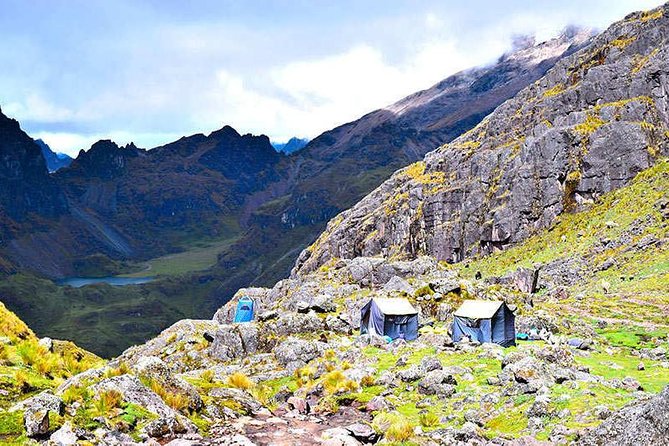
The route reaches the highest pass after about two hours of climbing. At nearly 4,400 meters, or close to 14,000 feet, this is the moment that tests your preparation. The views open toward snowy peaks and remote valleys, but the thin air can make even a modest slope feel demanding.
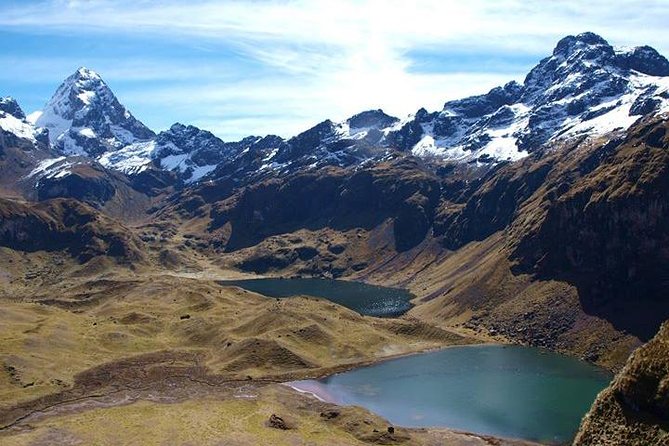
After the pass, the trail mostly descends. That change is welcome, although downhill walking can still tire your knees and thighs. The route passes several mountain lakes, including Yanacocha, known as Black Water Lake. Its dark surface reflects the sky and gives the setting a quiet, almost solemn feel.
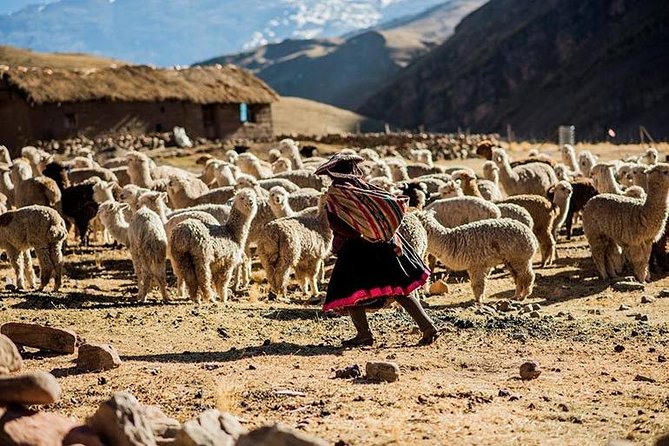
This side of the pass also brings a cultural change. You move through remote communities where traditional clothing, farming, and village life remain part of the daily scene. The experience is valuable because the trek is not only about reaching Machu Picchu. You get a closer look at the people and places that make the Andes more than a backdrop for an archaeological site.
Cuncani is your destination for the night. At 3,900 meters, it remains very high, so warmth and rest matter. Pack gloves, a hat, and a proper warm layer even if the lower sections of the walk feel mild.
Day 3: A Quechua family visit and the Lares hot springs
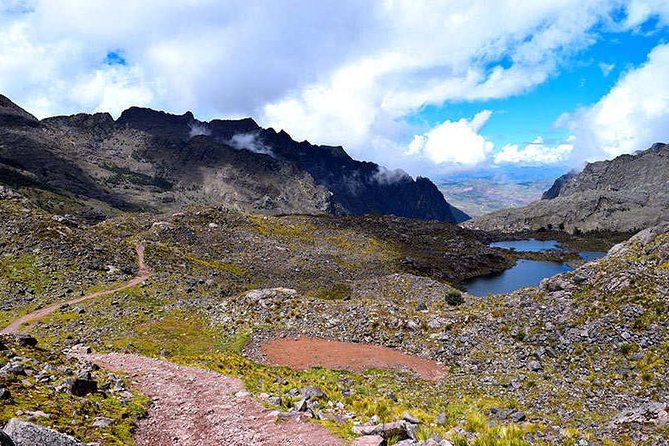
Day 3 is shorter, covering about 6 kilometers, or 3.7 miles, on a gentle descent toward Lares. The walking time is listed at about three hours, giving you more room to focus on local life and recover from the first two days.
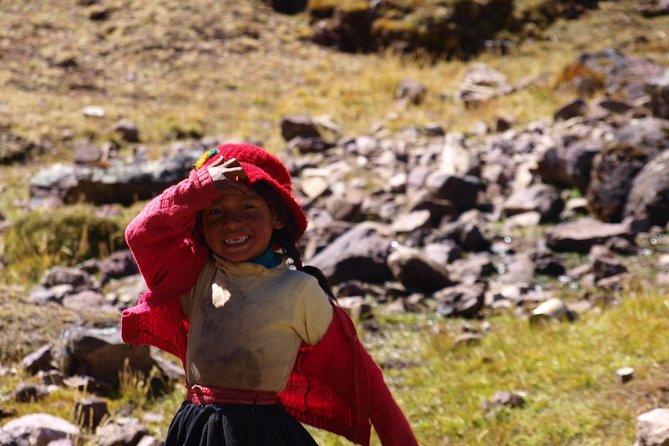
An early visit to an Andean family is the cultural center of the day. You meet the family in their home, learn about their traditions, and may have a chance to use a few Quechua phrases. Small gifts can be offered, and handwoven alpaca textiles are available to browse.
This stop calls for respectful behavior. Bring curiosity rather than expectations, and ask your guide how to handle gifts, photographs, and purchases. The textile visit can be a good chance to buy something directly connected to the community, but you should only purchase if you genuinely want the item.
Along the descent, you pass quinoa and tarwi fields. These crops provide a useful connection to Andean food and farming, especially after seeing the high villages where cultivation is shaped by cold, altitude, and short growing seasons.
The day ends at the Lares hot springs, at roughly 3,150 meters. After two demanding days, the chance to soak in warm water is more than a pleasant extra. It gives your legs a break before the final Machu Picchu portion of the trip.
You then continue the journey toward Aguas Calientes, including the scenic train ride. The exact rhythm of the day matters: you move from a mountain trail to rail transport and then to a proper hotel room. That switch makes the third night much easier than another cold campsite.
Same trailhead, a longer or shorter day out:
- From Cusco: 7 Lakes Ausangate Trek with Breakfast and Lunch
★ 4.8 · 360 reviews - Cusco: Full-Day Rainbow Mountain & Red Valley Trekking Tour
★ 4.5 · 121 reviews - From Cusco: Rainbow Mountain Trek
★ 4.5 · 98 reviews - Ancascocha Trek To Machu Picchu 4 Days And 3 Nights
★ 5.0 · 77 reviews
Ollantaytambo adds an important Inca stop
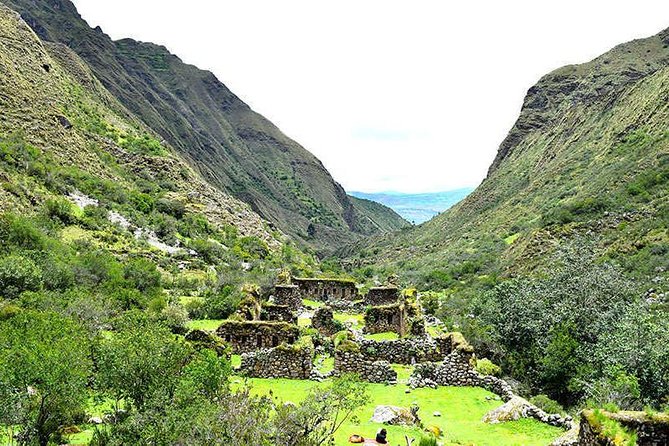
Ollantaytambo is included as part of the wider experience and is one of the strongest archaeological stops connected with the route. The town is known for its old Inca terraces, built for farming on steep slopes.
The terraces show how practical Inca engineering could be. They were not decoration. They helped make agriculture possible in difficult mountain terrain, and their scale gives you a clearer sense of how organized the Inca state was.
Ollantaytambo also works well as a transition point between the Sacred Valley and the rail journey toward Aguas Calientes. It adds archaeological interest before Machu Picchu, so the final citadel is not your first encounter with Inca construction.
Do not expect a long, leisurely museum visit here. The wider schedule has an early start, mountain walking, train travel, and a fixed Machu Picchu entry. Still, even a focused visit can make the next day’s ruins easier to understand.
Aguas Calientes: a useful night before Machu Picchu
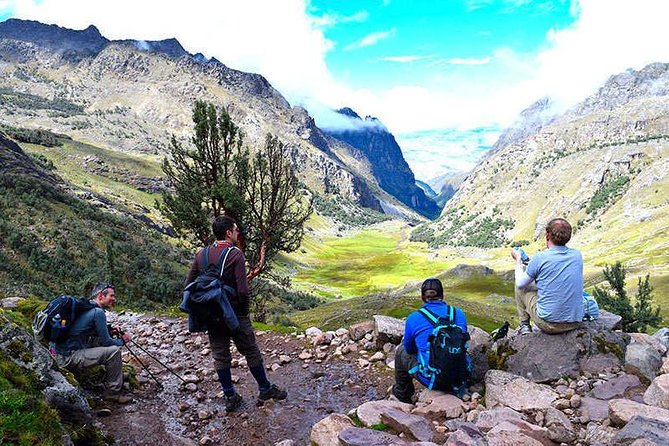
The included hotel in Aguas Calientes is one of the package’s practical strengths. After sleeping in tents and hiking at high altitude, you get a bed before the early visit to Machu Picchu.
The town is also the base for the final morning buses. The tour includes round-trip bus transport between Aguas Calientes and the citadel, so you do not need to arrange that connection separately.
You will have time to soak in the natural hot springs in Aguas Calientes, an appealing reward after the trek. Keep your expectations sensible: the springs are part of a busy tourist town, not a remote mountain pool. Their value is mainly the chance to rest your muscles before the final early start.
Day 4: Machu Picchu before the day gets busy
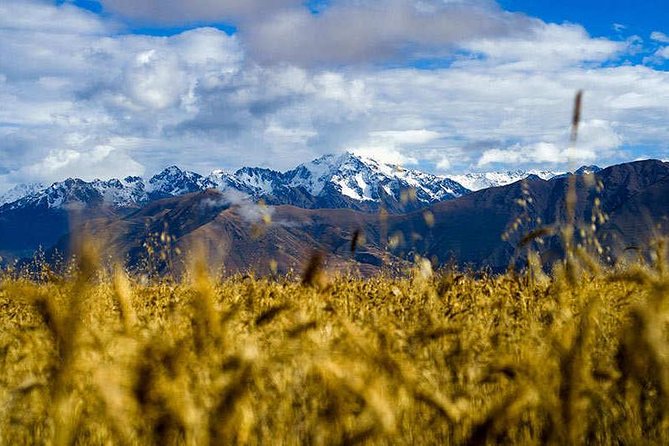
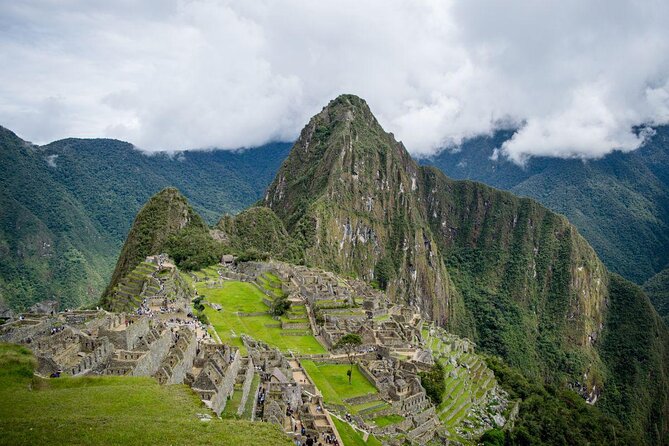
The last day begins with breakfast and a morning bus up to Machu Picchu, at 2,430 meters, or 7,972 feet. The early timing is smart. It gives you a better chance to see the citadel before the site becomes more crowded.
Inside, your guide leads a detailed visit through temples, ceremonial spaces, terraces, and storage buildings. A guided tour is useful here because Machu Picchu can otherwise become a blur of stone walls and excellent viewpoints. The guide gives structure to the visit and explains how the main areas fit together.
After the guided portion, you get time to explore independently. I value that balance. Too much guiding can make a famous site feel like a classroom, while no explanation at all leaves you guessing. Here, you receive context first and then have space to look around at your own pace.
Huayna Picchu and Machu Picchu Mountain are optional additions, not part of the standard price. You need an extra ticket in advance for either one. Huayna Picchu reaches 2,720 meters, while Machu Picchu Mountain reaches 3,082 meters. If you want one of these climbs, arrange it before the trip rather than assuming it can be added at the gate.
Lunch on Day 4 is not included, so plan for that expense after leaving the citadel. The return transport by train and bus to Cusco is included, which keeps the final day organized.
Fitness, altitude, and what to pack
You should have a strong level of physical fitness for this tour. The mileage is manageable for a fit hiker, but the altitude changes the effort. The climb on Day 1 and the high pass on Day 2 are the hardest sections.
Cusco itself is already at 3,399 meters. Arriving with some time to adjust is sensible, although the tour data does not specify a required acclimatization period. Pay attention to how you feel before the 5:00 a.m. pickup.
Bring:
- Walking boots
- Waterproof jacket or rain poncho
- Warm jacket
- Hat and gloves
- T-shirts and comfortable trousers
- Sunscreen of factor 35 or higher
- Insect repellent
- Toiletries and hand sanitizer
- Personal medication
- Flashlight with spare batteries
- Original passport
- ISIC card if you want to qualify for a student discount
You also need a sleeping bag, unless you hire one from the operator. The mules carry cooking and camping equipment plus up to 7 kilograms of your personal items, but you should still pack with restraint.
Vegetarian meals are available at no extra cost if you request them when booking. Tell the guide and cook about allergies as well as recording them on your trek voucher. The operator does not accept bookings from people with life-threatening allergies, so this point deserves attention before you pay.
The minimum age is six, but the altitude and long walking days matter more than the age limit. A young child may technically qualify and still find the trek too demanding.
The guide can make a real difference
The most encouraging personal detail comes from the experience of Tim, who had trouble walking at higher elevations. Guide Edgar helped and encouraged him to reach the top of the mountain, turning a difficult section into a successful one.
That detail points to an important question: how does the guide handle a slow or struggling walker? Here, the guide is not only there to explain plants, birds, and Inca sites. The guide also manages pace, watches the group, and provides reassurance when altitude becomes a problem.
The 4.9 rating from 30 published ratings and a 97 percent recommendation rate suggest a strong overall record. Still, no guide can remove the physical demands of the route. Edgar’s support is a positive sign, but you should book this trek only if you are prepared to work hard.
Who should choose this Lares Trek?
I would choose this route if you want Machu Picchu combined with quiet mountain walking and contact with small Andean communities. It suits you if you prefer a less crowded path, appreciate a guide-led cultural experience, and like having meals and transport handled in one package.
It is a good fit for hikers who want both camping and comfort. You get two nights in the mountains, then a hotel and train ride before Machu Picchu.
I would hesitate if your main goal is an easy route to the ruins. The 14,000-foot pass, early starts, cold nights, and Day 1 climb are real demands. I would also hesitate if you dislike fixed schedules or cannot manage high-altitude hiking.
The cancellation terms are strict. The experience is non-refundable and cannot be changed for any reason, so buy travel insurance and be certain of your dates before booking.
Should you book it?
Book this Lares Trek if you want more than a quick visit to Machu Picchu. The route gives you snowy peaks, high lakes, farming villages, Quechua culture, Inca terraces, hot springs, a scenic train ride, and a guided visit to the citadel. That is a lot of Peru packed into four demanding days.
Skip it if altitude is a major concern or if you want a relaxed vacation. For a fit hiker who values quiet trails and practical support, the $656.42 price is fair, especially with meals, camping gear, mules, buses, trains, and a hotel included.
FAQ
What time does the Lares Trek begin?
Pickup begins at 5:00 a.m. from your hotel in Cusco.
How high does the trek go?
The highest pass reaches nearly 14,000 feet, or about 4,400 meters.
Is food included?
Yes. Three breakfasts, three lunches, three dinners, and three afternoon snacks are included. Breakfast on Day 1 and lunch on Day 4 are not included.
Is camping equipment provided?
Yes. The package includes a tent shared by two people, an inflatable Thermarest sleeping mattress, a dining tent, tables, chairs, and mules for cooking and camping equipment. A sleeping bag is not included, but it can be hired.
Is the train to Aguas Calientes included?
Yes. Return transportation by train and bus to Cusco is included, along with round-trip buses between Aguas Calientes and Machu Picchu.
Can I visit Huayna Picchu or Machu Picchu Mountain?
Yes, but you need an additional ticket purchased in advance. Huayna Picchu and Machu Picchu Mountain are not included in the standard tour price.
More 4-Day Experiences in Cusco
- 4 Day Inca Trail Trek to Machu Picchu Multi day tour
★ 5.0 · 70 reviews - Salkantay Trek 4 Days to Machu Picchu by Glamping Sky Lodge Dome
★ 5.0 · 68 reviews - Salkantay Trek to Machu Picchu in 4 days
★ 4.5 · 50 reviews - 4-Day Lares Trek to Machu Picchu from Cusco
★ 5.0 · 47 reviews
Recently added around Cusco
- Small Group: 4-Day Inca Trail Trek to Machu Picchu★ 5.0 · 33 reviews
- 5 Day – Salkantay trek to Machu Picchu – Group Service★ 4.5 · 27 reviews
- 6 day Rainbow Mountain x Ausangate Trek – FlashpackerConnect★ 5.0 · 30 reviews
- Salkantay Trek: 5 Days to Machu Picchu★ 5.0 · 33 reviews
- Humantay Lake Full-Day Adventure: Scenic Trek and Stunning Views★ 4.5 · 39 reviews
- Salkantay 5-Day Trek To Machu Picchu★ 5.0 · 39 reviews
- Inca Trail Trek to Machu Picchu – 2 Days (Small Group or Private)★ 5.0 · 31 reviews
- Ausangate and Rainbow Mountain Trek – 3 Days / 2 Nights★ 5.0 · 35 reviews
Machu Picchu & Inca Trail Treks, compared.
Machu Picchu: 5-Day Salkantay Trek with Panoramic Train
Read our review →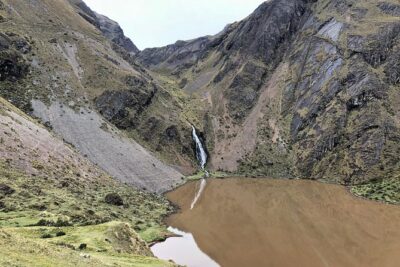
Ancascocha Trek To Machu Picchu 4 Days And 3 Nights
Read our review →
4 Day Inca Trail Trek to Machu Picchu Multi day tour
Read our review →
Salkantay Trek 4 Days to Machu Picchu by Glamping Sky Lodge Dome
Read our review →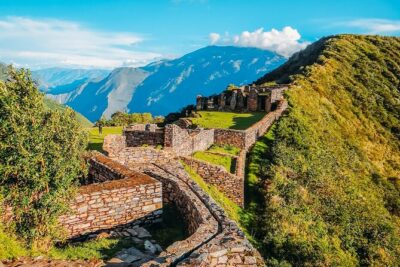
Browse the lists this tour appears in