
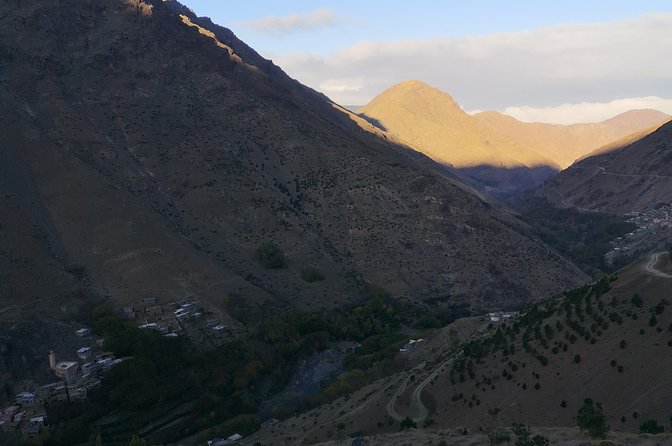
REVIEW · MARRAKECH
Trekking in Morocco / Toubkal Circle and Waterfalls 3 Days 2 Nights
North Africa’s highest summit waits in the snow. This three-day trek from Imlil combines Mount Toubkal, the Azzaden Valley, high waterfalls, and two mountain nights, making it a serious but rewarding Atlas Mountains adventure. I like the route’s variety: you are not simply walking up and down the same trail, and the mule team carries your baggage and food. I also like the practical setup, with a mountain guide, meals, transport, and pickup included. The main caution is the effort required, especially on summit day, which can take up to 12 hours.
The route reaches 4,167 meters, so this is not a casual mountain stroll. Winter snow equipment is part of the experience, not a decorative extra, and you need strong fitness, warm clothing, proper boots, and a willingness to handle long uphill sections. The group is limited to 12 people, which should keep the walk more personal, though the actual pace will still depend on the group.
The route at a glance
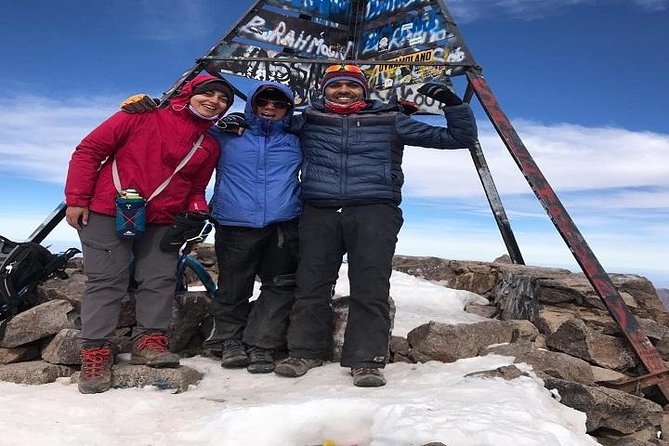
- Three days from Imlil and back: The route forms a useful circle through Tizi M’zzik, Tamsoult, the waterfalls, Toubkal Refuge, and the summit.
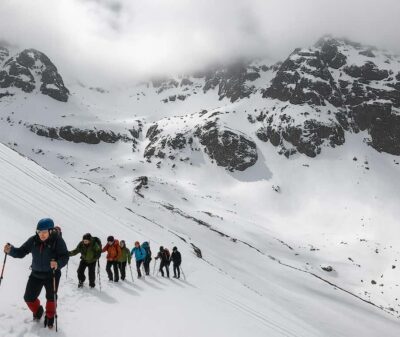
- Winter Mount Toubkal attempt: Snowy conditions offer striking views, but crampons and ice axes may be needed and are available to rent.
- A high point of 4,167 meters: Mount Toubkal is the highest peak in North Africa, with views toward the High Atlas and, from the summit, the Sahara Desert.
- Waterfalls and the 82-step climb: Day Two includes the area’s biggest waterfalls and a steep zig-zag section toward Refuge Lipeney.
- Support from mules and porters: Your baggage and food are carried, reducing the load on your back during the long ascent.
- A small-group mountain trip: The maximum group size is 12, with pickup offered and an air-conditioned vehicle included.
Why this route is more than a summit walk
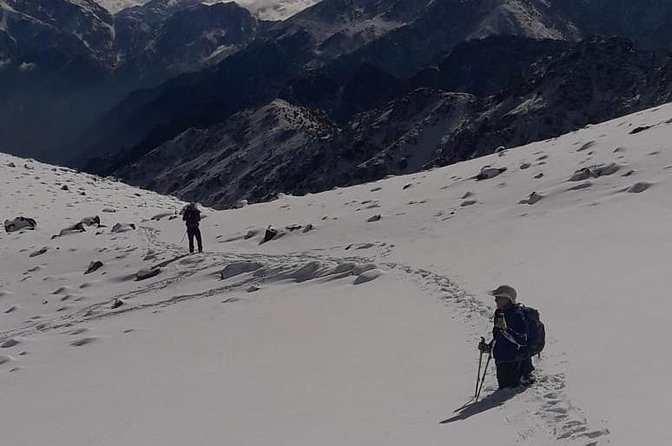
A standard peak attempt can feel like a long march toward one payoff. This route gives you several distinct chapters. You begin among the valleys near Imlil, cross Tizi M’zzik at 2,450 meters, spend time in the Azzaden Valley, visit waterfalls, cross the much higher Aguelzim Pass at 3,560 meters, and then tackle Toubkal itself.
I like that progression. You get a sense of the mountains before the summit day, rather than being dropped into a single exhausting climb. The route also gives you a look at the working side of a Moroccan mountain trek. Mules and their owners carry baggage and food, while the guide manages the route and the group.
The setting changes quickly. The first day includes a walk through broad juniper forest. Later, the path becomes steeper and more exposed in feel, especially around the pass and refuge approach. In winter, snow alters the character of every section. A slope that would be straightforward in dry weather may require careful foot placement and rented equipment.
More Atlas Mountains Treks in Marrakech:
- Marrakesh: 2-Day Mt. Toubkal Trek with 1-Night Stay & Meals
★ 4.7 · 795 reviews - Marrakech: 2-Day Atlas Mountains Trek with Village Stay
★ 4.8 · 717 reviews - From Marrakech: 3-Day Mount Toubkal Climbing Trek
★ 4.7 · 597 reviews
Day One: Imlil to Tizi M’zzik and Tamsoult
The trek begins at Imlil at about 8:30 in the morning. Pickup is offered, and the included air-conditioned vehicle is useful for getting you to the starting point without arranging a separate transfer.
The first day takes around six hours. From Imlil, you climb toward Tizi M’zzik at 2,450 meters. This pass gives you broad views over the Azzaden valleys, so it is an early reward for the uphill work. You then continue through juniper forest toward Azib n’Tamsoult.
This section should suit you if you enjoy a gradual introduction to mountain walking. You gain height, but the day is shorter than the final summit push. The forest also breaks up the route and gives the scenery a different texture from the bare, snowy slopes higher up.
The overnight stay is at Azib Tamsoult, either in a refuge or at camp. The information provided gives the place as 300 meters, but that figure appears inconsistent with the high mountain route, so you should confirm the exact overnight altitude before departure. The key point is that you spend the first night away from Imlil, already positioned for the waterfalls and pass on Day Two.
Lunch is included during the trek, along with dinner, breakfast, coffee, and tea as part of the supplied meals. Water is not included. You buy it from local sellers, so carry enough for each stage and keep some Moroccan dirhams available.
Day Two: waterfalls, Refuge Lipeney, and Aguelzim Pass
After breakfast, the route heads toward the area’s biggest waterfalls. That makes Day Two more than a transfer between overnight stops. You have a clear natural feature to look forward to, then a sustained climb toward the high refuge.
The route passes Refuge Lipeney and includes an 82-step zig-zag path. Do not treat those steps as a small sightseeing stop. They are part of a demanding uphill section, and in snow or icy conditions they can take time and concentration.
From there, the trail continues toward Aguelzim Pass at 3,560 meters. This is a major altitude gain and one of the harder points of the trip. You then make your way to Neltner Refuge, also referred to as the Toubkal Refuge, at 3,208 meters. The second night is spent there or at camp.
The numbers require a little care. Aguelzim Pass is higher than the refuge, so the route includes a high crossing before dropping or continuing toward the overnight base. Your guide will determine the safest line in winter conditions. The exact route can change with snow, and that is one reason a mountain guide matters here.
This day is likely to feel tougher than Day One, even though it does not include the summit. You are climbing higher, dealing with thinner air, and preparing for the next morning. If you have not spent much time at altitude, walk steadily and avoid racing the group early in the day.
Day Three: Mount Toubkal at 4,167 meters
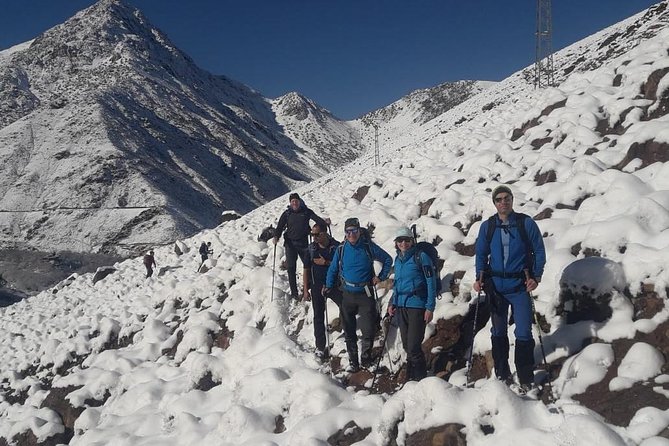
Summit day is the reason most people choose this trek, but it is also the part that demands the most honesty about your fitness. The day can take up to 12 hours, including the ascent, descent, and return to Imlil.
From the Toubkal Refuge, you climb toward Mount Toubkal at 4,167 meters. In winter, crampons and ice axes may be required. They are available for rent, but you should not leave this decision until the last minute. Ask the provider what equipment is available, what it costs, and whether the guide will check that it fits and is suitable for the conditions.
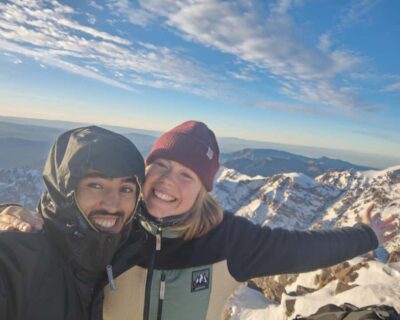
The summit views include the High Atlas and the Sahara Desert. Visibility is never guaranteed in mountain weather, but the promise of seeing both mountain country and desert from North Africa’s highest peak gives this walk its special pull.
The summit is only half of the day. You still need to descend and return to Imlil, which is why the 12-hour estimate matters. A descent can be hard on tired knees, particularly after walking on snow or uneven rock. I would treat this as a full mountain day, not a quick morning climb followed by a relaxed afternoon.
A strong guide makes a major difference here. The trip includes a mountain guide, and the family experiences connected with this program praise the organization by Mohammed as well as the support of the guide and mule team. One seven-person family group reached the summit with that setup, suggesting the operation can manage a larger family party while keeping the practical side organized.
More Waterfall Treks in Marrakech:
- Atlas Mountains:Full-Day Trek to Berber Villages & Waterfall
★ 5.0 · 50 reviews - Trekking in Morocco / 3 Days Valley Trek in the Atlas Mountain & Waterfalls
★ 5.0 · 34 reviews - Atlas Mountains, Waterfalls Day Hike & Trek From Marrakech
★ 5.0 · 24 reviews - Bali: Munduk Waterfalls Trek, Twin Lakes and Temple Tour
★ 4.8 · 545 reviews
Winter conditions and equipment you need
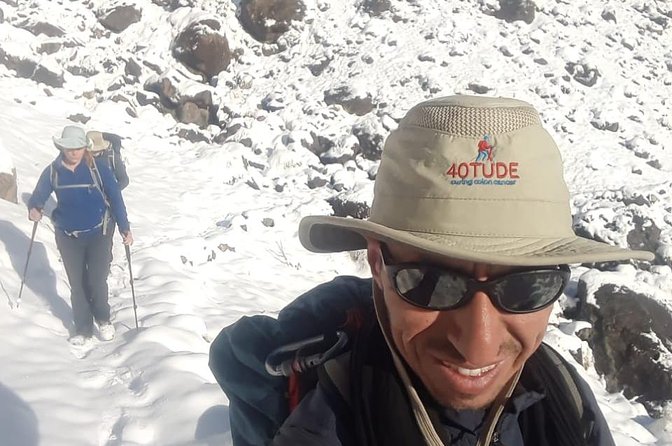
The winter setting is the chief attraction and the chief risk. Snow gives Toubkal a sharper, more dramatic look, but it also changes the trail surface and the time required for each stage.
You should bring:
- Walking boots
- Sleeping bag
- Jacket and down jacket
- Warm clothing
- Hat and gloves
- Head torch
- Sunglasses
- Sunscreen
Crampons and axes are available to rent. Your own boots still need to be suitable for cold, wet, uneven ground. Ordinary footwear is not a sensible substitute for proper walking boots on this route.
A head torch is important because the summit day is long, and the start or finish may involve low light. Sunglasses and sunscreen matter even in cold weather. Snow can reflect strong sunlight, and high-altitude exposure is easy to underestimate.
The supplied information does not specify a detailed equipment list, rental price, sleeping arrangements, or the exact winter grade of the route. Ask these questions before booking. You should also ask whether the refuge provides bedding or whether your sleeping bag is your only bedding, since a sleeping bag is specifically requested.
Meals, water, and the mule team
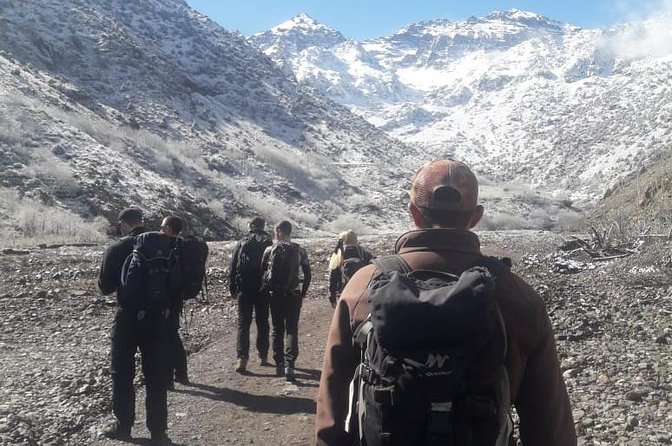
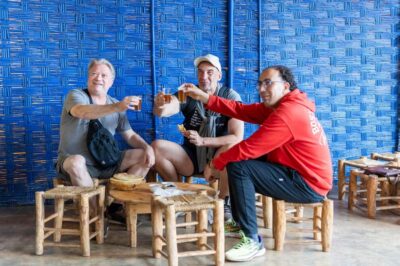
The price includes three lunches during the trek, plus dinner, breakfast, coffee, and tea. That is useful because mountain food can add up quickly when you arrange everything separately. It also means you can focus on walking instead of planning every meal along the route.
Water is excluded. You buy it from local people, so budget separately and carry a refill plan that works for you. The information does not promise treated water or refill points, so do not assume that every stream is safe to drink from.
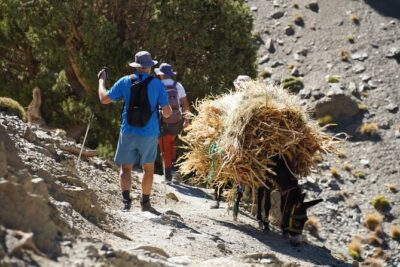
Mules and porters carry baggage and food. This is one of the strongest practical features of the trek. You still need a day pack for personal essentials, warm layers, water, sunscreen, snacks if you want them, and your camera or phone. But you should not need to carry all clothing and food for three days on your back.
The mule support also connects the walk to local mountain life. You are not on a fully self-contained expedition. The route depends on local people, animals, refuges, and camps, which gives the experience a more direct connection to the communities around the High Atlas.
How the price compares with the workload
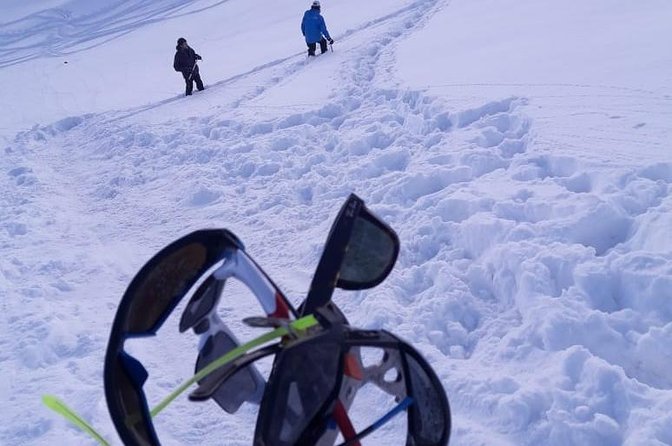
At $258.52 per person, the trip offers good value if you need a supported three-day summit attempt. The cost includes pickup, an air-conditioned vehicle, a mountain guide, mules and porters, three lunches, breakfast, dinner, coffee, and tea. Those inclusions cover the parts that are hardest to organize on your own.
You still need to pay for water and possibly rented crampons and axes. You also need to bring the required clothing and sleeping bag. If you arrive without winter equipment, the final cost will be higher than the advertised price.
The value is strongest for people who want a guided route with logistics handled. You are paying not just for a summit path, but for food transport, baggage support, an overnight plan, and guidance on a high mountain route. The value is less clear if you already have mountain experience, equipment, and a trusted local plan.
The maximum group size is 12. That is small enough to avoid a huge procession, but it is not a private walk unless you book one. The two family accounts connected with this experience describe private or family-sized outings, including a three-person family and a seven-person family. If privacy matters to you, ask exactly how your booking will be grouped.
Who should book this Toubkal trek?
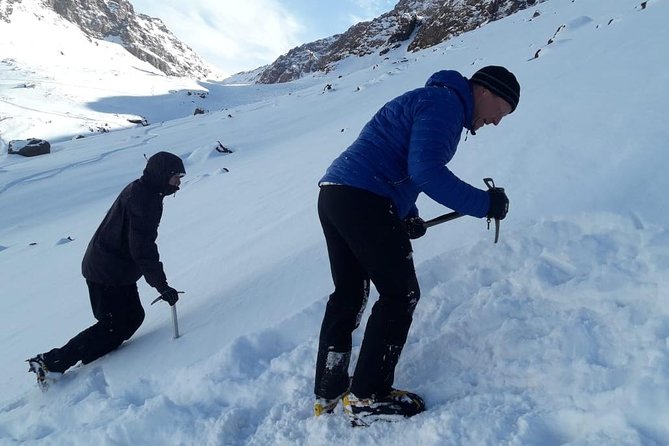
This trip suits you if you have strong fitness and want a compact route with a real summit goal. It is a good match for an active family group, provided every member can handle long uphill days and winter conditions. It also suits hikers who want local support without arranging mules, food, and mountain transport themselves.
It is not a good choice for a relaxed sightseeing holiday. The route includes high passes, a summit at 4,167 meters, snow equipment, and a final day of up to 12 hours. If you dislike cold weather, steep climbs, basic overnight conditions, or uncertain mountain timing, choose a lower-level Atlas walk instead.
You should also be realistic about altitude. The itinerary requires you to move from Imlil to a 3,560-meter pass and then attempt the summit soon after. The information does not promise an acclimatization day, so your prior mountain experience and physical preparation matter.
Booking details worth checking first
Pickup is offered, and the stated start time is 8:30 in the morning. Confirmation is provided at booking, and free cancellation is available until 24 hours before the local start time. Changes or cancellations inside that 24-hour window are not accepted for a refund.
Before paying, I would confirm the pickup location, winter equipment rental costs, refuge or camp arrangements, the exact sleeping setup, and how water is handled. I would also ask how the group will be divided if the maximum of 12 people is reached.
The provider is Trekking in Morocco. The operation has received a perfect rating from the two supplied ratings, with especially strong praise for organization, the guide, the mule support, and the ability to handle family groups. The number of ratings is small, so I would treat that as encouraging rather than final proof of every aspect of the trip.
Should you book it?
Book this trek if you want a demanding winter achievement and like the idea of combining Toubkal with waterfalls, forest, high passes, and local mule support. The three-day circle offers more variety than a simple out-and-back summit route, and the included guide, meals, transport, and baggage support make the $258.52 price attractive.
Think twice if you are not prepared for a 12-hour summit day or do not already have warm clothing and sturdy boots. Ask the provider about rented crampons and axes before you go. For a fit hiker who respects the weather and arrives properly equipped, this is a strong-value route to the top of North Africa.
FAQ
How long is the Toubkal Circle and Waterfalls experience?
The experience lasts three days and two nights.
Where does the trek start?
The trek starts in Imlil, Morocco. Pickup is offered, with a stated start time of 8:30 in the morning.
What is the highest point reached?
The route reaches Mount Toubkal at 4,167 meters, the highest peak in North Africa.
Are meals included?
Yes. The package includes three lunches during the trek, breakfast, dinner, coffee, and tea.
Is drinking water included?
No. You buy water from local people during the trek.
Are crampons and ice axes included?
They are not included in the listed package, but crampons and axes are available to rent.
How fit do I need to be?
You should have a strong physical fitness level. The third day can take up to 12 hours and includes the summit of Mount Toubkal before returning to Imlil.
More Three-Day Treks in Marrakech
- 3 Day Trek in the Atlas Mountains and Berber Villages from Marrakech
★ 4.5 · 85 reviews - Marrakech: 3-Day High Atlas Mountains and Three Valleys Trek
★ 4.8 · 63 reviews - Climb Mount Toubkal: 3-Day Trek from Marrakech
★ 4.4 · 58 reviews - Climb Mount Toubkal – trekking – 3 days
★ 5.0 · 47 reviews
Recently added around Marrakech
- Berber villages trek Day trip★ 5.0 · 12 reviews
- 2 Days Trek to Atlas Mountains berber villages★ 5.0 · 25 reviews
- Day Trekking Atlas Mountains★ 4.5 · 10 reviews
- two days valley trek in the Atlas mountains★ 4.5 · 2 reviews
- Trekking 8 days in the Moroccan desert from Marrakech★ 5.0 · 4 reviews
- 2 days Toubkal adventure Trek★ 5.0 · 5 reviews
- Mount Toubkal Trek: 2-Day Adventure★ 5.0 · 26 reviews
- Trekking and Hiking in Morocco 2 Day trek in Atlas Mountains Berber villages★ 5.0 · 10 reviews
Atlas Mountains Treks, compared.
Mt Toubkal Ascent Express Trek 2 Days 1 Nights
Read our review →
2-Day Mt. Toubkal Trek with 1-Night Stay & Meals
Read our review →
Summiting and Hiking the Atlas Mountains Day Trek from Marrakech
Read our review →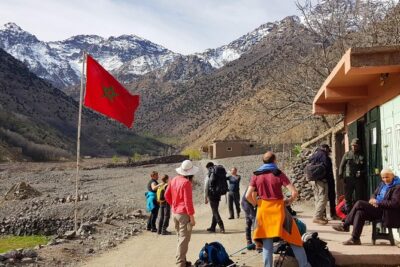
Browse the lists this tour appears in