
REVIEW · MARRAKECH
Trek Jebel Saghro Morocco 8 Days
Volcanic Morocco rewards patient walkers. This eight-day Jebel Saghro trek links Marrakech with quiet valleys, village homes, mule-supported mountain trails, and camps beneath the Anti-Atlas sky. I like the practical mix of hotel nights, local lodging, tents, cooked meals, and transport, so you do not have to arrange each moving part yourself. I also like that the route reaches Mount Kouaouche at 2,500 metres, giving the trek a real summit day rather than a string of gentle walks.
The personal care is another strong point. Ahmed works as guide and cook, while mule handlers including Idir and Hussein help carry the luggage and respond to changing needs. The main drawback is the amount of road time: Day 2 takes about six hours by vehicle, and the return to Marrakech on Day 7 can take eight hours. You should also expect simple accommodation and a moderate level of walking fitness.
Key points at a glance
- Mount Kouaouche at 2,500 metres: The trek’s main ascent brings wide views toward southern Morocco and the High Atlas.
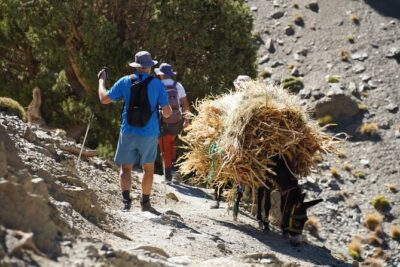
- Mule-supported walking: Mules carry luggage while you walk for roughly four to six hours on trekking days.
- Local stays and camping: You spend nights in Marrakech hotels or a standard riad, local village houses, and tents.
- Ahmed, Idir, and Hussein: The guide, cook, and mule team add practical support and a more personal feel to the route.
- Ait Atta country: Afourar Valley and the rock formations near Ali’s Gate introduce you to the region associated with the Ait Atta tribes.
- $860 with major costs covered: Transport, guide, mules, camping gear, meals, and accommodation are included, while flights, drinks, insurance, and tips are extra.
Why Jebel Saghro feels different from a standard Morocco tour
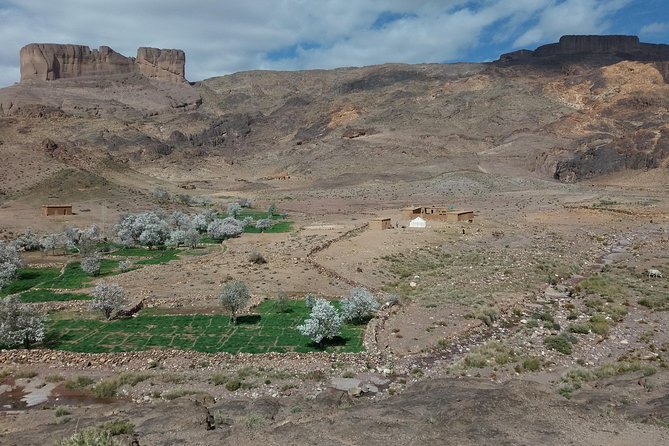
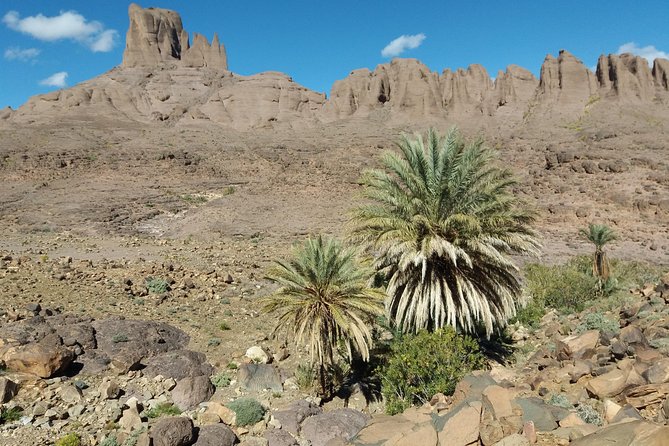
Jebel Saghro sits south of the High Atlas, in a harsher, more volcanic part of Morocco. The route is not built around grand monuments or long city visits. Instead, you move through barley fields, fig trees, small oases, dry valleys, farms, hamlets, and unusual rock formations.
That makes the trip a good choice if you want Morocco on foot. You get a closer look at rural life than you would from a minibus window, yet you still have a vehicle for the long transfers between Marrakech and the mountains.
The route also has a useful rhythm. You begin and end in Marrakech, spend the middle days walking with mules, and camp in different parts of the Saghro range. The terrain changes often enough to keep the week interesting, from cultivated valley floors to rocky mountain slopes and old trade routes toward the Sahara.
The setting can feel remote, but this is not a technical mountaineering trip. The published guidance calls for moderate physical fitness. Walking days range from about four to six hours, with the Mount Kouaouche ascent adding the main uphill challenge.
A few more treks around Marrakech worth a look
- Marrakesh: 2-Day Mt. Toubkal Trek with 1-Night Stay & Meals
★ 4.7 · 795 reviews - Marrakech: 2-Day Atlas Mountains Trek with Village Stay
★ 4.8 · 717 reviews - From Marrakech: 3-Day Mount Toubkal Climbing Trek
★ 4.7 · 597 reviews
Marrakech arrival and the first night
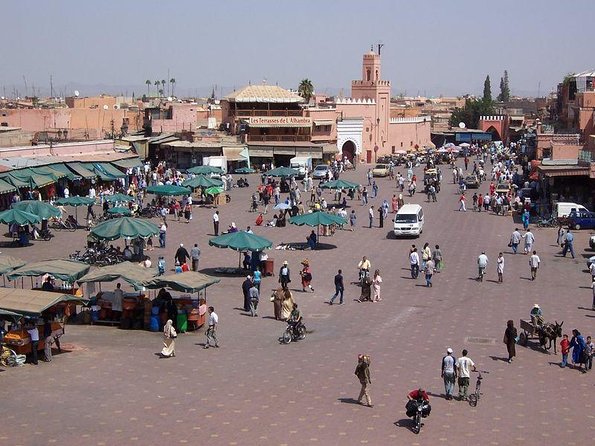
Day 1 is simple by design. You are collected at Marrakech airport and taken to a three-star hotel or standard riad. The included Marrakech accommodation covers two nights on a bed-and-breakfast basis, one at the beginning and one at the end of the trip.
This first night gives you a soft landing before the long drive south. It is also useful because the trek begins with a major change of pace. Marrakech is the urban bookend, while the days ahead are built around walking, camps, and small communities.
On Day 8, the airport transfer takes about 20 minutes from the Jemaa el-Fnaa area. The exact timing of your departure matters, so you should keep your flight details clear when arranging the transfer.
Day 2: crossing the High Atlas to Dades country
After breakfast, you leave Marrakech and cross the High Atlas through the Tizi-n-Tichka Pass at 2,260 metres. This is Morocco’s highest road pass, and the drive gives you a strong first look at the scale of the country.
The journey continues through Ouarzazate, the Rose Valley, and the Dades Valley. Along the way, you see fortified villages built in earth tones, an architectural style that fits the dry southern climate and makes the road journey more than simple transportation.
The full transfer takes about six hours. That is a substantial first travel day, so do not expect to start hiking immediately. You spend the night in Tagdilt in a simple village house, an arrangement that trades hotel polish for a more local setting.
The accommodation here is basic. If you prefer a predictable room every night, this may feel like a compromise. If you value a closer connection with village life, it is one of the more memorable parts of the schedule.
Day 3: from oases to the volcanic slopes
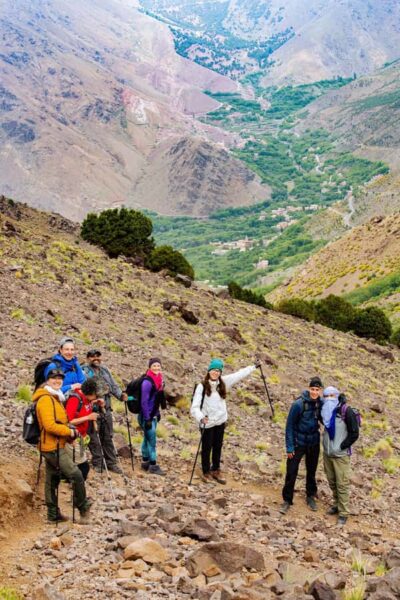
After breakfast, you meet the trekking crew. Your luggage is loaded onto mules, which means you can walk with a lighter day pack rather than carrying all your belongings over the mountains.
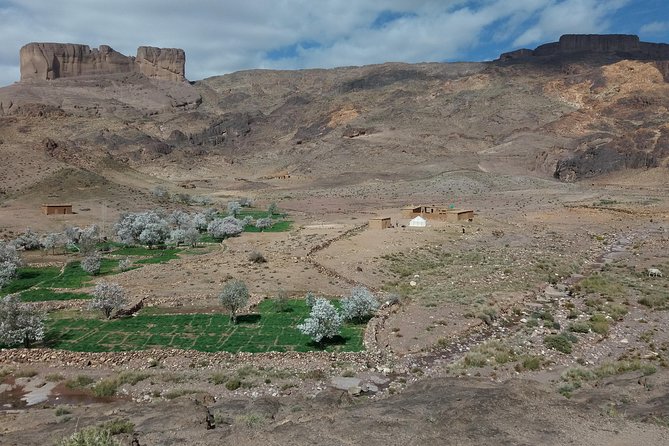
The route begins among small oases, barley fields, and slopes planted with fig trees. These details matter because they show how people make a living in a dry region. The walk is not only about reaching a viewpoint. It also follows the link between water, farming, and settlement.
The trail winds through an impressive valley before climbing onto the volcanic sides of Jebel Saghro. After descending, you reach the first camp and spend the night under canvas. Walking time is about five hours.
The camp setup includes tents and a cook. That is a helpful arrangement after a full day on foot, especially since the group does not need to prepare its own evening meal. The tour includes dinner on six nights, and the camping crew handles the cooking during the trekking section.
Same trailhead, a longer or shorter day out:
- From Marrakesh: 2-Day Mount Toubkal Trek
★ 4.7 · 591 reviews - From Marrakech: Atlas Mountains Summit Trek
★ 4.9 · 228 reviews - Summiting and Hiking the Atlas Mountains Day Trek from Marrakech
★ 5.0 · 131 reviews - From Marrakech: Private Tour to Oasis and Trekking in the Desert of Erg Chigaga
★ 5.0 · 115 reviews
Day 4: the 2,500-metre climb to Mount Kouaouche
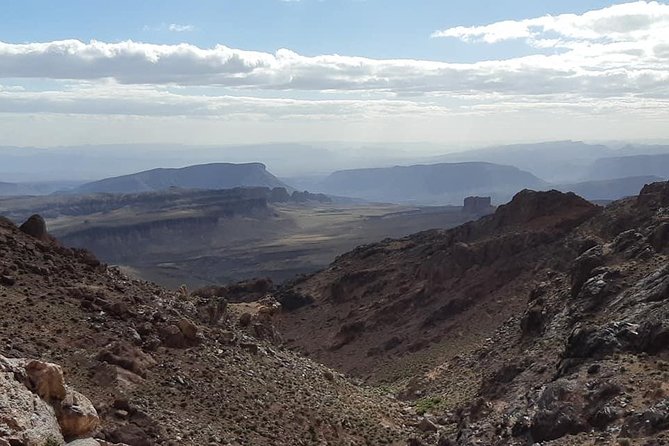
Day 4 is the most obvious test of the trek. You climb Mount Kouaouche, one of the prominent peaks in the Saghro range, reaching about 2,500 metres.
The reward is the view. From higher ground, you can look south across Morocco and north toward the High Atlas. The contrast between the volcanic Saghro and the taller Atlas peaks gives this day its special character.
The walking time is listed at four to five hours. That sounds manageable, but the ascent is still the part of the itinerary that demands the most steady effort. You should be comfortable walking uphill for several hours and moving over rocky ground.
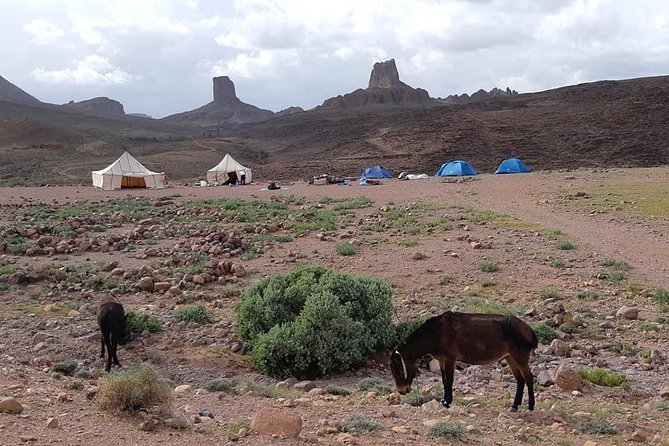
After the descent, you camp among the rocks at Igli. The setting should appeal to anyone who prefers striking natural surroundings to formal accommodation. It also means another night outdoors, so this is not the right trip if you want a mountain walk followed by a private hotel room each evening.
Day 5: Afourar Valley and Ait Atta country
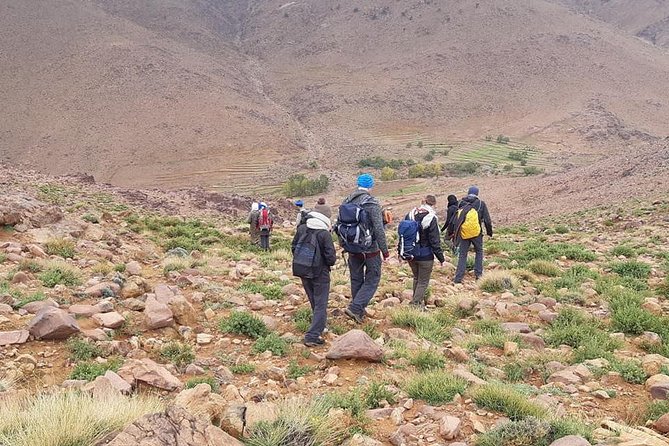
Day 5 changes the mood. Instead of another summit attempt, you walk through Afourar Valley, passing a small village and unusual rock formations.
The area is connected with the Ait Atta tribes, an important cultural detail that gives the route a human story. You are not simply walking through empty mountain space. The valleys have communities, farms, trade routes, and tribal connections that help explain why people have used this region for generations.
The walking time is again about four to five hours. Camp is set near Ali’s Gate, a memorable natural feature and a useful landmark for the route. This day should feel less demanding than the peak day, although the moderate fitness requirement still applies.
I like the way this section balances the physical side of the trek with a sense of place. The schedule does not treat the mountains as scenery alone. Villages and local culture remain part of the experience.
Day 6: old trade routes toward the Sahara
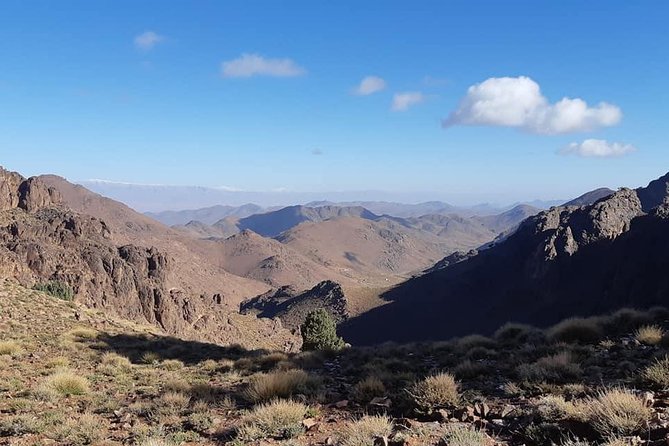
The sixth walking day follows roads still used as trade routes toward the neighbouring Sahara Desert. You pass through small villages, hamlets, and farms in the Ighazoun and Tawdachte valleys.
The agricultural details are especially interesting here. The area produces wheat, clover, carrots, henna, tomatoes, and almonds. Those crops give you a more grounded view of southern Morocco, where farming depends on careful use of limited water and fertile valley pockets.
This is the longest walking day, at about five to six hours. It does not feature a named summit, but the route’s value is its steady passage through working countryside. You see how settlements fit into the valleys and how movement through the mountains connects with desert trade.
At this point, the mule support becomes even more useful. You still need to carry personal essentials, but your main luggage is not adding to the strain of a multi-day walk.
Day 7: the long return through Ouarzazate and the Draa Valley
Day 7 is mostly a transport day. You begin the journey back toward Ouarzazate or Marrakech, passing the snow-capped Atlas peaks and crossing the Draa Valley.
There is a brief stop in Ouarzazate, often called the Hollywood of North Africa. Films including Gladiator, Kingdom of Heaven, Lawrence of Arabia, and The Prince of Persia were made in the area. The stop adds a bit of film history to a day that otherwise involves a lot of sitting.
The drive continues over Tizi-n-Tichka Pass before an afternoon arrival in Marrakech. The full day takes about eight hours, so you should treat it as a final transfer rather than another sightseeing day.
This is the clearest drawback in the plan. After several days of walking, an eight-hour return drive can feel long. The benefit is that you finish in Marrakech rather than needing an extra night elsewhere, and the following hotel night gives you a more comfortable end to the trip.
What the $860 price really covers
At $860 per person, the price is reasonable for a small-group trek if you use the included services. The package covers an air-conditioned vehicle, an expert guide, mules, tents, a cook, two nights in a Marrakech three-star hotel or standard riad, and two nights in local houses.
Meals are also part of the value. The package lists seven breakfasts, five lunches, and six dinners. Drinks are not included, so you should budget separately for those, along with tips, travel insurance, and flights.
The group size is capped at 15 people. That is large enough to keep the price from becoming excessive, but still small enough for the guide and mule team to offer personal attention. The strongest personal element comes from the named crew: Ahmed serves as guide and cook, while Idir and Hussein are among the mule handlers.
You should check the final arrangements at booking, especially the exact accommodation style and meal schedule. The information gives a clear outline, but local houses and camps are naturally less standardized than city hotels.
Who will enjoy this trek most
I would recommend this trip to you if you:
- Want several days of walking rather than a sightseeing circuit
- Like simple accommodation and camping
- Prefer a supported trek where mules carry luggage
- Can handle four to six hours of walking on most trekking days
- Want rural Morocco, valleys, farms, and mountain views
- Appreciate having transport and meals arranged in advance
- Are happy to share the experience with a group of up to 15 people
You may want a different trip if you need luxury accommodation, dislike long vehicle transfers, or want a relaxed schedule with little uphill walking. The tour asks you to accept basic village stays, tents, changing terrain, and a long final drive.
The route also suits people who enjoy cultural details without needing a formal museum program. You pass villages, agricultural areas, and places associated with the Ait Atta tribes. The experience is active, but it is not only about physical achievement.
Practical details before you book
Confirmation is provided when you book, and pickup is offered. The tour operates near public transportation, although the main experience itself relies on the arranged vehicle and trekking crew.
You should have moderate physical fitness. The information does not describe technical climbing, but the 2,500-metre ascent, repeated walking days, and rocky camps make basic preparation worthwhile. Comfortable walking shoes, sun protection, and a small personal day pack would be sensible choices, though specific equipment requirements should be confirmed with Easygo Tours.
The tour requires suitable weather and a minimum number of participants. If poor weather cancels the trip, you are offered another date or a full refund. The same applies if the minimum group size is not reached.
Free cancellation is available if you cancel at least 24 hours before the start time. Changes or cancellations made inside that window are not accepted for a refund, and the times are based on Morocco’s local time.
Should you book the Jebel Saghro trek?
Book it if you want a practical, moderately active introduction to southern Morocco and you are comfortable trading comfort for access. The combination of mule support, local houses, tents, home-style cooking, and named staff gives the week a more personal feel than a standard coach tour.
The best reasons to choose it are the 2,500-metre Mount Kouaouche day, the shifting scenery from oases to volcanic rock, and the chance to walk through valleys still tied to farming and trade. The main warnings are simple accommodation, several hours of walking each day, and the long drives on Days 2 and 7.
At $860, the included transport, accommodation, guide, cook, mules, tents, and meals make the package good value for an active visitor. If you want Morocco at walking pace and do not need polished hotels, this is a strong choice. If you want short transfers and easy comfort, choose a city and desert tour with less trekking.
FAQ
How long is the Jebel Saghro tour?
The tour lasts eight days, beginning and ending in Marrakech.
Where does the tour start and finish?
It starts in Marrakech with an airport transfer to your hotel or standard riad, and it finishes with a departure transfer to the airport.
How many hours do you walk each day?
The listed walking days take about five hours on Day 3, four to five hours on Day 4, four to five hours on Day 5, and five to six hours on Day 6.
What is the highest point on the trek?
The route climbs Mount Kouaouche, which reaches about 2,500 metres.
Are mules included?
Yes. Mules are included to carry luggage during the trekking section.
What accommodation is included?
The package includes two nights in a Marrakech three-star hotel or standard riad, two nights in local houses, and tent accommodation during the trek.
Are meals included?
Yes. The package lists seven breakfasts, five lunches, and six dinners. Drinks are not included.
What is not included in the price?
Flights, travel insurance, drinks, and tips are not included.
How many people can join the tour?
The group has a maximum of 15 people. The tour also requires a minimum number of participants to operate.
Recently added around Marrakech
- Berber villages trek Day trip★ 5.0 · 12 reviews
- 2 Days Trek to Atlas Mountains berber villages★ 5.0 · 25 reviews
- Day Trekking Atlas Mountains★ 4.5 · 10 reviews
- two days valley trek in the Atlas mountains★ 4.5 · 2 reviews
- Mount Toubkal Trek: 2-Day Adventure★ 5.0 · 26 reviews
- Trekking 8 days in the Moroccan desert from Marrakech★ 5.0 · 4 reviews
- 2 days Toubkal adventure Trek★ 5.0 · 5 reviews
- Toubkal Ascent Trek – Atlas Mountains – 2 days (Private Trek)★ 5.0 · 8 reviews
Marrakech Trekking Tours, compared.
2-Day Mt. Toubkal Trek with 1-Night Stay & Meals
Read our review →
Summiting and Hiking the Atlas Mountains Day Trek from Marrakech
Read our review →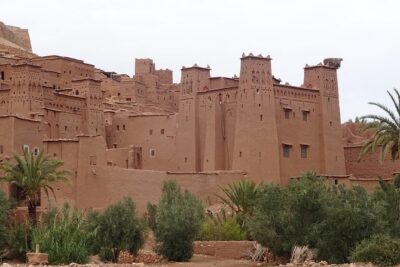
Private Tour to Oasis and Trekking in the Desert of Erg Chigaga
Read our review →
Browse the lists this tour appears in