
REVIEW · CATANIA
Special trekking on the most authentic and wild side of Etna
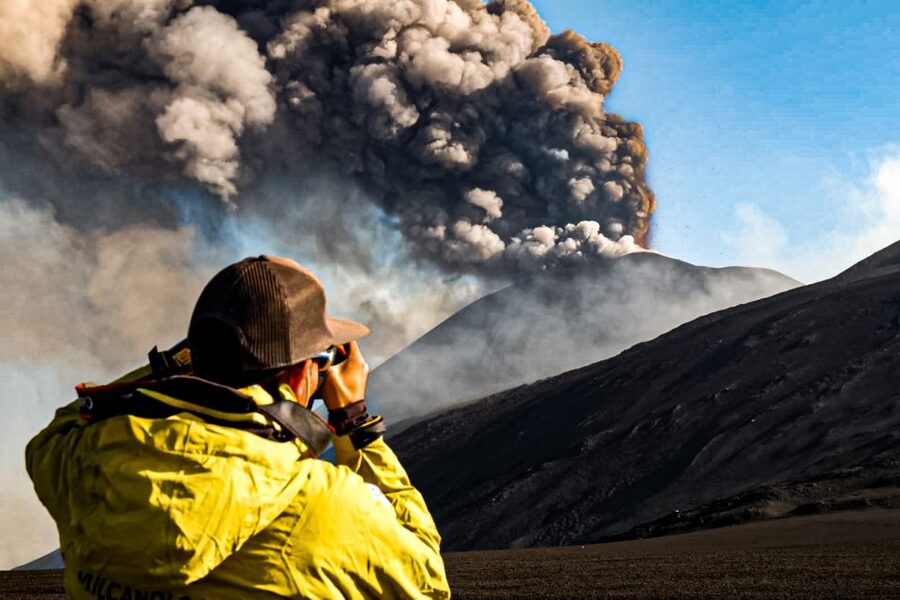
Etna shows its wilder face here. This four-hour trek takes you up Sicily’s north slope, far from the busiest summit routes, with a volcanological guide explaining craters, lava flows, ground fractures, and volcanic chimneys. I like the panoramic stop near 2,900 meters, where views may reach Taormina and the Aeolian Islands, and I like that the route remains a strong alternative when summit access is closed.
The biggest catch is cost clarity: the advertised price is $62.63 per person, but you must add 50 euros on site for the 4×4 transport and 3 euros for parking. The walk also demands reasonable fitness, steady footing, and comfort with height, loose volcanic ash, and enclosed volcanic passages.
Key points about the Etna north-side trek
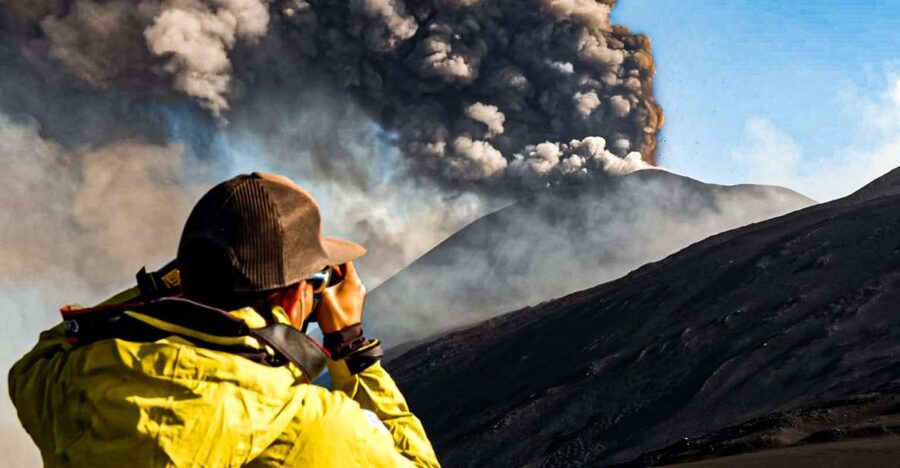
- Reach about 2,900 meters safely: The guide sets the highest point according to volcanic conditions and current safety rules.
- Explore the quieter north slope: The route uses rarely visited paths around craters, lava flows, and fractures.
- Enter a volcanic chimney: Protective helmets allow you to step inside an intact cone from the February 24, 1947 eruption.
- Ride specialized 4×4 vehicles: The rough road climbs from 1,800 to 2,800 meters before the main walks begin.
- See Sicily from above: Clear weather can reveal Taormina, the Aeolian Islands, recent lava flows, and Etna’s summit craters.
- Use provided hiking gear: Trekking poles, helmets, trekking shoes, warm jackets, extra socks, and a backpack are included.
Why Etna’s north side feels different
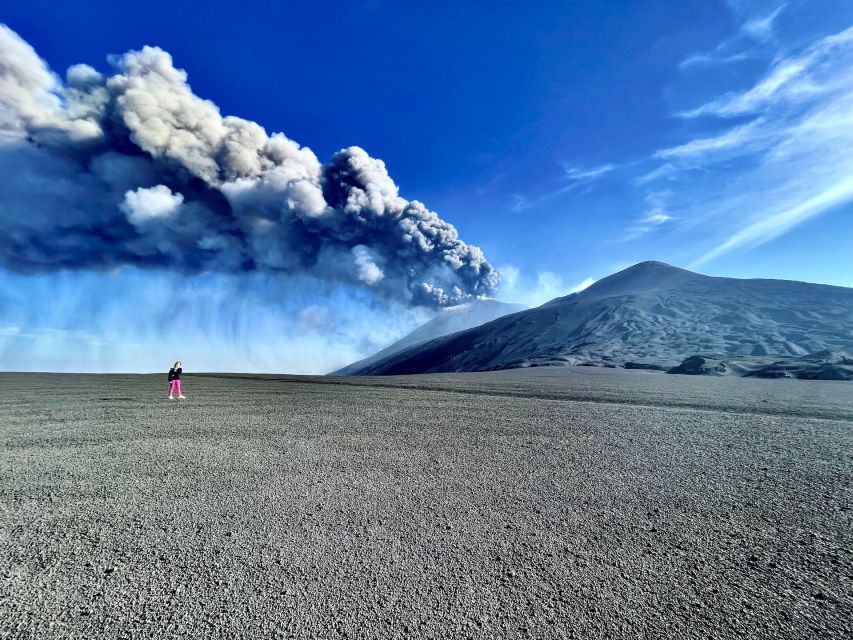
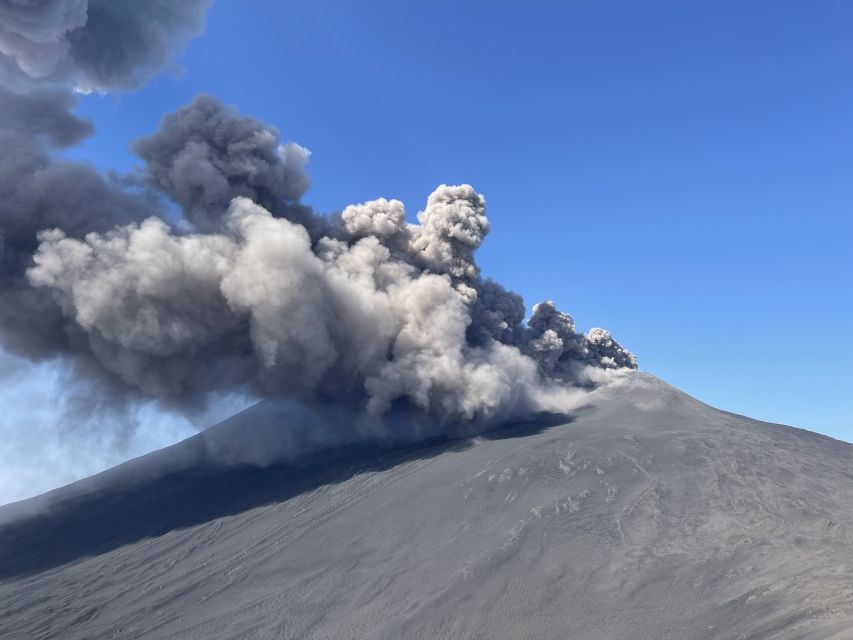
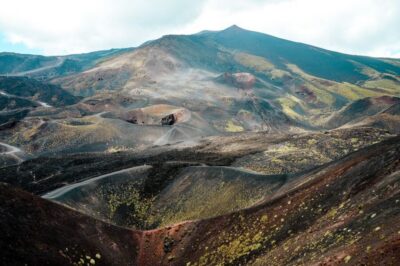
Most visitors picture Etna as a summit excursion. That usually means a high-altitude ride, a short walk, and a look toward the active upper craters. This route takes another approach. It treats the volcano as a large open record of eruptions, showing how lava moved, where the ground split, and how explosive craters formed.
You begin near Piano Provenzana, on the north side of Etna, at the Chiosco Bar Mareneve beside the winter chairlift. This is a useful meeting point, but do not arrive at the last minute. The group must organize equipment, guides, and the 4×4 transfer before heading uphill.
The north side is also a good choice if you want fewer crowds and a more rugged setting. The paths are not presented as a polished mountain walk. They cross volcanic ash, rough ground, crater rims, and old eruption zones. That raw quality is the reason to choose this outing, but it is also why proper shoes and a fair level of fitness matter.
More Volcano Treks in Italy
- Mount Etna: Guided Trek 3,000 Meters to the Summit
★ 4.8 · 1,407 reviews - Etna Sunset Tour: Volcano trek, Cave & tasting from Catania
★ 4.8 · 1,290 reviews - From Catania: trek on Mount Etna, Lava Cave & tasting Tour
★ 4.8 · 563 reviews
The 4×4 climb from 1,800 to 2,800 meters
The first major part of the outing happens in a specialized 4×4 vehicle. You ride roughly eight kilometers from 1,800 meters to the Volcanological Observatory at about 2,800 meters. The road is extremely rough in places, so this is not a smooth sightseeing transfer.
The guide begins explaining Etna while you are still in the vehicle. That makes good use of the ride, especially because the road itself is not the main attraction. You get context for the volcanic features you will see on foot, along with an introduction to the rules that govern access on an active volcano.
The 4×4 charge is separate from the advertised tour price. You pay 50 euros per person on site for the vehicle service, including the later transfer from about 2,800 meters to 2,500 meters. Add the 3 euro all-day parking fee after the excursion. With those costs included, I would budget for the actual outing rather than judging value from the headline price alone.
The ride also matters for energy. By using the vehicle for the steep upper approach, the tour saves your legs for the walking sections, where the guide’s explanations and the volcanic features become the focus.
The first walk near 2,900 meters
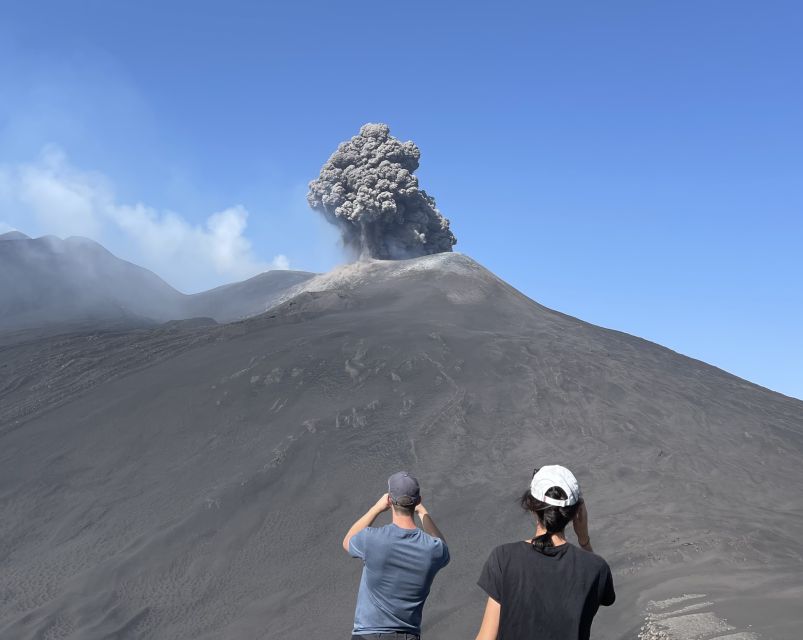
At the Volcanological Observatory, you start the first walk from about 2,800 meters and climb to approximately 2,900 meters. This section is shorter, but the altitude makes it meaningful. Even a moderate incline can feel harder high on Etna, especially if you are not used to mountain walking.
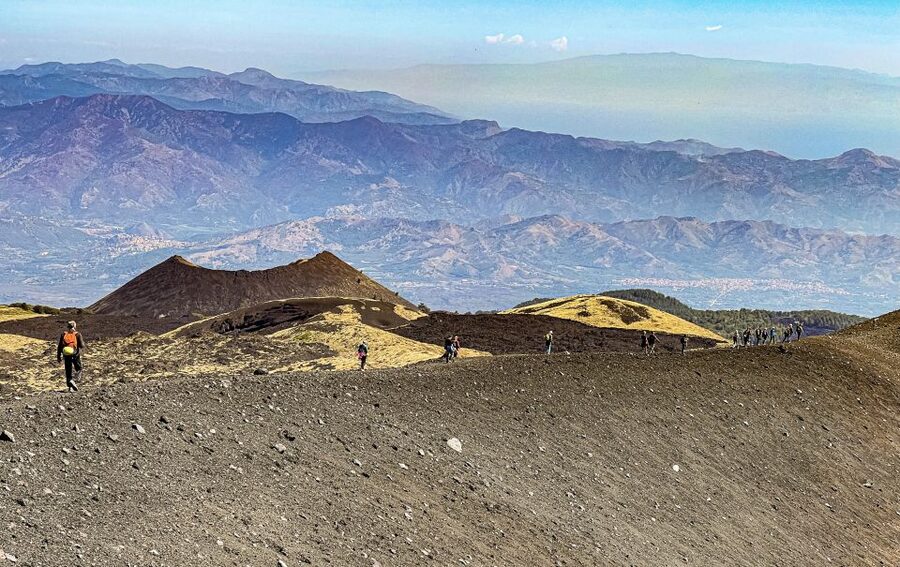
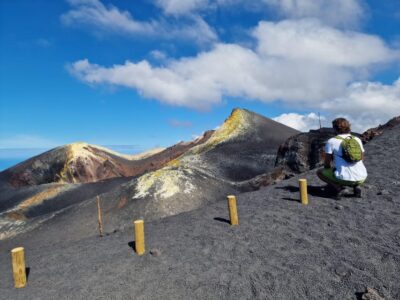
The reward is a panoramic viewpoint toward the summit craters and recent lava flows. On a clear day, you may see Taormina and the Aeolian Islands, with Sicily spread below. Weather controls the view, so treat the panorama as a bonus rather than a guarantee.
This stop is also where the tour offers its safest answer to changing volcanic conditions. Access to the summit craters can close when volcanic risk rises. The guide follows Civil Protection communications and the current safety limits, taking the group only as high as allowed. You may not reach the summit craters themselves, but you still get a high-altitude view and a serious volcano walk.
That flexibility is one of the tour’s strongest points. It does not pretend that an active volcano operates like a museum. The route changes according to conditions, and the highest reachable point may be around 2,900 meters rather than the summit.
The long descent through eruption sites
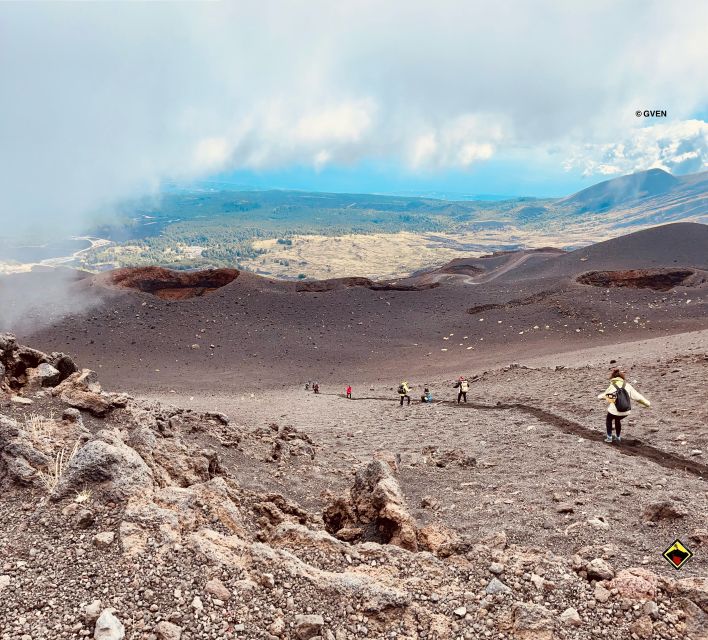
After the first walk, the 4×4 takes you to the side of one of Etna’s large northern craters. From there, the longer walking section leads about six kilometers back toward Piano Provenzana. This is the main event, and it takes roughly four hours for the full outing, including the vehicle transfers and walks.
The route passes eruption sites from several periods, including 1914 to 1924, 1809, 1874, 1879, 1911, 1923, 1974 to 1975, and 2002. You are not simply looking at one crater. You are walking through a series of lateral eruptions that have built new cones and altered the north slope over time.
The names and dates matter because they help you read the ground. A crater is not just a round hollow. Its size, rim, slope, and surrounding lava tell you something about how the eruption behaved. A volcanological guide can connect those visible details to the processes below the surface.
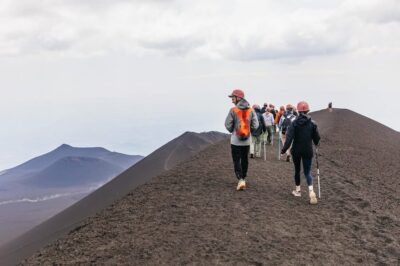
Much of the route involves descending slopes of volcanic ash. This can be easier on the knees than a hard rocky descent, but ash is loose and can make your footing uncertain. Trekking poles are included, and I would use them. Long pants are a wise choice because ash can work its way into clothing and shoes.
More Volcano Treks in Catania:
- Mount Etna: North Upper Craters Guided Tour by 4×4 with Trek
★ 4.6 · 243 reviews - Catania: Mount Etna Sunset Trekking with Wine Tasting
★ 5.0 · 140 reviews - From Catania: Private mt. Etna trekking and pic-nic
★ 5.0 · 37 reviews - Etna trekking and wine tasting
★ 5.0 · 28 reviews
The 1947 cone and its volcanic chimney
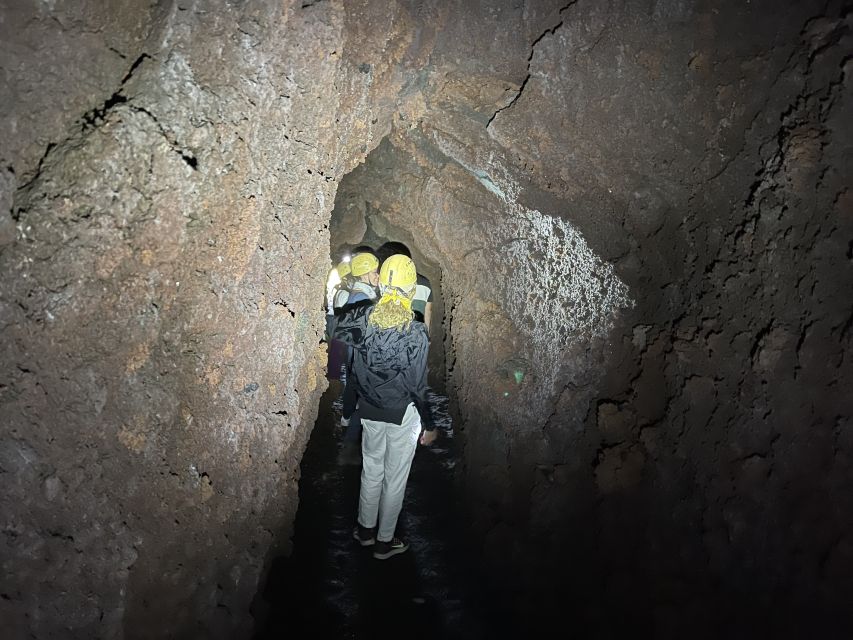
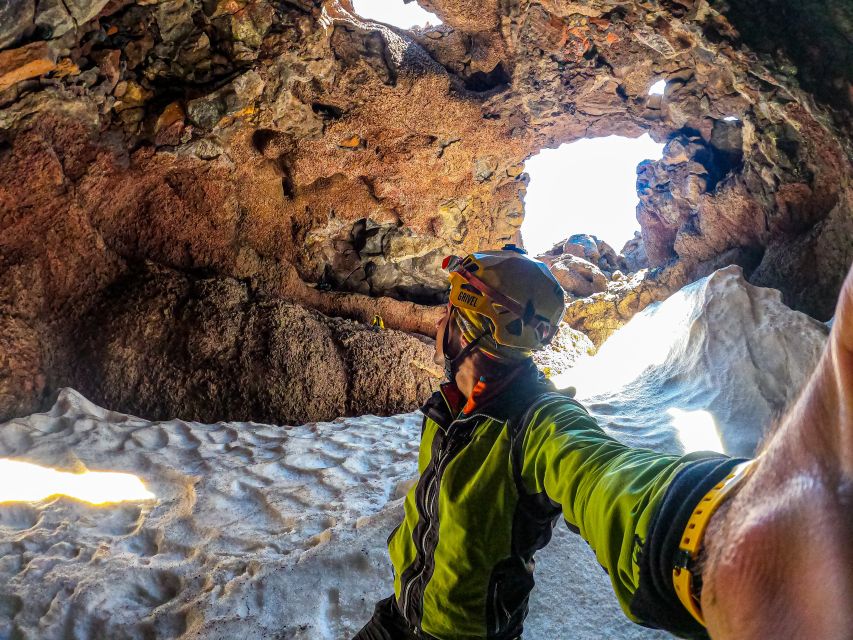
One of the most unusual stops comes at the craters formed during the February 24, 1947 eruption. You can enter the chimney of a perfectly intact volcanic cone while wearing the protective helmet supplied by the guide team.
This is a rare kind of Etna visit because you are not only looking at the outside of a cone. You get close to the internal shape of the vent where molten material once moved upward. The guide explains how an eruption works and how lava reached the surface.
The passage is not suitable for everyone. The activity information specifically excludes people with claustrophobia, and that warning deserves attention. If enclosed spaces make you uneasy, ask the guide before entering or consider skipping that part. The tour also excludes people with vertigo, a fear of heights, respiratory issues, heart problems, epilepsy, recent surgery, or altitude sickness.
The route continues into mouths that produced lava flows. You may find these sections especially striking because they show the connection between the crater and the dark flows spreading below it. You are seeing the supply routes of an eruption, not just its final surface.
Walking crater edges with care
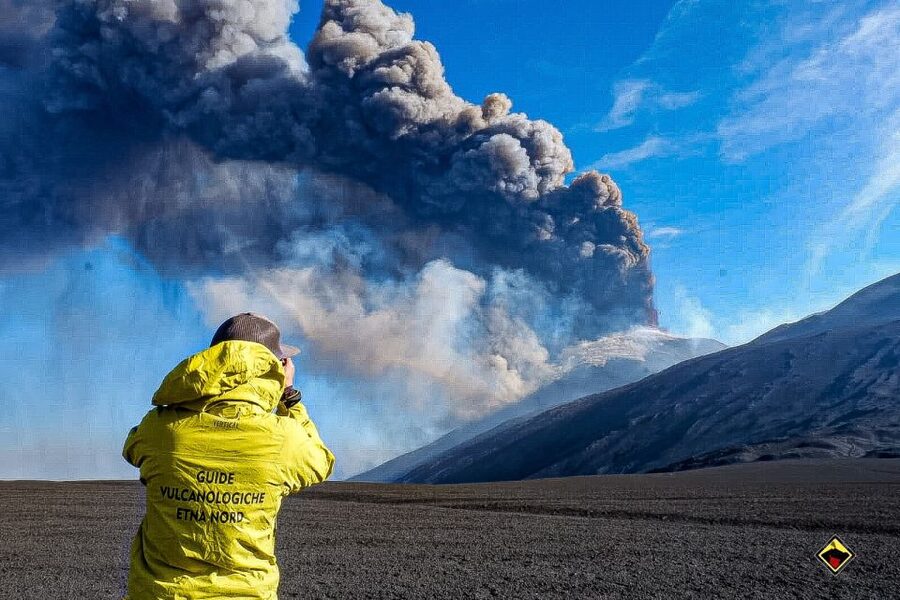
The trek includes the edges of large explosive craters. This offers some of the best views of the north side, but it is not a casual stroll. The path develops at high altitude, and the combination of loose ash, sloping ground, and exposed rims can cause dizziness for people who are sensitive to heights.
I would take the safety warnings literally. You need hiking shoes, long pants, sunglasses, sunscreen, water, snacks, and a windbreaker or jacket. The company supplies trekking shoes, warm jackets, extra socks, backpacks, and poles, but the instructions still ask you to bring suitable clothing and drinks. Pack your own rain jacket too, as a K-way is not included.
The guide team is authorized to lead people on active volcanoes and follows the current limits set by public safety authorities. That does not make the route risk-free. It means the itinerary is adjusted to the conditions, and the guide decides how far the group can go.
Groups are divided according to size and language, with guides assigned to avoid very large walking groups. The tour runs in English, Italian, and French. A small or well-organized group matters here because the guide needs to explain fragile volcanic features while keeping everyone together on uneven ground.
Gear, food, and what the price really buys
At $62.63 per person, the guide service is fairly priced for a specialized outing, but the total is higher once you add the 50 euro 4×4 cost and 3 euro parking fee. Lunch, bottled water, snacks, and accommodation transport are not included.
The strongest value comes from the route and the specialist access, not from included meals or a cheap transfer. You are paying for an authorized volcanological guide, safety equipment, a carefully chosen route, and transport into terrain that would be difficult to reach independently.
The supplied equipment is helpful. Trekking poles are useful on ash slopes, helmets are needed inside the volcanic cone, and warm jackets can make the high-altitude stop much more comfortable. Without adequate shoes, accident insurance does not apply, so do not treat footwear as a minor detail.
Bring a packed lunch if you need a full meal, although the stated duration is four hours. Also bring water because bottled water is not supplied. Alcohol is not allowed in the vehicle, and open shoes, sandals, flip-flops, and high heels are not permitted.
How demanding is the walk?
This is for moderately trained hikers. You do not need to be an expert mountaineer, but you should be comfortable walking for several hours on volcanic ash and uneven ground at high altitude. The route includes ascent, descents, crater edges, and rough surfaces.
It is not suitable for people with mobility impairments, back problems, low fitness, respiratory conditions, heart conditions, epilepsy, recent surgeries, or altitude sickness. The activity also excludes people without experience, people afraid of heights, and people with vertigo.
The age guidance excludes people over 95 years old. The minimum group size is eight participants, so the outing can be cancelled if enough people do not book. Bad weather can also lead to cancellation or postponement.
For the best chance of enjoying it, arrive rested, wear close-fitting outdoor clothing, and tell the guide about any health condition that could affect your pace or balance. This is not the place to hide a problem and hope the volcano will not notice.
Is this the right Etna experience for you?
I would choose this excursion if I wanted Etna to feel geological rather than merely scenic. The 1947 chimney, the sequence of lateral eruption sites, and the walk along the northern craters give the day a clear purpose. You are not only seeking a high viewpoint. You are learning to read volcanic ground.
It also makes sense if summit access is closed. The route gives you a serious alternative, with a high point near 2,900 meters when conditions permit, without ignoring the safety rules that govern an active volcano.
I would hesitate if you want a relaxed ride, a guaranteed view, or an easy family walk. The 4×4 road is rough, the ash slopes are loose, and the crater edges can unsettle anyone prone to vertigo. The extra 50 euro transport payment should also be part of your decision.
One guide praised by name is Ciccio, whose explanations cover both the science and the eruption history. His care around the volcanic cone and the amount of information provided are exactly the kind of guiding this route needs.
Should you book the north-side Etna trek?
Book it if you are reasonably fit, comfortable at altitude, and curious about how eruptions shape a volcano. The combination of crater rims, lava vents, eruption dates, high views, and the 1947 volcanic chimney gives you much more than a standard summit lookout.
Skip it if you need an easy path, have any of the listed medical or mobility concerns, or dislike enclosed spaces and exposed crater edges. Also confirm the full cost before booking: $62.63 for the guide service, 50 euros for the 4×4 transport, and 3 euros for parking. For the right hiker, this is a focused, safety-aware way to meet Etna on its rougher and more authentic north side.
FAQ
How long does the Etna north-side trek last?
The activity lasts four hours. Starting times vary, so you need to check availability when booking.
Where does the excursion begin?
It begins at the Chiosco Bar Mareneve, beside the chairlift used by skiers in winter. It is the second house among the four buildings in the parking area.
Where does the excursion finish?
The activity finishes back at the original meeting point.
Is 4×4 transport included in the advertised price?
No. You pay 50 euros per person on site for the 4×4 transport from about 1,800 to 2,800 meters and the later transfer from about 2,800 to 2,500 meters.
How high does the tour go?
The route reaches about 2,900 meters when conditions and safety rules allow. The exact maximum altitude depends on volcanic risk and current official restrictions.
What languages are available?
The tour is available in English, Italian, and French.
What equipment is included?
The tour includes an authorized volcanological guide, trekking poles, protective helmets, accident insurance, trekking shoes, warm jackets, extra socks, and a backpack.
Can the excursion be cancelled?
Yes. The activity requires at least eight participants and may be cancelled if that minimum is not reached. Adverse weather or volcanic safety conditions can also lead to cancellation or postponement. You can cancel up to 24 hours before the activity for a full refund.
Recently added around Catania
- Etna trekking and wine tasting★ 5.0 · 28 reviews
- Trekking in the morning on Mount Etna★ 5.0 · 2 reviews
- Mount Etna Advanced Trekking: Private Full-Day Tour from Catania★ 5.0 · 21 reviews
- Sunset Trekking on Mount Etna★ 5.0 · 3 reviews
- One Day Tour in Catania and Trekking on Etna★ 5.0 · 2 reviews
- From Catania: Private mt. Etna trekking and pic-nic★ 5.0 · 37 reviews
- Nature Reserve ,Trekking Eco Tour in Iblei National Park★ 5.0 · 27 reviews
- Piano Provenzana: Guided Mt. Etna Snowshoeing Trek★ 5.0 · 3 reviews
Volcano Treks, compared.
summit craters trekking with volcano guide 3350mt
Read our review →
Mount Etna Trekking Tour Beyond the Tourist Trails
Read our review →
Etna Sunset Tour: Volcano trek, Cave & tasting from Catania
Read our review →
Browse the lists this tour appears in