
REVIEW · ITALY
Etna: summit craters trekking with volcano guide 3350mt
Etna makes Sicily feel wonderfully wild. This six-hour trek takes you from Rifugio Sapienza by cable car and 4×4 to the high slopes of Europe’s highest volcano, then sends you on foot across lava, sulfur-stained ground, and crater rims. I especially like the certified volcano guides and the chance to walk through terrain that looks almost lunar. I also like that boots, poles, helmets, and insurance are included.
The main catch is price clarity. The advertised rate is $77 per person, but the cable car and 4×4 tickets cost another €65 in cash, paid locally. The hike is also harder than a casual mountain outing, and strong winds or volcanic activity can change the route before you reach the summit.
Guides such as Antonio, Massimo, Giovanni, Giacomo, and Nello receive especially strong praise for setting a steady pace, explaining the volcano clearly, and helping people who struggle on steep or sandy ground. That care matters here. Etna is active, and the safest, most rewarding day depends on listening to the guide rather than chasing a particular altitude.
Key points before you book
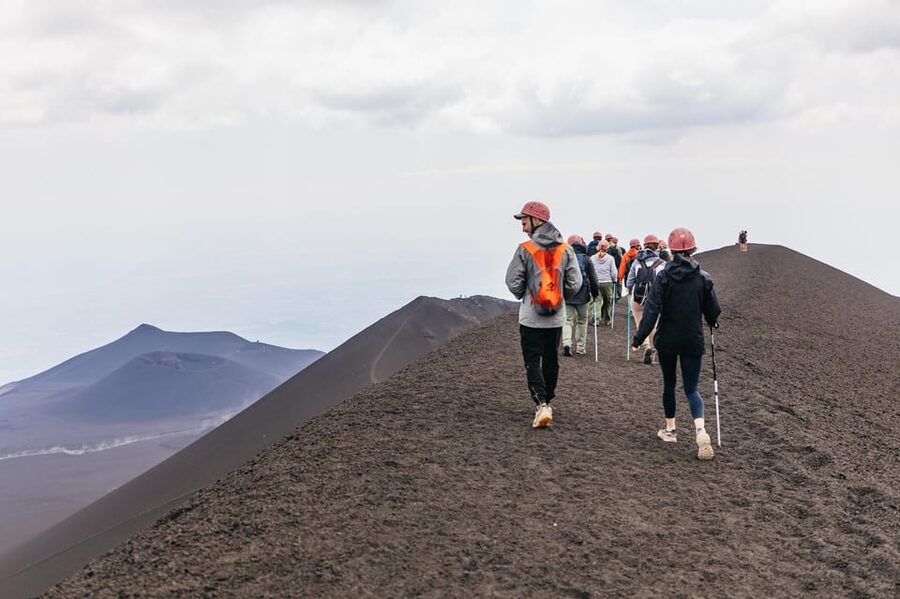
- The summit is not guaranteed: You may reach 3350 meters, but volcanic activity, wind, cloud, or other safety concerns can limit the route to around 3000 meters or lower.
- The extra transport cost is essential: Cable car and 4×4 tickets cost €65 per person, payable in cash on the spot.
- This is a medium-high difficulty hike: Expect sandy, uneven ground, altitude, cold, wind, and about two hours of walking at high elevation.
- The scenery changes constantly: You pass lava flows, volcanic bombs, gas emissions, sulfur-colored soil, summit craters, Barbagallo craters, and Valle del Bove.
- Equipment is provided: Hiking boots, walking sticks, and a rock helmet are included. In colder conditions, jackets, gloves, crampons, or other gear may also be available.
- Small groups can make a big difference: Some departures have been intimate, while larger groups can create delays during equipment fitting and transport.
Starting at Rifugio Sapienza on Etna’s south side
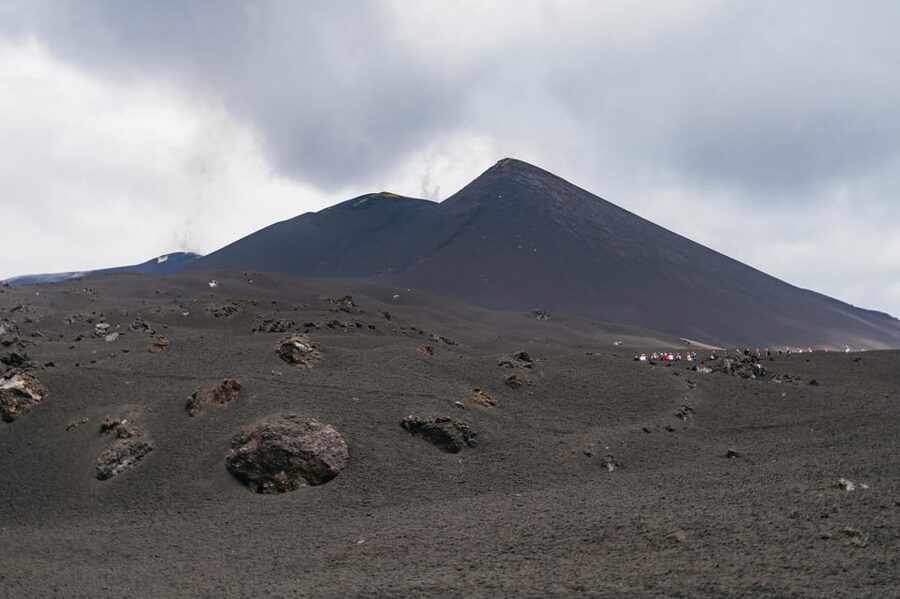
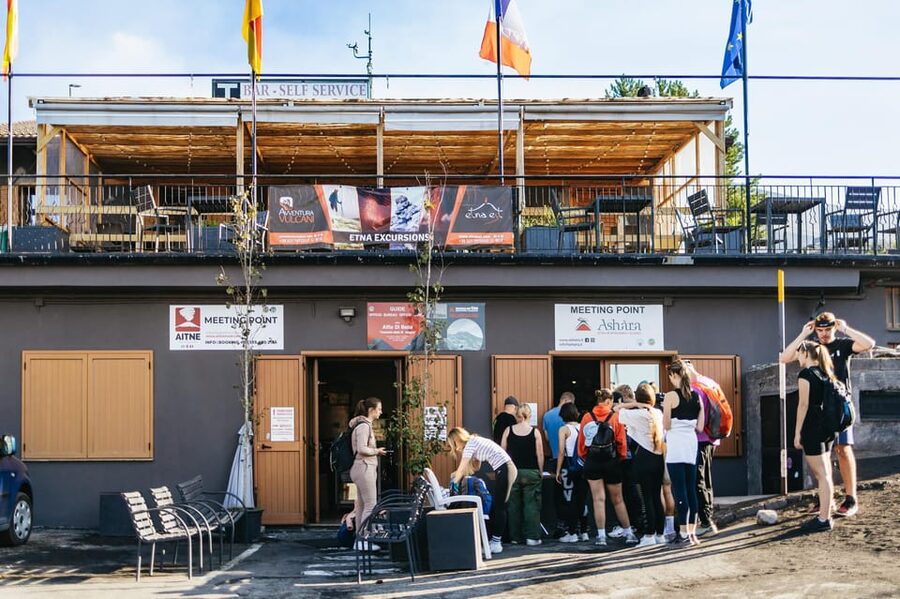
You meet the Ashàra team at its information point near the Terrazza dell’Etna restaurant at Piazzale Rifugio Sapienza. This is the main starting area on Etna’s south side, and it is easy to identify once you are among the cable car facilities and mountain shops.
Allow time at the beginning for check-in and equipment. Boots, poles, and helmets are included, which is useful if you are traveling around Sicily without mountain gear. The equipment also removes one common worry: you do not need to buy specialized footwear just for this day.
That said, the start can feel slow if the group is large. One group of about 25 people reported spending roughly an hour and a half being fitted out, followed by another wait while cable car tickets were arranged. A smaller departure may move much faster, so group size is worth asking about before you commit.
Wear long trousers from the start. Shorts are not allowed, and the upper mountain can be cold even when Catania is warm. Bring a daypack of roughly 10 to 20 liters, water, snacks, a packed lunch, sunscreen, sunglasses, a sun hat, a jacket, an extra T-shirt, and gloves. A face covering can also help when wind pushes volcanic dust across the trail.
More Volcano Treks in Italy
- Mount Etna: Trek to 3000m with cable car and 4×4
★ 4.6 · 3,823 reviews - Mount Etna: Summit Crater Trek with Cable Car
★ 4.8 · 1,875 reviews - Catania: Mount Etna Trekking Tour Beyond the Tourist Trails
★ 4.9 · 1,596 reviews
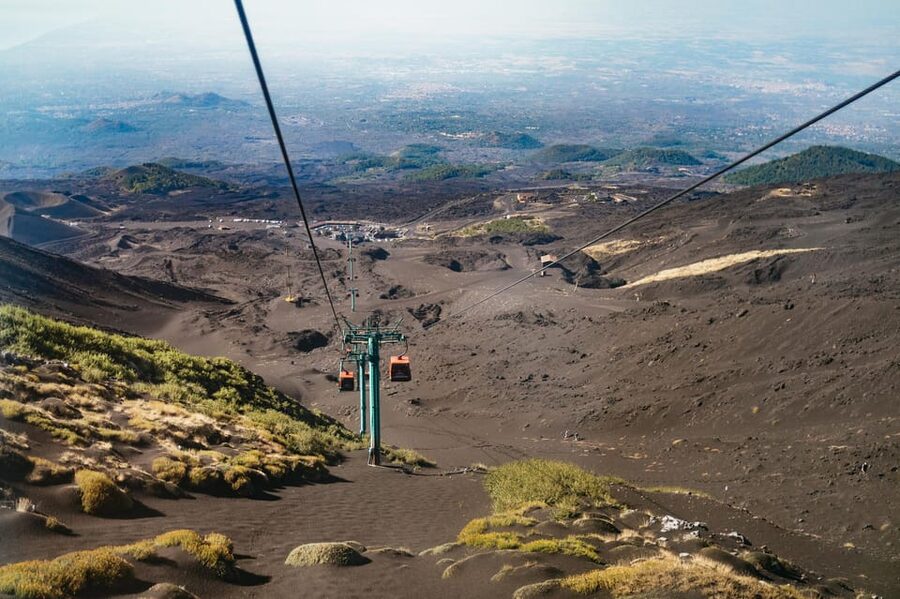
The cable car ride to 2500 meters
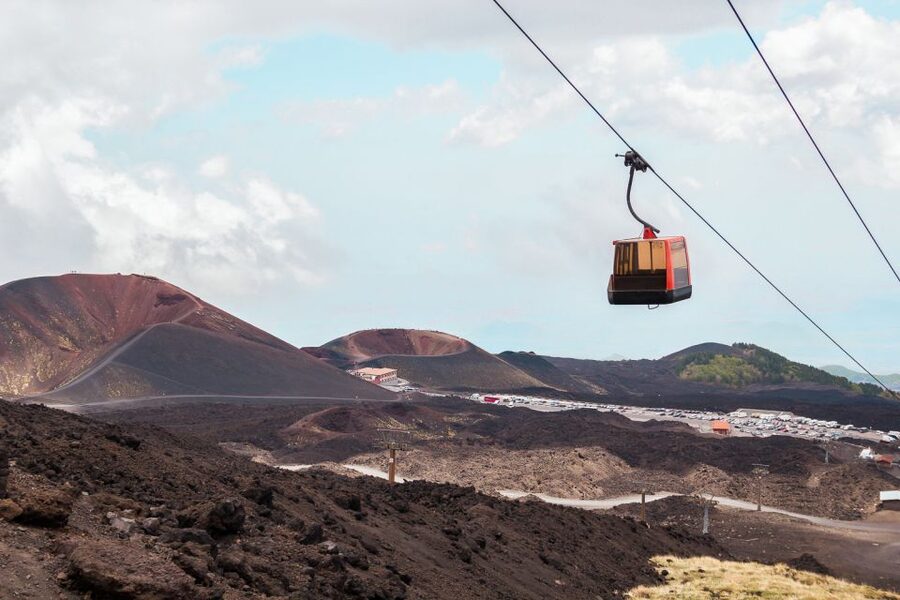
The cable car takes about 25 minutes and lifts you from the busy lower station into a much harsher mountain setting. This is not just a convenient ride. It lets you gain a large amount of altitude without spending your legs on the lower slopes, leaving your energy for the more interesting section above.
At around 2500 meters, you begin to feel the difference. Breathing can become harder, and the air may feel sharply cold. The cable car itself is simple rather than scenic in a polished theme-park sense, but it gives you a clear sense of how quickly Etna changes from a cultivated Sicilian mountain into bare volcanic ground.
This portion can involve waiting, especially during a busy period. Still, the ride is an important part of the experience, since walking from the lower slopes would make the day much longer and more demanding.
The 4×4 climb to 2800 meters
After the cable car, a jeep or SUV carries you higher, to around 2800 meters. The drive takes roughly 30 minutes and covers rough volcanic access roads that are not suitable for ordinary cars.
The vehicle transfer is practical, but it also helps explain the price. Your transport cost is not limited to a scenic lift. You are paying for access to the high mountain, where roads, cable cars, and guided movement are tightly controlled because of the terrain and volcanic risk.
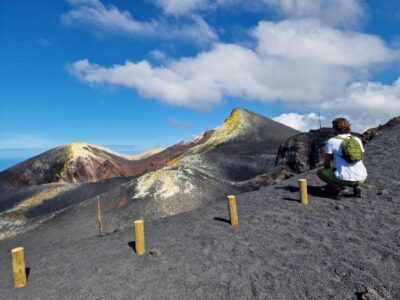
At this point, the mountain can look stark and severe. There are few soft edges. You see black and gray lava, loose sand, old eruption remains, and broad views toward the Ionian coast when the air is clear. On a cloudy or windy day, visibility can shrink quickly, which is one reason the guide may alter the plan.
Hiking across lava and volcanic sand
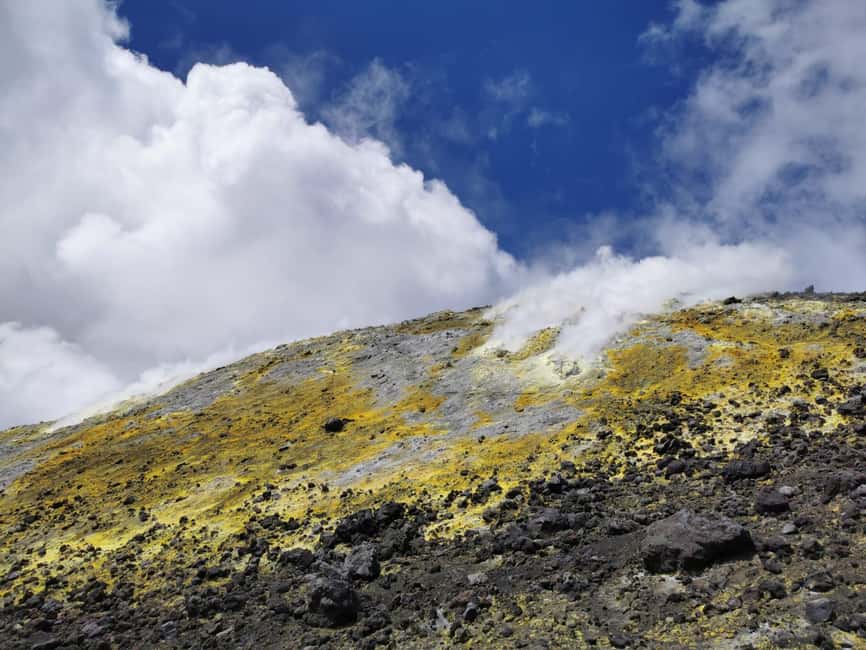
From the upper transport point, the walking section begins. The hike to the summit area takes about two hours, although the day includes stops and the exact route changes with conditions.
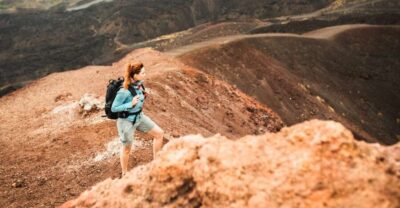
The footing is the first real test. Volcanic sand can slide beneath your boots, while lava flows create uneven surfaces that demand careful steps. Walking poles are genuinely useful here, not decorative equipment handed out for appearances. They help with balance on the ascent and reduce strain on the descent.
The pace is set by the guide. That is good news if your group includes different fitness levels. Guides such as Antonio, Massimo, and Giovanni are repeatedly praised for stopping often enough for people to rest, drink, take photographs, and catch up. The best approach is to walk steadily, avoid racing ahead, and tell the guide early if altitude or the slope is bothering you.
This is not a technical climb, but it is a serious walk. You should be comfortable hiking for several hours on loose, uneven ground. The tour is not intended for children under 11, pregnant women, or people with heart, back, respiratory, or blood pressure problems. It is also unsuitable if vertigo is a major concern.
Same trailhead, a longer or shorter day out:
- Mount Etna: Guided Trek 3,000 Meters to the Summit
★ 4.8 · 1,407 reviews - Stromboli: Sunset Trekking at Sciara del Fuoco
★ 4.6 · 1,372 reviews - Etna Sunset Tour: Volcano trek, Cave & tasting from Catania
★ 4.8 · 1,290 reviews - From Catania: trek on Mount Etna, Lava Cave & tasting Tour
★ 4.8 · 563 reviews
Reaching the Central Crater and summit zone
The reward is the Central Crater area, where the route may bring you to the rim at about 3350 meters. From here, the views can be startling. On a clear day, you look down toward the crater and across to the Northeast Crater and Southeast Crater, the latter linked to some of Etna’s most dramatic recent eruptions.
Walking along a crater rim requires attention. The ground may be unstable or sharply sloped, and gas emissions can add another reminder that this is not an ordinary sightseeing stop. Your guide decides exactly where the group can go and how long it can remain there.
The summit zone is visually strange in the best way. Volcanic bombs sit among ash and lava. The soil can sparkle or shift color as sulfur and other elements collect near fumaroles. Steam and gas give the crater area a sense of motion, even when no lava is visible.
You get a proper break and photo stop here, usually with time to take in the Ionian coast and the surrounding volcanic features. Do not expect a warm, leisurely picnic. Wind can be fierce, and the temperature can drop quickly. Several people needed extra jackets, gloves, or other warm clothing even in months that felt like summer at sea level.
Why the guide matters on an active volcano
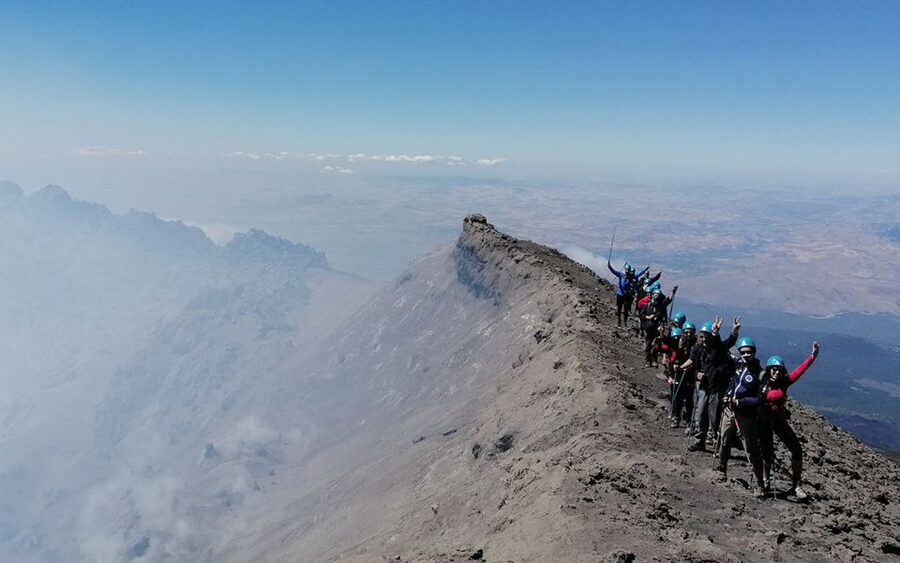
A guide is not simply there to point out rocks. The route can change because of wind, cloud, environmental conditions, seismic activity, or volcanic restrictions. The guide is also entitled to stop the outing if continuing would put an individual or the group at risk.
That flexibility is one of the strongest parts of the experience. You may hope to stand at 3350 meters, but a safe day at 3100 meters can be better than a risky attempt at the top. On one windy outing, the group reached about 3100 meters and followed an alternative route with excellent views. On other days, access stopped around 3000 meters because of activity near the summit.
Guides are in contact with people monitoring Etna’s activity and weather. Their value shows most clearly when the original plan is no longer sensible. An informed guide can turn a disappointing change into a worthwhile volcanic walk, while an unguided visitor may simply find a closed path and a confusing mountain.
The multilingual guiding is offered in English, French, and Italian. English communication has been praised, as have the guides’ geological explanations and calm handling of different abilities.
Descending past the Barbagallo craters
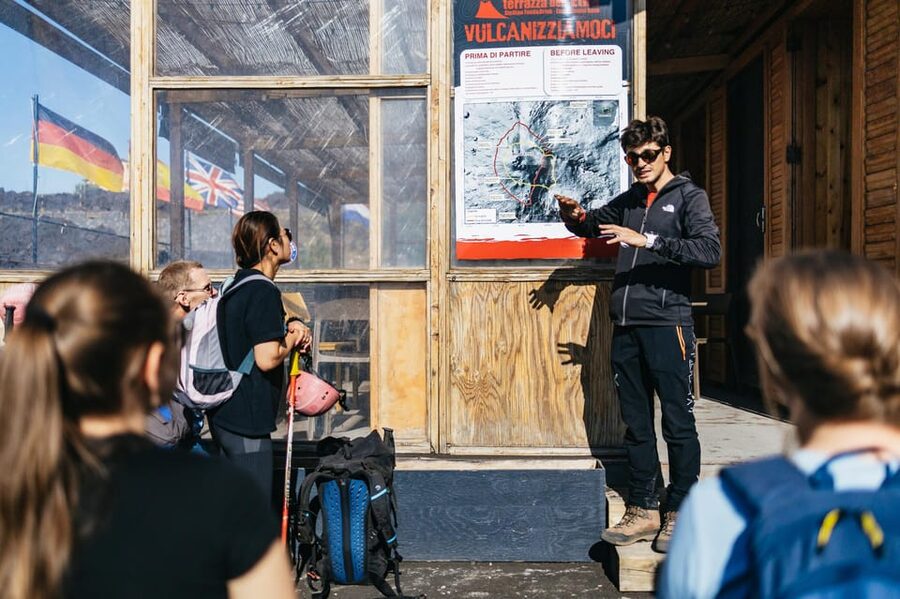
The return route is not simply the morning walk in reverse. During the descent, you visit the Barbagallo craters, smaller volcanic cones formed by past eruptions. These give you a different view of Etna’s activity and help connect the black, raw scenery with the way the mountain has been built over time.
Descending volcanic sand can be harder than climbing it. Your feet may slide forward, and loose ground can put pressure on your knees. Use the walking sticks, take short steps, and do not let the excitement of going downhill make you rush.
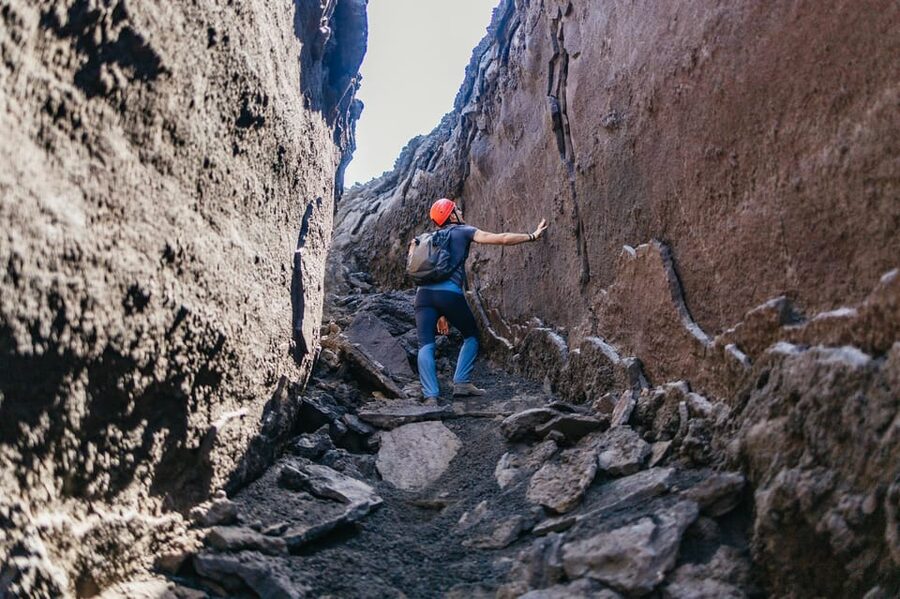
The guide may also take you through or beside a lava-flow channel. This is one of the more memorable parts of the route because you can see how molten rock once moved across the mountain. The terrain feels close and physical here, unlike the wide views from the crater rim.
Valle del Bove and the final cable car
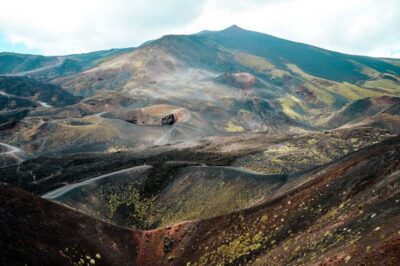
The route continues with views toward Valle del Bove, a huge volcanic depression on Etna. Its scale helps you understand that Etna is not just a single peak with a hole at the top. It is a vast, changing volcanic system marked by repeated eruptions and collapses.
The Valle del Bove section adds variety to the day. Instead of looking only into summit craters, you look across a broad volcanic basin and see how lava has shaped the mountain’s sides. Weather can affect how much of it you see, but even partial views can be impressive.
At around 2500 meters, you board the cable car for the return to Rifugio Sapienza. The final ride is welcome after the rough descent. The complete excursion lasts about six hours, though transport lines, equipment fitting, weather delays, and route changes can affect the exact timing.
The real cost and what you receive
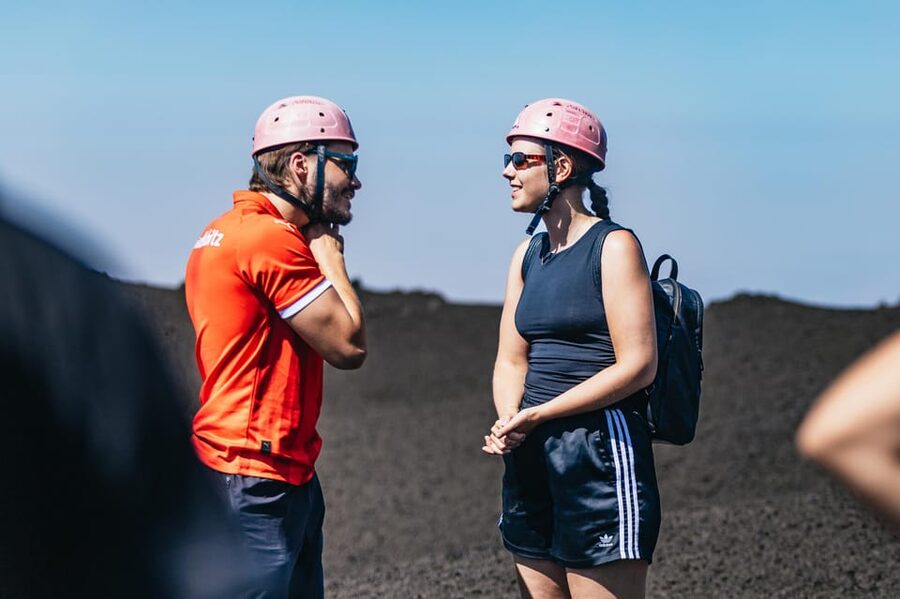
The advertised price is $77 per person, but you should budget for the required €65 cable car and 4×4 payment in cash. That puts the actual cost well above the headline figure, and currency conversion may make the total feel expensive.
Still, the value is reasonable if you want high-altitude access with a trained guide and equipment. The price includes the guided hike, a volcano or Alpine guide, hiking boots, walking sticks, a rock helmet, and liability insurance. You are not paying only for transportation. You are paying for route decisions, safety judgment, and explanations that make the terrain meaningful.
Food and water are not included. Bring both. A sandwich, snacks, and plenty of water are more useful than relying on facilities at the base, especially when the group is moving on a revised route.
The tour offers free cancellation up to 24 hours before departure and a reserve-now, pay-later option. Those policies help if your Sicily plans are still shifting, but they do not change the extra cash payment required on the mountain.
Who should book this Etna hike?
I would choose this tour if you want more than a cable car viewpoint. It suits a reasonably fit adult who is happy to walk on sand, rock, and uneven ground for several hours and who accepts that the summit is conditional.
It is also a good choice if you value explanation. Guides such as Massimo, Antonio, Giovanni, Giacomo, and Nello have been praised for combining geological knowledge with humor, patience, and close attention to safety. That mix makes a hard day feel manageable.
I would think twice if you want a fixed itinerary, warm conditions, or an easy mountain outing. You may spend time waiting, you may not reach the summit, and the €65 transport charge is easy to overlook when comparing prices. The weather can also turn a bright day in Sicily into a cold, windy outing within minutes.
Should you book it?
Book this Etna summit trek if you want the most complete south-side experience available in a half-day format: cable car, 4×4, high-altitude walking, crater views, volcanic geology, and the Barbagallo craters. The strongest reason to go is not a guaranteed 3350-meter photograph. It is having an experienced guide who can show you the best safe version of Etna on that particular day.
Before booking, set aside the extra €65 in cash, prepare for cold weather, and be honest about your fitness. If you do that, this can be one of Sicily’s most memorable outings. If reaching the exact summit is your only goal, the tour may disappoint when Etna closes the upper route. If you want a safe, informed, changing encounter with an active volcano, it is a strong choice.
FAQ
How long does the Etna summit craters trek last?
The activity lasts about six hours, including the cable car, 4×4 transfer, hiking, guided stops, rest breaks, and the return cable car.
Where does the tour meet?
You meet at the Ashàra information point at Rifugio Sapienza on Etna’s south side, close to the Terrazza dell’Etna restaurant.
Is the cable car included in the advertised price?
No. The cable car and 4×4 tickets cost €65 per person and must be paid in cash on the spot.
What happens if volcanic activity prevents access to the summit?
The guide may change the route and continue to the highest safe point. If the summit is unavailable, the hike may stop around 3000 meters or lower, depending on conditions.
What equipment is included?
The tour includes hiking boots, walking sticks, a rock helmet, hiking instruction, a multilingual volcano or Alpine guide, and liability insurance.
What should I bring?
Bring water, food, snacks, sunscreen, sunglasses, a sun hat, a jacket, long trousers, socks, a daypack, and an extra T-shirt. Gloves and a face covering are also useful in cold or windy conditions.
Who should not join this hike?
The activity is not suitable for children under 11, pregnant women, or people with back, heart, respiratory, or blood pressure problems. It is also unsuitable for people with vertigo.
Recently added around Italy
- Trekking in the Wood with picnic on the turtles lake★ 5.0 · 8 reviews
- Lake Como trekking private guided tour, from Milan★ 5.0 · 9 reviews
- Trekking towards Torrente Gravina and Rupestrian Churches of the Murgia★ 4.5 · 3 reviews
- Trekking on the roof of Tuscany★ 5.0 · 6 reviews
- Otranto Trekking Adventure: The Path of the Hermit and the Bay of the Turks★ 3.5 · 8 reviews
- Lecce: Hike to Otranto with town visit – Half Day Trekking +Taxi★ 5.0 · 2 reviews
- Wine Hiking Sip & Trek★ 5.0 · 3 reviews
- Trekking an Island of Palmaria★ 4.5 · 6 reviews
Volcano Treks, compared.
Mount Etna Trekking Tour Beyond the Tourist Trails
Read our review →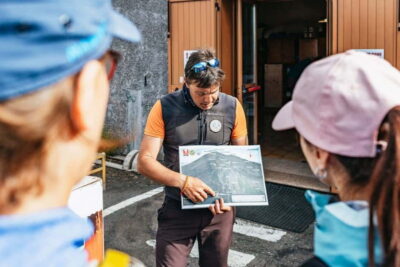
Etna Sunset Tour: Volcano trek, Cave & tasting from Catania
Read our review →
Browse the lists this tour appears in