
REVIEW · MOSHI
Mount Kilimanjaro Trek 8 days Lemosho Route
Kilimanjaro rewards patience. This 8-day Lemosho trek gives you a gradual approach, starting in western Kilimanjaro’s rain forest and crossing the Shira Plateau before joining the southern circuit. I like the quieter opening days and the route’s strong acclimatization plan, especially the high Lava Tower to lower Barranco descent.
I also like that you descend by the Mweka trail instead of retracing your steps. The private format, airport transfers, mountain crew, meals, camping equipment, and portable toilet make the $3,088 price easier to understand. The main drawback is the summit day: up to 14 hours of walking, cold night conditions, and a steep final push are serious demands.
Key points to know before booking
- The route begins at 2,360 meters: You start at Londorossi Gate and climb through rain forest before reaching the open Shira highlands.
- Acclimatization is built into the plan: You spend time at Lava Tower, about 4,785 meters, then sleep lower at Barranco Camp.
- The summit day is very long: You leave around midnight, reach Stella Point near sunrise, continue to Uhuru Peak, then descend to Mweka Camp.
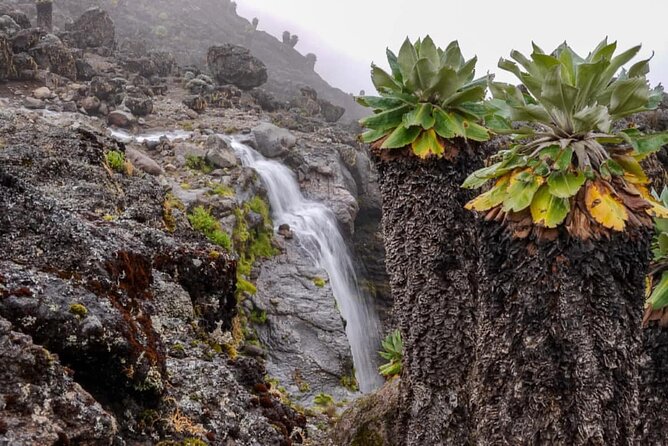
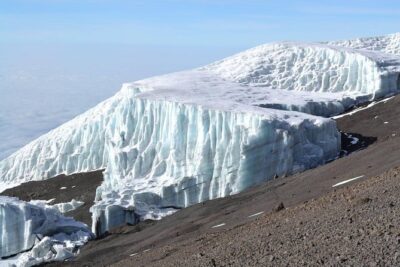
- The scenery changes every day: Expect rain forest, heather, moorland, volcanic rock, alpine desert, and an arctic summit zone.
- Most major trek costs are included: Park fees, rescue fees, crew, tents, food, transfers, and two hotel nights are covered.
- Personal equipment and tips cost extra: Sleeping bags, boots, duffle bags, walking sticks, visas, insurance, flights, drinks, and crew tips are not included.
Why the Lemosho Route is a smart choice
The Lemosho Route is a good fit if you want a slower start and more varied scenery. The trek begins far west of the mountain at Londorossi Gate, then curves around Kilimanjaro toward the south. This gives you a sense of progress as the surroundings change from thick forest to open high country and finally to bare volcanic slopes.
The first few days are also quieter than the more heavily used sections closer to the summit. That matters because the early part of a Kilimanjaro climb is not about rushing. You are giving your body time to adjust while walking through some of the mountain’s most attractive plant zones.
This is a private activity, so only your own group takes part. That can make the walking pace, meal routine, and rest periods easier to manage than on a large shared departure. The available information does not state the maximum group size, so ask how many climbers and crew members will be with you before paying.
The route is described as an 8-day climb, with about 9 days of total arrangements once airport pickup, hotel nights, and the return transfer are counted. You begin and end in Moshi, Tanzania.
More Kilimanjaro Climbs in Moshi
- Best Kilimanjaro Adventure 7 days Machame route Trekking
★ 5.0 · 42 reviews - Kilimanjaro 7 Day Private Trekking Experience
★ 5.0 · 40 reviews - 6 Days Machame Route Kilimanjaro Climbing Trekking Tour
★ 5.0 · 34 reviews
Arrival in Moshi and the gear check
Your airport transfer starts at Kilimanjaro International Airport. A driver waits outside customs with a name tag, then takes you to Parkview Inn Lodge in Moshi.
Depending on your arrival time, you meet an experienced mountain guide for a briefing and equipment check. This is one of the most useful parts of the first day. Kilimanjaro is not a place to discover at the gate that your boots hurt, your sleeping bag is missing, or your clothing is not warm enough.
If you need equipment, rentals are available in Moshi. The stated examples include a sleeping bag for $40, a duffle bag for $35, hiking boots for $40, and walking sticks for $10. Confirm current prices and condition before relying on rental gear.
You should treat the first night as part of the trek, not just an airport stopover. Eat, rest, organize your bag, and use the equipment check to settle small problems before the trail begins.
Day 1 on the trail: Londorossi Gate to Big Tree Camp
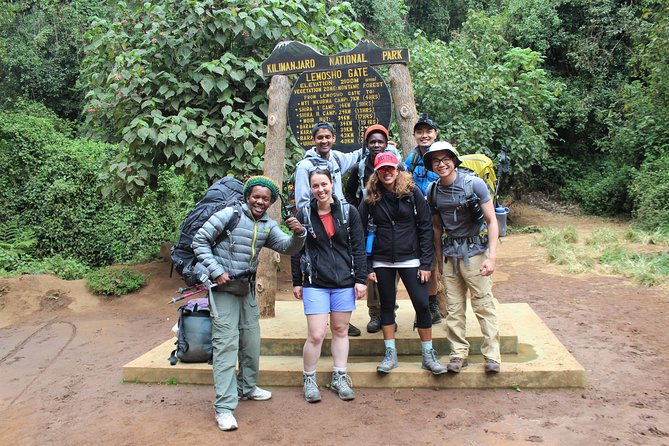
After breakfast in Moshi, you drive for about three hours to Londorossi Gate. Park registration takes place there, and you meet the rest of the mountain team before beginning the walk.
The trail covers about 6 kilometers and takes roughly three to four hours. The habitat is rain forest, and the destination is Mti Mkubwa, also called Big Tree Camp.
This is a gentle introduction in terms of distance, but do not treat it as a throwaway day. The forest can feel damp, and the trail is your first chance to settle into the slow walking rhythm used at altitude. The route description also notes opportunities to see unusual wildlife in the forest region, though no sightings are guaranteed.
Lunch is provided after reaching the gate, and the mountain food plan begins here. Tents, a dining tent, mattresses, tables, chairs, and lighting are supplied, so you are not expected to carry a full camping setup.
Day 2: Shira Ridge and the first open views
From Big Tree Camp, you walk about 8 kilometers over five to six hours. The trail leaves the rain forest and enters a high zone of tall grasses, heather, volcanic rock, and lichen.
This is where the route begins to feel properly alpine. You climb through rolling ground and cross streams before reaching Shira Ridge, then continue down toward Shira 1 Camp. The change from enclosed forest to broad high-country views is one of the memorable transitions on this route.
The elevation gain can feel more noticeable here, even though the walking time is manageable. Keep your pace slow and steady. You are not racing to camp, and conserving energy now helps later.
The route’s early movement toward the Shira Plateau also gives you a strong visual sense of Kilimanjaro’s scale. You can look back across the terrain you have crossed, then ahead toward the higher volcanic zones.
Same trailhead, a longer or shorter day out:
- Kilimanjaro Trekking 7Days 6Night Lemosho Route
★ 5.0 · 23 reviews - 8 Day Kilimanjaro Trek via Lemosho Route
★ 5.0 · 17 reviews - Top 6 Days Mt. Kilimanjaro Bike trek Tour by Marangu-Kilema Route
★ 5.0 · 15 reviews - 6 Days Mount Kilimanjaro Trek Marangu Route
★ 5.0 · 15 reviews
Day 3: Shira Plateau, Shira Cathedral, and Moir Hut
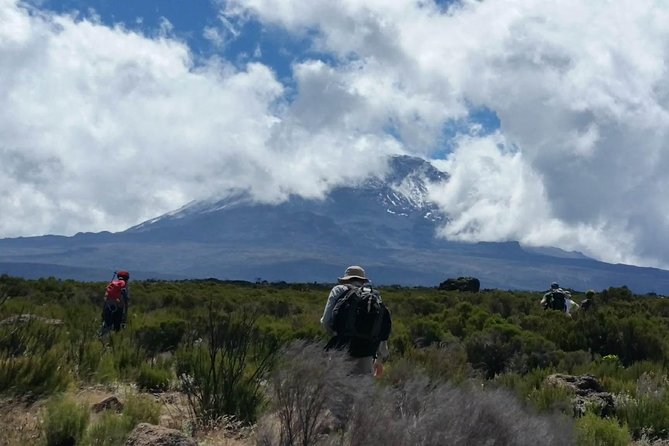
The fourth trekking day is a full day on the Shira Plateau. You walk about 11 kilometers over five to seven hours through heath and moorland.
The route heads east toward Shira 2 Camp, then turns toward Moir Hut. Lunch is taken at the camp area before dinner and an overnight stay. The route description also highlights Shira Cathedral, a notable formation on the plateau.
This day has real value for acclimatization because you are spending more time at high elevation without yet tackling the summit slopes. The plateau itself is one of the most distinctive parts of the climb, with open volcanic ground and fewer trees to frame your view.
The drawback is simple: three or four hours of walking may feel modest, but five to seven hours across high ground can be tiring. You should not judge the day only by the distance. Altitude, uneven volcanic surfaces, and the repeated rise and fall of the trail all add effort.
Day 4: Lava Tower to Barranco and the acclimatization payoff
This is one of the best-designed days of the trek. You walk toward Lava Tower, a volcanic rock formation at about 4,785 meters, or 15,190 feet. The route covers roughly 7 kilometers in four to five hours before the descent.
After lunch, you continue about 3 kilometers over two to three hours to Barranco Camp at approximately 4,182 meters, or 13,044 feet. You gain height during the day, then sleep lower than Lava Tower.
That pattern is valuable because it gives you time at a higher altitude while avoiding an overnight stay at the highest point reached that day. It is often described as climb high, sleep low, and here it is built into the route rather than left to chance.
The strange Senecio Forest adds visual interest during the descent. These large plants give the alpine desert a distinctly Kilimanjaro character.
You finish the day at nearly the same general elevation where you began, so the distance and altitude profile can be deceptive. This is an eight-hour day on paper, and you should expect it to feel like one.
Day 5: The Barranco Wall and Karanga Valley
From Barranco Camp, the trail first drops toward the base of the Great Barranco Wall. You then climb the steep, non-technical wall, which rises nearly 900 feet.
The word non-technical is important. You do not need climbing equipment for this section, but it is still steep and requires care. The trail crosses hills and valleys after the wall, then drops sharply into Karanga Valley before rising again to Karanga Camp.
The total walking distance is about 5 kilometers, with four to five hours of hiking. Karanga River is the last water point noted on the route, so this is a useful place to understand how the support system works as you move closer to the summit.
Lunch is served at camp, followed by a shorter afternoon acclimatization walk. That extra walk is a sensible use of the afternoon, but it also means you should not assume arrival at camp ends the day entirely.
The Barranco Wall is likely to be a psychological high point. It looks imposing, but the route is described as steep rather than technical. Move at the guide’s pace, keep your hands free, and focus on secure footing.
Day 6: Barafu Camp and preparation for the summit
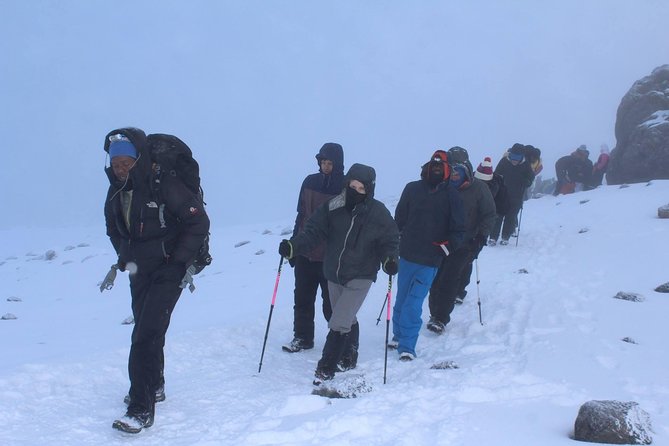
The trail from Karanga to Barafu Camp is only about 4 kilometers, with four to five hours of walking. The terrain is rocky and remains in the alpine desert zone.
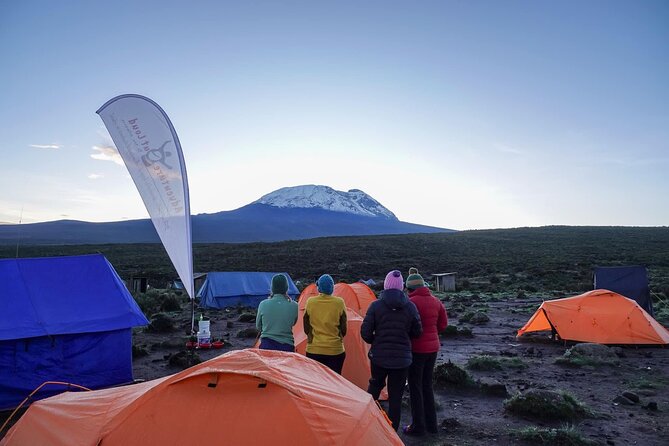
At Barafu, you have completed the Southern Circuit. The route gives you views of the summit from several angles, and clear weather may reveal both Mawenzi and Kibo. These are the views you want to take in before resting, because the next stage is about stamina rather than sightseeing.
You arrive, rest, eat an early dinner, and prepare for the summit attempt. The early dinner may feel out of step with normal habits, but the midnight start makes it necessary.
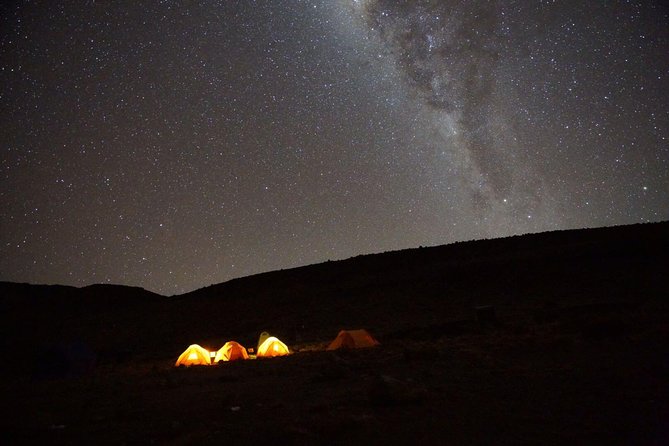
Barafu is not a place for a casual late-night campfire mood. Organize your headlamp, warm layers, water, snacks, and summit clothing before trying to sleep. The schedule is short on comfort but practical for the summit timetable.
Day 7: Uhuru Peak and the long descent to Mweka Camp
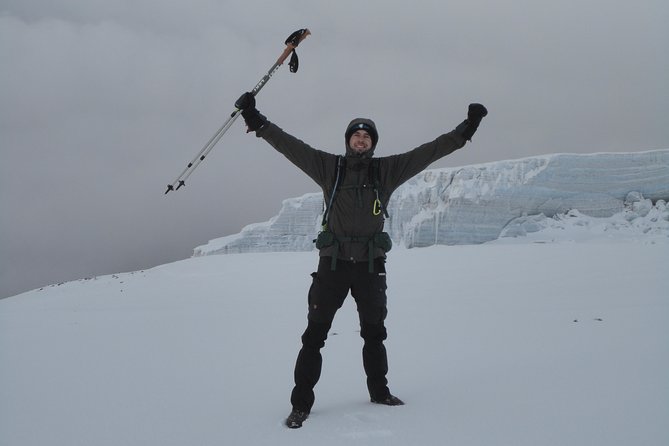
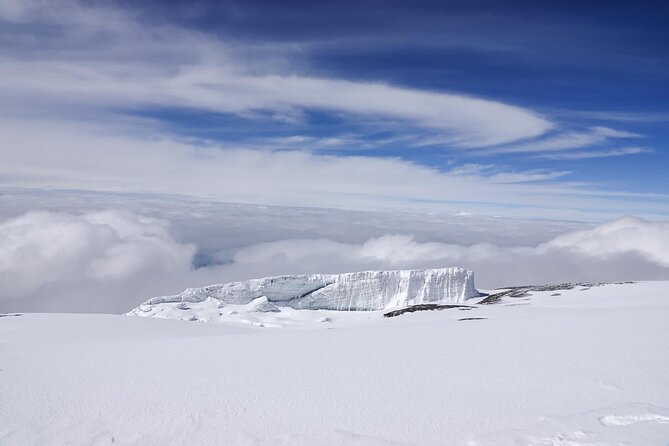
Summit day begins around midnight. You walk in darkness and cold for several hours, taking short breaks as needed. The first major target is Stella Point at about 5,730 meters, or 18,900 feet, usually reached around sunrise if conditions and pace allow.
From Stella Point, you continue for about an hour to Uhuru Peak, the highest point on Mount Kilimanjaro at 5,895 meters, or 19,341 feet. The summit section is physically demanding, but the mental challenge is just as important. You have already spent several days walking, and the cold, darkness, and thin air can make each step feel slow.
The listed summit segment covers about 5 kilometers and takes seven to eight hours. After a short time at the top for photographs, you descend to Mweka Camp. That part covers about 12 kilometers and takes another four to six hours, bringing the full day to around 14 hours.
This is the clearest reason to take the itinerary seriously. Reaching Uhuru Peak is only part of the day. You still have to walk down to camp, so conserve energy and follow the guide’s instructions rather than staying too long at the summit.
The route changes from arctic conditions near the top to rain forest around Mweka Camp. That sharp shift is a fitting final chapter to the climb, but the descent can be hard on tired knees.
Day 8: Mweka Gate, certificates, and Moshi
After breakfast and a celebration at camp, you descend about 10 kilometers over three to four hours to Mweka Gate.
At the gate, you sign out with the national park authority and collect summit certificates. A vehicle then takes you back to your Moshi hotel.
The package includes one hotel night before the trek and one night afterward, with bed and breakfast. The final airport transfer is also included, timed according to your flight details. Having a post-trek night in Moshi is useful because the summit day is so long and the final descent still requires effort.
The activity officially ends back at the meeting point, KiliTwende Adventures Limited, on the fourth floor of the Kilimanjaro Complex in the NSSF Building on Aga Khan Road. The stated start time is 8:30 a.m., though the airport arrival and mountain schedule naturally shape the full trip.
What the $3,088 price covers
At $3,088 per person, this is not a budget walk, but the price includes many of the expensive and essential parts of a Kilimanjaro climb.
Included are park fees, camp fees, rescue fees, 18 percent VAT, airport transfers, mountain gate transfers, two hotel nights, tents, mattresses, a dining tent, a mess tent, tables, chairs, lanterns, food, professional guides, cooks, porters, and a portable flush toilet with a toilet tent. An oxygen tank is also carried for emergencies.
Three meals a day are provided on the mountain. The package lists seven breakfasts, eight lunches, and seven dinners, matching the multi-day camping schedule.
You still need to budget for personal equipment, hotel meals and drinks, travel documents, insurance, flights, camera costs, and tips for porters, guides, and the cook. Tips are especially important to plan for because the mountain crew does much of the physical work behind your climb.
The value here is strongest if you need airport transfers, camping equipment, food, and a full support team arranged together. It is less attractive if you already own all equipment and prefer to organize every component independently.
Who should choose this trek?
I would recommend this route to someone with moderate physical fitness who wants a gradual approach, varied scenery, and a private group setting. You should be comfortable walking for several hours on consecutive days and prepared for the possibility of a 14-hour summit day.
It suits you if you value acclimatization more than the shortest possible schedule. The Shira Plateau, Lava Tower, Barranco Wall, and Mweka descent give the trek a good range of terrain and scenery.
It is not a casual nature holiday. The route description specifically calls for moderate fitness, and the summit day demands much more than ordinary sightseeing. If you dislike camping, cold nights, steep ground, or long hours on foot, this is probably the wrong choice.
The company has two published positive accounts associated with the experience, including one from two sisters who reached the summit after booking a 7-day Lemosho climb through Bushkomba, which works with KiliTwende. Another account praises the booking process and the 8-day Lemosho experience. The available information does not provide guide names, so ask for the names and experience of your own guide team before departure.
Should you book the Lemosho trek?
Book it if you want a well-supported Kilimanjaro climb with a slower western approach, strong acclimatization days, and a different descent route. The included crew, meals, transfers, mountain fees, equipment, and hotel nights give the $3,088 cost solid practical value.
Before booking, confirm the group size, exact rental gear prices, tipping guidance, hotel details, and the plan for handling altitude problems. Also check your own travel insurance and make sure your equipment is ready for the summit night.
You can cancel for a full refund if you do so at least 24 hours before the experience start time. Changes or cancellations inside that window are not accepted for a refund.
FAQ
How long is the Mount Kilimanjaro Lemosho trek?
The mountain climb is described as an 8-day trek, with about 9 days in total when arrival, hotel accommodation, and departure arrangements are counted.
Where does the trek begin?
The climb begins at Londorossi Gate, located at about 2,360 meters. The trail then passes through rain forest before reaching the Shira Ridge and Shira Plateau.
Is airport pickup included?
Yes. Pickup and drop-off at Kilimanjaro International Airport are included, along with transfers to and from the mountain gates.
Are meals included during the trek?
Yes. Breakfast, lunch, and dinner are provided on the mountain. Food and three meals a day are included in the package.
Is personal mountain equipment included?
No. Personal gear is not included. Listed rental examples include a sleeping bag, duffle bag, hiking boots, and walking sticks.
How difficult is summit day?
Summit day is the most demanding part of the trek. You start around midnight, walk to Stella Point and Uhuru Peak, then descend to Mweka Camp. The full day is listed at about 14 hours.
Recently added around Moshi
- Mt Kilimanjaro Trek, 6 Days – Umbwe Route★ 5.0 · 4 reviews
- 7 Day Trek To The Roof Of Africa Kilimanjaro via Machame Route★ 5.0 · 5 reviews
- Mount Kilimanjaro Trek 7-Days: Lemosho Route★ 5.0 · 2 reviews
- 8 Day Kilimanjaro Trek via Lemosho Route★ 5.0 · 17 reviews
- 6-Day Kilimanjaro Machame Route – A Stunning Trek to Uhuru Peak★ 5.0 · 7 reviews
- 7-Days Tour Mount Kilimanjaro Trekking via Machame Route★ 5.0 · 2 reviews
- Unforgettable 8 Days Lemosho Route Trekking on Kilimanjaro★ 5.0 · 4 reviews
- 6-Day Rongai Route Trek in Mount Kilimanjaro★ 5.0 · 8 reviews
Kilimanjaro Climbs, compared.
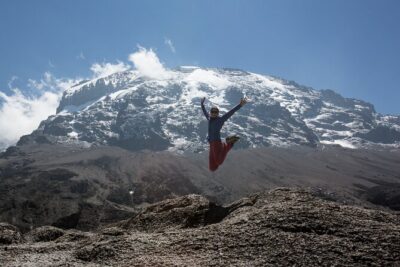
8-Day Small-group Lemosho Kilimanjaro Summit Trekking
Read our review →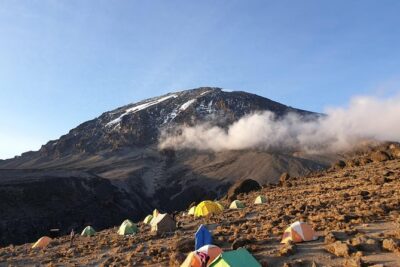
Best Kilimanjaro Adventure 7 days Machame route Trekking
Read our review →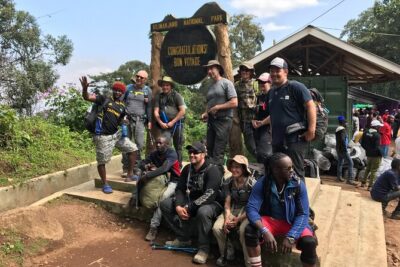
Kilimanjaro 7 Day Private Trekking Experience
Read our review →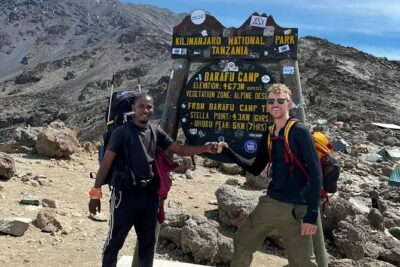
6 Days Machame Route Kilimanjaro Climbing Trekking Tour
Read our review →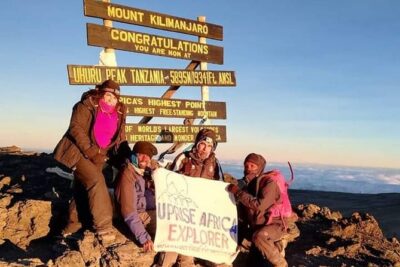
Kilimanjaro Trekking 7Days 6Night Lemosho Route
Read our review →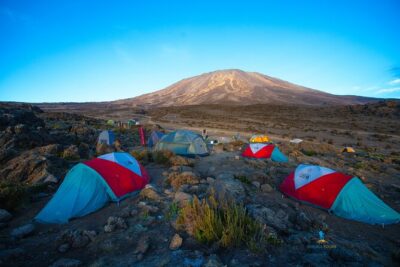
Top 6 Days Mt. Kilimanjaro Bike trek Tour by Marangu-Kilema Route
Read our review →Browse the lists this tour appears in