
REVIEW · SICILY
Etna North: Guided trekking to Summit volcano craters
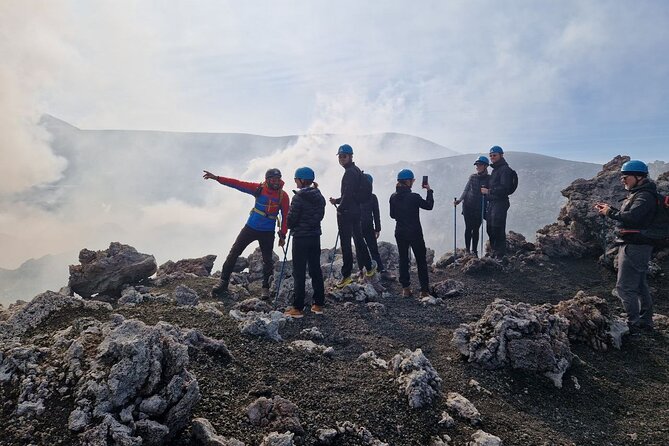
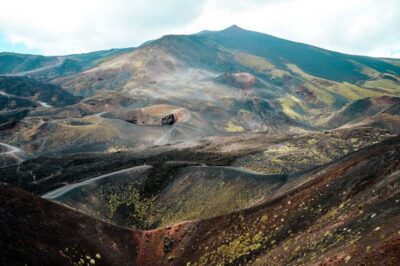
Etna rewards those who climb higher. This five-hour trek from Piano Provenzana takes you by 4×4 to 2,825 meters, then on foot toward the summit craters at about 3,320 meters. You walk beside steaming vents, lava fields, volcanic bombs, and sulfur-stained ground while guides explain how Sicily’s great volcano formed and erupted.
I like the excellent safety setup, with boots, helmets, walking poles, insurance, and a volcanological or Alpine guide included. I also like the chance to reach places many Etna visitors never see, including the rim of the Central Crater and views toward the Northeast and Southeast Craters.
The main caution is simple: this is a serious high-altitude walk, not an easy sightseeing outing. Snow, gas emissions, weather, altitude, and volcanic restrictions can change the route, and the extra 4×4 ride costs €60 per person in cash.
Key points to know before you book
- The walk begins at 2,825 meters: A 4×4 carries you from Piano Provenzana to Piano delle Concazze, saving energy for the steep climb.
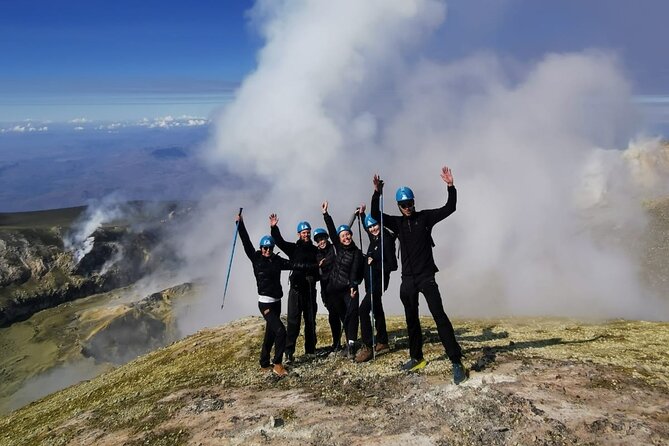
- You reach about 3,320 meters: The route heads toward the main crater rim and skirts the Central Crater.
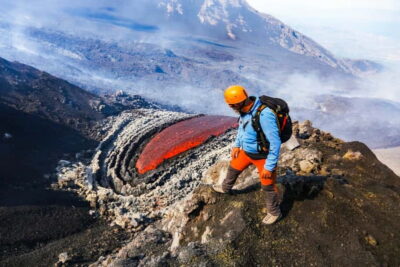
- The volcanic details are the real prize: Expect gas emissions, lava fields, volcanic bombs, ash, slag, and sulfur-colored soil.
- The tour includes useful safety gear: Boots, helmets, walking sticks, insurance, and a specialist guide are provided.
- The €78.10 price is not the whole cost: Add €60 per person for the 4×4 transfer, paid in cash on site.
- Guides make a major difference: Antonio and Massimo are praised for clear explanations, care, and good group management.
Starting at Piano Provenzana on Etna’s north side
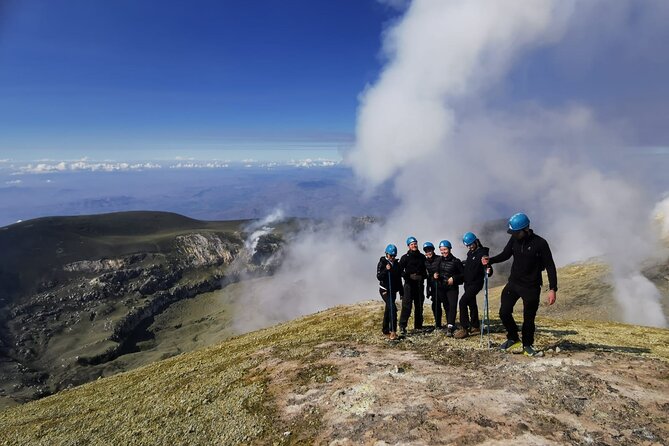
Meet at Piano Provenzana, at 1,800 meters on Etna’s north side, for the 8:00 am start. This is a mountain departure point rather than a town center, so arrive ready to begin with the group. The activity ends back at the same place.
The north side gives you a quieter, more rugged approach to Etna. Instead of starting with a long walk from lower ground, the group uses a special 4×4 vehicle to reach Piano delle Concazze at 2,825 meters. The ride takes about 40 minutes.
That transfer is practical, not just a bit of mountain fun. It puts you close to the high craters and preserves your legs for the demanding section on foot. It also means you gain altitude quickly, so you should take the first part of the hike steadily.
The 4×4 ticket is not included in the advertised tour price. You pay €60 per person in cash on site. With the listed $78.10 booking price added, the real cost is considerably higher, so bring enough cash and budget for the full amount before deciding this is a bargain.
More Volcano Treks in Italy
- Mount Etna: Trek to 3000m with cable car and 4×4
★ 4.6 · 3,823 reviews - Mount Etna: Summit Crater Trek with Cable Car
★ 4.8 · 1,875 reviews - Etna: summit craters trekking with volcano guide 3350mt
★ 4.7 · 1,712 reviews
Climbing from 2,825 to 3,320 meters
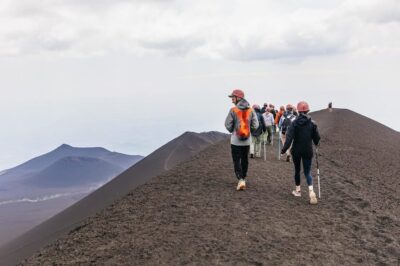
From Piano delle Concazze, the walking section takes about two hours uphill to the main crater rim. The route passes over fine volcanic ash and rough slag, surfaces that can shift under your boots and make each step more tiring than the distance suggests.
At this height, the air is thinner and the weather can feel very different from the coast or towns below. You need moderate physical fitness, and you should not treat the five-hour duration as a relaxed stroll. The guide sets the pace for a group, and the group format means you may need to follow the planned rhythm rather than take long personal breaks.
The provided hiking boots and poles are useful here. Poles help with loose ash, while proper boots give better support than ordinary exercise shoes. A helmet is also supplied, an important part of a guided volcano outing near unstable terrain and active crater areas.
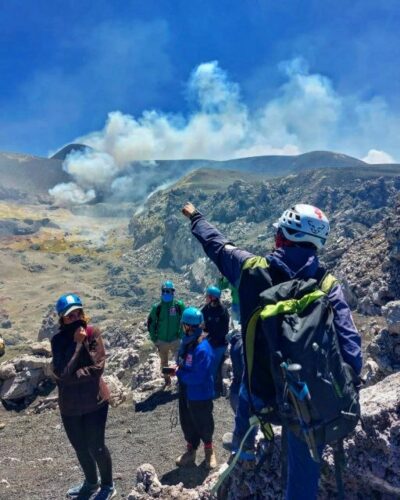
The ascent is broken up by pauses for explanations. Guides point out the formation of Etna, the character of the craters, lava activity, and the volcanic material underfoot. Massimo, also called Max, has been especially praised for explaining rock formations, mineral composition, lava fields, and past eruptions in a way that keeps the climb interesting.
Seeing Etna’s three great summit craters
The high point of the walk is the summit crater zone. The route reaches the edge of the Central Crater at about 3,320 meters, then takes you along its rim when conditions allow.
From there, you face the Northeast Crater, described as vertiginous from the route, while the Southeast Crater rises nearby. The Southeast Crater has produced some of Etna’s most recent and impressive eruptions, so you are seeing a part of the volcano that is still very much part of its active story.
The experience is not about entering a crater or standing on a perfectly quiet summit. Etna is an active volcano, and access depends on gas emissions, eruption conditions, official restrictions, and weather. The route may be changed, shortened, or redirected for safety.
That flexibility matters. On one outing, high gas emissions prevented access to the summit craters, but the guide team arranged an alternative high-mountain route. On another, volcanic activity made the planned north and summit route legally impossible. A good Etna tour is one that respects those limits rather than promising a fixed finish at all costs.
You may therefore reach two summit craters, part of the crater rim, or a permitted viewpoint near the upper zone. The exact result is controlled by the volcano, not by the brochure. That is frustrating only if you expect a guaranteed summit; it is sensible if you understand the conditions before booking.
Gas vents, sulfur colors, and fresh volcanic ground
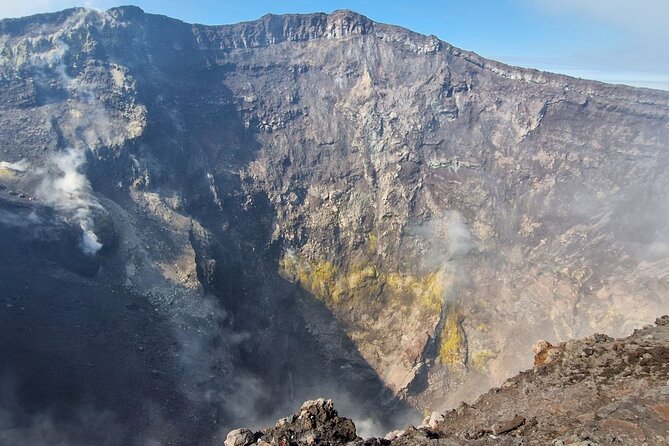
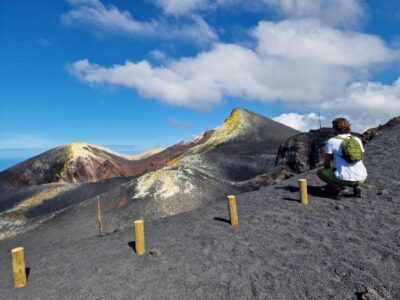
The most memorable details are often under your feet. Near the upper craters, you can see gas emissions, volcanic bombs, and ground colored by the sublimation of minerals, especially sulfur.
These features make the walk feel like a natural science lesson rather than a simple mountain climb. The ground can glitter or show unusual shades, and the air may carry signs of the volcano’s heat and gases. Your guide’s explanations help connect those small details to the larger eruptions and crater formations around you.
You also pass lava fields and volcanic ash, with the surface changing from rough slag to loose, fine material. The descent is not automatically easy. Ash can slide, and the uneven surface asks for care, particularly after the uphill effort and at altitude.
This is where the walking poles earn their place. They help you keep balance and control your pace. Use the breaks to drink water, check how you feel, and tell the guide early if the altitude or conditions are affecting you.
More Volcano Treks in Sicily
- Etna excursion 3000 meters with 4×4 cable car and Trekking
★ 4.5 · 504 reviews - Etna – Trekking to the summit craters (only guide service) experienced hikers
★ 5.0 · 286 reviews - Etna Morning or Sunset – Trek & Lava Tunnel with Gear
★ 5.0 · 133 reviews - Etna trekking tour
★ 5.0 · 115 reviews
Descending with the Sicilian coast in view
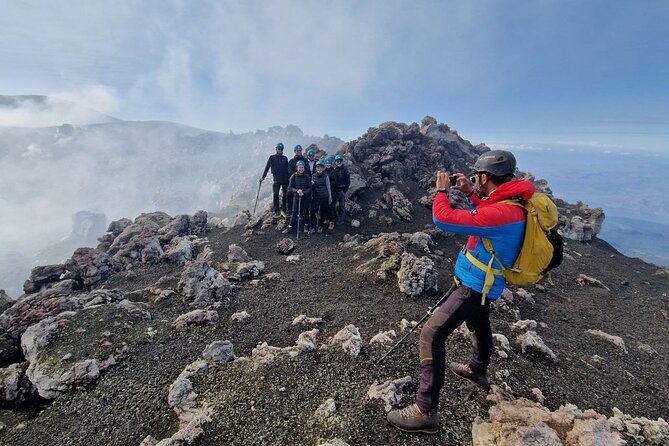
After the upper crater visit, the route descends toward the 4×4 meeting point at 2,825 meters. The descent takes about two hours, including pauses and interpretation.
The north side opens to broad views toward the Sicilian coast. Those views provide a welcome change after the close volcanic textures of the summit zone. The contrast is part of the appeal: one moment you are examining sulfur-stained earth and vents, and the next you are looking far across the island.
The return walk is still physically demanding. Fine ash can get into shoes and clothing, while rough slag requires careful footing. Provided boots help, but you should still wear clothing that can handle dust and changing mountain weather.
At Piano delle Concazze, you board the 4×4 for the return to Piano Provenzana. The vehicle ride completes the loop and brings you back to the original meeting point, normally after about five hours in total.
Guides, group size, and the pace of the climb
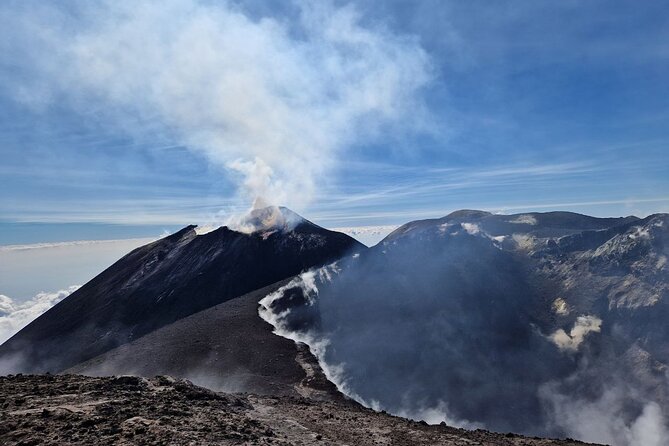
The maximum group size is 20 people. That is small enough for a guide to keep an eye on the group, though it is still a group trek rather than a private outing.
The guides receive strong praise for safety and explanations. Antonio is noted for being funny, attentive, and clear in English, while Massimo is praised for his volcanic knowledge, patience, and ability to keep the experience engaging. Giuseppe is also described as friendly and informed in one outing, though another account found his pace too fast during difficult snowy conditions.
That mixed experience is useful to understand. A group trek works best when everyone has a similar ability and accepts the guide’s schedule. One account involved a snow-covered route where a member slipped, struggled to continue, and was turned back. The company’s response was that the guide had a duty to protect the group and that a private guide would have been better for anyone needing a slower personal pace.
I would take that warning seriously. If you want frequent stops, a custom rhythm, or extra help for one member of your party, ask about a private option before booking. This outing is designed for a shared group pace.
The team has also shown flexibility when conditions change. A guide once returned to help someone experiencing altitude sickness, and another guide took responsibility for part of that group. That kind of coordination is reassuring, even though it can affect the exact timing.
Weather, snow, gas, and volcanic restrictions
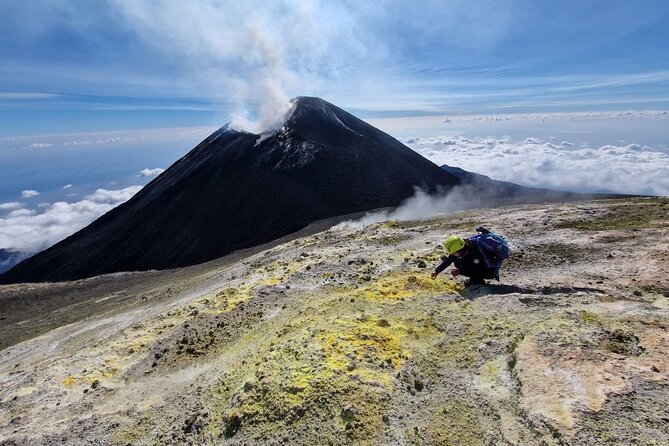
Etna’s upper slopes are not predictable. Poor weather can cancel the activity, in which case you are offered another date or a full refund. The same applies if the minimum number of participants is not reached.
Weather can also transform the difficulty without canceling the walk. Snow makes the ash and slopes harder to cross, and standard hiking boots may not provide the same grip as dedicated snow gear. Ask about current conditions if your date follows a storm or heavy snowfall.
High gas emissions can close parts of the route. So can volcanic activity or official restrictions. A planned summit visit may become a permitted alternative at a lower point or on a different section of the mountain.
I see this as a normal condition of visiting an active volcano. Still, you should book with the right expectations. The value is not a guaranteed photograph beside a particular crater. The value is expert access to a changing volcanic environment, with safety decisions made on the day.
People with asthma or heart problems are specifically advised against this activity. You also need a moderate level of fitness. If you are uncertain about altitude or strenuous walking, speak with a medical professional before booking.
Is the $78.10 price good value?
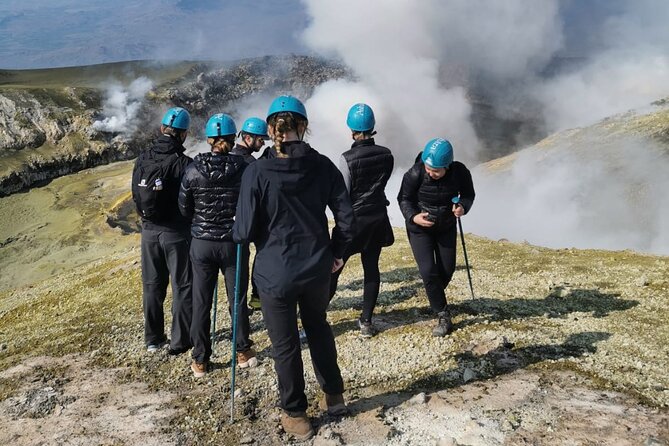
The advertised price looks reasonable for a five-hour guided mountain experience, especially with boots, a helmet, walking poles, insurance, and a specialist guide included. Those inclusions save you from renting or carrying several useful items.
But the extra €60 4×4 ticket changes the calculation. It is mandatory for the high transfer described here and must be paid in cash on site. Once added, this becomes a more substantial half-day expense.
I still think the value is fair for the right person. You receive transport up the mountain, safety equipment, specialist interpretation, and access to high areas that are difficult to visit independently. The guide also handles decisions about volcanic conditions and route safety.
It is less attractive if you mainly want a cheap view from Etna or if you are happy with a lower, easier walk. In that case, paying for the upper-crater route and transfer may not make sense.
Who should book this Etna trek?
I would recommend it to you if you want an active, high-altitude experience and have reasonable fitness. It suits people who enjoy geology, volcanoes, unusual terrain, and wide views more than a leisurely bus excursion.
It is especially good for visitors who want to understand Etna while walking through its features. The explanations about lava, minerals, craters, and eruptions give the scenery meaning.
You should think twice if you dislike loose ground, steep uphill walking, altitude, or a group pace. You should also avoid it if you have asthma or heart problems, as specifically advised by the operator.
Bring cash for the 4×4, allow flexibility for weather, and wear layers suitable for changing conditions. The provided boots and helmet are useful, but they do not turn a demanding mountain climb into an easy walk.
Should you book Etna North Summit Craters Trek?
I would book this tour if your priority is reaching Etna’s upper volcanic zone with a guide who can explain what you are seeing and manage safety decisions. The strongest features are the high starting point, the crater views, the volcanic details underfoot, and the care shown by guides such as Antonio and Massimo.
Book with caution if your fitness is uncertain or if you need a slow, private pace. Also remember that the final route depends on Etna, and the €60 cash 4×4 charge is separate.
For an active visitor who accepts that an active volcano makes the rules, this is one of the more memorable ways to experience Sicily’s highest mountain.
FAQ
Where does the Etna North trek begin?
The meeting point is Piano Provenzana, Etna North, on Via Provenzana in Linguaglossa, Sicily.
What time does the activity start?
The stated start time is 8:00 am.
How long does the experience last?
The experience lasts approximately five hours.
How high does the route go?
The 4×4 transfer reaches Piano delle Concazze at 2,825 meters, and the walking route continues to the main crater rim at about 3,320 meters when conditions allow.
Is the 4×4 ride included in the price?
No. The 4×4 ticket costs €60 per person and must be paid in cash on site.
What equipment is provided?
Hiking boots, a helmet, and walking sticks are provided. Insurance and a volcanological or Alpine guide are also included.
Is the tour offered in English?
Yes. The activity is offered in English.
How physically demanding is the trek?
You need a moderate level of physical fitness. The walking route includes about two hours of ascent and about two hours of descent over volcanic ash and slag.
Can the route change because of weather or volcanic activity?
Yes. Poor weather, gas emissions, volcanic activity, and official restrictions can change or cancel the route. A different route or a refund may be offered when the activity is canceled.
Can I cancel for a full refund?
Yes, if you cancel at least 24 hours before the experience starts. Cancellations or changes made less than 24 hours before the start time are not refunded or accepted.
Recently added around Italy
- Trekking in the Wood with picnic on the turtles lake★ 5.0 · 8 reviews
- Lake Como trekking private guided tour, from Milan★ 5.0 · 9 reviews
- Trekking towards Torrente Gravina and Rupestrian Churches of the Murgia★ 4.5 · 3 reviews
- Trekking on the roof of Tuscany★ 5.0 · 6 reviews
- Otranto Trekking Adventure: The Path of the Hermit and the Bay of the Turks★ 3.5 · 8 reviews
- Lecce: Hike to Otranto with town visit – Half Day Trekking +Taxi★ 5.0 · 2 reviews
- Wine Hiking Sip & Trek★ 5.0 · 3 reviews
- Trekking an Island of Palmaria★ 4.5 · 6 reviews
Volcano Treks, compared.
summit craters trekking with volcano guide 3350mt
Read our review →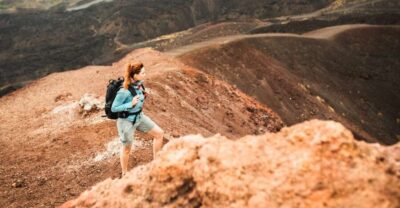
Mount Etna Trekking Tour Beyond the Tourist Trails
Read our review →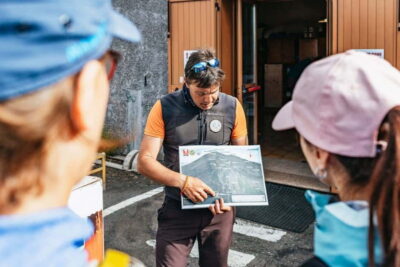
Etna Sunset Tour: Volcano trek, Cave & tasting from Catania
Read our review →
Browse the lists this tour appears in