
REVIEW · CHIANG RAI
Chiang Rai: 2-Day Jungle Trek only walk with Waterfall
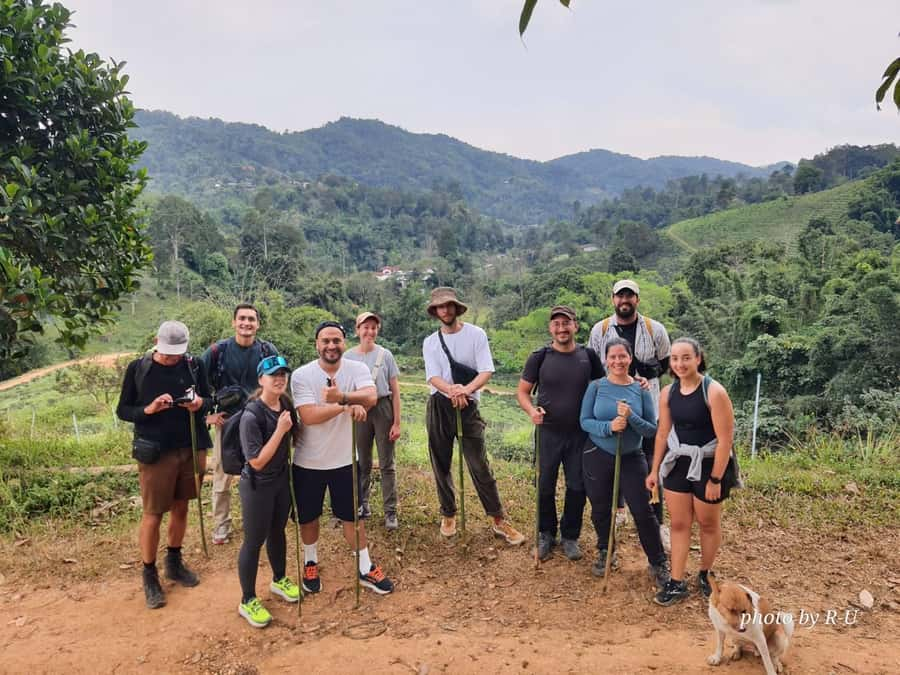
The jungle teaches best with a bamboo cup. This two-day Chiang Rai trek pairs hands-on jungle skills with visits to Lesu, Chinese, Akha, and Lahu villages. I like the way you learn by doing, from carving cups and chopsticks to cooking lunch in bamboo, and I also like the overnight stay in an Akha village, where the setting and local welcome add real character. The main caution is the physical effort: expect about 10 kilometers of walking each day, with steep sections and plenty of climbing.
This is not a simple forest stroll. You carry a traditional long-bladed jungle knife under your guide’s direction, learn about plants and natural materials, and sleep on a thin mattress over a bamboo floor. Guides such as Mo, RU, and Aryu have been praised for their local knowledge, humor, and ability to adjust the pace. Still, the route can be tough, and one reported outing ended early when the walking proved harder than expected.
Key points to know before you book
- About 10 kilometers of walking each day: Expect hills, uneven ground, and climbs rather than a gentle nature walk.
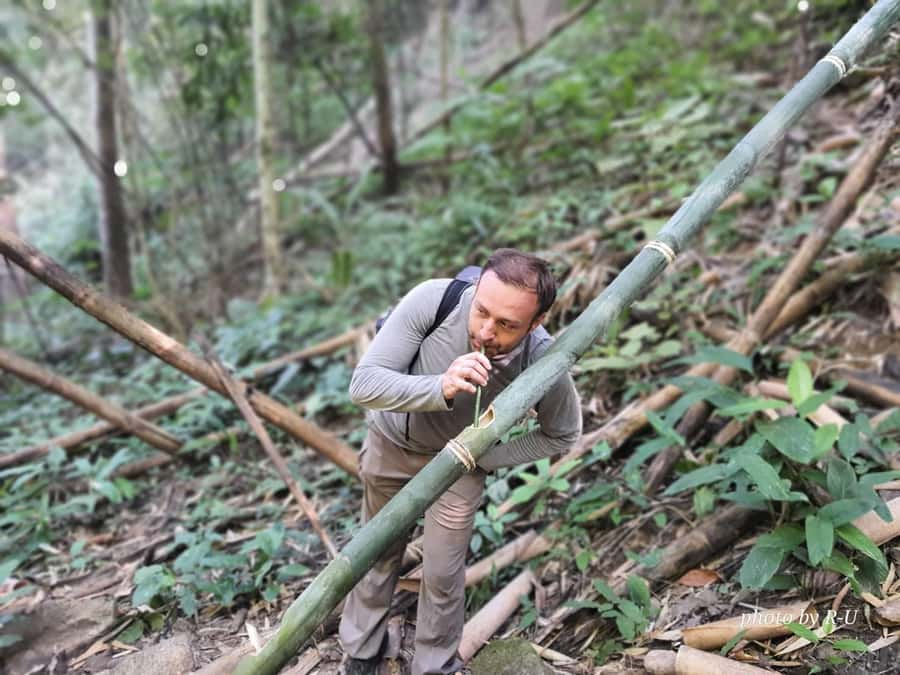
- Bamboo becomes your camp kitchen: You make cups and chopsticks, then help cook lunch in bamboo.
- Four hill communities are included: The route passes through Lesu, Chinese, Akha, and Lahu villages.
- The Akha overnight stay is the cultural centerpiece: Sleep in a simple village home with a thin mattress on a bamboo floor.
- Water comes in two forms: Swim at a waterfall on the first day, then soak in the Pasoet hot spring on day two.
- Small groups help the pace: The maximum group size is 10, and guides may adjust the walking for fitness or dietary needs.
What the two days are really like
Pickup is from downtown Chiang Rai hotels within about 3 kilometers. You should wait in the lobby between 9:00 and 9:30 a.m., ready for the drive into the hills.
The tour includes four meals, drinking water, guide service, insurance, hotel transport, and the village accommodation. You still need money for drinks, personal purchases, and the 100 baht hot spring swimming fee. At $122 per person, the price is fair if you value a small group, two full days of guiding, four meals, transport, and a local homestay rather than simply counting the number of sights.
The group limit of 10 matters here. A jungle walk is easier to manage when the guide can stop, explain a plant, or adjust the pace without holding up a large crowd. Mo, RU, and Aryu have each been praised for giving clear explanations and adapting routes or food where needed. That flexibility is especially useful on steep ground.
More Jungle Treks in Thailand
- Chiang Rai: Jungle Adventure-Group Trekking & Bamboo Cooking
★ 4.9 · 166 reviews - Authentic trek only walk in Chiang Rai jungle
★ 5.0 · 90 reviews - Trekking with Lunch cooked by Bamboo in the Chiang Rai jungle
★ 5.0 · 12 reviews
Day one: hot spring, jungle skills, and village trails
The first stop is a hot spring, where you begin the journey before walking into the forest. The opening section introduces you to the plants and animals of the Chiang Rai hills, with the guide explaining how local people use natural materials.
The most unusual part is the traditional jungle knife lesson. You are not simply shown a bamboo cup at the end of the day. You learn how a long-bladed knife can help create useful items from the forest, always under the guide’s direction. The tour specifically forbids making your own fire, touching plants, or littering, so this is a controlled lesson in traditional skills, not a free-for-all survival exercise.
You may make cups, chopsticks, and other simple tools from bamboo. This gives the walk a purpose. Instead of passing through trees while waiting for the next stop, you pay attention to what grows around you and how it can be used.
The walking can be demanding. About 10 kilometers per day sounds manageable on paper, but hills and changing ground make the effort greater than a flat city walk. Comfortable trekking shoes are essential. If you have knee, back, or heart problems, this is not the right outing. It is also unsuitable for pregnant women, wheelchair users, babies under one year, and people over 70.
Lesu village and a lunch with local context
The route reaches a Lesu village around lunchtime. This is your first major chance to see village life rather than only forest scenery. Lunch is included, and the village stop gives the food a stronger sense of place.
One detail that makes this stop especially personal is the role of local guides. Mo guided one group through the Lesu village where he was born and spent part of his childhood. That kind of connection can change the tone of a village visit. You are not just being led past houses with a rehearsed speech. You may hear family or local stories that a guide from outside the area could not offer.
Be respectful during all village visits. Dress sensibly, ask before photographing people, and follow your guide’s instructions. The tour asks you to respect local customs and traditions, which is not a minor point when the route enters working communities.
Tea fields, Chinese village, and the waterfall stop
After lunch, the walk continues toward a Chinese village and a large tea plantation. The tea fields provide one of the prettiest sections of the route, especially when contrasted with bamboo forest and mountain paths.
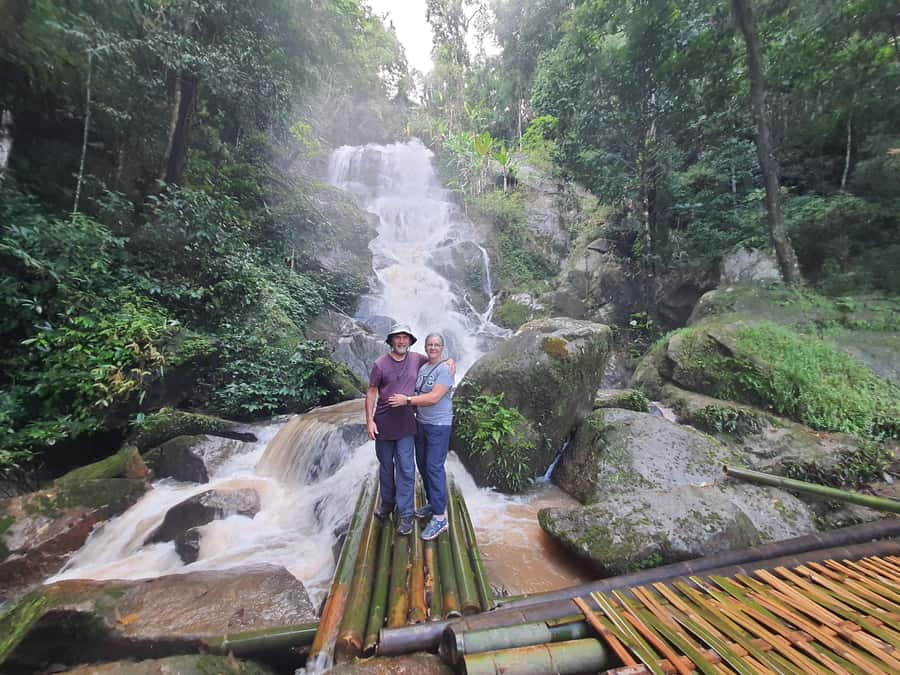
The tour describes a waterfall stop where you can swim and cool off. This is one point to keep flexible. Conditions can change with weather and water levels, and one account described a small waterfall where swimming was not possible. So bring swimwear, but do not treat the swim as guaranteed every time.
If the water is suitable, the break should be welcome after the day’s climbing. A towel, dry clothes, and a waterproof way to protect your phone or camera are sensible. The supplied packing advice also includes sunscreen, insect repellent, a hat, snacks, and a reusable water bottle.
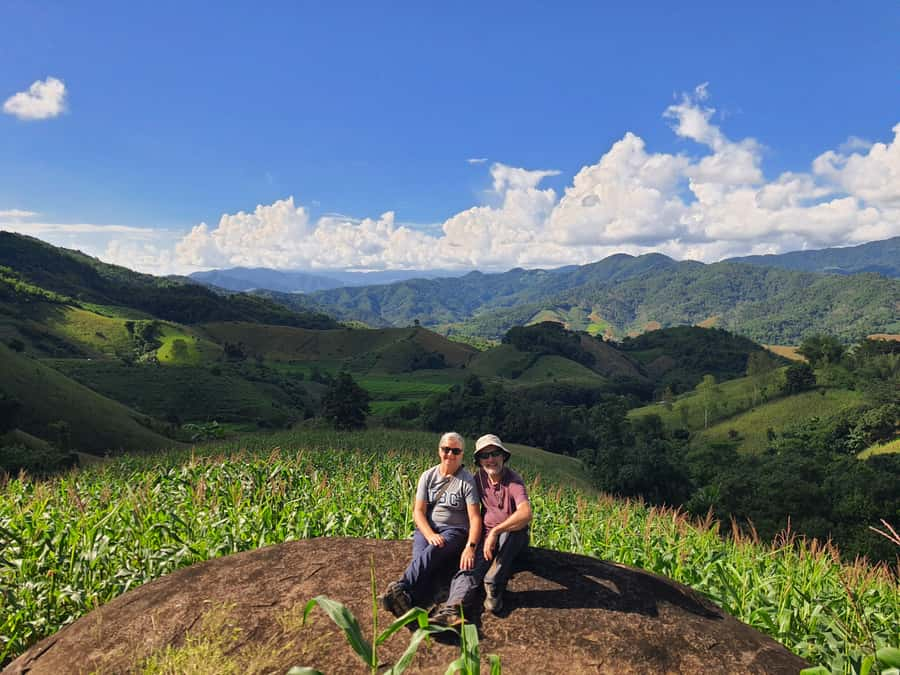
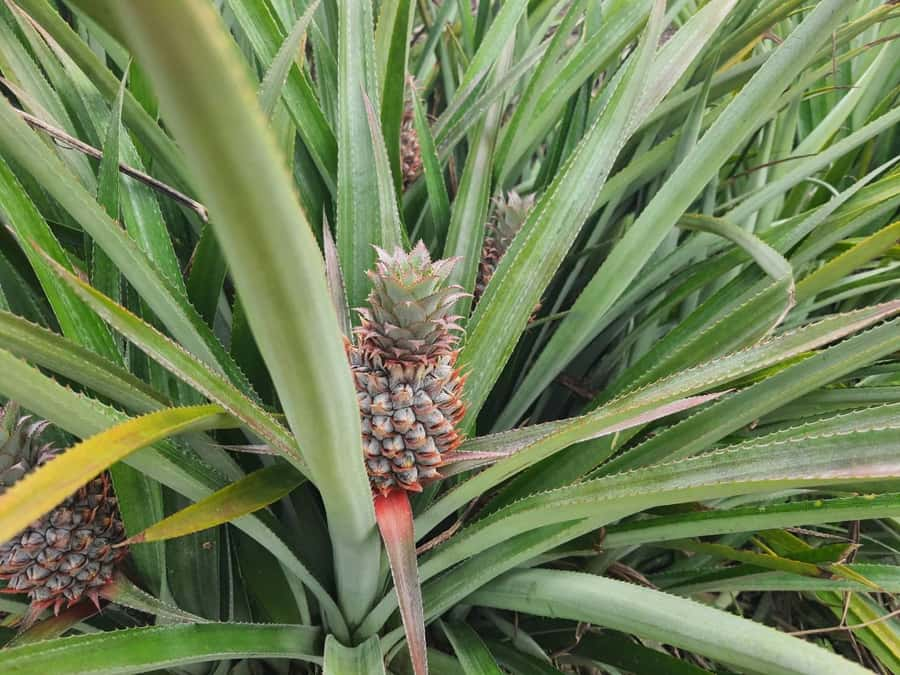
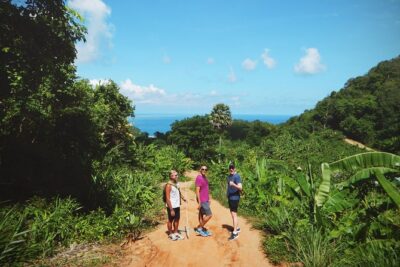
The route’s appeal comes from the changes in scenery. You move among jungle, tea plantations, village paths, and mountain views rather than spending two days under one unbroken canopy. You might also see rice fields and pineapple plantations, details that make the countryside feel lived in and worked rather than arranged for sightseeing.
More Waterfall Treks in Thailand
- Chiang Rai Trek: 4 Hilltribes Villages & Waterfall Only Walk
★ 4.8 · 8 reviews - Khao Sok: Private Waterfalls and Wildlife Half-Day Trek
★ 4.5 · 337 reviews - Trekking to Waterfall Adventure Tubing 45 mins. (Only Khao lak)
★ 5.0 · 111 reviews - Chiang Mai: 2-Days Jungle Trek, Waterfalls and Karen Village
★ 4.8 · 103 reviews
The Akha overnight: simple, social, and not a hotel
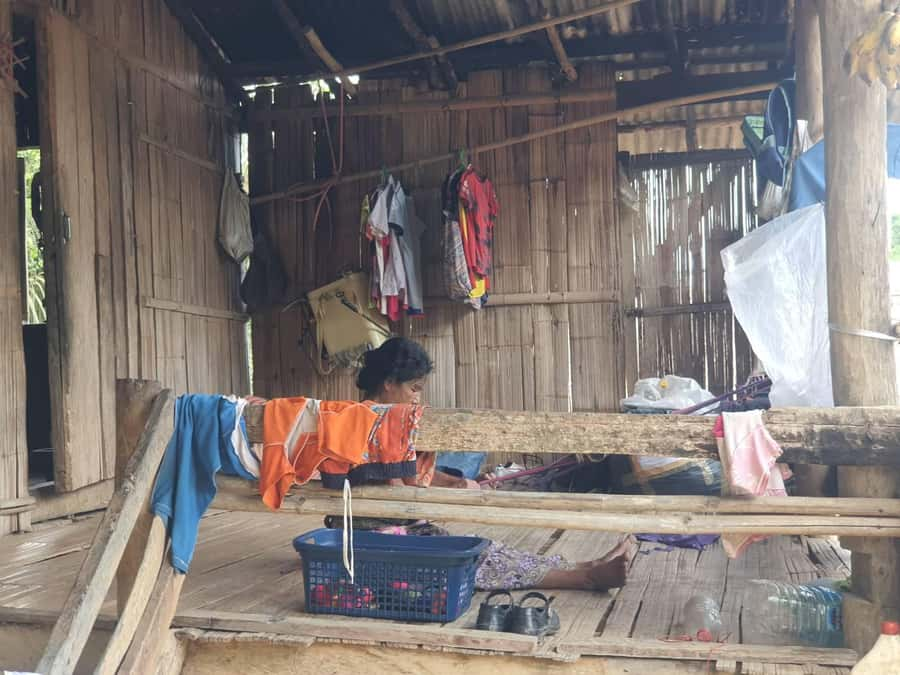
The first day ends in an Akha village. Your accommodation is basic. Expect a thin mattress on a bamboo floor rather than a private hotel room with a soft bed and polished bathroom.
That simplicity is part of the point, but it is also the biggest comfort issue. If you sleep lightly or need firm facilities, bring realistic expectations. The overnight stay is not designed as a luxury retreat.
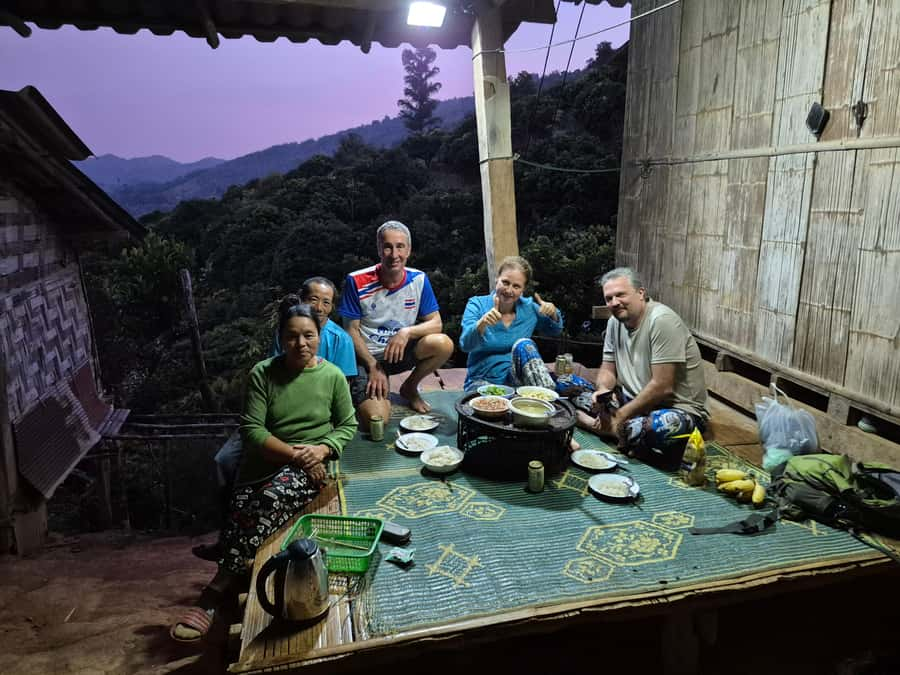
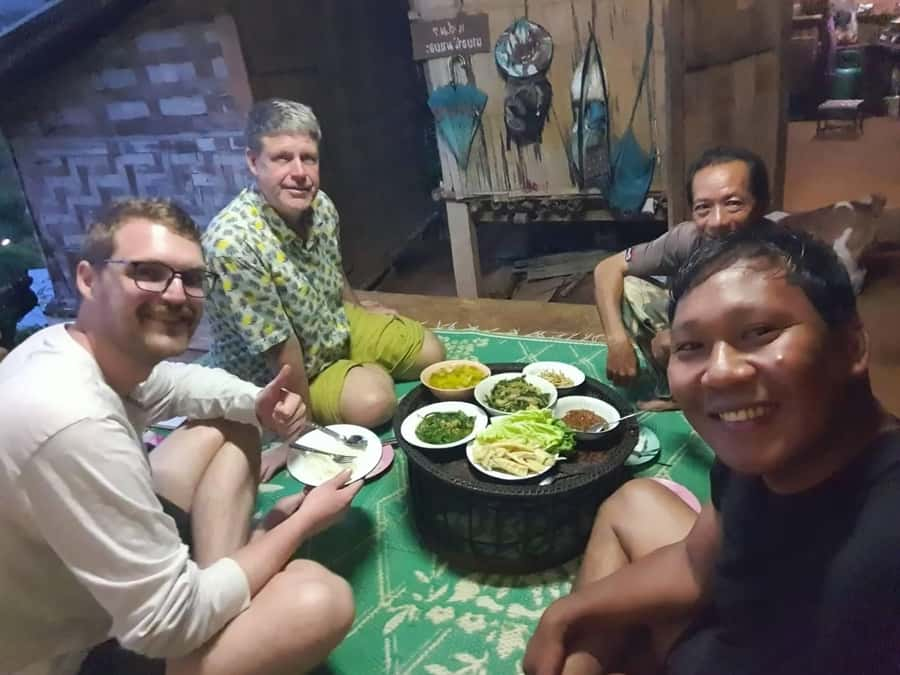
The setting can be memorable. One guide-led group stayed in a bamboo house above the Akha village and watched the sunset from the mountains. Dinner was prepared with a host family, and the evening included singing, dancing, smiles, and time with local children. Another group helped prepare a traditional Thai meal and shared it with the family.
You should see this as a home visit, not a stage show. The best approach is to join in politely when invited, keep your camera in check, and accept that the evening may be informal and communal. Dinner is included, as is breakfast the next morning.
Day two: bamboo cooking and practical forest knowledge
After breakfast, day two returns to the forest. This is the strongest day for the tour’s practical theme.
You cut bamboo for cups and chopsticks, then use bamboo to cook lunch. The food is prepared with very few tools, showing how the material can serve as both kitchen equipment and tableware. You are not merely watching a demonstration. The format allows you to take part, which makes the lesson easier to remember.
The guide also explains how people use natural resources without modern equipment. Mo has been praised for his bamboo carving and jungle cooking, while RU has been able to work around vegetarian and vegan food requests. You should state dietary needs when booking or before departure, since the food is prepared as part of the group’s daily schedule.
The rule against making fire is important. The guide handles the fire and cooking process, while you learn the method safely. Do not assume you can collect plants or handle anything you find in the forest. The tour specifically asks you not to touch plants, and your guide’s directions should take priority.
Lahu village and the final hot spring
After lunch, the walk continues to a Lahu village in the high mountains. This adds another cultural stop to a route already passing through several communities. The value is in seeing how village life differs from the forest skills and farming areas visited earlier.
The final section leads to the Pasoet Hot Spring. Here you can swim in a hot spa pool before the drive back to Chiang Rai. The 100 baht entry fee is not included, so keep cash available.
This last stop is well placed. After two days of uphill walking, a hot pool can be a welcome way to loosen tired legs before sitting in the vehicle. It also gives the day a clear ending rather than finishing with one more viewpoint or hurried village stop.
The return drive brings you back to the same downtown meeting point. The tour does not list an exact arrival time, so avoid scheduling a tight evening connection or fixed dinner reservation.
How hard is the trek?
The honest answer is moderate to strenuous depending on your fitness and the weather. The official description calls it moderate, but the daily distance and elevation changes deserve respect. One person described it as suitable for sporty hikers, with a lot of climbing and less reward than expected from one waterfall section.
Other outings found the terrain manageable, especially when the guide included rest stops and changed the pace. A participant with a knee ligament injury received route adjustments, which suggests that a good guide may offer alternatives. That does not make the route suitable for serious injuries, however.
You should be comfortable walking for several hours on uneven trails. Wear shoes with a secure grip, not casual sandals. Pack light, since carrying unnecessary weight will make the climbs harder. Take water, even though drinking water is provided, and bring snacks for extra energy.
Weather can affect the footing, waterfall conditions, and how hot the walking feels. The tour operates in changing mountain conditions, so you need clothes that can handle heat, rain, and mud.
Guide quality makes the difference
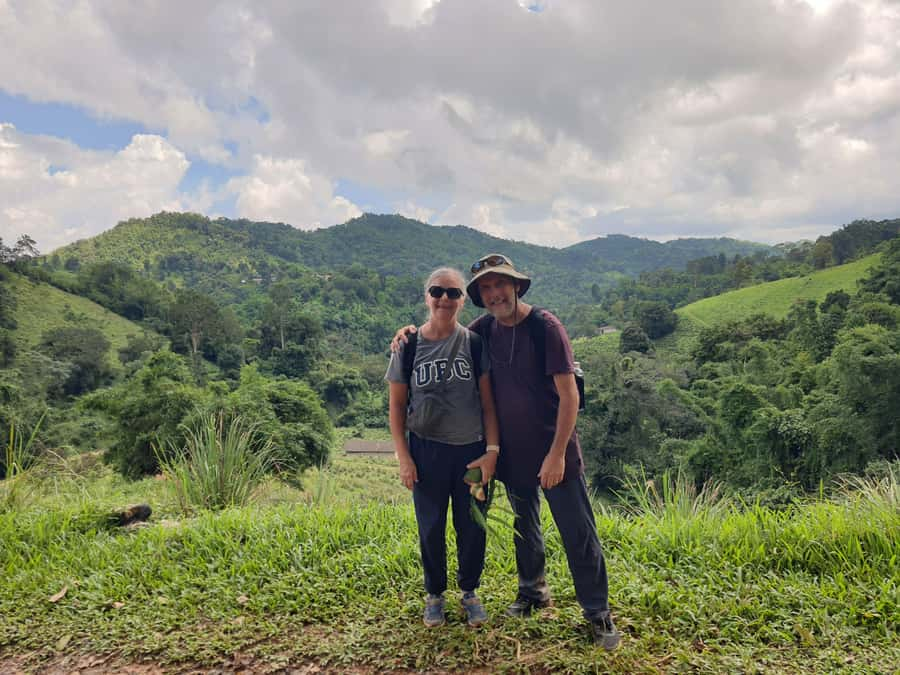
This tour depends heavily on the guide. The route is not just a transfer from one attraction to another. The guide explains plants, village customs, bamboo work, food preparation, and local life.
Mo has been singled out for being relaxed, funny, and easy to talk to, while also handling jungle cooking and bamboo carving well. His childhood connection to the Lesu area gives his explanations a personal angle. RU has been praised for adjusting routes and meals, including vegetarian and vegan options. Aryu has also led private departures and answered questions throughout the walk.
A small group gives these guides room to adapt. If you are the only participant or part of a very small group, the outing may feel more personal. If the group is full, the pace will depend on the range of fitness levels, though the maximum is still only 10 people.
What is included, and what should you bring?
The package includes:
- Hotel pickup and drop-off within 3 kilometers of downtown Chiang Rai
- English-speaking trekking guide
- Four meals: lunch and dinner on day one, breakfast and lunch on day two
- One night in an Akha village
- Drinking water
- Insurance
Bring comfortable trekking shoes, a hat, swimwear, a towel, a change of clothes, sunscreen, insect repellent, snacks, and a reusable bottle. A camera is welcome, but protect it from rain and waterfall spray.
Soft drinks, alcohol, personal expenses, and the 100 baht hot spring ticket cost extra. Smoking, littering, making a fire, and touching plants are not allowed.
Free cancellation is available up to 24 hours before the activity for a full refund. You can also reserve now and pay later, which helps if your Chiang Rai schedule is still shifting.
Who should book this Chiang Rai trek?
I would choose this for someone who wants a working, practical connection to the countryside rather than a short viewpoint stop. It suits hikers who enjoy learning skills, eating simple local food, and sharing space with a village family.
It is also a strong choice if you want variety. In two days, you cover jungle, bamboo forest, tea fields, rice fields, plantations, waterfalls, villages, and a hot spring. The village overnight makes it more personal than a day tour, but it also means giving up hotel comfort for one night.
I would not choose it if you want an easy walk, guaranteed swimming, or a polished resort-style stay. The route may be too demanding for anyone with serious physical limits, and the waterfall stop can vary with conditions.
Should you book it?
Book this two-day trek if you want active days, a simple village homestay, and real participation in bamboo cooking and jungle craft. The $122 price makes sense when you count transport, four meals, a guide, accommodation, and a small group.
Before booking, be honest about your fitness. You will walk around 20 kilometers over two days, often on hilly ground. If that sounds like a challenge you would enjoy, this can be one of Chiang Rai’s more personal ways to meet the hills and the communities who live there. If you mainly want a gentle forest outing, choose something shorter.
FAQ
How long is the Chiang Rai jungle trek?
The activity lasts two days, with approximately 10 kilometers of walking each day.
Where does hotel pickup take place?
Pickup is available from hotels in downtown Chiang Rai within about 3 kilometers. You should wait in the lobby between 9:00 and 9:30 a.m.
Where do you spend the night?
You spend one night in an Akha village in simple overnight accommodation.
What kind of sleeping arrangement should you expect?
The accommodation may include a thin mattress placed on a bamboo floor. It is a basic village stay rather than a hotel room.
Are meals included?
Yes. The tour includes lunch and dinner on day one, plus breakfast and lunch on day two.
Can you swim during the trek?
You may swim at the waterfall if conditions allow. You can also swim in the Pasoet hot spring pool on day two. The hot spring swimming fee of 100 baht is not included.
Is the hot spring entrance fee included?
No. You need to pay 100 baht for hot spring swimming.
Is the trek suitable for beginners?
The tour involves moderate physical activity and about 10 kilometers of walking per day. It is not a simple forest walk, so you should be comfortable with hills and uneven ground.
What language does the guide speak?
The live guide service is in English.
How large is the group?
The group is limited to 10 participants.
What should you bring?
Bring comfortable trekking shoes, a hat, swimwear, a towel, spare clothes, sunscreen, insect repellent, snacks, water or a reusable bottle, and a camera.
Can you cancel for a refund?
Yes. You can cancel up to 24 hours in advance for a full refund.
More Jungle Treks in Chiang Rai
- Chiang Rai Trek:Jungle Hike, Bamboo-Cooked Lunch & Boat Ride
★ 5.0 · 7 reviews - Chiang Rai Jungle Trek & Bamboo Tube Cooking Adventure
★ 5.0 · 5 reviews - Chiang Rai 1 Day Jungle Trek with Bamboo Lunch & Local Guide
★ 5.0 · 5 reviews - One Day Trekking Chiang Rai Jungle Adventure and Bamboo Cooking
★ 3.5 · 3 reviews
More Waterfall Treks in Chiang Rai
- Bali: Munduk Waterfalls Trek, Twin Lakes and Temple Tour
★ 4.8 · 545 reviews - Selogriyo Temple and Trekking Java Rice Terraces, hidden waterfall -Nature Java
★ 5.0 · 179 reviews - Ubud: Rice Terrace, Holy Water Temple & Waterfalls Trek Tour
★ 4.9 · 115 reviews - Wild Elephant Anakulam & Waterfalls Tour(munnar valley Trekking)
★ 5.0 · 98 reviews
Recently added around Chiang Rai
- Full Day Trekking & bamboo cooking Tour in Chiang Rai★ 5.0 · 7 reviews
- Trekking with Lunch cooked by Bamboo in the Chiang Rai jungle★ 5.0 · 12 reviews
- One Day Trekking Chiang Rai Jungle Adventure and Bamboo Cooking★ 3.5 · 3 reviews
- Akha private eco-trekking 2 days 1 night Chiang Rai★ 4.5 · 2 reviews
- Cultural trekking and boat trip★ 5.0 · 5 reviews
- Chiang Rai Trek:Jungle Hike, Bamboo-Cooked Lunch & Boat Ride★ 5.0 · 7 reviews
- Chiangrai: Group Trekking with Bamboo Cooking★ 4.8 · 5 reviews
- Chiang Rai: The Adventure of Trekking & Bamboo Cooking★ 5.0 · 3 reviews
Jungle Treks, compared.
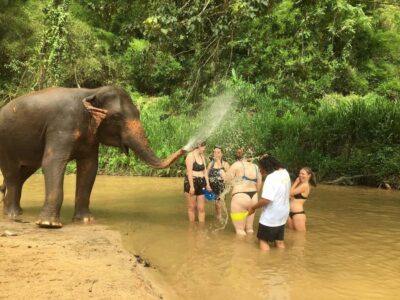
2-Day Jungle Trek with Elephant Farm & Raft Ride
Read our review →
3-Day Ethical Orangutan Jungle Trek | Bukit Lawang, Sumatra
Read our review →
Monkey Business 3 days – 2 nights Jungle trekking (including rafting)
Read our review →

Big Buddha Jungle Trekking and Temple tour with Lunch
Read our review →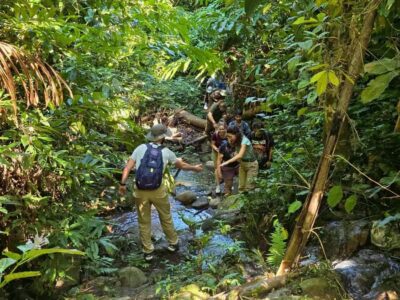
Jungle Adventure-Group Trekking & Bamboo Cooking
Read our review →
Browse the lists this tour appears in