
REVIEW · CHIANG RAI
Chiang Rai Trek:Jungle Hike, Bamboo-Cooked Lunch & Boat Ride
A bamboo kitchen in the jungle is hard to forget. This full-day trip combines a long-tail boat ride on the Mae Kok River with a jungle hike, a bamboo-cooked lunch, waterfall swim, tea plantation, and visits to Karen, Akha, and Lahu communities. I especially like the hands-on cooking and the chance to see useful bamboo turned into cups, chopsticks, pans, and toys. The main caution is that the hike is genuinely active, and rain can make the paths slippery.
At $77 per person, the outing packs a lot into one day: hotel transport, guide, boat, lunch, water, trekking, and insurance. Guides such as Arju and Aryu have helped make the day feel lively for families, but you should bring proper shoes and expect mud, hills, and a warm, humid walk.
Key points at a glance
- Bamboo becomes your jungle kitchen: Cutlery, cups, cooking vessels, and even small toys are made from materials found along the route.
- The Mae Kok River sets the tone: A motorized long-tail boat carries you toward the first hill-tribe village and adds a calm start to a fairly physical day.
- The hike is moderate in dry weather: Rain changes the equation, making steep or muddy sections harder and more slippery.
- Lunch is part of the activity: You help prepare a fire-cooked Thai meal rather than simply sitting down at a restaurant.
- The waterfall is a real refreshment stop: Swim, stand under the falling water, or let the current work on your shoulders.
- Three hill-tribe communities offer different views: Karen, Akha, and Lahu villages appear at different points, with the Lahu settlement reached in the high mountains.
Why this Chiang Rai day trip feels different
Many countryside tours from Chiang Rai are built around quick photo stops. This one asks you to spend more time walking and doing. You do not simply watch someone cook lunch. You help make the tools, gather what is needed from bamboo, and see how a meal can come together with very little equipment.
That practical element gives the day its character. A guide may make bamboo cups, chopsticks, rings, hats, and small toys as you go. Children aged 9 and 11 managed the route in dry weather, and the guide kept them busy with these small projects. That makes this a stronger choice for an active family than a day filled only with village visits.
The setting also feels less packaged than a standard attraction. You pass through jungle, walk by a large tea plantation, and reach villages away from the main city. Still, you should keep your expectations sensible. This is a guided cultural encounter, not a long stay with a hill-tribe family, and the route may include an elephant camp by the river where you can watch elephants near the water.
More Jungle Treks in Thailand
- Chiang Rai: Jungle Adventure-Group Trekking & Bamboo Cooking
★ 4.9 · 166 reviews - Authentic trek only walk in Chiang Rai jungle
★ 5.0 · 90 reviews - Chiang Rai: 2-Day Jungle Trek only walk with Waterfall
★ 4.8 · 17 reviews
From your Chiang Rai hotel to the Mae Kok River
Pickup is provided from downtown Chiang Rai, within about 3 kilometers of the city center. Plan to wait in your hotel lobby from 8:30 a.m. The day returns to the same meeting point in the late afternoon, which keeps the arrangements simple if you are staying in central Chiang Rai.
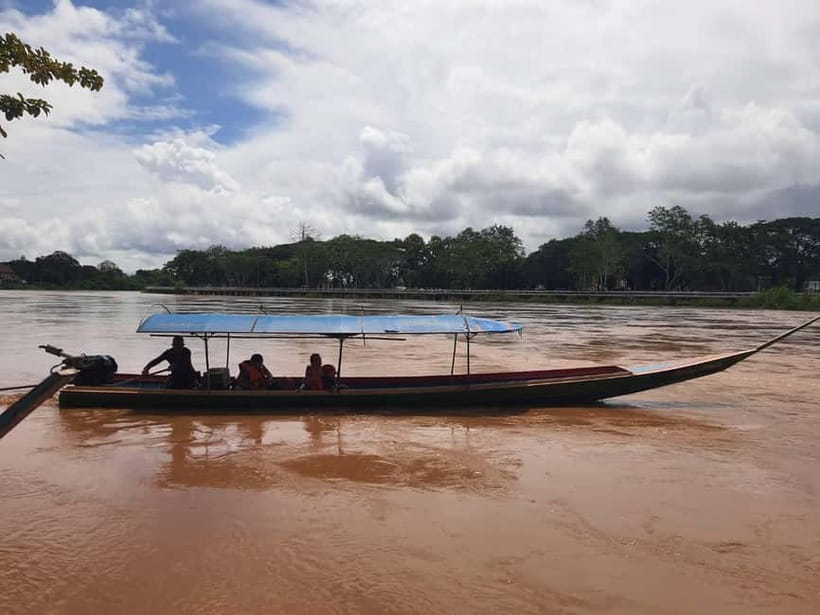
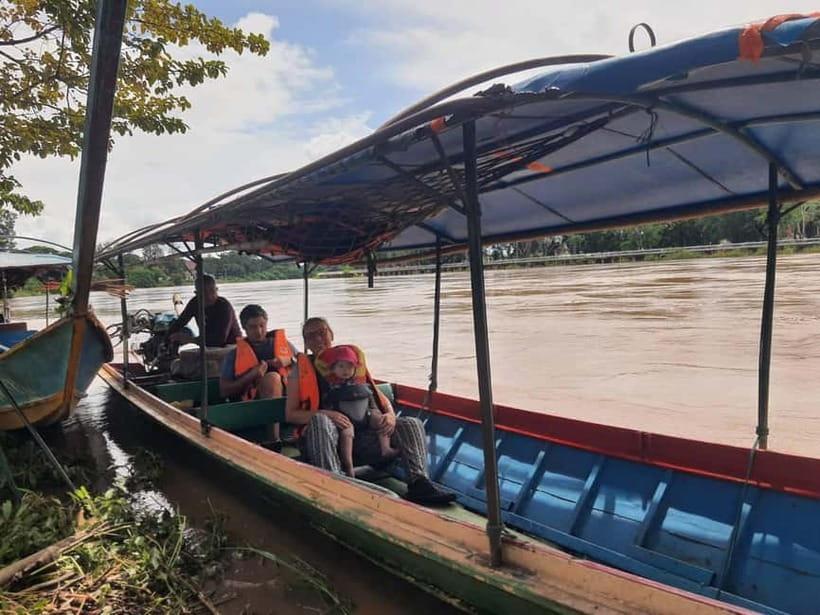
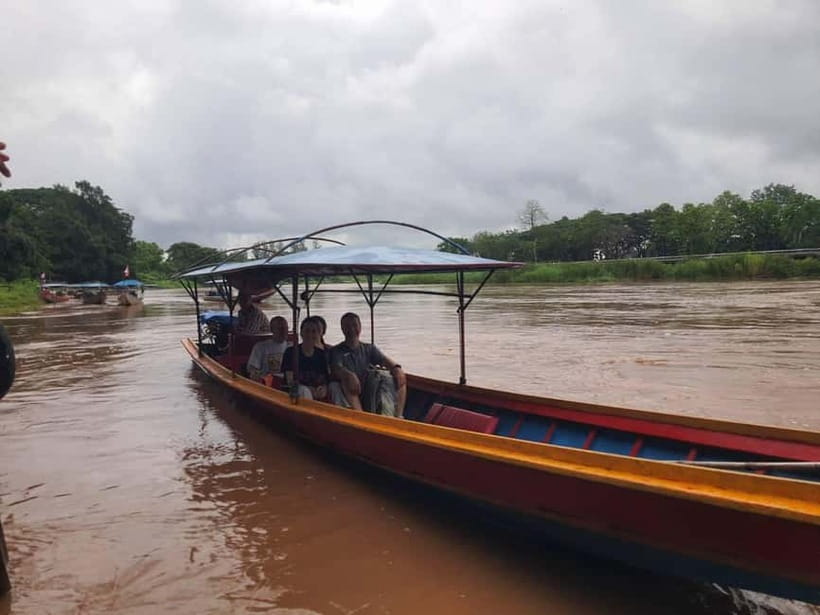
Transport by road takes you to the Mae Kok River, where you board a motorized long-tail boat. The ride upriver is one of the more relaxed parts of the day. You get time to look at the wooded banks and settle into the pace before the walking begins.
The boat ride takes about 40 minutes according to the detailed trip account. One possible stop is near an elephant camp, where you can watch elephants at the waterside. The tour description does not promise a fixed elephant activity, so treat this as a possible viewing stop rather than a hands-on encounter.
A long-tail boat is noisy compared with a quiet canoe, but that is part of the local character. You will want sunscreen, a hat, and a camera close at hand. Keep your belongings secure and easy to reach, since the boat is transport rather than a formal sightseeing cruise.
Meeting the Karen community and starting the jungle walk
The boat brings you toward a Karen village, then the route continues by vehicle to the start of the trek. The exact order can vary slightly, as one detailed account describes reaching the river village first and then driving to the walking point.
The Karen community is your first chance to hear about local ways of life. The guide is important here because the value comes from explanation and context, not just looking at houses or passing through. Respect local customs, ask before photographing people, and do not touch plants or take things from the village.
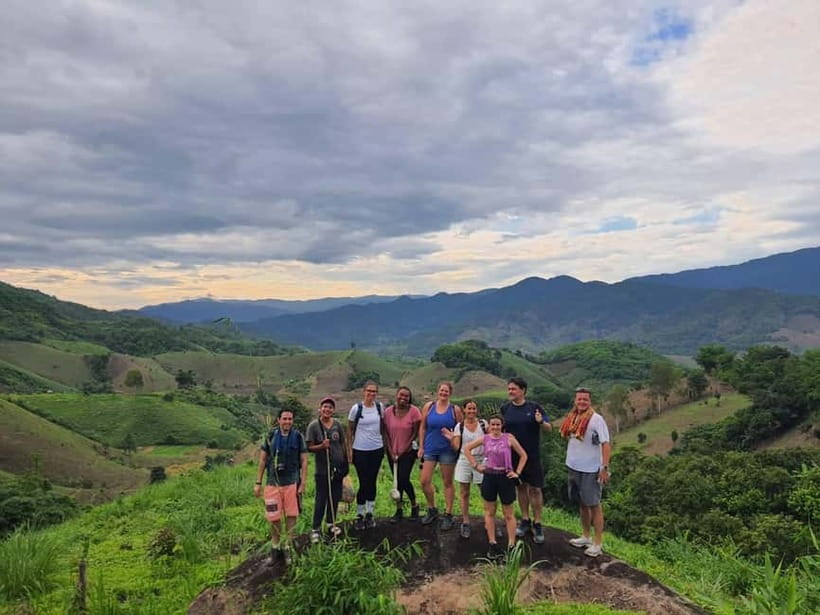
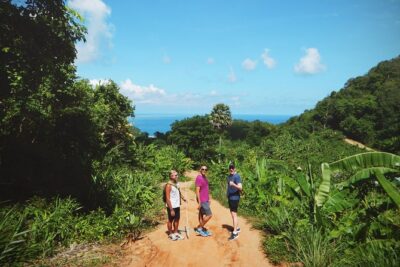
The hike itself is not a gentle stroll. In dry weather, it is manageable for reasonably fit people, including older walkers who are comfortable on uneven ground. After heavy rain, the same path can become a much tougher outing. Mud, slippery sections, humidity, and hills can turn a moderate trek into a demanding one.
You can ask the guide about taking a shorter route. That flexibility has helped some participants who wanted the scenery and village visits without completing every section. It is still wise to speak up early if your legs, back, or footing are becoming a problem.
Bamboo tools, forest skills, and a lunch you help create
This is the strongest part of the experience for me. Along the jungle route, the guide shows you how bamboo can serve many purposes. You may cut pieces for cups and chopsticks, then help prepare cooking vessels and other simple tools.
The lesson is not presented as a survival course with technical claims. It is a practical look at how natural materials can replace items we normally buy or carry. You see how much can be done with a knife, bamboo, a fire, and local know-how.
The guide may also point out plants and fruit along the way. Some groups have been able to taste plants or fruit found in the forest, but you should only eat anything after the guide gives clear permission. The rules specifically ask you not to touch plants, so do not pick or sample anything independently.
Lunch is cooked over an open fire in the jungle, using bamboo utensils and containers made during the walk. The meal is described as a traditional Thai lunch, and the barbecue-style food has been a major highlight for families. Children can take part in preparing food, which gives them a real job instead of another passive sightseeing stop.
There is a practical tradeoff. Cooking in the forest takes time, and the meal is part of the activity rather than a polished restaurant service. If you want a quick lunch and a tightly timed itinerary, this may feel slow. If you enjoy learning by doing, it is likely to be the most memorable meal of your Chiang Rai visit.
More Jungle Treks in Chiang Rai:
- Trekking with Lunch cooked by Bamboo in the Chiang Rai jungle
★ 5.0 · 12 reviews - Chiang Rai Jungle Trek & Bamboo Tube Cooking Adventure
★ 5.0 · 5 reviews - Chiang Rai 1 Day Jungle Trek with Bamboo Lunch & Local Guide
★ 5.0 · 5 reviews - One Day Trekking Chiang Rai Jungle Adventure and Bamboo Cooking
★ 3.5 · 3 reviews
Tea plantations and the waterfall break
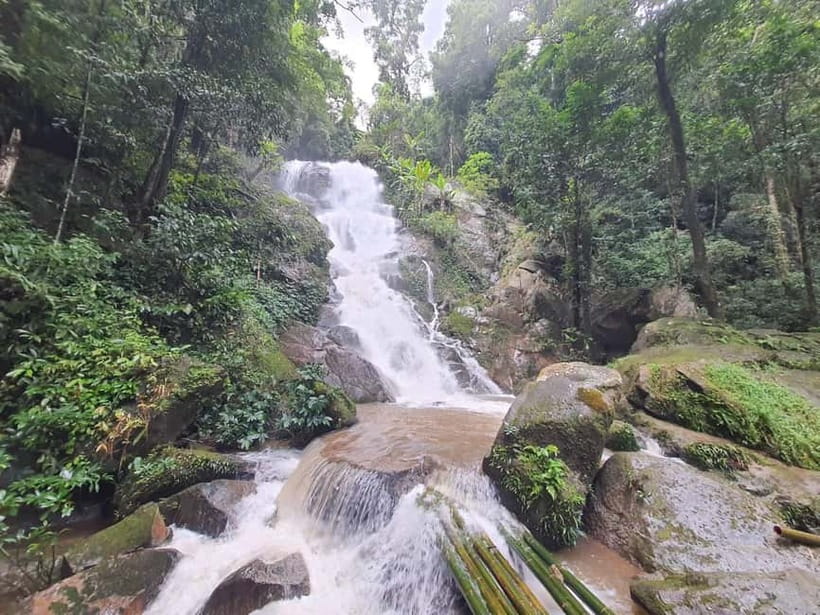
The route passes a large tea plantation, adding a cultivated stretch to the jungle scenery. It is a useful reminder that the hills are not only wild forest. People farm, work, and move through these areas, and the tea fields give the walk a different texture.
After lunch, you continue toward a waterfall near a village. Swimming is optional, so you can enjoy the stop without getting wet. If you do enter the water, bring swimwear and a towel, and expect the footing around a natural waterfall to require care.
The falling water can act like a shoulder massage, which is a welcome reward after the hike. The pool is not presented as a supervised swimming facility, so follow the guide’s advice and avoid treating it like a deep-water attraction. A quick swim or cool rinse may be all you need before walking onward.
This is one reason to pack both sturdy hiking shoes and clothes that can handle moisture. Comfortable walking shoes are essential, while sandals or casual trainers may be a poor choice in wet conditions.
Akha and Lahu villages in the mountain interior
After the waterfall, the route continues to an Akha village. Here you get another view of hill-community life, with the guide explaining customs and daily routines. The point is not to collect quick snapshots of different groups. It is to notice that Karen, Akha, and Lahu communities have their own identities and ways of living.
The final village stop is Lahu, located in the high mountains. The description of the community emphasizes a simple way of life, and the mountain setting adds to the sense of distance from Chiang Rai. You should come ready for a modest visit rather than a staged cultural show with performances and souvenir stalls.
Cultural respect matters throughout the day. Dress modestly, avoid loud behavior, ask before taking close-up photographs, and listen when the guide explains what is appropriate. A tour like this works best when you treat the villages as living communities, not scenery.
The route may end at a village, and there can be an option to continue walking. One group chose the shorter route at that point, showing that the guide can adjust the outing to suit the group’s energy. Do not assume every group will follow precisely the same walking pattern.
Ending with a hot spring in the mountains
After the mountain villages, the day finishes at a hot spring pool. This is a useful final stop because the heat can loosen tired muscles after several hours on foot. You can take a relaxing soak before returning to Chiang Rai in the late afternoon.
The hot spring swimming ticket costs 100 baht and is not included in the $77 price. Bring cash for that fee, plus personal purchases, soft drinks, or alcohol if available. Alcohol and drugs are not permitted on the tour, and smoking is also prohibited.
The hot spring is not the main reason to book this outing, but it improves the rhythm of the day. The morning and middle portion are active and hands-on. The final soak gives you a quiet pause before the ride back.
How difficult is the trek?
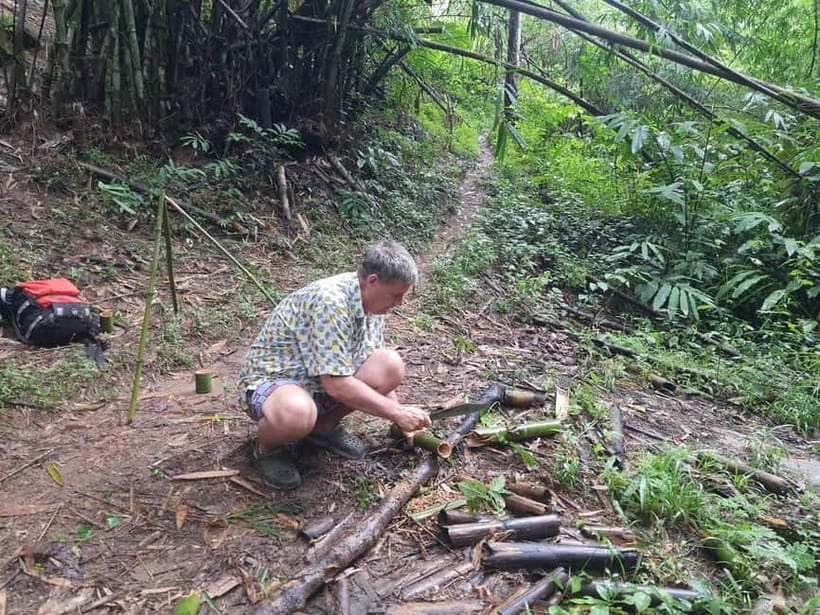
The tour is best described as moderate, with conditions making a big difference. In dry weather, fit children and active adults can manage it. One 60-year-old couple completed the route comfortably, but they were already fit and agile.
Rain is the key variable. Wet paths can become slippery, and the hike may feel strenuous rather than moderate. You should be comfortable with uneven ground, climbing, and a long day outdoors. The tour is not suitable for pregnant women, people with back problems, people with mobility impairments, wheelchair users, or babies under 1 year.
Pack long pants, a long-sleeved shirt, insect repellent, sunscreen, a hat, drinking water, snacks, and cash. Water is included, but extra snacks may help if you prefer to eat between the included lunch and the return journey.
The guide can make or break the day
The guide’s role is unusually important here. A good guide turns bamboo cutting, plant use, village customs, and the cooking stop into a connected story. Arju has been praised for making bamboo hats, cups, toys, and rings while keeping both adults and children involved. Aryu is also described as organized, punctual, and clear about the day’s plan.
Guide names and spellings may vary, and the individual assigned to your group can differ. Still, the experience depends on having someone who can explain local life in English, manage the walking pace, and judge when weather or group energy calls for a shorter route.
The tour is listed as English-speaking. If cultural detail and plant knowledge matter to you, use the walking sections to ask questions rather than saving everything for the village stops.
Is $77 a fair price?
At $77 per person, this is not the cheapest countryside outing near Chiang Rai. The price makes more sense when you count the parts included: hotel pickup and return, road transport, long-tail boat transport, professional English-speaking guide, lunch, water, trekking, and insurance.
You also avoid arranging separate transport to the river, boat hire, village access, lunch, and the hot spring. The 100-baht swimming ticket is extra, as are personal expenses and soft drinks or alcohol. For a full day with several transport stages and a meal cooked in the forest, the cost is reasonable if you value active experiences.
The value drops if you dislike hiking or expect a comfortable cultural tour with little effort. In that case, you may not use enough of what you are paying for. You are paying partly for the guide’s practical instruction and for access to a route that would be difficult to arrange independently.
Who should book this experience?
I would recommend it to active couples, families with older children, and anyone who wants a countryside day built around doing rather than watching. It is especially good for people who enjoy nature, simple cooking, local transport, and informal cultural contact.
Children aged 9 and 11 managed the walk in dry conditions, but younger children may find the hills and heat tiring. Babies are not suitable for the trip, and the lack of wheelchair access makes it inappropriate for anyone needing step-free transport or smooth paths.
You should think twice if you have back trouble, poor balance, limited mobility, or strong dislike of mud and humidity. Rain can change the difficulty quickly, and the route is not designed as a relaxed sightseeing loop.
Should you book the Chiang Rai jungle trek?
Book it if you want a full day that joins river travel, jungle walking, village visits, hands-on cooking, a waterfall, and a hot spring. The bamboo lunch and the guide-led forest skills are the real reasons to choose it, while the boat ride and villages give the day variety.
Skip it if you want guaranteed dry footing, a short walk, or a highly polished cultural attraction. For everyone else, $77 buys a busy but rewarding day, with enough flexibility to shorten the walk and enough activity to keep the experience from feeling staged. Reserve by the day before if your plans may change, since cancellation is allowed up to 24 hours ahead for a full refund.
FAQ
Where does pickup take place?
Pickup is provided from hotels or meeting points in downtown Chiang Rai within 3 kilometers. You should wait in the lobby from 8:30 a.m., and the tour returns to the same meeting point in the late afternoon.
Is lunch included?
Yes. Lunch is included and is cooked in the jungle over an open fire using bamboo cups, utensils, and cooking vessels made during the walk.
Is the hot spring entrance included?
No. The hot spring swimming ticket costs 100 baht and is paid separately.
Can I swim during the tour?
Yes. Swimming at the waterfall is optional. Bring swimwear and a towel if you want to enter the water, and the hot spring also offers a chance to soak at the end of the day.
What should I wear for the trek?
Wear comfortable walking or hiking shoes, light clothing, long pants, and a long-sleeved shirt. Bring sunscreen, a hat, insect repellent, and suitable clothing for possible rain or wet conditions.
Who should not join this tour?
The tour is not suitable for pregnant women, people with back problems, people with mobility impairments, wheelchair users, or babies under 1 year. It also requires a moderate amount of walking on potentially slippery paths.
Recently added around Chiang Rai
- Full Day Trekking & bamboo cooking Tour in Chiang Rai★ 5.0 · 7 reviews
- One Day Trekking Chiang Rai Jungle Adventure and Bamboo Cooking★ 3.5 · 3 reviews
- Trekking with Lunch cooked by Bamboo in the Chiang Rai jungle★ 5.0 · 12 reviews
- Akha private eco-trekking 2 days 1 night Chiang Rai★ 4.5 · 2 reviews
- Cultural trekking and boat trip★ 5.0 · 5 reviews
- Chiangrai: Group Trekking with Bamboo Cooking★ 4.8 · 5 reviews
- Chiang Rai: The Adventure of Trekking & Bamboo Cooking★ 5.0 · 3 reviews
- Chiang Rai Jungle Trek & Bamboo Tube Cooking Adventure★ 5.0 · 5 reviews
Jungle Treks, compared.
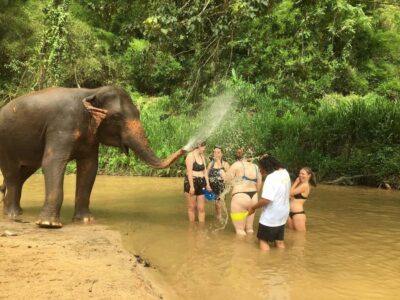
2-Day Jungle Trek with Elephant Farm & Raft Ride
Read our review →
3-Day Ethical Orangutan Jungle Trek | Bukit Lawang, Sumatra
Read our review →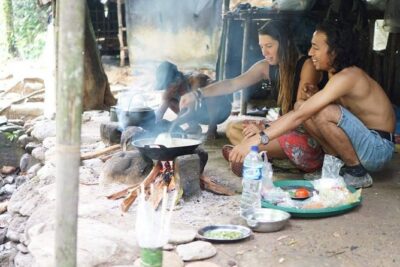
Monkey Business 3 days – 2 nights Jungle trekking (including rafting)
Read our review →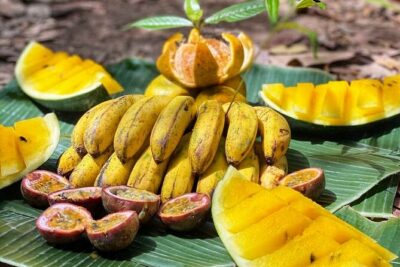
Big Buddha Jungle Trekking and Temple tour with Lunch
Read our review →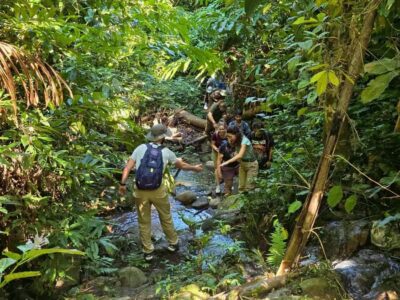
Jungle Adventure-Group Trekking & Bamboo Cooking
Read our review →
Browse the lists this tour appears in