
REVIEW · MARRAKECH
Atlas Mauntains and 3 Valleys Trek
Three days can change your view of Morocco. This Atlas Mountains trek takes you beyond Marrakech into cool pine and juniper country, where river valleys, Berber villages, terraced fields, and mountain paths shape the journey. I like the mix of natural scenery and direct contact with local communities. I also like that the price includes accommodation, all main meals, transport, and a private guide.
The main consideration is the walking itself. You will cross gorges, streams, village paths, and mountain terrain, and one account describes part of the route as scary. The exact walking pace and sleeping arrangements are not fully detailed, so ask for the day-by-day plan before booking if you need a gentle route or particular room standards.
Key Points To Know Before You Go
- Three days and two nights in the High Atlas: The trek gives you time to move beyond a quick day trip from Marrakech.
- Berber villages and family hospitality: You may spend time near traditional homes and learn about farming, herding, food, and local customs.
- Cool shade in the mountains: Juniper and pine trees offer welcome breaks from Morocco’s heat.
- Terraced farming valleys: Corn, barley, and vegetables grow on carefully shaped slopes beside the walking routes.
- Private group with a dedicated guide: Only your party takes part, with guides such as Hassan, Mohamed, or Mohamed Larbi named in the available trip details.
- Meals and lodging included: Breakfast, lunch, dinner, afternoon tea, coffee or tea, accommodation, and air-conditioned transport are covered.
Leaving Marrakech For The Atlas Mountains
The experience begins with pickup at about 8:30 a.m. in Marrakech. Transport is provided in an air-conditioned minivan, which matters after several days in the city or during warmer months. You can settle in for the drive rather than arrange separate transport to the mountains.
The advertised duration is approximately three days, five hours, and seven minutes. In practical terms, this is a three-day trek with two nights away, according to the detailed trip accounts. The precise pickup time, road route, and first walking point are not stated, so confirm these details when you book.
This is a private activity. Your group does not join a larger bus tour, which gives you more room to ask questions and adjust the pace within the limits of the route. It also means the quality of the experience depends heavily on the guide assigned to you.
Several guides are named in the available details. Hassan is praised for guiding groups near Imlil and for hosting visitors in his family home. Mohamed is described as making the mountain experience especially enjoyable, while Mohamed Larbi guided an outing that included waterfalls, a tasty lunch, and Berber villages. You cannot necessarily request every named guide, but it is worth asking who will lead your group.
A few more treks around Marrakech worth a look
- Marrakesh: 2-Day Mt. Toubkal Trek with 1-Night Stay & Meals
★ 4.7 · 795 reviews - Marrakech: 2-Day Atlas Mountains Trek with Village Stay
★ 4.8 · 717 reviews - From Marrakech: 3-Day Mount Toubkal Climbing Trek
★ 4.7 · 597 reviews
Day One: Forest Paths, Villages, And First Mountain Views
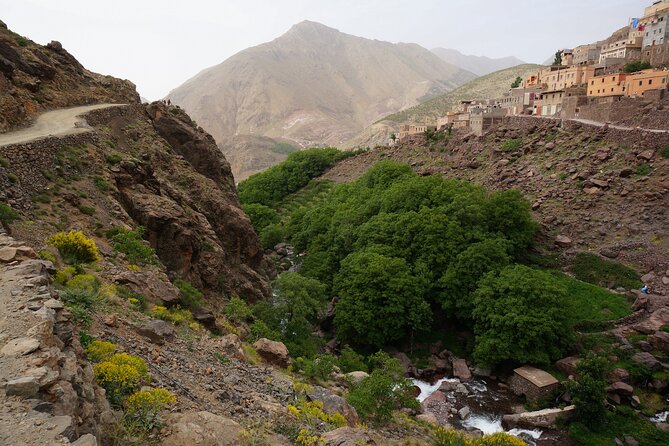
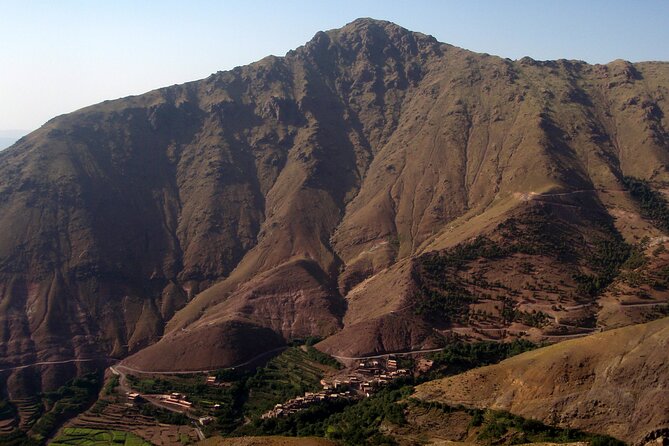
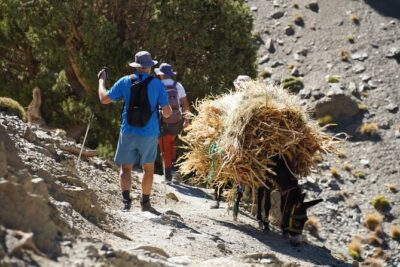
The first walking day introduces you to the cooler side of the Atlas Mountains. Juniper and pine trees provide shade, a welcome change from the open heat around Marrakech. These trees also give the route a different feel from the ochre walls and dry plains that many people associate with Morocco.
You will pass streams and may cross sections of rocky ground, deep gorges, and narrow valley paths. The scenery changes as you walk. One moment you may be beside running water, and later you may look across slopes shaped by small farms and village homes.
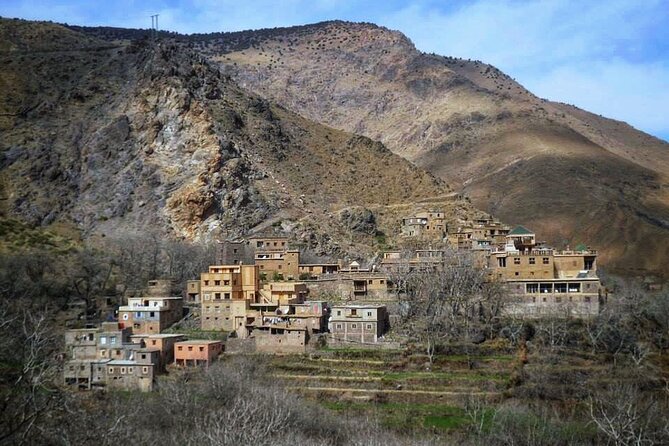
The village visits are a major reason to choose this trek instead of a simple mountain viewpoint tour. Berber communities in the valleys still depend on farming and herding. Terraces support crops such as corn, barley, and vegetables, allowing people to cultivate steep ground that would otherwise be difficult to use.
You should approach these villages with ordinary courtesy. Your guide can explain local customs and help conversations take place naturally. The communities are accustomed to visitors and are described as open to interaction, but this is still a lived-in place, not a staged cultural display.
The first day can also be the point when you learn how demanding the route feels. The available material does not give distances, elevation gains, or hours of walking, so do not assume this is a light stroll. Ask how much uphill walking is planned, especially if you have limited hiking experience.
Day Two: Gorges, Streams, And Berber Hospitality
The second day is likely to bring the strongest sense of being away from the city. You continue through mountain valleys with streams, groves of cherry and walnut trees, and changing views across the slopes. The trees are not just pretty scenery. They provide shade, food, and part of the agricultural character of the area.
Water is one of the pleasures of this route. The description highlights gushing river streams, and the available accounts also describe beautiful waterfalls. A waterfall stop may depend on the exact route and water conditions, so check whether it is part of your planned walk rather than treating it as guaranteed.
The guide’s role becomes particularly important here. A good guide does more than lead from one turn to the next. You will want explanations of how the terraces work, why villages sit where they do, and how Berber families use the valleys. The trip is strongest when the walking and the local story support each other.
Hassan is specifically associated with a stay in his home and with time spent alongside his family and fellow Berber trekkers. That kind of hospitality can be the most memorable part of the trip, though it also means you should not expect hotel-style service. Conditions in village homes may be simple. One Portuguese-language account praises the homemade food and warm treatment while also noting the basic conditions of the houses.
That tradeoff is important. If you want polished accommodation, this may feel rustic. If you want a closer look at mountain life, the simplicity is part of the value. The included meals are another strong point. Breakfast, lunch, dinner, afternoon tea, coffee, and tea are covered, and homemade food receives repeated praise.
Day Three: A Slower Look At The Valleys
The final day gives you more time to appreciate the places you passed too quickly earlier. Three days is useful here because you are not limited to a rushed photo stop before returning to Marrakech. You can watch the scenery change at walking speed and spend longer around villages and cultivated slopes.
The valleys are the heart of the trip. Their terraces show how much work goes into farming in mountain country. Corn, barley, and vegetables are grown on stepped fields, often beside paths and streams. You may also see cherry and walnut groves, depending on the season and route.
The walking is not only about reaching a summit. This is a valley trek, with culture and scenery sharing equal billing. If your ideal mountain experience means dramatic high-altitude peaks, ask whether the route reaches the heights you want. The information provided focuses on valleys, forests, villages, gorges, and streams rather than a named summit.
That focus suits you if you prefer seeing how people live in the mountains. It also suits anyone who wants more than the standard Marrakech circuit. You will spend time with a guide and local communities rather than moving from one large attraction to another.
At the end of the trek, transport returns you toward Marrakech. The exact return time is not provided, so avoid scheduling a tight evening flight or another fixed activity without confirming the timing first.
Same trailhead, a longer or shorter day out:
- From Marrakesh: 2-Day Mount Toubkal Trek
★ 4.7 · 591 reviews - From Marrakech: Atlas Mountains Summit Trek
★ 4.9 · 228 reviews - Summiting and Hiking the Atlas Mountains Day Trek from Marrakech
★ 5.0 · 131 reviews - From Marrakech: Private Tour to Oasis and Trekking in the Desert of Erg Chigaga
★ 5.0 · 115 reviews
What The Guide Adds To The Experience
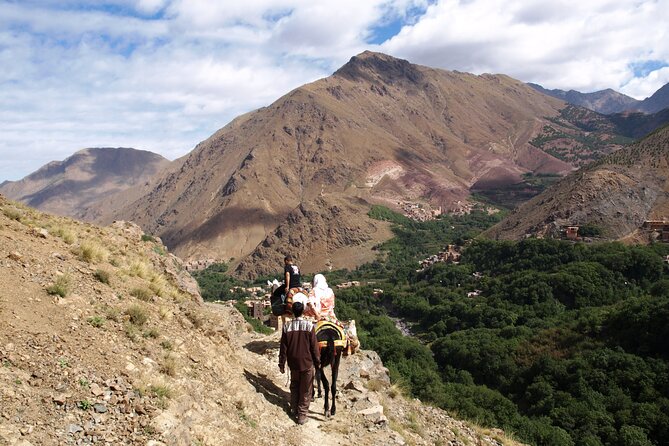
Your guide is included and remains with you throughout the trek. This is a major practical benefit because mountain paths, village customs, meal arrangements, and daily timing can be easier to manage with local help.
The strongest guide accounts are personal. Hassan is described as attentive, funny, and welcoming, with time spent in his home near Imlil. Mohamed is praised for improving an already beautiful mountain trip, and Mohamed Larbi is linked with a waterfall visit, a good lunch, and village encounters.
Those details suggest that the human side of the trip can shape your memories as much as the scenery. Still, guide assignments may change. Ask whether you can request a particular guide, what languages are available, and how strenuous the planned route will be.
A guide also helps you read the setting properly. A terrace is not simply a striking pattern on a slope. It is farmland. A walnut grove is not just shade. It is part of the local economy. This context makes the walk more meaningful without turning it into a formal lecture.
Food, Accommodation, And Comfort
The package includes accommodation for the two nights, along with breakfast, lunch, and dinner. Afternoon tea, coffee, and tea are also included. Soft drinks are not included, and tips are separate, so carry some extra cash for those costs.
The food receives especially warm praise. Homemade meals are described as delicious, and lunch is singled out as a highlight. You should expect food connected to the homes and communities along the route rather than a restaurant schedule designed for international tourists.
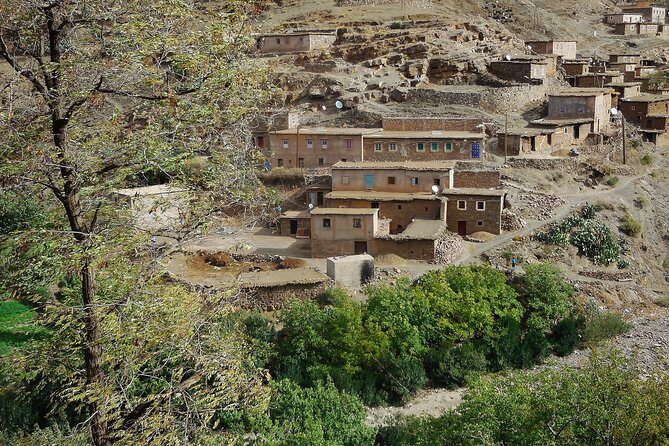
Accommodation is the less certain part. The information confirms that lodging is included, but it does not specify the names, room types, bathroom arrangements, or whether every night is in a family home, guesthouse, or another basic property. Conditions in the homes are described as simple.
I would ask three questions before paying: where you sleep each night, whether rooms are private or shared, and what washing facilities are available. This is not a complaint about the trip. It is sensible preparation for a mountain stay where local hospitality may matter more than hotel comforts.
Is The $234.84 Price Good Value?
At $234.84 per person, the price covers a lot for a three-day private trip. You receive transport from Marrakech, a guide, two nights of accommodation, breakfast, lunch, dinner, tea, coffee, and the walking experience itself.
The value is strongest if you would otherwise pay separately for a mountain transfer, guide, meals, and lodging. A short day trip may cost less, but it would not provide the same amount of time in the valleys or the same chance to stay overnight in a Berber community.
The private format also helps justify the cost. Your group is not folded into a large tour, and the guide can focus on your questions and needs. The exact value depends on group size, since the price is quoted per person and the activity is private.
Budget for soft drinks and a tip. Also check whether any optional route or activity carries an additional charge, since the supplied details do not spell out every possible extra.
Who Will Enjoy This Trek Most?
I would choose this trip if you want a close look at mountain life, enjoy walking for several hours, and prefer small-scale contact with local communities. It is a good match for people who value homemade food, village hospitality, and scenery that changes slowly as you walk.
It also suits anyone who wants to add a more active three-day stay to time in Marrakech. The air-conditioned transfer makes the start easier, while the included meals reduce the need to organize food in remote areas.
You should think carefully if you need measured walking distances, guaranteed private rooms, a fixed daily schedule, or fully comfortable lodging. The route includes gorges, streams, and uneven mountain terrain, and one account describes a section as frightening. The description says most people can participate, but it gives no specific accessibility details.
Ask about the route before booking if you have knee, balance, or mobility concerns. You can also ask how much uphill walking is planned and whether the guide can adjust the pace.
Booking And Cancellation Practicalities
Confirmation is provided when you book, and a mobile ticket is available. Pickup is offered, with the listed start time at 8:30 a.m. Confirm the pickup point and return timing directly, since those details are not fully stated.
Free cancellation is available if you cancel at least 24 hours before the local start time. A cancellation made less than 24 hours before departure is not refunded, and late changes are not accepted. That rule matters if your Marrakech plans are still uncertain.
My Verdict: Book It For The Human Side
I would book this trek for the combination of Berber hospitality, valley farming, and mountain walking, not simply for a checklist of viewpoints. The best parts are the time spent near villages, the homemade meals, the shaded forest paths, and the chance to understand how people work the terraces.
I would not book it without asking about the exact route and accommodation. The lack of published walking distances and room details is the main weakness. If you are comfortable with some rustic conditions and want a personal mountain experience, $234.84 is a fair price for what is included. If you want predictable hotel standards and a gentle sightseeing program, choose a shorter and more structured outing instead.
FAQ
Where does the Atlas Mountains trek begin?
The experience begins in Marrakech, with pickup offered and a listed start time of 8:30 a.m.
How long does the experience last?
The advertised duration is approximately three days, five hours, and seven minutes. The detailed trip information describes three days and two nights in the mountains.
Is transport included?
Yes. Transport is provided in an air-conditioned minivan.
Is this a private tour?
Yes. Only your group takes part in the activity.
What meals are included?
Breakfast, lunch, dinner, afternoon tea, coffee, and tea are included. Soft drinks are not included.
Is accommodation included?
Yes. Accommodation is included for the trip, though the exact properties and room arrangements are not specified.
Can I cancel for a full refund?
Yes, if you cancel at least 24 hours before the experience starts. Cancellations made less than 24 hours before the local start time are not refunded.
Recently added around Marrakech
- Berber villages trek Day trip★ 5.0 · 12 reviews
- two days valley trek in the Atlas mountains★ 4.5 · 2 reviews
- 2 Days Trek to Atlas Mountains berber villages★ 5.0 · 25 reviews
- Day Trekking Atlas Mountains★ 4.5 · 10 reviews
- Trekking 8 days in the Moroccan desert from Marrakech★ 5.0 · 4 reviews
- 2 days Toubkal adventure Trek★ 5.0 · 5 reviews
- Mount Toubkal Trek: 2-Day Adventure★ 5.0 · 26 reviews
- Toubkal Ascent Trek – Atlas Mountains – 2 days (Private Trek)★ 5.0 · 8 reviews
Marrakech Trekking Tours, compared.
2-Day Mt. Toubkal Trek with 1-Night Stay & Meals
Read our review →
Summiting and Hiking the Atlas Mountains Day Trek from Marrakech
Read our review →
Private Tour to Oasis and Trekking in the Desert of Erg Chigaga
Read our review →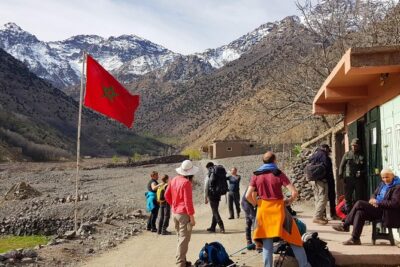
Browse the lists this tour appears in