
REVIEW · MOSHI
Mount Kilimanjaro Trek 7-Days: Lemosho Route
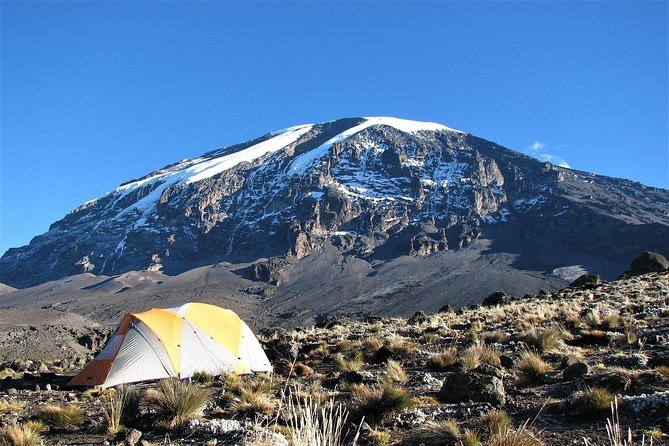
The mountain saves its best views for sunrise. This seven-day Lemosho trek reaches Kilimanjaro by a quieter western approach, crosses the Shira Plateau, and climbs through Lava Tower, Barranco, and Barafu before the push to Uhuru Peak. I like the gradual route into high country, and I like that the price includes guides, porters, meals, airport transfers, and hotel nights. The main catch is the summit day: 13 to 15 hours on foot, followed by a descent, so this is not a casual holiday with a scenic walk attached.
You begin far from Moshi at Londorossi Gate, then finish by the Mweka route. The western side can feel wild, with possible sightings of antelope, buffalo, or elephant, though wildlife is never promised. The private format is useful if you want your own group, but the itinerary still demands steady fitness, good pacing, and serious preparation for altitude.
Key points to know before you book
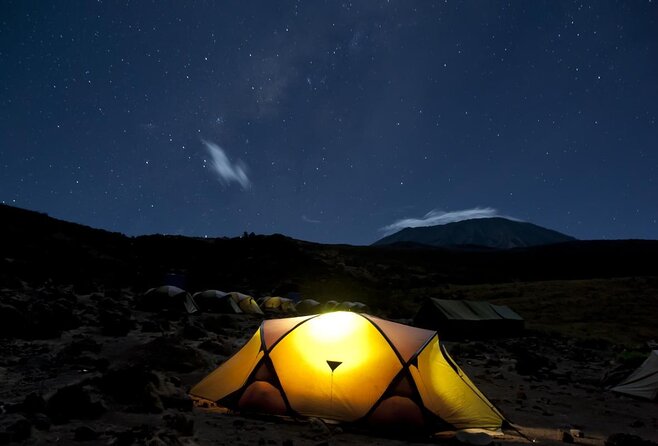
- A quieter western start: Lemosho begins at Londorossi Gate, well away from the busier town roads and closer to Kilimanjaro’s wild western side.
- Useful acclimatization: The route spends time at Big Tree, Shira 1, and Shira 2 before reaching the high point at Lava Tower.
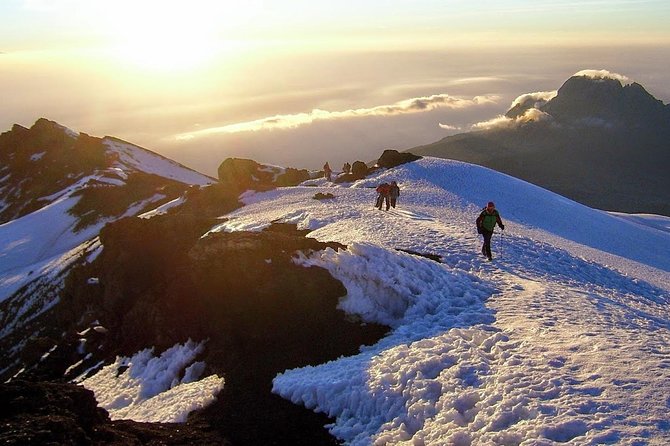
- A tough summit schedule: You start around midnight, reach Stella Point near sunrise, continue to Uhuru Peak, return to Barafu, and then descend to Mweka Camp.
- Barranco Wall is demanding but nontechnical: You climb over rock on a long, tiring section, but no technical climbing is described.
- Strong package value: The $2,465.76 price includes park costs, food, crew, water, airport transfers, and hotel nights before and after the climb.
- A private seven-day trip: Only your group participates, with a qualified guide, assistant guides, porters, and a cook.
Why the Lemosho Route earns its seven days
Kilimanjaro has several routes, and Lemosho is appealing because it does not throw you straight into the highest terrain. It starts on the western side at Londorossi Gate, where you register with park authorities before driving another 12 kilometers to the trailhead.
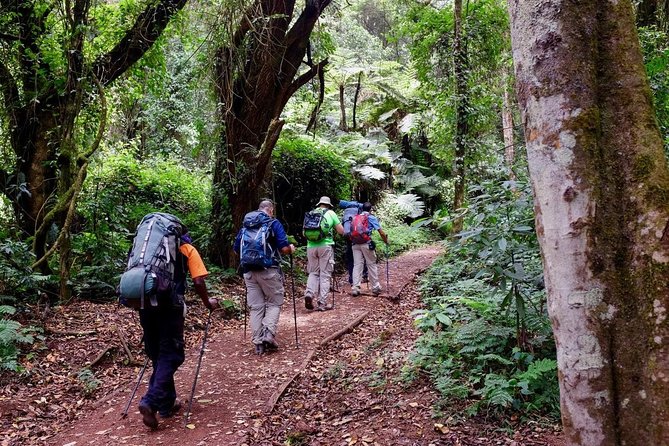
That extra transfer takes time, but it also sets the tone. You are not simply walking from a busy access point toward the summit. The opening section passes through forest and the Lemosho glades, where the western side remains relatively wild. You might spot large antelope, buffalo, or even elephant, but treat any animal sighting as a lucky bonus.
The route later joins the Machame route near Lava Tower. From there, it follows the southern circuit toward Barranco, Barafu, Uhuru Peak, and finally the Mweka descent. This route design matters because you gain height, then lose some of it, then climb again. That can feel inefficient on a map, but it helps your body spend more time adjusting to altitude.
The trip is private, so only your party participates. That gives you a simpler group dynamic than a large shared departure. You can still expect a full mountain crew: a qualified guide, assistant guides, porters, and a cook. Salaries are covered according to Kilimanjaro National Park guidelines, which is an important part of responsible budgeting.
More Kilimanjaro Climbs in Moshi
- Best Kilimanjaro Adventure 7 days Machame route Trekking
★ 5.0 · 42 reviews - Kilimanjaro 7 Day Private Trekking Experience
★ 5.0 · 40 reviews - 6 Days Machame Route Kilimanjaro Climbing Trekking Tour
★ 5.0 · 34 reviews
Day 1: Forest paths to Big Tree Camp
Pickup is scheduled around 8:00 a.m. from your hotel. The drive leads to Londorossi Gate, where registration takes place, followed by the additional 12-kilometer transfer to the trailhead.
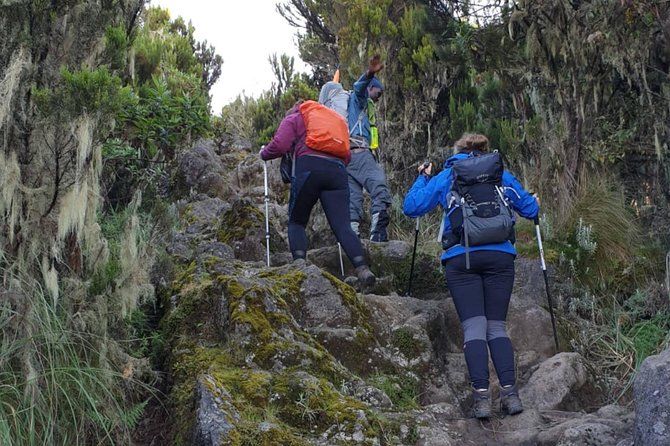
The opening hike covers about 7 kilometers and takes roughly four hours. You climb steadily through forest and reach Big Tree Camp for the night. The pace is a sensible introduction. You are walking, but you are not yet dealing with exposed high-altitude ground or long summit-style hours.
The forest gives you shade and a softer start than the upper mountain. It is also the point where the trip shifts from road travel to a real trek. Keep your daypack organized before leaving the vehicle. You will want water, rain protection, a warm layer, and any personal medicine within easy reach.
The included fresh water and hot water for washing each day are practical comforts. They do not turn camp into a hotel, but they remove two common hassles on a week-long mountain route.
Day 2: Open moorland and the first real altitude
Day two covers about 8.5 kilometers and takes around seven hours. The forest gives way to grassy moorland and heather, with volcanic rock formations scattered along the route.
This is where the mountain begins to feel larger. The route gains a reasonable amount of altitude, and some parts are fairly steep. Shira 1 Camp is the goal, often with views of Kibo Peak appearing above or through the clouds.
The broad open ground brings better views, but it also offers less shelter from changing conditions. Keep your clothing easy to adjust. A cool morning can become a warm uphill walk, then turn cold when you stop.
Seven hours is not extreme compared with summit day, but it is long enough to test your pacing. Walk slowly from the start. You gain little by rushing early and paying for it later.
Day 3: Shira Plateau and a useful acclimatization walk
The third day reaches Shira 2 Camp after about 8 kilometers and five hours of walking. The route continues across the Shira Plateau, with panoramic views and unusual angles toward Kibo.
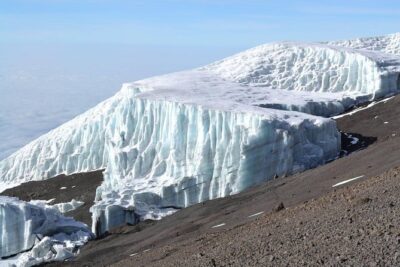
One special feature is the view toward Kilimanjaro’s Northern Ice fields from the western side. The mountain can look very different from this direction than it does in the classic photographs. You also get more time in the moorland zone, which helps break up the long climb to the summit.
An afternoon acclimatization walk is included before you return to camp for dinner and the night. This is a good use of time. You are not just marching toward the next camp. You are adding gentle movement at altitude, then returning lower to sleep.
Shira 2 can also remind you that distance is not the only measure of difficulty. Five hours may sound easy after the seven-hour day before it, but altitude affects effort. Keep your pace modest, drink regularly, and tell your guide promptly if you feel unwell.
Same trailhead, a longer or shorter day out:
- Kilimanjaro Trekking 7Days 6Night Lemosho Route
★ 5.0 · 23 reviews - 8 Day Kilimanjaro Trek via Lemosho Route
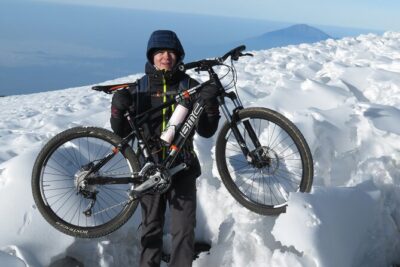
★ 5.0 · 17 reviews - Top 6 Days Mt. Kilimanjaro Bike trek Tour by Marangu-Kilema Route
★ 5.0 · 15 reviews - 6 Days Mount Kilimanjaro Trek Marangu Route
★ 5.0 · 15 reviews
Day 4: Lava Tower at 4,640 meters, then Barranco
Day four is one of the route’s most useful and dramatic sections. You walk about 10 kilometers over roughly seven hours, climbing toward Lava Tower at 4,640 meters.
The surroundings become upland desert, with lava ridges beneath the glaciers of the Western Breach. Lava Tower is the high point for the day and a natural lunch stop. Reaching this height and then descending to Barranco is the classic climb-high, sleep-lower pattern that makes this route attractive for acclimatization.
The afternoon descent is steep. Barranco Camp sits at about 3,960 meters, sheltered by tall cliffs with broad views toward the plains. After the exposed climb, the camp’s position gives you a striking change in atmosphere.
Do not judge the day by the descent alone. Going down does not mean the work is over. The climb to Lava Tower can be tiring, and the steep drop afterward can be hard on knees and legs. Trekking poles may be useful, though personal gear is not included and must be brought or rented.
Day 5: Barranco Wall, Karanga, and Barafu Camp
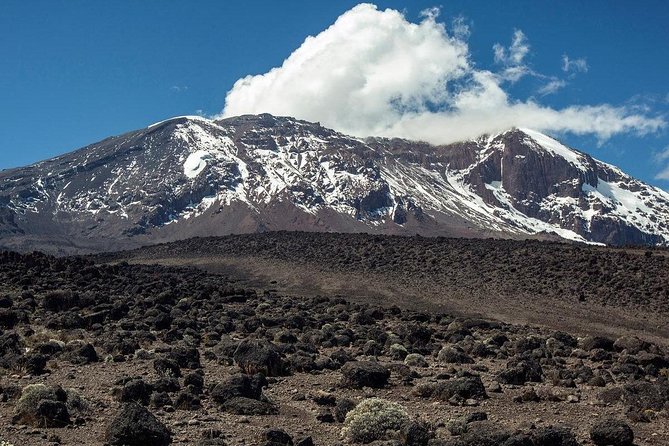
Day five is a hard day before the summit. The route first drops into the Great Barranco, then climbs the Barranco Wall. This is a rock scramble rather than technical climbing, but it is long and tiring.
The wall divides you from the southeastern slopes of Kibo. You pass below the Heim and Kersten glaciers before heading toward the Karanga Valley. From there, a steep climb leads to Barafu Camp at 4,640 meters.
Vegetation disappears as you cross bare scree slopes. The route feels stark and exposed, and the altitude makes every uphill section harder. The day takes about eight hours, and the itinerary notes that the steep climb is made more difficult by the height.
Once at Barafu, you eat and rest. That afternoon is not spare time for sightseeing. It is recovery time before the midnight start. Keep your summit clothing, headlamp, water, snacks, and warm layers ready before trying to sleep. Personal snacks and medicine are not included, so plan those yourself.
A portable toilet is optional but highly recommended. It costs extra, yet it may be worth considering for comfort and privacy during the camping sections.
Day 6: The midnight push to Uhuru Peak
Summit day is the trip’s defining challenge. You start around midnight and climb steep scree toward the glaciers for four to five hours. The distance is listed as about 16.4 kilometers, with a total walking time of 13 to 15 hours.
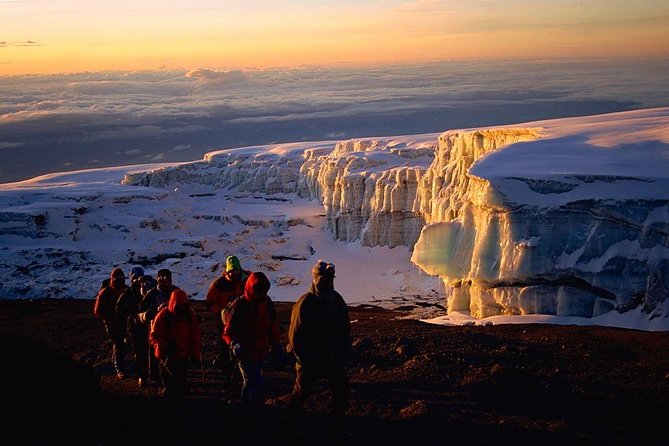
You aim to reach Stella Point on the crater rim at 5,739 meters as the first light arrives. From there, the final hour to Uhuru Peak reaches 5,895 meters. The crater’s ice cliffs, views toward Mawenzi Peak, and sunrise from the rim provide the day’s great rewards.
The schedule is demanding because the summit is only part of the day. After Uhuru Peak, you return to Stella Point, descend scree to Barafu for breakfast, and continue down to Mweka Camp. You are climbing high, then walking for hours while tired and short on sleep.
Emergency oxygen is included, but it is for emergencies only, not as summit assistance. A basic first aid kit is also provided for emergencies. These provisions are reassuring, but they do not replace fitness, acclimatization, or honest communication with your guide.
The summit may be the goal, but safe decisions matter more than a photograph at the top. If altitude symptoms become serious, follow the guide’s advice. The route has already given you spectacular scenery before the final summit ridge, and no certificate is worth ignoring a medical warning.
Day 7: Rainforest, Mweka Gate, and a proper shower
The final descent passes through rainforest toward Mweka Gate. The schedule gives about 9.1 kilometers and roughly six hours, although the day description also mentions four hours, so you should allow flexibility.
At the gate, you complete park formalities and receive a certificate. Vehicles then take you back to your Moshi hotel, where you can shower and celebrate with cold drinks.
The Mweka descent is a fitting finish because it contrasts with the summit day. After scree, glaciers, and bare rock, the rainforest feels lower, warmer, and full of life. Your legs may disagree with the word gentle, especially after the previous day.
The package includes the hotel night after the climb, with dinner and breakfast. That final night is valuable. You do not need to arrange an immediate onward transfer after returning from the mountain, and you have a place to clean up and recover.
What the $2,465.76 price really covers
The cost is not just payment for a walking route. It covers the mountain operation needed to move a private group through Kilimanjaro National Park for a week.
Included items are:
- All fees and taxes
- Airport transfers between Kilimanjaro Airport and Moshi
- A hotel night before and after the climb
- Dinner and breakfast at those hotel stays
- Six breakfasts, seven lunches, and six dinners during the trek
- Fresh drinking water and hot water for washing each day
- A qualified guide, assistant guides, porters, and cook
- Crew salaries following park guidelines
- Emergency oxygen and a basic first aid kit
That is strong value if you need the airport transfers and hotel nights. Food and crew support account for a large part of the practical work on the mountain. You still need to budget for flights, visas, insurance, personal equipment, snacks, medicine, water purification tablets, and meals or drinks not specified.
You can rent some hiking gear from the operator’s equipment store in Tanzania. Ask for current rental costs and availability before you rely on that option. The package does not include a personal trekking kit.
The organization and personal touch
The company is Intrepid Explorer Tanzania. The available feedback gives the operation two useful signs of good service. Wence helped arrange a postponement of more than a year at no added cost when one party faced a family health problem. Another climber, joining an existing group at short notice, found the preparation and organization in place and praised the team’s competence, good humor, and commitment.
Those details matter. A Kilimanjaro trip involves park registrations, vehicles, food, crew, camps, and changing weather. Good organization is not decoration. It keeps the week moving when everyone is tired.
The tour has a top rating from two published ratings, but that is a very small sample. I would treat the positive signal as encouraging rather than decisive. Before paying, confirm the current hotel names, group arrangements, gear rental terms, and exact meeting details.
Who should book this climb?
I would recommend this route to you if you want a private Kilimanjaro climb with a quieter start, strong included support, and a route that allows several days before the summit attempt.
You should be comfortable walking for five to eight hours on several days, handling steep uphill and downhill sections, and coping with a 13 to 15-hour summit schedule. A moderate fitness level is required, but that phrase should not make the climb sound easy. Altitude is unpredictable, and the summit day is a serious physical test.
This is less suitable if you want short daily walks, a relaxed camping holiday, or a guaranteed summit. It is also less suitable if you prefer to arrange every detail independently. The value here comes from the full support system.
Cancellation is free up to 24 hours before the experience begins. After that cutoff, the amount paid is not refunded, and last-minute changes are not accepted. The cutoff uses local time.
Should you book the seven-day Lemosho trek?
Book it if you want a slower western approach, varied mountain zones, strong crew support, and a private trip with airport and hotel arrangements included. The Shira Plateau, Lava Tower, Barranco Wall, and sunrise attempt at Stella Point give the week a clear sense of progress.
Think twice if you are not ready for the summit schedule or if the included gear list leaves too many personal costs for your budget. Ask about equipment rental and the optional portable toilet before you commit.
For a prepared climber, this is a well-rounded way to tackle Kilimanjaro. You get the quiet opening, useful acclimatization time, and the classic southern circuit, with the hard truth made clear: reaching Uhuru Peak takes patience, stamina, and sensible choices.
FAQ
How long is the Kilimanjaro Lemosho trek?
The experience lasts approximately seven days, including the climb, summit attempt, descent, and return to a hotel in Moshi.
Where does the trek begin?
It begins at the Lemosho Route on the western side of Mount Kilimanjaro, after registration at Londorossi Gate and a further 12-kilometer drive to the trailhead.
Where does the trek end?
The descent uses the Mweka route and finishes at Mweka Gate. Vehicles then return you to your hotel in Moshi.
Is hotel accommodation included?
Yes. One hotel night before the climb and one night after the climb are included, with dinner and breakfast.
Are airport transfers included?
Yes. Transfers between Kilimanjaro Airport and Moshi are included in both directions.
Are meals included during the trek?
Yes. The package includes six breakfasts, seven lunches, and six dinners, along with dinner and breakfast at the included hotel stays.
Is drinking water provided?
Fresh water for drinking and hot water for washing are provided each day.
Is the Barranco Wall technical climbing?
The Barranco Wall is described as a climb over rock that is not technical, though it is long and tiring.
What fitness level is required?
A moderate physical fitness level is required. The longest day takes about 13 to 15 hours and includes the summit, return to Barafu, and descent to Mweka Camp.
Is emergency oxygen included?
Yes. Emergency oxygen is included for emergencies only and is not provided as summit aid.
Recently added around Moshi
- Mt Kilimanjaro Trek, 6 Days – Umbwe Route★ 5.0 · 4 reviews
- 7 Day Trek To The Roof Of Africa Kilimanjaro via Machame Route★ 5.0 · 5 reviews
- 8 Day Kilimanjaro Trek via Lemosho Route★ 5.0 · 17 reviews
- 6-Day Kilimanjaro Machame Route – A Stunning Trek to Uhuru Peak★ 5.0 · 7 reviews
- 7-Days Tour Mount Kilimanjaro Trekking via Machame Route★ 5.0 · 2 reviews
- 6-Day Rongai Route Trek in Mount Kilimanjaro★ 5.0 · 8 reviews
- Trek To Mount Kilimanjaro★ 5.0 · 12 reviews
- Unforgettable 8 Days Lemosho Route Trekking on Kilimanjaro★ 5.0 · 4 reviews
Kilimanjaro Climbs, compared.
8-Day Small-group Lemosho Kilimanjaro Summit Trekking
Read our review →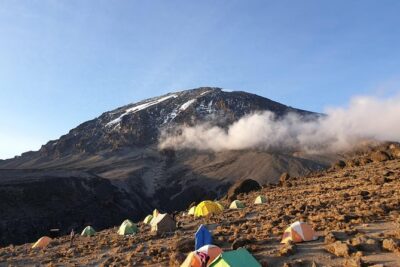
Best Kilimanjaro Adventure 7 days Machame route Trekking
Read our review →
Kilimanjaro 7 Day Private Trekking Experience
Read our review →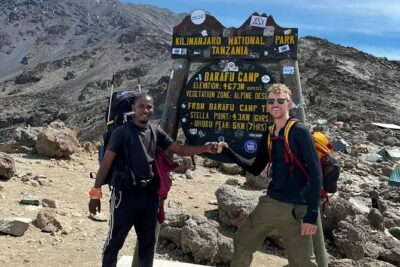
6 Days Machame Route Kilimanjaro Climbing Trekking Tour
Read our review →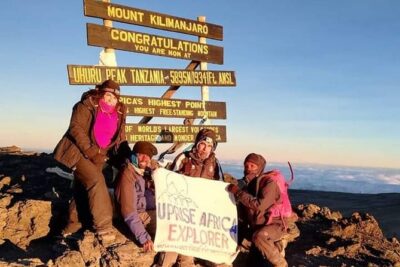
Kilimanjaro Trekking 7Days 6Night Lemosho Route
Read our review →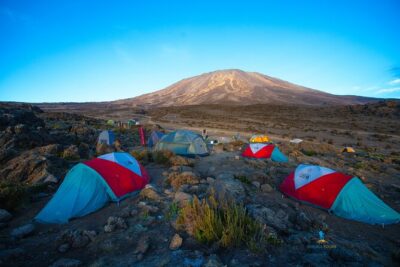
Top 6 Days Mt. Kilimanjaro Bike trek Tour by Marangu-Kilema Route
Read our review →Browse the lists this tour appears in