
REVIEW · LOMBOK
2D1N Senaru Crater Rim Trekking
Sunset comes after a very long climb. This private 2-day trek takes you from Senaru through tropical forest to Mount Rinjani’s crater rim, where I like the sweeping view of the Gili Islands and Mount Agung in Bali. I also like the thoughtful camp setup, with mattresses, pillows, sleeping bags, meals, drinking water, and a toilet tent included. The catch is simple: the climb is much harder than the price and short duration suggest, with more than 2,000 meters of ascent on the first day.
You’ll walk at your own group’s pace with a private English-speaking guide and porters carrying the food and camp gear. Guides such as Anton, Lim, Rudy, Mario, Benji, and Rudi have earned praise for their patience and care. Still, this is not a casual forest walk. You need moderate fitness, sturdy shoes, and a willingness to work for the view.
Key points before you book
- The first day is the test: You climb from 601 meters in Senaru to 2,641 meters at the crater rim.
- This is not the summit route: You reach Senaru Crater Rim, not Mount Rinjani’s 3,726-meter summit.
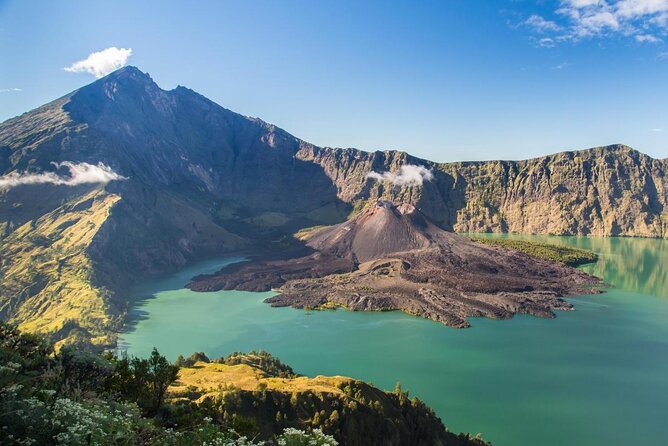
- Sunset is the reward: From camp, you can see the Gili Islands, Mount Agung, Segara Anak Lake, and Rinjani’s volcanic cone.
- The private format helps: Your group can set the pace and take breaks when needed.
- Camping is better equipped than basic trekking: Expect a tent, mattress, pillow, sleeping bag, toilet tent, meals, snacks, and water.
- Budget for extras: The national park fee is IDR 250,000 per person per day, and transport, accommodation, and personal trekking gear are not included.
What this Senaru route really involves
The Senaru Crater Rim trek is often presented as the easiest way to experience Mount Rinjani. That is fair only when you compare it with the summit routes. You still climb from 601 meters to 2,641 meters in one day, gaining more than 2,000 meters in elevation.
That makes the route physically serious. You do not need to climb to the summit, but you do need to keep walking uphill for most of the day. The trail begins in forest, then changes to open grassland and steeper volcanic ground. The last section can feel especially demanding after several hours on your feet.
I like this route for people who want Rinjani’s big views without committing to a longer summit itinerary. You get the crater, lake, volcano, Bali, and the islands in a compact trip. The tradeoff is that the climb is concentrated into one hard day, followed by a long descent.
The private format is useful here. If one person in your group needs more rest, the guide can adjust the pace rather than forcing you to keep up with a large mixed group. That does not make the hill less steep, but it can make the day feel more manageable.
More Volcano Treks in Indonesia
- Trekking Mt. Rinjani 2 Days 1 Night Senaru Crater Rim
★ 5.0 · 55 reviews - Trekking Rinjani Volcano To Crater Rim Senaru 2D-1N Private – Syam Trekker
★ 5.0 · 45 reviews - Hiking Rinjani Volcano To Crater rim Senaru 2 Days, Group – Syam Trekker
★ 5.0 · 29 reviews
Starting at Senaru’s Rinjani Trek Centre
The trek begins at 7:00 am at the Lombok Volcano Trekking office on Jalan Pariwisata in Senaru. You register at the Rinjani Trek Centre, which sits at about 601 meters above sea level.
This early start gives you the full day for the ascent. It also matters because reaching the crater rim before sunset is the main goal. The schedule is not packed with sightseeing stops. The mountain itself is the attraction, and your time is spent moving steadily upward.
The tour includes an experienced guide and professional porters. The porters carry cooking equipment and camping supplies, so you do not have to haul the tent, food, or sleeping gear uphill. This support is one of the strongest parts of the experience. Several people praised how quickly and efficiently the porters handled the heavy loads, while also preparing surprisingly good meals.
You can leave luggage at the Lombok Volcano Trekking office during the trek. That is helpful if you are traveling around Lombok with a larger bag. Bring only what you need for the mountain.
Through Senaru’s tropical forest
The first section passes through dense tropical forest. You stop at Pos 1 and Pos 2 for rests, then continue toward Pos 3, where lunch is served at roughly 2,000 meters.
The forest provides shade and a cooler setting than the exposed upper slopes. It is also where you may notice the route’s gradual physical demand. The trail keeps climbing, and the humidity can make the effort feel greater than the distance suggests.
The porters carry three liters of mineral water per person per day, along with the food and camp equipment. That is a useful allowance for a full day of uphill walking. Even so, pace yourself. The biggest mistake on this route is treating the lower forest section as an easy warm-up and spending too much energy before the steepest ground begins.
The guide’s role matters here. The better guides do more than point out the trail. They offer encouragement, answer questions about the forest, and adjust the pace to the group. Lim was praised for explaining nature along the way, while guides including Anton, Benji, and Rudy were noted for staying cheerful and supportive when the climb became difficult.
Pos 3 and the change to open ground
At Pos 3, around 2,000 meters, you stop for lunch before the trail leaves much of the forest behind. From here, the surroundings become more open, and the climb becomes steeper.
This change is important because you lose the shelter of the trees. The trail exposes you to the elements, and the volcanic ground can make footing less comfortable. You should bring a rain jacket, long pants, gloves, and a headlamp or hand torch, all of which are listed as items you must provide yourself.
The hike can take longer than expected, particularly if rain slows the group. One person described the route as harder than anticipated, while still feeling that the view made the effort worthwhile. That is the right way to think about this tour. The goal is not speed. It is to arrive at the rim with enough energy to enjoy the evening.
A private guide can help you find that balance. Take regular pauses, eat the snacks provided, and do not feel embarrassed about a slower pace. The trail does not reward rushing.
More Volcano Treks in Lombok
- Trekking Mt. Rinjani 2D1N Via Sembalun – Crater Rim – Summit
★ 5.0 · 21 reviews - Mount Rinjani 3D2N Private Trek – Summit, Crater Rim & Hot Spring
★ 5.0 · 13 reviews - Rinjani Trekking 2D1N Senaru Crater rim
★ 4.5 · 9 reviews - Trekking Rinjani 1 Day Trek Senaru Crater Rim
★ 5.0 · 3 reviews
Reaching Senaru Crater Rim at 2,641 meters
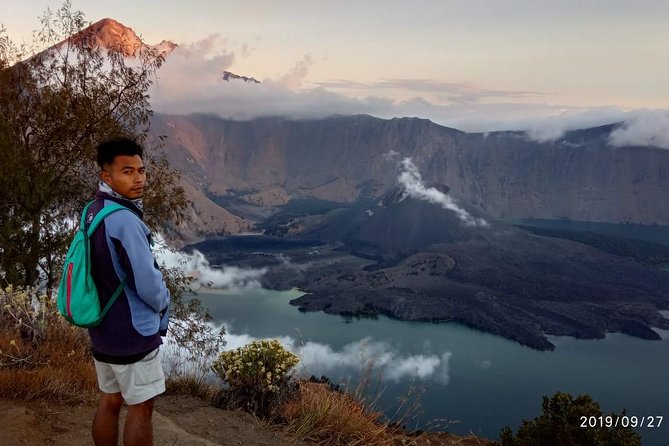
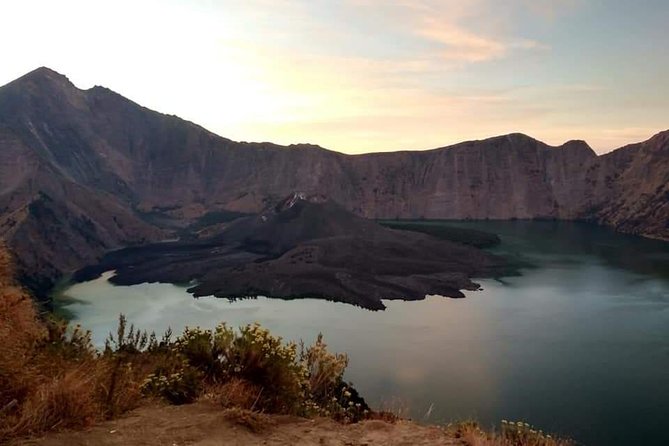
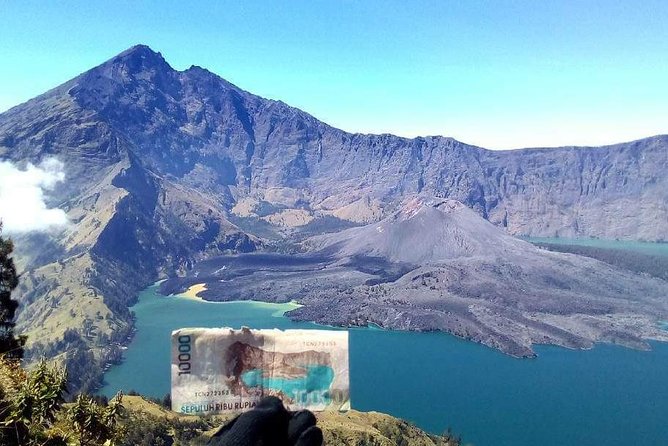
The crater rim is the payoff for the day. At about 2,641 meters, your camp looks across the volcanic interior toward Mount Rinjani’s summit, Segara Anak Lake, and the Gunung Baru volcanic cone.
In the opposite direction, the view reaches toward the Gili Islands and Mount Agung on Bali. Sunset adds another layer, with the islands and Bali’s volcano forming the backdrop as the light fades. This is the part of the tour that gives the hard climb a clear purpose.
Camp is set up for you by the guide and porters. The package includes a tent, sleeping bags, mattresses, pillows, a toilet tent, and toilet paper. The camping is still camping, of course. You should not expect a hotel bed or private bathroom. But the thick mattresses and warm sleeping bags received particular praise, and the setup is more comfortable than carrying and arranging your own basic kit.
Your exact campsite view can vary. One group had a spot right on the rim with a clear view of the volcano and summit from the tent. That is a fine reminder to ask the guide about camp placement, while understanding that mountain conditions and available sites may affect the answer.
Food, water, and the night on the rim
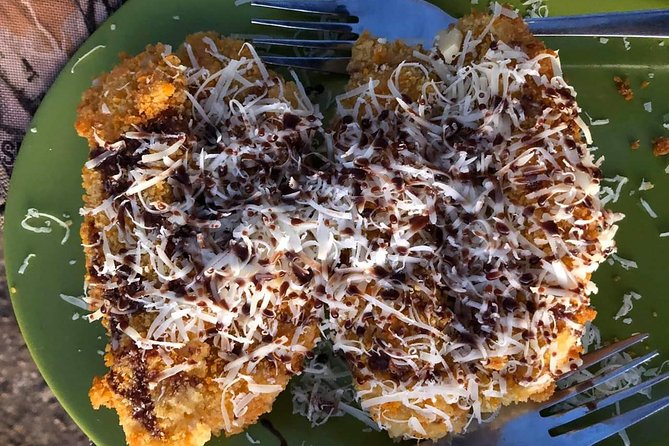
Meals are included, along with snacks and drinking water. The food received some of the warmest praise, with several people describing it as generous, tasty, and better than expected for a mountain camp.
Vegetarian meals were accommodated for at least one group, but you should communicate dietary needs when booking. The supplied information confirms food and water, but not a complete menu, so it is sensible to clarify any strict dietary requirements ahead of time.
The evening is quiet and simple. You eat, watch the light change over the crater and islands, then settle into the tent. At this altitude, temperatures can feel cold, especially after sunset. A sleeping bag is provided, but pack warm layers rather than relying on tropical Lombok weather at the coast.
Rain is possible. One group still enjoyed the trip despite wet conditions because the guide remained upbeat and the meals, sunrise, and views delivered. That said, clouds can hide the sunset or sunrise. The mountain sets the schedule, not the tour operator.
Sunrise and the long walk back down
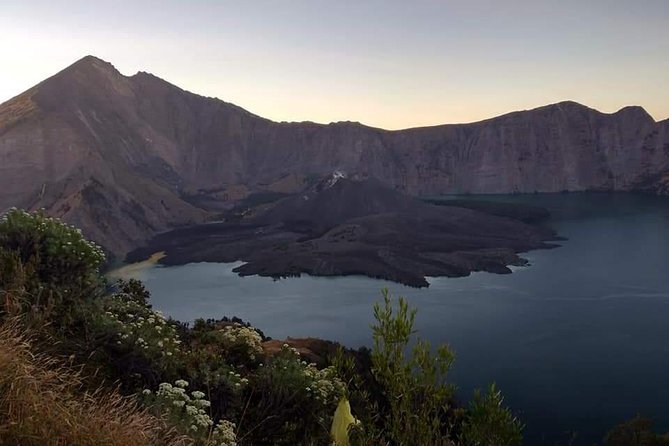
Day two begins with sunrise, followed by breakfast and a relaxed start to the descent. The route returns through the same general Senaru trail, with snack breaks along the way and lunch at Pos 2.
Going down is easier on your lungs but can be tough on your knees and thighs. Loose or uneven volcanic ground can make the descent tiring, particularly after the previous day’s climb. Good footwear is essential, and trekking shoes are not included.
You should arrive back in Senaru at about 1:00 pm. The tour ends at the original meeting point, so plan onward transport from there. Pickup before the trek and transfers after it are not included.
The descent also gives you a different view of the forest. You can watch the mountain change from open rim to grassland and then tropical woodland. It is less dramatic than the crater vista, but it completes the sense of having crossed several distinct zones in two days.
What the $156 price covers
At $156 per person, the tour offers solid value if you want support on a demanding mountain. The price includes a private guide, porters, food, three liters of mineral water per person per day, camping equipment, sleeping gear, luggage storage, and the camp toilet setup.
Those inclusions matter. Buying, carrying, and preparing all of that yourself would take time and effort. The porters also allow you to concentrate on walking rather than hauling a tent, cooking supplies, and food up 2,000 meters.
The headline price is not the final cost. The Rinjani national park fee is IDR 250,000 per person per day, so a 2-day trek requires IDR 500,000 per person. Accommodation before the trek, transport to Senaru and onward transfers, trekking shoes, a rain jacket, long pants, gloves, and a headlamp are also excluded.
For a private mountain trip with meals and camp support, the package is reasonably priced. It is less attractive if you need a full transport package or must buy every item of trekking gear before departure.
Who should choose this trek
I would choose this route if you want a major Rinjani experience but do not want the longer summit program. It suits couples, friends, solo hikers, and families with older children who already understand that the climb requires effort. One family completed it with children aged 10 and 12, though the children needed determination and the route was not effortless.
The private format also suits groups with different walking speeds. You can stop when necessary, and the guide can keep the day focused on your needs.
I would not choose it for a casual holiday morning, a first-ever walk in ordinary trainers, or anyone unwilling to handle a full day of climbing. The word easiest can mislead you. This is the easiest major option in comparison with harder Rinjani routes, not an easy excursion.
The tour has a 4.9 rating from 178 reviews and is recommended by 97 percent of customers. Those figures point to strong satisfaction, especially with the guides, porters, food, camping equipment, and views. The lower rating also deserves attention: one person felt the service was below expectations and believed other companies offered better support. That is a useful reminder to confirm what is included and to judge the trip by its actual conditions, not just its score.
Practical preparation for Senaru
Pack light, but pack for a mountain. You need trekking shoes, a rain jacket, long pants, gloves, and a headlamp or hand torch. Warm clothing is wise for the night at 2,641 meters.
Keep your luggage at the trekking office and carry only essentials. Your water allowance is three liters per day, and the porters carry the cooking and camping gear.
Start slowly on day one. Eat at Pos 3, use the rest stops, and tell your guide if you need to pause. Guides such as Mario, Anton, Lim, Rudy, Rudi, and Benji received praise for encouragement and personal care, but the quality of your day still depends on honest communication about your energy.
Also remember to budget for tips. Tips are not listed as included, and the porters do the heavy physical work that makes this trip possible.
Should you book the Senaru crater rim trek?
Book it if you want dramatic Rinjani scenery, a private pace, strong camp support, and a shorter alternative to the summit route. The views from the rim are superb, and the included meals, porters, mattresses, sleeping bags, and toilet tent make the mountain more approachable.
Skip it if your fitness is low, your schedule cannot handle a hard uphill day, or you need guaranteed weather and hotel-style comfort. The route is demanding, the national park fee and transport cost extra, and bad weather can reduce the views.
For the right person, this is a well-supported mountain adventure with a clear reward: sunset over the Gili Islands and Bali, sunrise above Segara Anak Lake, and the satisfaction of earning every meter.
FAQ
How long is the Senaru Crater Rim trek?
The experience lasts approximately two days and one night. You trek up on day one, camp at the crater rim, then descend to Senaru on day two.
Where does the trek start?
It starts at the Lombok Volcano Trekking office on Jalan Pariwisata in Senaru. You also register at the Rinjani Trek Centre in Senaru.
What time does the trek begin?
The scheduled start time is 7:00 am.
How high is the crater rim campsite?
Senaru Crater Rim is approximately 2,641 meters above sea level.
Does this tour reach Mount Rinjani’s summit?
No. This itinerary reaches Senaru Crater Rim. It does not continue to the 3,726-meter summit.
Is the tour private?
Yes. Only your group participates, and your group can set its own walking pace with the guide.
Are meals and drinking water included?
Yes. Food and drinking water are included, with three liters of mineral water per person per day.
What camping equipment is provided?
The package includes a tent, toilet tent, toilet paper, sleeping bags, mattresses, and pillows.
What costs extra?
The national park fee is IDR 250,000 per person per day. Accommodation before the trek, transport, transfers, trekking shoes, a rain jacket, long pants, gloves, and a headlamp or hand torch are not included.
Where does the trek finish?
The activity ends back at the original meeting point in Senaru, at the Lombok Volcano Trekking office.
More Two-Day Treks in Lombok
- Rinjani trekking 2D 1N RIM
★ 5.0 · 94 reviews - Mount Rinjani Second Summit Trekking ( 2Days-1Night )
★ 5.0 · 49 reviews - Trekking Rinjani Mountain Summit 2 Days 1 Night – Em Adventure
★ 5.0 · 42 reviews - Mount Rinjani: 2D/1N Trekking To Sembalun Or Senaru Views
★ 4.8 · 24 reviews
Recently added around Lombok
- Trekking Rinjani 1 Day Trek Senaru Crater Rim★ 5.0 · 3 reviews
- Mount Rinjani 3D2N Private Trek – Summit, Crater Rim & Hot Spring★ 5.0 · 13 reviews
- Popular Rinjani Trekking Tour Service To Summit For 2 Days Via Sembalun Trail★ 5.0 · 8 reviews
- Rinjani Trekking 2D1N Senaru Crater rim★ 4.5 · 9 reviews
- Rinjani Trekking 1 day Trek To the rim via senaru 2,642m★ 5.0 · 16 reviews
- Rinjani Trekking 2D/1N Senaru Crater Rim★ 5.0 · 2 reviews
- Rinjani Trekking 3D2N Summit – Full Trail★ 4.5 · 14 reviews
- 3D 2N Mount Rinjani Trekking Tour To Summit And Lake★ 4.5 · 7 reviews
Volcano Treks, compared.
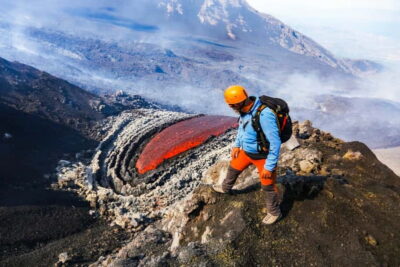
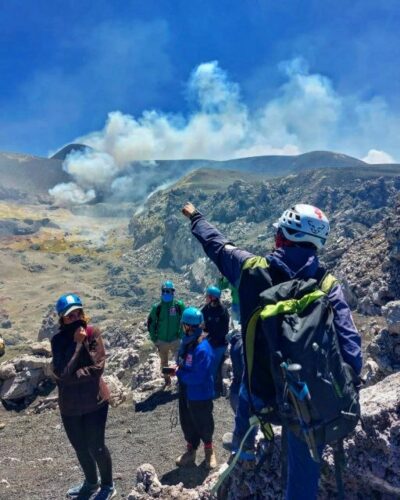
summit craters trekking with volcano guide 3350mt
Read our review →
Mount Etna Trekking Tour Beyond the Tourist Trails
Read our review →
Etna Sunset Tour: Volcano trek, Cave & tasting from Catania
Read our review →
Browse the lists this tour appears in