REVIEW · LOMBOK
Hiking Rinjani Volcano To Crater rim Senaru 2 Days, Group – Syam Trekker
Rinjani rewards steady legs with giant views. This two-day Senaru crater-rim hike gives you a demanding but manageable way to experience Lombok’s famous volcano without committing to a longer summit trip. I like the small group size, capped at six, and the fact that camping gear, meals, water, porters, park fees, and an English-speaking guide are included.
I also like the overnight camp at 2,641 meters, where you can watch sunset over Mount Agung in Bali and wake for sunrise above Lombok. The main catch is the effort: this is a serious uphill walk, not a casual nature stroll. You need moderate fitness, a sensible pace, and a willingness to sleep in a tent after several hours on the trail.
Key points at a glance
- The route reaches Senaru Crater Rim at 2,641 meters, not Mount Rinjani’s 3,726-meter summit.
- The first day takes you through tropical forest, with breaks at Post 2 and Post 3 before the final climb.
- The overnight camp brings sunset, sunrise, and views toward Mount Agung in Bali.
- A group of no more than six people makes it easier for the guide to match the group’s pace.
- Camping equipment, three meals, snacks, fruit, drinks, and three liters of mineral water per day are included.
- The $217 price covers the major costs, but personal spending and tips for the guide and porters are extra.
What this two-day Rinjani route actually includes
Mount Rinjani rises to 3,726 meters and is one of Lombok’s defining sights. This particular trip does not take you to the summit. It follows the Senaru route to the crater rim, then returns to Senaru village the next day.
That distinction matters. Some descriptions of Rinjani hikes use broad language about climbing the volcano, but this itinerary is specifically a crater-rim trek. You still gain a high viewpoint and spend the night on the mountain, but you do not face the steep summit push that forms part of longer Rinjani programs.
The tour price is $217 per person. For that sum, you receive tents, sleeping mats, sleeping bags, pillows, camping chairs, a toilet tent, food, water, porters, a guide, park entry, and travel insurance. That is useful value for a remote mountain trip because the heavy camping supplies do not sit on your back.
You still need to budget for personal expenses and tips. The tipping amount is not specified, so ask the operator before departure if you want a clear idea of local expectations.
More Mount Rinjani Treks in Lombok
- Rinjani trekking 2D 1N RIM
★ 5.0 · 94 reviews - Rinjani Trekking 3D2N Summit
★ 4.5 · 85 reviews - 3D/2N Rinjani trekking summit,lake and hot springs.
★ 5.0 · 85 reviews
Starting at Senaru and entering the forest
The meeting point is Syam Trekker at Jl. Pariwisata in Senaru, North Lombok. The listed meeting time is 7:00 a.m., while the trek itself is scheduled to begin at the Rinjani Trek Center Senaru at about 8:00 a.m.
That hour gives you time to gather your group, meet the guide and porters, and handle the start of the park visit. The route begins in dense tropical forest, where the scenery is shaded and green rather than immediately wide open. You may see varied plant life, birds, and butterflies along this section.
The forest is more than a warm-up with pretty plants. It protects you from the full heat of the day during the first part of the ascent. It also makes the climb feel gradual at first, though the steady gain in height soon becomes clear.
Your guide sets the rhythm, and the small group limit helps here. With no more than six people, you are less likely to be tied to a large crowd moving at one fixed speed. That does not make the climb easy, but it can make the day feel more controlled.
Post 2 and Post 3: useful breaks on a steady climb
The first planned stop is Post 2, also called Montong SATAS shelter, at about 1,500 meters. The break includes tea and biscuits, a small detail that becomes surprisingly welcome once you have been walking uphill.
From Post 2, the route continues for about two hours to Post 3, known as Mondokan Lolak, at approximately 2,000 meters. Lunch is served there. These named stops give the day a helpful structure. Instead of thinking about the entire mountain, you can focus on reaching the next rest point.
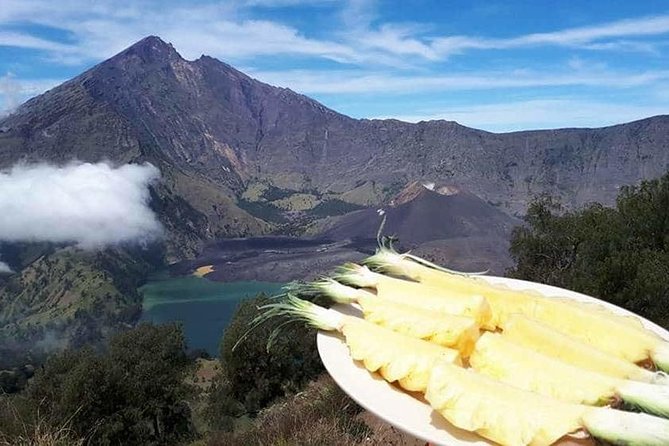
I appreciate that the food plan includes three meals a day, snacks, fruit, and drinks during the trek. Several accounts praise the meals as tasty and nutritious, and one specifically describes the food as extremely good. That is important on a climb where energy drops can make the final hours feel much harder.
The food is prepared and carried by the support team, so you are not expected to manage your own camp kitchen. Porters also carry the camping supplies. You should still carry your personal essentials, but the included support removes much of the burden from the hike.
The final climb to Senaru Crater Rim
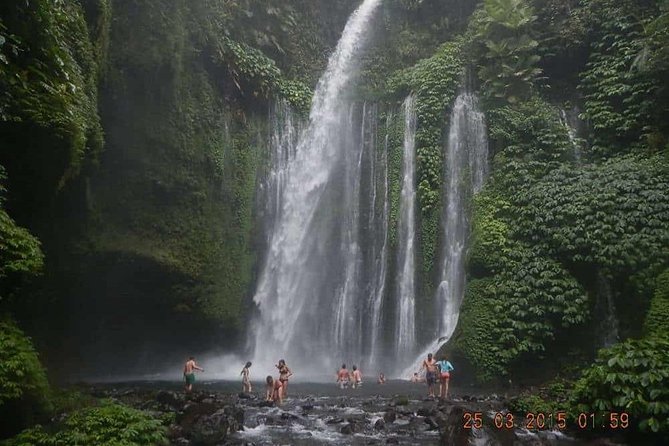
After lunch at Post 3, you continue upward for roughly two hours to the Senaru Crater Rim. The rim sits at 2,641 meters, so the final section brings a clear change in altitude and effort.
This is the part where a moderate fitness level becomes important. The route has already taken several hours, and the trail continues uphill after lunch. I would plan to walk slowly, drink regularly, and treat the scheduled breaks as part of the route rather than as lost time.
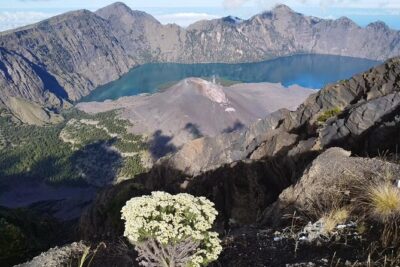
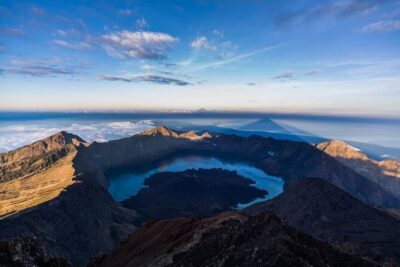
The reward is the view from the rim. The itinerary describes it as one of the finest viewpoints on Mount Rinjani, with sightlines across the crater area and toward the lake. You can watch the sun set over Mount Agung in Bali, while smoke rises from a newer volcanic feature at the edge of the lake.
Those details make the overnight worthwhile. You are not simply stopping because the day has ended. You reach the rim in time for one of the best viewing periods, then wake above the forest for sunrise.
More Volcano Treks in Indonesia
- 2D1N Senaru Crater Rim Trekking
★ 5.0 · 178 reviews - Trekking Mt. Rinjani 2 Days 1 Night Senaru Crater Rim
★ 5.0 · 55 reviews - Trekking Rinjani Volcano To Crater Rim Senaru 2D-1N Private – Syam Trekker
★ 5.0 · 45 reviews - Trekking Mt. Rinjani 2D1N Via Sembalun – Crater Rim – Summit
★ 5.0 · 21 reviews
Camping at 2,641 meters
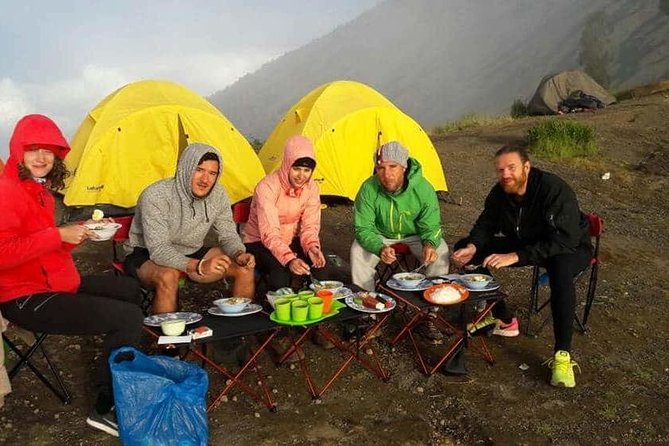
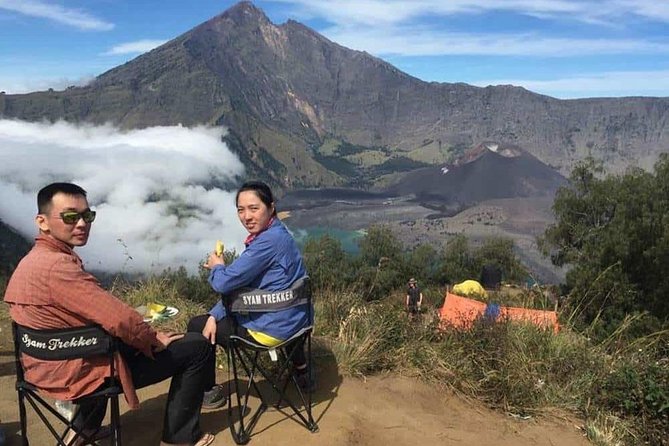
The overnight setup includes a tent, a 5-centimeter sleeping mat, sleeping bag, pillow, camping chair, and toilet tent. You should not expect hotel comfort. This is mountain camping, and the altitude, uneven ground, and cool conditions can affect how well you sleep.
Still, the supplied equipment adds real value. Clean tents and sleeping bags received specific praise, and good gear can make the difference between a memorable night and a miserable one. The sleeping mat is not luxurious, but it is more useful than sleeping directly on the ground.
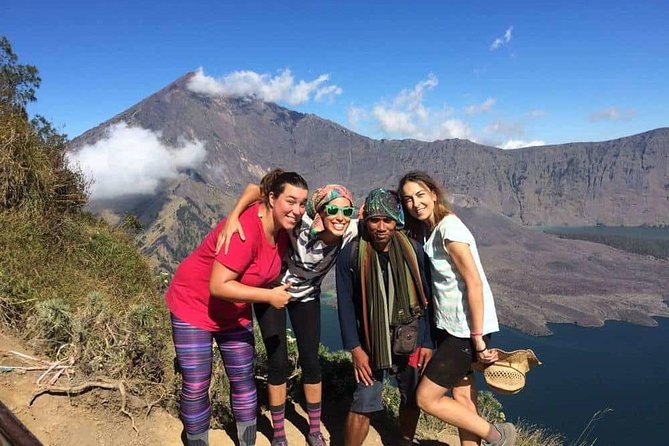
The guide and porters remain central to the camp experience. The accounts of guides Rahmin, Amin, Awal, Ari, and Anto repeatedly describe patient, kind, funny, and encouraging support. Those qualities matter on a climb because practical help and a calm attitude can keep the group moving when legs are tired.
Some guides also take photographs, which is a pleasant extra if you want images of the climb without constantly reaching for your own phone. Do not treat that as a guaranteed professional photography service, but it has been a valued part of the experience.
Sunrise before the descent
The second day begins with breakfast and sunrise at the rim. Morning light gives you a different view of the crater, lake, and surrounding areas than the previous evening’s sunset. The changing light is one of the strongest reasons to spend the night rather than walk up and down in a single day.
After breakfast, you descend through the rainforest toward Senaru village. The descent takes about five hours, with lunch along the way.
Do not underestimate this part. Downhill walking is easier on your lungs but can be tiring for your knees and thighs, especially after sleeping outdoors. Trekking poles may be worth bringing if you already use them, though they are not listed among the included supplies.
The forest return also gives you a quieter ending than the open rim. You pass back through the shaded vegetation and gradually lose altitude. Once you reach Senaru village, the activity ends back at the meeting point.
How the guide and porter support affect the experience
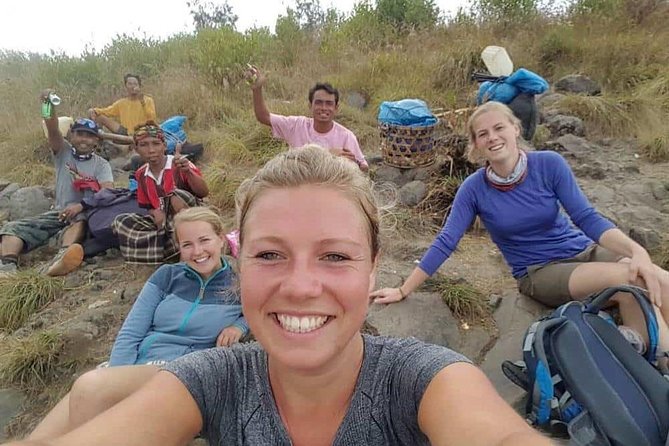
The guide is not just there to point out the trail. The supplied program places safety, pacing, and route support in the guide’s hands. That is valuable on a mountain where weather, fatigue, and changing trail conditions can affect the day.
The small group limit of six is one of the best features here. A guide can pay closer attention to the group than would be practical with a large crowd. You still need to communicate honestly about your pace and condition. The guide can help, but cannot remove the physical demands of the mountain.
Porters carry food and camping equipment, which keeps your personal pack lighter. This arrangement also reflects the local trekking system, where support workers make multi-day routes possible. Pack only what you need, and remember that the porters are carrying the shared supplies, not an unlimited amount of personal luggage.
The company has received a 4.9 rating from 29 ratings, with 97 percent recommending the experience. The strongest praise focuses on the guides’ kindness and patience, the porters’ care, clean camping equipment, and good food. Those are exactly the practical details that can make a difficult hike feel well organized.
Is $217 a fair price?
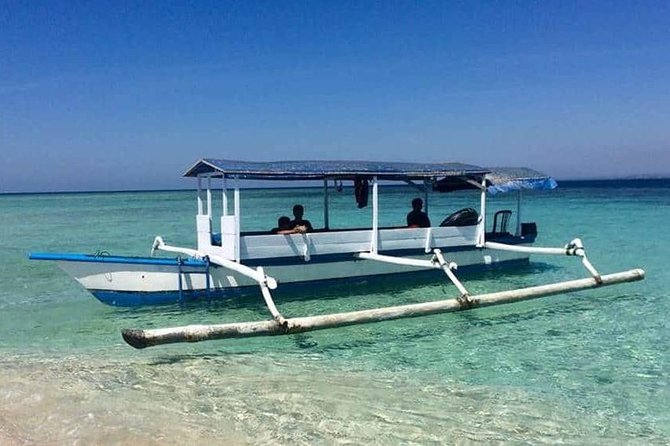
At first glance, $217 may seem high for a two-day walk. It becomes easier to judge when you count what is included: national park admission, travel insurance, guide, porters, tents, sleeping gear, toilet tent, three meals per day, snacks, fruit, water, and drinks.
You are also paying for planning and support. The operator handles the camping system while you concentrate on walking. For a mountain route, that can be better value than arranging each part separately, especially if you do not already own camping equipment.
The price does not include tips or personal costs. It also does not promise luxury. You are paying for an organized mountain experience, not a private resort with a volcano view.
The maximum group size is six, which adds value compared with a large group tour. If the group fills, you get the social side of a shared hike while keeping a reasonably personal pace.
Who should book this hike?
This trip suits you if you want a serious mountain walk, a night outdoors, and major views without attempting the full summit route. It is a good match for people who prefer a guided experience and do not want to carry a tent, sleeping bag, or group food.
It also suits small groups and solo bookers who like the idea of meeting a few other hikers rather than joining a large crowd. The guide names connected with the company include Rahmin, Amin, Awal, Ari, and Anto, and the strongest service praise centers on the warmth and humor of the guiding team.
You should think twice if you dislike long uphill walks, basic camping, or early starts. The itinerary involves several hours of ascent on day one and about five hours of descent on day two. A moderate fitness level is required, and poor weather can cancel the trip.
The route is not designed for someone seeking the summit of Mount Rinjani. If reaching 3,726 meters is your main goal, you need to compare this with a longer summit itinerary. If your priority is the crater rim, sunset, sunrise, and a supported overnight hike, this plan is more focused.
Practical details before you go
The activity offers mobile tickets, and confirmation is provided when you book. The meeting point is near public transportation in Senaru, and the listed start time is 7:00 a.m.
The itinerary requires good weather. If poor conditions lead to cancellation, you can choose another date or receive a full refund. For a full refund when you cancel yourself, you need to cancel at least 24 hours before the local start time. Changes made inside that period are not accepted.
Bring personal items suited to a cool night outdoors, but keep your load sensible. The tour supplies the main camping gear, so you do not need to duplicate the tent or sleeping bag. You should also expect to manage your own comfort during the five-hour return walk.
Should you book Syam Trekker?
I would recommend this hike if you want the best parts of a Rinjani overnight experience without a summit attempt. The combination of a six-person maximum, included porters, solid meal provision, camping equipment, and a sunrise at 2,641 meters gives the $217 price a reasonable value.
Book it with clear expectations. This is a strenuous two-day climb, the campsite is basic, and the route ends at the Senaru crater rim rather than the summit. If those limits suit you, Syam Trekker offers a well-supported way to see Lombok from high above the forest, with the sunset and sunrise doing much of the hard work of making the trip memorable.
FAQ
How long is the Syam Trekker Rinjani hike?
The experience lasts approximately two days and one night. Day one takes you from Senaru through the forest to Senaru Crater Rim, while day two returns you to Senaru village.
Does this tour reach the summit of Mount Rinjani?
No. This itinerary reaches Senaru Crater Rim at 2,641 meters. Mount Rinjani’s listed peak is 3,726 meters, but the summit is not part of this two-day route.
What time does the trek start?
The meeting time is 7:00 a.m. at the Syam Trekker office in Senaru. The trek is scheduled to begin at the Rinjani Trek Center Senaru at about 8:00 a.m.
What equipment is included?
The package includes tents, 5-centimeter sleeping mats, sleeping bags, pillows, camping chairs, and a toilet tent. It also includes an experienced English-speaking guide and professional porters.
Are meals and water included?
Yes. The package includes three meals per day, snacks, fruit, drinks during the trek, and three liters of mineral water per day.
How large is the group?
The maximum group size is six people. This allows the guide to manage a small group rather than a large hiking party.
Can I cancel for a refund?
You can cancel up to 24 hours before the experience starts for a full refund. If poor weather causes the operator to cancel, you can receive a full refund or choose another date.
More Two-Day Treks in Lombok
- Mount Rinjani Second Summit Trekking ( 2Days-1Night )
★ 5.0 · 49 reviews - Trekking Rinjani Mountain Summit 2 Days 1 Night – Em Adventure
★ 5.0 · 42 reviews - Mount Rinjani: 2D/1N Trekking To Sembalun Or Senaru Views
★ 4.8 · 24 reviews - Mount Sangkareang Trekking 2D1N 3200msl – Tetebatu
★ 5.0 · 19 reviews
More Volcano Treks in Lombok
- Mount Rinjani 3D2N Private Trek – Summit, Crater Rim & Hot Spring
★ 5.0 · 13 reviews - Rinjani Trekking 2D1N Senaru Crater rim
★ 4.5 · 9 reviews - Trekking Rinjani 1 Day Trek Senaru Crater Rim
★ 5.0 · 3 reviews - Rinjani Trekking 2D/1N Senaru Crater Rim
★ 5.0 · 2 reviews
Recently added around Lombok
- Trekking Rinjani 1 Day Trek Senaru Crater Rim★ 5.0 · 3 reviews
- Mount Rinjani 3D2N Private Trek – Summit, Crater Rim & Hot Spring★ 5.0 · 13 reviews
- Popular Rinjani Trekking Tour Service To Summit For 2 Days Via Sembalun Trail★ 5.0 · 8 reviews
- Rinjani Trekking 2D1N Senaru Crater rim★ 4.5 · 9 reviews
- Rinjani Trekking 1 day Trek To the rim via senaru 2,642m★ 5.0 · 16 reviews
- Rinjani Trekking 2D/1N Senaru Crater Rim★ 5.0 · 2 reviews
- 3D 2N Mount Rinjani Trekking Tour To Summit And Lake★ 4.5 · 7 reviews
- Rinjani Trekking 3D2N Summit – Full Trail★ 4.5 · 14 reviews
Mount Rinjani Treks, compared.
Mount Rinjani Trek 3D-2N To Summit – Lake – Hotspring
Read our review →
3D/2N Rinjani trekking summit,lake and hot springs.
Read our review →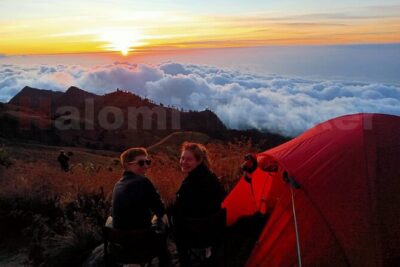
Mt Rinjani Trekking 2 Days 1 Night (Senaru Crater Rim)
Read our review →
Rinjani Trekking 3 Days 2 Nights (Sembalun – Senaru)
Read our review →