
REVIEW · MOROCCO
2 days trekking from Chefchaouen to Akchour
Leave Chefchaouen’s blue lanes behind. This private two-day trek trades Medina alleys for forest paths, mountain villages, rock formations, and the dramatic Pont de Dieu near Akchour. I like the personal service, especially the guide who can collect you from a hotel inside the tricky Medina, and I like that the overnight stop is a rural house rather than a standard hotel.
The main caution is physical effort. One French-language review describes roughly 1,300 meters of ascent and 900 meters of descent on day one, making this a serious mountain walk rather than a gentle stroll. Also, this route reaches God’s Bridge, not the main Akchour waterfall, which requires an additional day.
At a glance: what matters most
- The route begins in Chefchaouen and ends at Akchour, with a taxi transfer back to the city included.
- Day one is the hard day, with steep climbing through Talassemtane National Park to Azilane and the Afeska rural house.
- God’s Bridge is the main natural landmark, a red rock arch in a canyon setting.
- Najib and Mohamed are named guides associated with the experience, with praise for their kindness, local knowledge, and plant knowledge.
- Breakfast and dinner are included, but you must arrange and pay for your picnic lunch.
- The price is $153.37 per person, a fair package price if you value a private guide, overnight stay, meals, and return transport.
Starting among Chefchaouen’s blue streets
The day can begin with pickup from any hotel in Chefchaouen. That includes accommodation inside the Medina, where narrow lanes and confusing turns can make meeting a guide on the main road inconvenient. This small detail matters because you do not need to haul your pack to a distant meeting point before sunrise or a long walk.
The route passes several of Chefchaouen’s central sights before the walking portion begins. The main square is a practical place for an inexpensive meal, with restaurants, the Kasbah, and the city’s first mosque gathered around it. If you have time before the trek, it is also a useful spot to buy snacks for lunch.
The nearby cemetery is quiet and modest. Arabic inscriptions on some tombs hint at the city’s older Muslim culture without turning the stop into a formal museum visit.
The Kasbah offers a different kind of introduction. Its walls have been heavily restored, but the small garden, ethnographic museum, art gallery, and tower views still make it worth a look. The museum contains old views of Chefchaouen, while the tower gives you a fine picture of the blue and white Medina below.
You can admire the Grande Mosque from outside. Its octagonal minaret reflects Andalusian influence and looks unusual beside Morocco’s more common square towers. Non-Muslim visitors cannot enter, so treat this as an exterior stop rather than a tour of the interior.
More Two-Day Treks in Morocco:
- Mt Toubkal Ascent Express Trek 2 Days 1 Nights
★ 4.7 · 962 reviews - Marrakesh: 2-Day Mt. Toubkal Trek with 1-Night Stay & Meals
★ 4.7 · 795 reviews - Marrakech: 2-Day Atlas Mountains Trek with Village Stay
★ 4.8 · 717 reviews
Bouzafer Mosque marks the real beginning
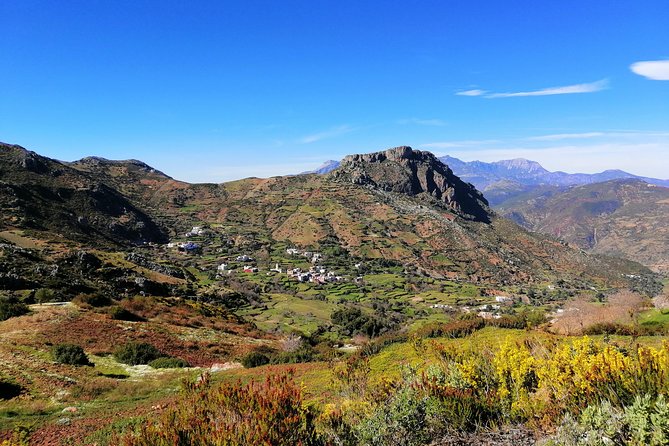
The city sightseeing soon gives way to the first mountain viewpoint at Bouzafer Mosque. The stop is brief, about 10 minutes, but it provides a wide view back toward Chefchaouen. This is a good place to take a final city photograph and adjust your pack before the serious walking starts.
The official walking point is described as Km 0. From here, the character of the day changes quickly. You leave paved streets and begin moving through the Rif foothills toward Talassemtane National Park.
The panoramic view is useful for another reason: it lets you see how much elevation you are about to gain. If the steep slopes look intimidating from below, take that seriously. The route suits people who regularly hike and who are comfortable with sustained uphill walking.
Talassemtane National Park and the long climb to Azilane
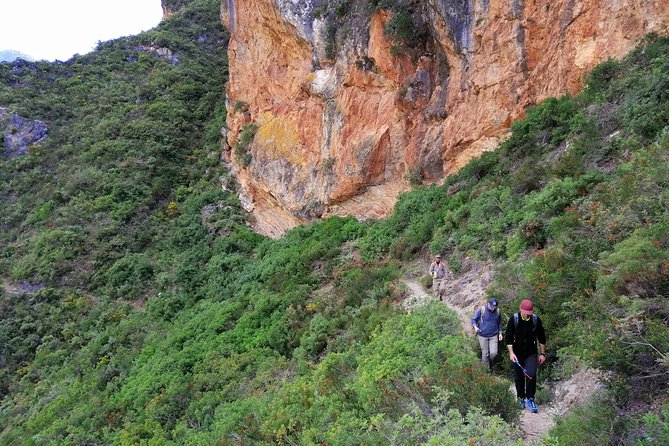
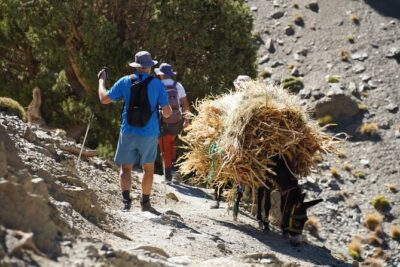
Talassemtane National Park is the heart of the trek. Its name means cold spring in Berber, and the route passes through forests, open mountain areas, small villages, and striking rock formations.
The supplied itinerary gives the park stop about nine hours, which appears to cover the main walking section rather than a short sightseeing visit. Exact walking times can vary, so you should be ready for a full day outdoors. The route is not simply a scenic path with occasional viewpoints. It involves a considerable climb, followed by a long descent the next day.
This is where a private guide earns his keep. The guide can set a sensible pace for your group, explain local customs, and point out plants and wildlife. Najib is praised for teaching about wild plants and for helping with Arabic practice. Another account describes him as kind and good company, with local knowledge that added depth to the walk.
You may see wildlife along the route. One account describes seeing monkeys in the wild at a distance. That does not mean a sighting is guaranteed, so bring binoculars only if you already have a pair and do not expect a wildlife safari.
The plant life also receives special attention. The route passes flowering mountain vegetation, Mediterranean plants, and cedar trees according to the detailed account of the walk. These details give the journey more purpose than simply getting from one town to another. You are moving through a working mountain region with its own plants, villages, customs, and daily rhythms.
A night at Afeska rural house in Azilane
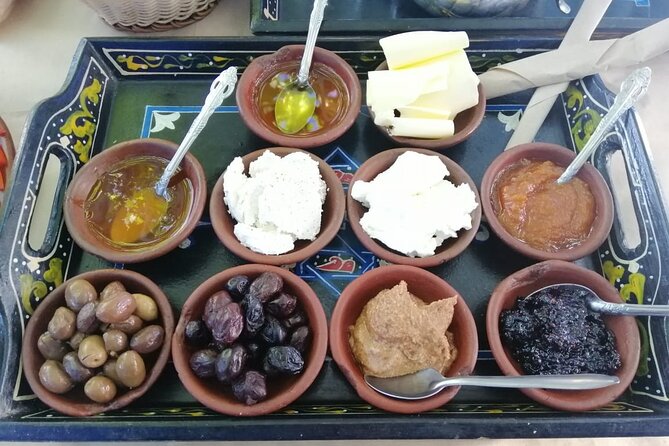
The first day ends near Azilane, a small village in the national park. Accommodation is at the Afeska rural house, described as a simple local mountain lodge with half-board. Dinner and breakfast are included.
Do not picture a polished resort. The value here is the setting and the chance to spend the night in a small village rather than return to a city hotel. The evening may include mint tea, conversation, and local board games. One account specifically mentions meeting other hikers at the lodge, who later joined the second day. That suggests the private nature of the booking does not prevent casual social contact along the way.
The overnight stop also breaks up what would otherwise be an exhausting point-to-point walk. You can eat dinner at the lodge, sleep near the trail, and start the next stage without returning to Chefchaouen.
The exact room arrangements are not specified, so ask the provider if private rooms or particular bedding matters to you. The listing confirms a rural house and half-board, but it does not give details about bathrooms, heating, or room layouts.
A few more treks around Morocco worth a look
- From Marrakech: 3-Day Mount Toubkal Climbing Trek
★ 4.7 · 597 reviews - From Marrakesh: 2-Day Mount Toubkal Trek
★ 4.7 · 591 reviews - From Agadir: Camel Ride and Flamingo Trek
★ 4.7 · 371 reviews - From Marrakech: Atlas Mountains Summit Trek
★ 4.9 · 228 reviews
Day two leads toward God’s Bridge
The second day continues through the mountains toward Akchour. The main goal is the famous Pont de Dieu, also called God’s Bridge. This is a natural red rock arch above a canyon, reached by a route lined with other rock formations and rolling countryside.
The stop descriptions list several short visits at the bridge, including about 30 minutes and then shorter periods of 15 and 20 minutes. These times should not be read as a strict limit. They show that the bridge is a featured stop for photographs and sightseeing, but the full day also includes walking between the rural house and Akchour.
The rock arch is especially attractive in late light. The description notes that it looks best at sunset, when the red stone catches the warm light. Your timing may not allow a long sunset stay, since the itinerary continues to Akchour and then back to Chefchaouen by taxi. Still, the guide can help you make the most of the viewing time available.
A useful point of clarification: God’s Bridge is not the Akchour waterfall. The two attractions are often confused because both are associated with the same area. The detailed account of this trek says the two-day route goes to the bridge, while reaching the waterfall requires one additional day. If the cascade is your main goal, confirm the route before booking.
Lunch in Akchour and the ride back
The walk finishes in the village of Akchour. Here you can have lunch or stop for mint tea beside the river. Lunch is not included, and the picnic lunch during the trek is also excluded, so budget for food on the second day and carry something for the trail.
This is a practical end to a demanding route. You do not need to continue walking back to Chefchaouen. A taxi transfer from Akchour to Chefchaouen is included, taking you back to the city after the mountain section.
The return transfer also makes the experience more efficient than trying to plan two separate transport legs yourself. You can concentrate on the route instead of negotiating a ride at the end of a tiring day.
What the $153.37 price really covers
At $153.37 per person, the cost is not just payment for a guide. It includes a local mountain guide, one night at the Afeska rural house, dinner, breakfast, and the taxi from Akchour back to Chefchaouen.
For a private activity, that is reasonable if you want a personal pace and direct explanations along the route. It is also useful for travelers who would rather not arrange a rural overnight stay, local transport, and route planning separately.
The value is weaker if you mainly want a short nature walk. You are paying for a demanding two-day crossing, not a few hours at a waterfall. The price also does not include picnic lunch, drinks, or lunch in Akchour.
Group discounts are offered, which can improve the per-person cost if you are booking with friends or family. Since the experience is private, only your own group participates, although you may meet other hikers at the rural house or on the trail.
How difficult is the trek?
The tour requires a moderate level of physical fitness according to the supplied conditions, but the detailed elevation figures make the route sound harder than the phrase moderate might suggest. A gain of around 1,300 meters and a descent of around 900 meters on the first day is substantial.
You should be comfortable with:
- Long hours on mountain trails
- Sustained uphill walking
- Uneven ground and changes in elevation
- Carrying personal belongings for an overnight stay
- Walking in weather that can change in the mountains
The exact trail surface and pace are not specified. Because of that, sturdy walking shoes and a light pack are sensible choices. Carry water and trail food, since lunch is not included.
This trek is best for active hikers who want scenery and local contact. It is less suitable if you have limited mobility, dislike steep climbs, or want a relaxed sightseeing schedule with frequent vehicle transfers.
Guides, culture, and the human side of the walk
The strongest part of the experience is the guide-led connection to the area. Najib receives particular praise for his friendly manner, Arabic practice, plant explanations, and easy companionship. Mohamed is also named in connection with a highly praised version of the route.
That matters because mountain walking can otherwise become a silent march from one viewpoint to the next. Here, the guide can explain Moroccan customs, identify plants, and give context to the villages and natural features around you.
The small touches are memorable: mint tea in the mountains, conversation at the rural house, and local board games in the evening. These moments cost little, but they make the overnight stop feel like part of the journey rather than a place to sleep between two walks.
The experience provider is Chefchaouen Adventures. The available information does not promise that you will receive a particular guide, so ask for Najib or Mohamed by name if having one of them matters to you.
Who should book this experience?
I would choose this trek if you want to connect Chefchaouen with the Rif Mountains in a direct, active way. It suits hikers who enjoy a full day on foot, a simple rural overnight stay, and local guidance more than luxury comforts.
It is also a good fit for a small private group. Friends can share the effort, and families with older teenagers who are fit enough for the elevation may appreciate the flexible pace of a private guide.
I would not choose it for a first-ever mountain walk unless you have trained for long uphill days. I would also skip it if the Akchour waterfall is your essential goal, since the two-day route is aimed at God’s Bridge and the waterfall needs extra time.
Free cancellation is available until 24 hours before the start time. Poor weather or failure to meet the minimum number of participants can lead to a changed date or refund. The activity is also subject to suitable weather, so keep your schedule flexible.
Should you book the Chefchaouen to Akchour trek?
Book it if you want a proper mountain crossing, not a quick excursion. The combination of Talassemtane National Park, a night at Afeska, a local guide, and God’s Bridge gives you a fuller sense of the Rif than a short drive to a viewpoint.
Before paying, confirm three things: the expected walking distance, the room arrangements at the rural house, and the distinction between God’s Bridge and the Akchour waterfall. If you are ready for the climb and pack a lunch, the $153.37 price offers good value for a private two-day route with meals and return transport.
FAQ
Where does the trek begin?
The trek begins in Chefchaouen, with pickup available from hotels anywhere in the city, including hotels inside the Medina.
Where does the trek finish?
The walking route finishes in Akchour. A taxi transfer from Akchour back to Chefchaouen is included.
Is the tour private?
Yes. Only your group participates in the private tour or activity.
What accommodation is included?
You spend the night at the Afeska rural house in Azilane, inside Talassemtane National Park.
Are meals included?
Breakfast and dinner are included. Picnic lunch is not included, and lunch in Akchour is also at your own cost.
Does the trek visit the Akchour waterfall?
The two-day route visits God’s Bridge near Akchour. The supplied details indicate that reaching the Akchour waterfall requires one additional day.
How physically demanding is the trek?
You need a moderate level of physical fitness. A detailed route description gives approximately 1,300 meters of ascent and 900 meters of descent on day one, so you should be prepared for a strenuous mountain walk.
What is the price?
The listed price is $153.37 per person. Group discounts are available.
Can I cancel for a refund?
Yes. You can cancel at least 24 hours before the experience starts for a full refund. Poor weather or failure to meet the minimum number of participants may also result in a changed date or full refund.
Recently added around Morocco
- Berber villages trek Day trip★ 5.0 · 12 reviews
- 2 Days Trek to Atlas Mountains berber villages★ 5.0 · 25 reviews
- Day Trekking Atlas Mountains★ 4.5 · 10 reviews
- two days valley trek in the Atlas mountains★ 4.5 · 2 reviews
- Trekking 8 days in the Moroccan desert from Marrakech★ 5.0 · 4 reviews
- 2 days Toubkal adventure Trek★ 5.0 · 5 reviews
- Mount Toubkal Trek: 2-Day Adventure★ 5.0 · 26 reviews
- Trekking and Hiking in Morocco 2 Day trek in Atlas Mountains Berber villages★ 5.0 · 10 reviews
Morocco Trekking Tours, compared.
Mt Toubkal Ascent Express Trek 2 Days 1 Nights
Read our review →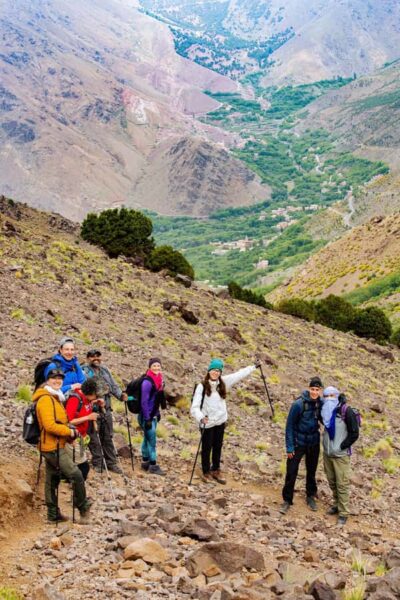
2-Day Mt. Toubkal Trek with 1-Night Stay & Meals
Read our review →
Summiting and Hiking the Atlas Mountains Day Trek from Marrakech
Read our review →Browse the lists this tour appears in