
REVIEW · ARUSHA
4 Days best Mount meru trekking
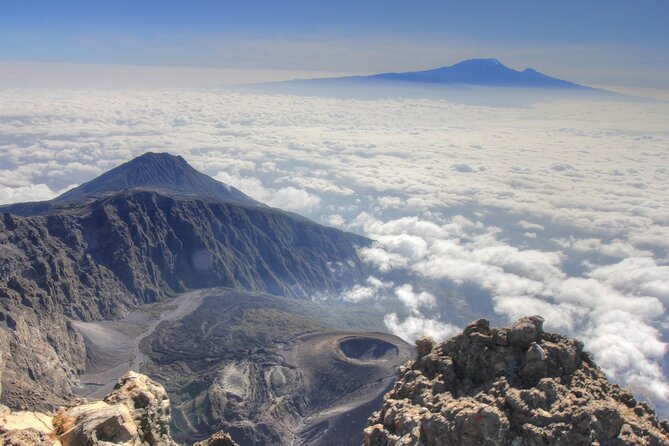
A volcano ridge, wildlife, and a sunrise await. Mount Meru gives you a serious four-day mountain trip close to Arusha, with a rare mix of walking safari and high-altitude trekking. At 4,566 meters, it is Tanzania’s second-highest mountain and a useful acclimatization climb before Kilimanjaro.
I like the four-day schedule, which gives you more time to adjust than the shorter three-day option. I also like the armed ranger escort, since the trail passes through Arusha National Park and may bring you near buffaloes, zebras, giraffes, antelopes, and black-and-white colobus monkeys. The main consideration is the summit day: a midnight start, steep ground, cold conditions, and up to 12 hours of hiking demand real fitness.
What makes this Mount Meru trek special
- Wildlife begins on the first hiking day: The lower trail can feel like a walking safari before it becomes a mountain route.
- The summit ridge is the highlight: You walk between the crater and inner cliffs toward a 4,566-meter summit.
- Little Meru offers extra acclimatization: After reaching Saddle Hut, you can climb to 3,820 meters for wider views.
- An armed ranger is required: This is a national park trek, not a solo mountain walk.
- The group price can work well: At $1,189 for up to 15 people, the cost becomes more attractive when shared by a full group.
- The operator handles the main trek logistics: Transfers, park fees, guides, porters, cook, meals, water, and rescue fees are included.
Why four days is the sensible choice
Mount Meru can be attempted in three days, but the four-day version gives your body more time to adjust to rising altitude. That matters most because the summit push begins around 1:30 in the morning after sleeping at about 3,500 meters.
The schedule is not leisurely in the usual holiday sense. Day one takes about five to seven hours, day two about three to five hours, summit day about 10 to 12 hours, and the final descent about two to three hours. The supplied timing also lists approximate stop durations of six, six, nine, and five hours, so you should treat the schedule as flexible rather than exact.
The mountain rises from Arusha National Park, roughly 20 kilometers from Arusha town. That short transfer is useful if you are staying in Arusha before or after a safari, and it keeps the trek from requiring a separate internal flight or a long road journey.
I would choose four days for anyone using Mount Meru as preparation for Kilimanjaro. You gain time at altitude, a less rushed second day, and a better chance to appreciate the crater and ridge instead of simply pushing toward the top.
A few more treks around Arusha worth a look
- 4 Days Mount Meru Trekking
★ 5.0 · 55 reviews - 4 Days Mount Meru Climbing | Hiking | Trekking Tour
★ 5.0 · 13 reviews - Pokhara: 4-Day Ghorepani, Poonhill & Ghandruk Mountain Trek
★ 5.0 · 132 reviews
Day one: From Momella Gate into the wildlife zone
Your morning begins with breakfast at your Arusha hotel or lodge, followed by a drive to the first Arusha National Park gate. There, you handle registration and park formalities before continuing to Momella Gate, the trailhead.
This beginning involves more than a quick sign-in. The porters and cook organize, pack, and weigh the equipment needed for the climb while your guide completes the park arrangements. You may eat your packed lunch at the gate before walking.
The first day is described as similar to a walking safari, and that is one of the trip’s best features. The lower route can bring sightings of giraffes, zebras, antelopes, buffaloes, and black-and-white colobus monkeys. The armed ranger is part of the experience here, since you are moving through a national park where wildlife is present.
Do not think of this as a casual game drive with a mountain attached. You still have a five to seven-hour hike ahead, and the route gradually takes you away from the easier lower ground. The attraction is the change in setting: you begin among wildlife and forest, then move toward the higher mountain zones.
Your guide and support crew carry the shared equipment, prepare meals, and manage the practical work. You should still bring your own personal trekking equipment, including hiking boots, clothing, and a sleeping bag. Those items are not included.
Day two: Forest climbs and the optional Little Meru walk
After breakfast, the trail steepens as you continue through the forest zone. Wildlife may still appear, but the character of the day shifts toward mountain walking. The route offers views of the Mount Meru Crater and the Ash Tray, two features that make this more than a standard uphill hike.
You reach Saddle Hut at about 3,500 meters around lunchtime. This is the alpine desert zone, and it gives you a useful break before the summit attempt. Lunch is followed by rest, which you should take seriously. The night ahead will be short.
If you still have energy, you can climb Little Meru with your guide. Its summit reaches 3,820 meters and offers views around Mount Meru while giving your body another controlled taste of altitude. This optional climb is useful for acclimatization, but it is not compulsory. I would decide based on how your legs and breathing feel after the main ascent to Saddle Hut.
Dinner is served early, and the planned bedtime is around 7:00 in the evening. The schedule calls for a wake-up at 12:30 in the morning, with tea and biscuits before you begin walking at roughly 1:30. That makes day two less about sightseeing after lunch and more about conserving energy.
Day three: A midnight summit push to 4,566 meters
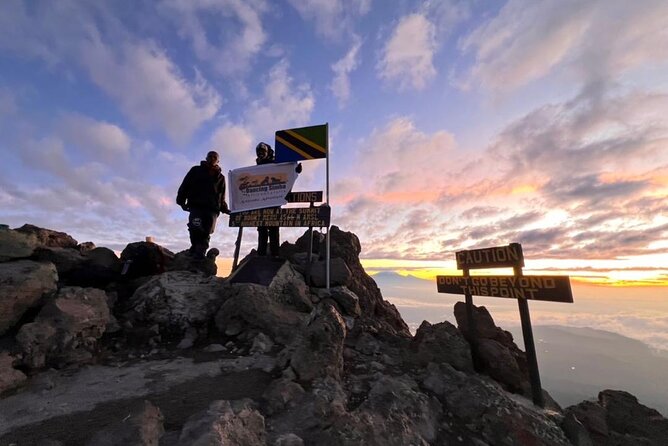
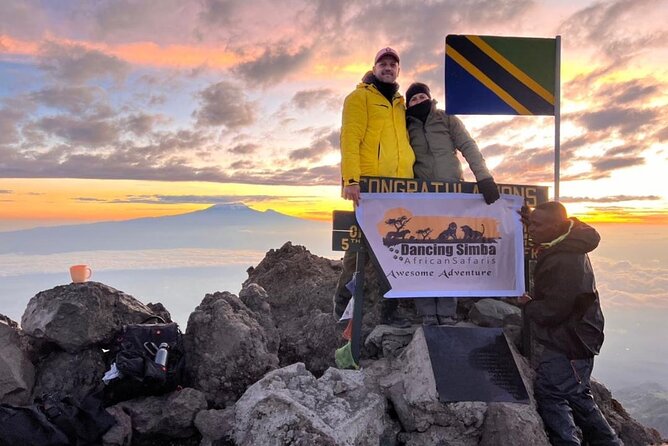
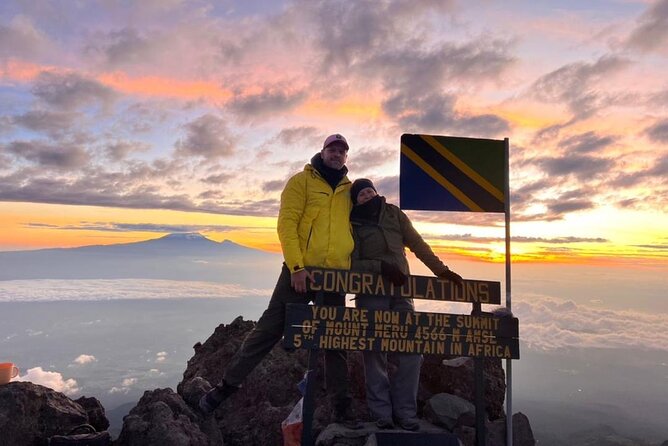
Summit day is the heart of the trek and the part you need to prepare for most carefully. You leave Saddle Hut in darkness, climbing steeply first toward Rhino Point at about 3,800 meters, then Cobra Point at about 4,350 meters.
From Cobra Point, the trail follows a rocky ridge between the crater and Mount Meru’s inner cliffs. This section is the mountain’s dramatic centerpiece. The route is high, exposed in character, and physically demanding, so your pace should be steady rather than hurried.
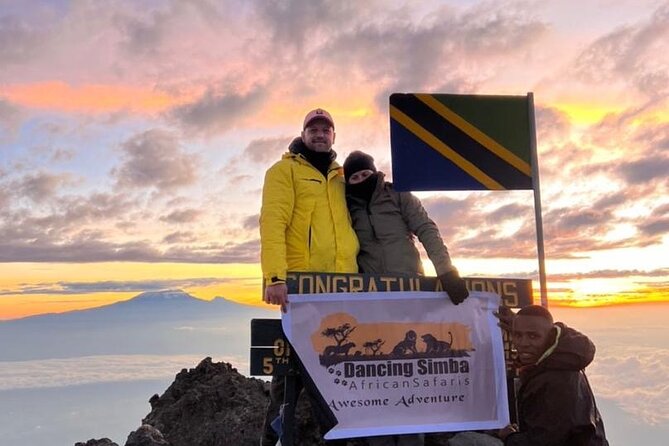
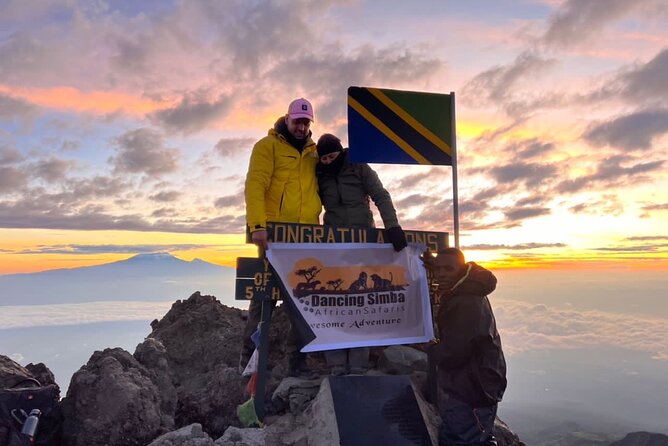
You aim to reach the summit at 4,566 meters in the early morning. From there, you can watch the sun rise in the east. On a clear morning, Kilimanjaro is normally visible, adding another famous Tanzanian peak to the view. The crater cliffs drop steeply, at nearly 1,000 feet or more according to the trip details, giving the summit area a powerful sense of height.
The early start serves a practical purpose. You reach the summit for sunrise and complete much of the steep ascent before the day becomes warmer. The tradeoff is sleep. Even with tea and biscuits before departure, you will be climbing after a very short night.
The full day is expected to take about 10 to 12 hours. That includes the summit effort and the return toward lower camp. You should expect this to be the hardest day, not only because of the distance but because altitude can make every steep section feel longer.
The itinerary allows time at the summit before beginning the descent. Keep your expectations flexible. Weather, pace, and individual fitness can affect how long you remain at the top and how far you continue afterward.
Same trailhead, a longer or shorter day out:
- 8-Day Small-group Lemosho Kilimanjaro Summit Trekking
★ 5.0 · 186 reviews - 7 Days Kilimanjaro trek via Machame route
★ 5.0 · 13 reviews - Mount Kilimanjaro day trip trekking
★ 5.0 · 12 reviews - 7 Days Machame Route Trek Mount Kilimanjaro
★ 5.0 · 12 reviews
Day four: Forest descent and the return to Arusha
After rest and a relaxed breakfast, you begin the final walk down to Momella Gate. The descent takes about two to three hours and returns through forest, where you may again see animals.
If you used the longer route on day one, the descent may pass Tululunsi Waterfalls. This gives the last morning a different character from the summit day, with a lower, greener setting after the rocky ridge and alpine desert.
At the gate, your driver meets you for the return to Arusha. You say goodbye to the guides, porters, and cook, with tipping handled separately. The transfer back to your Arusha hotel is included.
The final day is short on paper, but descending can be hard on tired knees after the summit push. Still, the compact finish is welcome. You are back in town rather than facing another long mountain day.
What the $1,189 group price covers
The advertised price is $1,189 per group for up to 15 people. That wording matters. It is not a per-person price, so the value depends heavily on how many people share the booking.
For a full group, the basic arithmetic works out to about $79 per person. For two people, it is roughly $595 each, before personal equipment and tips. That makes the trip particularly attractive for a larger private group, though you should confirm the final group arrangement and cost before paying.
The included services cover much of what makes a guided national park trek expensive:
- Transfers to the mountain and back to your Arusha hotel
- Professional mountain guides
- Porters and cook
- Guide, porter, and cook salaries
- Arusha National Park fees
- Rescue fees included as part of the park fees
- Government VAT at 18 percent
- Drinking water
- Binoculars
- Three breakfasts
- Four lunches
- Three dinners
- An emergency oxygen cylinder
That is a strong list for a four-day trek. The rescue fees and emergency oxygen cylinder are especially important because they relate to mountain safety, although they should not make you assume that altitude problems are automatically solved. You still need suitable clothing, footwear, and a realistic view of your fitness.
Personal trekking equipment is not included. You are responsible for sleeping bags, hiking boots, clothing, souvenirs, international or domestic flights, and gratuities. Tips for the safari guide are also listed separately, though this trip’s main crew includes mountain guides, porters, and a cook. Ask the operator how tipping should be divided among them.
Guides, communication, and group size
The experience allows a maximum of 15 participants. That is large enough to affect pace and group rhythm, especially on the summit morning. If you prefer a quieter climb, ask how many people are actually booked for your departure rather than relying only on the maximum.
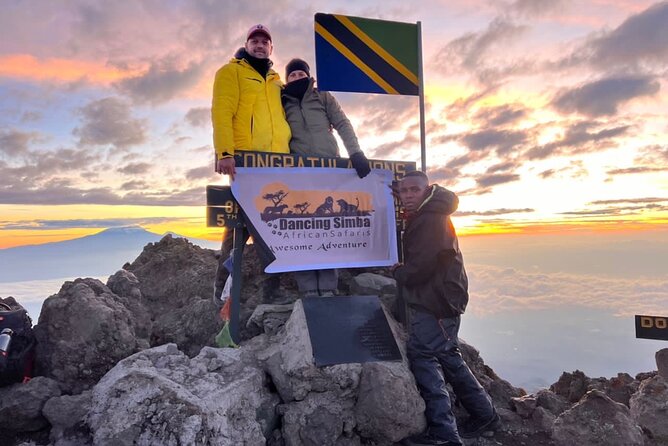
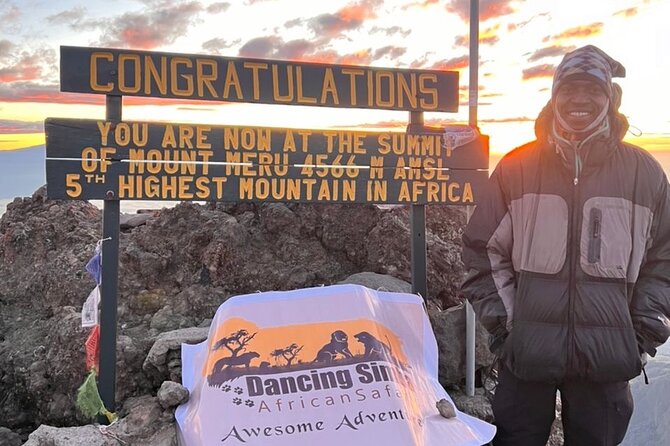
Dancing Simba Safaris is the provider. David is associated with the booking process and is noted for quick WhatsApp communication, which can be useful when sorting out pickup details, equipment questions, and the meeting point. Greyson is named as a guide connected with the operator. Dickson is also named in operator feedback, but in connection with a separate safari service, so you should confirm who your Mount Meru guide will be.
An experienced guide matters here for more than route finding. You need help with pacing, the early summit departure, the crater ridge, and decisions about the optional Little Meru climb. The ranger escort is part of the park requirement and adds another person to the mountain team.
Food, water, and practical comfort
The trip includes drinking water and meals across the four days. You receive three breakfasts, four lunches, and three dinners, which fits the overnight schedule and summit morning. Tea and biscuits are specifically provided before the midnight climb.
You should not expect restaurant-style timing on the mountain. Dinner on day two is early because you need to sleep before the 12:30 wake-up. Lunch at Saddle Hut also divides the day between the forest ascent and the summit preparation.
The listing does not specify sleeping-bag type, hut details beyond Saddle Hut, shower access, toilet arrangements, or a full packing list. Those are sensible questions to ask before departure. Since sleeping bags and personal clothing are excluded, confirm what you need to bring and what, if anything, the operator can arrange separately.
Who should book this trek?
I would recommend this trek to a reasonably fit person who wants more than a straightforward Kilimanjaro preparation hike. You get wildlife, crater views, a high ridge, and a summit sunrise in four days, all from a base near Arusha.
It suits people who are comfortable with early mornings, long uphill walks, basic mountain conditions, and a flexible schedule. It is also a practical choice if you are already planning time in Arusha and want a mountain experience without committing to the longer Kilimanjaro trip.
I would be cautious if you dislike group travel, have no experience with long hikes, or expect the price to include personal gear. The short summit-night sleep is the biggest challenge, followed by the 10 to 12-hour third day.
Most participants can take part, but the experience is still physically demanding. Ask the provider direct questions about your fitness, current health, equipment, and the exact group size before booking.
Cancellation and booking details
Confirmation is provided at booking, and pickup is offered. Free cancellation applies if you cancel at least 24 hours before the experience begins. Cancellations or changes made less than 24 hours before the start time are not accepted for a refund, and the cut-off follows local time.
The operator has received top ratings in the supplied feedback, with praise for helpful communication, planning support, and service from the wider safari team. That feedback includes safari experiences as well as operator communication, so use it as a positive sign about organization, not as a guarantee about every Mount Meru departure.
Should you book this Mount Meru climb?
Book it if you want a compact Tanzanian mountain trip with wildlife at the start, a serious summit day, and a four-day schedule that gives acclimatization a fair chance. The included park fees, crew, meals, transfers, water, and rescue fees make $1,189 a good group value, especially with several people sharing the booking.
Before paying, confirm the actual group size, the name of your mountain guide, the personal equipment you must supply, and the exact pickup arrangements. If you are fit, prepared for a midnight start, and willing to trade comfort for a memorable crater-ridge summit, this is a strong Mount Meru option.
FAQ
Where does the Mount Meru trek begin?
The trek begins at Momella Gate in Arusha National Park. You first travel from your Arusha hotel or lodge to the park gates for registration and other formalities.
How high is Mount Meru?
Mount Meru reaches 4,566 meters above sea level. It is Tanzania’s second-highest mountain.
How long does the trek take?
The experience lasts about four days. Hiking time is approximately five to seven hours on day one, three to five hours on day two, 10 to 12 hours on day three, and two to three hours on day four.
Is a ranger required on Mount Meru?
Yes. You are escorted by an armed ranger while passing through Arusha National Park.
Is Little Meru included?
You can climb Little Meru with your guide after reaching Saddle Hut, if you wish and have enough energy. Little Meru reaches about 3,820 meters and provides extra acclimatization.
What meals are included?
The tour includes three breakfasts, four lunches, and three dinners. Tea and biscuits are served before the early morning summit attempt.
Is personal trekking equipment included?
No. You must arrange personal equipment such as a sleeping bag, hiking boots, and suitable clothing. International and domestic flights, souvenirs, and tips are also excluded.
Recently added around Arusha
- 3 Days Mount Meru trekking★ 4.5 · 7 reviews
- Mount Kilimanjaro day trip trekking★ 5.0 · 12 reviews
- 7 Days Machame Route Trek Mount Kilimanjaro★ 5.0 · 12 reviews
- 5 Days Marangu Route – Mount Kilimanjaro Trek★ 5.0 · 5 reviews
- Private One-Day Trek to Mount Kilimanjaro★ 4.5 · 2 reviews
- 8 Days Lemosho Route Kilimanjaro Trekking★ 5.0 · 5 reviews
- 7 Days Machame Route Kilimanjaro Trekking★ 5.0 · 9 reviews
- Lemosho Route 7 Days Trekking at Mount Kilimanjaro★ 5.0 · 7 reviews
Arusha Trekking Tours, compared.
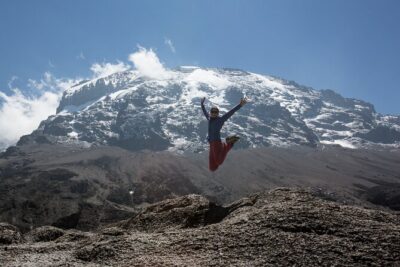
8-Day Small-group Lemosho Kilimanjaro Summit Trekking
Read our review →
4 Days Mount Meru Climbing | Hiking | Trekking Tour
Read our review →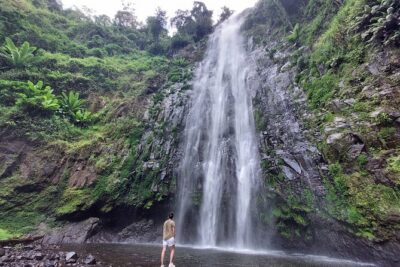
13 Days Adventure in Tanzania – Trekking and Wildlife Safari
Read our review →Browse the lists this tour appears in