
REVIEW · MARRAKECH
3 days Toubkal Trek from Marrakech
The High Atlas begins just outside Marrakech. This three-day trek takes you from the city to Jbel Toubkal, North Africa’s highest peak, with Berber villages, mountain paths, and wide views toward the Sahara. I like the sensible three-day pace and the chance to learn about Berber culture from a local guide. I also like that pickup from your hotel or the airport is included.
The main drawback is the effort required on summit day. You will walk for about six hours over steep, rocky ground, then return to the refuge area instead of heading straight back to Marrakech. This is not a casual mountain stroll, so you should arrive with a moderate level of fitness and be ready for an early start.
Key points to know before booking
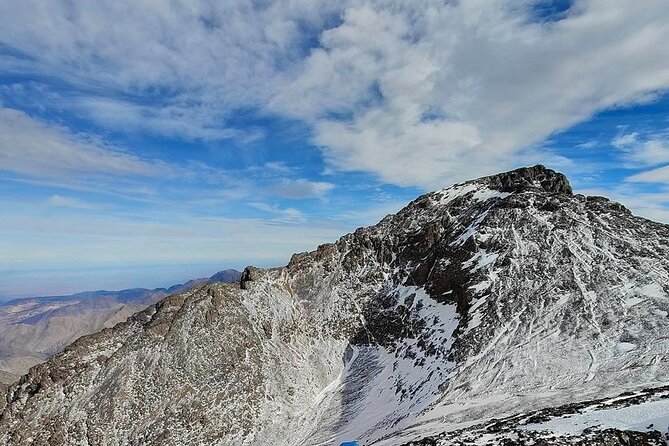
- Jbel Toubkal is the main prize: You climb to North Africa’s highest point on the second day, with views toward the Marrakesh plain, the High Atlas, the Anti-Atlas, and the Sahara.
- The trek starts at 1,740 meters: A drive of about 90 minutes takes you from Marrakech to Imlil Valley, where the walking begins.
- The route includes Aremd and Sidi Chamarouch: These villages and mountain stops add cultural interest before the climb becomes more rugged.
- Rachid receives especially warm praise: His guiding, English, Berber cultural insight, and ability to adjust the pace are major strengths.
- You sleep two nights in the mountains: The first night is at the Toubkal refuge, followed by another overnight stay after the summit day.
- The price is $290.98 per person: For transport, guiding, and three days in the mountains, this can be good value if you want a ready-made summit attempt.
Leaving Marrakech for Imlil Valley
Your pickup begins in Marrakech, either at your hotel or at the airport. The drive to the High Atlas takes about one hour and 30 minutes, which makes this a practical choice if you want to move from city sightseeing to mountain walking without arranging separate transport.
The trek begins in Imlil Valley at 1,740 meters. This is an important detail. You are not starting from the summit foothills at sea level, but you are still gaining a great deal of height over the next two days. The altitude is one reason the three-day plan makes sense.
At Imlil, you meet a multilingual guide and receive a map of the Berber village route. There is also a special surprise at the start, though no further detail is given, so you should treat that as a small bonus rather than a reason to book.
The early section follows the Aït Mizane Valley toward Aremd. This gives you a gradual introduction to the area. You are walking through settled mountain country before the route turns more demanding. If you want a quick change from Marrakech’s streets and traffic, this first morning delivers it.
The route also gives you a chance to hear about local life. Guide Rachid was praised for explaining Berber culture and for speaking very good English. His approach appears to be one of the strongest parts of the experience, especially if you prefer a guide who does more than point out the route.
More Atlas Mountains Treks in Marrakech:
- Marrakesh: 2-Day Mt. Toubkal Trek with 1-Night Stay & Meals
★ 4.7 · 795 reviews - Marrakech: 2-Day Atlas Mountains Trek with Village Stay
★ 4.8 · 717 reviews - From Marrakech: 3-Day Mount Toubkal Climbing Trek
★ 4.7 · 597 reviews
Day one: Aremd, Sidi Chamarouch, and the refuge
The first day involves about four to five hours of walking. From Aremd, the path continues toward the sanctuary of Sidi Chamarouch and a nearby waterfall.
Sidi Chamarouch is a useful point to break up the day. It gives the route a cultural and visual focus before the hard climb begins. The waterfall adds another natural stop, though the supplied details do not specify its size or flow, and conditions can vary.
After Sidi Chamarouch, the path becomes steep. You continue toward the Toubkal refuge, where you spend the night. This is the part of day one when the trek changes character. The earlier valley walking gives way to a more serious mountain ascent.
I would treat the first day as a proper mountain day, not a warm-up. Four or five hours can feel manageable on paper, but steep paths and a rising altitude can slow you down. Wear shoes with a firm grip, carry water, and keep your pace steady. Rushing early can make the next day harder.
The refuge overnight is valuable because it places you close to the summit route. Instead of making a long approach from Marrakech, you wake up in the mountain zone and can begin the summit attempt from there. The tradeoff is comfort. The information provided does not describe the refuge facilities, room arrangements, meals, or bedding, so you should ask the operator what is included before departure.
Day two: the six-hour climb to Toubkal
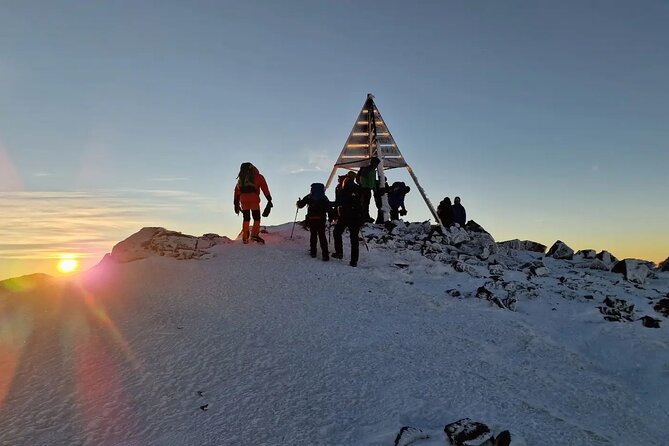
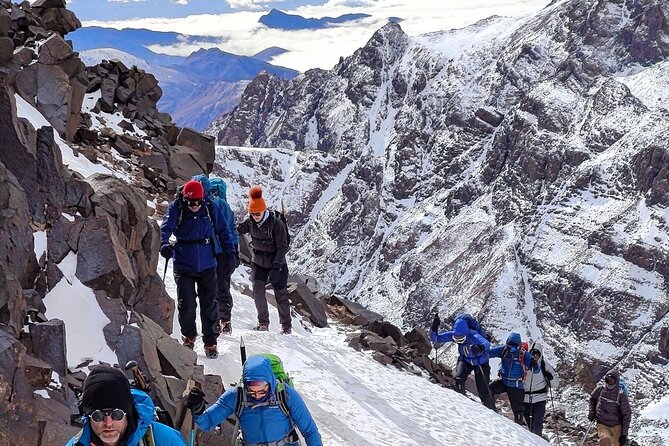
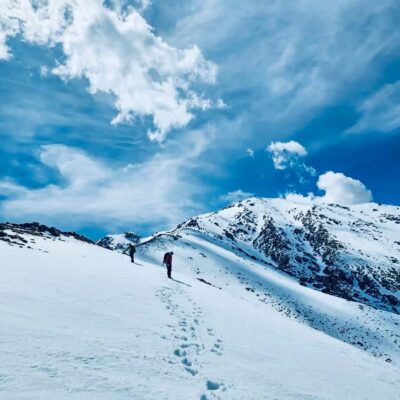
Day two is the demanding centerpiece. You start early and head for the summit of Jbel Toubkal. The route crosses streams and moves over rocky ground before reaching a plateau.
The early start matters. You have a long walking day ahead, and mountain weather can change. The route description does not give a precise departure time, so confirm that detail with Morocco Next before you go.
The terrain requires care. Stream crossings and loose rocks are not technical climbing, based on the information provided, but they do make the walk more tiring. You will want footwear that supports your feet and clothing that can handle changing conditions.
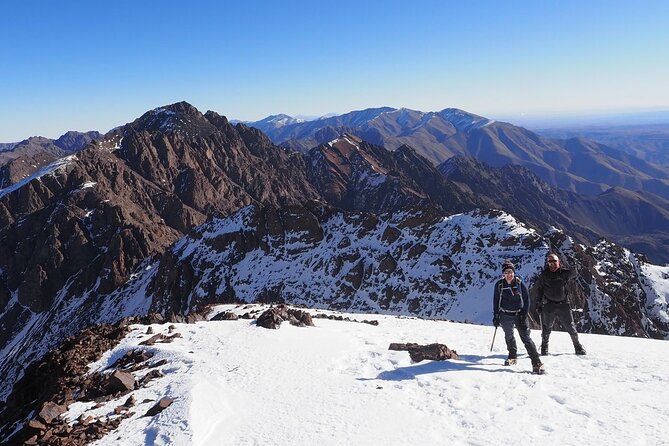
The plateau is a natural rest point. From there, you can stop and take in views of the surrounding area. Looking north, you may see the plain of Marrakesh and the High Atlas. To the south, the route offers views toward the Anti-Atlas and the Sahara. Those directions help explain why the summit is so rewarding: you are not simply looking down at one valley, but across several distinct parts of Morocco.
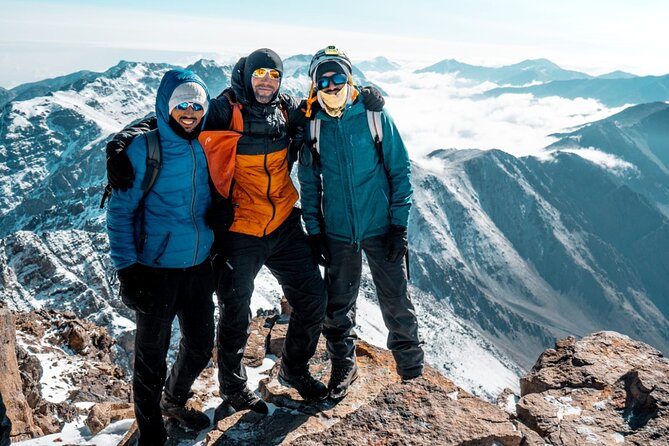
The final push to the summit can be slow. The altitude, steep ground, and total distance all add up. One account of the trek described the climb as demanding but highly rewarding, which is a fair way to think about it. The summit is a clear goal, but the route asks for patience.
After reaching the top, you begin the descent to the lower part of the mountain. Lunch is taken at camp, and you spend another night in the mountain area. This arrangement is a practical feature, since it avoids forcing you to descend all the way to Imlil after the summit.
It also means the second day is not over when you reach the top. You still have a descent and an overnight stay ahead. Keep some energy in reserve. A summit walk is judged by the full day, not just the moment at the highest point.
What the summit views add to the trek
Toubkal is more than a high point on a map. The summit connects several regions of Morocco in one view. The Marrakesh plain and High Atlas lie to the north, while the Anti-Atlas and Sahara extend to the south.
That variety gives the climb a strong sense of place. You are not walking an isolated trail with no context. The mountain lets you see how the Atlas rises between the city, the southern ranges, and the desert.
The route is also a good choice if you want a physical challenge with a cultural element. The first day passes through Berber villages, and the guide can explain local culture as you walk. Rachid was praised for his care toward people, animals, and the natural environment, as well as for being a good companion during the three days.
That personal side matters on a demanding route. A guide who adjusts the pace to suit the group can make the difference between a rewarding climb and an unpleasant slog. Rachid’s approach was described as flexible, with small changes made according to the group’s performance and preferences.
Still, the exact guide assigned to your departure is not guaranteed in the information provided. You can request Rachid when booking, but confirm who will lead your group and what languages are spoken.
More Three-Day Treks in Marrakech:
- 3 Day Trek in the Atlas Mountains and Berber Villages from Marrakech
★ 4.5 · 85 reviews - Marrakech: 3-Day High Atlas Mountains and Three Valleys Trek
★ 4.8 · 63 reviews - Climb Mount Toubkal: 3-Day Trek from Marrakech
★ 4.4 · 58 reviews - Climb Mount Toubkal – trekking – 3 days
★ 5.0 · 47 reviews
Day three: back to Imlil and Marrakech
After breakfast, you walk back down by the same route to Imlil Valley. The walking time is about four to five hours, followed by the 90-minute drive to Marrakech.
Returning by the same path has two effects. It makes the route easy to understand, since you already know the terrain, but it also means you see no new trail on the final day. After the effort of summit day, a familiar descent may be welcome.
Downhill walking can be harder on tired legs than expected. Rocky paths require attention, and you should not treat the final morning as effortless. Keep your walking poles, if you use them, and take care with each step.
Lunch is served at a guesthouse in Imlil before pickup. This gives you a proper pause before the drive back to the city. The final transfer is long enough to feel like a separate part of the day, but it is far easier than arranging your own ride after several days on foot.
You should expect to return to Marrakech tired. The tour is designed around the mountain, not around preserving a relaxed city schedule on day three. If you have an evening flight, leave plenty of extra time and confirm the expected return hour.
Guide quality and the Berber culture element
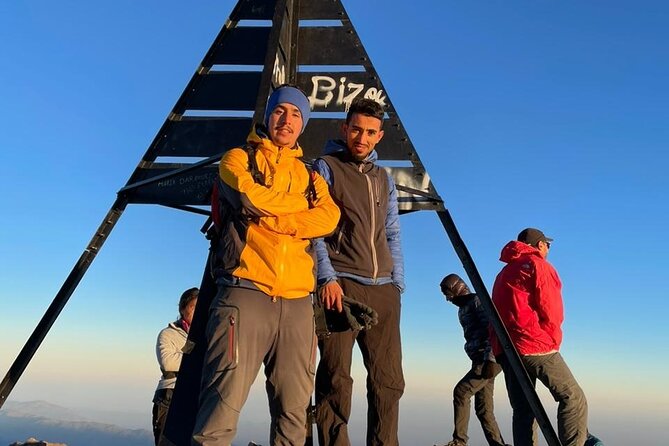
The strongest praise centers on the guides, especially Rachid. He was described as professional, friendly, and well-informed about Morocco and Berber culture. His very good English is useful if you want explanations rather than a silent walk.
The guide’s role is especially important here because the route combines physical effort with local context. You can learn more about the villages and the people who live in the High Atlas while moving between the valley and the refuge.
The reported flexibility is another advantage. The pace can be adjusted to suit the group’s ability and preferences. That does not remove the hard parts, but it can make the day more manageable.
I would still ask practical questions before booking. Confirm the guide’s language, group size, meals, refuge arrangements, and the plan for difficult weather. The advertised maximum is 30 people, which is fairly large for a mountain trek. Your actual group may be smaller, but you should not assume a private or small-group experience unless it is stated.
Is $290.98 good value?
At $290.98 per person, the trip is not the cheapest way to see the Atlas, but it is priced reasonably for a three-day guided summit attempt with pickup from Marrakech or the airport.
The value comes from combining several separate needs:
- Transport between Marrakech and Imlil
- A multilingual mountain guide
- Route planning
- Two nights in the mountain area
- Summit-day support
- Lunch at a guesthouse on the final day
The supplied details do not clearly spell out every inclusion, so you should check whether meals, refuge fees, luggage handling, and equipment are covered. Those items can affect the final cost.
For me, the price makes the most sense if you want the logistics handled. You do not have to work out the transfer, route, overnight stops, or summit approach on your own. If you already have transport and mountain experience, an independent trip might cost less, but it would also require more planning.
The free cancellation policy improves the booking value. You can cancel at least 24 hours before the start for a full refund. Changes or cancellations inside 24 hours are not accepted for a refund, and poor weather can cause the experience to be rescheduled or fully refunded.
Who should book this Toubkal trek?
This experience suits you if you want a short but serious mountain challenge from Marrakech. It works well for people who want a guided route, cultural conversation, and a clear summit goal without arranging every detail themselves.
You should be comfortable walking for four to six hours a day. The route includes steep paths, streams, rocks, and high altitude. A moderate fitness level is required, but the description does not claim that technical climbing skills are needed.
It may not suit you if you want soft beds, a slow schedule, or a quick day trip. You spend two nights in the mountains, and the summit day is physically demanding. The group size can reach 30, so anyone looking for a private, highly tailored outing should confirm the format first.
The winter option deserves extra care. One guest hoped to return in winter, when Toubkal is covered in snow and the views change. That sounds appealing, but the supplied information does not state that winter equipment, crampons, or special instruction are included. Ask the operator about seasonal conditions before choosing a winter date.
Should you book it?
Book this trek if reaching Toubkal matters more to you than comfort, and if you like having a guide to handle the route and transport. The three-day schedule gives you time to approach the mountain, make the summit attempt, and descend without cramming everything into one exhausting push.
I would be most inclined to book if Rachid is available, since his cultural insight, English, and flexible pacing were praised repeatedly. Before paying, confirm the guide, group size, refuge details, meal inclusions, equipment needs, and return timing.
Skip it if you are not ready for six hours of rocky mountain walking or if you need a guaranteed small group. For fit visitors who want an authentic High Atlas challenge from Marrakech, though, this is a strong and fairly priced choice.
FAQ
Where does the Toubkal trek begin?
The walking portion begins in Imlil Valley at an altitude of 1,740 meters. Pickup is offered from your Marrakech hotel or the airport, followed by a drive of about one hour and 30 minutes.
How long is the trek?
The experience lasts about three days. Walking takes about four to five hours on day one, six hours on day two, and four to five hours on day three.
When do I climb Jbel Toubkal?
The summit attempt takes place on day two. You start early, cross streams, walk over rocky ground, reach a plateau, and continue toward the summit before descending for lunch and another overnight stay.
Is Toubkal the highest mountain in North Africa?
Yes. Jbel Toubkal is described as the highest peak in North Africa.
What villages and places are visited?
The route passes through the Aït Mizane Valley toward Aremd, then continues to the sanctuary of Sidi Chamarouch and a nearby waterfall before reaching the Toubkal refuge.
Where do I sleep during the trek?
You spend the first night at a Toubkal refuge. After the summit day, you stay overnight again in the mountain area. The provided details do not specify the exact sleeping arrangements or refuge facilities.
What fitness level is required?
A moderate level of physical fitness is required. The route includes steep paths, streams, rocks, and walking periods of up to about six hours.
What is the cancellation policy?
You can cancel at least 24 hours before the start time for a full refund. Cancellations or changes made less than 24 hours before the experience are not refunded. If poor weather forces cancellation, you will be offered another date or a full refund.
Recently added around Marrakech
- Berber villages trek Day trip★ 5.0 · 12 reviews
- 2 Days Trek to Atlas Mountains berber villages★ 5.0 · 25 reviews
- Day Trekking Atlas Mountains★ 4.5 · 10 reviews
- two days valley trek in the Atlas mountains★ 4.5 · 2 reviews
- Trekking 8 days in the Moroccan desert from Marrakech★ 5.0 · 4 reviews
- 2 days Toubkal adventure Trek★ 5.0 · 5 reviews
- Mount Toubkal Trek: 2-Day Adventure★ 5.0 · 26 reviews
- Toubkal Ascent Trek – Atlas Mountains – 2 days (Private Trek)★ 5.0 · 8 reviews
Atlas Mountains Treks, compared.
Mt Toubkal Ascent Express Trek 2 Days 1 Nights
Read our review →
2-Day Mt. Toubkal Trek with 1-Night Stay & Meals
Read our review →
Summiting and Hiking the Atlas Mountains Day Trek from Marrakech
Read our review →
Browse the lists this tour appears in