
REVIEW · MOROCCO
2-day trek – In the footsteps of beetles
The desert rewards slow travel. This two-day trek from M’Hamid El Ghizlane trades road noise for walking, dromedaries, campfire meals, and the wide silence of the Sahara’s edge. You follow old caravan routes and animal tracks toward Bertham and Mazwrya, with a night outdoors under the stars.
I like the small private-group format, which keeps the experience personal, and I like the human side of the trip: guides, camel drivers, cooks, and family-run hospitality are central to the journey. The warm care shown by team members such as Bachir, Hassan, Bakar, Zacky, and Mohammed is one of the strongest reasons to consider it.
The main drawback is simple: this is a walking trip, not a sightseeing ride. You need moderate fitness, and a sleeping bag is not included. The exact walking distance is not stated, so ask about daily hours before booking.
Key points at a glance
- Walk from M’Hamid to Bertham and Mazwrya: The route follows former nomadic and caravan ground rather than simply stopping at a photo-friendly dune.
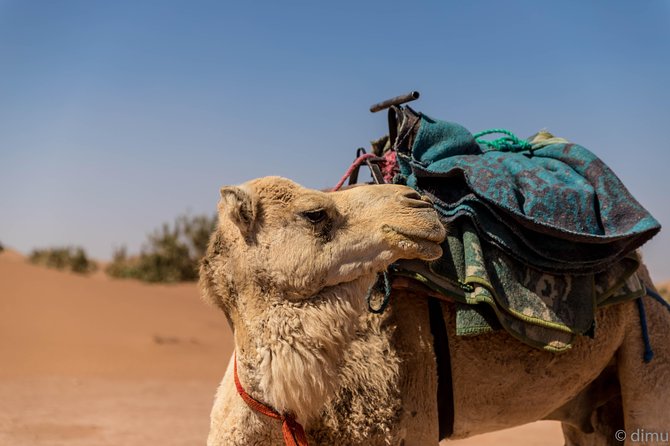
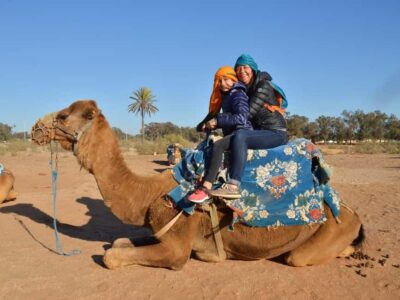
- Travel with a dromedary caravan: Camel drivers, guides, and cooks accompany the group, giving the trek a working, lived-in feel.
- Sleep near the ostrich plain: The first night brings a desert bivouac, dinner, firelight, music, and a star-filled sky.
- Look for the desert’s plant life: This trip focuses on the Sahara’s less obvious side, including animals and plants adapted to dry conditions.
- A private two-day outing: Only your group participates, which is useful for solo visitors, couples, or friends who want a quieter pace.
- Good care matters here: Past guests repeatedly praised the organization, safety, cooking, and kindness of the team.
Leaving M’Hamid on foot with the dromedaries
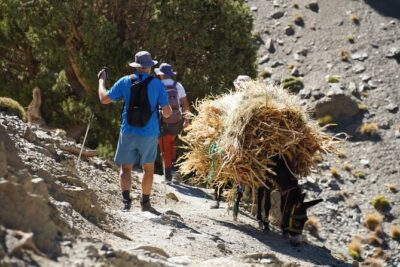
The trek begins at 8:00 a.m. in M’Hamid, the desert settlement known as the gateway to the Sahara. You set off on foot with a caravan of dromedaries and the support team, including camel drivers, guides, and cooks.
That early start makes sense. Walking in the desert is more pleasant before the strongest heat of the day, and the morning departure gives you time to reach the first camp without rushing. The pace is likely to feel steady rather than athletic, but you should still be comfortable walking for several hours on uneven, sandy ground.
I like that the route begins directly from M’Hamid instead of relying entirely on a vehicle to deliver you to a camp. You get a clearer sense of the transition from settlement to open desert. The experience is less about collecting distant views from a 4×4 and more about noticing how the ground changes under your feet.
The title, In the footsteps of beetles, points to the smaller life of this place. The desert is not empty, despite first impressions. The route introduces you to animals that live around the Sahara’s edge and to plants that have adapted to very little water. That gives the walk a useful focus. You are not only looking at dunes. You are learning to pay attention to the marks and forms that make the desert a living place.
The exact distance and walking hours are not provided, so this is one detail I would confirm before paying. If you enjoy unhurried walking and open scenery, the route should suit you well. If you prefer a short camel ride followed by a fixed camp, this may feel more demanding than expected.
More Two-Day Treks in Morocco:
- Mt Toubkal Ascent Express Trek 2 Days 1 Nights
★ 4.7 · 962 reviews - Marrakesh: 2-Day Mt. Toubkal Trek with 1-Night Stay & Meals
★ 4.7 · 795 reviews - Marrakech: 2-Day Atlas Mountains Trek with Village Stay
★ 4.8 · 717 reviews
Bertham and the memory of nomadic life
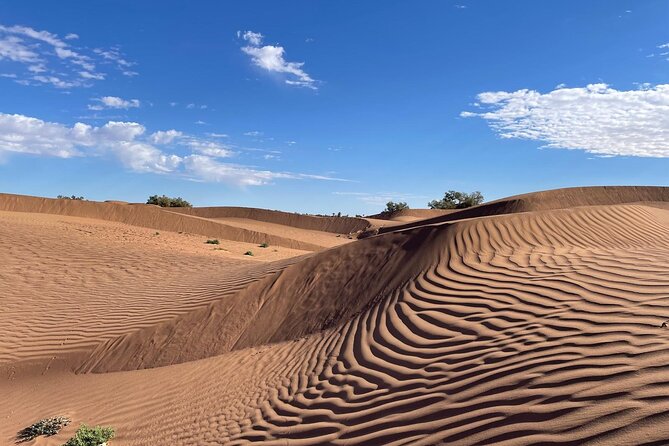
The first major destination is the splendid dune area of Bertham. Nomads once lived here with their herds of dromedaries, so the stop carries more meaning than a simple sand-dune visit.
That connection to nomadic life is the heart of the trip. You are introduced to the practical side of moving through the desert, where animals, water, shade, food, and route knowledge matter. The support caravan also helps you see how a desert journey works. The dromedaries carry equipment, while the cooks and guides make it possible to spend the night away from town.
I appreciate this arrangement because it allows you to walk with less gear than a self-supported trek. You still need to carry your personal essentials, but the larger sleeping and cooking equipment travels with the caravan. The included eating and sleeping equipment makes the trip more approachable for a first desert trek.
Bertham also offers the kind of scenery most people hope to see in southern Morocco: open sand, shifting dune shapes, and a horizon without buildings. Still, do not expect a packed program of stops. This is a quiet route. Much of the pleasure comes from the movement between places, not from a long list of scheduled activities.
A guide can make a major difference here. The team associated with this outing has been praised for careful organization, safety, and genuine warmth. Bachir is singled out for his personal attention, while Hassan is praised for his passionate way of presenting the desert. Those details matter on a private trek because you spend so much time with the people leading it.
A bivouac beside the ostrich plain
The first night’s camp is set up near the plain of the ostriches. The name adds a memorable touch, though the information provided does not promise that you will see ostriches. Treat it as a place name and a clue to the area’s wildlife rather than a guaranteed animal encounter.
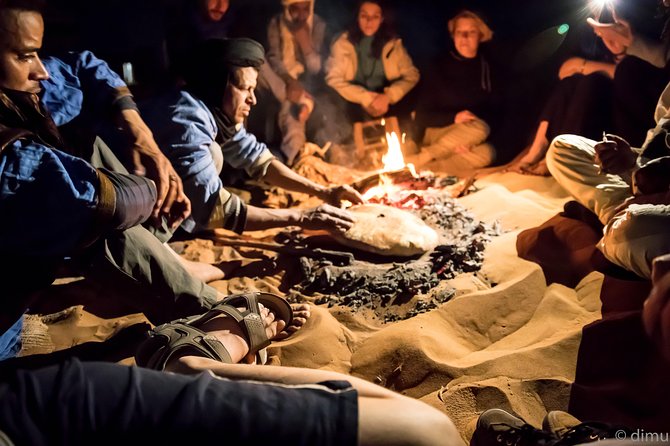
The evening centers on a traditional desert bivouac. Dinner is prepared as part of the trip, and the campfire becomes the natural gathering point. Music and singing have been an important part of the experience for past participants, with some evenings described as quiet and reflective, and others filled with songs around the fire.
That combination is one of the best reasons to choose an overnight trek instead of a short desert excursion. After sunset, the desert changes character. Candlelight and firelight replace electric lighting, and the sky becomes the main attraction. You can share food, listen to the team, and enjoy the rare luxury of having very little to do.
The sleeping arrangement is included, but your sleeping bag is not. Pack accordingly. The information does not specify the exact bedding setup, so ask whether blankets or mattresses are supplied and what kind of sleeping bag is suitable for the season.
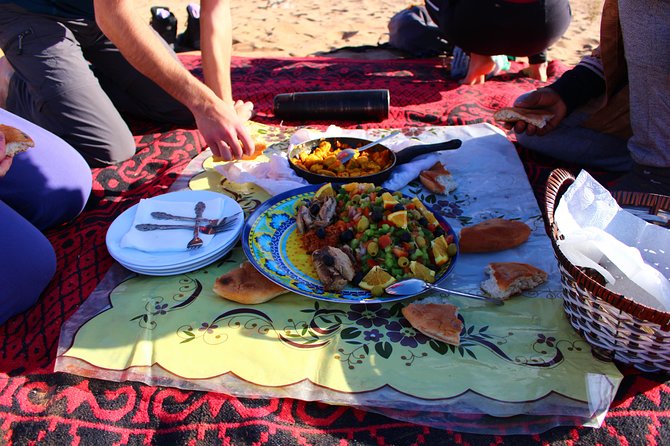
Dinner is included, and the cooking receives especially strong praise. Bakar is remembered as an excellent cook who served satisfying food from morning through evening. That is valuable on a walking trip. A good meal is not a minor extra when you have spent hours on foot.
The camp may suit you if you enjoy simple comfort, outdoor sleeping, and shared meals. It may not suit you if you need a private room, a fixed bathroom, or a predictable hotel-style night. The appeal lies in the simplicity.
Day two: Mazwrya and an old caravan meeting place
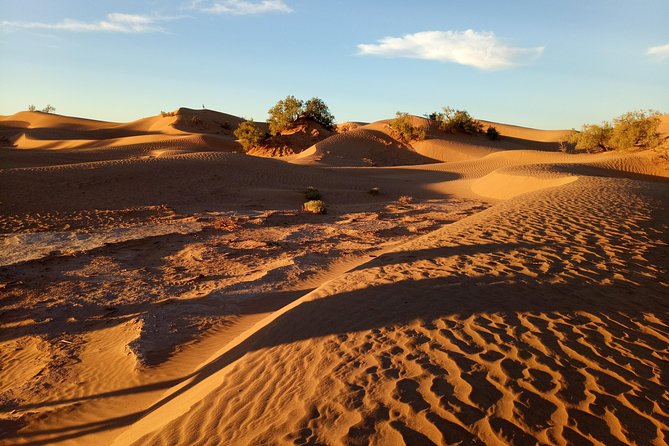
After breakfast, the group walks toward Mazwrya. This was once a meeting place for caravans arriving from Timbuktu, which gives the second day a strong sense of connection to the wider Sahara.
That detail helps put the route in context. The desert was not an empty barrier between settled places. It was crossed by people, animals, and goods along routes that connected distant communities. Walking toward Mazwrya gives you a small taste of that older movement, even though the modern trip is shorter and supported by a prepared team.
The morning walk is followed by lunch. The meal timing gives you a natural pause before the return toward M’Hamid. Two lunches and two dinners are listed among the inclusions, which appears to cover the meals during the two-day program. Confirm the exact meal schedule when booking, especially if you have dietary needs, since the provided details do not explain menu choices or special requests.
The return journey begins after the midday meal. The wording suggests that you walk back toward M’Hamid and say goodbye to the caravan at the end of the break. The activity ends at the original meeting point, so you should not expect a separate drop-off at another town.
The second day may feel less dramatic than the first. The initial excitement of leaving town and setting up camp has passed, and you are walking back over a familiar type of terrain. That is not a flaw, but it is worth knowing. The value is in the rhythm, the conversation, and the final hours with the team rather than in a constant stream of new sights.
A few more treks around Morocco worth a look
- From Marrakech: 3-Day Mount Toubkal Climbing Trek
★ 4.7 · 597 reviews - From Marrakesh: 2-Day Mount Toubkal Trek
★ 4.7 · 591 reviews - From Agadir: Camel Ride and Flamingo Trek
★ 4.7 · 371 reviews - From Marrakech: Atlas Mountains Summit Trek
★ 4.9 · 228 reviews
Why the private format changes the experience
This is a private activity, so only your group takes part. That can make a real difference in the desert. You can ask questions, settle into the walking pace, and spend the evening with the guides without being folded into a large coach excursion.
A private setup is especially helpful for solo visitors and small groups of friends. One solo participant found the experience a strong first trek in the Sahara, helped by a warm and caring team. Groups of friends also praised the attention they received, the shared food, and the music around the fire.
The private format does not mean you are entirely independent. You still follow the support team and the planned route. It simply gives your party more privacy and a closer connection with the people running the trek.
Pickup is offered, but the stated meeting point is M’Hamid and private transportation is not included. That means you should clarify where pickup is available, what it costs if applicable, and whether you need to reach M’Hamid on your own. Public transportation is nearby, but no transfer details are provided.
What the $319.52 price includes
At $319.52 per person, this is not a bare-bones walking tour. The price covers breakfast, lunches, dinners, taxes and fees, sleeping equipment, and the support needed for the desert camp. It also pays for the work of the guides, camel drivers, and cooks who keep the trek moving.
The value is strongest if you want a supported overnight experience without organizing food, camp gear, and animal transport yourself. You receive a full two-day program rather than a short sunset visit, and the private format adds privacy.
The price is less attractive if you already have desert equipment, want to camp independently, or only want a quick look at the dunes. Private transportation is not included, and neither is a sleeping bag, so those costs or packing needs belong in your planning.
The team’s reputation for organization, kindness, and safety also matters when judging value. In a remote setting, dependable logistics are worth paying for. A well-prepared cook and a calm guide can make the difference between a memorable night and an uncomfortable one.
Who should book this desert trek?
I would recommend it to you if you:
- Enjoy walking more than riding in a vehicle
- Want a first introduction to nomadic desert travel
- Like simple camping, shared meals, music, and firelight
- Prefer a private group rather than a large organized outing
- Have moderate physical fitness
- Want to notice desert plants and animals, not only photograph dunes
I would be cautious about booking it if you:
- Need a hotel room or modern facilities every night
- Dislike sleeping outdoors
- Do not have a suitable sleeping bag
- Want a precise, highly scheduled sightseeing program
- Are looking for a camel ride with very little walking
- Need confirmed transport from outside M’Hamid
The strongest parts of the experience are personal rather than flashy. The guides’ kindness, the careful organization, the cooking, and the chance to sit around a fire after a full day outside are what give the trip its character.
Practical advice before you go
Wear comfortable walking shoes and clothing that protects you from sun and sand. Bring water, sun protection, and a sleeping bag suitable for the conditions. Since the exact walking distance is not stated, ask how many hours you will walk on each day.
Ask about meal arrangements if you have allergies or dietary restrictions. The trip includes meals, but the available information does not specify special menus.
It is also wise to confirm the pickup arrangement before departure. The activity begins at 8:00 a.m. in M’Hamid, and private transport is not included. Booking confirmation is normally sent at the time of booking, though reservations made within two days of departure may take up to 48 hours to confirm and remain subject to availability.
The cancellation terms are fairly strict close to departure. Cancel at least six full days before the start time for a full refund. A cancellation two to six days before departure receives a 50 percent refund, while cancelling less than two days before the start time brings no refund.
Should you book the two-day trek?
Book it if you want a calm, human-scale introduction to the Sahara. The route gives you two days on foot, a night by the ostrich plain, meals cooked by the team, a dromedary caravan, and a link to old nomadic and caravan routes. The care associated with guides such as Bachir and Hassan adds confidence, especially for a first trek.
Skip it if you want a luxury camp, a short ride, or a fully explained walking schedule before you commit. For the right person, though, this is a thoughtful way to meet the desert slowly, with time for silence, conversation, firelight, and the small signs of life underfoot.
FAQ
Where does the trek begin and end?
It begins in M’Hamid, Morocco, at 8:00 a.m., and ends back at the original meeting point in M’Hamid.
How long does the experience last?
The trek lasts approximately two days.
Is transportation included?
Pickup is offered, but private transportation is not included. Confirm the pickup details before departure.
Is the tour private?
Yes. Only your group participates in the activity.
What meals are included?
Breakfast, two lunches, and two dinners are listed as included, along with eating and sleeping equipment.
Do I need to bring a sleeping bag?
Yes. A sleeping bag is not included, so you need to bring your own or arrange one separately.
Recently added around Morocco
- Berber villages trek Day trip★ 5.0 · 12 reviews
- 2 Days Trek to Atlas Mountains berber villages★ 5.0 · 25 reviews
- Day Trekking Atlas Mountains★ 4.5 · 10 reviews
- two days valley trek in the Atlas mountains★ 4.5 · 2 reviews
- Trekking 8 days in the Moroccan desert from Marrakech★ 5.0 · 4 reviews
- 2 days Toubkal adventure Trek★ 5.0 · 5 reviews
- Mount Toubkal Trek: 2-Day Adventure★ 5.0 · 26 reviews
- Toubkal Ascent Trek – Atlas Mountains – 2 days (Private Trek)★ 5.0 · 8 reviews
Morocco Trekking Tours, compared.
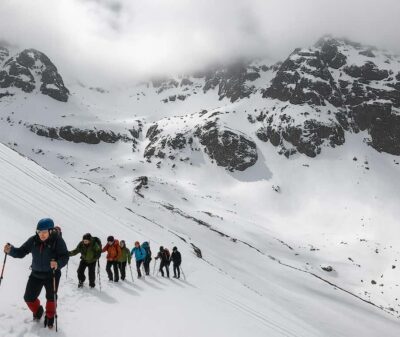
Mt Toubkal Ascent Express Trek 2 Days 1 Nights
Read our review →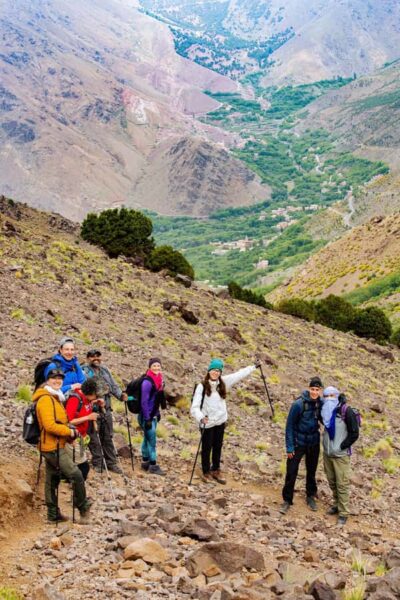
2-Day Mt. Toubkal Trek with 1-Night Stay & Meals
Read our review →
Summiting and Hiking the Atlas Mountains Day Trek from Marrakech
Read our review →Browse the lists this tour appears in