
REVIEW · INDONESIA
Mount Rinjani 2-Day Trek to Senaru Crater Rim
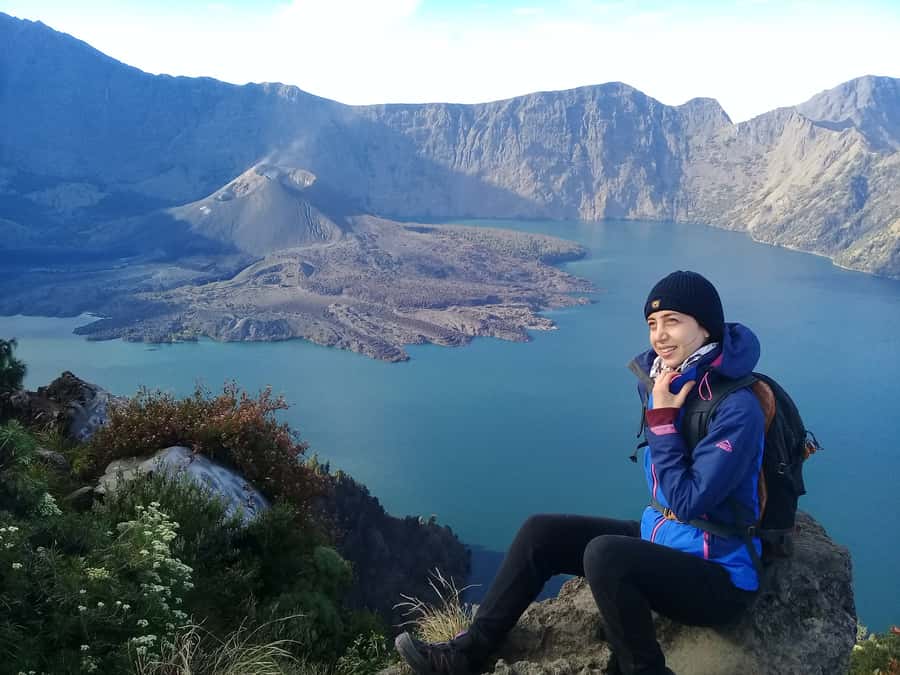
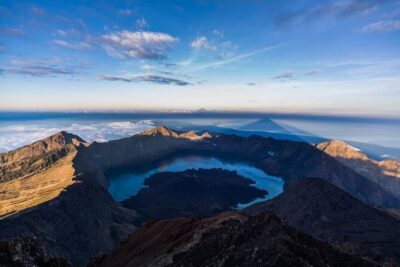
This is a serious hike with a spectacular payoff. Mount Rinjani’s two-day trek gives you rainforest, steep volcanic slopes, a night beside the crater rim, and wide views toward Bali without requiring the longer summit route. I especially like the porter service and the thoughtful camp setup, which includes a tent, mattress, sleeping bag, chairs, and a toilet tent. The food also gets unusually high praise, with meals ranging from fried bananas and pancakes to curry, fruit, soup, and rice dishes.
The main catch is the climb itself. You gain roughly 2,000 meters from the trailhead to the crater rim, and much of the route is steep rather than gently rolling. You need good fitness, proper shoes, and patience, especially for the loose, slippery descent into Senaru Village.
Key points to know before booking
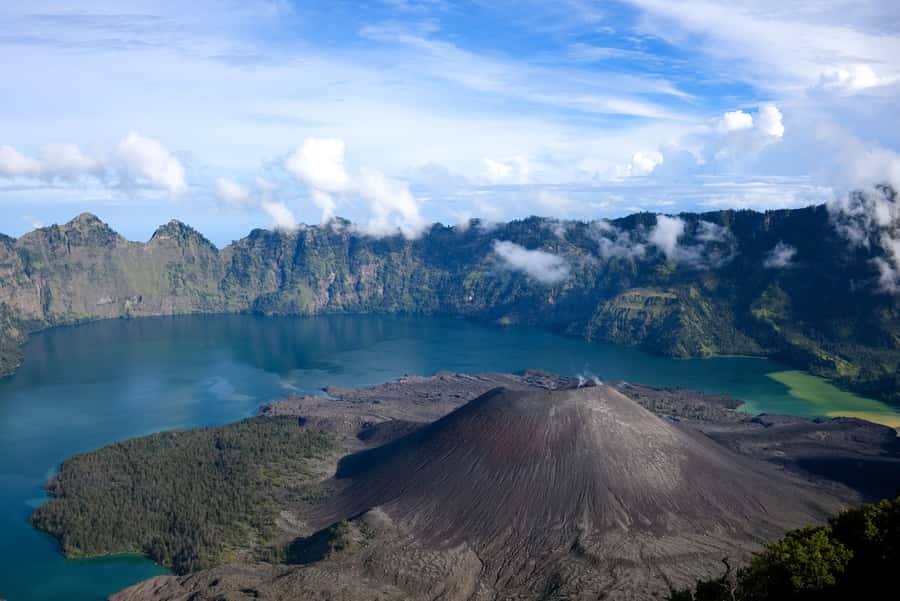
- The crater rim is the goal, not the summit: You get grand views of Mount Rinjani and Segara Anak Lake without adding the much harder summit climb.
- Porters carry the heavy load: Camping equipment, food, and water are transported for you, leaving you with a day pack of no more than 5 kilograms.
- The final climb is the hardest section: The forest gives way to steep rock and loose gravel, with few flat stretches.
- Sunset faces Mount Agung in Bali: Clear weather can give you a memorable view across the sea to Bali’s volcano.
- National Park permits are limited: Only 240 permits are available per day, and the entrance fee is paid separately at RP 250,000 per person per day.
- The food is a real strength: Porters prepare generous hot meals and drinks at camp and along the route.
What the $150 price really covers
At $150 per person, this is not a bare-bones walk with a guide and a bottle of water. The price includes a trekking guide, porter service for camping equipment, meals, drinking water, camping gear, trekking insurance, and one night at the crater rim. For a high-altitude overnight trek, that package offers solid value.
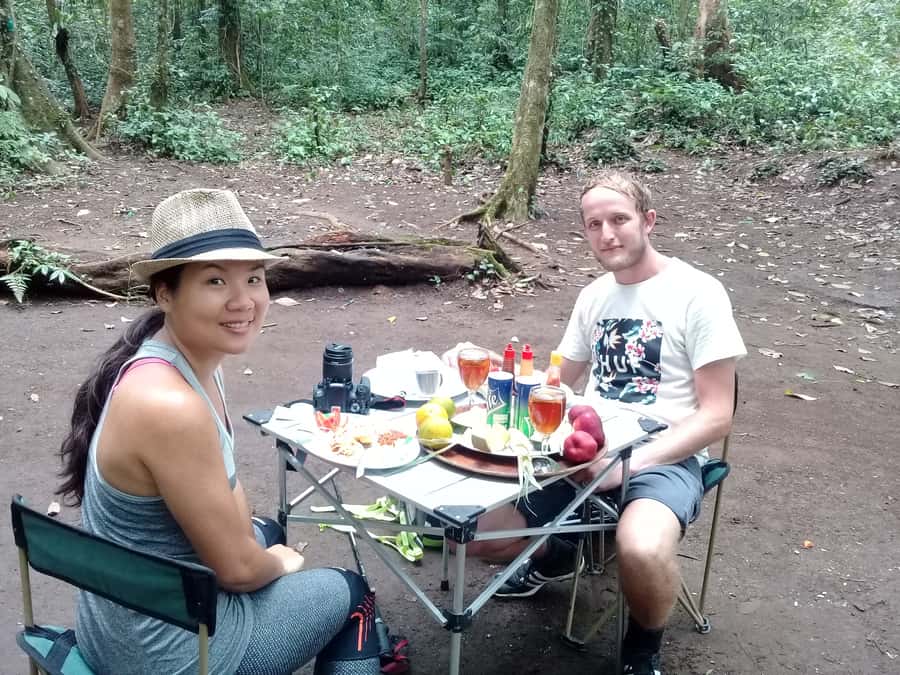
Your camp equipment includes a double-size tent, sleeping bags, pillows, mattresses, camp chairs, and a toilet tent. The porters also carry the cooking supplies and food. Several meals described on the trek include nasi goreng-style rice, chicken curry soup, fresh vegetables, pineapple, other fruit, banana pancakes, fried bananas, sandwiches, coffee, and tea.
That matters because the first day is long and demanding. Arriving at camp to find the tent already set up and hot food being prepared changes the whole mood. You still have to climb every meter yourself, but you do not have to carry a full camping load.
The National Park entrance fee is not included. The stated cost is RP 250,000 per person per day, so a two-day trek requires RP 500,000 per person for the park fee. You also need to budget for trekking shoes, long pants, gloves, a day pack, toiletries, medication, sunscreen, insect repellent, and suitable warm clothing.
An extra porter can be added to carry your personal belongings. Otherwise, you should keep your own backpack under 5 kilograms. Larger luggage can be stored at the local operator’s office, which is useful if you are traveling around Lombok with a full suitcase.
More Volcano Treks in Indonesia
- 2D1N Senaru Crater Rim Trekking
★ 5.0 · 178 reviews - Mt Rinjani Trekking 2 Days 1 Night (Senaru Crater Rim)
★ 5.0 · 85 reviews - Banyuwangi: Ijen Crater Bluefire and Sunrise Guided Trek
★ 4.9 · 65 reviews
Permit planning is not optional
The Rinjani permit system deserves attention before you arrive. Daily permits are limited to 240 people, and once that number is reached, you cannot simply turn up and begin the trek. You will need to reschedule.
You can register through the eRinjani app using each member’s passport number, full name, birthday, weight, height, and nationality. Payment is made directly to the Indonesian government account through an Indonesian bank. If that process is difficult, the local guide can help arrange registration.
I would treat the permit as the first thing to settle, not a minor detail. A confirmed tour booking does not remove the need for a National Park permit. Ask the operator to confirm that your names are registered and that the permit is secured for the exact trekking dates.
Day one starts in the rainforest
After breakfast, you are transferred to the Rinjani National Park gate for registration and a briefing with your guide. The walking begins around 7:00 or 7:30 in the morning.
The early part of the route passes through dense tropical forest. This is the more forgiving section of the climb, though it is still a steady uphill walk. You may see native plants, birds, and butterflies, and the shade is welcome before the trail opens onto more exposed volcanic ground.
This section also gives you time to settle into your pace. Do not rush at the beginning. The gain in height is large, and the people who enjoy this trek most are the ones who walk steadily, drink regularly, and take breaks before they are exhausted.
The guide is important here. Guides including Ibrahim, Will, Sapar, Odi, Ojik, Sip, and Arteri received strong praise for checking walking speed, offering breaks, sharing information about Lombok, and helping on difficult sections. Ibrahim is known for keeping groups laughing, with music, jokes, and even dancing during one trek. That may not be what every group wants, but it shows how much the guide can shape the feel of the day.
Lunch at Montong Satas Shelter
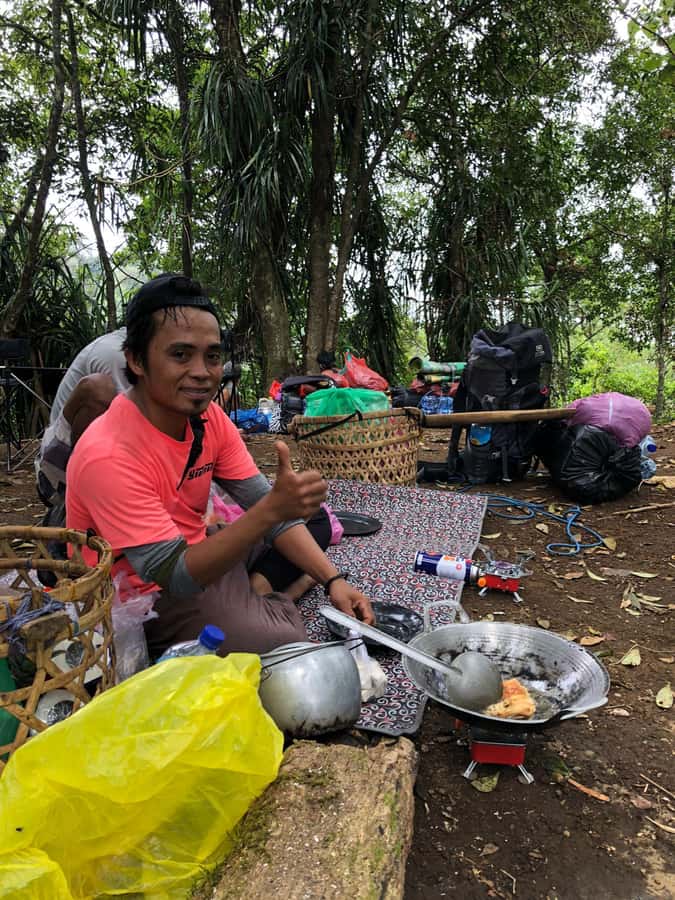
The first stated lunch stop is Montong Satas Shelter at about 1,500 meters above sea level. It breaks up the climb and gives you a chance to eat before the trail becomes more demanding.
The meals are not just functional sandwiches. The cooking team prepares fresh, filling food, and the porters often set up a table at rest stops. You might receive rice, fruit, fried bananas, pancakes, or hot drinks depending on the meal plan and conditions.
That service is one of the most impressive parts of the trip. Porters carry food, water, tents, and cooking equipment up the mountain, sometimes in simple footwear. You should still pack snacks for yourself, but the supplied meals mean you do not need to carry two days of provisions.
More Mount Rinjani Treks in Indonesia:
- Mount Rinjani Trek 3D-2N To Summit – Lake – Hotspring
★ 4.7 · 111 reviews - Rinjani trekking 2D 1N RIM
★ 5.0 · 94 reviews - Rinjani Trekking 3D2N Summit
★ 4.5 · 85 reviews - 3D/2N Rinjani trekking summit,lake and hot springs.
★ 5.0 · 85 reviews
The final climb to 2,641 meters
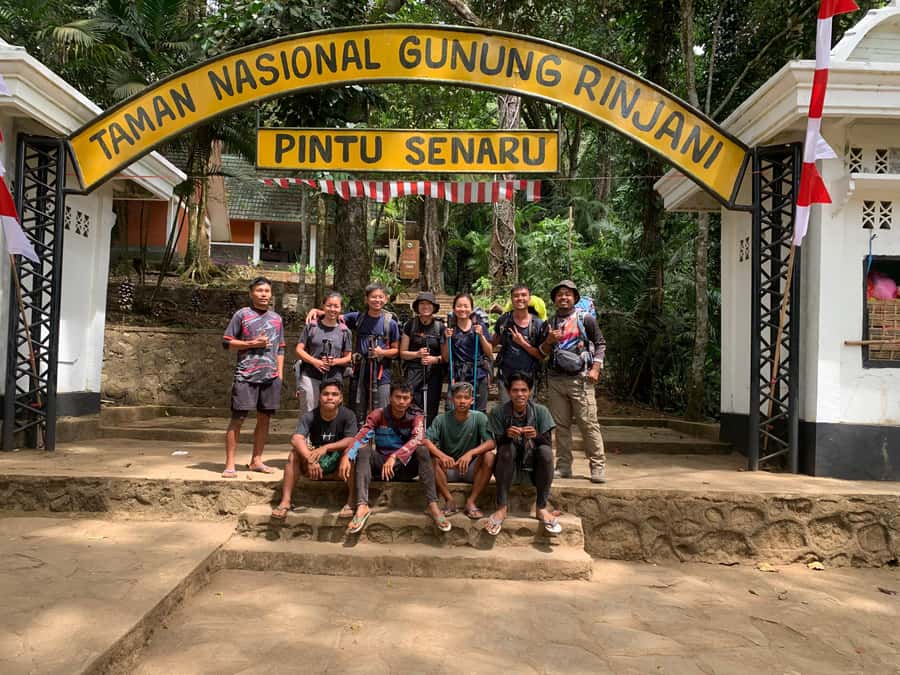
After lunch, the forest begins to give way to rock, sand, and steeper ground. This is where the trek becomes a test of endurance rather than a normal woodland walk.
The climb to the Senaru Crater Rim reaches about 2,641 meters. There are long steep sections and few genuinely flat stretches. Loose gravel can make each step slide backward, and some areas require careful foot placement or light scrambling over rock.
If you are moderately fit, the climb is manageable, but you should not mistake that for easy. Several people with hiking experience still found it very hard. Plan for tired legs and give yourself time to recover after the trek.
Walking poles are useful, especially on the loose upper slopes and the descent the next morning. They are not included, so bring your own if you already use them. Your shoes should have a firm sole and good grip. Sandals are listed for camp, not for the main route.
The guide’s pacing makes a difference. A good guide will let you stop for water and snacks without making the group feel rushed. The porter team may reach camp ahead of you, which means your tent and food can be ready while you finish the climb.
Sunset beside the crater rim
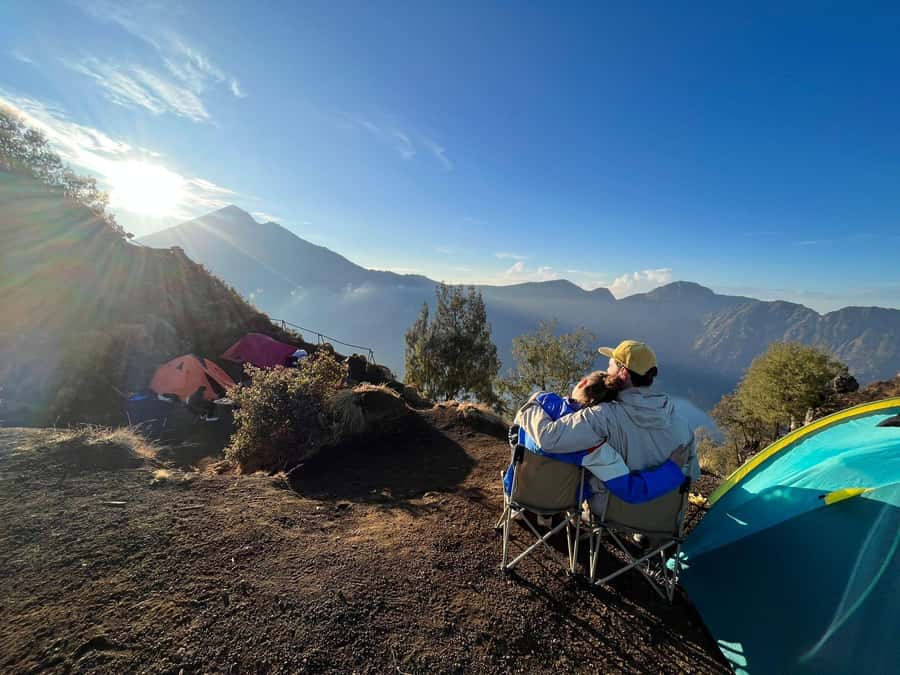
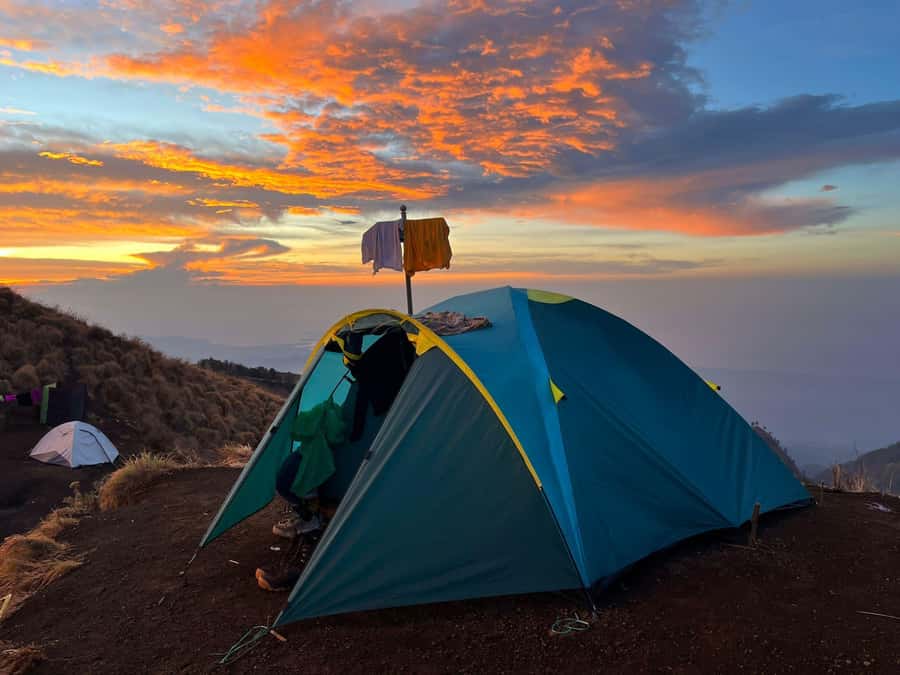
You reach camp around 4:00 in the afternoon, assuming weather and walking pace cooperate. The crater rim is the reward for the hard ascent.
From camp, you can look toward Mount Agung in Bali. On a clear evening, the sunset over Bali’s volcano is the scene that stays with you. You can also see smoke rising from the volcanic area near the lake, a reminder that Rinjani is not simply a scenic mountain but an active volcanic environment.
Weather is the wild card. Clouds can cover the sunset and sunrise, and wind or rain may make the night less comfortable. Even when the sky is not clear, the crater views can still be impressive, but you should not book this trek expecting a guaranteed postcard sunset.
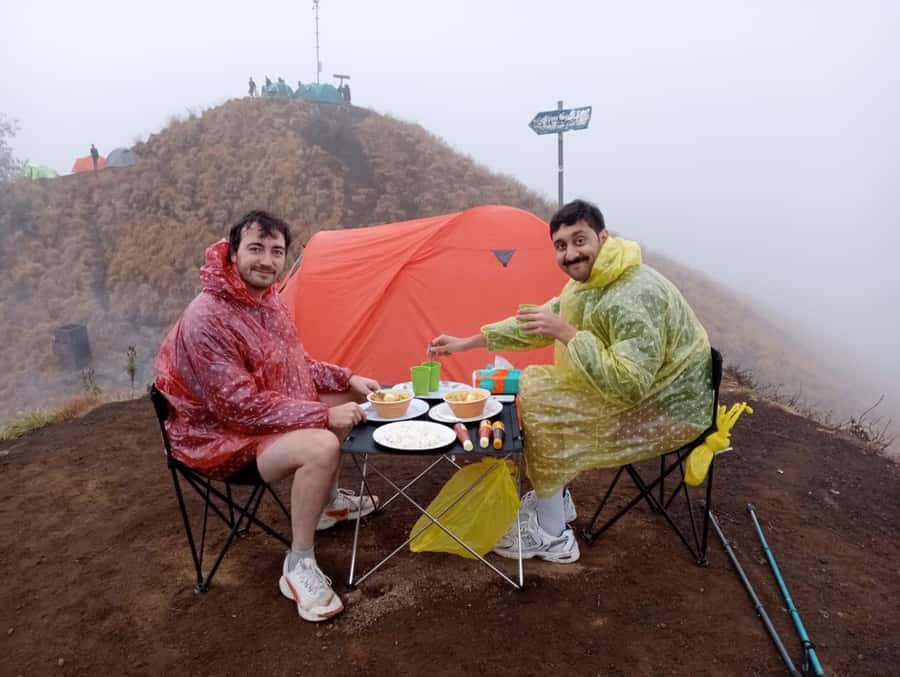
The camp setup is more comfortable than the price might suggest. You sleep in a tent with a mattress, pillow, and sleeping bag, and chairs are provided outside. Some equipment is described as clean and warm, and jackets may be available to rent through the operator if you need extra protection.
Temperatures at the rim can feel far colder than the lowland start. Pack a windproof jacket, dry clothes for the night, and a warm layer. Your cotton shirts are useful during the climb, but they may not be enough once you stop moving.
Dinner, stars, and a short night
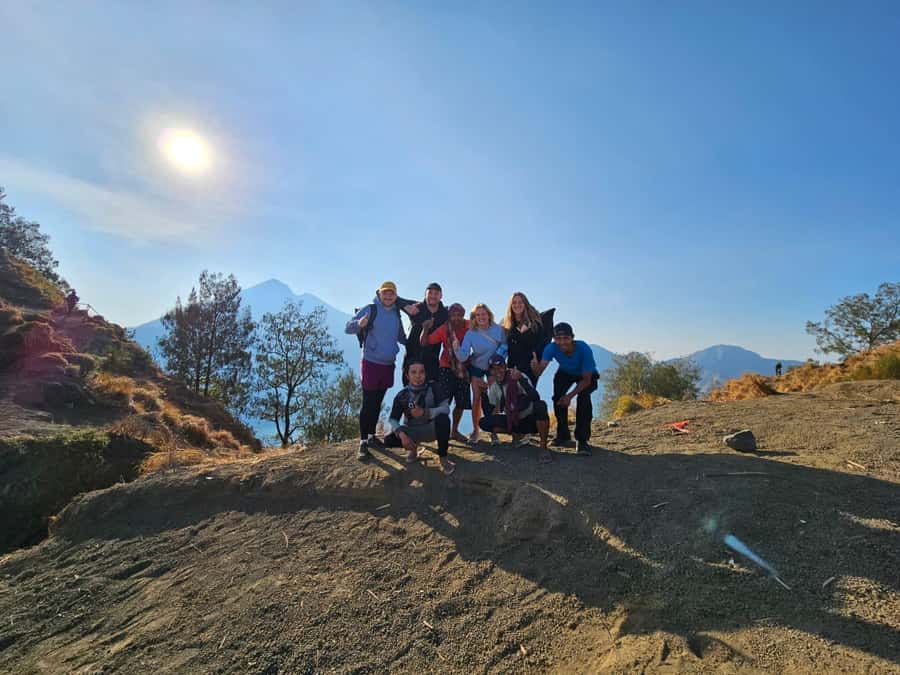
Dinner is served at camp, often with hot tea or coffee. The porters prepare surprisingly varied meals in difficult conditions, which is a major comfort after the climb.
The night is not a luxury camping experience. Wind, cold, rain, and the basic toilet arrangement are part of mountain camping. Still, sitting outside the tent with a hot meal and the crater below you gives the evening a sense of occasion that a hotel room cannot match.
Try to keep your personal gear organized inside one small bag. You do not want to search for socks, medication, or a jacket in the dark while your tent is shaking in the wind.
Day two descends through Senaru forest
After breakfast and sunrise views, you begin the descent toward Senaru Village. The total walk down takes about five hours, with lunch scheduled around 11:30 in the morning.
The route returns through rainforest, but the descent has its own problems. Loose soil and wet ground can become slippery, and tired knees make every downhill step harder. This is where walking poles and shoes with strong grip are most useful.
The forest may also offer a wildlife moment. Keep watch for the black monkeys mentioned along the route. Sightings are not guaranteed, so do not treat them as a fixed part of the itinerary.
The descent is less strenuous for your lungs than the climb, but it can be rough on your knees and ankles. Take short steps, avoid racing downhill, and let your guide help you choose secure footing. One practical mistake is to think the hard part ended at the crater rim. For many people, the slippery way down is the most awkward section.
After lunch, you continue to Senaru Village. At the local operator’s office, you can shower, enjoy a welcome drink, and collect luggage before the trek ends.
What the guide and porter service add
The human side of this trek is one of its strongest features. The guides are not there only to point at the trail. They monitor your condition, explain local life, and help the group manage the steep parts.
English ability can vary. Most of the guide feedback is very positive, but one experience noted that more detailed conversation would have been easier with stronger English. If cultural explanation is important to you, ask in advance for an English-speaking guide with the level of communication you want.
The porters are central to the trip. They carry tents, cooking equipment, food, and water, then set up camp and prepare meals. Their work allows you to focus on the walk, but it also raises a point worth considering: the service depends on physically demanding labor. Treat the porter team with respect, carry your own small essentials, and avoid overpacking.
Who should book this trek?
This route suits you if you want a major Lombok hiking experience but do not need to reach Mount Rinjani’s summit. The crater rim provides dramatic views, a night outdoors, and a strong sense of achievement in only two days.
It is a good match for people with regular hiking experience or solid general fitness. You should be comfortable walking long distances uphill and descending on uneven ground. The tour is not suitable for people with mountain sickness, a fear of heights, or an inability to walk for extended periods.
A small group of up to 15 people keeps the trip more personal than a large hiking convoy. You may still walk at different speeds, so discuss your pace with the guide at the start.
Practical packing advice
Keep your day pack under 5 kilograms. Pack only what you will use on the trail and at camp:
- Trekking shoes with firm grip
- Long trekking pants and two pairs of shorts
- Two to four cotton shirts
- Windproof jacket and warm layer
- Gloves and a small towel
- Toiletries and personal medication
- Sunscreen and insect repellent
- Camera
- Sandals and swimwear
- Water bottle or hydration container
Safe drinking water is included, but a small personal bottle is still useful while walking. Bring snacks if you like to eat between supplied meals.
Free cancellation is available up to 24 hours before departure, and you can reserve while paying later. Even so, do not wait too long to settle the National Park permit because the daily quota is limited.
Should you book Mount Rinjani’s crater rim trek?
Book it if you want dramatic volcanic scenery, strong local support, and a demanding but shorter alternative to the summit route. The $150 price is reasonable for the guide, porters, meals, water, equipment, insurance, and camp service, though you must add the National Park entrance fee and personal gear.
Do not book it because the photographs look easy. The climb is steep, the descent can be slippery, and weather may hide the sunset or sunrise. But if you arrive prepared, secure your permit early, and accept that your legs will need recovery time, this is one of Lombok’s most rewarding two-day experiences.
FAQ
How long is the Mount Rinjani crater rim trek?
The trek lasts two days and includes one night camping at the crater rim.
What time does the first day begin?
After breakfast and transfer to the National Park gate, walking begins around 7:00 or 7:30 in the morning.
How high is the crater rim campsite?
The campsite is at approximately 2,641 meters above sea level.
Is the Mount Rinjani entrance fee included?
No. The National Park entrance fee is separate and is stated as RP 250,000 per person per day.
How many permits are available each day?
The National Park permits are limited to 240 people per day.
How do I register for the National Park permit?
You can register through the eRinjani app with passport number, full name, birthday, weight, height, and nationality. A local guide can also help with registration.
What does the porter carry?
The porter carries camping equipment, food, water, and related supplies. You should carry your personal items in a small pack of no more than 5 kilograms unless you add an extra porter.
Are meals included?
Yes. Breakfast, lunch, dinner, and drinks are included, along with safe drinking water.
Is camping equipment included?
Yes. The package includes a double-size tent, camp chairs, toilet tent, sleeping bag, pillow, and mattress.
Is the trek suitable for beginners?
You need a good level of fitness and the ability to walk long distances. The climb and descent are challenging, so it is not suitable for people with mountain sickness or a fear of heights.
More Two-Day Treks in Indonesia
- 2 Days and 1 Night Ethical Jungle Trek
★ 5.0 · 229 reviews - 2 Days 1 Night Ethical Jungle Trekking
★ 5.0 · 153 reviews - ORANGUTAN TREK (2D/1N) by EcoTravel Bukit Lawang
★ 5.0 · 122 reviews - Monkey Business 2 days – 1 night Jungle Trekking (including rafting)
★ 5.0 · 121 reviews
Recently added around Indonesia
- Overnight Trekking Adventure in Ketambe★ 5.0 · 2 reviews
- Wonderful 7 Days North Sumatra Tour (Include: 2 Days 1 Night Jungle Trekking)★ 5.0 · 27 reviews
- 5 Day’s 4 Night’s jungle Tour trekking in Bukit Lawang★ 5.0 · 7 reviews
- 1 Day Ethical Jungle Trekking★ 5.0 · 14 reviews
- ONE DAY JUNGLE TREKKING 6-7 hours (see orang utan) + RAFTING in BUKIT LAWANG★ 5.0 · 37 reviews
- FAMILY JUNGLE TOUR: Orangutan Trek (4-hours hike) by EcoTravel Bukit Lawang★ 5.0 · 10 reviews
- TOUR PACKAGE (Taxi, Room, Jungle Trekking) 3 Days in BUKIT LAWANG★ 5.0 · 17 reviews
- 6 Day North Sumatra Jungles Orangutans Overnight trek and Hot Springs★ 5.0 · 2 reviews
Mount Rinjani Treks, compared.
Mount Rinjani Trek 3D-2N To Summit – Lake – Hotspring
Read our review →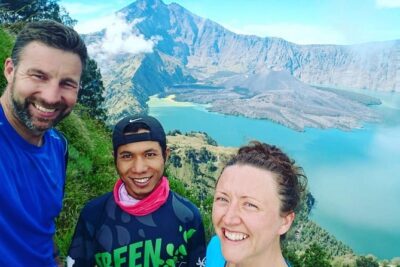
3D/2N Rinjani trekking summit,lake and hot springs.
Read our review →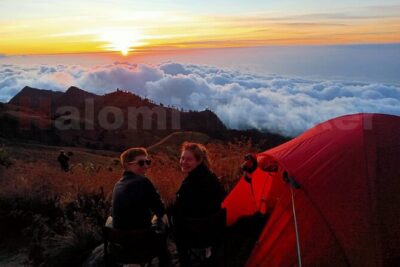
Mt Rinjani Trekking 2 Days 1 Night (Senaru Crater Rim)
Read our review →
Rinjani Trekking 3 Days 2 Nights (Sembalun – Senaru)
Read our review →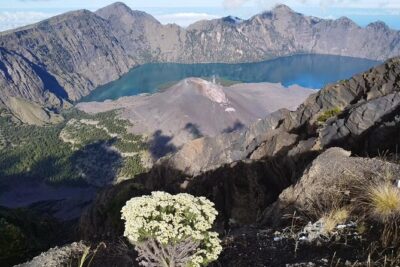
Rinjani Trekking Three Days Two Night Summit Lake
Read our review →
Mount Rinjani Trekking 2D/1N Summit Sunrise & Sunset Views
Read our review →Browse the lists this tour appears in