
REVIEW · MARRAKECH
Marrakech: 2 Day Toubkal Trek & 1 Nights with Hotel Pick up
North Africa’s highest summit is within reach. This two-day trip links Marrakech with the High Atlas in a brisk, demanding route that passes Berber villages, Sidi Chamharouch, and the Toubkal Refuge before reaching the 4,167-meter summit. I like the clear structure, with transport, meals, guide, and refuge lodging arranged in advance. I also like the chance to travel with a local guide such as Mohamed, whose support and knowledge of the route can make a real difference.
The main catch is the pace. You climb from Imlil at 1,740 meters to the refuge at 3,207 meters on day one, then summit and return to Imlil on day two. That can mean 10 to 12 hours of walking on the final day, so this is not a relaxed mountain outing.
Key points at a glance
- Reach 4,167 meters in only two days: Mount Toubkal is a trekking peak rather than a technical climb, but the altitude and long descent still demand good fitness.
- Sleep at 3,207 meters: The shared hostel room at Toubkal Refuge gives you a simple mountain base before the early summit start.
- See Sidi Chamharouch on the way up: The sanctuary, waterfall, and surrounding mountain path add cultural interest to what could otherwise be a straightforward ascent.
- Start from Marrakech with transport included: Hotel or riad pickup, the drive to Imlil, and the return trip remove much of the route-planning work.
- Expect generous basic catering: The package includes one breakfast, two lunches, one dinner, tea, and coffee.
- Small group, multilingual support: Groups are limited to 15 people, with guiding available in English, Spanish, Arabic, French, Dutch, German, and Italian.
Why this Toubkal trip works well from Marrakech
Mount Toubkal gives you a sharp change of scene from Marrakech. In about 1.5 hours by van, you leave the city and reach Imlil Valley, the trailhead at 1,740 meters. That quick transition is one of the strongest points of the trip. You do not need to arrange a separate taxi, compare mountain transport, or work out where to meet the local team.
At $284 per person, the price covers more than the walking itself. You receive hotel pickup and drop-off, transport, a professional local guide, one night in a shared refuge room, three main meals, tea, and coffee. For a two-day mountain trip with a guide and transfers, that is useful value, particularly if you prefer a fixed plan.
You should still understand what the price does not cover. Sleeping bags are excluded, as are crampons, ice axes, and soft drinks. Those items matter most in colder conditions or when snow and ice are present, so check the expected conditions before departure and ask the provider about equipment if you need it.
The group limit of 15 is another practical advantage. It is not a private trek, but it is small enough for the guide to keep the group together and offer help when needed. Mohamed received especially warm praise for being supportive on the ascent, including helping a woman who felt unwell halfway up. That kind of attention matters on a mountain where people can tire quickly.
More Atlas Mountains Treks in Marrakesh:
- Marrakesh: 2-Day Mt. Toubkal Trek with 1-Night Stay & Meals
★ 4.7 · 795 reviews - Marrakech: 2-Day Atlas Mountains Trek with Village Stay
★ 4.8 · 717 reviews - From Marrakech: 3-Day Mount Toubkal Climbing Trek
★ 4.7 · 597 reviews
From Marrakech to Imlil Valley
Pickup is normally arranged at your hotel or riad in Marrakech. The provider confirms the meeting point by email or WhatsApp, so watch for that message and make sure your contact details are correct.
The drive to Imlil takes about 1.5 hours. You will meet the local guide and begin walking from the valley floor. Imlil sits at 1,740 meters, which means the first day is not a gentle village stroll. You gain nearly 1,500 meters before reaching the refuge.
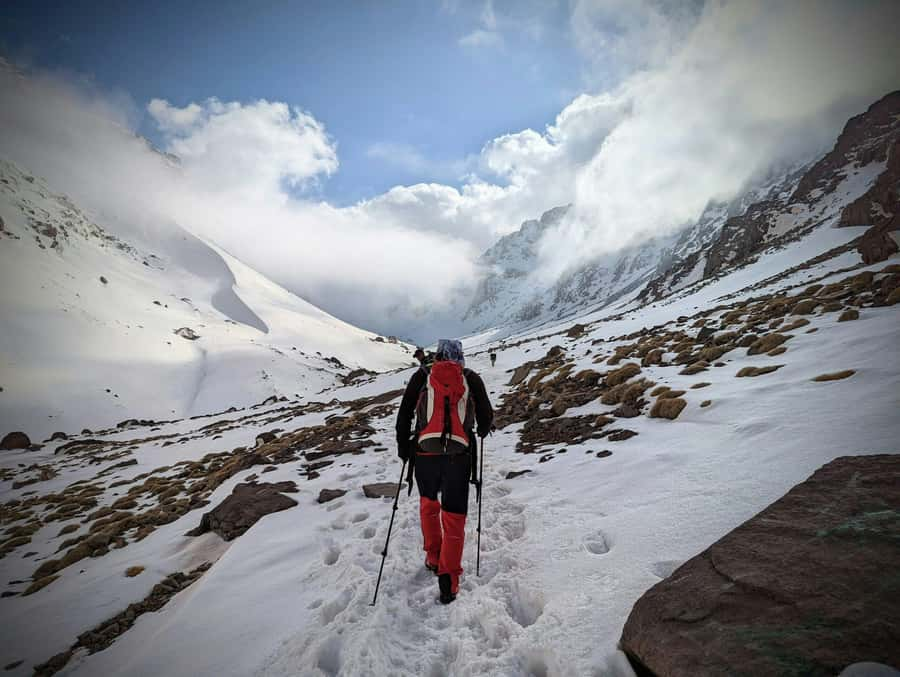
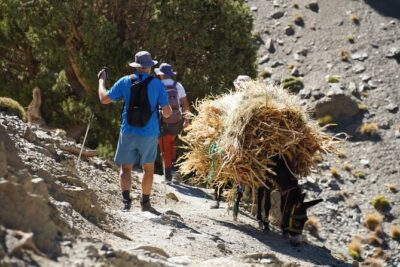
The early section takes you through the Aït Mizane Valley and past Aremd, a Berber village that marks the transition from road access to a mountain route. The setting changes gradually, with homes and cultivated areas giving way to open slopes and rougher paths.
I like this start because it gives the trek a sense of place. You are not dropped beside a summit trail with no context. You pass through a lived-in valley and see how the climb connects with local communities.
Sidi Chamharouch adds culture to the climb
After roughly two hours of walking, the route reaches the Sidi Chamharouch area, known for its spiritual sanctuary and nearby waterfall. This is also a planned lunch area, giving you a useful break before the harder climb toward the refuge.
Sidi Chamharouch is more than a photo stop. It is a local pilgrimage site, and the setting helps explain why this route has cultural value as well as mountain appeal. The path here can feel busy and social compared with the quieter upper sections, though conditions and group movement will vary.
The waterfall is a welcome sight during the ascent, particularly after leaving Imlil. You can pause for photographs, tea, lunch, or simply a few minutes to catch your breath. Do not treat this break as wasted time. The second half of the day becomes steeper, and saving some energy is wise.
The supplied schedule allows about two hours for the Sidi Chamharouch portion, followed by another 3.5 hours toward the refuge. Actual walking time can vary with group pace and stops, but you should expect a full first day of about five to six hours on foot.
The climb to Toubkal Refuge
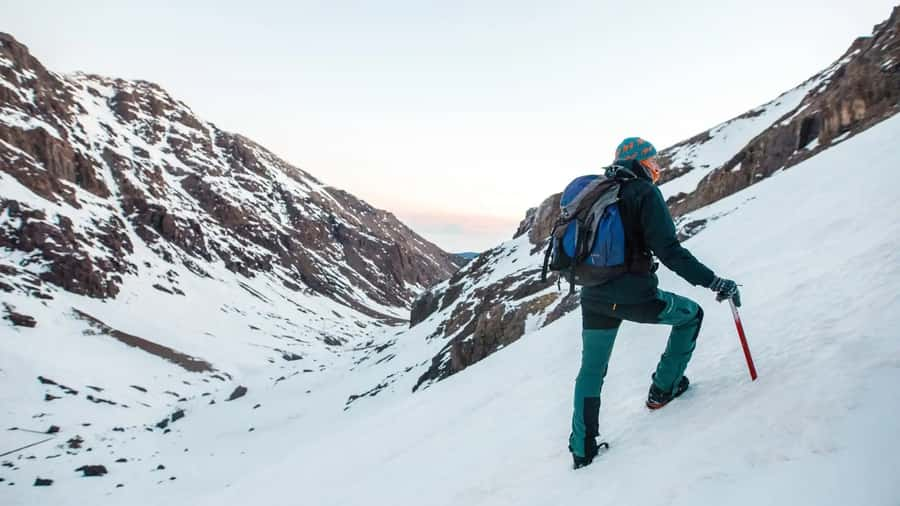
From Sidi Chamharouch, the route becomes more demanding. You continue on steeper mountain paths toward Toubkal Refuge at 3,207 meters. This is where the difference between a scenic hike and a serious trek becomes clear.
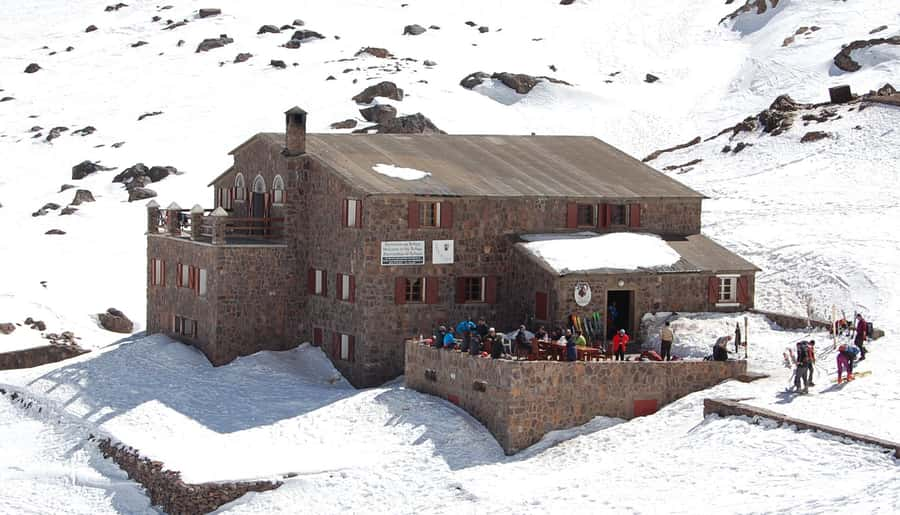
The refuge is basic. You sleep in a shared hostel room, not a private mountain lodge. Dinner and breakfast are included, and tea and coffee are provided, which keeps the evening simple and practical. Bring the sleeping bag listed among the required items, since it is not included in the cost.
The refuge serves one clear purpose: it puts you close to the summit so you can begin the final ascent early. You will not be there for luxury or a long evening. After five or six hours of walking, most of your attention will be on eating, resting, organizing your clothes, and preparing for the morning.
If you value privacy, quiet, or hotel comforts, this overnight stop may feel rough. If you see it as a functional mountain base, it makes sense. The shared room and basic facilities are part of the trade-off for reaching the summit in a short two-day schedule.
More Two-Day Treks in Marrakesh:
- From Marrakesh: 2-Day Mount Toubkal Trek
★ 4.7 · 591 reviews - Marrakech: 2-Day Atlas Villages Trekking Tour
★ 4.5 · 76 reviews - 2 Days Mount Toubkal ascent trek via Ait Mizane Valley
★ 4.3 · 45 reviews - From Marrakech:Trekking in Atlas mountains 2 days
★ 4.9 · 40 reviews
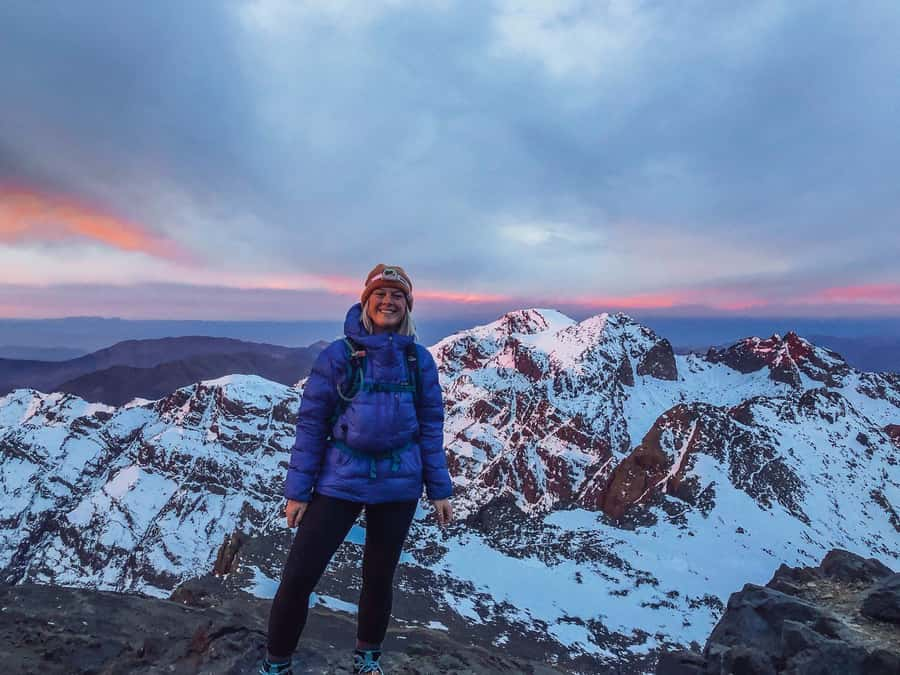
Sunrise on the 4,167-meter summit
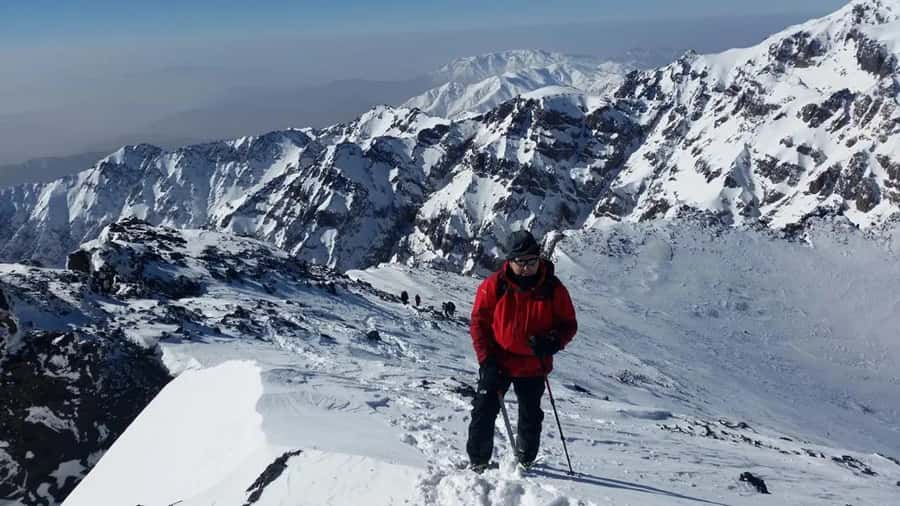
Day two begins early after breakfast. The goal is to reach the summit around sunrise, though the exact timing depends on the group and conditions. From the refuge, you cross mountain streams and follow rocky paths toward the higher slopes.
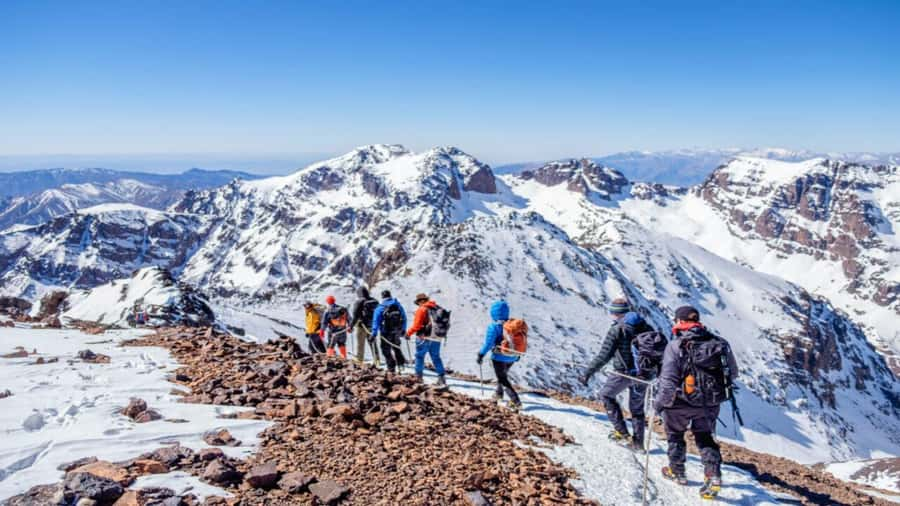
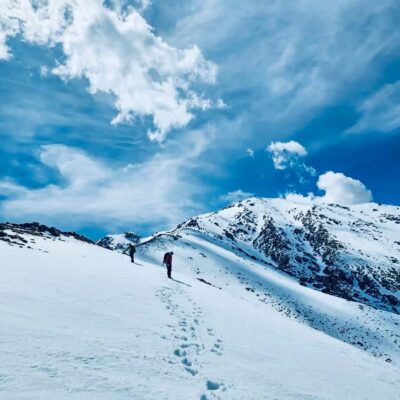
The summit section is described as a challenging walk rather than a technical climb. You do not need climbing skills for the standard route, but the terrain is steep and rocky, and winter conditions may require crampons or an ice axe. These are not included, so ask ahead if snow or ice is expected.
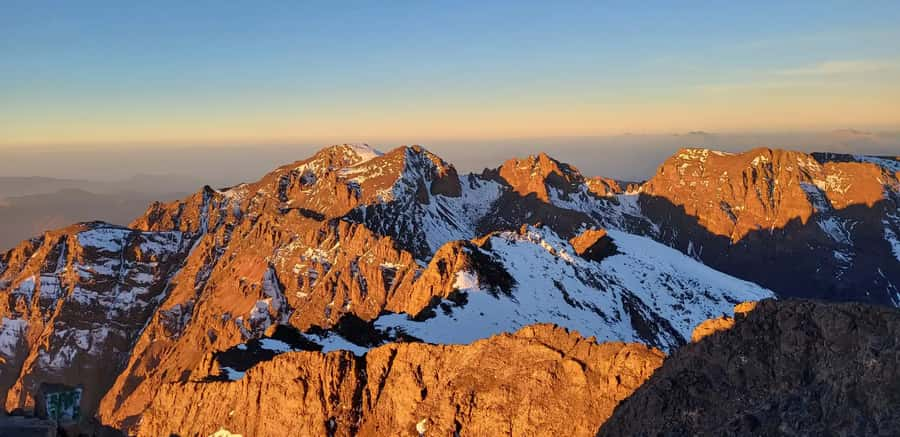
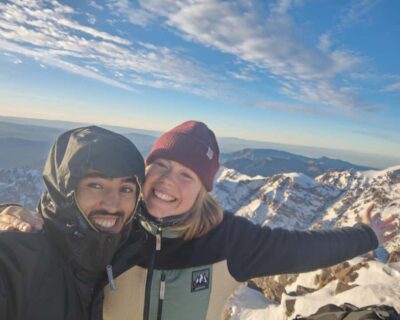
The climb from the refuge to Mount Toubkal’s summit takes about four hours in the planned schedule. At the top, you reach 4,167 meters, the highest point in North Africa. The reward is a wide view over the High Atlas, the plains toward Marrakech, the Anti-Atlas, and the southern horizon toward the Sahara.
The summit break is not just about taking a photograph. It gives you a chance to understand the scale of the area you have crossed. Green valleys and Berber villages sit far below, while the surrounding mountain ridges stretch in every direction. Clear weather makes a major difference, so do not judge the entire experience only by the amount of visibility on your particular morning.
Pacing is important. The phrase at your own pace should not be taken to mean an easy or private ascent. You are still part of a small group with a long return ahead. A slow, steady rhythm is more useful than rushing early and struggling later.
The long descent back to Imlil
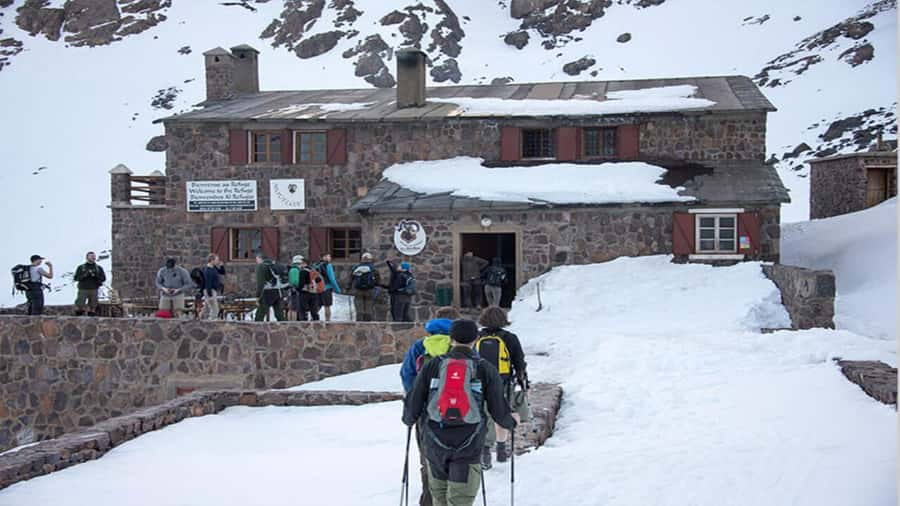
After time at the summit, you descend to the refuge for a break and tea. This pause divides the day into manageable sections, but it does not make the day short. You then continue down through Sidi Chamharouch and back to Imlil.
The schedule allows about 2.5 hours from the summit to the refuge, three hours around the Sidi Chamharouch section, and two hours to reach Imlil. With breaks, meals, photographs, and group movement, the total day can reach 10 to 12 hours.
Many hikers find the descent harder than expected. Your knees and feet take repeated impact, and rocky paths require attention even when the scenery is familiar. Comfortable shoes are listed as essential, but proper hiking shoes are the safer choice for this route. Rain gear also belongs in your pack because mountain weather can change.
At Imlil, you meet the driver for the return to Marrakech. Hassan was praised for being helpful and for driving extra without asking for additional payment. That sort of flexibility can be useful after a very long day, although the exact return timing depends on the group and road conditions.
Food, shelter, and what to pack
The package includes one breakfast, two lunches, and one dinner. Tea and coffee are also included. This reduces the amount of food you need to carry, but you should still bring personal snacks and water if you normally need extra fuel during long hikes. The provided details do not specify water arrangements, so confirm that point before setting out.
Pack for a mountain, not a city day trip. The useful basics are:
- Hiking shoes with secure grip
- Comfortable spare clothing
- Rain gear
- A sleeping bag
- Towel
- Warm layers for the refuge and summit
- Any required crampons or ice axe, if conditions call for them
Sleeping bags are specifically excluded, so this is the item most likely to catch you out. Crampons and ice axes are also excluded, but they may only be needed in certain conditions. Ask the provider what is required for your date instead of assuming the summer setup applies all year.
Alcohol and drugs are not permitted. The tour is designed around a demanding mountain schedule, early breakfast, long walking hours, and a shared refuge.
Who should book this trek
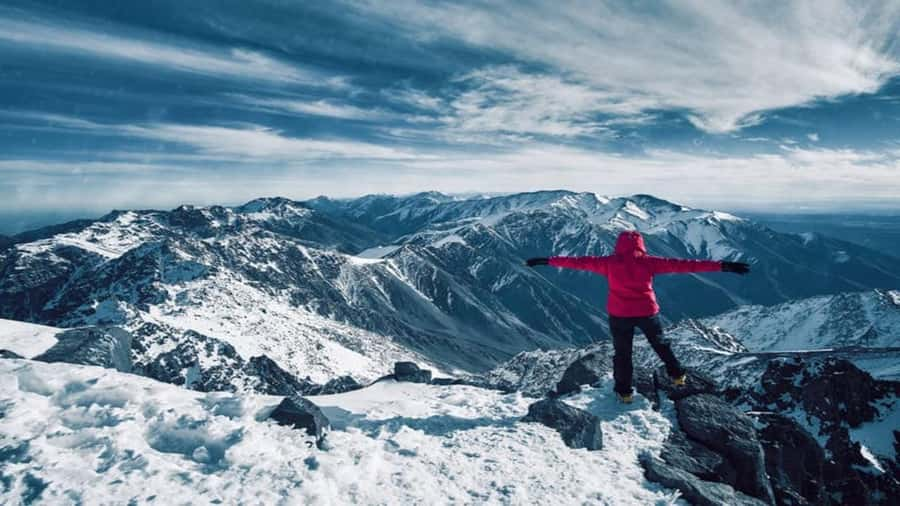
I would recommend this trip to you if you want a direct, organized route to Toubkal and have good physical fitness. It suits someone who likes a challenge, accepts basic accommodation, and wants local guiding without arranging every detail independently.
It is also a strong choice if you have limited time in Morocco. Starting and ending in Marrakech means you can add the trek to a city stay without organizing separate transport to the Atlas Mountains.
You should think twice if you dislike shared rooms, early starts, rocky trails, or long descents. The two-day format saves time, but it also compresses the effort. A longer itinerary would usually allow more time to adjust to the altitude and reduce the pressure of the summit day, but this particular trip is built for a short schedule.
This is not suitable for pregnant women, people with mobility impairments, or wheelchair users. It is also not a good match if you are unaccustomed to sustained walking and have no way to prepare beforehand.
Guide support and group experience
The guide is central to the quality of this trip. A local professional guide does more than point toward the summit. The guide manages the route, helps set the pace, and supports the group when the terrain becomes difficult.
Mohamed was singled out for his encouragement, route knowledge, and willingness to help a struggling member of the group. His use of shortcuts and good viewpoints was also praised. You should still remember that guide quality can vary by departure, but the direct feedback about Mohamed is a reassuring detail if he is assigned to your group.
The available guiding languages are English, Spanish, Arabic, French, Dutch, German, and Italian. Confirm your preferred language when booking, since availability may depend on the date.
A group of up to 15 people gives you company without the scale of a large coach tour. The trade-off is that the group must move at a shared pace. Strong hikers may need patience, while less experienced hikers should feel more comfortable knowing that the guide is not managing a completely private outing.
Booking, cancellation, and value
The $284 price is easiest to justify if you use most of what is included. Pickup and drop-off alone simplify the trip, while the guide, refuge, meals, and mountain transport cover the main practical needs.
Free cancellation is available up to 24 hours before departure for a full refund. You can also reserve now and pay later, which helps if your Marrakech plans are not fixed. Pickup is usually at your hotel or riad, but wait for direct confirmation of the meeting point.
The strongest value comes from convenience and support rather than luxury. You are paying to have the route, transport, food, guide, and overnight base arranged. You are not paying for private rooms, equipment rental, or a slow-paced mountain holiday.
Should you book this Toubkal adventure?
Book it if you want to reach North Africa’s highest summit in a tight two-day plan and you are ready for a long, physically demanding second day. The combination of Marrakech transport, Berber villages, Sidi Chamharouch, local guiding, refuge lodging, and sunrise views gives you a lot in a short time.
I would be cautious if you want comfort, flexible walking hours, or a gentle introduction to high-altitude hiking. Bring a sleeping bag, use proper hiking shoes, confirm seasonal equipment needs, and take the 10 to 12-hour summit day seriously. For fit hikers who accept basic conditions, this is a well-priced and memorable way to connect Marrakech with the High Atlas.
FAQ
How long does the Mount Toubkal tour last?
The tour lasts two days, starting and ending in Marrakech.
What is the highest point reached?
The summit of Mount Toubkal reaches 4,167 meters, making it the highest peak in North Africa.
Is Mount Toubkal a technical climb?
It is described as a challenging walk rather than a technical climb. The route involves trekking, though crampons or an ice axe may be needed in some conditions.
Where do I sleep overnight?
You spend one night in a shared hostel room at Toubkal Refuge, located at 3,207 meters.
Are meals included?
Yes. The package includes one breakfast, two lunches, one dinner, tea, and coffee.
What languages are available for the guide?
Guiding is available in English, Spanish, Arabic, French, Dutch, German, and Italian.
Recently added around Marrakesh
- Mount Toubkal Trek 2 Days & 1 Night★ 4.5 · 26 reviews
- Marrakech: High Atlas Tedali Summit Guided Day Trek★ 5.0 · 4 reviews
- Marrakech: Mount Toubkal 2-Day trek from Marrakech★ 5.0 · 2 reviews
- Marrakech: 2 Day Trek Atlas Mountains & Taoudja Summit 2724M★ 5.0 · 2 reviews
- Marrakech: Guided 2-Day Trek to Imlil and Imnan Valleys★ 4.6 · 14 reviews
- From Marrakesh: 2-Day Trek to Ait-Benhaddou and Ouarzazate★ 4.6 · 36 reviews
- From Marrakech: Aourirt N’ouassif Summit Day Hike & Trek★ 4.9 · 10 reviews
- Day Trek In Atlas Mountais & Taoudja Summit 2720m★ 4.1 · 3 reviews
Atlas Mountains Treks, compared.
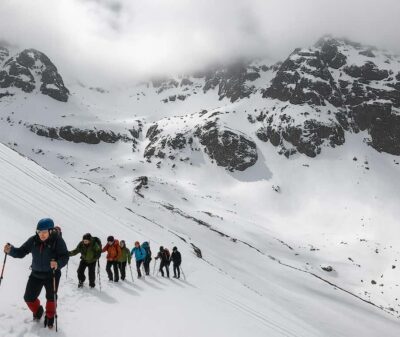
Mt Toubkal Ascent Express Trek 2 Days 1 Nights
Read our review →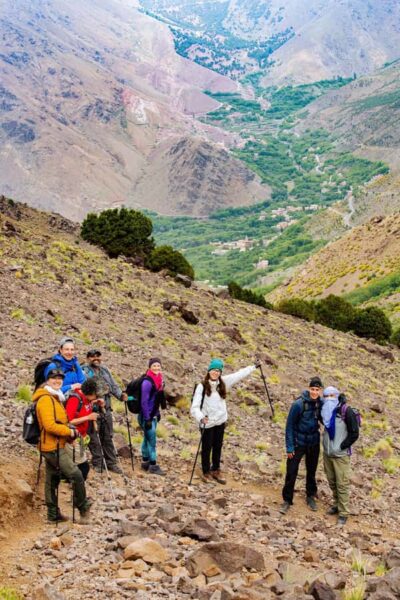
2-Day Mt. Toubkal Trek with 1-Night Stay & Meals
Read our review →
Summiting and Hiking the Atlas Mountains Day Trek from Marrakech
Read our review →
Browse the lists this tour appears in