
REVIEW · MARRAKECH
Marrakech: 2-Day Atlas Villages Trekking Tour
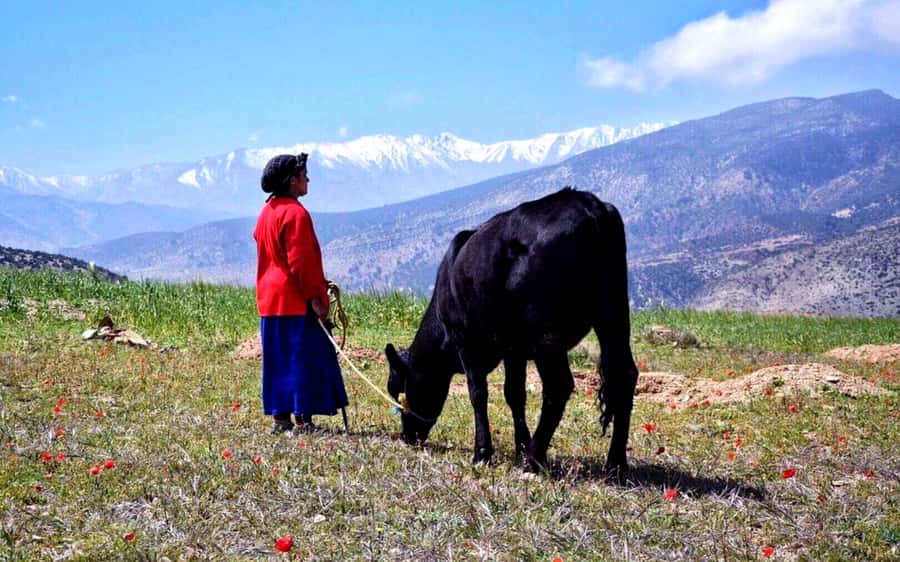
Mountains, villages, and mint tea await. This two-day trip is a strong way to leave Marrakech behind and see the High Atlas through Amazigh villages, family homes, valley walks, and meals cooked in the mountains. I especially like the overnight stay in Ijoukak and the chance to walk through quieter villages rather than spending both days on the usual Marrakech to desert route.
The other big strength is flexibility. You can choose a shorter or longer walk, and guides such as Ali, Youssef, Mustapha, Marwan, and Lahcen have helped make the experience feel personal and relaxed. The main caution is that the first day is busy, and transport arrangements can feel a little mixed at the start. One past booking also involved an older vehicle without working air-conditioning.
Five things to know before you book
- The overnight stay changes the trip: You sleep in the Atlas Mountains, rather than rushing back to Marrakech after a single mountain outing.
- You can choose your walking level: Daily walks range from about one to four hours, with the second day offering the main trek.
- Ijoukak is the special base: The Maison d’Haute Atlas Ijoukak, also called Maison d’Hant in some booking details, has received praise for its food, clean rooms, river setting, and welcoming service.
- The cultural stops are hands-on: Expect argan products, pottery, carpets, henna, tea, livestock, and visits with local families.
- The package is good value at $106: Transport, a guide, one night, meals, drinks, camel or horse riding, entrance fees, and henna are included, though tips and alcohol are not.
Why two days works better than one
A one-day Atlas trip can give you mountain views and lunch, but it often feels like a long outing from Marrakech. This two-day version gives you time to slow down. You spend the night in the mountains, wake up to a rooftop breakfast, and then walk deeper into the valleys on day two.
I like that rhythm. The first day is a mixture of driving, short visits, food, and a village walk. The second day is more focused on walking. You get a better sense of how the villages connect, how fields fit into the valleys, and how different the quieter southern Atlas feels from Marrakech.
The trip is sold at $106 per person. For that price, the package includes a private or shared air-conditioned vehicle, hotel pickup and return, guiding, a night in a mountain riad or guesthouse, breakfast, lunch, dinner, water, tea, coffee, camel or horse riding for 30 minutes, entrance fees, and henna. That is a solid bundle, especially because the overnight accommodation and meals are already covered.
The value is strongest if you want variety. You are not paying only for a hike. You are also paying for transport between scattered villages, local guides, food, and access to family-run places that can be awkward to arrange independently.
More Two-Day Treks in Marrakesh:
- Marrakesh: 2-Day Mt. Toubkal Trek with 1-Night Stay & Meals
★ 4.7 · 795 reviews - Marrakech: 2-Day Atlas Mountains Trek with Village Stay
★ 4.8 · 717 reviews - From Marrakesh: 2-Day Mount Toubkal Trek
★ 4.7 · 591 reviews
From Marrakech to the first argan stop
Pickup is from your hotel, riad, or apartment in Marrakech. You should be ready in the lobby 15 minutes before departure and provide the exact name of your accommodation when booking. The drive toward the Atlas takes about two and a half hours in total, although the day includes several stops.
About an hour after leaving Marrakech, the trip begins to feel less like a transfer and more like a sightseeing drive. You may stop for photographs near old villages and visit a women’s argan cooperative near Moulay Brahim, around 45 kilometers from Marrakech.
This is a useful stop if you want context rather than a quick souvenir purchase. You can taste Moroccan tea, try argan products, and learn how this distinctive tree supports local work. The activity description also includes a demonstration connected with argan oil production, so you may see parts of the process rather than simply browsing shelves.
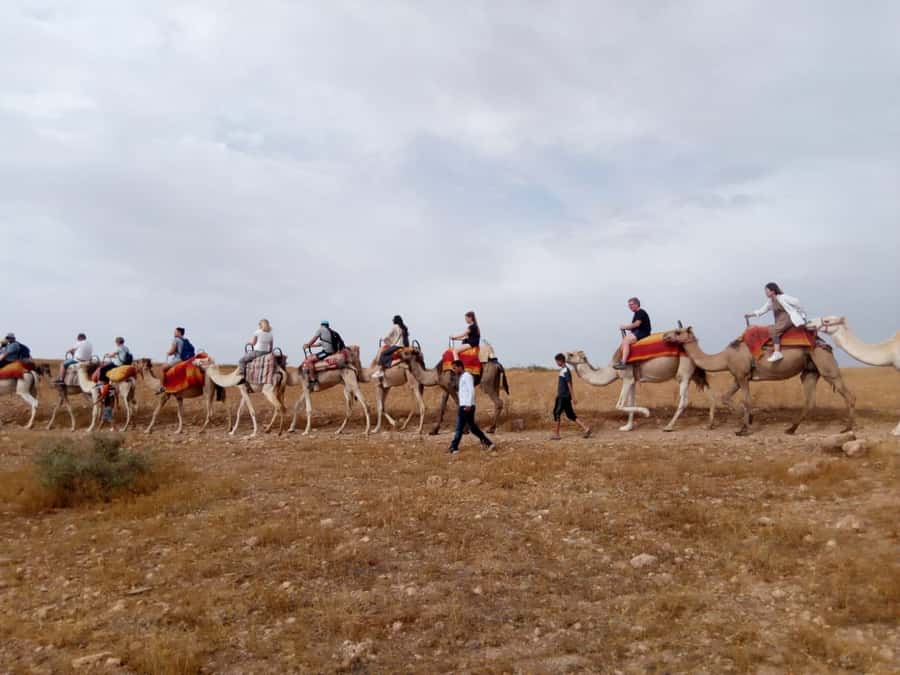
There is an optional 30-minute camel or horse ride. It is included, but you can skip it. I would treat it as a light, playful extra, not the main reason to choose this tour. If you have limited interest in animal rides, the argan cooperative and mountain drive offer more cultural value.
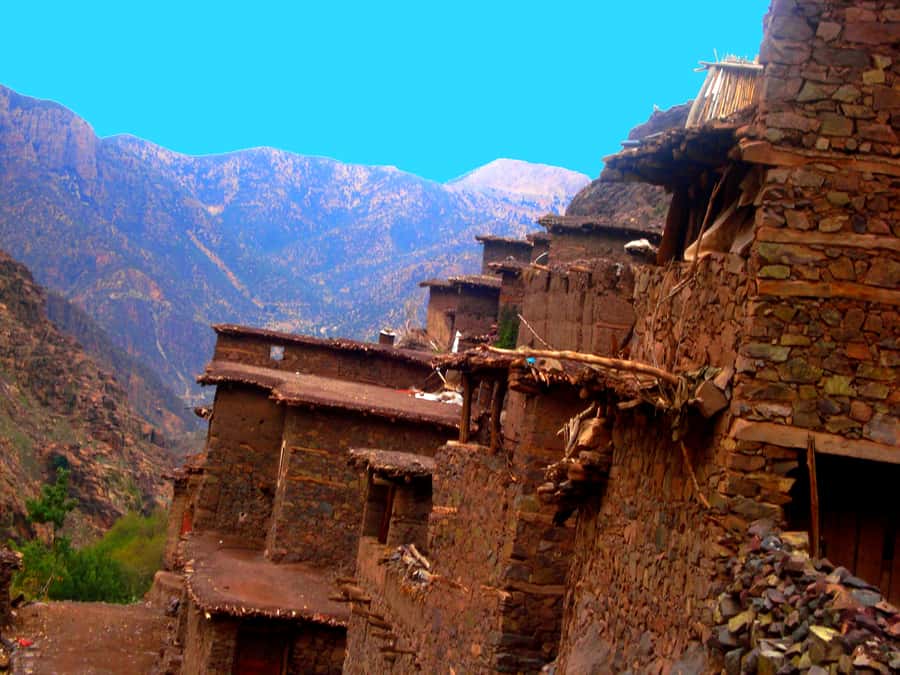
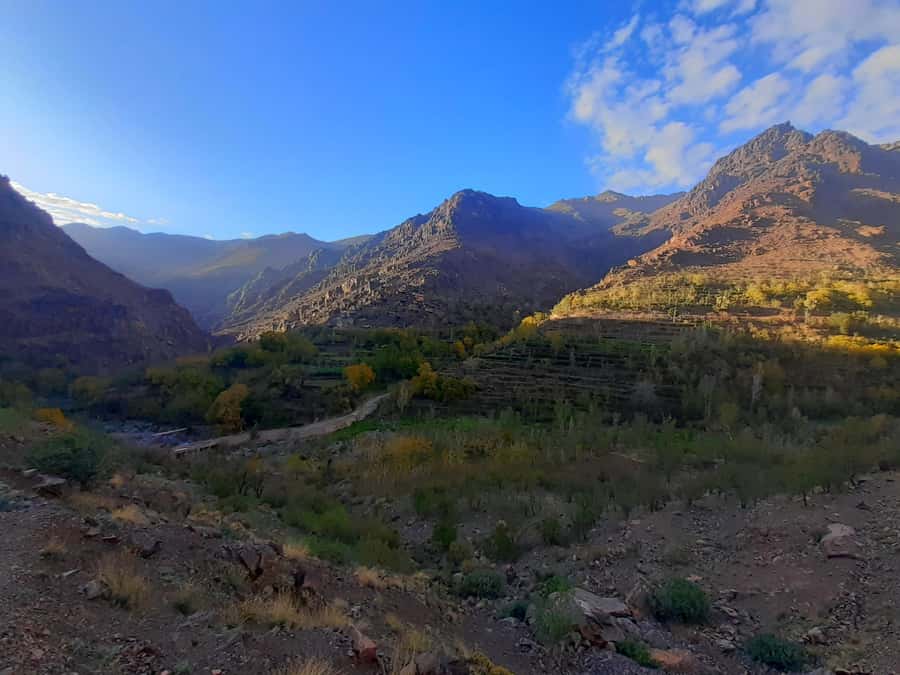
The drive continues through mountain valleys and remote villages, with several photo stops. The scenery is the real attraction here: barley, corn, vegetable plots, almond trees, walnut trees, dirt-built homes, and steep slopes that change as the road climbs and bends.
Tinmel, Ijoukak, and lunch above the valley

One of the most unusual stops is the Tinmel School, a historic site dating from the 12th century. The description also refers to other older monuments, including the Kasbah of the Dukouj, built in 1880. Which sites you visit can depend on the day’s route and local conditions, so think of these as possible stops rather than guaranteed highlights.
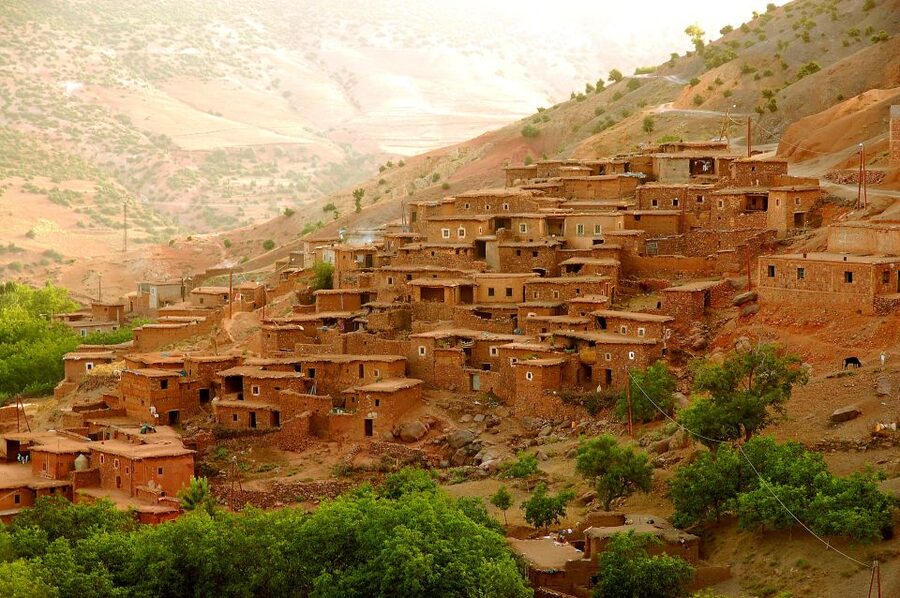
The route then reaches the Oued Agoundiss area and the villages around Ijoukak. Here, the experience turns from road sightseeing to a closer look at mountain life. You may walk through remote Amazigh villages, meet residents, and eat a meal on a terrace at a local family home.
Lunch is a major part of the pleasure. Several bookings describe generous Moroccan food served in comfortable homes or mountain guesthouses, with wide views over the valley. This is not polished restaurant dining, and that is the point. You are eating where people live, often with tea and conversation included.
The cultural activities can include local pottery, carpet making, henna, livestock, and visits to families. Much of this is optional. You can take part, watch, or skip a portion if you are tired or simply not interested.
That flexibility matters because the first day packs in a lot. You may have already driven for several hours, stopped at the cooperative, taken photographs, ridden a camel or horse, visited a historic site, and walked through villages before reaching your accommodation.
A quiet night at Maison d’Haute Atlas Ijoukak
The overnight stay is the reason I would choose this option over a shorter Atlas excursion. The accommodation has been praised for clean rooms, good service, beautiful views, a river setting, and very generous meals.
One particularly useful detail is that the lodging has felt warm and comfortable even during a cold-weather visit. A past booking described an open fire, a private sitting area attached to the bedroom, and a special dinner arranged for Valentine’s Day. You should not assume a custom celebration, of course, but the example says something about the care the hosts may provide.
The accommodation is described as a riad, hotel, or guesthouse depending on the booking details. In practice, expect a local mountain stay rather than a city hotel. Facilities can be more basic than in Marrakech, and one booking noted unreliable Wi-Fi during a storm. If you need constant internet access, prepare for a quieter evening.
Dinner, breakfast, and drinks are included. The rooftop breakfast is one of the simple pleasures of the trip. You can look over the mountains with tea or coffee before setting off, rather than eating quickly in a city café.
A few more treks around Marrakesh worth a look
- From Marrakech: 3-Day Mount Toubkal Climbing Trek
★ 4.7 · 597 reviews - From Marrakech: Atlas Mountains Summit Trek
★ 4.9 · 228 reviews - Marrakech: Atlas Mountains Summit Day Trek 2700m
★ 4.9 · 83 reviews - Marrakech: 3-Day High Atlas Mountains and Three Valleys Trek
★ 4.8 · 63 reviews
The second-day walk through Agoundiss Valley
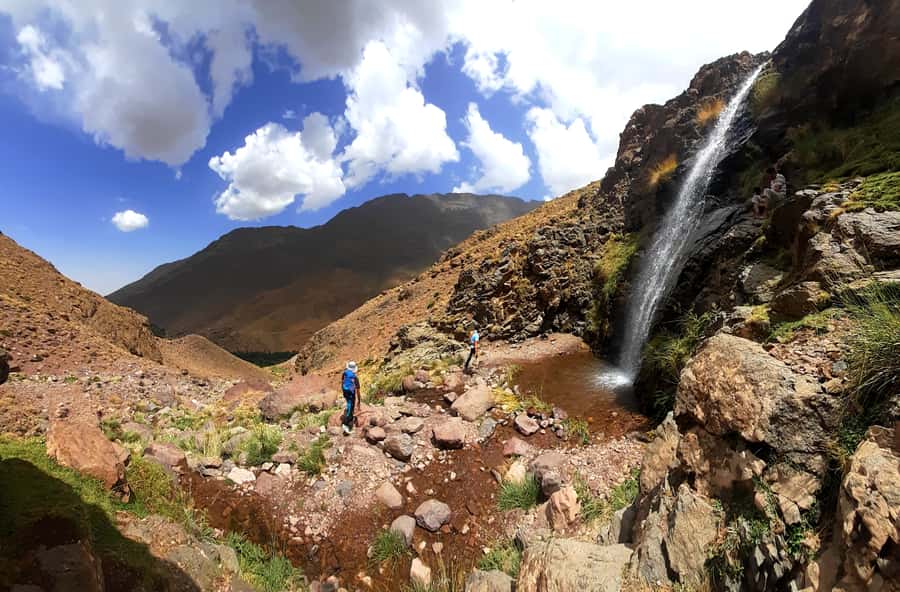
Day two is the clearest reason to book the two-day version. After breakfast, you take a guided walk lasting about three to four hours, with the exact length adjusted to your choice and ability.
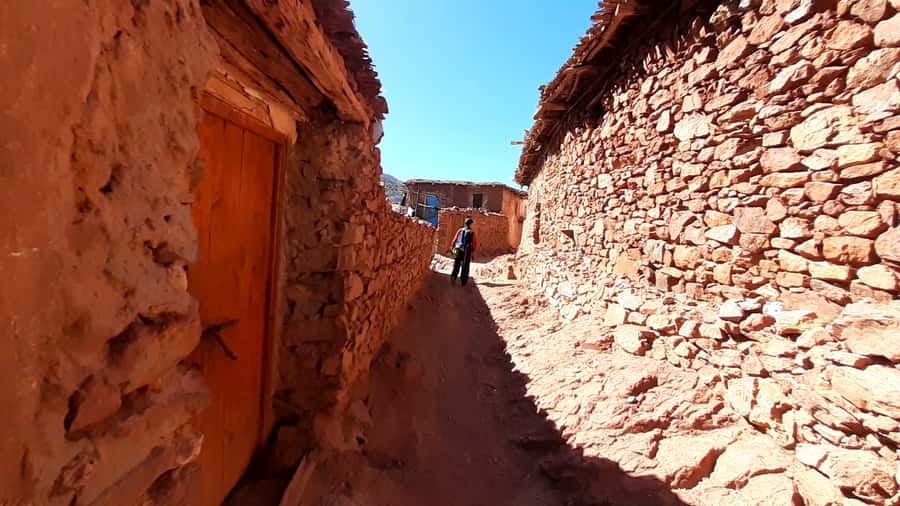
The walk begins in the Agoundiss Valley and can pass through Amazigh villages with few other visitors around. The route is about seeing daily life as much as reaching a viewpoint. You may pass fields, old houses, village paths, and mountain scenery while your guide explains the area and local culture.
The walk is not presented as a technical mountain climb. Still, you need to be comfortable walking outdoors for several hours. The activity is not suitable for people with heart problems, and you should bring sunglasses, a camera, and your passport or identification card.
Guides make a real difference here. Ali has been praised for his professionalism and warmth. Youssef has been described as friendly and informative, while Marwan has helped explain Moroccan culture, religion, and village life. Lahcen has led longer walks through remote settlements and adapted well when communication in English or French was limited.
You may have different guides on the two days. That is normal for this arrangement and can be a benefit, since each local guide brings knowledge of a different valley or village. It can also mean the experience feels less uniform than a trip led by one guide from start to finish.
Depending on the route, you may also have the chance to make pottery or choose where to eat lunch. One booking described reaching Marrakech around 7 p.m. after a four-hour trek, while another guide helped a group return by about 5 p.m. If you have an evening flight or dinner booking, leave plenty of space in your schedule.
Meeting local families without rushing the moment
The best parts of this experience are not the named stops. They are the small exchanges: drinking tea in a family home, learning how the tea bearer serves it, watching a carpet or pottery demonstration, or having henna applied at the guide’s family home.
The henna activity is scheduled for the last day in the guide’s home, with his family. It is a personal touch, but you should see it as optional rather than a formal performance. The same applies to the women’s cooperative, carpet work, pottery, and livestock visits.
These activities also connect the trip to local income. Buying an argan product or carpet is not required, and you should never feel pressured. Still, these stops can be more meaningful when you understand what the work involves and how cooperatives help women earn locally.
The tour description uses both Berber and Amazigh. Amazigh is the preferred modern term for the Indigenous peoples of Morocco, while Berber remains common in tourism. Your guide can add more detail, but even a short visit offers a better sense of mountain culture than a quick roadside photograph.
Transport, group flow, and small drawbacks
The tour includes pickup and drop-off in an air-conditioned vehicle. In practice, the first transfer may involve a larger bus or a vehicle shared with people taking a one-day trip. A private booking may therefore not feel fully private during the initial ride to the mountains.
That arrangement has helped some groups, but it can be confusing. You might be separated from one-day participants later, while the two-day group continues to Ijoukak. Ask the driver or guide early where you will sleep and who will lead the next walk.
Vehicle quality may vary. One past booking reported an old car without air-conditioning, while later vehicles and buses were comfortable. This does not appear to be the usual experience, but it is a fair reason to keep expectations practical.
The schedule is full. If you prefer a slow holiday with long café breaks, this may feel busy on day one. If you want a broad sample of mountain life in only 48 hours, the packed schedule is a benefit.
The tour is offered with guides speaking English, French, Arabic, or Spanish. Communication has worked well for many people, though language ability can differ from one guide to another. The strongest guides are flexible and use simple explanations, demonstrations, and local examples.
Who will get the most from this $106 trip?
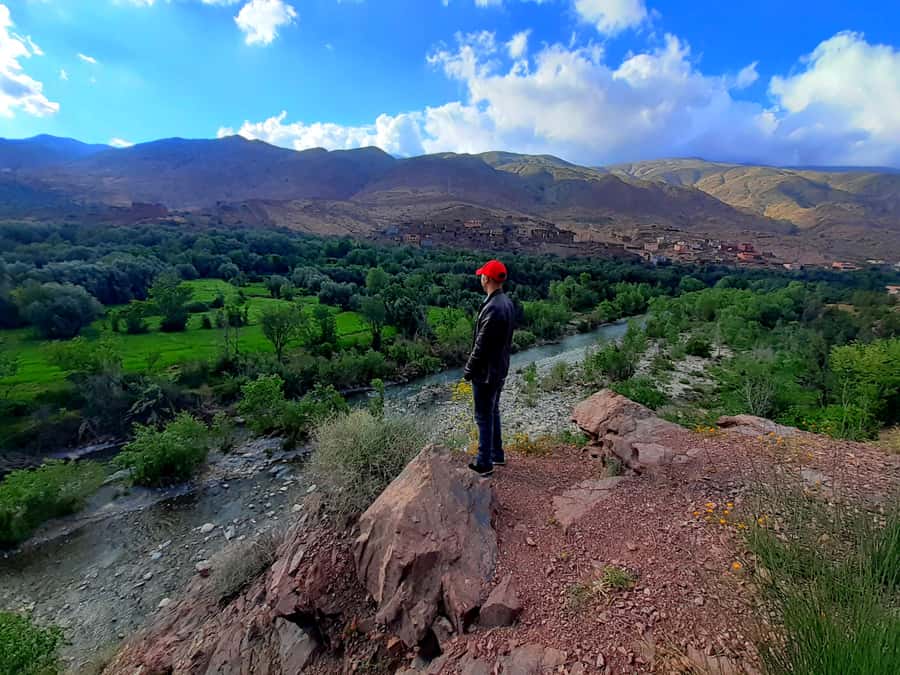
I would recommend this experience to you if you want a first taste of the High Atlas without arranging transport, lodging, meals, and local guides separately. It suits solo visitors, couples, families, and small groups who enjoy walking but do not want an extreme trek.
It is especially good after several days in Marrakech. The shift from medina lanes and city noise to open valleys, dirt houses, fields, and family kitchens gives the trip a useful change of pace.
You should think twice if you dislike uneven walking, long drives, optional shopping-style stops, or changing guides. The first day is not a pure hiking day, and the second day can finish late. People with heart problems should not book it.
Bring comfortable walking shoes, sunglasses, a camera, and your passport or ID. Pack lightly for the overnight stay, and keep some flexibility in your evening schedule on day two.
Cancellation is available up to 24 hours before departure for a full refund, and you can reserve without paying immediately. You will receive a message the day before to confirm the departure date and timing.
Should you book the Atlas villages trek?
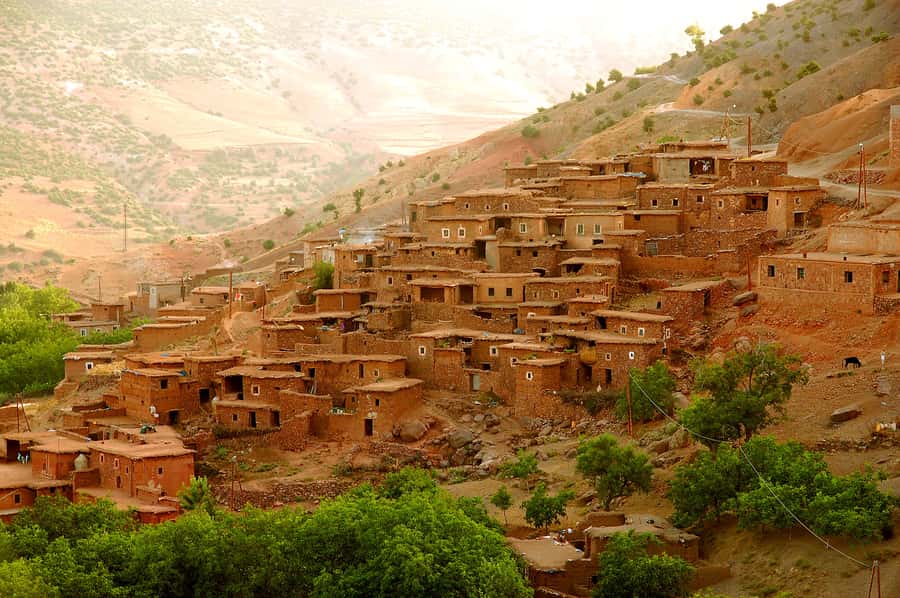
Book it if you want mountain culture rather than a quick photo stop. The strongest parts are the overnight stay in Ijoukak, the excellent food, the local guides, and the longer second-day walk through villages that feel far removed from Marrakech.
The experience is not perfectly polished. Vehicle arrangements can vary, the first day is busy, and the exact stops may change. But at $106, with transport, accommodation, meals, activities, and guiding included, it offers a lot for two days.
I would choose it over a one-day mountain trip if your schedule allows. Ask for the two-day route clearly, confirm your hotel or riad name, and be ready to walk for several hours. If that sounds right, this is a practical and memorable way to see the Atlas with local people at the center of the experience.
FAQ
How long is the Marrakech Atlas villages tour?
The experience lasts two days. The drive from Marrakech to the Atlas area takes about two and a half hours, with stops along the way, and the second day includes a three to four-hour guided hike.
What is included in the $106 price?
The price includes hotel transport, a guide, one night in Atlas Mountain accommodation, breakfast, lunch, dinner, water, tea, coffee, a 30-minute camel or horse ride, entrance fees, visits, an air-conditioned vehicle, and henna.
Where do you stay overnight?
The overnight stay is in the Ijoukak area of the Atlas Mountains. The accommodation is described as a riad, hotel, or guesthouse, including Maison d’Haute Atlas Ijoukak in the booking details.
Can I choose how much walking to do?
Yes. The activity offers walking options ranging from about one to four hours per day, depending on your choice. The main second-day walk usually lasts three to four hours.
What languages are available for the guide?
Guides are available in English, French, Arabic, and Spanish. You may have different guides on the two days.
Is camel or horse riding included?
Yes. A 30-minute camel ride or horse ride is included. It is described as an optional stop, so you can choose not to take part.
What should I bring?
Bring your passport or ID card, sunglasses, and a camera. You should also arrive at the meeting point 15 minutes before departure and provide your hotel, riad, or apartment name.
Recently added around Marrakesh
- Mount Toubkal Trek 2 Days & 1 Night★ 4.5 · 26 reviews
- Marrakech: Mount Toubkal 2-Day trek from Marrakech★ 5.0 · 2 reviews
- Marrakech: High Atlas Tedali Summit Guided Day Trek★ 5.0 · 4 reviews
- Marrakech: 2 Day Trek Atlas Mountains & Taoudja Summit 2724M★ 5.0 · 2 reviews
- Marrakech: Guided 2-Day Trek to Imlil and Imnan Valleys★ 4.6 · 14 reviews
- Marrakech: 2 Day Toubkal Trek & 1 Nights with Hotel Pick up★ 5.0 · 2 reviews
- From Marrakesh: 2-Day Trek to Ait-Benhaddou and Ouarzazate★ 4.6 · 36 reviews
- From Marrakech: Aourirt N’ouassif Summit Day Hike & Trek★ 4.9 · 10 reviews
Marrakech Trekking Tours, compared.
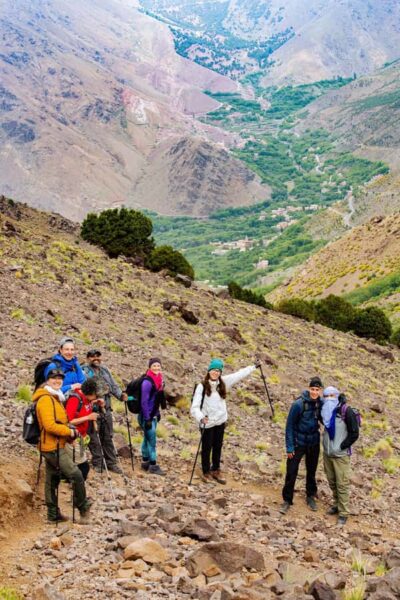
2-Day Mt. Toubkal Trek with 1-Night Stay & Meals
Read our review →
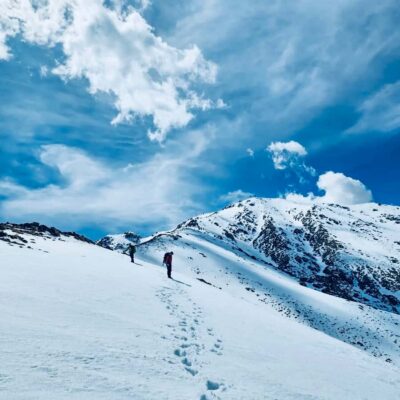
Summiting and Hiking the Atlas Mountains Day Trek from Marrakech
Read our review →
Private Tour to Oasis and Trekking in the Desert of Erg Chigaga
Read our review →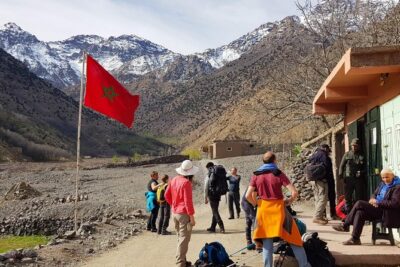
Browse the lists this tour appears in