
REVIEW · LOMBOK
Mount Rinjani Trekking 3D/2N Lake,Host Spring Full Experiece
This 3-day, 2-night Mount Rinjani trek gives you the mountain’s greatest hits: a sunrise summit at 3,726 meters, Segara Anak Lake, hot springs, and a sunset from Senaru Crater Rim. I like the small group limit of six, and I like that experienced guides and porters handle the camp gear, cooking equipment, and food. The main drawback is the pace. You need strong fitness, an early summit start, and enough energy for two demanding days in a row.
The route crosses open grassland, volcanic slopes, crater rims, forest, and high mountain camps. I also like the thoughtful camping setup, which includes a private tent, sleeping bag, thick sponge mattress, toilet tent, and camping chair. Still, the advertised duration is confusing: the program is described as 3 days and 2 nights, while the activity details also say 2 days. Confirm the exact schedule before paying.
Five details that shape the trip
- The route starts in Sembalun and ends in Senaru: You climb through open country toward the summit, then descend through forest.
- Summit morning begins around 2:00 a.m.: Expect a warm drink, light food, and a 3:00 a.m. climb in darkness.
- Segara Anak Lake comes with a hot-spring stop: After the summit, you descend to the lake, rest, swim, and bathe in hot water.
- Porters carry the camping load: You still need to carry a daypack, but the heavy tent, cooking gear, and supplies are handled for you.
- Senaru Crater Rim is the scenic finale: The camp looks toward Mount Agung in Bali and the volcanic activity near the lake.
- The price includes more than a basic hike: At $231 per person, you receive guiding, porters, meals, water, camping equipment, transport, insurance, and the national park fee.
Is $231 a fair price?
At $231 per person, this trek sits in the comfort-oriented part of the Rinjani market rather than the bare-bones backpacker end. The value comes from the number of practical items included. You receive an English-speaking guide, professional porters, three meals a day, fruit, tea, coffee, drinking water, camping equipment, transport to the trailhead, hotel pickup around Senaru, storage for bags you do not need, trekking insurance, and the Rinjani National Park entrance fee of IDR 250,000 per person.
The package also includes three liters of mineral water per person per day. That matters on a hot, exposed climb, though you should still ask how water is distributed and whether the full amount is supplied at each stage.
The larger private tent and 6-centimeter sponge mattress are useful upgrades. So is the toilet tent. A mountain toilet is never a luxury in the usual sense, but privacy and shelter from the wind make a real difference at crater-rim camps.
You still need to budget for a night before the trek, personal clothing, trekking shoes, poles, gloves, a jacket, and optional tips. A small daypack can be rented, but the supplied details do not give the rental price. GoPro use, flights, extra food, and warm clothing are also outside the package.
The porter system makes this possible for fit hikers who do not want to carry a full camping load. It does not make the mountain easy. You still walk for hours, climb steep volcanic slopes, sleep at altitude, and face a long summit morning.
More Mount Rinjani Treks in Lombok
- Rinjani trekking 2D 1N RIM
★ 5.0 · 94 reviews - Rinjani Trekking 3D2N Summit
★ 4.5 · 85 reviews - 3D/2N Rinjani trekking summit,lake and hot springs.
★ 5.0 · 85 reviews
Day one: Sembalun’s grassland to the crater rim
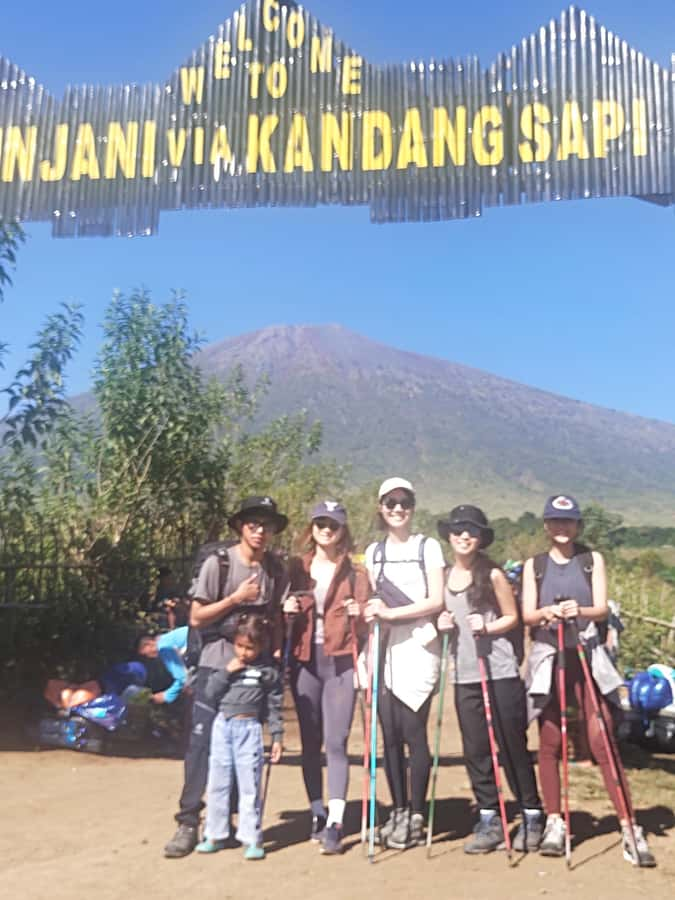
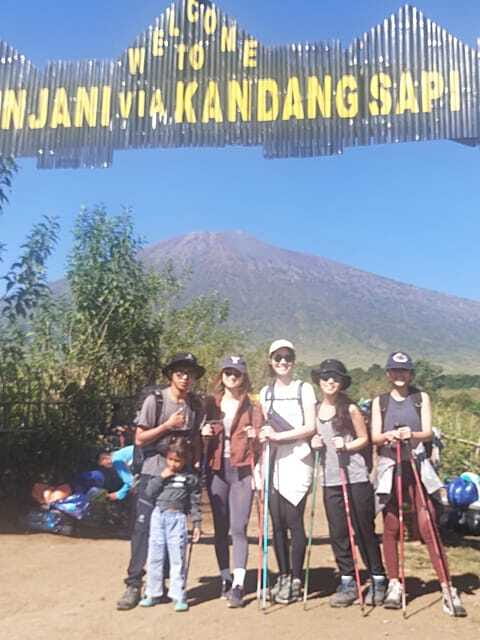
Your first morning starts around 6:00 a.m. with breakfast, followed by transport to Sembalun Village at about 1,100 meters. Registration takes place at the Rinjani information center before you begin walking at approximately 8:00 a.m.
The opening section crosses wide grassland. The climb is gentle at first, and the broad views give you room to settle into the day. There is little shelter in this section, so sun protection and a hat are practical choices. Bring outdoor clothing that can handle heat early in the day and cooler air later.
After about two hours, you reach Post 1 at 1,300 meters. The walk to Post 2 at 1,500 meters takes roughly another 40 minutes. From there, the path continues to Post 3 at 1,800 meters, where you stop for lunch.
The final push to Sembalun Crater Rim at 2,639 meters takes about three hours, including a long, steep climb. This is where the day becomes serious. Save some strength for this section, since arriving tired can make the first night uncomfortable.
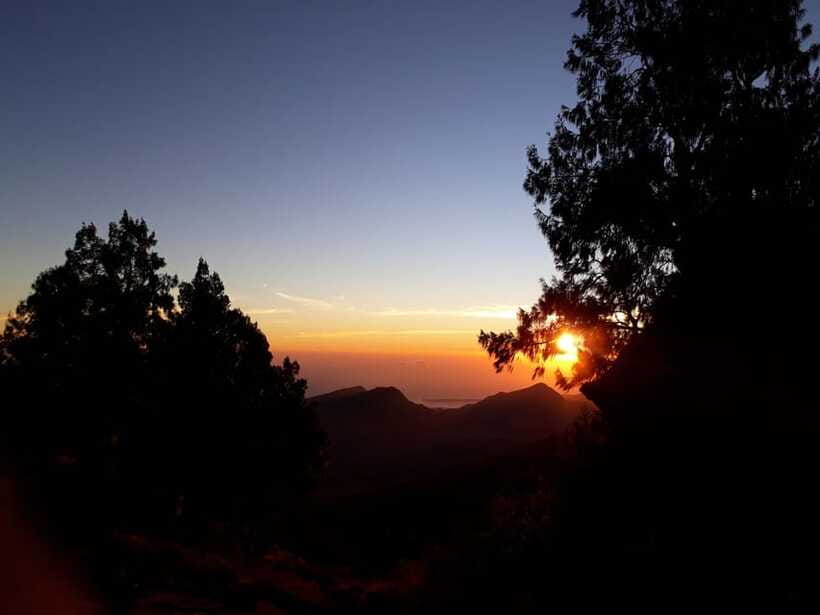
Camp is set on the crater rim. The reward is a sunset over the mountain and the crater. Your guide and porters prepare dinner, and the included menu may feature curry or gado-gado, followed by fruit, cheese, and chocolate. The food is a major part of the value here. One verified booking praised the meals as better than expected for a mountain trek, while also noting that the porter was supportive and accommodating.
Try to sleep early. The next wake-up comes around 2:00 a.m.
Summit morning: a 3,726-meter test
A warm drink and light breakfast come before the summit climb. The walk begins at about 3:00 a.m., usually in darkness, so a working flashlight is essential. The route starts with a moderate climb, then becomes longer and more demanding before the final steep volcanic section.
That last approach is the part that tests your patience. The surface can make progress slow, and the height adds to the strain. The supplied guidance calls this route suitable for experienced climbers with strong energy, not for casual walkers who simply want a scenic mountain outing.
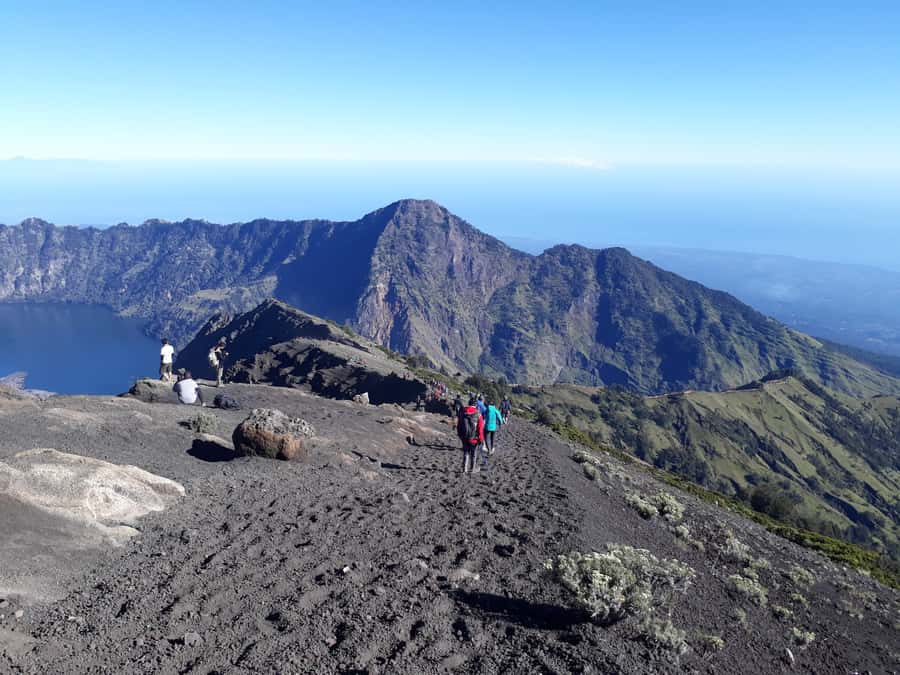
The target is the summit at 3,726 meters, reached at about 6:00 a.m. if the pace works as planned. From the top, you can see Lombok, Bali, Sumbawa, and Segara Anak Lake. Sunrise is the reason for the early start, but the view is also the payoff for the hard climb.
You should keep expectations realistic. Weather, pace, and personal fitness affect the arrival time. The tour includes trekking insurance, but you remain responsible for telling the guide about any health problem before starting.
After time at the summit, you descend to the Sembalun Crater Rim in about two hours. Breakfast is served there. A menu can include beef burgers, toast, pancakes, fruit, or similar breakfast foods. This is a welcome stop because you have already spent several hours climbing and descending before the main descent to the lake begins.
Segara Anak Lake and the hot springs
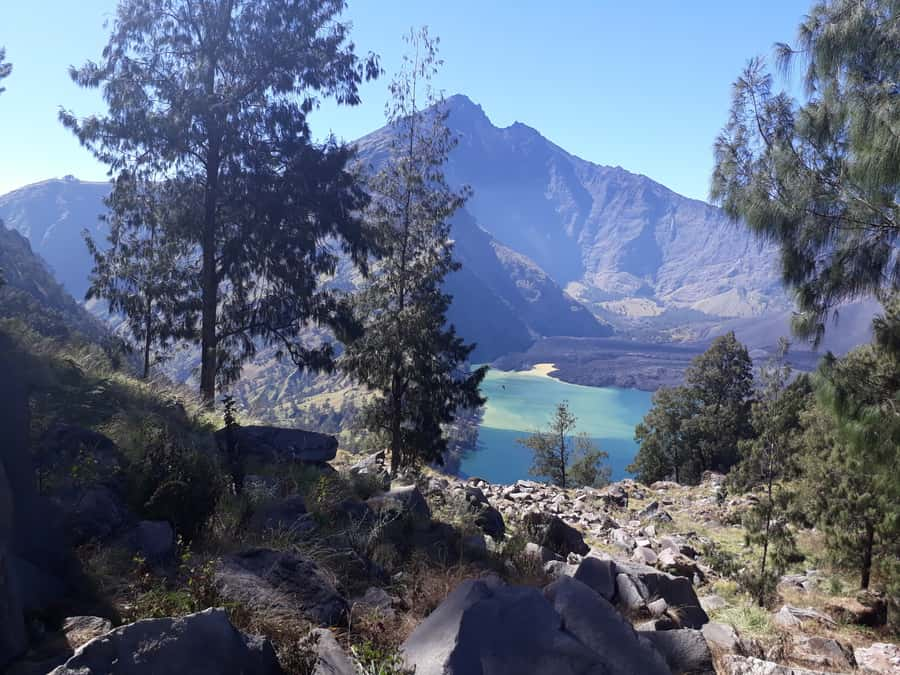
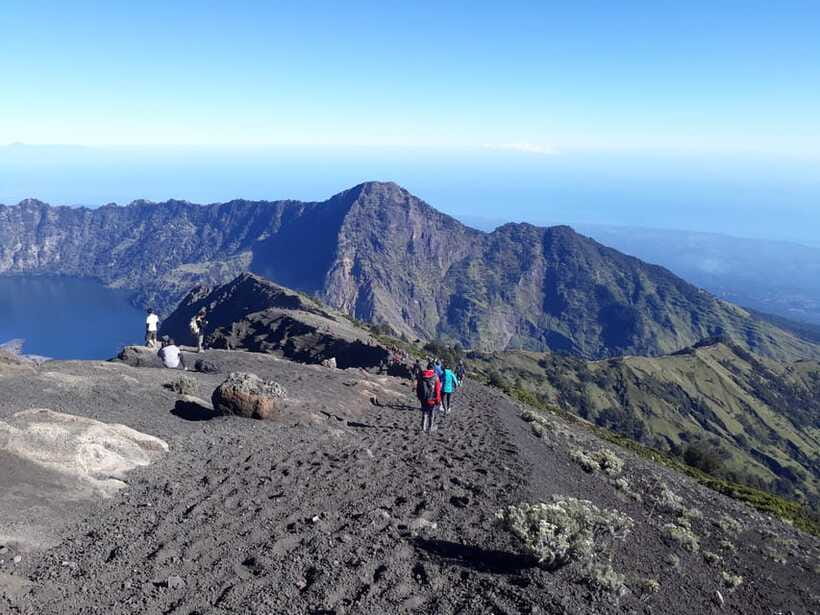
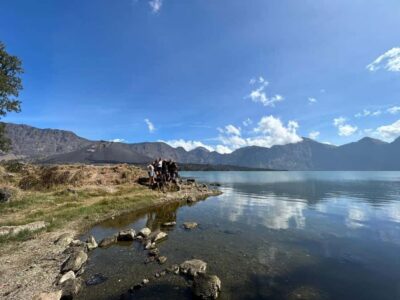
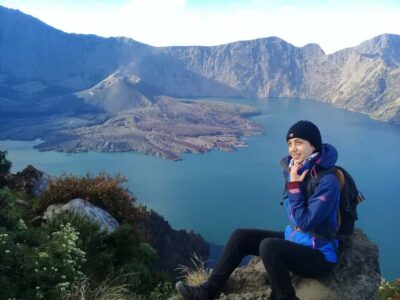
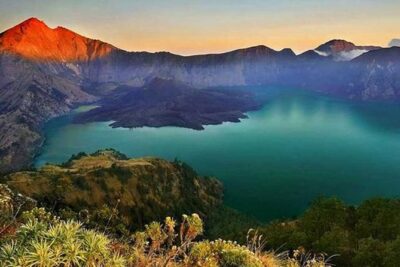
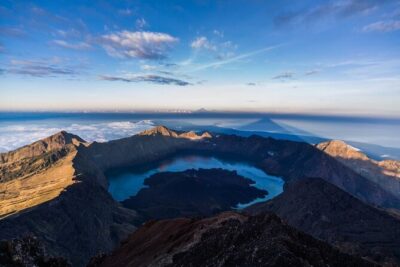
From Sembalun Crater Rim, the trail drops toward Segara Anak Lake for about three hours. This section changes the feel of the trek. You leave the high summit terrain and head toward the crater floor, where the lake provides one of Rinjani’s most memorable views.
You stop beside the lake for rest, lunch, and time to look around. The porters prepare the meal, which may include spaghetti, fried rice, or noodles with meat, vegetables, tofu, or tempe. Pineapple and banana are also included during the trek, along with tea and coffee.
The lake stop is not just a photo break. You can swim in the lake and bathe in the hot springs. Short pants, a small towel, and a change of clothing are worth packing in your daypack. The hot water can soothe tired muscles, though you should not assume it will erase the effort of the summit morning.
The timing is demanding. You climb the summit before dawn, descend for breakfast, walk down to the lake, and then climb again to Senaru Crater Rim. If you are already struggling by the lake, tell your guide early. The porter team and guide are there to support the group, but the route still requires a further ascent.
Same trailhead, a longer or shorter day out:
- 2D1N Senaru Crater Rim Trekking
★ 5.0 · 178 reviews - Rinjani Trekking 3 Days 2 Nights (Sembalun – Senaru)
★ 5.0 · 84 reviews - Trekking Mt. Rinjani 2 Days 1 Night Senaru Crater Rim
★ 5.0 · 55 reviews - Mount Rinjani Second Summit Trekking ( 2Days-1Night )
★ 5.0 · 49 reviews
Night two at Senaru Crater Rim
After lunch and rest at the lake, you climb to Senaru Crater Rim at 2,641 meters. This is another steep section after a very long day. The reward is a different view from the first night’s camp.
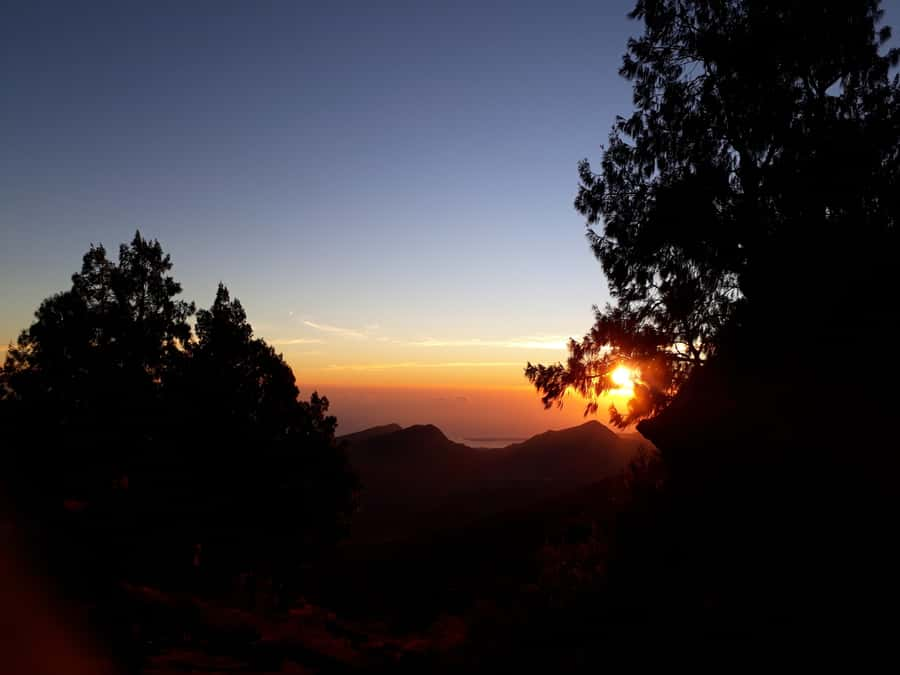
Senaru Crater Rim is known here for its sunset over Mount Agung in Bali. You can also look down toward the lake and see smoke from the newer volcanic cone near its edge. The combination of water, crater walls, and volcanic activity makes this camp especially striking.
Dinner is prepared by the porter team. The camping setup includes a large private tent, sleeping bag, mattress, toilet tent, and camping chair. These extras matter after the second day, when a flat sleeping mat and a private toilet area feel far more valuable than they did at home.
The cold is another factor. The included gear helps, but bring a thick coat or jacket, gloves, and warm clothing. The supplied advice also asks you to bring personal medicine, outdoor clothing, hiking pants, and a flashlight.
Day three: rainforest descent to Senaru
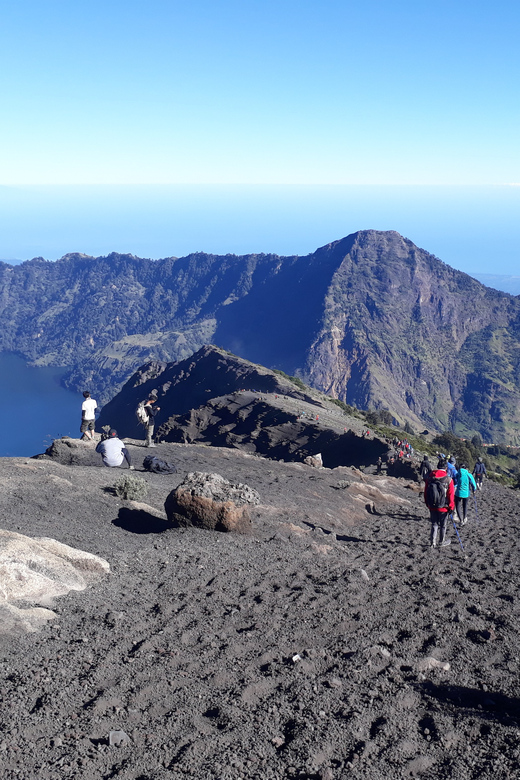
The final morning begins with breakfast and a sunrise from the Senaru Crater Rim. Then you descend through rainforest toward Senaru Village at about 601 meters.
The descent takes around five hours, with lunch along the way. Downhill walking can sound easy after a summit climb, but tired legs and uneven ground can make it hard on your knees. Trekking poles are not included, so bring your own or ask about renting them.
The forest adds shade and a different setting from the open Sembalun grassland. If you are lucky, you may see rare black monkeys. The supplied details do not promise a sighting, so treat it as a possibility rather than a planned attraction.
At Senaru Village, transport takes you to your next destination. Pickup from hotels around Senaru is included, and free pickup and drop-off are also listed for Bangsal and Senggigi. Confirm the exact pickup area when booking, since transport terms can vary by starting point.
Food, gear, and what you carry
The food plan is unusually detailed for a mountain trip. You receive three meals each day, fruit such as pineapple and banana, tea, coffee, and water. Meals may include meat, vegetables, tofu, tempe, curry, gado-gado, fried rice, noodles, pancakes, toast, and fruit.
Tell the operator about dietary needs before the trek. The supplied information does not describe vegetarian, vegan, halal, or allergy arrangements in detail, so do not leave this question until departure morning.
The porters carry cooking utensils, tents, sleeping equipment, and other camping supplies. The description also calls this a luxury package with porters carrying personal belongings. Still, you should pack a small daypack with water, warm layers, a flashlight, snacks if permitted, sunscreen, medicine, and a rain layer if needed.
There is a contradiction in the practical instructions. One section says to bring food and drinks, while another lists food and drinks as not allowed. Ask Din Trekking Rinjani to clarify what personal snacks and drinks are permitted before you start.
You also need trekking shoes, hiking pants, gloves, a head covering, a jacket, and suitable outdoor clothing. A passport or copy is requested, and you may be asked for a deposit. The advice to bring plantation seeds is unusual, so ask why they are required and what type is acceptable.
Who should choose this Rinjani trek?
This trip suits you if you already hike regularly, can walk long distances, and are comfortable with steep climbs and early starts. It is especially good for someone who wants the complete Sembalun to Senaru route rather than a short crater-rim outing.
The small group limit of six is a real advantage. A group this size is easier to manage on a narrow trail, and the guide can check on people more closely. One booking praised the guide for being professional and attentive, with regular checks on the group’s condition. Another gave strong praise to both the guide and porter.
You should reconsider if you have vertigo, a history of mountain sickness, or limited walking fitness. The guidance says participants must be in good health and at least 10 years old, but the restrictions also say the activity is not suitable for children under two. It separately lists people over 70 and over 95 as unsuitable, which is inconsistent. Confirm the current age policy directly before booking.
Free cancellation up to 24 hours before the activity and reserve-now, pay-later terms give you some planning flexibility. The more important decision, though, is physical readiness. A flexible booking does not make the summit climb shorter.
Should you book it?
Book this trek if you want the full Rinjani route, appreciate practical support, and are ready for a demanding mountain schedule. At $231, the combination of porters, meals, water, private camping equipment, transport, guide, insurance, and park fee offers solid value.
I would not choose it for a relaxed nature walk or a first-ever hike. The summit morning is hard, and day two combines a pre-dawn climb, a long descent, a lake stop, and another uphill push to Senaru Crater Rim.
Before booking, confirm the two-day versus three-day description, age limits, food rules, pickup location, personal snack policy, and available cold-weather equipment. If those details are clear and your fitness is ready, this is a strong way to see Rinjani from its summit, lake, crater rims, and rainforest in one well-supported trip.
FAQ
How long is the Mount Rinjani trek?
The route is described as a 3-day, 2-night trek. Some activity details also state a duration of 2 days, so confirm the exact schedule with Din Trekking Rinjani before booking.
Where does the trek start and finish?
You start in Sembalun Village and finish in Senaru Village. Transport is provided to the starting point, and pickup from hotels around Senaru is included.
What time does the summit climb begin?
You wake around 2:00 a.m. for a warm drink and light breakfast, then begin walking toward the summit at about 3:00 a.m.
How high is Mount Rinjani?
The summit reaches 3,726 meters.
Are meals and drinking water included?
Yes. The package includes three meals per day, fruit, tea, coffee, and three liters of mineral water per person per day.
Does the package include camping equipment?
Yes. It includes a private tent, sleeping bag, sleeping mat, a 6-centimeter sponge mattress, toilet tent, cooking equipment, and camping chair.
Are porters included?
Yes. Porters carry camping equipment, cooking supplies, and personal belongings as described. A professional English-speaking guide is also included.
Can I swim or use hot springs during the trek?
Yes. At Segara Anak Lake, you can rest, swim in the lake, and bathe in the hot springs.
What should I bring?
Bring trekking shoes, a small daypack, warm clothing, a jacket, gloves, hiking pants, a flashlight, personal medicine, outdoor clothing, a passport or copy, and a small towel for the hot springs. Trekking poles and some other equipment may be rented, but prices are not provided.
Recently added around Lombok
- Trekking Rinjani 1 Day Trek Senaru Crater Rim★ 5.0 · 3 reviews
- Mount Rinjani 3D2N Private Trek – Summit, Crater Rim & Hot Spring★ 5.0 · 13 reviews
- Rinjani Trekking 2D1N Senaru Crater rim★ 4.5 · 9 reviews
- Popular Rinjani Trekking Tour Service To Summit For 2 Days Via Sembalun Trail★ 5.0 · 8 reviews
- Rinjani Trekking 1 day Trek To the rim via senaru 2,642m★ 5.0 · 16 reviews
- Rinjani Trekking 2D/1N Senaru Crater Rim★ 5.0 · 2 reviews
- 3D 2N Mount Rinjani Trekking Tour To Summit And Lake★ 4.5 · 7 reviews
- Rinjani Trekking 3D2N Summit – Full Trail★ 4.5 · 14 reviews
Mount Rinjani Treks, compared.
Mount Rinjani Trek 3D-2N To Summit – Lake – Hotspring
Read our review →
3D/2N Rinjani trekking summit,lake and hot springs.
Read our review →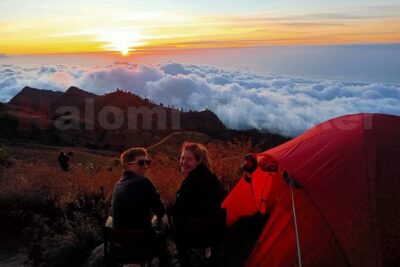
Mt Rinjani Trekking 2 Days 1 Night (Senaru Crater Rim)
Read our review →
Rinjani Trekking 3 Days 2 Nights (Sembalun – Senaru)
Read our review →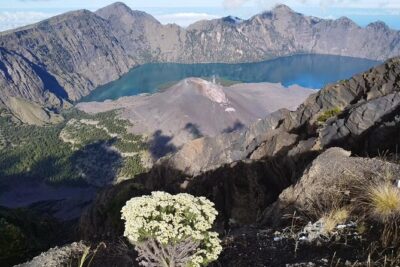
Rinjani Trekking Three Days Two Night Summit Lake
Read our review →Browse the lists this tour appears in