
REVIEW · ITALY
Genoa: Columbus Trail Urban Trekking with Wine & Local Tastings
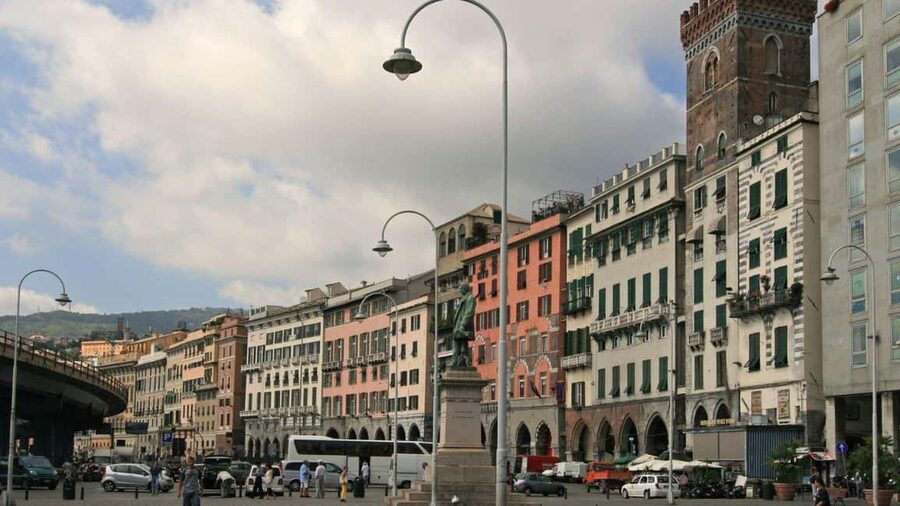
Genoa rewards walkers who look up. This three-hour Columbus Trail links Christopher Columbus’s birthplace, medieval lanes, noble palaces, the Old Port, and the Castelletto viewpoint, then finishes with focaccia, pesto, cheese, cured meats, and two glasses of Ligurian wine. I especially like the small six-person limit and the way the route supports local shops, food makers, and guides rather than rushing from one famous sight to the next. The main drawback is simple: this is a genuine walking tour, with cobblestones, slopes, and a short but fairly sharp climb.
I also like that the experience has a clear sense of place. Guides such as Barbara and Gaia bring local pride and practical knowledge to the walk, while the circular route keeps you from retracing your steps. At $77 per person, it costs more than a basic group walk, but the tasting, wine, printed trail material, and very small group make the price easier to justify.
Key points at a glance
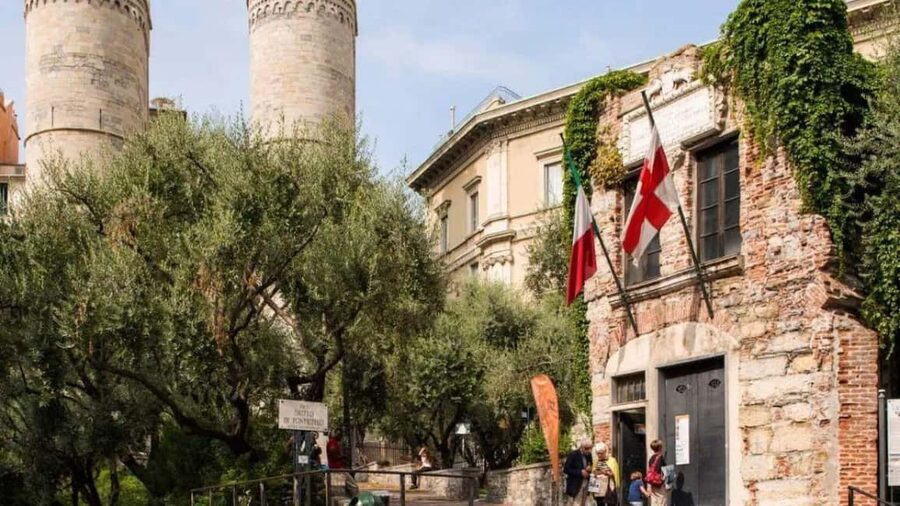
- A four-kilometer city walk: The route passes from Columbus’s House to the Old Port, Via del Campo, Castelletto, Via Garibaldi, and Piazza De Ferrari.
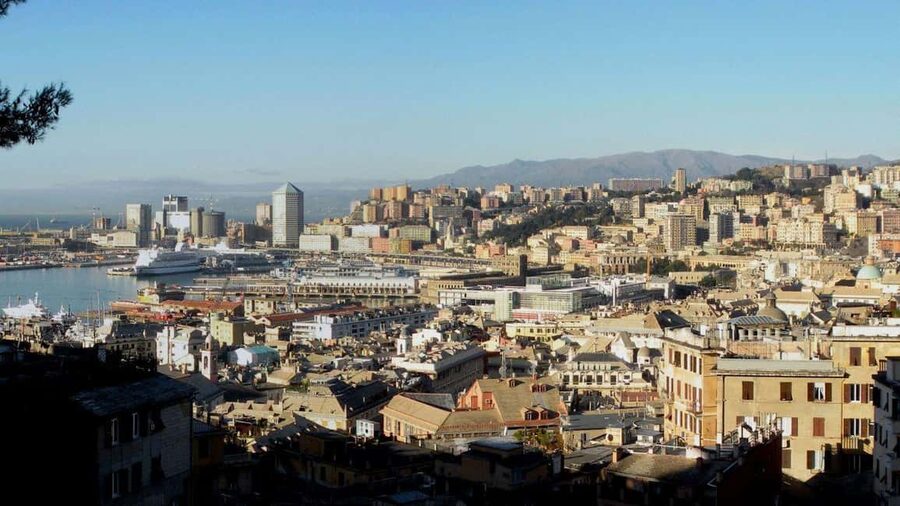
- A strong city view: The stop at Spianata di Castelletto gives you a broad look across Genoa, from the sea toward the inland hills.
- Food is part of the experience: Genoese focaccia, mortar-made pesto, local cheeses, cold cuts, and two regional wines are included.
- A very small group: With no more than six participants, the guide can keep the pace personal and conversation focused.
- A practical test of fitness: Expect uneven paving, inclines, and stairs or slopes. Comfortable shoes matter.
- A slower alternative to sightseeing by checklist: The walk connects everyday streets, small businesses, historic buildings, and major landmarks.
Starting beside Columbus’s House and Porta Soprana
The meeting point is in front of the House of Christopher Columbus, close to Porta Soprana. This is a useful place to begin because it puts you near one of Genoa’s best-known symbols while also placing you at the edge of the old center.
The house itself is a modest stop, not a grand palace. That is part of its appeal. The tour uses Columbus as a thread through Genoa rather than treating him as the only subject. You receive a map and a legend of the walk, along with an official stamp. It gives the outing a small walking-pilgrimage feel without making the experience solemn.
You should arrive about 10 minutes early. The route is not designed for people with reduced mobility, and the opening streets quickly show why. Genoa’s historic center uses narrow lanes, uneven paving, slopes, and sudden changes in direction. This is city walking, but it can feel more demanding than a flat museum district.
The official starting and ending point for the tasting is BioTigullio5Terre on Via di Ravecca, 51/r. The route begins near Columbus’s House, then connects with the shop and returns there later. That arrangement is handy if you want to buy Ligurian products after the walk or use the shop as a fixed point for the experience.
A few more treks around Italy worth a look
- Catania: Mount Etna Sunset Trekking with Wine Tasting
★ 5.0 · 140 reviews - Vernazza: Panoramic Vineyard Trekking Tour w/ Wine Tasting
★ 4.9 · 126 reviews - From Siracusa: Etna Tour – Trek, Wine and Food
★ 4.8 · 50 reviews
Via di Ravecca and the old lanes of Genoa
Via di Ravecca provides an early taste of the tour’s approach. Instead of sending you straight to the biggest monuments, the walk moves through a street lined with history, small shops, and artisans. You get a sense of Genoa as a lived-in city, not just a collection of postcard views.
The guide can also point out participating businesses along the way. Discounts are available at selected shops on Via di Ravecca, which adds a practical benefit if you want to take home food or local products. The experience does not force shopping on you, but it gives you a better idea of where a small purchase may support the local economy.
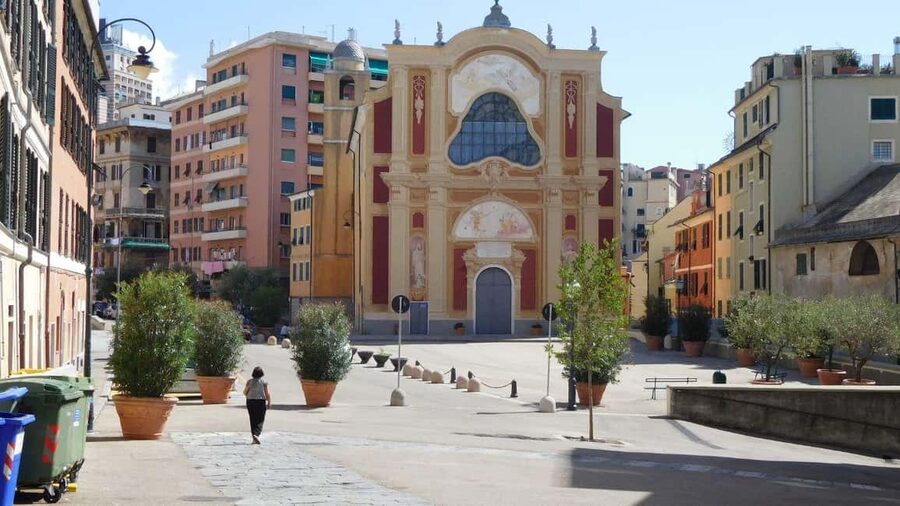
From there, the route reaches Piazza Sarzano, the Oratory of Sant’Antonio Abate, and the Faculty of Architecture. These stops broaden the story beyond Columbus. You see how old religious buildings, public spaces, and modern city life sit close together in Genoa.
The walk then moves along Via Mura delle Grazie toward San Giacomo della Marina and the Church of San Cosimo. Votive shrines set into the walls add small details that are easy to miss when you walk alone. This is where a local guide earns the fee. The value is not only in naming buildings, but in drawing your eyes to things you would likely pass without noticing.
The Old Port, Palazzo San Giorgio, and Genoese trade
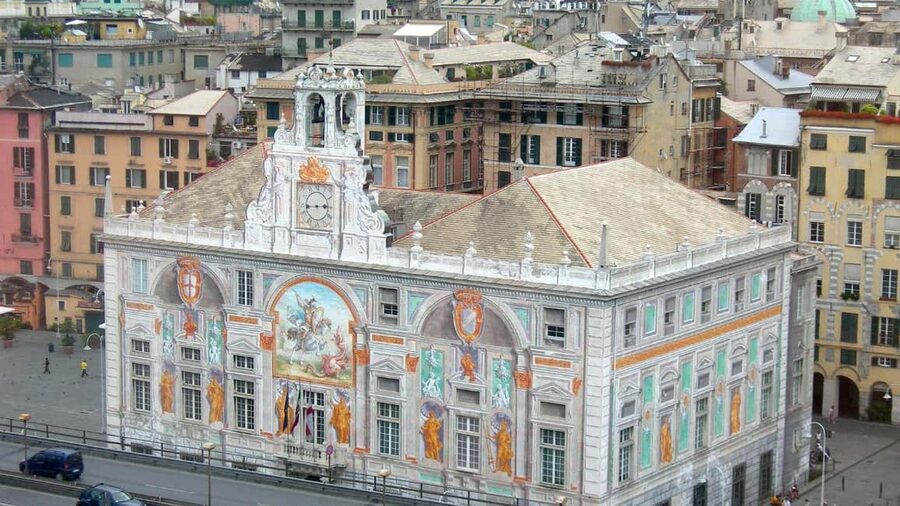
The route reaches the Old Port, one of Genoa’s central public spaces. Here, the walk becomes more open after the tight lanes of the historic center. You pass Palazzo San Giorgio, a major landmark linked to the city’s commercial and maritime past, and the entrance to the Genoa Aquarium.
The scheduled stop at Palazzo San Giorgio is short, about 10 minutes. Do not expect an interior visit or a long museum talk. This is a guided look from the route, with time to pause, take in the building, and hear its place in Genoa’s story.
The same applies to the Aquarium. You see the entrance, but admission is not included. If the aquarium is a priority, plan a separate visit on another part of your Genoa stay. Trying to combine a full aquarium visit with this three-hour walk would make the schedule too tight.
This section works best for people who like connections. The tour links Genoa’s maritime identity with its narrow residential lanes and grand civic buildings. You are not simply moving from one attraction to another. You are watching the city change scale as the route passes from alleyways to port architecture.
Via del Campo and the city’s modern memory
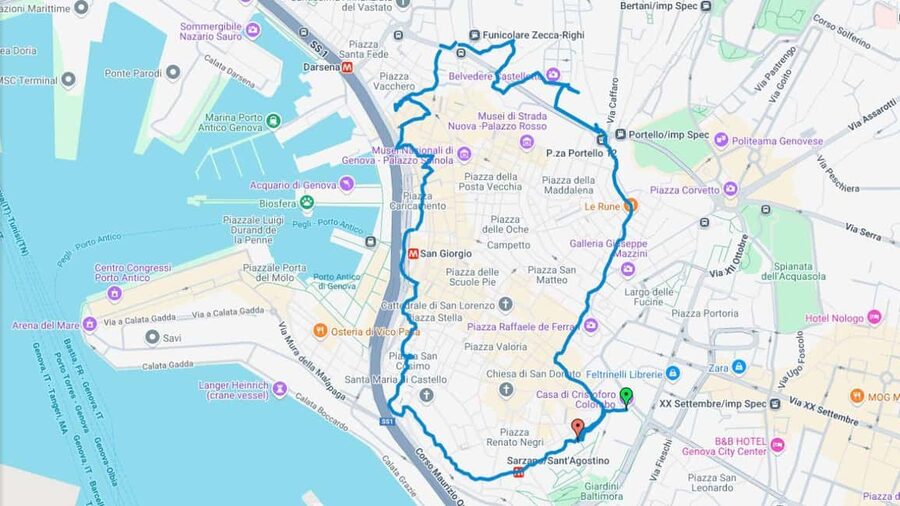
Via del Campo brings a different kind of cultural reference. The street is associated with Fabrizio De André, one of Italy’s best-known singer-songwriters. The route also passes Piazza Don Gallo and the birthplace of Giuseppe Mazzini.
These stops make the walk feel less like a standard monument circuit. Genoa’s story includes maritime power and aristocratic palaces, but also music, politics, neighborhood life, and strong local personalities. I like this mix because it gives you several ways into the city.
The scheduled visit at Via del Campo and nearby sites is not a performance or a concert. The guide uses the street and its associations to add context. If you want a tour focused only on grand architecture, this may feel too broad. If you enjoy seeing how culture grows out of ordinary streets, it is one of the better parts of the route.
The walk remains fairly relaxed, but you should not mistake relaxed for effortless. The route covers about four kilometers and includes a climb toward Castelletto. The guide can set the pace for a small group, yet the terrain still requires steady walking.
Same trailhead, a longer or shorter day out:
- Mount Etna: Trek to 3000m with cable car and 4×4
★ 4.6 · 3,823 reviews - Mount Etna: Summit Crater Trek with Cable Car
★ 4.8 · 1,875 reviews - Etna: summit craters trekking with volcano guide 3350mt
★ 4.7 · 1,712 reviews - Catania: Mount Etna Trekking Tour Beyond the Tourist Trails
★ 4.9 · 1,596 reviews
The climb to Castelletto and Genoa’s best view
The climb to Spianata di Castelletto is the physical high point of the experience. It is described as short but intense, so save a little energy for it. This is where sturdy shoes and a sensible pace matter most.
At Castelletto, you get a 20-minute stop for a break, photographs, and a guided visit. The view reaches across Genoa, from the sea toward the inland part of the city. After the close lanes below, the open outlook gives you a useful mental map of where you have been walking.
This stop also helps explain Genoa’s shape. The city rises quickly from the waterfront, which is why the historic center can feel compact on a map but tiring on foot. You get the visual reward after making the climb.
The view is one of the strongest reasons to choose this route instead of a flatter food walk. It adds a clear sense of place, not just another photograph. Still, the climb may be a deal breaker for anyone who finds slopes difficult. The activity is specifically not suitable for people with reduced mobility.
Riding the Castelletto Elevator back down
After the viewpoint, the group descends aboard the Castelletto Elevator. This short ride is part of the character of Genoa, a city where public lifts help connect the lower streets with the hillside neighborhoods.
The elevator is also a smart break in the route. You get off your feet after the climb instead of walking the same slope back down. The experience notes its association with poet Giorgio Caproni, adding a literary touch to what might otherwise feel like a simple transport detail.
Once back in the lower city, the route continues through Piazza Fontane Marose. This is a 10-minute photo and commentary stop before the group reaches Via Garibaldi.
Via Garibaldi and the grand center of Genoa
Via Garibaldi changes the mood again. Its historic palaces provide a sharp contrast to Via del Campo and the older working streets. The street is recognized as a UNESCO World Heritage Site for its historic buildings, and it is one of Genoa’s essential architectural sights.
The tour does not include museum or palace entrance fees. You will see the street and receive a guided explanation, but you should plan a separate visit if you want to enter one of the buildings. That keeps this experience moving and helps it fit within three hours.
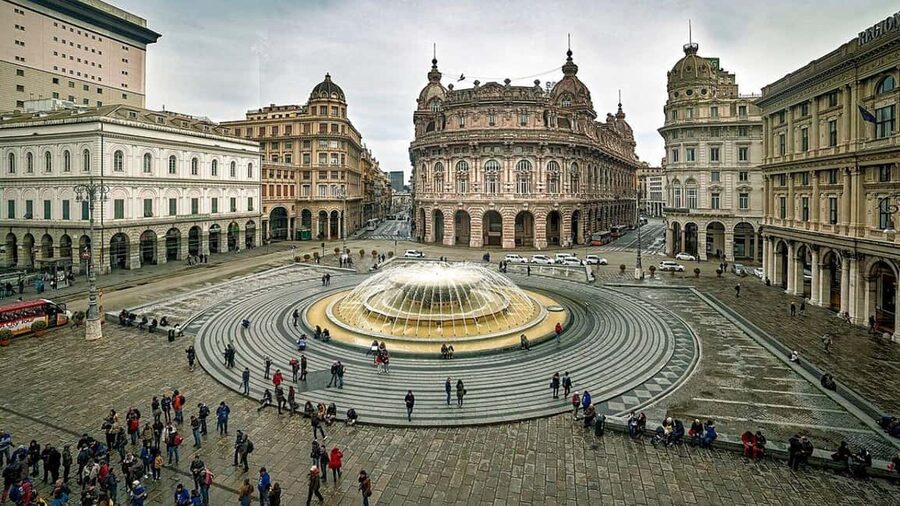
The route then climbs Via XXV Aprile toward Piazza Raffaele de Ferrari. The square is Genoa’s modern civic heart, with its famous fountain and large open space. It is a good place to understand the shift from the old lanes to the city’s formal public center.
The stop here lasts about 10 minutes. That is enough for photographs and orientation, but not a full architectural study. The tour favors variety and connections over long visits at any one site.
Returning past the Doge’s Palace and Porta Soprana
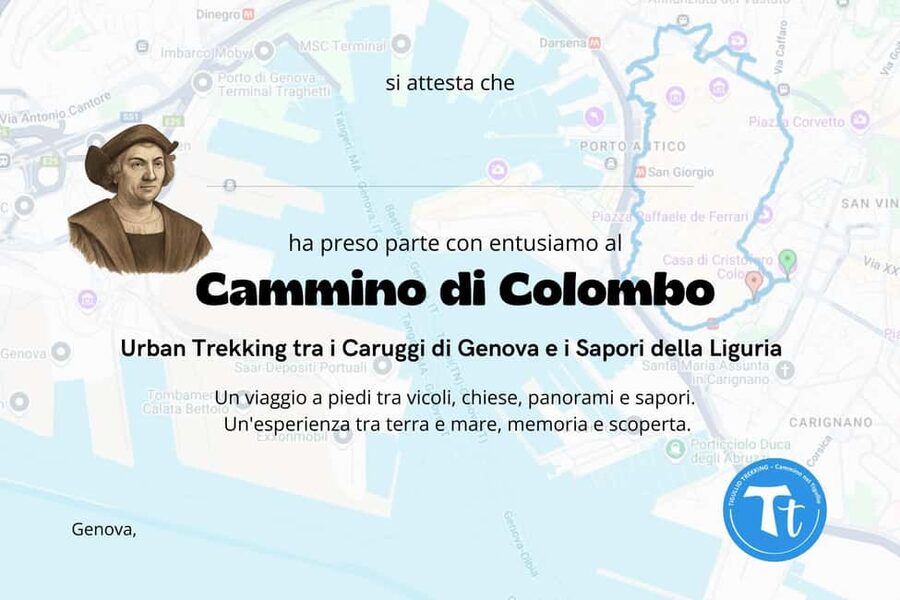
The final section passes the Palazzo Ducale, the Carlo Felice Theater, and the Palazzo della Borsa before returning to Porta Soprana. This creates a satisfying loop between Genoa’s medieval edge, aristocratic streets, commercial center, and modern civic spaces.
The return to Porta Soprana also brings the route back near Columbus’s House. You do not finish far from where you started, which makes the tour easier to fit into a day of independent sightseeing.
The circular design is one of the route’s practical strengths. You see more of Genoa without spending time repeating the same streets. It also gives the experience a natural rhythm: narrow lanes at the start, open views in the middle, and major public buildings on the way back.
The tasting at BioTigullio5Terre
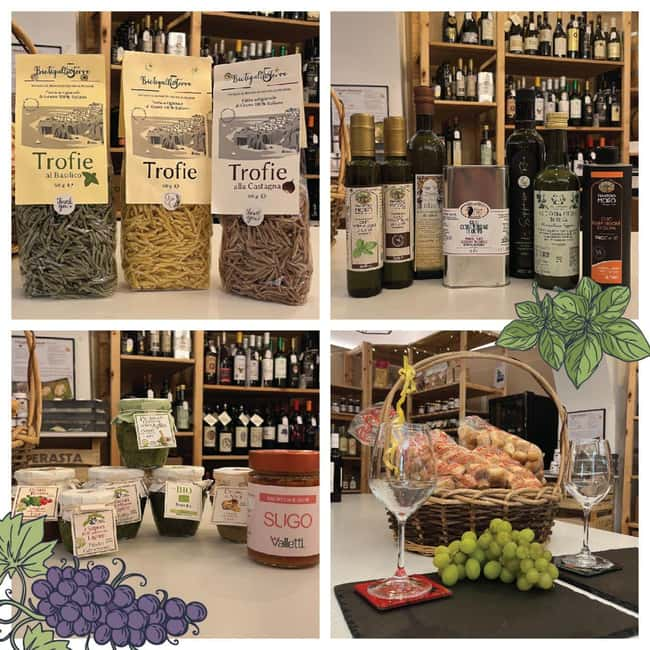
Food comes at the end, when you have earned a seat and a pause. The tasting includes Genoese focaccia, pesto prepared in a mortar, artisanal cold cuts, local cheeses, and two glasses of Ligurian wine.
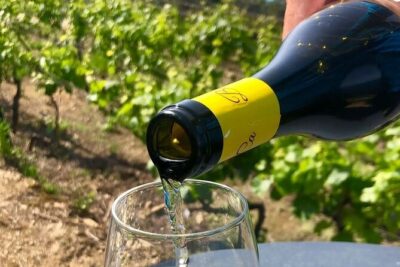
The wines are selected from regional styles: one white, either Vermentino or Pigato, and one red, either Ciliegiolo or Rossese. The tasting is not an optional extra hidden behind a second payment. It is included in the experience, although any additional consumption is your responsibility.
The mortar-made pesto is a useful detail. Pesto is so closely tied to Liguria that tasting it in Genoa gives the food portion a clear local focus rather than turning it into a generic Italian snack stop. Focaccia also fits the setting well, especially after a walk through the city that produced these food traditions.
The tasting lasts about 20 minutes according to the schedule. That is enough for a pleasant sample, but do not book this expecting a long lunch. If you are very hungry, you may want to plan a later meal. The tasting is best understood as a regional introduction and a chance to talk with the guide, not a full restaurant sitting.
Is $77 a fair price?
At $77 per person, the Columbus Trail is not the cheapest way to see Genoa. A self-guided walk costs little beyond your time, and you can visit public squares and streets without paying for a guide.
The price makes more sense when you count what is bundled in:
- A three-hour guided walk
- A group limited to six people
- English or Italian guidance
- A printed map, trail legend, and official stamp
- Local business discounts
- Focaccia, pesto, cold cuts, and cheeses
- Two glasses of Ligurian wine
The small group is the biggest value point. With six or fewer people, the walk can stay conversational, and the guide has a better chance to answer questions or adjust the pace. The experience is also built around local operators from Tigullio Trekking and BioTigullio5Terre, rather than a large coach-tour structure.
You are paying for interpretation and access to a local food stop, not for entrance tickets. That distinction matters. If you want several indoor attractions included, this is not the right product. If you want a well-planned introduction to Genoa with food at the finish, the cost is reasonable.
Who should book this Genoa walk?
I would choose this for a first day in Genoa, especially if you want your bearings before exploring alone. The route covers enough ground to show the city’s main contrasts, while the guide gives you context for returning to places later.
It suits adults and older teens who enjoy walking, city history, architecture, food, and small groups. It also works well for anyone who prefers a local guide with a personal connection to the city. Barbara has been described as passionate about Genoa and full of positive energy, while Gaia has been praised for being polite and well informed. The experience appears to benefit from guides who care about local shops, farmers, and the city itself.
I would think twice if you dislike hills, uneven paving, or fixed walking routes. The tour is not suitable for people with reduced mobility, and the booking information marks it as unsuitable for children under 16. Light rain does not automatically stop the walk, so bring an umbrella or raincoat. Heavy rain or official weather alerts can lead to a rescheduled tour or refund.
The activity requires at least two participants to run. Cancellation is free up to 24 hours before the start, and a reserve-now, pay-later option is available. Those policies make it easier to fit the walk into a changing Genoa itinerary.
Should you book the Columbus Trail?
Book it if you want a personal introduction to Genoa, not a fast list of monuments. The best parts are the small group, the Castelletto view, the mix of famous and ordinary streets, and the Ligurian tasting at the end.
Skip it if your priority is museum admission, a completely flat route, or a long sit-down meal. For most active visitors, though, the $77 price buys a useful blend of history, city views, local food, and friendly guidance. The Columbus Trail gives you a stronger feel for Genoa than a quick port-side stroll, and it does so without turning the city into a backdrop for mass tourism.
FAQ
How long does the Columbus Trail take?
The experience lasts three hours.
How far is the route?
The circular urban trekking route is about four kilometers long.
Where does the tour meet?
The meeting point is at the House of Christopher Columbus near Porta Soprana, with the BioTigullio5Terre shop at Via di Ravecca, 51/r also used as the starting and ending point.
What languages are available?
The tour is offered in Italian and English.
How large is the group?
The group is limited to six participants.
Is the food tasting included?
Yes. The final tasting includes Genoese focaccia, mortar-made pesto, local cold cuts, and cheeses.
Which wines are included?
You receive two glasses of Ligurian wine: one white, either Vermentino or Pigato, and one red, either Ciliegiolo or Rossese.
Is the route suitable for people with reduced mobility?
No. The route includes cobblestones and slopes and is not suitable for people with reduced mobility.
What happens if it rains?
The walk takes place in light rain, so you should bring an umbrella or raincoat. Heavy rain or weather alerts may lead to a rescheduled experience or refund.
Are museum and attraction entrance fees included?
No. Entrance fees to museums and attractions are not included.
Recently added around Italy
- Trekking in the Wood with picnic on the turtles lake★ 5.0 · 8 reviews
- Lake Como trekking private guided tour, from Milan★ 5.0 · 9 reviews
- Trekking towards Torrente Gravina and Rupestrian Churches of the Murgia★ 4.5 · 3 reviews
- Trekking on the roof of Tuscany★ 5.0 · 6 reviews
- Otranto Trekking Adventure: The Path of the Hermit and the Bay of the Turks★ 3.5 · 8 reviews
- Lecce: Hike to Otranto with town visit – Half Day Trekking +Taxi★ 5.0 · 2 reviews
- Wine Hiking Sip & Trek★ 5.0 · 3 reviews
- Trekking an Island of Palmaria★ 4.5 · 6 reviews
Wine Tours, compared.
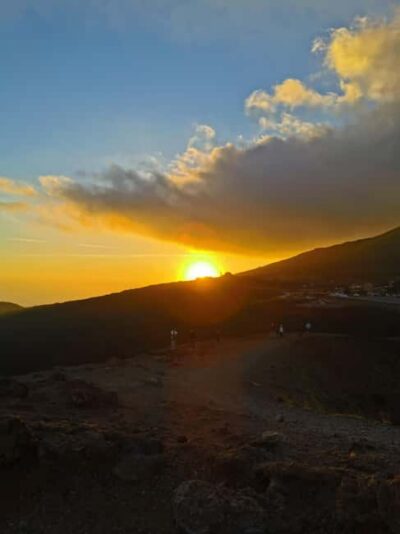
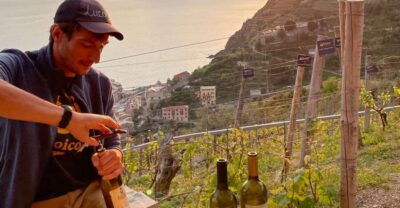
Vernazza: Panoramic Vineyard Trekking Tour w/ Wine Tasting
Read our review →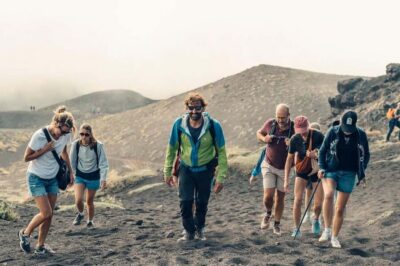
BarCa Winery Cinqueterre Trekking & Wine Tasting & Pesto Class
Read our review →

Browse the lists this tour appears in