
REVIEW · CHIANG RAI
Cultural trekking and boat trip
Follow the river, then plant a memory. This one-day Chiang Rai outing blends a 45-minute long-tail boat ride, village walking, local food, and a small tree-planting project. I like the chance to choose your own planting spot, and I like that the day includes a waterfall swim and a mineral hot bath. The main drawback is the early uphill section, which can feel hot and steep.
The $94 price is fair if you value a full day with transport, guide, meals, boat travel, a plant, and the hot spring entrance included. You should still bring proper hiking shoes, mosquito repellent, swimwear, and cash, since those are not supplied.
Five details that make this Chiang Rai day different
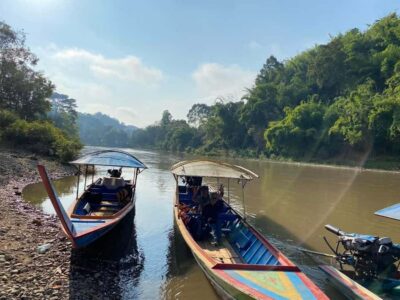
- A 45-minute long-tail boat ride carries you up the Mae Kok River toward Buddha Cave, adding scenery before the walking begins.
- You plant a tree during the trek, choosing a spot that gives the day a personal connection to the hills.
- The first 20 to 30 minutes are the hardest, with a sun-exposed uphill stretch before the route becomes easier.
- Lahu and Akha villages bring the cultural side of northern Thailand into the day.
- Huay Kaew Waterfall offers time to swim, so pack a swimsuit rather than treating this as a dry walking tour.
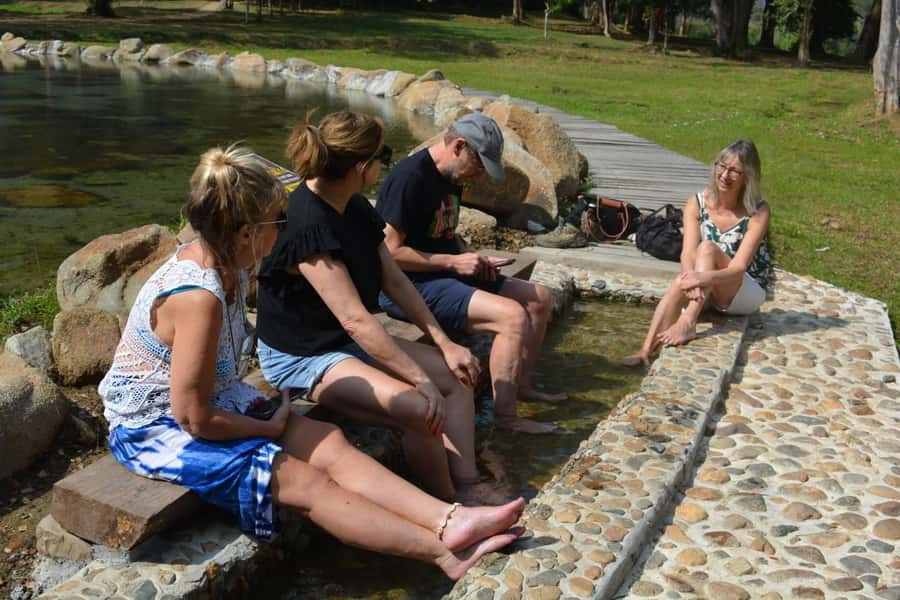
- The day ends with a mineral hot bath, a welcome way to ease tired legs before the drive back to Chiang Rai.
A river start on the Mae Kok
The day begins with pickup in Chiang Rai. The service can collect you from a hotel, airport, or bus station, then take you to the boat pier. That is useful if you are arriving without your own car, though the exact start time depends on availability when you book.
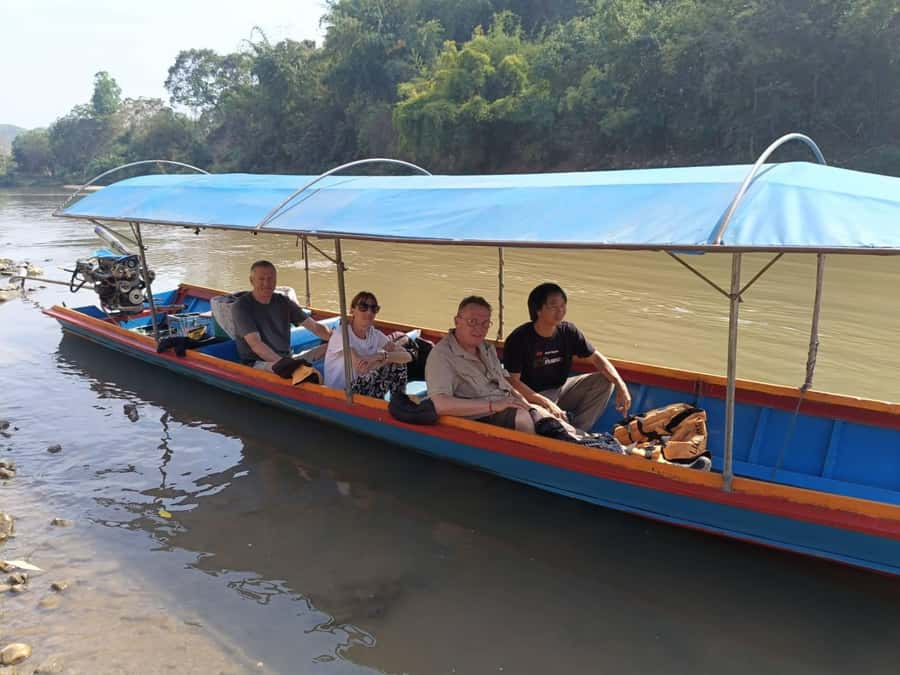
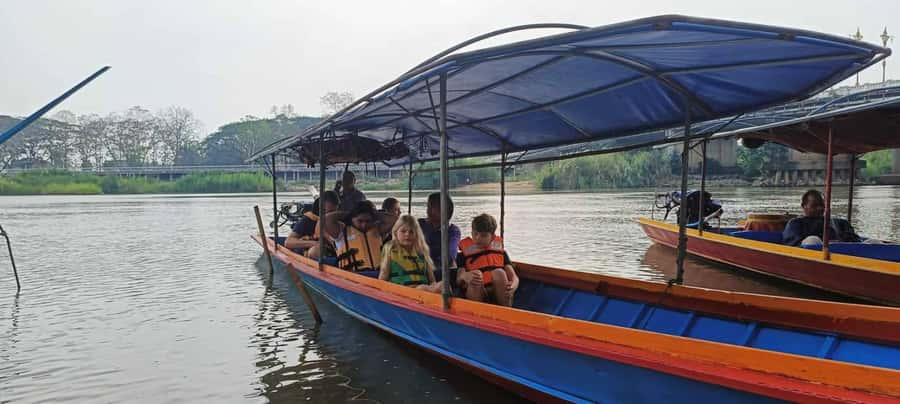
Before boarding, the tree for the planting activity is prepared. Then you step into a motorized long-tail boat for about 45 minutes on the Mae Kok River. This is not just a transfer. It gives you a slower look at the riverbanks and lets the day begin with open views rather than a hard climb.
The boat heads toward Buddha Cave. The ride is a strong part of the experience for anyone who likes to see northern Thailand from the water, but it is still weather-dependent in feel. You should expect the simple, open nature of a long-tail boat rather than a quiet enclosed cruise. Bring your camera, and keep it protected from spray or sudden rain.
The boat trip also breaks up the day well. You are not asked to hike immediately after leaving the hotel. That matters in Chiang Rai, where heat can make even a moderate trail feel demanding.
A few more treks around Chiang Rai worth a look
- Chiang Rai: Jungle Adventure-Group Trekking & Bamboo Cooking
★ 4.9 · 166 reviews - 1 Day Trekking in Chiang Rai forest (walk only)
★ 4.9 · 95 reviews - Authentic trek only walk in Chiang Rai jungle
★ 5.0 · 90 reviews
Buddha Cave and the first climb
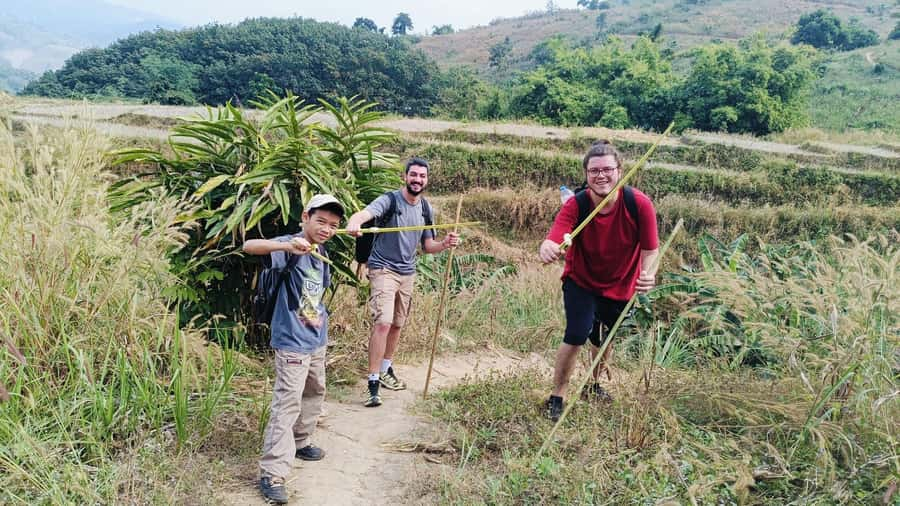
After the boat ride, the route turns toward the walking portion. The full walk is described as about three hours, though the listed walking sections add up to roughly three and a half hours. Treat that figure as a guide rather than a strict timetable.
The first 20 to 30 minutes are the part to take seriously. The path climbs steeply in places and runs along a sunny section. One account describes this opening as tiring, while the rest of the route becomes easier to manage. If you walk regularly, it should be within reach, but you will want water and shoes with a firm sole.
The guides have long experience with local trails, and the operators describe 20 years of hiking work. They also have ex-soldiers among their background, which suggests a practical approach to moving groups through uneven ground. Still, experience does not remove the need for sensible pacing. Take the uphill section steadily rather than trying to match the fastest person in the group.
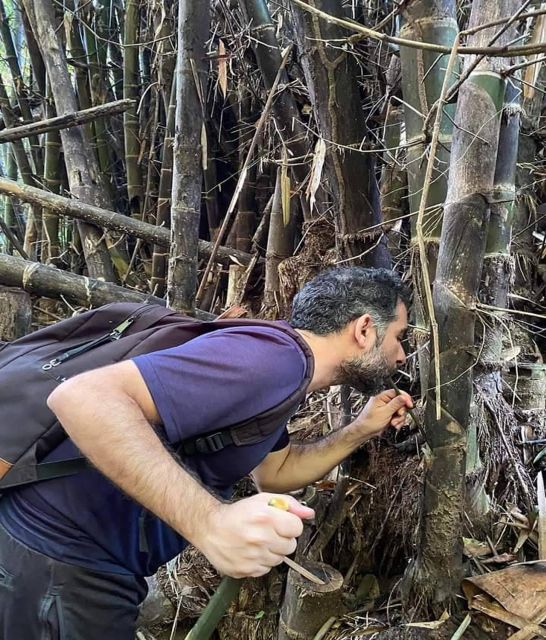
This part of the day is more about the setting and the guide’s explanations than about a demanding athletic challenge. The route passes bamboo forest and farmland, and the guide talks about local nature and culture along the way. That steady commentary helps turn a walk into a better understanding of how people use the land.
Planting a tree with your own hands
The tree-planting stop gives this tour its most unusual idea. You carry a young plant into the trekking area, then choose your own place to put it in the ground. The point is not to create a formal garden or complete a major conservation project in one afternoon. It is a small, personal act tied to your walk.
I like this because it gives you a reason to notice the ground around you. Instead of passing through the bamboo forest and farmland only as scenery, you take part in the place for a moment. You can also treat the planting as a simple marker of your time in Chiang Rai.
The available information does not specify the tree species or explain how the plants are maintained afterward. You should therefore see this as a hands-on cultural and environmental activity, not a promise that you can track the tree’s future growth. The charm is in choosing a spot and doing the work yourself.
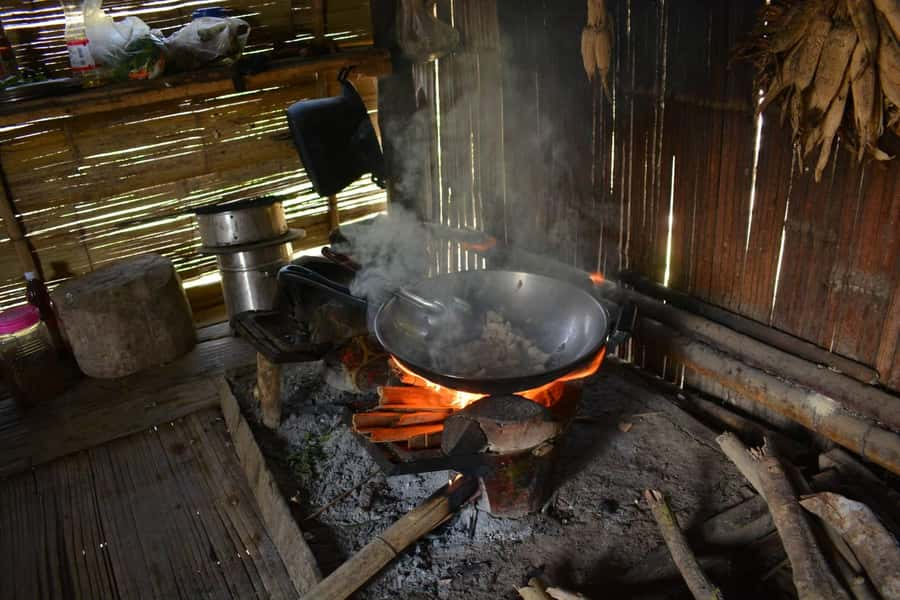
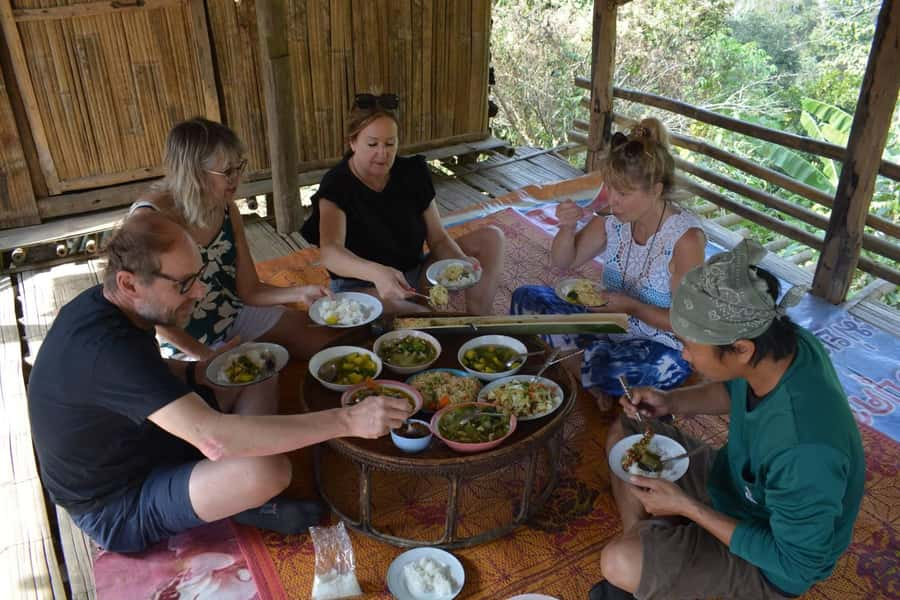
The tour’s local focus continues through its food. The guides encourage you to eat and drink in the local style, and the meal is included. A particularly memorable version of the lunch involves cooking together in a simple bamboo hut, using very little to make a satisfying meal. Since the schedule also describes lunch at a local restaurant, the exact setup may vary, but you should expect something more connected to local life than a standard hotel buffet.
Lahu and Akha villages along the route
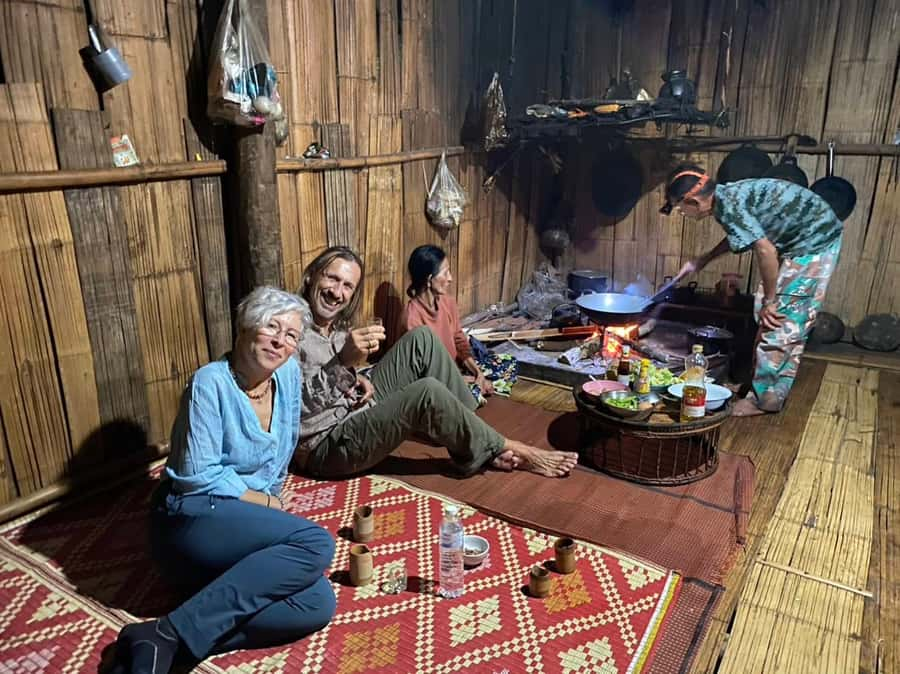
After the planting activity, the walk continues to Lahu and Akha hilltribe villages. These stops add human context to the forest and farmland. The route is not simply a string of viewpoints. You pass through communities where the guide can explain local culture and daily life.
The village visits are intended to be friendly and open, but you should still behave as you would anywhere people live. Ask before taking close-up photographs, keep your voice low, and remember that the homes and paths are part of someone’s everyday world, not a stage set.
The guide is important here. A good explanation can help you understand what you are seeing without turning the villages into a rushed photo stop. June has received especially warm praise for being friendly, experienced, informative, and easy to spend a day with. That sort of personal guiding is one of the strongest reasons to choose a small cultural outing instead of a basic sightseeing transfer.
The tour is offered in Thai and English. If you need detailed explanations about customs, farming, or village life, tell the guide early in the day. The walk includes several settings, and asking questions as you go should help you get more from each stop.
Same trailhead, a longer or shorter day out:
- Chiang Rai: 1-Day Trekking and Longtail Boat Trip
★ 4.9 · 53 reviews - 1 Day Trekking Group Tour With Bamboo Cooking / Chiang Rai
★ 5.0 · 51 reviews - Akha & Lahu village trekking 1 day
★ 4.8 · 18 reviews - 1 Day trekking : Chiang Rai popular activity,Fun in Nature.
★ 4.8 · 18 reviews
Huay Kaew Waterfall and time to swim
The route then reaches Huay Kaew Waterfall, described as the second largest waterfall in Chiang Rai. The key practical point is that you have time to swim. This is a welcome change after walking in the sun and along uphill paths.
Pack a swimsuit, towel, and a way to keep your camera dry. Swimwear is specifically not included, and there is no reason to expect a rental option. If you do not want to swim, the waterfall still gives you a scenic rest stop, but the bathing opportunity is one of the day’s best rewards.
You should also keep your expectations sensible. This is part of an active day in a natural area, not a resort pool. Conditions can change with weather, and the route itself may leave you muddy or damp. The tour does not provide hiking shoes, so shoes with good grip are a must if you plan to move confidently around wet ground.
For families, note the age restrictions. Babies under one year old are not considered suitable for this activity, and the tour is not recommended for people over 95. People with diabetes are also listed as unsuitable. Those limits do not replace personal medical advice, but they are useful warning signs when deciding if the heat, walking, and remote stops fit your needs.
Tea, a Chinese village, and a hot spring finish
After the waterfall, the walk continues toward a Chinese village and a tea plantation. These stops add another layer to the day’s cultural mix. You move from river scenery to forest, farmland, hill communities, a waterfall, and tea-growing country without needing to arrange separate excursions.
The tea plantation is especially appealing if you want to see how the region’s rural economy looks beyond the usual temples and city sights. The provided details do not promise a tasting session or a tea purchase, so consider the plantation mainly a scenic and cultural stop unless your guide says otherwise.
The final stop is a hot spring. You can take a mineral hot bath before returning to Chiang Rai by car. After several hours on foot, this is a practical finish rather than a decorative extra. It gives your legs a chance to relax before the ride back.
Bring cash because it is listed among the recommended items. The tour includes the hot bath, but cash can still be useful for personal purchases or small needs during the day. The tour does not list snacks, personal drinks beyond the supplied drinking water, or souvenirs as included.
What the $94 price really covers

At $94 per person, this is not the cheapest way to see the Chiang Rai countryside. It is also not merely a guided hike. The price includes transportation, a TAT-licensed guide, the boat trip, lunch, drinking water, the tree plant, and the hot bath.
That bundle makes the cost easier to justify. If you arranged a boat ride, countryside transport, a guide, lunch, a waterfall visit, and a hot spring separately, the logistics would quickly become awkward. Here, the route is built as one day, with the boat setting up the trek and the car bringing you back after the hot spring.
The value depends on what you want from Chiang Rai. If your priority is temples, markets, or a relaxed city day, this may feel too active. If you want a countryside day that combines nature, food, local communities, and practical transport, the price is more reasonable.
You are paying partly for organization. The day includes several transfers and different activities, and the guide controls the timing. That matters because a long-tail boat, village walk, waterfall stop, tea area, and hot spring would be difficult to connect efficiently without local help.
What to bring and how to prepare
The short packing list has a few items that matter a great deal:
- Hiking shoes with reliable grip
- Swimsuit for Huay Kaew Waterfall
- Mosquito repellent
- Camera
- Cash
- Drinking water, although some is included
- A small bag for wet clothing
Wear clothes suited to sun and walking. The first uphill section is exposed, and you will be outside for much of the day. You should also avoid bringing more than you can comfortably carry during the trekking sections.
The tour is not presented as a technical hike, but it is more than a gentle stroll. The opening climb can be tiring, and the total walking time is around three hours, possibly a little longer depending on how the schedule is counted. If you are comfortable walking on uneven paths and handling a short steep climb, you should be better prepared for the day.
Free cancellation is available up to 24 hours before the start for a full refund. You can also reserve now and pay later, which helps if your Chiang Rai plans are still shifting.
Who should book this Chiang Rai experience?
I would choose this tour if you want to combine several sides of northern Thailand in one day. It suits you if you enjoy walking, local food, river scenery, village visits, and simple outdoor activities more than polished attractions.
It is also a good fit if you like a day with a clear sense of purpose. Planting a tree, eating in a local setting, and hearing about nature and culture from a guide give the excursion more meaning than a sequence of photo stops.
I would think twice if you dislike heat, uneven paths, or an early uphill climb. You may also prefer another activity if swimming is not appealing and you want a purely cultural tour. The day has a full schedule, so it is not designed for lingering at every stop.
The strongest part is the human side. A guide such as June can make the difference between simply passing through northern Thailand and understanding a little more about the people, food, and countryside around Chiang Rai. The boat ride, meal, villages, and hot spring then fit together as one well-shaped day.
FAQ
Where does the tour pick up?
Pickup is available in Chiang Rai from a hotel, airport, or bus station.
How long is the boat ride?
The motorized long-tail boat ride lasts about 45 minutes and travels along the Mae Kok River toward Buddha Cave.
How much walking is involved?
The total walk is described as around three hours. The scheduled walking sections are listed as 1.5 hours and two hours, so the actual time may be closer to three to three and a half hours.
Is lunch included?
Yes. Lunch and drinking water are included. The meal is connected to local food, and the experience can include cooking in a simple bamboo hut.
Can I swim during the tour?
Yes. The route visits Huay Kaew Waterfall, where you can enjoy time swimming. Bring your own swimsuit.
Is the hot spring included?
Yes. A mineral hot bath at the hot spring is included before the return drive to Chiang Rai.
What languages does the guide speak?
The live guide service is available in Thai and English.
Should you book it?
Book this if you want a full countryside day with real walking, not just a drive between viewpoints. The best reasons are the Mae Kok River boat ride, the chance to plant a tree, the local meal, the hill villages, and the combination of waterfall swimming with a hot spring finish.
Skip it if you need a very gentle outing or dislike heat and uphill paths. For most reasonably active visitors who want nature and local contact in one organized day, the $94 cost is justified by the amount included and the variety of the route.
Recently added around Chiang Rai
- Full Day Trekking & bamboo cooking Tour in Chiang Rai★ 5.0 · 7 reviews
- One Day Trekking Chiang Rai Jungle Adventure and Bamboo Cooking★ 3.5 · 3 reviews
- Trekking with Lunch cooked by Bamboo in the Chiang Rai jungle★ 5.0 · 12 reviews
- Akha private eco-trekking 2 days 1 night Chiang Rai★ 4.5 · 2 reviews
- Chiang Rai Trek:Jungle Hike, Bamboo-Cooked Lunch & Boat Ride★ 5.0 · 7 reviews
- Chiangrai: Group Trekking with Bamboo Cooking★ 4.8 · 5 reviews
- Chiang Rai: The Adventure of Trekking & Bamboo Cooking★ 5.0 · 3 reviews
- Chiang Rai Jungle Trek & Bamboo Tube Cooking Adventure★ 5.0 · 5 reviews
Cruises & Boat Tours, compared.

Perito Moreno Glacier Trekking Tour and Cruise
Read our review →
Phang Nga Treasures Sunrise Trekking and No-crowd James Bond by longtailed boat
Read our review →
Queenstown: Walter Peak Horse Trek & Queenstown Lake Cruise
Read our review →
Half Day Walter Peak Horse Trek and Cruise from Queenstown
Read our review →
Lake Como: Easy Mountain Trek with Funicular & Boat Ride
Read our review →
Pu Luong Amazing Trekking Village,Rafting,Swimming, Lunch on Boat
Read our review →Browse the lists this tour appears in