REVIEW · ISLAMABAD, PAKISTAN
K2 And Gondogoro La Trek
The high mountains are only half the story. This K2 Base Camp and Gondogoro La trek takes you from Islamabad into Baltistan, across the Baltoro Glacier, past Concordia, and over one of Pakistan’s most demanding mountain passes. You spend about 20 days moving between hotels, camps, glaciers, valleys, and small mountain villages, with a private guide and crew throughout.
I like the careful acclimatization plan, especially the extra night at Urdukas, and I like that the route includes both K2 Base Camp and the Gondogoro La crossing. The main drawback is the long return journey: the drive from Skardu to Islamabad can take 18 to 20 hours, and poor weather can disrupt flights or delay the pass crossing.
Key points before you commit
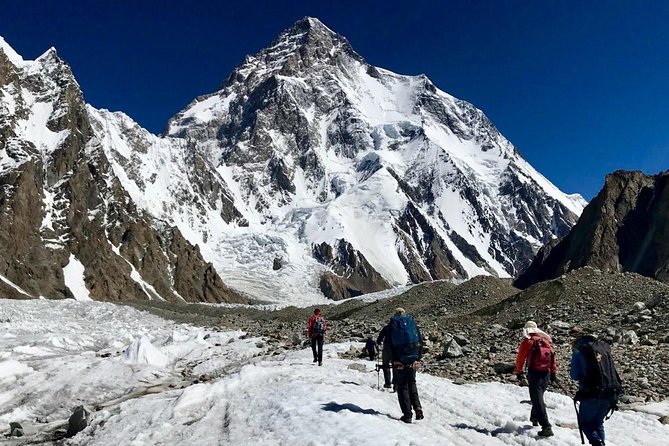
- The route reaches K2 Base Camp and Broad Peak Base Camp, giving you two excellent angles on K2 rather than one.
- Gondogoro La is the toughest day, with an early start around 2 a.m., crampons, a harness, roped glacier travel, and roughly 11 hours on the move.
- Urdukas is used as an acclimatization rest stop, with time to climb a little higher and sleep lower.
- Accommodation changes constantly, from Islamabad and Skardu hotels to basic camps on the Baltoro Glacier.
- Weather controls the schedule, including the flight to Skardu and the crossing of Gondogoro La.
- The price is $4,818.35 per person, with private transport, a guide and crew, and most meals included.
Islamabad to Skardu, with weather in charge
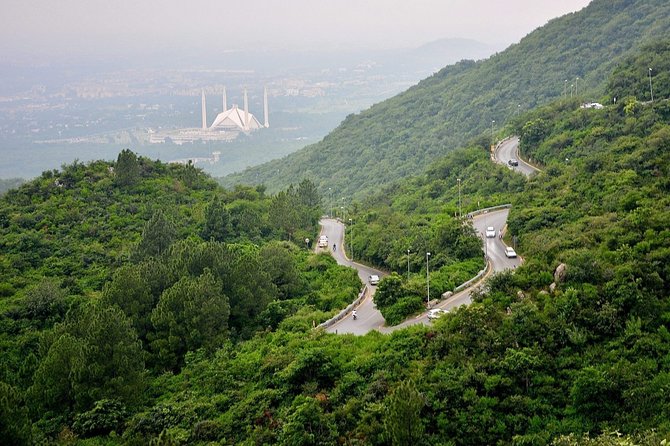
Your guide meets you at Islamabad International Airport and takes you to the hotel. The first day is intentionally gentle. You have time to recover from the international flight, attend a briefing, and possibly see a little of Islamabad if schedules allow.
That slow start matters. You are not being pushed straight into the mountains after a long flight, and the briefing gives your group a chance to understand the route ahead. The advertised start time is 10:30 p.m., so confirm exactly how that applies to your arrival and airport pickup.
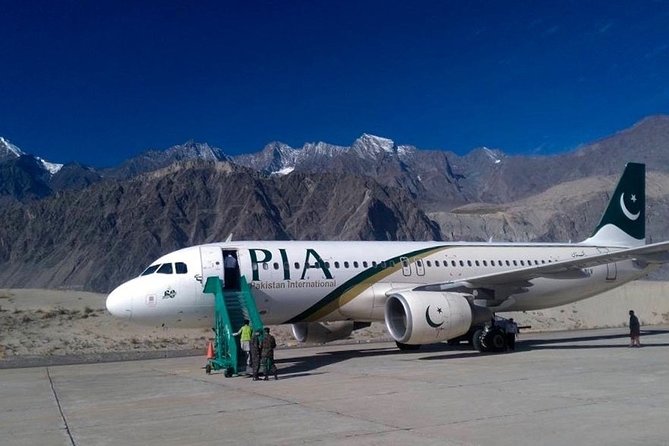
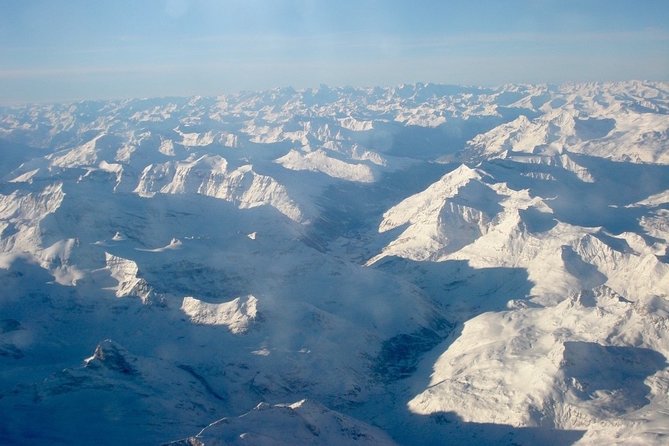
The next day brings one of the trip’s memorable transport links: a roughly 45-minute flight from Islamabad to Skardu. When the weather is clear, you can see Nanga Parbat and parts of the Himalaya and Karakoram. K2 and Gondogoro La may also be visible from the air, although this is firmly a weather-dependent bonus.
If the flight is canceled or delayed, the whole schedule can shift. That is normal in this part of Pakistan, but it is worth keeping your plans flexible and buying travel insurance before you go.
A few more treks around the world worth a look
- Mount Etna: Trek to 3000m with cable car and 4×4
★ 4.6 · 3,823 reviews - Bali: Mount Batur Sunrise Trek With Guide and Breakfast
★ 4.8 · 3,461 reviews - From Chania: Full-Day Samaria Gorge Trek Excursion & Guide
★ 4.6 · 3,191 reviews
Skardu days add culture before the trail
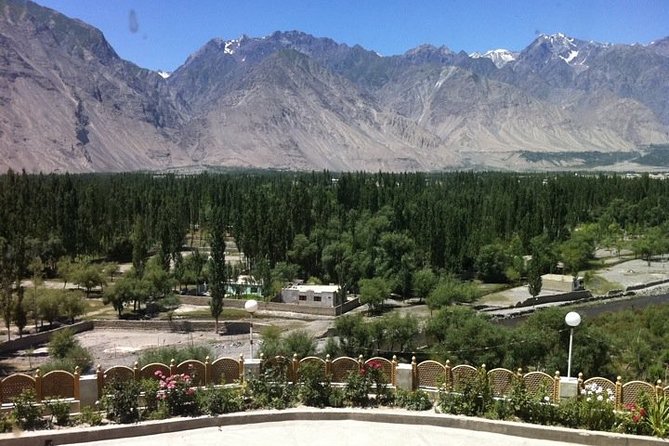
Skardu is not just a staging point for the trek. It was the capital of the old Baltistan Kingdom and offers a useful look at the region before you leave the road behind.
The program includes time around the local bazaar, historic forts, lakes, and ancient rock inscriptions. One unusual sight is the eighth-century Manthal Buddha Rock, which reflects the Buddhist influence that existed in the area before Islam.
The following day includes a walk to the remains of Kharpocho Fort. Built in the early 1700s, the fort overlooks Skardu and the Indus River. The view is especially appealing for photographers, and sunrise or sunset can be arranged as an optional outing.
You also visit an organic farming village and have free time for the bazaar. An optional jeep trip to Satpara Lake is available, but it is not part of the included experience. These Skardu days give the trip some cultural shape. Without them, the journey could feel like a long transfer into the mountains.
Askole and Johla mark the real beginning
The road follows the Indus, Shigar, and Braldu rivers toward Askole, the last village before the main Karakoram trekking zone. The drive takes about seven hours and leads into a much more remote setting.
Askole is a small settlement of wooden homes, irrigated fields, corn, potatoes, and apricot trees. It is a good reminder that the trail is not only about famous peaks. Local agriculture and village life still hold the valley together.
The route then continues to Johla Camp for the night. From here onward, you should expect camping as the norm, not the exception. The program includes a mix of hotels and tents, but the glacier portion is basic, exposed, and shaped by weather.
Paiju gives you your first great mountain views
The walk from Johla to Paiju takes about six hours. The trail follows the river before climbing to higher ground, with views toward Paiju Peak, which rises to 6,611 meters.
You may need to cross streams, and the condition depends on glacier melt. Bring sports sandals or old trainers for wet crossings. This is a small packing tip with a big payoff: you do not want to soak your main trekking shoes on the first serious walking day.
Paiju is a green oasis below the peak. It also gives you your first views of the Baltoro Glacier, the Trango and Cathedral groups, and possibly K2 if the clouds cooperate. The contrast is striking: green ground underfoot, bare rock walls above, and ice stretching into the distance.
Same trailhead, a longer or shorter day out:
- Mount Etna: Summit Crater Trek with Cable Car
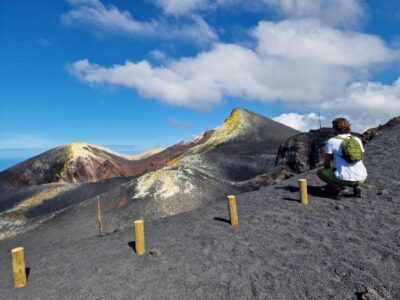
★ 4.8 · 1,875 reviews - La Palma: Tajogaite Volcano Guided Trek
★ 4.8 · 1,810 reviews - Etna: summit craters trekking with volcano guide 3350mt
★ 4.7 · 1,712 reviews - From Rethymno: Samaria Gorge Full-Day Trek, Pickup & Guide
★ 4.5 · 1,610 reviews
Six days across the Baltoro Glacier
From Paiju, you reach the snout of the Baltoro Glacier after about an hour. The glacier is covered with rubble and rock, so this is not a smooth walk across clean white ice. The trail rises and falls over moving ice and moraine, with six-hour walking days common at this stage.
You continue toward Urdukas, passing the ship-like Great Trango and the Nameless Tower. The views of Trango Towers, Cathedral Peak, and Lobsang are among the best on the route. Urdukas sits on grassy slopes away from the main glacier, which makes it a welcome change from bare moraine.
The extra night at Urdukas is one of the strongest design choices in the itinerary. You can rest, wash, and take a short walk among alpine flowers. The schedule also uses the sensible principle of climbing higher during the day and sleeping lower at night, which helps your body adjust to altitude.
After Urdukas, the route returns to the glacier. You pass the Yermanandu Glacier and gain views of Muztagh, Masherbrum, and Gasherbrum IV. The camp is on the Baltoro itself, with tent platforms leveled into the ice. Nights will be colder here, and you should be prepared for the fact that the glacier is not simply a scenic backdrop. It is your campsite, walking surface, and daily environment.
Concordia and the two best views of K2
The walk to Concordia is about five hours and takes you into one of the great mountain junctions of the world. Mustagh Tower, Gasherbrum IV, Gasherbrum II, Broad Peak, and K2 all enter the story as you move up the Baltoro.
K2 is famously shy from some angles, appearing only at the final point of approach. That makes the arrival at Concordia feel earned rather than predictable.
The route then continues toward Broad Peak Base Camp. This is a smart feature of the program because it gives you an excellent view of K2 without relying only on the standard Concordia camp. The day is described as very short in the schedule, but the approach involves jumbled ice and moraine, so the distance should not be mistaken for an easy stroll.
The next major outing is K2 Base Camp itself. You start early, walk up the Godwin Austen Glacier, and reach the base camp used by climbers. From there, K2 rises in one direction, while Concordia, Mitre Peak, and Chogolisa frame the return view.
The round trip takes about seven hours. It is a long day at high altitude, but it is also the trip’s clearest objective. You are not merely looking at K2 from a distant valley. You reach the point from which serious expeditions attempt the mountain.
The Upper Baltoro turns toward Gondogoro La
After returning from K2 Base Camp, you leave the main route and take a quieter line along the Upper Baltoro. The route crosses moraine ridges and reaches the Vigne Glacier, which is described as flatter and less crevassed than some nearby ice.
You continue toward the confluence of the Upper Baltoro and West Vigne Glacier, below Gondogoro La. This section takes about six hours, with the bulk of Chogolisa ahead. The camp is placed near the glacier junction, setting up the hardest day of the trek.
The pass crossing begins around 2 a.m. That early departure is not for dramatic effect. It is intended to reduce the risk of rockfall on the descent toward the Hushe side. You eat breakfast in the dining tent, put on crampons and a harness, and travel roped together across the glacier in the dark.
This is a serious mountain day, not simply a scenic hike. The total effort is listed at about 11 hours, and the conditions can change quickly. At the top, the views include all four 8,000-meter peaks in one direction, with the Hushe Valley and Leila Peak visible in the other.
You need to be comfortable with early starts, glacier equipment, exposure, and a long day when choosing this route. The guide and crew are there to manage the mountain logistics, but they cannot remove the physical demands. Your own fitness, pace, and reaction to altitude still matter.
Weather buffers are essential, not wasted days
The itinerary includes two flexible days after the planned pass crossing. This is one of the most practical parts of the schedule.
If weather blocks Gondogoro La, these days provide another opportunity. If the crossing succeeds on schedule, you may rest, explore, or continue toward Hushe. In a high mountain area, spare days are not wasted time. They protect the most important section of the trip from a single bad forecast.
You should still expect uncertainty. The experience requires suitable weather, and a cancellation caused by poor conditions may lead to a different date or a full refund. That policy is useful, but flexible personal plans remain important.
Descending to Saitcho and Hushe
After the pass, the route reaches Dalsangpa, a name that means field of flowers, with views toward Masherbrum and the glacier flowing from Masherbrum Pass.
The trail then moves through yak pastures toward Shaicho and Saitcho. Trees reappear as you lose altitude, and the environment becomes less severe. The listed walking time is about seven hours, but the descent can feel demanding after the pass day and glacier travel.
The final walking day to Hushe is easier. Hushe has stone houses, narrow alleys, a school, shop, hotel, and trekking camp. It offers a human-scale finish to a route that has spent many days among ice and rock.
Vehicles wait in Hushe for the drive through the Khapulu Valley and onward to Skardu. The road is smoother and more paved on this side, following the Indus. You return to a hotel in Skardu before the long trip south.
The return journey is a real part of the trip
The route back to Islamabad follows the Karakoram Highway and can take 18 to 20 hours by road from Skardu. An overnight stop in Chilas may be possible, depending on the schedule.
This is the least glamorous part of the experience, but it deserves honest attention. After nearly three weeks of trekking, a full day in a vehicle can be tiring. The private transport is valuable here because you are not left to arrange a complicated return on your own, but the distance remains considerable.
The final day transfers you to Islamabad airport. Check your onward flight timing carefully, since road delays, weather, and the pass schedule can affect the end of the trip.
What the $4,818.35 price really covers
At $4,818.35 per person, this is a major purchase. The value depends on how much support you want in a remote region.
The price includes private transportation, a guide and crew, 18 breakfasts, 18 dinners, and 17 lunches. Hotels, camping, transport between Islamabad, Skardu, Askole, Hushe, and Islamabad, and support during the glacier sections are built into the overall arrangement.
The strongest value comes from coordination. You are not piecing together domestic flights, remote road transfers, camps, meals, porters, glacier equipment, and weather delays yourself. The crew also stays with you through the route, which matters on a trek where conditions and timing can change.
Still, read the meal and accommodation details carefully before paying. The summary says the trip uses a mix of hotels and camping, but it does not specify every hotel, tent arrangement, or equipment item. Travel insurance is not included and should be purchased separately.
The operator has a reported rating of 4.9 from 42 ratings, with 98 percent recommending the experience. The strongest praise centers on organization, supportive staff, abundant food, airport pickup, and the way the guides and porters handle difficult days. That matches the trip’s main selling point: reliable support in a demanding place.
Who should book this trek?
I would recommend it to a fit trekker who wants a major Himalayan or Karakoram challenge, values a private arrangement, and accepts that comfort will change from hotel rooms to glacier tents.
It suits you if K2 Base Camp is a genuine goal, if you want the added challenge of Gondogoro La, and if you can give the trip three weeks of flexible time. It also works well for a small group that wants its own guide and transport rather than joining a large departure.
I would hesitate if you dislike camping, long vehicle transfers, uncertain weather, or very early starts. The K2 views are extraordinary, but the route asks for patience. Some days involve moraine, ice, cold nights, wet crossings, or many hours on foot.
Before booking, ask for the exact equipment list, porter arrangements, hotel names, guide-to-group ratio, and the current pass conditions. Also confirm the flight plan, the meaning of the 10:30 p.m. start time, and how unused buffer days are handled.
Should you book it?
Book this K2 and Gondogoro La trek if you want a serious, fully supported mountain journey and you can accept rough conditions and schedule changes. The route has an excellent rhythm: Skardu culture, village roads, Paiju, the Baltoro, Urdukas acclimatization, Concordia, K2 Base Camp, and then the demanding pass crossing.
The price is high, but it covers the parts that are difficult to arrange independently. I would choose it for the route design and support, not for comfort. Buy travel insurance, keep your return plans flexible, and bring proper footwear for both glacier travel and stream crossings. If you do that, this can be a powerful way to see K2 without trying to organize every remote detail yourself.
FAQ
How long does the K2 and Gondogoro La Trek take?
The experience is advertised as approximately 20 days, and the detailed schedule runs from Day 1 through Day 20.
What is included in the price?
Private transportation, 18 dinners, 18 breakfasts, and 17 lunches are included. A guide and crew accompany the trek, and accommodation is a mix of hotels and camping.
Is travel insurance included?
No. Travel insurance is not included, and you should arrange it before the trip.
Is the flight from Islamabad to Skardu guaranteed?
No. The flight is weather permitting. Clear conditions may provide views of Nanga Parbat, K2, and Gondogoro La.
How difficult is the Gondogoro La crossing?
It is the hardest day described on the route. You start around 2 a.m., use crampons and a harness, travel roped together across the glacier, and spend about 11 hours on the move.
What happens if bad weather prevents the pass crossing?
The schedule includes two flexible days that may allow another attempt. If the experience is canceled because of poor weather, you are offered another date or a full refund.
Recently added around the world
- Mt Kilimanjaro Trek, 6 Days – Umbwe Route★ 5.0 · 4 reviews
- 7 Day Trek To The Roof Of Africa Kilimanjaro via Machame Route★ 5.0 · 5 reviews
- Full Day Private Trekking Mu Cang Chai★ 5.0 · 33 reviews
- Mount Kilimanjaro Trek 7-Days: Lemosho Route★ 5.0 · 2 reviews
- 7-Days Tour Mount Kilimanjaro Trekking via Machame Route★ 5.0 · 2 reviews
- 8 Day Kilimanjaro Trek via Lemosho Route★ 5.0 · 17 reviews
- 6-Day Kilimanjaro Machame Route – A Stunning Trek to Uhuru Peak★ 5.0 · 7 reviews
- Trek To Mount Kilimanjaro★ 5.0 · 12 reviews
Trekking Tours, compared.
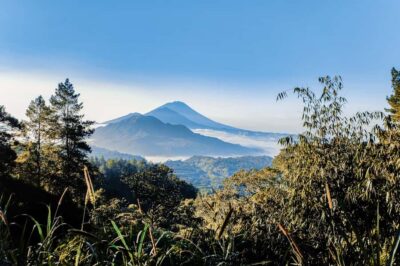
Mount Batur Sunrise Trek With Guide and Breakfast
Read our review →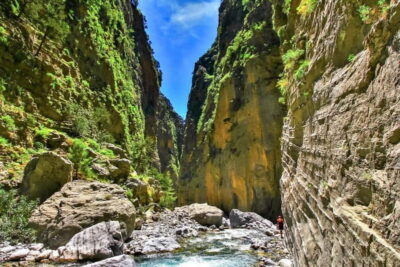
Full-Day Samaria Gorge Trek Excursion & Guide
Read our review →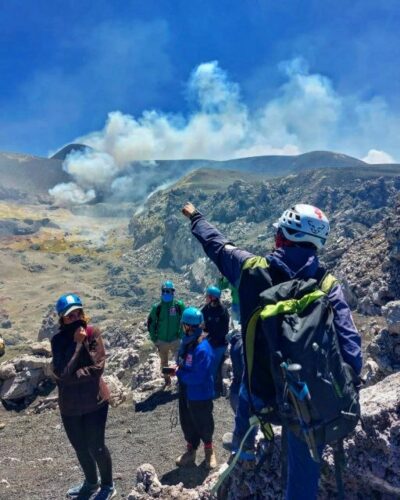
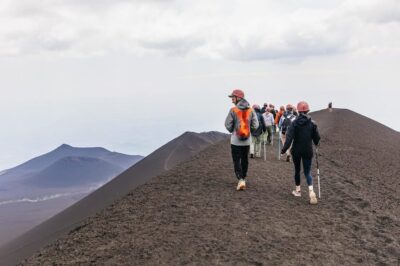
summit craters trekking with volcano guide 3350mt
Read our review →