
REVIEW · CHILE
Torres del Paine: Base Torres Trekking
Patagonia saves its best view for the hardest mile. This 14-hour hike takes you through the Ascencio Valley, Lenga forest, and glacial moraine to the three granite towers of Torres del Paine. I like the route’s changing scenery, especially the Hanging Glacier Martina, and I like that hotel pickup, a guide, and trekking poles are included. The main drawback is simple: this is a demanding 20-kilometer day, and you must bring your own food and drinks.
You should also know that the final kilometer is a rocky uphill push, not a gentle stroll with a postcard at the end. Guides Gabriel and Phillipe earned high praise for their patience and for helping slower hikers keep moving, which matters on such a long day. Still, if your fitness is low, this is not the place to test a new pair of legs.
Key points to know before you book
- A 20-kilometer round trip: The trek is divided into three stages, with the final kilometer being the steepest and roughest.
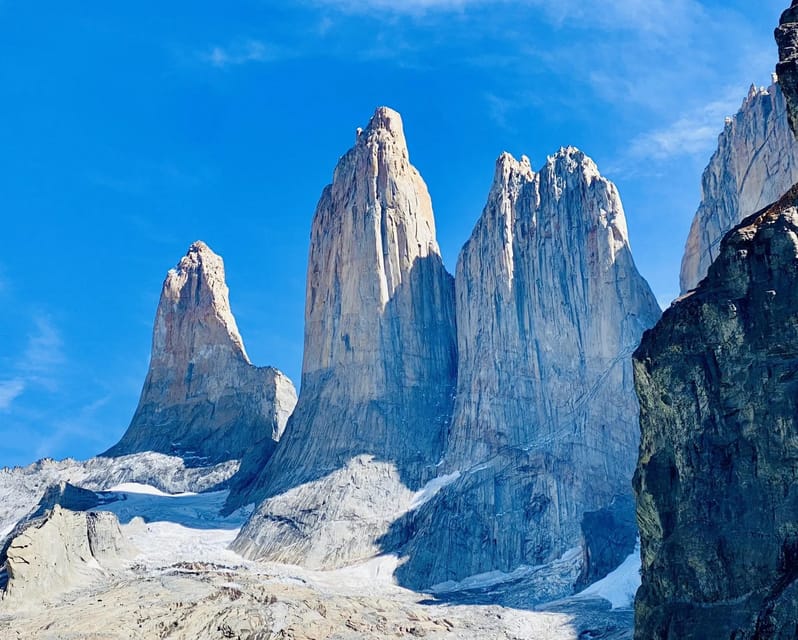
- Three famous granite towers: The goal is the base of the D’Agostini, Central, and Monzino towers.
- Changing scenery throughout: You pass through the Ascencio Valley, Lenga forest, stream crossings, and glacial moraine.
- Martina Hanging Glacier: This is a memorable viewpoint roughly 1 hour and 15 minutes after entering the forest section.
- A full-day outing: The experience lasts about 14 hours, including hotel pickup and return.
- Bring lunch and water: Food and drinks are not included, and there is no lunchbox provided.
Why the Base Torres trek earns its reputation
The Base Torres route is the most popular trek in Torres del Paine National Park for good reason. It gives you a clear goal, a demanding but understandable route, and one of the park’s most recognizable views at the finish.
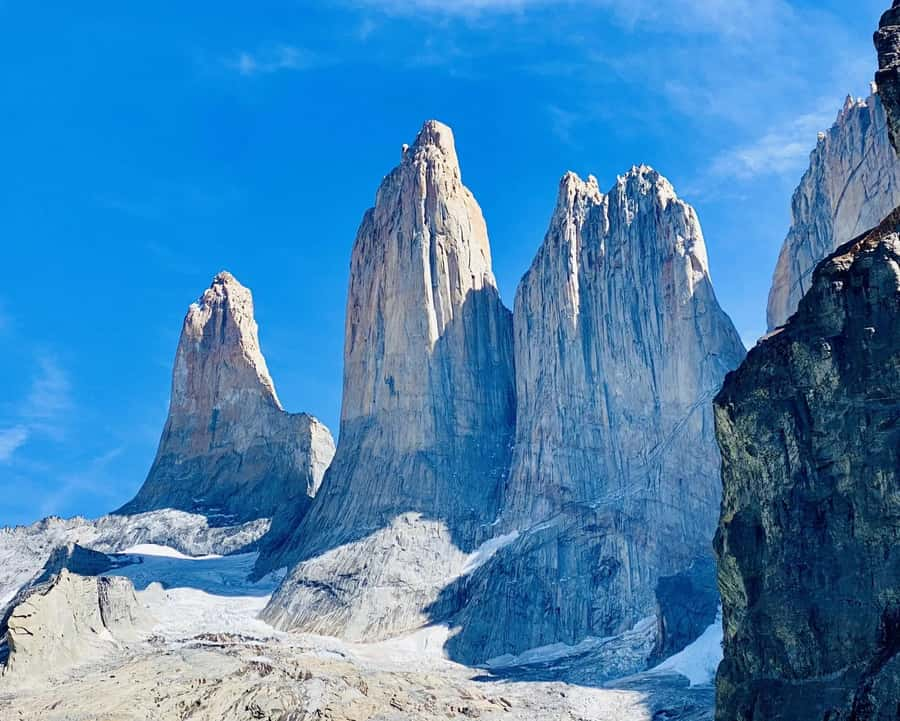
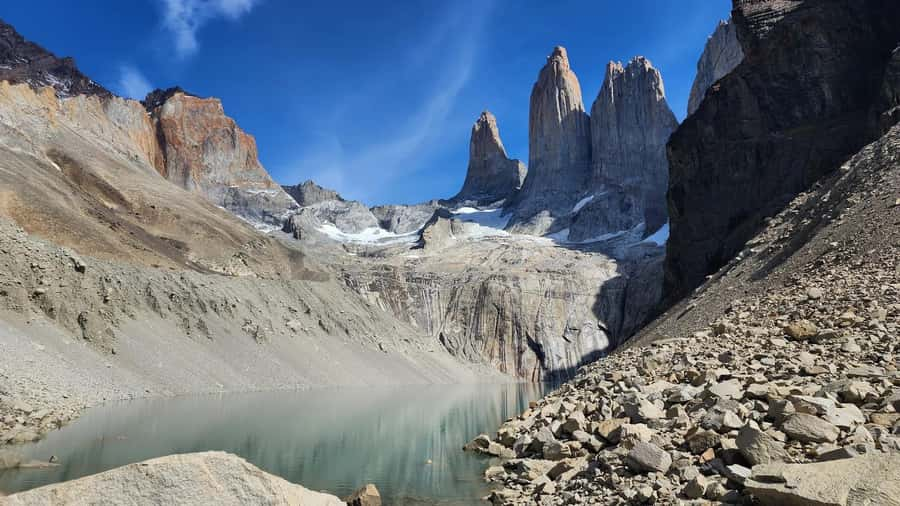
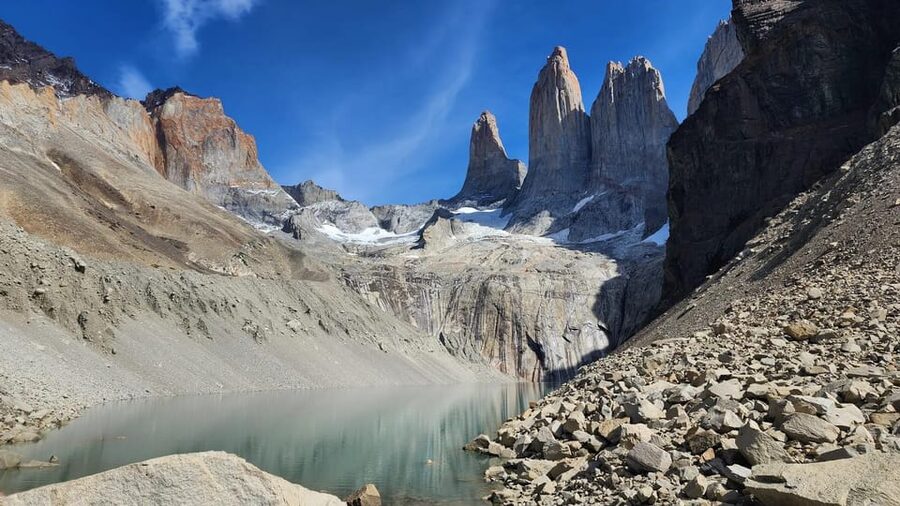
The three granite towers rise above the turquoise water at their base, creating the scene most people picture when they think of Torres del Paine. The reward is not only the towers themselves. You also get a close look at the valley, forest, rock, and ice that make this part of Patagonia so striking.
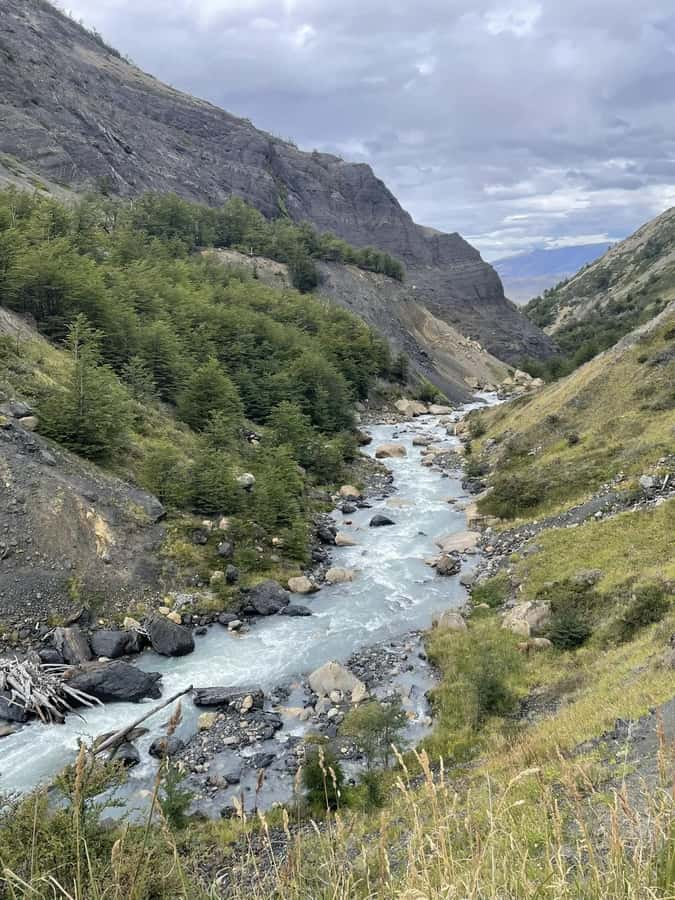
I like that the route does not give you the same view for hours. The first part moves through the Ascencio Valley, then the setting becomes greener near the forest. After that, you reach the rough moraine section, where the trail becomes more physical and the towers feel closer.
This is an active day, not a sightseeing trip with a short walk attached. You need enough stamina for 20 kilometers and the ability to handle uneven ground. The tour is not suitable for children under 14, pregnant women, wheelchair users, people with heart problems, or anyone with a low level of fitness.
A few more treks around the world worth a look
- Mount Etna: Trek to 3000m with cable car and 4×4
★ 4.6 · 3,823 reviews - Bali: Mount Batur Sunrise Trek With Guide and Breakfast
★ 4.8 · 3,461 reviews - From Chania: Full-Day Samaria Gorge Trek Excursion & Guide
★ 4.6 · 3,191 reviews
The first stage: Ascencio Valley and the route to Campamento Chileno
The trek begins with the walk toward Campamento Chileno. This early section introduces the basic rhythm of the day: steady walking, changing views, and a trail that asks for consistent effort.
As you move into the Ascencio Valley, the path becomes narrower. This is where you begin to see why good footwear matters. Comfortable shoes are listed as essential, but I would treat hiking shoes as the better choice because the route later turns rocky and steep.
Campamento Chileno provides a useful pause. You can stop there and use the restroom, although restroom facilities are not included in the tour price. Since the outing lasts 14 hours, this is also a good point to check your water, food, and clothing before continuing.
The first stage is part of the demanding half of the route. Do not burn all your energy early just because the trail still feels manageable. A slow, even pace will help you much more than a fast start.
The valley also gives you a chance to notice the park’s plant and animal life. The tour focuses on the natural setting rather than a series of built attractions, so you should expect the guide to point out features along the route while you keep walking.
Crossing the stream into greener country
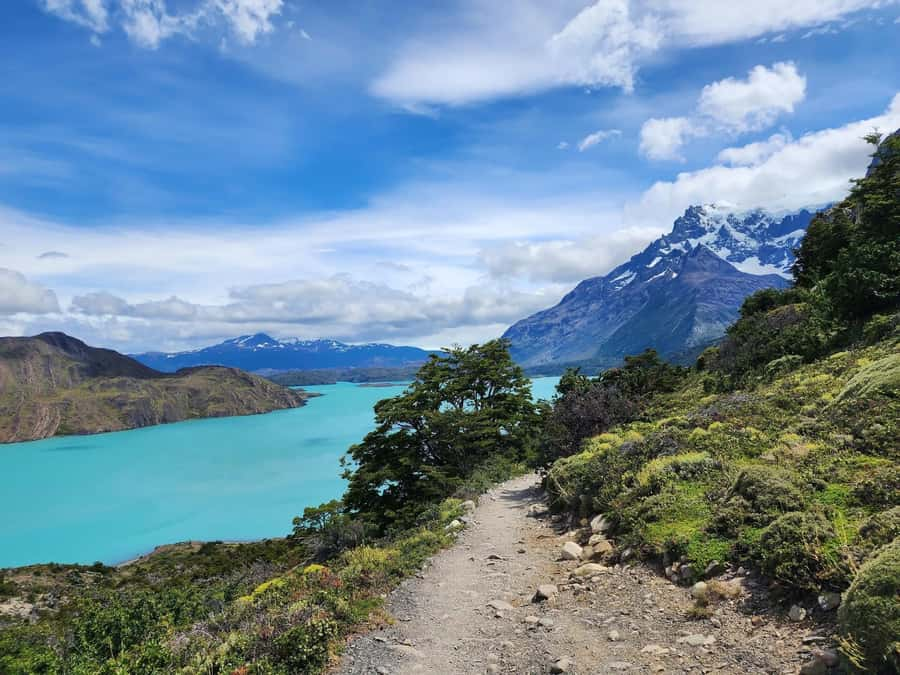
After Campamento Chileno, the route crosses a stream and enters a noticeably different setting. The surroundings become greener, with nearby forests and fewer steep sections than during the first stage.
This middle part is less demanding, but it is still not flat or effortless. After about 1 hour and 15 minutes of walking through the Lenga forest, you reach the view of Martina Hanging Glacier.
The forest section gives the day a welcome change of pace. Earlier, you have been working through the valley. Here, the trees create a more enclosed setting, and the nearby glacier adds a colder, more rugged note to the route.
I would use this portion to eat a snack and drink water before the final push. Food is not provided, and the only meal advice is clear: bring your own food and snacks. One person specifically wished a lunchbox had been included, a fair point for a full-day activity at this price.
The glacier view is also a useful mental marker. From here, you know the hardest section is still ahead, so do not mistake this scenic stop for the finish. Save some strength for the final kilometer.
The final kilometer: rocks, red trail marks, and a steep finish
The last stage begins near Martina Hanging Glacier and is the toughest part of the Base Torres trek. The distance is only one kilometer, but the route rises constantly over rocks.
At first, the trail may look confusing. It can seem as if there is no clear path, but red marks on sticks show where you should go. The route may also appear to climb straight up, making it look worse than it really is. You still need to work hard, but the markers help you choose the correct line.
This is where hiking shoes, warm clothing, water, and patience matter most. Trekking poles are provided, which should help with balance and reduce some strain on the climb. You may need to place each foot carefully rather than simply walk at your normal pace.
The route’s difficulty is not hidden, and that is useful when deciding if you should book. You do not need to be an elite hiker, but you should be comfortable with a long day on foot and a rocky uphill section near the end.
The final climb can feel slow. That is normal. Keep your pace controlled, follow the red trail marks, and stay with the group. The guides Gabriel and Phillipe were praised for their patience with slower hikers, so you are not expected to race to the top.
Same trailhead, a longer or shorter day out:
- Mount Etna: Summit Crater Trek with Cable Car
★ 4.8 · 1,875 reviews - La Palma: Tajogaite Volcano Guided Trek
★ 4.8 · 1,810 reviews - Etna: summit craters trekking with volcano guide 3350mt
★ 4.7 · 1,712 reviews - From Rethymno: Samaria Gorge Full-Day Trek, Pickup & Guide
★ 4.5 · 1,610 reviews
Reaching the three granite towers
At the Base of the Torres del Paine, the character of the day changes. The movement and effort give way to stillness, water, rock, and the three granite towers above you.
The towers are the D’Agostini, Central, and Monzino formations. This is the point where the route’s earlier stages come together: the valley, forest, glacier, and moraine have all led to one dramatic viewpoint.
The setting is especially powerful because it is quiet. The experience emphasizes the sound of nature, including the soft movement of water, rather than a busy attraction with facilities and displays. I like that the reward is a real place reached under your own power.
You should plan to enjoy the view without expecting a long rest in comfort. The tour information describes a challenging route and a return along the same trail, so the summit viewpoint is a turning point rather than the end of the day.
Take your photos, eat something, drink water, and give your legs a moment. A camera is worth carrying, but protect it from the changing conditions as you move through forest, rock, and open sections.
The return trip and the 14-hour schedule
The return follows the same trail before you head back to your hotel or accommodation. That means you will see familiar sections in reverse, but the experience can feel different after the hard climb and with tired legs.
The return is an important part of the physical calculation. Some people think only about reaching the towers, yet the total distance is 20 kilometers. You still need energy for the descent, the forest, the valley, and the ride back.
Hotel pickup and drop-off remove one practical worry. You do not need to arrange separate transport to the trailhead, and you can return directly to your accommodation for a well-earned rest.
The total day lasts about 14 hours, so keep your evening plans light. This is not a trek to pair with a late dinner reservation or another major activity. Bring enough food for the whole day because no meal is supplied.
You also need to provide a WhatsApp number so the operator can coordinate your transfer. The guide service is available in Spanish and English, so choose the language that will make trail instructions easiest to follow.
What the $149 price includes and leaves out
At $149 per person, the tour offers reasonable value if you want support on a difficult full-day route. Hotel transportation, a live guide, trekking poles, and the guided trek itself are included. Those details matter because transport and route support can be useful on a long day in a national park.
The price does not include the Torres del Paine National Park entrance ticket. It also excludes food and drinks, so you need to budget for the park entry separately and shop for a packed lunch, snacks, and water.
The lack of a lunchbox is the clearest weakness in the package. For a 14-hour outing, a supplied meal would make the day easier. You can solve that by preparing food before pickup, but do not wait until the last minute.
Free cancellation up to 24 hours before the activity and the option to reserve now and pay later add flexibility. Those policies are useful when weather or wider Patagonia plans are still being arranged, but they do not change the trek’s physical demands.
Guides, group support, and the value of patience
The strongest praise focuses on the guides’ helpful attitude. Gabriel and Phillipe were specifically recognized for staying patient with slower hikers and keeping them moving without turning the day into a race.
That is important here. A guide is not just useful for pointing out the route. On the rocky final kilometer, clear direction and encouragement can make the difference between feeling overwhelmed and finding a workable pace.
The guide speaks Spanish or English, and the tour includes trekking poles. You should still carry your own water and food, wear proper shoes, and bring warm layers. A guide can support your hike, but cannot replace preparation.
The available feedback gives the experience a five out of five rating from two verified bookings. That is a very small sample, so I would treat it as encouraging rather than final proof. The praise is specific, though, especially regarding guide patience, professionalism, and the scenery.
What to pack for this particular route
Pack for a long, changing day rather than a short park walk. The essentials are:
- Hiking shoes or other sturdy, comfortable footwear
- Warm clothing
- Water
- Lunch and snacks
- A camera
- Any food you need for the full day
The route includes a stream, forest, moraine, and a rocky ascent. You want footwear that feels secure and clothing that can handle changing conditions. Trekking poles are supplied, so you do not need to bring your own poles unless you prefer them.
Drones are not allowed. Leave yours behind, even if you are hoping for an aerial shot of the towers.
Your food plan deserves special attention. Since no lunchbox, food, or drinks are included, prepare enough for the entire outing. A small snack is not enough for 20 kilometers and 14 hours.
Who should book the Base Torres experience
I would recommend this trek to you if reaching the base of the Torres is a top priority and you are ready for a serious day outdoors. It suits hikers who value a guide, included hotel transport, and a clear route through several types of terrain.
It is also a good fit if you want to see Martina Hanging Glacier along the way rather than walk straight toward the towers. The route gives you more than one scenic payoff, even though the towers remain the main prize.
I would not recommend it if you have a low fitness level, a heart condition, are pregnant, use a wheelchair, or are looking for an easy family outing. Children under 14 are not suitable for this activity.
You should also think carefully about the 14-hour schedule. If you have only one free day in the area, this trek uses nearly all of it. That may be exactly what you want, but it leaves little room for another activity.
Should you book this Base Torres trek?
Book it if you want the classic Torres del Paine experience and accept that the view comes with a real physical cost. The changing route, Martina Hanging Glacier, three granite towers, hotel transfers, trekking poles, and patient guides make the $149 price fair, provided you add the park ticket and your own food.
Skip it if you want a relaxed outing or dislike rocky climbs. The final kilometer is short only on paper, and the total 20-kilometer distance requires preparation.
For a fit hiker with one full day available, this is a strong choice. Pack lunch, start with a steady pace, and save your best energy for the rocks near the top.
FAQ
How long does the Base Torres trek take?
The full activity lasts about 14 hours, including the trek, transportation, and return to your accommodation.
How far is the trek?
The total distance is 20 kilometers, divided into three stages.
What is the hardest part of the route?
The final kilometer is the most difficult. It climbs constantly over rocks and requires a strong level of fitness.
What can I see during the trek?
The route passes through the Ascencio Valley, Lenga forest, glacial moraine, and a stream area. You can also see Martina Hanging Glacier and the three granite towers, D’Agostini, Central, and Monzino.
Are food and drinks included?
No. You need to bring your own food, snacks, and water.
Is the Torres del Paine National Park ticket included?
No. The national park entrance ticket is not included in the price.
Are trekking poles provided?
Yes. Trekking poles are included with the experience.
Is hotel transportation included?
Yes. Pickup and drop-off at your hotel or accommodation are included. You need to provide a WhatsApp number so the operator can coordinate the transfer.
Recently added around the world
- Mt Kilimanjaro Trek, 6 Days – Umbwe Route★ 5.0 · 4 reviews
- 7 Day Trek To The Roof Of Africa Kilimanjaro via Machame Route★ 5.0 · 5 reviews
- Full Day Private Trekking Mu Cang Chai★ 5.0 · 33 reviews
- Mount Kilimanjaro Trek 7-Days: Lemosho Route★ 5.0 · 2 reviews
- 8 Day Kilimanjaro Trek via Lemosho Route★ 5.0 · 17 reviews
- 6-Day Kilimanjaro Machame Route – A Stunning Trek to Uhuru Peak★ 5.0 · 7 reviews
- 7-Days Tour Mount Kilimanjaro Trekking via Machame Route★ 5.0 · 2 reviews
- Trek To Mount Kilimanjaro★ 5.0 · 12 reviews
Chile Trekking Tours, compared.
Puerto Natales: Base of the Towers Trekking Experience
Read our review →
Puerto Natales: Base Torres Small Group Trekking
Read our review →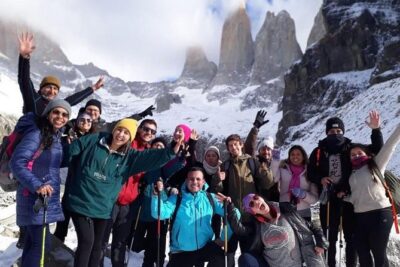
Trekking Base Torres – Torres del Paine trek from Puerto Natales
Read our review →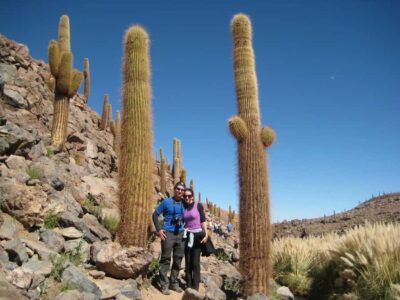
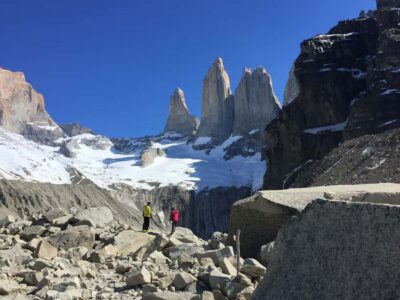
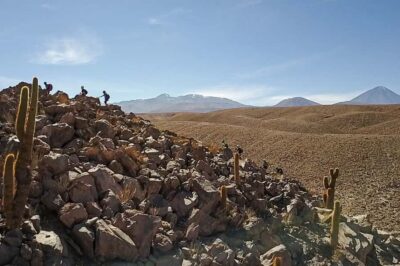
San Pedro de Atacama: Desert Tour with Canyoning & Trekking
Read our review →
San Pedro de Atacama: Canyon Swimming Pools Trekking Trip
Read our review →Browse the lists this tour appears in