
REVIEW · INDONESIA
Yogyakarta: Selogriyo Temple Tour & Java Rice Terrace Trek
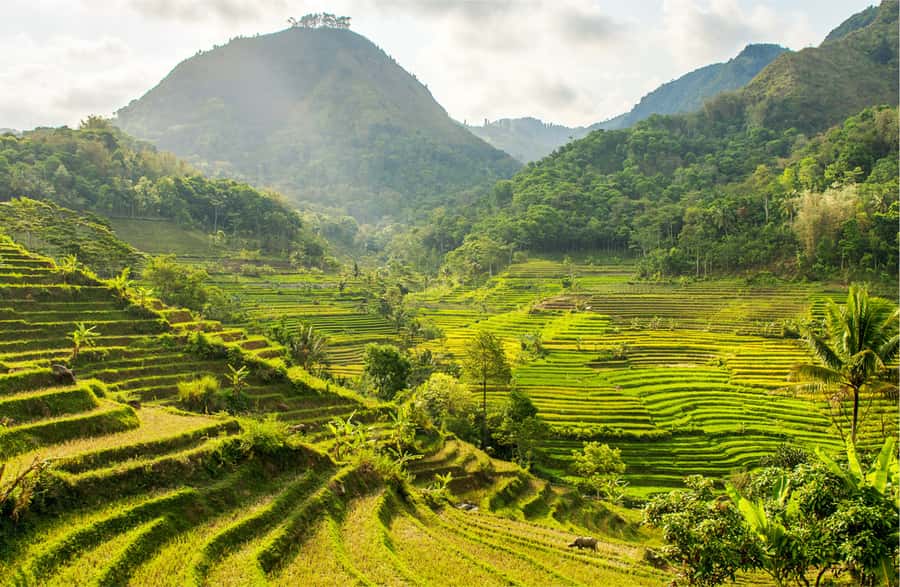
The quietest mornings are often the best. I like this six-hour trip because it trades Yogyakarta’s busy streets for a calm walk through working rice terraces, then leads you to small Selogriyo Temple in the hills. I also like the personal touch from guides such as Yuni, Haidar, Atok, and Kin, who explain farming, plants, village life, and local customs along the way. The main consideration is the travel time: reaching Selogriyo takes about two hours from Yogyakarta, so much of the day involves driving.
This is not Java’s biggest or grandest temple visit. Selogriyo is small and remote, and that is the point. You come for the peaceful setting, the walk, and the chance to see rural life up close. The path involves a moderate amount of walking, and muddy shoes are possible, especially during the rainy season.
What makes this outing worth your day
- A two-hour approach from Yogyakarta takes you far from the city and into quiet hill country.
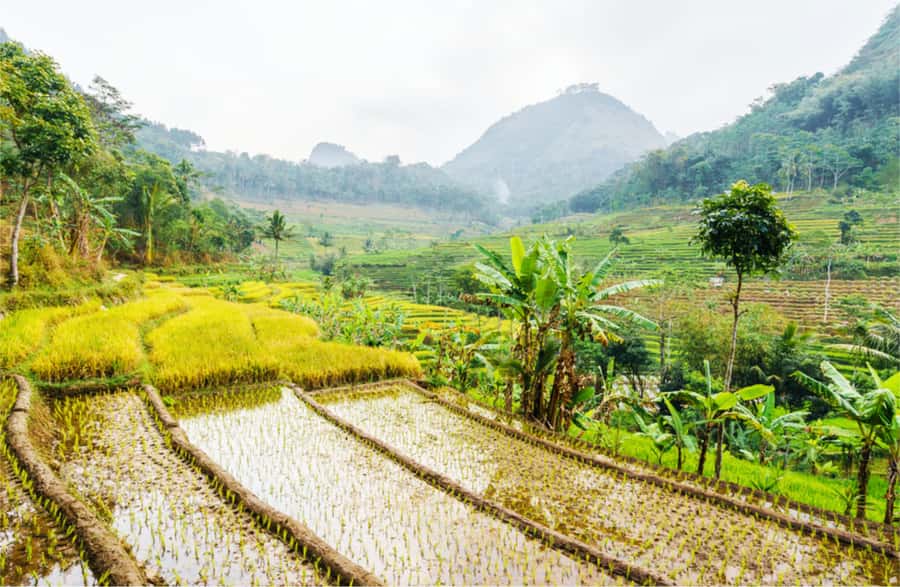
- Rice terraces are the main event, with paddy, beans, corn, tobacco, ginger, papaya, coffee, coconut, and other crops growing around the route.
- Selogriyo Temple is small but atmospheric, with Hindu sculptures, gardens, and views across the volcanic hills.
- Local guides add real value, explaining agriculture, religion, village life, language, food, and Javanese customs.
- The group is limited to 15 people, though low-season departures may feel almost private.
- Transport, entrance, parking, guide, and donation fees are included in the $55 price per person.
Leaving Yogyakarta for the rice terraces
Pickup is provided from your accommodation in Yogyakarta, with pickup also available from the Borobudur area. From central Yogyakarta, allow roughly two hours by car. From Borobudur, the journey is about one hour.
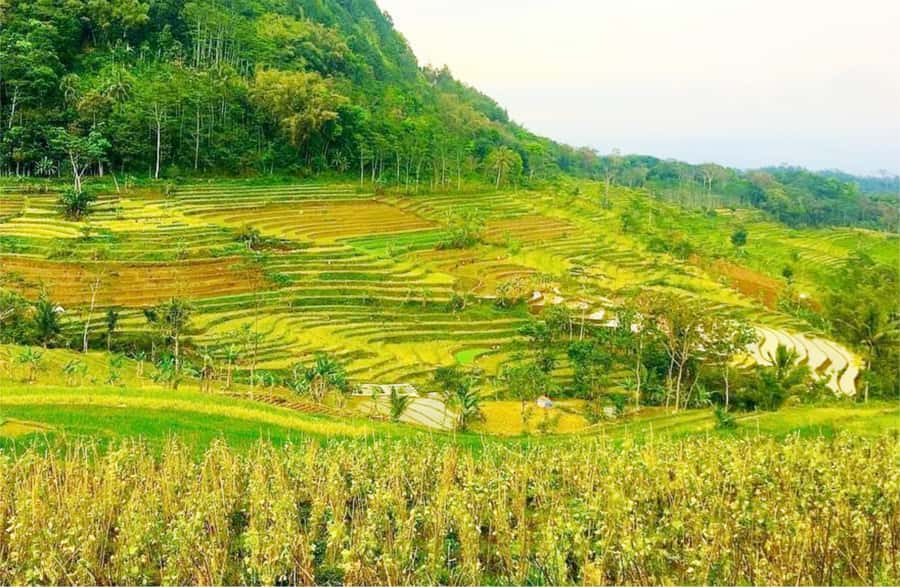
That drive is not just a transfer between two sights. It is part of the change in mood. You leave the city behind and move toward a quieter part of Java, where the tour focuses on fields, hills, village paths, and a modest religious site rather than major monuments and crowds.
The vehicle is one of the practical strengths of this trip. A highly rated transport service matters here because Selogriyo is not a convenient place to reach on your own by ordinary sightseeing routes. Drivers such as Haidar, Atok, Yuni, and Kin have been praised for safe driving, punctual pickup, clear communication, and comfortable cars.
The long drive can still feel tiring, especially if you are trying to fit several major Yogyakarta sights into the same day. I would treat this as a half-day countryside outing, not as a quick temple stop. If you are staying near Borobudur, the shorter transfer makes the trip easier to fit into your plans.
More Rice Terrace Treks in Indonesia
- Selogriyo Temple and Trekking Java Rice Terraces, hidden waterfall -Nature Java
★ 5.0 · 179 reviews - Ubud: Rice Terrace, Holy Water Temple & Waterfalls Trek Tour
★ 4.9 · 115 reviews - Mount Batur Sunrise Trekking and Rice Terrace Adventure
★ 5.0 · 111 reviews
The walk through working farmland
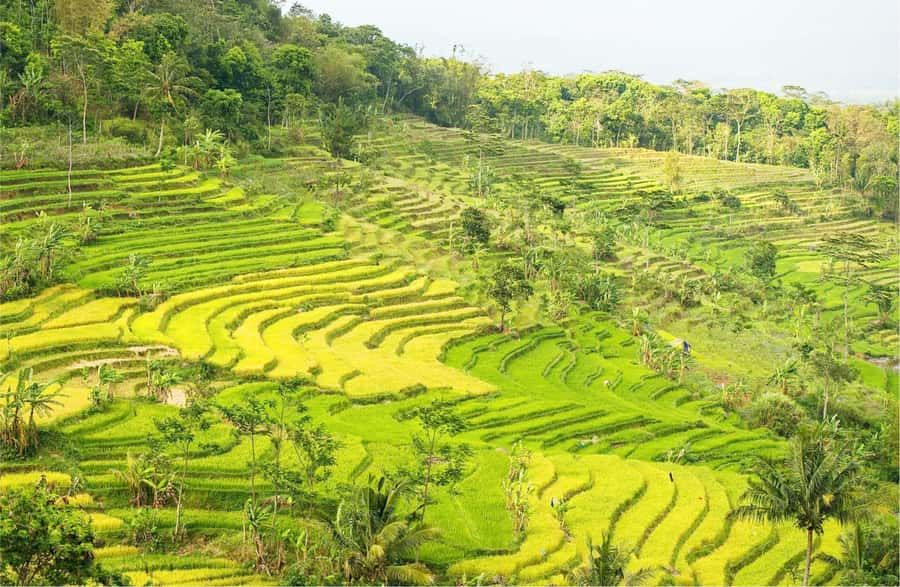
The walk is the heart of the experience. You hike through rice terraces and village farmland as the route rises toward the temple. The exact feel depends on the season. Fields may be bright green, recently harvested, or filled with other crops planted between rice-growing periods.
A good guide turns this from a pretty walk into a useful lesson. Yuni has explained how different plants grow in the area, while Haidar has helped visitors understand the process of rice cultivation and the role of local farmers. Other guides have pointed out tobacco, papaya, ginger, coffee, coconut, beans, corn, herbs, fruits, and small animals.
This variety is important. The fields are not simply a photo backdrop. They are working farmland, and your guide can help you notice the decisions behind it: what is planted, when crops change, and how village families use the land. The best moments come when you slow down and let the guide explain what is around you.
You may walk on a regular route or take a more adventurous path through the terraces, depending on conditions and your guide. Some guides give you a choice between the easier way and a route closer to the fields. That flexibility is useful, but you should be honest about your fitness and footwear.
The walk has been described as easy by some people and as quite a hike by others. That difference is worth noting. Your experience will depend on weather, mud, heat, the route selected, and how often you stop. The official advice calls it a moderate amount of walking, which is the safest way to think about it.
Wear shoes with a good grip. Comfortable clothing, sunscreen, and cash belong in your day bag. Muddy shoes are a real possibility, and the countryside offers little reason to dress formally.
Selogriyo Temple, small in size and big in setting
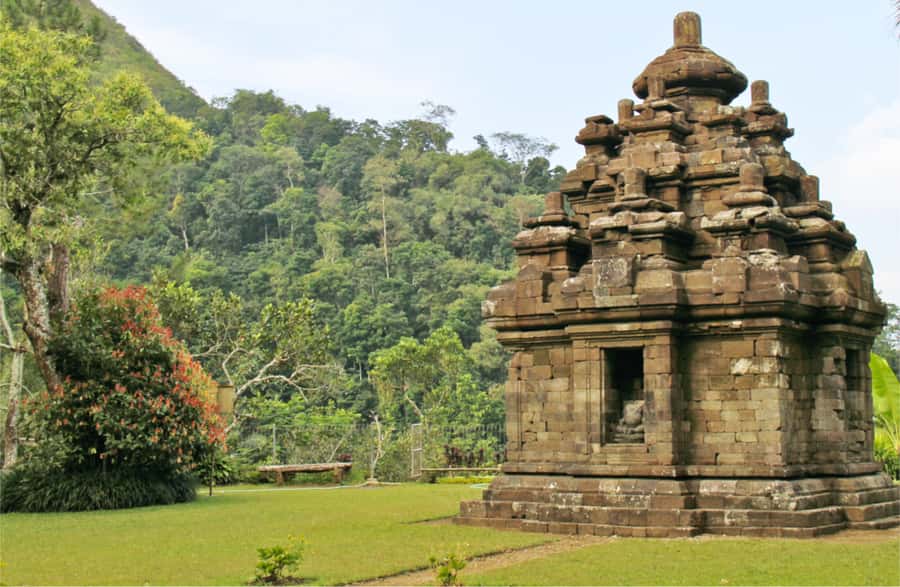
After the climb, Selogriyo Temple provides the destination for the walk. It is a small Hindu temple on a secluded hilltop, surrounded by gardens and greenery. Its size may surprise you if you expect something on the scale of Borobudur or Prambanan.
That comparison is also beside the point. Selogriyo works because of its setting. The temple feels tucked into the hills, and the approach gives it a story. You do not simply arrive by car, step out, take a photograph, and leave. You reach it on foot through fields and village country.
Your English-speaking guide can explain the temple’s structure, Hindu sculptures, and religious context. The quiet helps. There is room to look closely, ask questions, and enjoy the surroundings without the pressure of a large sightseeing crowd.
Views across the green volcanic hills depend on weather. In the rainy season, clouds can cover the distant mountains. That does not ruin the visit, but it changes the emphasis from wide views to the temple, gardens, and close-up details.
The lack of crowds is one of the strongest reasons to choose this outing. At quieter times, you might have the temple almost to yourself. It is a welcome contrast to Yogyakarta’s better-known sights, where the main challenge can be finding a calm place to stand.
Guides who make the countryside readable
The guide is the difference between a pleasant walk and a memorable one. The strongest part of this experience is not a single monument. It is the conversation that connects the fields, temple, people, and history.
Yuni has been praised for his English, plant knowledge, humor, careful driving, and willingness to take photographs. He grew up in the area and has shared childhood stories, local games, and observations about village life. Haidar has been especially good at explaining farming, religion, social customs, and the wider story of Java.
Atok is another popular guide, noted for his friendly manner, safe driving, enthusiasm, and ability to adjust the day. Kin has been praised for jokes during the long drive, local connections, and extra stops. Aulion has helped make the experience fun for families, explaining food and arranging chances to try cassava prepared in different ways.
Guide assignments are not guaranteed, so you should not book solely to get one particular person. Still, these names give you an idea of the standard of guiding available. The best guides do not rush from one point to the next. They stop for plants, answer questions, explain local work, and allow time for photographs.
Some guides also take good photos, a useful bonus if you are traveling alone. Solo visitors have described feeling safe and well looked after. Small groups also make it easier to ask questions than on a large coach excursion.
Same trailhead, a longer or shorter day out:
- Bali: Mount Batur Sunrise Trek With Guide and Breakfast
★ 4.8 · 3,461 reviews - Mount Batur Sunrise Trekking Private All Inclusive
★ 5.0 · 906 reviews - Mount Batur Sunrise Trekking Private Tour with Breakfast and Hotel Transfer
★ 5.0 · 885 reviews - Private Mount Batur Sunrise Trekking Tour
★ 5.0 · 634 reviews
Coffee, tea, and possible local extras
The planned experience centers on the temple and fields, but the route may include a stop at a local coffee or tea place. Several guides have taken people for coffee, ginger tea, lemongrass tea, redwood tea, blue pea tea, or fried cassava.
These stops add flavor to the day, but they may vary. They should be treated as possible local extras rather than guaranteed features of the advertised route. If you are interested in coffee, tell your guide early.
One stop has been described as the Selogriyo cafe, where tea came with fried cassava in a peaceful setting. Another guide arranged a coffee demonstration so a visitor could pour the drink personally. Some people also stopped at a civet coffee shop on the drive.
You should keep some cash with you for drinks, snacks, or personal purchases. Cash is specifically recommended, and these small village stops are part of the local character of the outing. They are not a substitute for lunch, so plan your expectations around a light refreshment rather than a full meal.
Extra detours may sometimes be possible when the schedule and guide allow. Past outings have included a waterfall, an Indonesian restaurant, another rice field, or a stop near Borobudur. These additions are not assured, so do not count on them when planning your day.
Is $55 a fair price?
At $55 per person, this is not the cheapest way to see a patch of rice fields. You are paying for more than admission to a small temple. The price includes hotel pickup and return, entrance, parking, donation fees, an English-speaking guide, and the vehicle.
The transport is especially valuable from Yogyakarta. Selogriyo takes about two hours each way, and arranging a reliable car, finding the temple, handling parking, and sorting out the walking route would take time and effort. The guide also adds value by explaining crops, religion, local history, and daily life.
The price looks strongest for solo visitors, couples, and small groups who want a private-feeling outing without organizing the day themselves. In low season, the small-group format may turn into a private or nearly private trip. That has happened when only one or two people booked.
For a large family, the cost can add up. You should also remember that the temple itself is modest. If your main goal is a monumental structure, you may find Borobudur or Prambanan a better use of your sightseeing budget. If your goal is rural Java, quiet paths, and a guide who can explain what you are seeing, the value is much better.
Who should choose this trip?
I would recommend this outing to you if you want a slower day away from Yogyakarta’s main sights. It suits people who enjoy walking, farming scenes, local conversation, and small religious sites more than grand architecture.
It is also a good choice for photographers. The terraces, working fields, hill paths, temple gardens, and changing weather provide more variety than a single viewpoint. Guides have also helped visitors take photographs, which is useful for solo participants and couples.
Families can enjoy it if everyone is comfortable with moderate walking and uneven or muddy conditions. A guide who enjoys talking about plants and local food can make the day engaging for children, though the experience is not designed as a formal children’s activity.
I would be more cautious if you dislike long car journeys, hot weather, hills, mud, or flexible timing. The walk is not presented as a strenuous trek, but it is not a flat stroll from a parking lot to a monument either.
This is also not the right choice if you need a packed schedule. The two-hour drive from Yogyakarta leaves less time for other major attractions. It is better to give the countryside its own half-day.
Practical planning for the six-hour outing
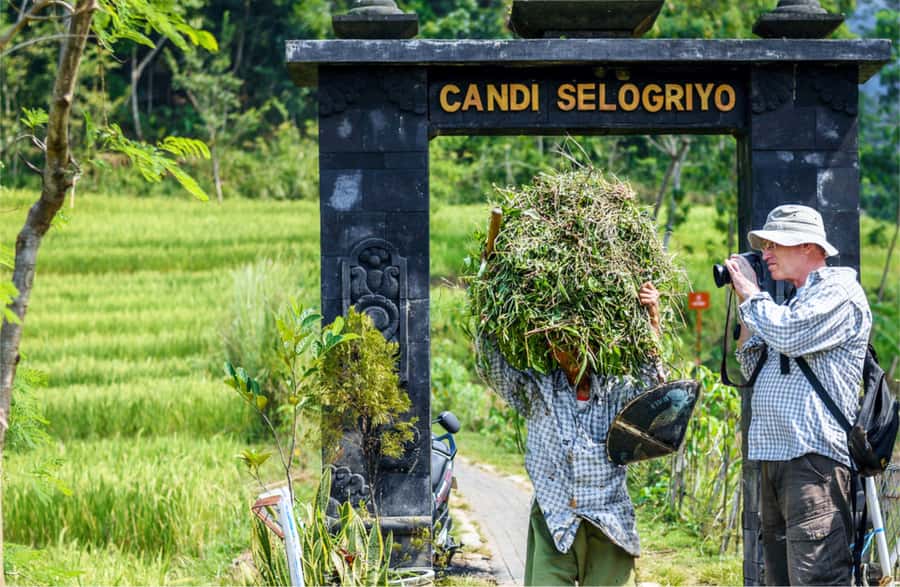
The tour lasts about six hours, with starting times based on availability. Pickup is included from your accommodation in Yogyakarta, and the Borobudur area is also served according to the tour details.
Bring:
- Comfortable walking shoes with grip
- Light, comfortable clothing
- Sunscreen
- Cash for drinks or snacks
- A camera or phone with spare battery power
The route can be peaceful and cool in the hills, but Java’s weather can change. Rain may make the path muddy and reduce distant views. Do not judge the outing only by the temple photograph. The walk and the countryside remain the main attraction even when clouds cover the mountains.
The group limit is 15 people. That is small enough for questions and conversation, though the actual group may be much smaller. Transport receives a 97 percent perfect rating, which supports the practical side of the tour.
Free cancellation is available up to 24 hours before the start for a full refund, and you can reserve now and pay later. Those policies are useful if your Yogyakarta plans are still shifting.
Should you book Selogriyo Temple and the rice terraces?
Book it if you want to see a quieter, more rural side of Java and you are happy to spend time in a car to reach it. The strongest reasons are the peaceful rice terrace walk, the lack of heavy crowds, the small hilltop temple, and the guides who explain plants, farming, culture, and local life with real warmth.
Skip it if you want a huge temple, a short transfer, or a tightly timed sightseeing circuit. Selogriyo is modest, and the drive is long from Yogyakarta.
For the right visitor, the $55 price is fair. You get transport, a guide, entry costs, and a countryside experience that would be awkward to arrange alone. Wear shoes you can get muddy, bring cash, and allow the day to move at village speed.
FAQ
How long is the Selogriyo Temple and rice terrace tour?
The tour lasts six hours.
How long does it take to reach Selogriyo from Yogyakarta?
The journey takes about two hours from Yogyakarta city.
How long does it take from the Borobudur area?
The journey takes about one hour from the Borobudur area.
Is hotel pickup included?
Yes. Pickup and drop-off from accommodation in Yogyakarta are included, with pickup also available from the Borobudur area according to the tour details.
Is an English-speaking guide provided?
Yes. The experience includes a live English-speaking guide.
How large is the group?
It is a small-group tour with a maximum of 15 participants. Depending on bookings, it may feel much smaller or become private.
How difficult is the walk?
The tour involves a moderate amount of walking through rice terraces and toward the temple. Comfortable shoes are recommended, and muddy conditions are possible.
What should I bring?
Bring comfortable shoes, sunscreen, comfortable clothes, and cash.
Recently added around Indonesia
- Overnight Trekking Adventure in Ketambe★ 5.0 · 2 reviews
- Wonderful 7 Days North Sumatra Tour (Include: 2 Days 1 Night Jungle Trekking)★ 5.0 · 27 reviews
- 5 Day’s 4 Night’s jungle Tour trekking in Bukit Lawang★ 5.0 · 7 reviews
- 1 Day Ethical Jungle Trekking★ 5.0 · 14 reviews
- ONE DAY JUNGLE TREKKING 6-7 hours (see orang utan) + RAFTING in BUKIT LAWANG★ 5.0 · 37 reviews
- TOUR PACKAGE (Taxi, Room, Jungle Trekking) 3 Days in BUKIT LAWANG★ 5.0 · 17 reviews
- 6 Day North Sumatra Jungles Orangutans Overnight trek and Hot Springs★ 5.0 · 2 reviews
- FAMILY JUNGLE TOUR: Orangutan Trek (4-hours hike) by EcoTravel Bukit Lawang★ 5.0 · 10 reviews
Rice Terrace Treks, compared.
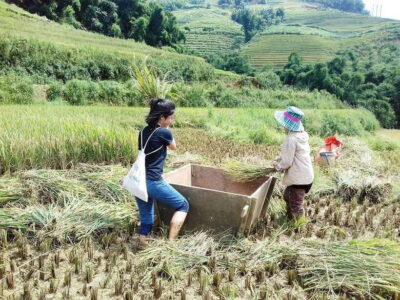
Muong Hoa Valley Trek and Local Ethnic Villages
Read our review →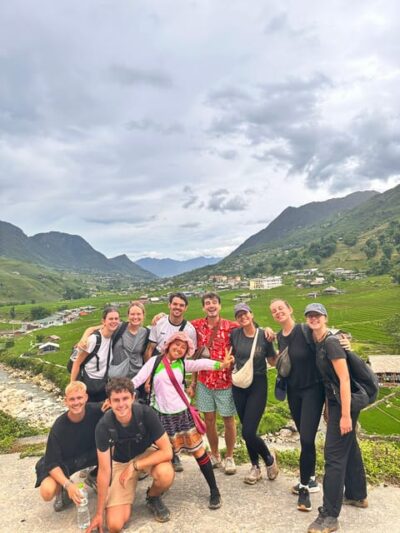
Explore Sapa by TrekkingAdventures, Mountain,Rice fields
Read our review →
Selogriyo Temple and Trekking Java Rice Terraces, hidden waterfall -Nature Java
Read our review →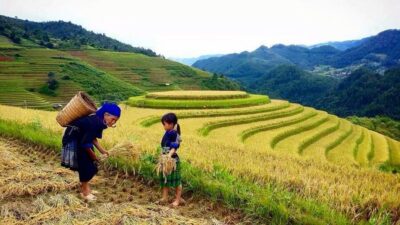
6-Hours Muong Hoa Valley Trek with Local Ethnic guide
Read our review →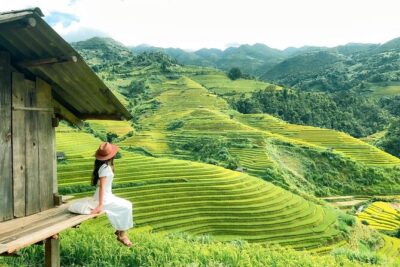
Sapa Muong Hoa Valley & Ta Van Eco Village Scenic Tour (No Trek)
Read our review →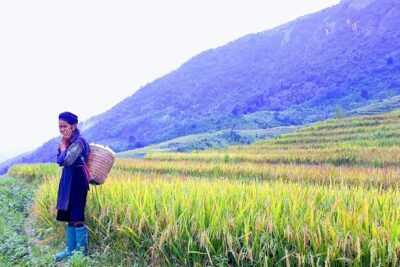
Daily Tour: Sapa Trekking in Muong Hoa valley, Bamboo forest
Read our review →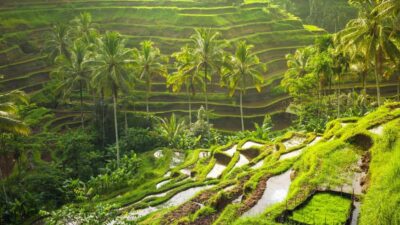
Rice Terrace, Holy Water Temple & Waterfalls Trek Tour
Read our review →
Mount Batur Sunrise Trekking and Rice Terrace Adventure
Read our review →Browse the lists this tour appears in