

REVIEW · HANOI
3D2N | Sapa – Bac Ha trekking tour to mountainous villages
Mountain paths reward early risers. I love the rice terraces around Lao Chai and Ta Van and the chance to visit Bac Ha Market with several ethnic communities in one trip. The small maximum of 10 people is another real plus, though the long bus rides, including an overnight return to Hanoi, require patience.
This is a packed mountain trip rather than a slow village stay. You get three lunches, three dinners, two breakfasts, air-conditioned shuttle transport, and guided walks for $314.66 per person. I like the value, but you should be comfortable with early starts, uneven paths, and a final arrival in Hanoi at about 4:00 AM.
Key points to know before booking
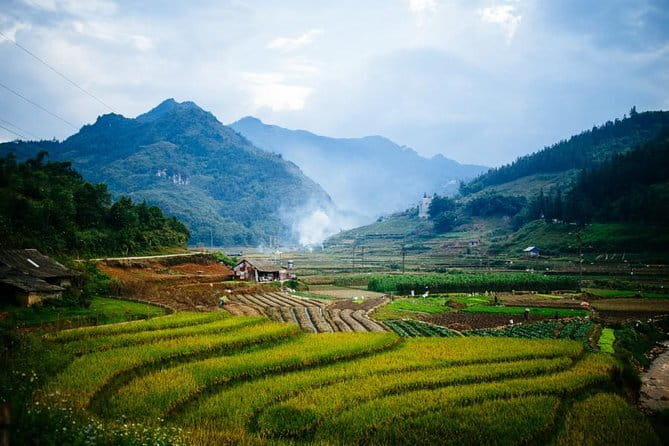
- Cat Cat introduces Sapa’s Black H’mong culture through a downhill village walk, traditional customs, and a French-built hydroelectric station.
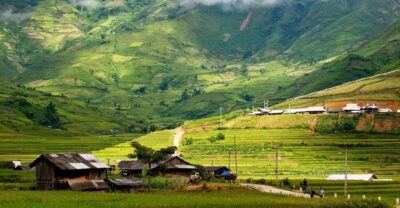
- Y Linh Ho, Lao Chai, and Ta Van form the scenic heart of the trip, with rice terraces and views toward the Hoang Lien Son range.
- Bac Ha Market takes you beyond Sapa’s usual routes, with Flower H’mong, Black Dao, Tay, Nung, La Chi, Phu La, and other local groups.
- The tour uses a maximum group size of 10, which should make village walks and guide support more manageable.
- Transport saves you from arranging mountain connections yourself, but the Hanoi to Sapa journey takes about six hours each way.
- The return is demanding, with a three-hour drive back to Sapa followed by a sleeping bus to Hanoi at 9:30 PM.
What this Sapa and Bac Ha trip is really like
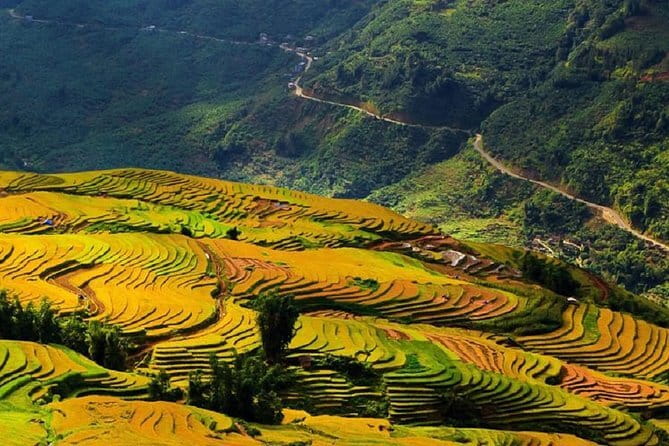
This three-day tour links two different sides of northern Vietnam. Sapa gives you steep mountain scenery, terraced rice fields, and walks through villages near town. Bac Ha brings a Sunday market and a wider mix of ethnic communities, along with a walk to Ban Pho village.
The appeal is variety. You are not spending all three days on one trail or inside Sapa’s town center. You see Black H’mong villages near Sapa, then travel to the Bac Ha area to meet Flower H’mong and other groups who come to trade livestock, food, clothing, and household goods.
The price of $314.66 includes the main transport between Hanoi and the mountains, meals listed in the schedule, and the planned village visits. That matters in this region, where arranging separate road transfers between Sapa, Y Linh Ho, Lao Chai, Ta Van, Bac Ha, and Ban Pho could become tiring and costly.
Still, this is not a relaxed three-day retreat. The first road journey takes about six hours. The drive from Sapa to Bac Ha takes about three hours, and the return from Bac Ha to Sapa takes another three hours. The overnight bus then leaves at 9:30 PM and reaches Hanoi at roughly 4:00 AM.
More Three-Day Treks in Hanoi:
- Sapa 3 Days 2 Nights Trekking Tour (1 Night In Ta Van Village, 1 Night In Hotel)
★ 5.0 · 699 reviews - 3-Day Trekking Adventure of Sapa from Hanoi – Stay Ta Van Village
★ 5.0 · 611 reviews - Hanoi – Sapa 3 Day 2 Night Trekking With Hotel & Homestay
★ 5.0 · 389 reviews
Day 1: From Hanoi to Cat Cat Village
The trip begins with pickup from hotels in Hanoi’s Old Quarter and the meeting point at Hanoi Opera House, 1 Trang Tien, in Hoan Kiem. The supplied schedule gives an early pickup window of 6:00 to 6:30 AM, while the general meeting information lists 7:00 AM as the start time. Confirm the exact pickup time when you book, since losing an hour in the morning can matter on a road journey of about six hours.
After reaching Sapa, you have lunch before heading to Cat Cat Village. The walk goes downhill, which sounds easy, but downhill paths can still be hard on your knees and may feel slippery in wet weather. Wear shoes with a firm sole rather than smooth casual sneakers.
Cat Cat is associated with the Black H’mong community. The visit gives you a first look at local customs and daily life before the longer walks on Day 2. A French-built hydroelectric power station from the twentieth century adds a specific historical detail to the route. It is a useful reminder that Sapa’s mountain settlements have long been connected to outside powers and public works, not simply isolated postcard villages.
The listed visit lasts about two hours, with admission included. You should expect a mix of village paths, mountain views, and cultural stops rather than a strenuous full-day hike.
One thing to keep in mind is the word village. Cat Cat is a popular stop close to Sapa, so it may feel more organized for tourism than the smaller settlements later in the trip. That does not make it worthless. It makes Cat Cat a gentle introduction, while Y Linh Ho, Lao Chai, Ta Van, and Ban Pho provide more walking and rural context.
In the evening, you are free in Sapa. This is a good chance to keep things simple. You can walk around town, shop, or try roasted corn and baked eggs cooked beside charcoal fires. Dinner is included at a local restaurant, but drinks and personal purchases are not included.
Day 2: The best walking day from Y Linh Ho to Ta Van
After breakfast, the guide collects you at about 8:00 AM for the walk to Y Linh Ho. The first section takes around one hour. A short break is built in, giving you time to enjoy the setting and regain your pace before continuing.
Y Linh Ho is a strong start because it moves you away from the immediate center of Sapa. The route then continues toward Lao Chai through rice terraces and along Muong Hoa Stream. This is the day when the scenery does most of the talking.
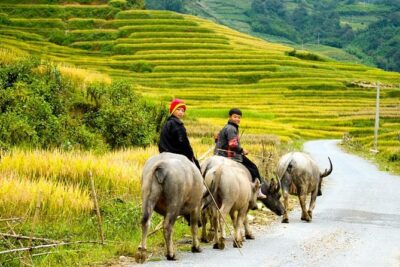
Sapa’s terraces have received international attention, including recognition by US-based Travel + Leisure magazine as one of the world’s seven most beautiful and magnificent terraced areas. The important thing for you is not the award itself. It is the changing view as paths pass between cultivated slopes, streams, and mountain villages.
The walk from Y Linh Ho to Lao Chai is listed at about one hour, followed by another hour from Lao Chai to Ta Van. Timing on mountain paths can vary with weather, ground conditions, and the pace of the group, so do not treat those figures as exact door-to-door walking times.
Lao Chai is home to the Black H’mong community. From here, the route continues to Ta Van, described as one of the largest villages in Sapa. Lunch is served at a local restaurant in Ta Van, followed by a short rest.
I like this part of the tour because the villages are not treated as quick photo stops. The route connects them on foot, which gives you a better sense of distance and terrain. You can also learn about customs and local life from the guide as you walk.
The drawback is that the schedule does not give detailed information about trail difficulty, elevation gain, or the exact amount of free time in each village. If you need a highly technical hiking plan, ask the operator for more detail before booking. Most people can participate, but you should still be ready for uneven mountain paths and a full day outdoors.
After Ta Van, a driver transfers you back to your Sapa hotel. Dinner is served at a local restaurant. The arrangement is practical, since it avoids making you walk back over the same route after lunch.
The tour feedback gives a useful clue about the service style. One guest praised the sales support, practical suggestions, food, fine weather, and a guide described as careful and trustworthy during a separate Fansipan walk. Another guest returned after a positive Ninh Binh tour and again praised the company’s sales team and guide support. The comments are short, but they point to a company that puts effort into advice before departure and attentive help during the trip.
Day 3: Bac Ha Market and Ban Pho
Day 3 begins at 7:00 AM, with a drive of about three hours from Sapa to Bac Ha Market. This is the longest single transfer of the tour, but it takes you to a very different setting.
Bac Ha Market is held on Sunday. People come from far away to buy and sell goods, exchange news, and maintain social ties. The market includes Flower H’mong, also called Red H’mong, as well as Black Dao, Tay, Nung, La Chi, Phu La, and other groups.
You can expect traditional clothing, handmade goods, produce, food, and livestock. Horses were once central to trade here, while motorbikes now play a larger role in daily transport. You may also see buffalo, cows, goats, and fish being bought and sold.
The market is one of the strongest reasons to choose this tour over a Sapa-only trip. Sapa offers beautiful mountain walks and accessible village visits. Bac Ha shows a wider regional network, with many groups gathering in one place for practical reasons rather than for a staged cultural performance.
You have about one hour at the market before lunch at a local restaurant. That is enough for a first look, but it is not a long, unhurried market morning. If you enjoy browsing every stall, taking photographs, or watching livestock trading, the time may feel tight.
The market can also be crowded and noisy. That is part of its character, but you should keep your belongings close and remain respectful when taking photographs. The tour description emphasizes contact with local communities, not a formal museum visit, so good manners matter.
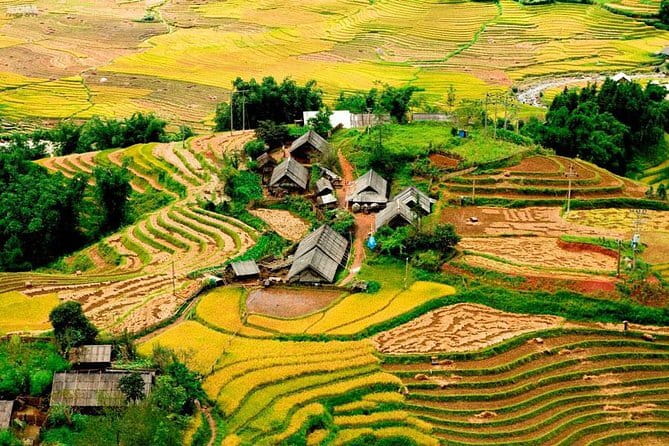
After lunch, the group heads to Ban Pho Village, home to Flower H’mong people. The walk lets you see houses, daily routines, and traditional customs. A particularly local detail is the chance to try homemade corn wine.
The corn wine tasting is optional in spirit, even if included as part of the visit. You do not need to drink it to appreciate the stop. If you do try it, take only a small amount, especially with another long drive ahead.
Ban Pho adds balance to the market. Bac Ha Market is public, crowded, and commercial. Ban Pho is more residential and focused on village life. Seeing both helps you understand that ethnic culture is not limited to clothing displayed at a market. It also appears in homes, food, farming, drink, and ordinary routines.
After Ban Pho, you drive three hours back to Sapa. Dinner is listed at 6:30 PM. The sleeping bus leaves at 9:30 PM for Hanoi, with arrival expected around 4:00 AM.
That final schedule is the main practical weakness of the tour. You get a full third day, but the return is not restful in the usual sense. The sleeping bus may make the journey easier than a standard seated bus, yet you should plan for a short night and a tired morning in Hanoi.
A few more treks around Hanoi worth a look
- From Hanoi: 2-Day Sapa Trekking Trip with Homestay & Meals
★ 4.8 · 704 reviews - 2-Day Sa Pa Ethnic Homestay Tour & Trek with Limousine Bus
★ 4.8 · 440 reviews - From Hanoi: 2-Day Sapa Trek Tour – Luxury Limousine Transfer
★ 4.1 · 249 reviews - From Hanoi: Trek and Stay: 3-Day Sapa Highlands Adventure
★ 4.6 · 152 reviews
Meals, transport, and what the price covers

The tour includes an air-conditioned shuttle bus for Hanoi to Sapa and back. It also covers three breakfasts, three lunches, and three dinners according to the supplied inclusions and schedule.
Meals reduce the need to search for restaurants during a tightly timed trip. They also make the $314.66 price easier to assess, since the package is not limited to transport and guiding.
VAT of 10 percent is not included. Insurance, visas, drinks with meals, tips, and other personal expenses are also your responsibility. Keep extra money for beverages, snacks, and any purchases at the market or villages.
The transport package is the biggest value here. You are covering a lot of ground without arranging each leg yourself. The tradeoff is that roads and transfer times control the rhythm of the trip. You will not have much freedom to linger in one village or change the route.
The maximum group size is 10 people. That is small enough for the guide to keep an eye on the group during walks and answer questions without trying to manage a large coach party. It also keeps the village visits more personal, although the actual group size on your date is not specified.
How hard is the walking?

The tour is described as suitable for most people, but that does not mean it is effortless. Day 1 includes a downhill walk to Cat Cat. Day 2 links Y Linh Ho, Lao Chai, and Ta Van on foot, with rice terraces, streamside paths, and mountain terrain. Day 3 adds a walk to Ban Pho after the market.
The supplied information does not state the total mileage, elevation gain, or trail grade. You should therefore prepare for ordinary mountain walking rather than assuming a flat sightseeing stroll.
Good walking shoes are the sensible choice. Bring water, sun protection, and a light layer for changing mountain weather. The tour requires good weather, and poor conditions can lead to a new date or a full refund.
Who will get the most from this tour?

This tour suits you if you want Sapa’s famous terraces but also want a Sunday market with a broader mix of communities. It works well for people who prefer a guided structure, included meals, and arranged transport.
It is also a good fit if you have only three days and want to connect Hanoi with two northern mountain areas. The itinerary covers more than you could comfortably organize by guesswork.
You may want a different plan if you dislike long road journeys, need a late start, or want several quiet nights in the mountains. The overnight bus to Hanoi is especially important to consider. It saves the cost and time of another hotel night, but it can leave you worn out when you arrive.
Families and older people may be able to join because most people can participate, but the tour data does not give age-specific guidance or detailed accessibility information. Ask about the walking surfaces and vehicle arrangements if anyone in your group has mobility concerns.
Booking details worth checking
Pickup is offered from the Old Quarter area, and the listed meeting point is Hanoi Opera House. Since the schedule gives both a 6:00 to 6:30 AM pickup window and a 7:00 AM start time, confirm where and when you need to wait.
Confirmation is provided at booking. Cancellation is free up to 24 hours before the start time for a full refund. Inside 24 hours, no refund is given, and late changes are not accepted.
If bad weather cancels the trip, you are offered another date or a full refund. The same applies if the minimum number of people is not met. The activity ends back at the meeting point after the return to Hanoi.
Should you book the Sapa and Bac Ha route?
Book it if you want a busy but rewarding mountain circuit with terraced fields, village walks, local meals, and a Sunday market. The combination of Sapa and Bac Ha gives you more cultural range than a short Sapa visit alone, while the maximum group size of 10 keeps the format reasonably personal.
Think twice if comfort and free time matter more than coverage. Six-hour road journeys, a three-hour Sapa to Bac Ha transfer, a three-hour return, and a 4:00 AM Hanoi arrival make this a demanding schedule.
For the right person, the value is strong. You get transport, meals, guided village visits, and access to places that would take more planning on your own. Pack good shoes, keep the final overnight ride in mind, and confirm the morning pickup time. If those conditions suit you, this tour offers a practical way to see both the famous terraces of Sapa and the many communities gathered at Bac Ha Market.
FAQ
Where does the tour start?
The listed meeting point is Hanoi Opera House, 1 Trang Tien, Phan Chu Trinh, Hoan Kiem, Hanoi. Pickup is also offered from hotels in the Old Quarter area.
What time does the tour begin?
The general start time is listed as 7:00 AM. The Day 1 pickup window is listed as 6:00 to 6:30 AM, so confirm your exact pickup time after booking.
How long is the tour?
The tour lasts approximately three days. The overnight sleeping bus leaves Sapa at 9:30 PM on the final day and is expected to reach Hanoi at about 4:00 AM.
Is transport from Hanoi to Sapa included?
Yes. An air-conditioned shuttle bus is included for the Hanoi to Sapa and Sapa to Hanoi journey.
Is Bac Ha Market included?
Yes. The itinerary includes a visit to Bac Ha Market on Day 3, followed by a walk to Ban Pho Village.
Which villages are visited?
The route includes Cat Cat, Y Linh Ho, Lao Chai, Ta Van, and Ban Pho Village.
What meals are included?
The inclusions list three breakfasts, three lunches, and three dinners. Drinks with meals are not included.
Is the tour suitable for most people?
The tour information says most people can participate. It does not provide detailed trail grades, total walking distances, or accessibility information.
How many people can join the tour?
The maximum group size is 10 people.
What happens if the weather is poor?
If poor weather causes cancellation, you are offered a different date or a full refund.
Recently added around Hanoi
- Trekking around Ha Giang 5 days 4 nights★ 3.0 · 2 reviews
- From Hanoi : Sapa Moutain Trek – Halong bay Heritage★ 4.5 · 25 reviews
- 2-Day SAPA Trekking – Villages-Homestay-Ethnic-Local Food-Market★ 5.0 · 2 reviews
- 8-Days Hanoi, Sapa Trekking And Halong Bay Cruise★ 5.0 · 8 reviews
- Hanoi: 3D2N Mu Cang Chai Visit All Attractions, Trek, Ethnic Life★ 5.0 · 3 reviews
- Mai Chau – Pu Luong trekking 3 days 2 nights★ 4.5 · 7 reviews
- Trekking In Ha Giang 5 Days★ 5.0 · 4 reviews
- Sapa trekking – Unique Route – 2D1N★ 5.0 · 3 reviews
Hanoi Trekking Tours, compared.
Sapa 3 Days 2 Nights Trekking Tour (1 Night In Ta Van Village, 1 Night In Hotel)
Read our review →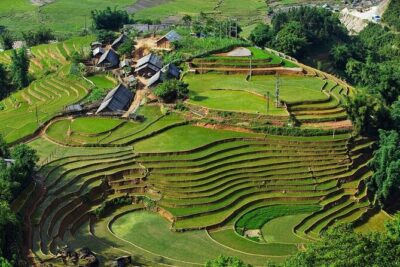
3-Day Trekking Adventure of Sapa from Hanoi – Stay Ta Van Village
Read our review →
2-Day Sa Pa Ethnic Homestay Tour & Trek with Limousine Bus
Read our review →
Sapa 3 Day 2 Night Trekking With Hotel & Homestay
Read our review →
2-Day Sapa Trek Tour – Luxury Limousine Transfer
Read our review →
Sapa 2 Days 1 Night Overnight At Local Homestay
Read our review →Browse the lists this tour appears in