
REVIEW · UBUD
Mount Agung Sunrise Trekking Private Tours
The hardest sunrise in Bali may be the best one. This private climb takes you up Mount Agung, Bali’s highest and most sacred volcano, through darkness and steep volcanic terrain, then places you near the summit for sunrise over Bali, Lombok, and Mount Rinjani. I like the small private format, and I like that transport, a guide, breakfast, poles, a flashlight, and a raincoat are included. The catch is simple: this is a serious mountain trek, not an easy sunrise outing.
I also like the quiet sense of achievement. Mount Agung rises to 9,944 feet, or 3,031 meters, and the route is far more demanding than the popular Mount Batur climb. Your reward is a raw, high-altitude experience with fewer people and huge views. But cold, loose rock and a steep descent can turn the final hours into a test of nerve and stamina.
Key points at a glance
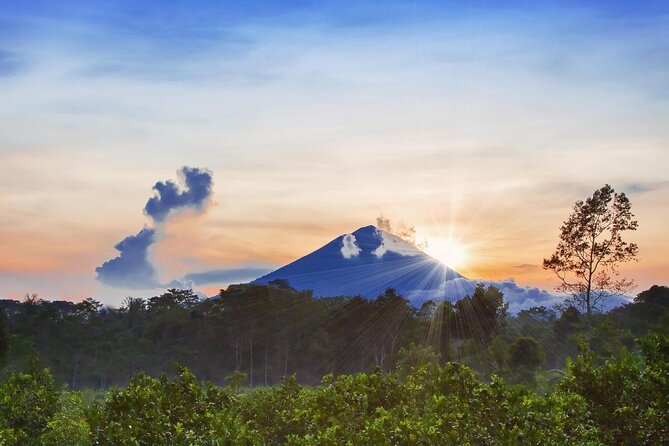
- A midnight start leads to sunrise near Bali’s highest point, with views toward Lombok and Mount Rinjani.
- The climb takes about four to five hours uphill, followed by roughly four hours back down for many fit hikers.
- The route is steep and rocky, with forest, loose stones, mud, narrow sections, and slippery ground after rain.
- The private guide matters, especially in darkness and on the rough upper sections. Guide Darta received especially warm praise for his calm, careful approach.
- Breakfast is basic but welcome, with bread, boiled eggs, fruit, biscuits, and tea or coffee.
- Warm layers and sturdy shoes are essential, since the tour provides a raincoat but not a jacket or footwear.
Why Mount Agung is a very different Bali sunrise
Mount Batur is usually the easier choice for a Bali sunrise. Mount Agung is the demanding one. It is Bali’s tallest mountain and a sacred volcano, so reaching its upper slopes feels like a major physical and cultural undertaking rather than a quick morning excursion.
You begin in darkness, often after a late-night pickup. The first part of the route can feel manageable, but the trail grows steeper and rougher as you climb. The forest section may be humid and warm, while the higher volcanic ground becomes cold, windy, and exposed.
The scale of the climb is important. One detailed account described about 2,000 meters of gain over roughly six kilometers. Another estimated four hours for the ascent and four hours for the return. Exact timing depends on fitness, weather, stops, and the pace set by your guide.
I would treat the advertised 12 to 16 hours as a full-night expedition. You lose sleep, climb for hours, wait near the top if you arrive early, and then descend before returning to your pickup point. Plan a quiet day afterward.
More Sunrise Treks in Ubud
- Mount Batur Sunrise Trekking Private All Inclusive
★ 5.0 · 906 reviews - Private Mount Batur Sunrise Trekking Tour
★ 5.0 · 634 reviews - Mount Batur Sunrise Trekking (Private Tour and Breakfast at Restaurant)
★ 5.0 · 598 reviews
The midnight transfer and meeting point
The official meeting point is Pura Pengubengan Besakih in Rendang, Karangasem Regency. Transfers are available from south Bali, Ubud, Amed, Lovina, and Candidasa, and the ride can be long from the southern resort areas.
Pickup times vary by location, but accounts from Ubud describe departures around 10 p.m., with the hike beginning close to midnight. One pickup from Canggu began around 9 p.m. The aim is to reach the mountain early enough for a night ascent and a sunrise arrival.
The private driver is a useful part of the experience. Drivers named Rodih and Ketut Bude received especially strong praise for punctuality, safe driving, and friendly conversation. After a demanding climb, having a reliable driver waiting for the return journey matters more than it might seem.
If you are staying far from Besakih, expect a long drive each way. That is part of the price, but it also makes the day much longer than the hiking time alone suggests. Confirm your pickup location and timing before you go.
Through the forest, then onto volcanic rock
The trek begins with a flashlight in hand. The guide supplies one, though bringing your own headlamp is a sensible backup. At first, the path runs through forest and may feel warm and humid. This section is still uphill, but it is usually less intimidating than the upper mountain.
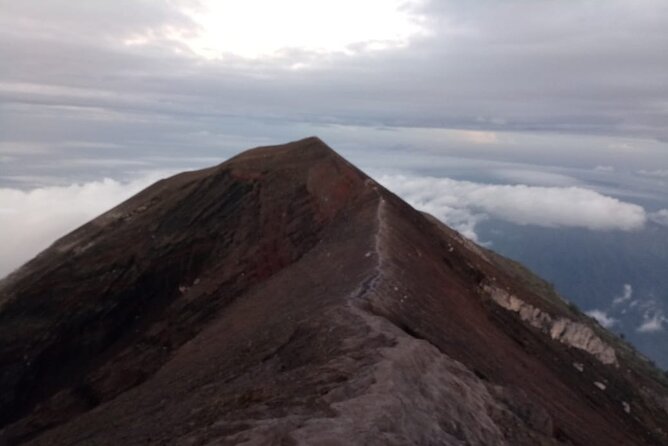
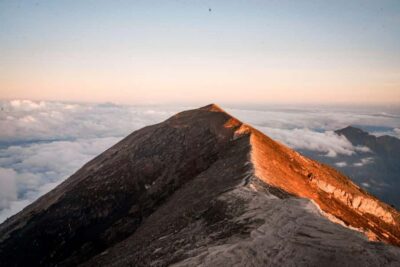
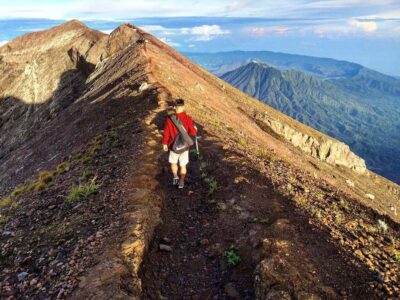
As the route rises, the ground becomes more uneven. You may find a rough footpath, loose stones, mud, and sections that feel more like a rocky stream bed than a maintained trail. The darkness hides the steepness at first. Daylight on the descent can reveal just how narrow and awkward some parts are.
The upper section is where the climb earns its reputation. You continue upward over volcanic rock, often with a sharp slope beneath your feet. Good tread becomes critical. Running shoes were a poor choice for some people on the descent, and sandals are plainly unsuitable.
Your guide’s job is not just to point the way. In darkness, a guide helps keep the route clear, sets a workable pace, and watches for slips or fatigue. The best accounts praised guides who stayed close, carried extra water or a pack when needed, and allowed a hiker to stop rather than forcing a summit attempt.
Waiting for sunrise near the summit
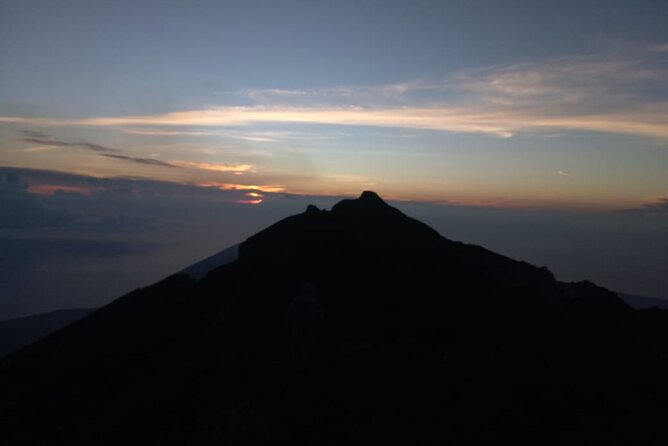
A curious part of this tour is that reaching the upper mountain too quickly is not always ideal. Some hiking groups arrived well before sunrise and waited for up to two hours in the cold. Your guide may stop below the highest point, build a small fire if conditions allow, and let you eat and warm up before the final push.
This pause can be welcome after hours of climbing. It can also feel long if you are underdressed. Bring enough clothing to sit still in wind and darkness, not just enough to hike uphill.
Breakfast is simple: bread, boiled eggs, seasonal fruit, biscuits, and tea or coffee. After four or five hours of climbing, simple food tastes excellent. Water is provided during the hike, but some hikers needed extra water from the guide after bringing too little.
One detailed account advised carrying at least three liters per person. That is a useful target for a strenuous overnight climb, especially if you are used to warm Bali conditions and expect to sweat during the forest section.
More Mount Agung Treks in Ubud:
- Mount Agung Sunrise Trekking Tour
★ 5.0 · 156 reviews - Bali: Mount Agung Sunrise Trekking Experience
★ 4.8 · 91 reviews - Dekwar Mount Agung Sunrise Trekking
★ 5.0 · 66 reviews - Bali/Mount Agung: Sunrise Trekking Adventure With Transfers
★ 4.6 · 55 reviews
Sunrise, Lombok, and the crater rim
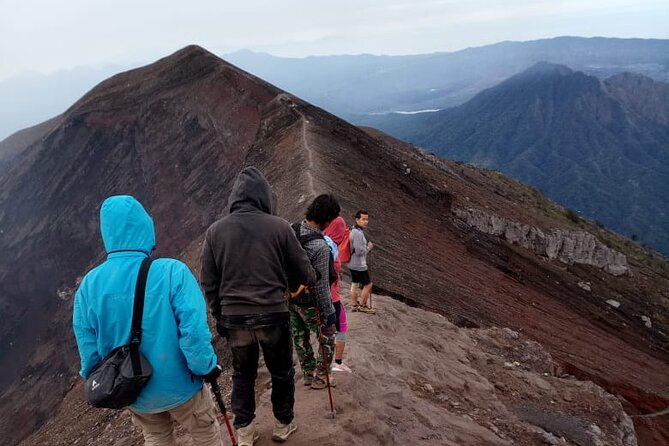
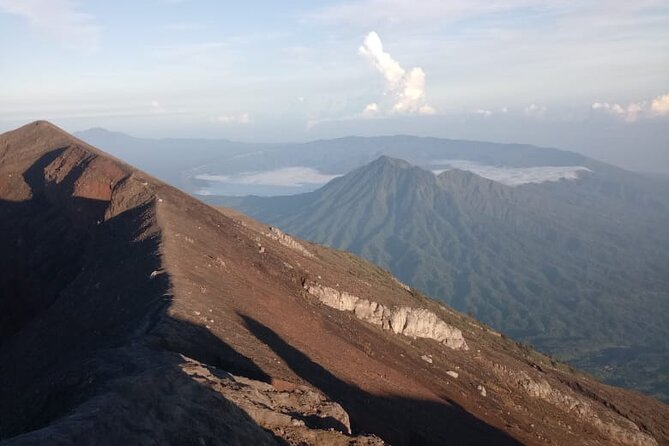
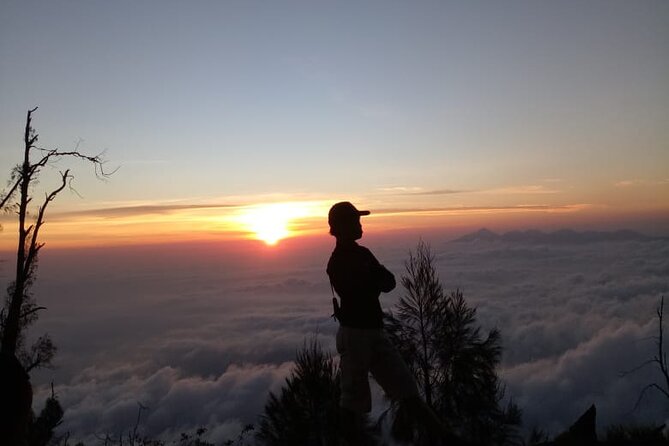
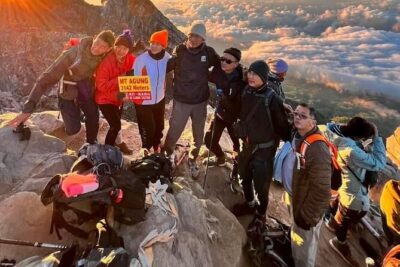
The payoff comes with the first light. From the upper mountain, you can look across Bali and toward Lombok, including the three peaks of Mount Rinjani. Clouds may form a sea below you, and the shadow of Mount Agung can appear across the surrounding terrain.
You are not simply standing at a roadside viewpoint. You have spent the night climbing toward one of Bali’s most important peaks, with the island slowly appearing below. That gives the sunrise real weight.
The weather is not guaranteed. Clouds and fog can soften or block the wider view, so you should not book this only for a perfect photograph. Even with limited visibility, reaching the upper mountain can be rewarding. One person who did not reach the summit still found the clouds, mountain shadow, and surrounding peaks beautiful.
The upper sections can also feel exposed. If heights make you uneasy, tell your guide early. One guide, Darta, was praised for calmly helping a nervous hiker, offering a lower breakfast stop and carrying the hiker’s bag when the final section became difficult. That kind of judgment is more useful than a guide who simply pushes for the top.
The descent is not an easy walk back
Many people think the hard part ends at sunrise. It does not. The descent may take about four hours, and daylight makes the steepness and loose rock visible.
Rain is a major concern, even if the forecast looks dry. The forest can remain muddy, and fine volcanic material can become slippery. Several accounts stressed that the way down was harder than expected. Move slowly, keep your weight controlled, and do not treat the return as a casual stroll.
The supplied trekking poles are useful here. They give you extra balance on loose stones and muddy sections. A raincoat is also included, but it will not replace warm clothing or proper footwear.
You need shoes with firm grip and ankle support if possible. The tour information only promises the basic supplied gear, so footwear remains your responsibility. Pack light enough to climb comfortably, but do not cut corners on water, layers, or traction.
The guide can shape the whole experience
This is a private activity, so only your group participates. That gives you more flexibility than a large group trip, but the quality of the experience depends heavily on the guide assigned to you.
The strongest feedback described guides as caring, calm, safety-conscious, and willing to match the pace of the group. Darta was praised for years of experience on the mountain and for helping a nervous climber without making the person feel pressured. Other positive comments described guides who stopped for regular breaks and helped with water or gear.
The weaker experiences had a different pattern. Some people found the guide quiet, with little explanation about the mountain or the timing of breaks. One group arrived near the summit too early and spent a long time waiting in the cold. Another felt the guide moved too quickly and did not offer enough encouragement or information.
If you need constant explanation, ask questions at the start. Ask how long the next section will take, where you will stop, and how much time you may spend waiting for sunrise. Communication makes a hard climb feel much more manageable.
What the price of $55 really includes
At $55 per person, this is good value if you use the included transport and equipment. You are paying for a private driver, mountain guide, round-trip transfers from several Bali areas, hiking poles, a flashlight, a raincoat, water, and a small breakfast.
The value is strongest for people who would otherwise need to arrange a driver and local mountain guide separately. A private format also avoids being tied to a large group’s pace, though the mountain timetable still controls much of the night.
Do not read the price as an all-inclusive mountain package. Warm jackets, shoes, and personal items are not included. Personal expenses are also extra. Bring your own layers, water capacity, snacks if you need more food than the supplied breakfast, and reliable footwear.
The activity has a 4.7 rating from 128 ratings, with 94 percent recommending it. That is a strong overall result, but the lower scores point to a real issue: the physical challenge is not the only variable. Guide communication, pacing, and how long you wait near the top can affect your view of the entire tour.
Who should book this climb
I would choose this for a fit hiker who wants Bali’s hardest major sunrise walk, not for someone seeking a gentle morning outing. Previous mountain experience is strongly useful, though the exact fitness needed varies with pace and conditions.
This suits you if you:
- Enjoy steep, rough mountain trails
- Can handle several hours of uphill walking in darkness
- Are comfortable with cold, wind, loose rock, and a long descent
- Want a quieter alternative to the more popular Mount Batur sunrise
- Value a private guide and door-to-door transport
I would choose another sunrise trip if your main goal is a short climb, a predictable trail, or a relaxed morning. The mountain has a serious physical cost, and some people turn back. Stopping short of the summit is a sensible choice if you feel dizzy, nauseated, frightened, or simply exhausted.
The tour is not recommended for people who are not in moderate physical condition. The supplied information also says it is not recommended during menstruation. Take that guidance seriously, along with any personal health concerns you may have.
What to pack for Mount Agung
Pack for two very different climates. The lower forest can feel hot and humid while you climb, but the upper slopes can be cold and windy when you stop moving.
Bring:
- A warm jacket or several insulating layers
- Gloves and a hat
- Hiking shoes with strong grip
- At least three liters of water per person
- Snacks beyond the supplied breakfast
- A headlamp or flashlight as backup
- Clothing that can handle mud and rain
- A small backpack with room for your layers
Do not wear sandals. Be cautious with smooth-soled running shoes. The trail may be wet even when rain does not fall during your climb.
Should you book Mount Agung sunrise trekking?
Book it if you want a demanding, memorable mountain day and understand that the sunrise is only one part of the experience. The best features are the private format, included transfers, attentive guides when well matched, and the rare feeling of looking across Bali from near its highest summit.
Skip it if you want comfort, a short walk, or a guaranteed sunrise view. Mount Agung asks for preparation, patience, and honest self-assessment. At $55, it offers strong value for a properly equipped hiker, but the mountain will not soften its terms for a bargain price.
If you book, ask about pickup timing, confirm your meeting point at Pura Pengubengan Besakih, wear real hiking shoes, and pack more warmth and water than you think you need. That small preparation can make the difference between a brutal night and a powerful Bali memory.
FAQ
How long does the Mount Agung sunrise trek take?
The full experience lasts about 12 to 16 hours. The hiking portion often includes roughly four to five hours uphill and around four hours back down, though timing varies.
Where does the trek start?
The meeting point is Pura Pengubengan Besakih in Rendang, Karangasem Regency, Bali.
Is hotel pickup available?
Yes. Pickup and drop-off are offered from south Bali, Ubud, Amed, Lovina, and Candidasa.
What is included in the tour?
The tour includes a private driver and guide, hiking poles, a flashlight, a raincoat, water during the hike, breakfast, bread, a boiled egg, seasonal fruit, biscuits, and tea or coffee.
Are warm clothes included?
No. Warm jackets and other personal clothing are not included. You should bring your own warm layers, gloves, and hat.
Do I need hiking shoes?
The tour does not provide shoes. Sturdy footwear with good grip is strongly advised because the route can be rocky, muddy, steep, and slippery.
Is this a private tour?
Yes. Only your group participates in the activity.
Is the trek suitable for all fitness levels?
No. A moderate level of physical fitness is required. The climb is strenuous and is best suited to people who are comfortable with demanding mountain hikes.
Can I cancel for a full refund?
Yes, if you cancel at least 24 hours before the experience starts. Cancellations made less than 24 hours in advance are not refunded.
More Early-Start Treks in Ubud
- Private Tour : Mount Batur Sunrise Trekking With Private Guide
★ 5.0 · 422 reviews - Mt Batur Sunrise Trekking Tour
★ 5.0 · 305 reviews - Mount Batur Sunrise Trekking
★ 5.0 · 225 reviews - Mount Batur Sunrise Trekking
★ 5.0 · 145 reviews
Recently added around Ubud
- Explore rice terraces munduk & waterfall trekking experience★ 4.9 · 7 reviews
- Munduk Twin Lake Jungle Hike, Ulun Danu Temple, & Waterfall★ 5.0 · 26 reviews
- Ubud: Trekking Through Rivers & Forests to Three Waterfalls★ 5.0 · 16 reviews
- Bali Most Scenic Waterfalls Trekking★ 4.5 · 9 reviews
- Lemukih Hidden Trekking Waterslide Sekumpul and Fiji Waterfall★ 5.0 · 20 reviews
- Mount Batur Trekking and Natural Hot Spring – All Inclusive Tour★ 5.0 · 23 reviews
- All inclusive Mount Batur Trekking with Hot Spring tour★ 5.0 · 41 reviews
- Mount Batur Sunrise Trekking With Local Guide★ 5.0 · 41 reviews
Mount Agung Treks, compared.
Bali/Mount Agung: Sunrise Trekking Adventure With Transfers
Read our review →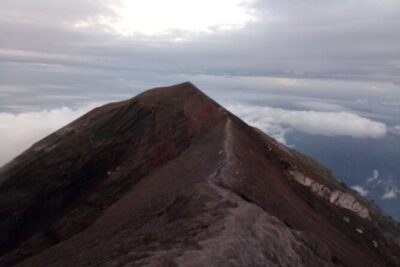
Mount Agung Sunrise Trekking Tour via Besakih Temple
Read our review →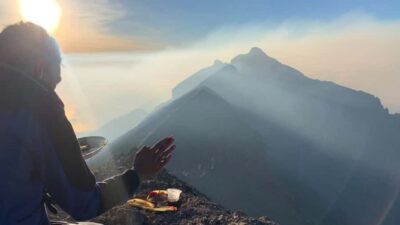
Mount Agung Sunrise Trekking Tour with Hotel Pickup
Read our review →Browse the lists this tour appears in