
REVIEW · UBUD
Sidemen Trekking: A Walk from a Different Perspective
Sidemen rewards slow walking. This two-hour outing takes you from a traditional market into rice fields, village lanes, temple grounds, and narrow irrigation paths, with Mount Agung often forming the backdrop. I like the local farming insight and the chance to see Bali away from the beach towns. I also like the small group size, capped at 10 people. The main caution is simple: this is an easy walk for fit people, but narrow, uneven, and sometimes slippery paths demand good balance.
The route is not a hard mountain hike. Think of it as a rural walk with frequent stops, gentle climbs, and plenty of time for questions and photos. Guides such as Adi, Darya, Wayan, and Adidas have been praised for their humor, local connections, and explanations of rice growing, Balinese customs, cooking, and village life.
The $13.75 price is hard to quarrel with, especially since bottled water is included and the guide leads you along paths you may not find alone. Still, you must arrange your own transport to the market and from the finish point, and the end of the walk is about 3 kilometers from where you started.
Key points at a glance
- Start at Sidemen Traditional Market: Meet at the shop marked Upa Boga, with an optional market visit before a morning walk.
- Walk where farmers walk: Parts of the route follow narrow rice terrace edges and irrigation channels rather than paved paths.
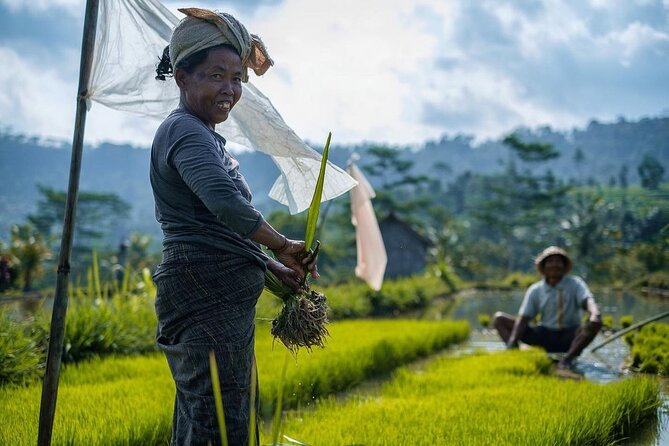
- Learn how Sidemen works: Guides explain rice farming, seasonal crops, offerings, temples, village customs, and everyday work.
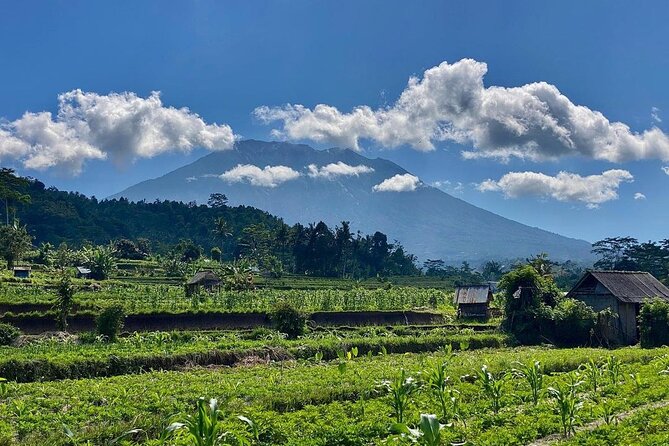
- See Mount Agung from the fields: The volcano provides the most memorable backdrop when weather and visibility cooperate.
- Finish at Warung Ume Anyar: The trek ends at a restaurant in Ogang Village, a useful place for a drink, meal, and arranged pickup.
- Expect a relaxed two hours: The route is roughly 4 kilometers, with ups and downs, photo stops, and no strenuous mountain ascent.
Why this Sidemen walk feels different from a standard Bali outing
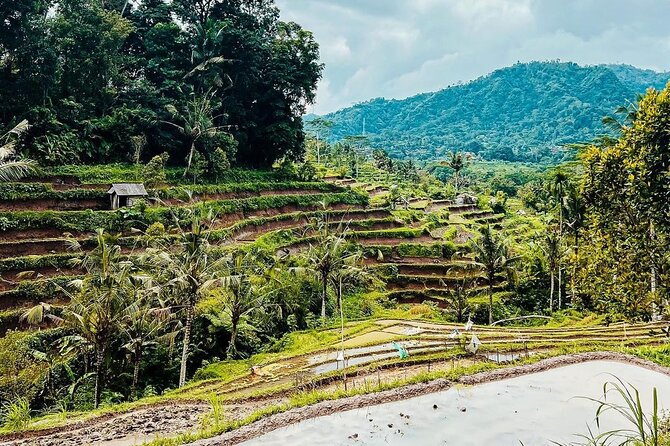
Sidemen gives you a quieter side of Bali. Instead of moving from one famous sight to another, you spend time watching how a rural community fits together. The market, village streets, temples, farms, waterways, and homes are all part of the route.
I like this kind of experience because the scenery has a purpose. The rice terraces are not just pretty steps in a photograph. They are working fields, shaped by water, weather, planting cycles, and years of local practice. A good guide helps you see the people and systems behind the view.
This also explains why the walk is more valuable than its low price suggests. You are not simply paying for a marked path. You are paying for access to local routes and explanations that would be difficult to find without someone who knows the area.
The group limit of 10 people helps keep the outing personal. It should be easier to hear the guide, ask questions, and move through narrow paths without creating a long line. Private outings may also happen when only a small number of people book, though that should not be treated as a guarantee.
A few more treks around Ubud worth a look
- Mount Batur Sunrise Trekking Private All Inclusive
★ 5.0 · 906 reviews - Private Mount Batur Sunrise Trekking Tour
★ 5.0 · 634 reviews - Mount Batur Sunrise Trekking (Private Tour and Breakfast at Restaurant)
★ 5.0 · 598 reviews
Meeting the guide at Sidemen’s early market
The walk begins at Pasar Sidemen, the traditional market on Jl. Sidemen. Look for the shop with the sign Upa Boga. This detail matters because a market can be confusing if you are searching only for a general street address.
The market operates from about 5:00 AM to 10:00 AM. If you want to see it at its most useful and active, choose a morning start and arrive early enough to look around before the trek. This is an optional extra, not a separate guided market tour, so keep your visit brief and be ready at the meeting point on time.
Starting here gives the walk a natural beginning. You first see a place tied to daily needs, then leave the market for village streets and farmland. That change from commerce to countryside helps you understand Sidemen as a lived-in place rather than a scenic backdrop.
If you are staying in Sidemen, arrange a ride through your hotel. Grab may not be practical for hotel pickups, since some local hotels allow drop-offs but do not allow Grab drivers to collect guests. If you are coming from elsewhere, confirm your transport plan before setting out.
Following water, fields, and the wooden bridge
From the village, the route heads toward the rice paddies. There may be no clear set of steps marking the way, which is part of the point and part of the challenge. Your guide leads you along routes used by farmers, so you can expect uneven ground rather than a polished walking trail.
The path follows irrigation water coming down from the hills. This is one of the best parts of the outing because the water explains how the fields function. You are not only looking at terraces. You are seeing the channels that support them.
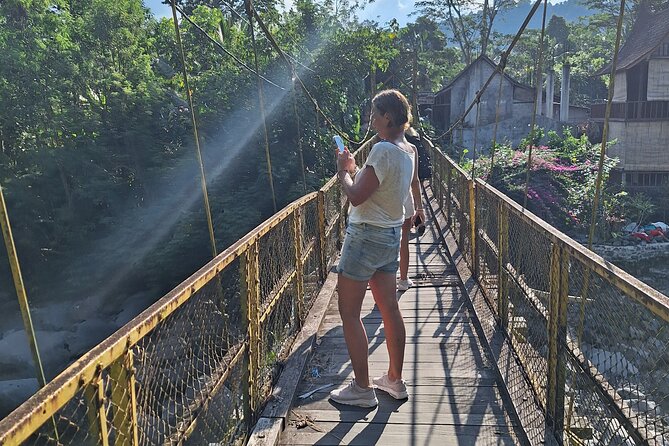
The walk also crosses a hanging wooden bridge suited to motorbikes and people. It adds a memorable change of pace, though anyone uneasy with narrow or moving crossings should take care and follow the guide’s instructions.
You may pass chili fields, rice plants, flowers used in offerings, and other seasonal crops. Planting changes through the year. In December, some rice may already have been harvested, while other crops are being grown for local cooking. That seasonal detail gives the walk more substance than a simple promise of green fields.
Rice terraces require balance, not heroic fitness
The physical level is best described as moderate fitness with easy pacing. The route goes up and down village streets before reaching the fields, and you may walk around 4 kilometers in roughly two hours. Frequent pauses for photographs and explanations make it feel less demanding than a continuous hike.
The real issue is footing. Some rice terrace paths are narrow and raised above the fields. Other sections follow waterways or small farm paths, and wet conditions can make them slippery. You do not need to be a serious hiker, but you should be comfortable placing each step carefully.
Wear hiking shoes or sturdy walking shoes with a good grip. Sandals and smooth-soled shoes are poor choices here. Expect the possibility of mud, especially after rain, and do not wear footwear you need to keep spotless.
Bring the required basics:
- Sun hat
- Hiking shoes or boots
- Sunscreen
- Sunglasses
Bottled water is included. I would still keep your clothing light and practical, with enough coverage for sun and village visits. The supplied details do not specify a formal dress code, but you will pass temples and places used for prayer, so respectful clothing is sensible.
Same trailhead, a longer or shorter day out:
- Private Tour : Mount Batur Sunrise Trekking With Private Guide
★ 5.0 · 422 reviews - Mount Batur Sunset Trekking
★ 5.0 · 353 reviews - Mt Batur Sunrise Trekking Tour
★ 5.0 · 305 reviews - Mount Batur Sunrise Trekking
★ 5.0 · 225 reviews
Temples, offerings, and the meaning behind the scenery
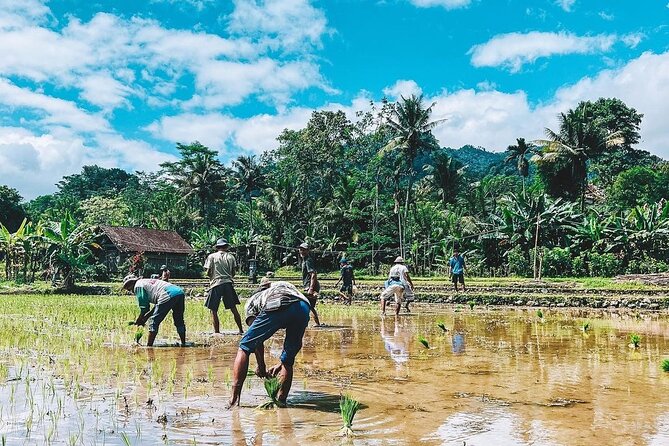
During the walk, you pass a temple used by local villagers. This is not presented as a grand monument with a long sightseeing stop. Its value comes from seeing how religious practice fits into ordinary village life.
Guides explain Balinese Hindu beliefs, offerings, and traditions as they relate to the homes, farms, and temples along the route. You may learn about flowers used in offerings and how religious customs connect with farming and family routines.
I find this context especially useful in Sidemen. Without it, you might see a small shrine or temple and move on without understanding its role. With a local guide, the village becomes easier to read. Rice farming, worship, cooking, and community relationships are not separate subjects here.
Several guides have been praised for making the conversation relaxed and interactive. Adi and Adidas are noted for humor and practical explanations, while Darya has been described as patient and deeply familiar with the local area. Wayan has also been praised for sharing village life in a warm, easygoing way. The assigned guide can vary, but local knowledge is central to the experience.
Mount Agung views and the best photo stops

The route takes you toward Mount Agung, Bali’s major volcano, and offers views across the rice terraces from different angles. The most appealing photographs are likely to come from the fields rather than from a single formal viewpoint.
Weather matters. Clouds can cover the mountain, and wet conditions can affect the path. The tour requires good weather, so poor conditions may lead to a new date or a full refund. Even without a clear volcano view, the village and field sections still give the walk its main value, but anyone booking mainly for Mount Agung should keep expectations flexible.
The guide also knows where to pause. You might stop to look across the terraces, examine a crop, watch work in the fields, or ask about a farming process. These pauses prevent the walk from becoming a race and give you time to take in the scenery without blocking the route.
Do not expect every field to be bright green. Rice is planted and harvested in cycles, and the appearance of the countryside changes by season. That variation is useful if you want to understand agriculture, though it may surprise anyone expecting a constant postcard view.
Finishing at Warung Ume Anyar in Ogang Village
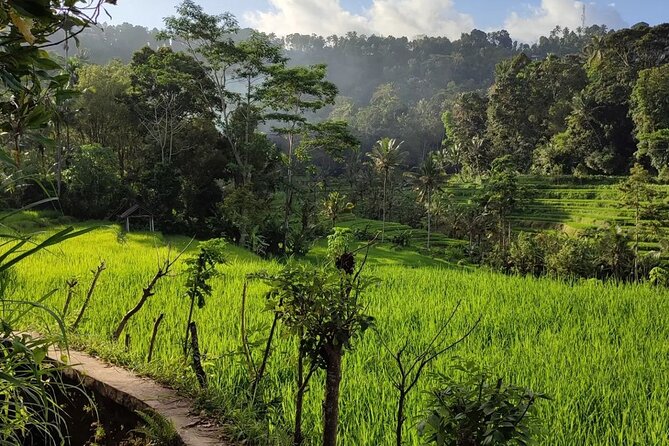
The trek ends at Warung Ume Anyar on Jl. Raya Sidemen Ogang in Ogang Village. This is a practical ending, not just an arbitrary meeting point. You can stop for a drink or meal after walking, then continue your journey with a prearranged driver.
Plan your pickup before the trek begins. Ask your driver to meet you at the restaurant about two to two and a half hours after the start time. Grab is available in the area, but there are only a few drivers, and some may ask for offline or additional payment. Waiting beside a rural road after a walk is not the best way to finish the morning.
The end point is about 3 kilometers from the market. If necessary, you can walk back along the main road in roughly 30 to 40 minutes, but arranging transport is much easier. The walk finishes in a different village, so do not assume your driver will automatically know where to collect you.
This transport detail is the biggest practical weakness of the outing. The activity itself is inexpensive, but your total cost and time will rise if you need to organize separate rides at both ends.
Is $13.75 good value?

Yes, for most people who want local contact and a guided rural route. At $13.75 per person, the price includes the guide and bottled water, while the group size stays at 10 or fewer. You also gain access to narrow farm paths that are easy to miss without local help.
The value is strongest if you care about context. You hear about rice production, seasonal crops, cooking, religion, and village life while seeing the places connected to those subjects. The experience offers more than a viewpoint and a photograph.
The price is less attractive if you expect a demanding hike, a highly organized transport package, or a formal sightseeing attraction. Hotel pickup and drop-off are not included. Tips are also not included, so budget for one if the guide gives you a useful and enjoyable morning.
Who should book this walk?
I would recommend it to you if you want a calm introduction to rural Bali, enjoy asking questions, and do not mind uneven ground. It suits couples, solo visitors, and small groups who want something more connected to daily life than a busy tourist center.
It is also a good choice for anyone staying in or near Sidemen who wants a short activity rather than a full-day excursion. The two-hour duration leaves time for lunch, rest, or another local stop.
You should think twice if you need flat, paved paths or have poor balance. The walk is not especially strenuous, but narrow terrace edges and slippery sections can be more important than hills. It is not the right choice if you are seeking a serious mountain trek, either. One of the pleasures of this tour is its easy pace.
Free cancellation is available up to 24 hours before the start time. Changes or cancellations inside that window are not refunded, and bad weather may result in a new date or full refund.
Final verdict: book it for the stories, not just the scenery
I would book this walk if I wanted to understand Sidemen rather than simply photograph it. The rice terraces, irrigation channels, village temple, market, and Mount Agung views give you plenty to see, but the guide’s explanations make the experience worthwhile.
Book it with sturdy shoes, sun protection, an open schedule, and a confirmed ride from Warung Ume Anyar. Skip it if you want a hard hike or cannot manage narrow paths. For everyone else, this is an affordable, low-key way to see a working part of Bali and learn how the countryside fits together.
FAQ
How long does the Sidemen trekking experience last?
The walk lasts approximately two hours, though you should allow about two to two and a half hours for the full activity and pickup timing.
Where does the trek start?
It starts at Pasar Sidemen, the Sidemen Traditional Market, at the shop marked Upa Boga.
Where does the trek finish?
The route ends at Warung Ume Anyar Restaurant in Ogang Village.
Is hotel pickup included?
No. Hotel pickup and drop-off are not included. You need to arrange transportation to the market and from the finish point.
What should I bring?
Bring a sun hat, hiking shoes or boots, sunscreen, and sunglasses. Bottled water is included.
Is the walk difficult?
The walk is described as suitable for people with moderate physical fitness. It is not a hard hike, but narrow, raised, uneven, and sometimes slippery paths require balance.
Can I visit the traditional market before the walk?
Yes. Pasar Sidemen is open from about 5:00 AM to 10:00 AM, so a morning session gives you the option to look around before trekking.
How do I get back after the trek?
Arrange a driver to collect you at Warung Ume Anyar about two to two and a half hours after the trek starts. Grab is available, but there are few drivers in the area. You can also walk about 3 kilometers back to the starting point, which takes roughly 30 to 40 minutes.
Recently added around Ubud
- Explore rice terraces munduk & waterfall trekking experience★ 4.9 · 7 reviews
- Munduk Twin Lake Jungle Hike, Ulun Danu Temple, & Waterfall★ 5.0 · 26 reviews
- Ubud: Trekking Through Rivers & Forests to Three Waterfalls★ 5.0 · 16 reviews
- Bali Most Scenic Waterfalls Trekking★ 4.5 · 9 reviews
- Lemukih Hidden Trekking Waterslide Sekumpul and Fiji Waterfall★ 5.0 · 20 reviews
- Mount Batur Trekking and Natural Hot Spring – All Inclusive Tour★ 5.0 · 23 reviews
- Mount Batur Sunrise Trekking With Local Guide★ 5.0 · 41 reviews
- All inclusive Mount Batur Trekking with Hot Spring tour★ 5.0 · 41 reviews
Ubud Trekking Tours, compared.

Mount Batur Sunrise Trekking Private All Inclusive
Read our review →

Mount Batur Sunrise Trekking (Private Tour and Breakfast at Restaurant)
Read our review →
Private Tour : Mount Batur Sunrise Trekking With Private Guide
Read our review →


Browse the lists this tour appears in