
REVIEW · CHIANG MAI
Chiang Mai: 2-Day Jungle Trek with Elephant Farm & Raft Ride
Leave Chiang Mai behind for a night. This two-day trip trades city streets for bamboo forests, rice fields, waterfalls, and a Karen hill village, with rescued elephants and a calm river ride added to the mix. I like the strong variety: you are not simply walking through the woods, and you are not simply visiting an elephant camp. You also get a village dinner, a night in the mountains, and time by the water.
I also like the human side of the trip. Guides such as Witoon, Moon, Sammy, Toon, and Louie are praised for explaining local life, keeping a steady pace, and helping with photos and small practical needs. The main caution is clear: this is a real hike, with uphill sections, heat, mud, and basic sleeping arrangements. It suits an active person far better than someone seeking a soft overnight tour.
Key points to know before booking
- About 8 to 8.5 kilometers on the first day: Expect uphill walking, including roughly 550 meters of gain in some versions of the route.
- A genuine village overnight: Dinner, breakfast, and the sleeping area are provided by the Karen community, with mosquito nets and mountain views.
- Three very different water stops: The Mae Wang bamboo raft, a jungle waterfall picnic, and time to swim or cool off in the falls.
- Rescued elephants without riding: You can feed and bathe the elephants, but riding is not allowed.
- Small groups of up to 12: The group size gives the guide room to adjust the pace and help when the trail gets tough.
- Bring your own drinking water: Meals are included, but bottled drinking water is not.
Why this two-day trip feels different
At $97 per person, this is a busy two-day outing with transport, a guide, meals, accommodation, a trek, river rafting, and an elephant sanctuary visit. I consider that strong value, especially when you compare it with booking each activity separately.
The value is not only in the number of activities. The overnight stop changes the mood of the trip. You have time to eat with local hosts, sit near a campfire, see the mountains at sunrise, and learn how a remote community lives. That is much more memorable than racing back to Chiang Mai after a waterfall visit.
The trip has earned a 4.7 rating from 881 bookings, and the praise is remarkably consistent about the guides, food, village stay, and scenery. Still, the experience is not polished in the resort sense. One person found the beds could be improved, and another noted that the market stop lacked explanation. Transport arrangements on the return have also not always been perfect.
That balance matters. You are paying for a hands-on mountain experience, not a luxury lodge or a tightly scripted sightseeing day.
More Jungle Treks in Chiang Mai
- Off the Map Chiang Mai Jungle Coffee Trek Roast and Brew
★ 5.0 · 107 reviews - Chiang Mai: 2-Days Jungle Trek, Waterfalls and Karen Village
★ 4.8 · 103 reviews - Chiang Mai: Elephant Sanctuary & Jungle Trek w/ Waterfall
★ 4.5 · 18 reviews
Starting at the local market
Pickup is normally between 9:00 and 9:30 in the morning, with the meeting point at Baan Meesuk in Chiang Mai’s old town if you are not using hotel pickup. Transport is by van or traditional songthaew, depending on the arrangements.
The first stop is a local market. You can walk among stalls selling vegetables, fruit, and regional food while your guide points out ingredients and everyday customs. This is a useful opening because it puts the coming meals and village cooking into context.
The market visit is short, and the level of guidance can vary. You may be shown around closely, or you may have free time to look on your own. If you want explanations about unfamiliar foods, ask your guide directly rather than waiting for a formal market lesson.
A quiet 40-minute ride on the Mae Wang River
The bamboo raft trip lasts about 40 minutes on the Mae Wang River. It is not a white-water thrill ride. The appeal is the slow pace, the sound of the water, and the chance to watch the forest pass by without an engine or a timetable pressing you along.
This is one of the easiest parts of the trip physically, which is welcome after walking through the heat. The raft is also a good contrast to the uphill trail later in the day.
Wear long sleeves and long pants for this section. They help with sun and mosquitoes, and you will be glad to have clothing that can get wet or dirty. The rafting may be changed or skipped in heavy rain or unsafe river conditions. One account describes the raft being canceled because of rain, so keep your expectations flexible.
Walking through fields and forest to a waterfall
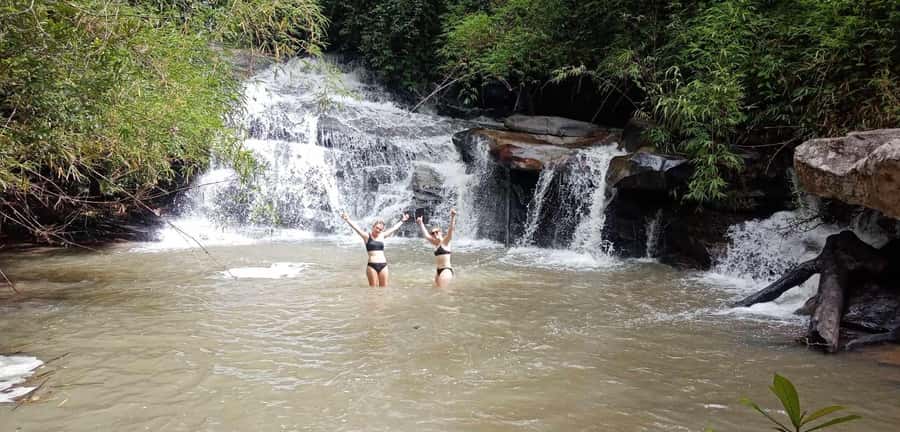
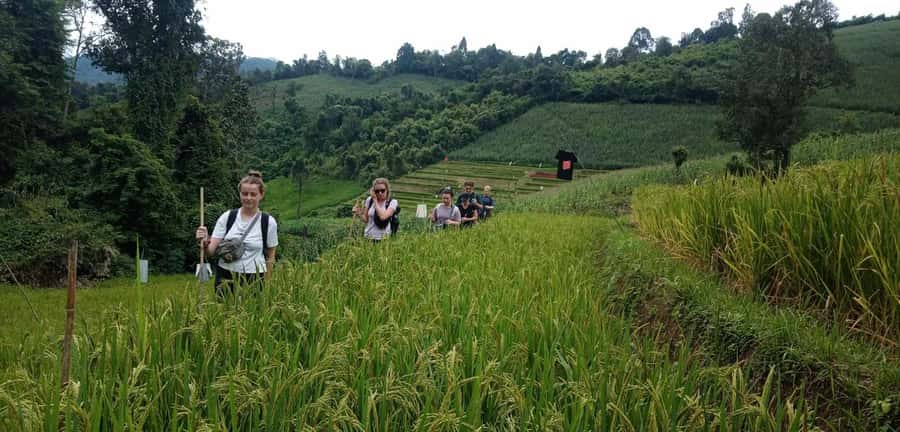
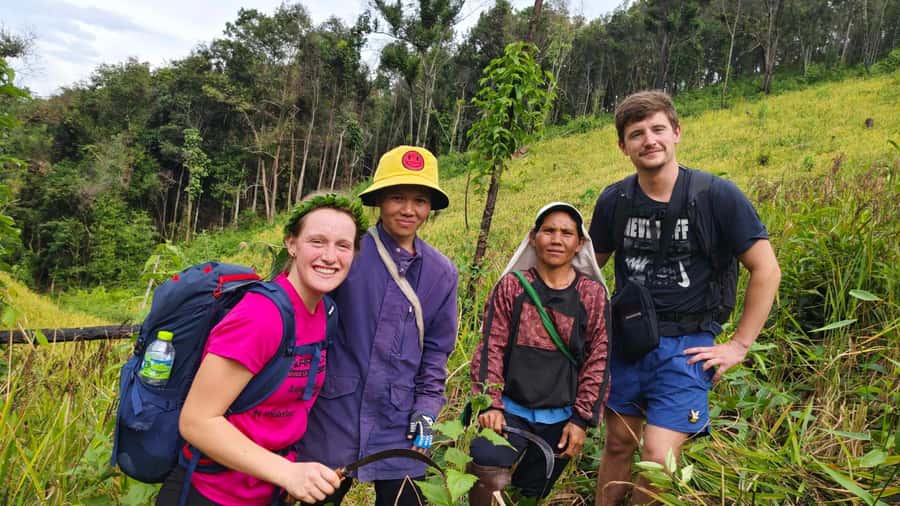
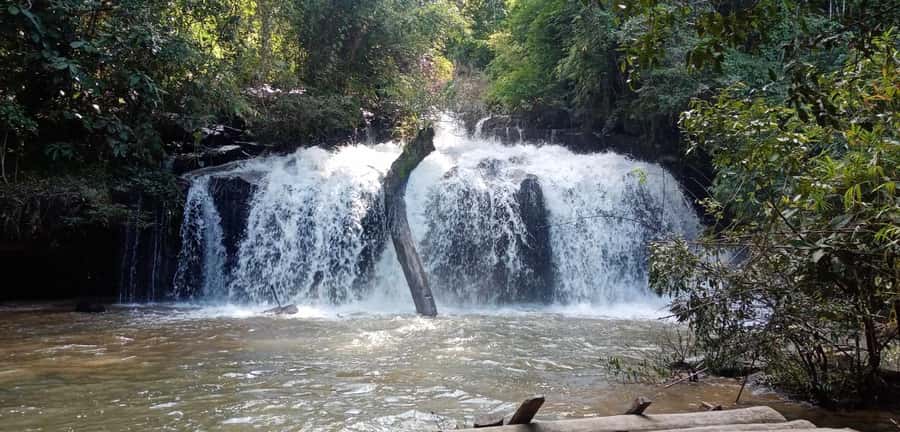
From the river area, the route moves toward the trail. You walk through paddy fields and mixed forest before reaching a jungle waterfall, with the first major hike taking about two hours.
The scenery changes often. Rice fields open the view, while bamboo and evergreen forest provide shade and a more enclosed feeling. Guides may point out plants, insects, and animals along the way. One guide, Lee, even showed a tarantula in its nest, while Louie was praised for explaining local plants and village life.
The waterfall is used for a picnic lunch and, when conditions allow, swimming. Bring swimwear, a towel, flip-flops, and a dry change of clothes. Do not assume the water will be warm. It is there mainly to cool you down after the hike.
Some descriptions of the trip place the waterfall visit after a short walk, while others include a longer first-day route before lunch. The exact order can shift with weather, trail conditions, and the group’s pace. Ask your guide where swimming will happen so you do not miss the chance to change.
More Jungle Treks in Thailand
- Trek to a Jungle Waterfall
★ 5.0 · 14 reviews - 8KM White Water Rafting and 3HRS Jungle Trekking Adventure
★ 5.0 · 9 reviews - Chiang Mai: Jungle Trek, Elephants care & Bamboo Rafting
★ 4.5 · 8 reviews - Chiang Mai: Guided Jungle and Waterfall Trek with Transfer
★ 4.9 · 8 reviews
The uphill push to the Karen village
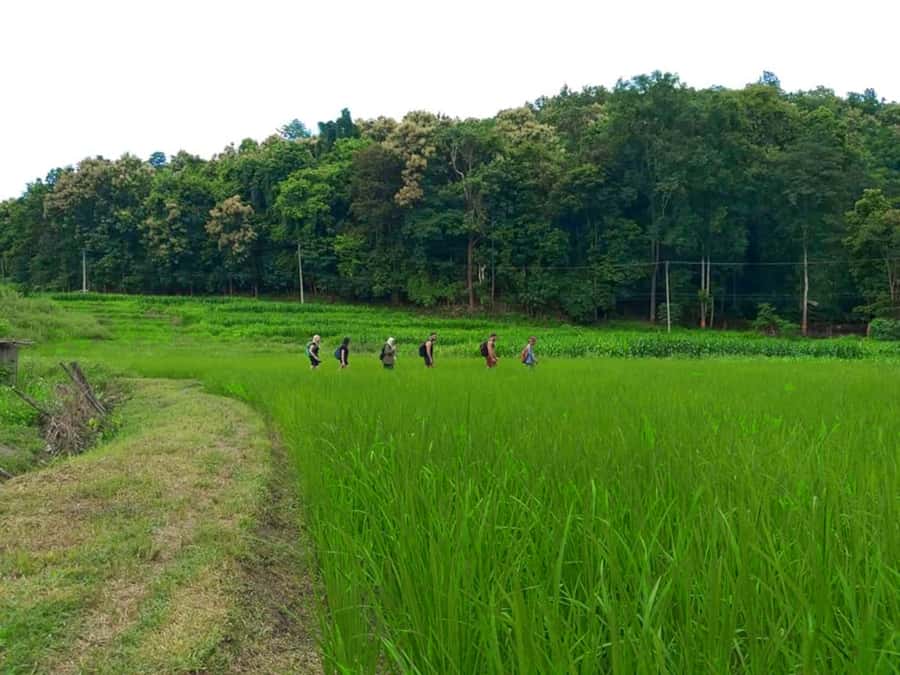
After lunch, the route continues uphill through bamboo and evergreen forest for about two more hours. This is where the trip earns its trekking label.
The trail is manageable for a reasonably fit person, but it is not effortless. Heat makes the climb harder, and rain can turn sections slippery. Several people describe the hike as tough in places but rewarding, while one account recorded about 8.5 kilometers and 550 meters of elevation gain on the first day.
Your guide’s pacing matters here. Witoon, Sammy, Moon, and Toon receive especially strong praise for being patient, funny, and attentive. A guide may slow the group, point out wildlife, carry the social energy when everyone gets tired, or help if someone is hurt.
Carry water in your daypack and use sunscreen before the walk begins. A hat, insect repellent, hiking shoes, and a light jacket are all sensible. Rain gear is worth packing even when the morning starts clear.
Dinner, campfire, and a night in the mountains
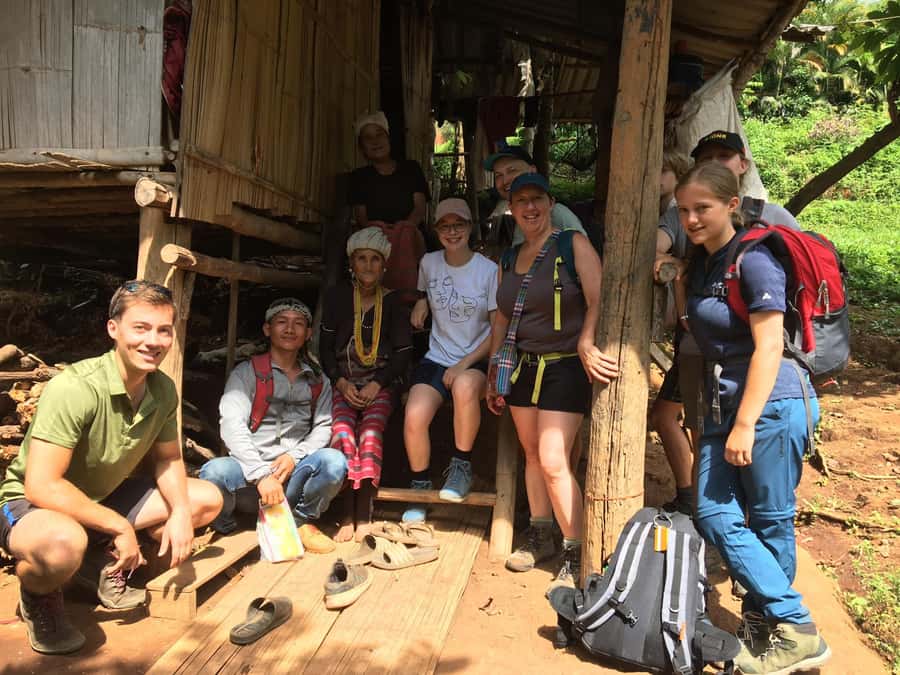
The Karen village is the emotional center of the trip. The accommodation is basic, but the welcome and the setting are what make it special.
Dinner is prepared by the local hosts, and the food is repeatedly praised for being generous and tasty. Meals may include local dishes, bamboo sticky rice, vegetables, rice, and tea. You should not expect a menu designed for every preference, so bring extra snacks if you are a very selective eater.
The evening may include a campfire, simple games, music, or conversation with village residents. Some groups have played volleyball or shared drinks with local people. These moments are not guaranteed as a formal program, but they show why the overnight stay is more than a place to sleep.
Sleeping arrangements are basic. Reports describe comfortable beds with mosquito nets, but another person wished the beds were better. Nights can also be surprisingly cold, especially in the mountains, so pack the jacket listed in the equipment advice. Toiletries, a change of clothes, and a small towel will make the night easier.
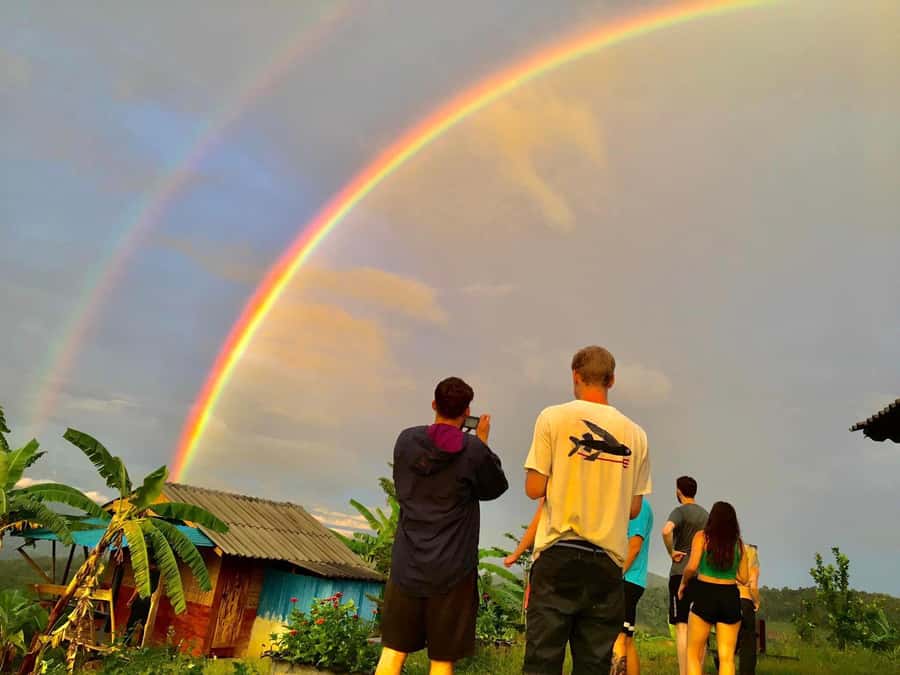
The views in the morning are a major reward. You may wake to sunrise over the mountains, but the exact view depends on weather and cloud cover.
Breakfast, a second forest walk, and the elephant sanctuary
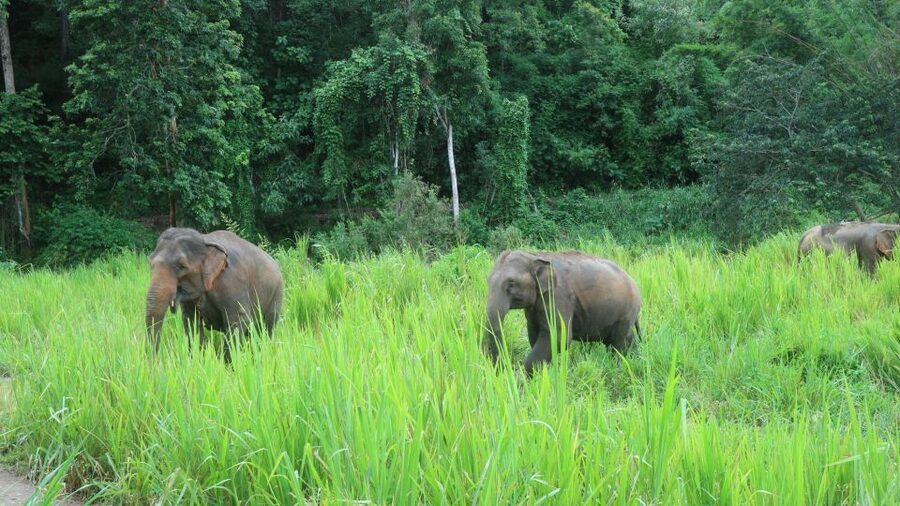
After breakfast, you return to the trail. The second day usually involves another two hours of walking before reaching the elephant sanctuary, though the precise route may vary.
This part is often mostly downhill, but downhill walking still works your legs and can be slippery after rain. One group covered about seven kilometers on the second day. Wear proper hiking shoes rather than relying on sandals, and keep flip-flops for the river or bathing area.
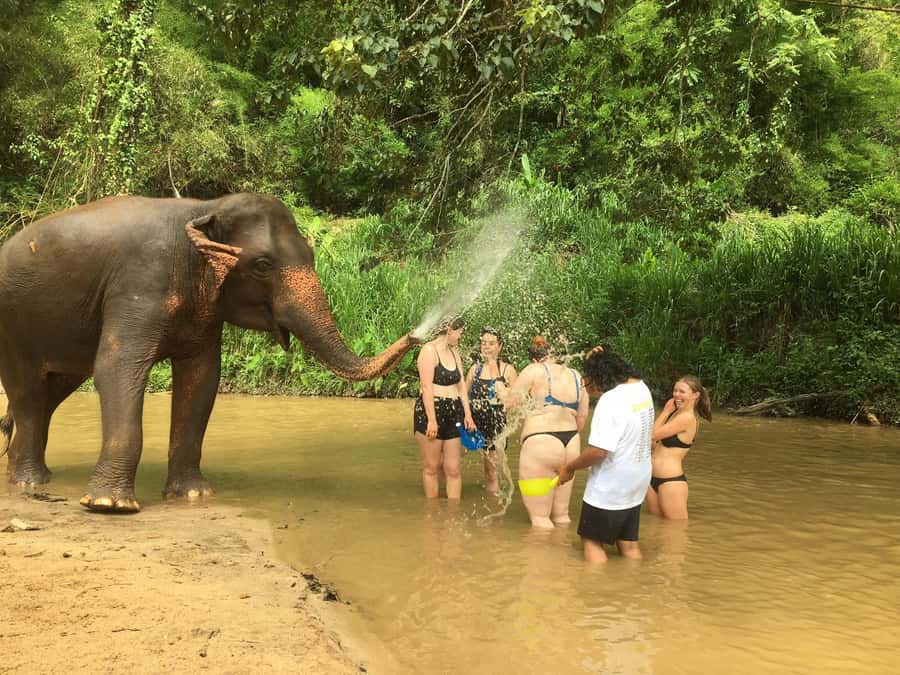
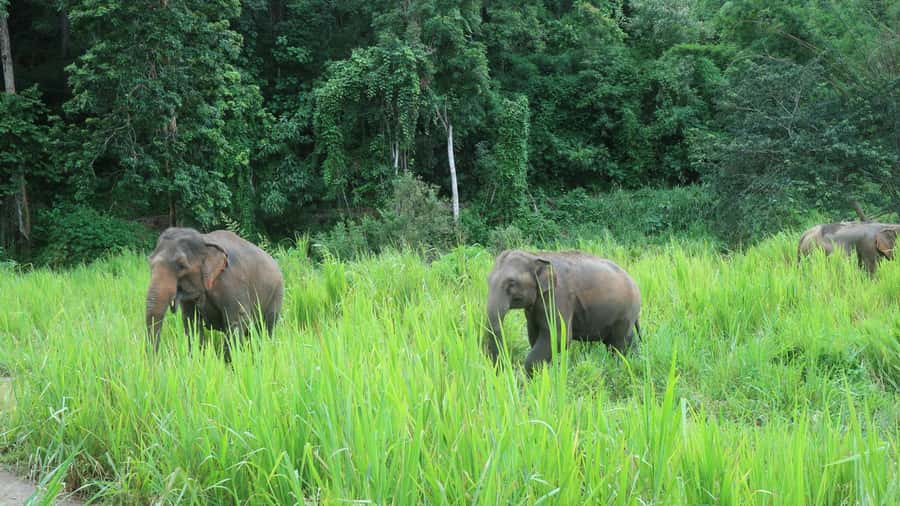
The sanctuary is home to rescued elephants. You can feed them, learn about them, and bathe with them in a river setting. The important practical point is that riding is not part of the experience. The tour also specifically prohibits animal riding.
I appreciate the move away from elephant rides, but you should still make your own judgment about bathing and close contact with elephants. The animals are used to people, and the activity is presented as respectful, but any elephant encounter deserves a little thought. Watch how staff handle the animals, follow instructions, and avoid crowding them.
The sanctuary is a highlight for many people because it comes after the hiking. You see the elephants when you are already in a remote setting, rather than stopping at a city attraction for a quick photo.
The ride back to Chiang Mai
After the elephant visit, the group returns to Chiang Mai by vehicle. The stated drive takes about one hour, with arrival around 4:30 in the afternoon.
That return time makes it possible to have dinner in Chiang Mai, although you may be tired after two days outside. Keep the evening light. The exact drop-off can vary, and one person reported being left at the wrong place on the way back, so check your hotel location with the driver before leaving.
What the guides add to the experience
The guides are a major part of the value. The best ones do more than lead the path. They explain plants and animals, describe local customs, help with language, keep the group together, and make a steep climb feel less grim.
Witoon is praised for taking photos and sending them afterward through WhatsApp. Moon is described as funny and well informed about the mountains. Sammy is repeatedly praised for clear English, care for the group, and a lively personality. Louie, sometimes called the jungle man, is noted for showing visitors around his village and explaining his own life there.
Guide assignments change, so you cannot count on a particular person. The useful lesson is to ask questions and tell the guide if you need a slower pace or a break. With a maximum group of 12, there is at least a reasonable chance for personal attention.
How hard is the trek?
You need a moderate level of fitness. The tour is not suitable for people with low fitness, mobility limitations, heart or respiratory problems, epilepsy, vertigo, or other conditions listed in the safety advice. It is also not suitable for pregnant people, babies under one year, or children under two.
You do not need to be an expert hiker, but you should be comfortable walking for several hours on uneven ground. The hardest parts are the uphill sections, heat, wet trails, and the accumulated tiredness on day two.
Pack lightly. A daypack should hold water, sun protection, insect repellent, rain gear, swimwear, a towel, toiletries, warm clothing, and a dry change of clothes. Long pants are useful for the forest, while shorts can be useful around the waterfall and river.
Best time to go and what weather changes
Weather can alter the order of the activities. Heavy rain may affect the bamboo rafting, make the trail muddy, or change where swimming takes place. The route is also subject to change because of bad weather or other events.
The supplied experiences include trips in the rainy season, with some people enjoying the cooler, greener conditions and others finding the trail harder. Rain can make the jungle feel more atmospheric, but it also demands better shoes and patience.
Dry conditions make the hiking easier, though heat remains a concern. No matter when you go, bring water. Drinking water is not included, and this is not a place to discover that your bottle is empty halfway up a hill.
Is the $97 price good value?
For $97, you receive hotel pickup and return, transport, a guide, the market visit, two days of trekking, two lunches, one dinner, one breakfast, a basic overnight stay, the elephant sanctuary, and bamboo rafting.
That is a strong package. The largest value comes from combining transport and several rural activities that would be awkward to arrange independently. You also avoid returning to Chiang Mai between each section, which gives the trip a more natural rhythm.
The tradeoff is comfort. The lodging is simple, the food is local rather than customized, and the route can be physically demanding. If you want a private room, air conditioning, bottled water, or a fixed schedule, spend your money elsewhere.
Who should book this trip?
You should book it if you want a full outdoor experience and like the idea of meeting local hosts rather than simply photographing a village from a vehicle. It is especially good for people who enjoy walking, waterfalls, wildlife, simple food, and a night away from town.
It also suits visitors who want several Chiang Mai highlights in one trip. The elephant sanctuary, bamboo raft, waterfall, village stay, and mountain hike create a varied two days.
You should skip it if you dislike heat, basic accommodation, wet clothes, insects, or uphill walking. It is also a poor choice if you need guaranteed accessibility or a precise timetable.
Cancellation is available up to 24 hours before departure for a full refund, and you can reserve now and pay later. The tour is offered in English and Thai, with hotel pickup optional and Baan Meesuk as the meeting point.
Should you book the Chiang Mai jungle trek?
Yes, if you are fit enough for a demanding but manageable hike and want a real overnight experience in Northern Thailand. The strongest reasons are the Karen village stay, the consistently praised guides and food, and the mix of walking, waterfalls, elephants, and rafting.
Go in with the right expectations. Pack water, proper shoes, warm clothing, insect repellent, and a sense of humor. You will not get luxury, but for $97 you get two busy days, a mountain community welcome, and a much closer look at rural Chiang Mai than a quick day trip can provide.
FAQ
How long is the Chiang Mai jungle trek?
The activity lasts two days and includes one overnight stay in a Karen hill tribe village.
How much does the tour cost?
The listed price is $97 per person.
Where is the meeting point?
The meeting point is Baan Meesuk, a hotel and hostel in Chiang Mai’s old town.
Is hotel pickup available?
Yes. Pickup is optional, and hotel pickup is generally scheduled between 9:00 and 9:30 in the morning.
What languages do the guides speak?
The tour is offered with English and Thai-speaking guides.
How many people are in the group?
The group is limited to 12 participants.
Are meals included?
Yes. The package includes two lunches, one dinner, and one breakfast.
Is drinking water included?
No. You need to bring or purchase your own drinking water.
Can I ride the elephants?
No. Riding the animals is not allowed. The visit includes feeding and bathing rescued elephants.
What should I bring?
Bring hiking shoes, long pants, sunscreen, insect repellent, a sun hat, sunglasses, swimwear, a towel, flip-flops, rain gear, toiletries, a jacket, a daypack, and clothes that can get dirty.
More Two-Day Treks in Chiang Mai
- Chiang Mai 2-Day: Trekking, Tubing & Elephant Observation
★ 4.9 · 95 reviews - Chiang Mai: 2 Days, 1 Night Non-Tourist Trek
★ 4.8 · 57 reviews - Chiang Mai: 2-Days Chiang Mai Amazing Trek
★ 5.0 · 3 reviews - 2days 1night : Trekking with Karen people and Doi Inthanon
★ 4.8 · 3 reviews
More Farms in Chiang Mai
- From Ho Chi Minh: Can Gio Trek – Monkey Island & Crocodile Farm
★ 5.0 · 353 reviews - Trekking Tour to Hidden Waterfall & Sturgeon Farm for dog-lovers
★ 5.0 · 67 reviews - Trekking to Hidden Waterfall & Sturgeon Farm for dog-lovers
★ 4.8 · 43 reviews - Women-led Coffee Farm Trek
★ 5.0 · 19 reviews
Recently added around Chiang Mai
- Trek to a Jungle Waterfall★ 5.0 · 14 reviews
- Trekking at the Monk Trail and Doi Suthep Temple Private Tour★ 5.0 · 3 reviews
- Small Group : Trekking Trip in Chiang Mai (Doi Suthep Area) with Market Tour★ 5.0 · 4 reviews
- Fantastic! Famous Doi Inthanon National park tour with 2hr trekking★ 4.5 · 17 reviews
- Private Tour 2 Difference Trails Trekking at Doi Inthanon National Park★ 5.0 · 19 reviews
- 8KM White Water Rafting and 3HRS Jungle Trekking Adventure★ 5.0 · 9 reviews
- One day Doi Inthanon & Trekking at Pha Dok Siew★ 3.5 · 3 reviews
- Half Day Doi Suthep Temple and short trekking on monk trail (Private Tour)★ 5.0 · 3 reviews
Jungle Treks, compared.

3-Day Ethical Orangutan Jungle Trek | Bukit Lawang, Sumatra
Read our review →
Monkey Business 3 days – 2 nights Jungle trekking (including rafting)
Read our review →

Big Buddha Jungle Trekking and Temple tour with Lunch
Read our review →
Jungle Adventure-Group Trekking & Bamboo Cooking
Read our review →
ORANGUTAN TREK (2D/1N) by EcoTravel Bukit Lawang
Read our review →Browse the lists this tour appears in