

REVIEW · HANOI
Sapa Trek Tour with Sleeper Bus/Night Train – Overnight at Hotel
Sapa rewards people who like walking for their views. This $66 Sapa trip from Hanoi combines mountain villages, rice terraces, and local guides with hotel nights, meals, and bus or train choices. I like the small-group limit of 15, and I like that the guide is a local Hmong speaker with good English. The main drawback is the schedule: the Bac Ha portion appears to be an optional third-day plan, so you should confirm exactly which transport and route your booking includes.
I also like the freedom built into the options. You can choose a regular Sapa trek, add Fansipan by cable car, visit Bac Ha privately, or continue from Sapa toward Ha Giang. The tradeoff is that long bus rides take up much of the trip, and the walking can be tiring if you arrive without proper shoes or comfortable clothes.
Key points to know before booking
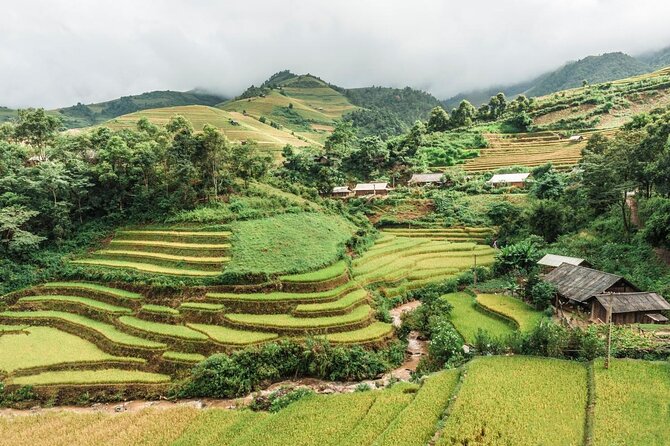
- Cat Cat on arrival day: Your first walk reaches a Black Hmong village, waterfall, stream, old French-built hydroelectric plant, and terrace fields.
- Local Hmong guiding: The Sapa guide is described as friendly, experienced, and able to speak good English.
- Small group size: Bookings are limited to 15 people, which should make village walks easier to manage than a large coach tour.
- Two route choices: You can follow the standard Lao Chai and Ta Van trek or pay extra for Fansipan cable car access.
- Bac Ha is a separate timing puzzle: The Sunday market, Pho village, and Hoang A Tuong’s Castle fit a different schedule, so confirm whether this is included in your selected plan.
- Ha Giang connection: You can continue directly from Sapa by limousine or sleeper bus instead of returning to Hanoi.
What this Sapa trip is really offering
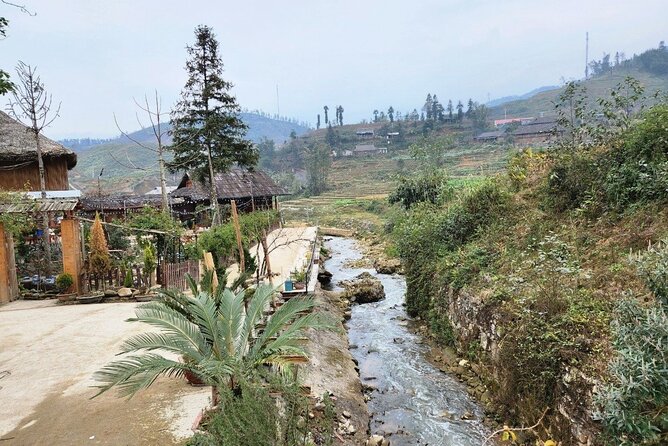
This is not a slow village homestay journey. It is a compact northern Vietnam trip built around transport, short treks, and a central Sapa hotel. You leave Hanoi early, reach Sapa around lunchtime, walk in the afternoon, trek again the next morning, and return by bus unless you select another arrangement.
That makes the tour useful if you have only a few days and want to see the famous Sapa area without arranging every ticket yourself. The price includes hotel accommodation, meals, transfers, entrance fees, and an English-speaking guide, which gives the $66 starting price good value on paper.
Still, you need to read the options carefully. The trip name refers to sleeper bus and night train choices, but the standard schedule described here uses a daytime sleeper bus from Hanoi to Sapa and back. A train may be available under another selection, not necessarily in the basic package.
A few more treks around Hanoi worth a look
- Sapa: 3-Day, 3-Night Trek and Hotel with Overnight Train
★ 4.2 · 64 reviews - Sa Pa Trekking 2 Days 3 Nights Homestay by Night Train
★ 4.5 · 11 reviews - Trekking Sapa – Bac Ha Market: Sleep on Train & Homestay
★ 4.5 · 7 reviews
Early start from Hanoi at 6:30 a.m.
Your trip begins at 160 Tran Quang Khai in Hanoi’s Hoan Kiem area. The bus leaves at 6:30 in the morning and takes about six hours on the highway, with two or three rest stops.
That timing is practical but not gentle. You lose a full morning to the road, so staying near the meeting point the night before would make sense. The meeting point is near public transport, and the activity ends back there on the standard return plan.
The air-conditioned sleeper bus is a useful choice for the long ride. It is not the same as a private car, so you should expect shared transport and fixed departure times. The bus reaches Sapa around 1 p.m., when the guide takes you to the hotel for lunch.
The road transfer is one of the tour’s less exciting parts, but it keeps the cost down. You also avoid the work of finding separate Hanoi, Sapa, and village transport.
Cat Cat village and the first afternoon walk

After lunch, you prepare a light bag and walk toward Cat Cat village with a local Hmong guide. The walk takes about four hours, including the village visit and surrounding sights.
Cat Cat is home to Black Hmong people. The area includes a waterfall, Muong Hoa Stream, terrace fields, a school, and a hydroelectric power plant built during the French period. That mix gives the walk more variety than a simple viewpoint stop.
I like this as an opening trek because it introduces the area without demanding a full day on steep mountain paths. You get an early look at village life, farming scenery, and local infrastructure before the longer walk the next morning.
The word village should not make you picture an untouched settlement. Cat Cat is a well-known stop, and the experience includes a defined walking route. Even so, the stream, fields, and Hmong cultural setting give you useful context for the Sapa region.
Dinner begins around 6:30 or 7 p.m. Afterward, you have free time to explore central Sapa on your own. That is a welcome break from guided movement. You can rest at the hotel, walk around town, or simply recover for the next trek.
Lao Chai and Ta Van on the main trekking day
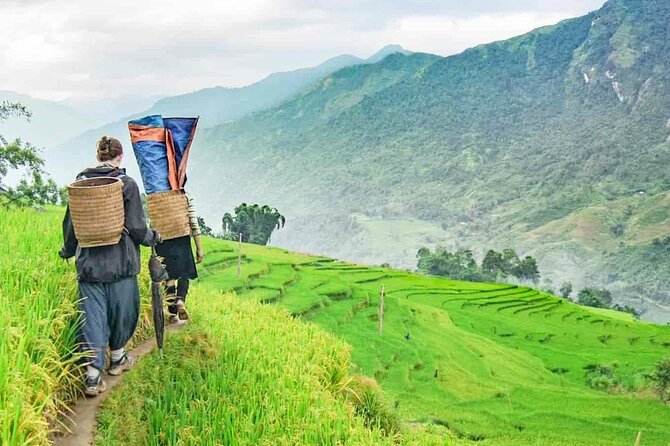
The second day begins with breakfast at the hotel. The main walk heads through rice terraces and along Muong Hoa Stream toward Lao Chai, a Black Hmong village surrounded by the Hoang Lien Son Mountains.
This is the strongest part of the standard Sapa route. The terraces are the reason many people come to this region, and walking beside them gives you a better sense of the work behind the scenery than viewing them from a bus window. The route is listed at about four hours to Lao Chai, followed by another hour to Ta Van.
Ta Van is associated with the Giay people, who live on flatter ground in wooden houses. The contrast between Lao Chai and Ta Van helps you see that Sapa is not one single ethnic or architectural setting. The villages belong to different communities, and the route gives you a short look at both.
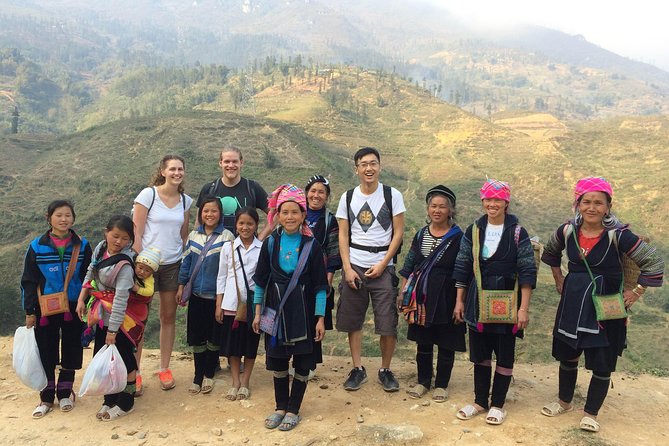
The guide matters here. The supplied information describes the Sapa guide as local, friendly, experienced, and good at English. One posted five-star rating specifically praised the beautiful rice fields and the guide’s local background and English ability. The guide is not named, so you cannot request a particular person from the information provided.
The walk is active rather than extreme, but conditions can affect how it feels. You are told to bring sports shoes and comfortable clothing. That is not decorative advice. Mud, uneven paths, and wet surfaces can make ordinary city shoes a poor choice, although the exact trail condition is not specified.
Same trailhead, a longer or shorter day out:
- Hanoi – Sapa 2 Days 1 Night Overnight At Homestay
★ 5.0 · 899 reviews - From Hanoi: 2-Day Sapa Trekking Trip with Homestay & Meals
★ 4.8 · 704 reviews - Sapa 3 Days 2 Nights Trekking Tour (1 Night In Ta Van Village, 1 Night In Hotel)
★ 5.0 · 699 reviews - 3-Day Trekking Adventure of Sapa from Hanoi – Stay Ta Van Village
★ 5.0 · 611 reviews
Fansipan as an alternative to the village route

There is an option to visit Fansipan Peak by cable car for an additional fee, paid directly during the tour. This is not included in the stated base price.
Fansipan is a sensible choice if the peak is a personal priority. The cable car gives you a different kind of mountain experience and may appeal if you want a major scenic landmark rather than another village walk.
The cost is the tradeoff. The extra fee is not stated, and choosing Fansipan may change how much time you spend on the Lao Chai and Ta Van route. Ask the operator how the timing works before you commit, especially if your main reason for booking is the rice terrace trek.
Meals, hotel nights, and the pace of the trip
The package includes breakfast, lunch, and dinner as listed in the inclusions. It also includes an overnight hotel in central Sapa, and the broader package information refers to hotel accommodation in Sapa and Bac Ha depending on the option selected.
Central accommodation is convenient. You are not left trying to find a remote village stay after a long walk, and you can explore Sapa town during free time. The tradeoff is that a central hotel may feel less intimate than a homestay, particularly if your main goal is close contact with rural family life.
The schedule is full. Day one includes six hours of transport and a four-hour village outing. Day two includes breakfast, a substantial trek, lunch, and another five-and-a-half to six-hour bus ride if you return to Hanoi at 1:30 p.m.
I would not choose this plan if you want long, quiet hours in one village. I would choose it if you want a practical introduction to Sapa with food, transport, and guiding handled for you.
Drinks are not included, nor are travel insurance, tips, VAT, or personal expenses. A holiday surcharge of 700,000 Vietnamese dong per person applies on April 30, May 1, September 1 to 3, December 31, and January 1.
Returning to Hanoi or continuing toward Ha Giang
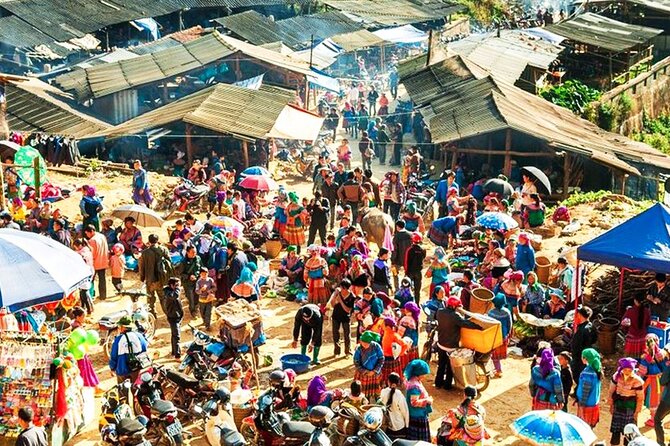
The standard second-day return bus leaves Sapa at 1:30 p.m. and reaches the Hanoi meeting point around 8:30 p.m. That gives you a direct end to the trip, but it also means a long afternoon on the road after trekking.
The Ha Giang option is useful for people building a longer northern Vietnam route. Two buses are listed from Sapa:
- An 18-seat limousine bus leaves at 2:30 p.m. from May Hotel and takes about six hours.
- A 40-seat sleeper bus leaves around 7 p.m. from its meeting point and also takes about six hours.
Both require an extra payment, and the precise fare is not provided. You should contact the tour consultant before booking if Ha Giang is your real destination. The connection can save you from returning to Hanoi, but it may leave little recovery time after the Sapa trek.
What to make of the Bac Ha day
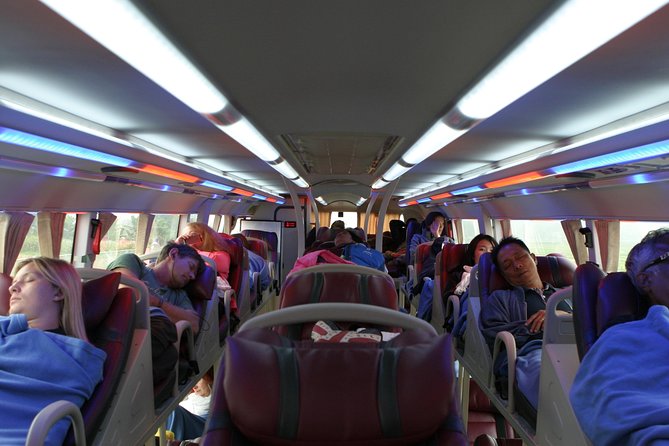
Bac Ha is the most unusual part of the advertised program, but it does not fit neatly with the two-day Sapa return schedule. The Bac Ha plan is described as a third day and includes a Sunday market, Pho village, and Hoang A Tuong’s Castle.
The market operates only on Sunday morning. That restriction matters. If your dates do not include Sunday, you should not assume Bac Ha market is available.
At the market, you can see Red Hmong, Giay, Red Dao, Tay, and other ethnic groups exchanging goods. The description includes livestock, hens, souvenirs, and local products, giving the visit a more traditional trading feel than a standard souvenir stop.
Pho village is close to the market. A one-hour walk there offers a quieter view of daily life after the market crowds. Hoang A Tuong’s Castle takes about 30 minutes and was once the home of a Hmong ruler and his family.
The Bac Ha visit is listed as a private tour with a private car and guide if that option is selected. That is a major difference from the small shared Sapa group. Confirm the exact package, hotel night, meals, and return transport before paying, because the information combines Sapa, Bac Ha, Hanoi, and Ha Giang choices in one description.
Is $66 good value?
At $66 per person, the basic package is attractive if it includes the stated hotel, meals, bus transport, guide, and entrance tickets. Buying those pieces separately could take more time and may cost more, especially when you add long-distance transfers.
The value depends on the option you choose. Train transport, Fansipan cable car access, Bac Ha arrangements, and Ha Giang buses may involve different prices. The listing also says sleeper bus arrangements depend on the selected option, so do not treat $66 as the final cost for every version of the trip.
I see the price as strong for a short, organized Sapa introduction. I would be less enthusiastic if you are paying extra for several add-ons without checking how they affect the walking time and hotel arrangements.
Who should book this tour?
I would recommend it to an active visitor who wants northern Vietnam scenery, local village walks, and simple logistics from Hanoi. The group limit of 15 is small enough to keep the experience more personal, while the local English-speaking guide adds useful context during the trek.
It also suits people who want to continue to Ha Giang. The direct Sapa connection is practical and avoids an unnecessary return to Hanoi.
I would hesitate if you dislike long bus journeys, need a slow pace, or want a guaranteed single route. The schedule moves quickly, and the Bac Ha, Fansipan, train, and Ha Giang choices need clarification. Bring proper sports shoes, comfortable clothes, and only a light bag for the walk.
Cancellation is flexible only if you plan ahead. Cancel at least six full days before departure for a full refund. Cancellations two to six days before departure receive 50 percent back, while cancellations less than two full days before departure are not refunded.
Final verdict
Book this trip if you want a low-cost, active Sapa sampler with meals, a central hotel, local guiding, and transport arranged from Hanoi. The strongest features are the rice terrace walks, the friendly local English-speaking guide, and the chance to link Sapa with Ha Giang.
Before booking, confirm three things: your exact transport, whether Bac Ha is included, and the extra price for Fansipan or Ha Giang. If those details match your plans, this is a practical way to see Sapa in a short window. If you want a relaxed mountain stay, choose a longer itinerary with fewer road hours.
FAQ
Where does the tour start in Hanoi?
The meeting point is 160 Tran Quang Khai, Ly Thai To, Hoan Kiem, Hanoi. The standard departure time is 6:30 a.m.
How long does the bus ride from Hanoi to Sapa take?
The journey takes about six hours and includes two or three rest stops.
What villages are included in the Sapa trekking route?
The route includes Cat Cat village on the first day, followed by Lao Chai and Ta Van on the second day.
What ethnic communities are associated with the villages?
Cat Cat and Lao Chai are associated with Black Hmong people. Ta Van is home to Giay people. The Bac Ha market also includes Red Hmong, Red Dao, Tay, and other ethnic communities.
Is Fansipan included in the tour price?
No. Fansipan by cable car is an optional extra, and the additional fee is paid directly during the tour.
Does the tour return to Hanoi?
The standard plan returns to Hanoi by bus, leaving Sapa at 1:30 p.m. and arriving near the original meeting point at about 8:30 p.m.
Can I travel from Sapa directly to Ha Giang?
Yes. An 18-seat limousine bus is listed at 2:30 p.m., and a 40-seat sleeper bus is listed at 7:30 p.m. Both require an additional fee.
Recently added around Hanoi
- Trekking around Ha Giang 5 days 4 nights★ 3.0 · 2 reviews
- From Hanoi : Sapa Moutain Trek – Halong bay Heritage★ 4.5 · 25 reviews
- 8-Days Hanoi, Sapa Trekking And Halong Bay Cruise★ 5.0 · 8 reviews
- 2-Day SAPA Trekking – Villages-Homestay-Ethnic-Local Food-Market★ 5.0 · 2 reviews
- Hanoi: 3D2N Mu Cang Chai Visit All Attractions, Trek, Ethnic Life★ 5.0 · 3 reviews
- Mai Chau – Pu Luong trekking 3 days 2 nights★ 4.5 · 7 reviews
- Trekking In Ha Giang 5 Days★ 5.0 · 4 reviews
- Sapa trekking – Unique Route – 2D1N★ 5.0 · 3 reviews
Train Experiences, compared.
Tour with the Mountain Train, Trek to Mystic Forest and Castle
Read our review →
Machu Picchu: 5-Day Salkantay Trek with Panoramic Train
Read our review →
3-Day, 3-Night Trek and Hotel with Overnight Train
Read our review →

4-Day Lares Trek to Machu Picchu with Panoramic Train
Read our review →
4-Day Salkantay Trek to Machu Picchu, Panoramic Train
Read our review →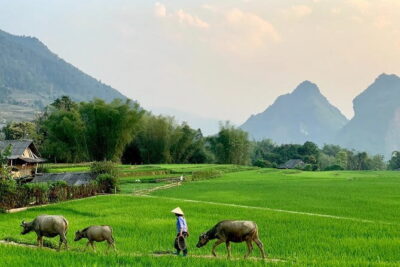
Sa Pa Trekking 2 Days 3 Nights Homestay by Night Train
Read our review →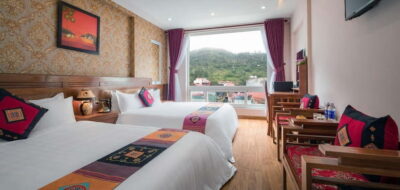
Explore Sa Pa with Overnight Train & Sleeper Bus & Trekking
Read our review →Browse the lists this tour appears in