
REVIEW · INDONESIA
Sidemen Trekking: A Walk from a Different Perspective
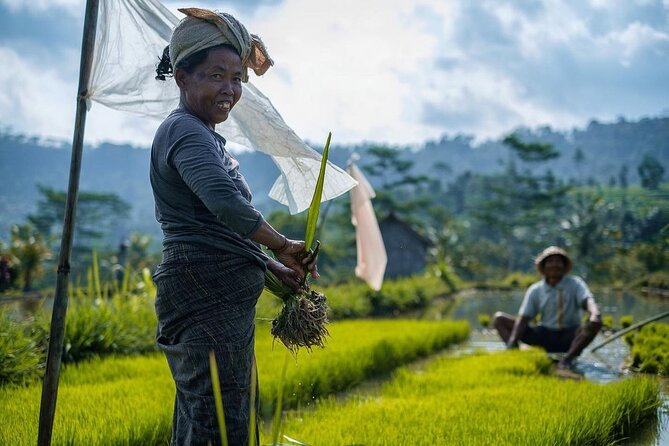
Sidemen rewards curious walkers. This two-hour trek takes you from the village market into rice fields, farm paths, temples, and quiet local lanes, with Mount Agung often appearing beyond the terraces. I like that the route moves one way rather than doubling back, and I like how much daily life fits into a short outing. The main thing to consider is the footing: narrow rice-field paths can be slippery and uneven.
The $13 price is hard to argue with, especially since it includes a guide and bottled water. I also appreciate the small group size, limited to 10 people, which makes it easier to ask questions and keep a steady pace. You will need to arrange your own transport to the start and from the finish, and sandals are a poor choice here.
Sidemen Trekking at a Glance
- A one-way walk through real working countryside: You pass rice paddies, mixed plantations, village lanes, temples, and irrigation channels instead of repeating the same trail.
- A local view of Balinese farming: Your guide explains plowing, planting, cultivation, and harvesting, along with the traditional Subak irrigation system.
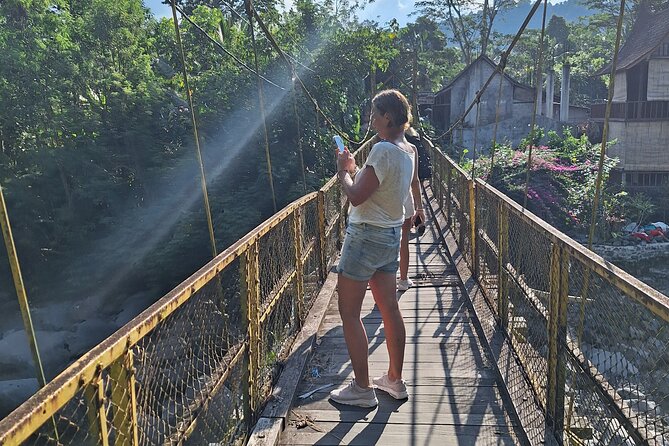
- The Yellow Bridge crossing: Jembatan Kuning Tukad Yeh Unda is a memorable stop, though the wooden bridge may feel slightly shaky.
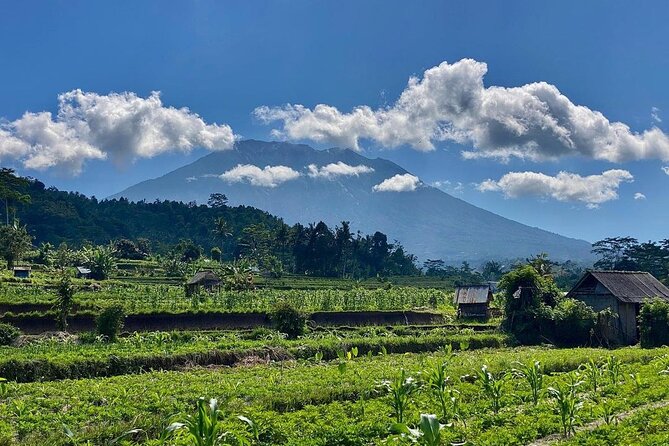
- Mount Agung and valley views: The best views come from the rice terraces, where the countryside opens up around you.
- A market start and village finish: You begin near Pasar Sidemen and finish at Warung Ume Anyar in Ogang Village.
- Good value for active visitors: At $13 per person, the walk offers local guidance and access to paths you would be unlikely to find alone.
Why Sidemen Feels Different From Ubud
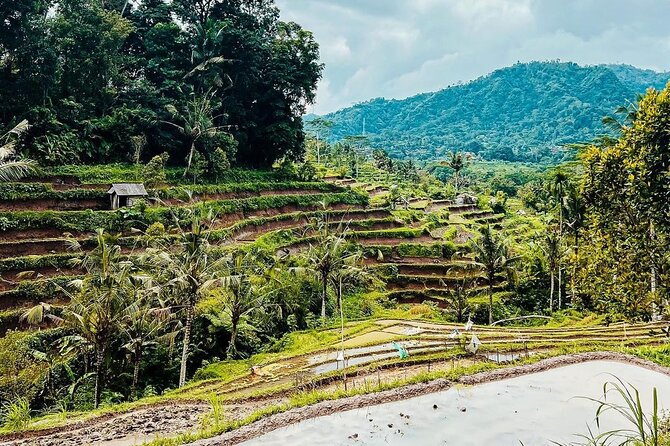
Sidemen is a useful choice if you want to see Bali beyond polished photo stops and busy visitor areas. The valley is shaped by rice farming, village life, water channels, shrines, and small plantations. You are not simply looking at a rice terrace from a roadside viewpoint. You are walking beside it, sometimes on the narrow raised edges that separate one field from another.
That difference matters. From a distance, a rice terrace is a pretty view. On foot, you can see how water moves through the fields, how farmers work the soil, and how paths connect homes, temples, and farmland. The guide helps explain what you are seeing, which turns a pleasant walk into a more useful lesson about local life.
I especially like the fact that the route is designed as a continuous one-way walk. You see changing scenery instead of returning along the same track. The path goes up and down streets, through the village, and back into the fields, so the experience has more variety than a simple out-and-back stroll.
A few more treks around Indonesia worth a look
- Bali: Mount Batur Sunrise Trek With Guide and Breakfast
★ 4.8 · 3,461 reviews - Mount Batur Sunrise Trekking Private All Inclusive
★ 5.0 · 906 reviews - Mount Batur Sunrise Trekking Private Tour with Breakfast and Hotel Transfer
★ 5.0 · 885 reviews
Starting at Pasar Sidemen and Upa Boga
The meeting point is at Toko Upa Boga Pertenunan, the shop marked Upa Boga, on the main road by Pasar Sidemen. This is also the area where you meet your English-speaking guide.
If you book a morning departure, you can add a short look around Pasar Sidemen before the walk. The traditional market is open from 5:00 AM to 10:00 AM, and the planned market stop lasts about 10 minutes. This is a quick taste of local trade rather than a long food tour, but it gives the trek a useful starting point.
I would choose a morning session if the market interests you. Later departures will not include the same market opportunity because of its opening hours. The early start can also make sense in Bali’s heat, though the available starting times should be checked when booking.
From the market, the walk heads toward the rice paddies. This opening section helps you shift from the main road into the quieter rhythm of Sidemen. You move from shops and traffic toward village lanes, fields, water channels, and views of the valley.
Rice Fields, Irrigation Channels, and Working Farms
The main reason to book this walk is the chance to enter the rice-growing area with someone who knows how the paths fit together. The route passes through different types of planting and farmland, not only rice. You might see mixed crops, high grass, fruit plants, and other local vegetation along the way.
The guide points out the stages of farming, from plowing and preparing the ground to planting, cultivating, and harvesting. That makes the fields easier to read. Instead of seeing only green terraces, you begin to notice the work behind them and the seasonal changes in the crops.
A particularly worthwhile part is the traditional Subak irrigation system around Ogang. Subak is the community-based system that manages water for Balinese rice fields. The walk gives you a chance to see the channels as part of working agriculture, not as an abstract cultural idea.
Guides such as Adidas, Adi, Daria, Darya, Gede, and Komang have been praised for explaining local crops, plants, farming methods, and village life in clear English. Several guides are from the area or from farming families, which adds a personal connection to the explanation. The exact guide depends on the departure, but the pattern is consistent: this is an information-rich walk without needing to feel like a classroom.
Crossing Jembatan Kuning Tukad Yeh Unda
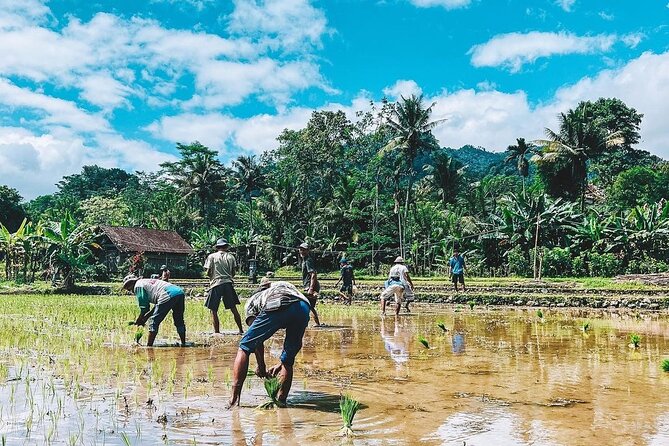
About 55 minutes into the planned route, you reach Jembatan Kuning Tukad Yeh Unda, the Yellow Bridge. It is used by people and motorbikes, so it is not a wilderness footbridge reserved for hikers. That is part of its appeal. You are seeing an ordinary piece of local infrastructure that connects daily life on both sides.
The bridge is also one of the more memorable photo stops. It can feel slightly shaky underfoot, so take your time and follow the guide’s lead. If you dislike heights, movement, or narrow crossings, this is worth knowing before you book.
The route also follows water coming from the direction of Mount Agung. This gives the walk a strong sense of place. The mountain is not just a distant backdrop. It is part of the valley’s identity and the water systems that support the fields.
Same trailhead, a longer or shorter day out:
- Private Mount Batur Sunrise Trekking Tour
★ 5.0 · 634 reviews - Mount Batur Sunrise Trekking (Private Tour and Breakfast at Restaurant)
★ 5.0 · 598 reviews - Bali: Munduk Waterfalls Trek, Twin Lakes and Temple Tour
★ 4.8 · 545 reviews - Private Tour Mount Batur Sunrise Trekking and Natural Hot Spring
★ 5.0 · 431 reviews
Dukuh Village and a Working Temple
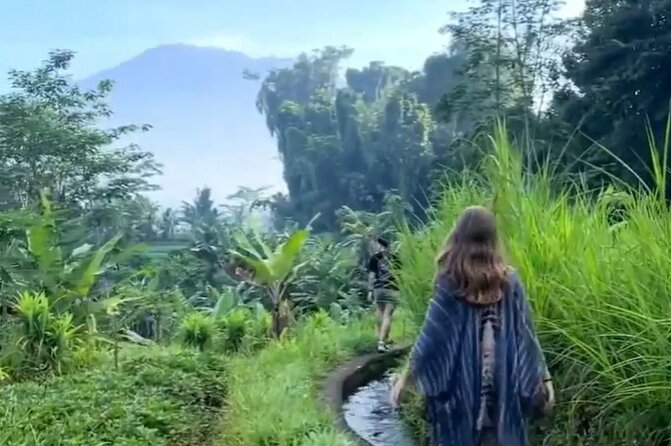
After the bridge, the trek continues through Dukuh village. Here, the scenery becomes more intimate. You walk along local streets, pass homes and community spaces, and see a temple used by villagers for prayer.
This section helps balance the rice-field views. You are not watching village life from a bus window or stopping for a staged cultural display. You are moving through a living community, so respectful behavior matters. Keep your voice down around homes and temples, follow your guide’s instructions, and dress in a way that is comfortable and respectful for a village setting.
The route rises and falls along streets before returning to the rice fields. That change in surface is useful to know. This is not a flat promenade. You should expect some uphill and downhill walking, along with transitions between roads, village paths, and narrow field edges.
Babakan Dukuh Rice Terrace: The Best Views
The longest section is the walk through Babakan Dukuh Rice Terrace, planned at about 45 minutes. This is where the walk earns its keep. You get broad views over the valley, terraces close at hand, and some of the best chances to see Mount Agung when weather and visibility cooperate.
The raised paths through the fields can be narrow. They may also be wet or slippery, especially after rain. One useful tip is to wear shoes with good grip and enough support for uneven ground. Several people found the slippery paths part of the fun, but that does not make them suitable for everyone.
Long trousers can be helpful because the route passes through high grass and vegetation. Some walkers have encountered insects and red ants, so sunscreen, a hat, and sensible clothing are practical rather than decorative choices.
Your guide will usually stop at good viewpoints and can help with photos. Guides including Daria and Adidas have been praised for taking pictures and making sure everyone keeps up. That is helpful if you are traveling alone or want more than a quick phone snapshot.
Finishing at Warung Ume Anyar
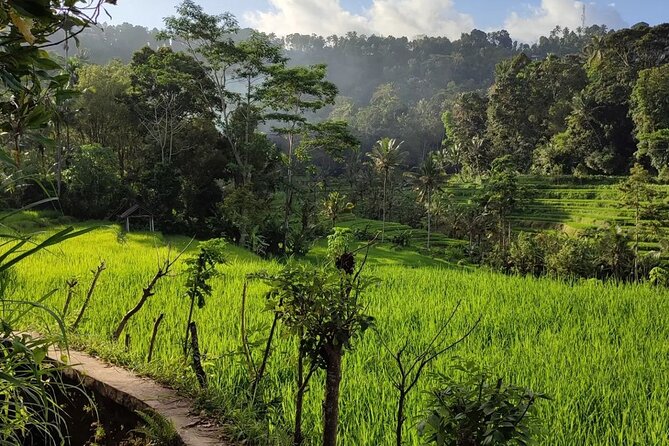
The walk ends at Warung Ume Anyar Restaurant in Ogang Village. This is not the same place where you began, and that transport detail deserves attention before you set out.
Arrange a pickup in advance, ideally asking your driver to meet you at the restaurant around two to two and a half hours after the trek starts. If you stay in Sidemen, the local advice is to arrange transport through your hotel. Grab may not be able to collect you directly from some Sidemen hotels, although drop-off is allowed.
If you need to return on foot, the route back to the starting point is about 3 kilometers along the main road, taking roughly 30 to 40 minutes. That is a useful backup, but after two hours of walking it may not be your preferred plan. I would treat advance pickup as part of the booking, not an afterthought.
What the $13 Price Really Buys

At $13 per person, this is excellent value if you want access to local paths and clear explanations. You receive an English-speaking guide and bottled water, while the small group limit of 10 people helps keep the walk manageable.
The price does not include hotel pickup or drop-off. That keeps the activity inexpensive, but you must add the cost and effort of getting to the market and away from the restaurant. If you are already staying in Sidemen, the arrangement is fairly simple. If you are coming from another part of Bali, check your transport timing carefully.
The value also depends on what you want from a trek. This is not a strenuous mountain climb, a long jungle hike, or a guided food experience. It is a calm countryside walk with modest physical demands and a strong local focus. If that sounds right, the price is very fair.
Fitness, Footwear, and Weather

You should be comfortable walking for two hours on uneven ground, with some uphill and downhill sections. The activity is not suitable for children under 5, pregnant women, people with heart problems, people over 60, or people with a low level of fitness according to the stated conditions.
The age guidance is broad, so individual ability still matters. A fit person over 60 may feel fine on this route, but the published restrictions should be taken seriously when deciding if it suits you.
Wear hiking shoes or sports shoes with a non-slip sole. Sandals and flip flops are not allowed, and I would not recommend them even if they were. Bring sunglasses, a hat, sunscreen, and extra protection from rain if the forecast looks uncertain. One walk took place in rain from beginning to end, yet the scenery and atmosphere still held up. Still, wet paths will be more demanding.
Who Will Enjoy This Walk Most
I would recommend Sidemen Trekking to you if you want:
- A close look at Balinese farming and irrigation
- A quieter alternative to more crowded rice-field stops
- A guide who can explain plants, crops, village customs, and local life
- A short activity that fits easily into a Sidemen stay
- Good photo opportunities without a staged attraction
- A small group rather than a large coach excursion
You may want to skip it if you need a fully flat route, dislike narrow paths, or want a polished attraction with easy vehicle access. You should also think twice if arranging two separate transfers feels like a nuisance.
Families can be a good fit when older children are confident walkers. A six-year-old completed the route with careful help from a guide, but younger children are excluded. Ask yourself how comfortably your child handles narrow, wet paths before booking.
Practical Booking Advice
The walk offers free cancellation up to 24 hours before the start, and you can reserve now and pay later. Those terms are useful if your Bali plans are still shifting, though the main practical decision is choosing a start time that works with the market and your transport.
For the most complete experience, book a morning session so you can see Pasar Sidemen before it closes. Tell your driver the finish is Warung Ume Anyar in Ogang Village, not the original market meeting point.
A small group can make the pace more personal, but it does not turn the route into a private walk. If you want a private outing, that may be possible through the provider, but it is not part of the standard small-group description. At the start, confirm the pickup plan and ask about the day’s ground conditions.
Should You Book Sidemen Trekking?
I would book this walk if you want to understand Sidemen rather than simply photograph it. The strongest parts are the one-way route, the close look at rice farming, the Yellow Bridge, the village temple, and the chance to walk among people carrying on with ordinary work.
The main caution is practical: the paths can be narrow and slippery, and the finish is several kilometers from the start. Wear proper shoes and arrange your ride before you begin.
For $13, this is one of the better-value ways to spend two hours in Sidemen. It suits independent visitors who want local context, gentle adventure, and a real look at how the valley works. It is less suitable for anyone seeking an effortless stroll or a major physical challenge.
FAQ
How long does the Sidemen trekking tour last?
The walk lasts about two hours. The route includes the traditional market area, village paths, the Yellow Bridge, Dukuh village, and Babakan Dukuh Rice Terrace.
Where does the trek start?
The meeting point is at Toko Upa Boga Pertenunan, marked by the sign Upa Boga, near Pasar Sidemen on the main road.
Where does the trek finish?
The walk ends at Warung Ume Anyar Restaurant in Ogang Village.
Is hotel pickup included?
No. Hotel pickup and drop-off are not included. You should arrange transport to the market meeting point and pickup from Warung Ume Anyar in advance.
What should I wear and bring?
Wear hiking shoes or sports shoes with good grip. Bring sunglasses, a hat, and sunscreen. Sandals and flip flops are not allowed.
Can I visit the traditional market before trekking?
Yes, if you choose a morning session. Pasar Sidemen is open from 5:00 AM to 10:00 AM, and the market visit is planned for about 10 minutes.
Recently added around Indonesia
- Overnight Trekking Adventure in Ketambe★ 5.0 · 2 reviews
- Wonderful 7 Days North Sumatra Tour (Include: 2 Days 1 Night Jungle Trekking)★ 5.0 · 27 reviews
- 5 Day’s 4 Night’s jungle Tour trekking in Bukit Lawang★ 5.0 · 7 reviews
- 1 Day Ethical Jungle Trekking★ 5.0 · 14 reviews
- ONE DAY JUNGLE TREKKING 6-7 hours (see orang utan) + RAFTING in BUKIT LAWANG★ 5.0 · 37 reviews
- TOUR PACKAGE (Taxi, Room, Jungle Trekking) 3 Days in BUKIT LAWANG★ 5.0 · 17 reviews
- 6 Day North Sumatra Jungles Orangutans Overnight trek and Hot Springs★ 5.0 · 2 reviews
- FAMILY JUNGLE TOUR: Orangutan Trek (4-hours hike) by EcoTravel Bukit Lawang★ 5.0 · 10 reviews
Indonesia Trekking Tours, compared.

Mount Batur Sunrise Trek With Guide and Breakfast
Read our review →
Mount Batur Sunrise Trekking Private All Inclusive
Read our review →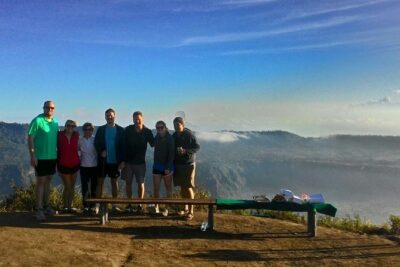
Mount Batur Sunrise Trekking Private Tour with Breakfast and Hotel Transfer
Read our review →

Mount Batur Sunrise Trekking (Private Tour and Breakfast at Restaurant)
Read our review →
Munduk Waterfalls Trek, Twin Lakes and Temple Tour
Read our review →
Private Tour Mount Batur Sunrise Trekking and Natural Hot Spring
Read our review →
Private Tour : Mount Batur Sunrise Trekking With Private Guide
Read our review →Browse the lists this tour appears in