
REVIEW · SPAIN
Alicante: Via Ferrata del Ponoig Guided Trek and Climb
This is Alicante with your pulse racing. The Via Ferrata del Ponoig combines a guided mountain trek with a near-vertical climb up metal staples, giving you wide views of the Valley of Guadalest, the Sierras de Aixortá and Bernia, and the Mediterranean coast. I like the small groups of up to 10 people, and I like that the guides begin with a practice session on a rock wall rather than sending you straight onto the route.
The $65 price is also fair for a five-hour outing that includes a guide, helmet, harness, Ferrata kit, and photos. My main caution is simple: this is not a gentle scenic walk. The route is rated K4, involves significant physical effort, and includes a nearly vertical ascent. Vertigo, limited mobility, and a dislike of heights are real reasons to choose another activity.
Key points before you book
- The climb starts with a practice session: You learn basic wall-climbing technique before tackling the main route.
- The K4 route is physically serious: Expect steep, aerial sections and a near-vertical climb using fixed metal staples.
- Your safety kit is included: A helmet, harness, and Ferrata equipment are provided, but hiking shoes are not.
- The views are the main reward: Look for the Valley of Guadalest, the Sierras de Aixortá and Bernia, and the Mediterranean coast from above.
- The group stays small: A maximum of 10 participants makes it easier for the guide to watch your pace and technique.
- Bring water and sun protection: A past participant specifically recommended plenty of water, suncream, a small rucksack, and a few sweets for energy.
What the Via Ferrata del Ponoig experience is really like
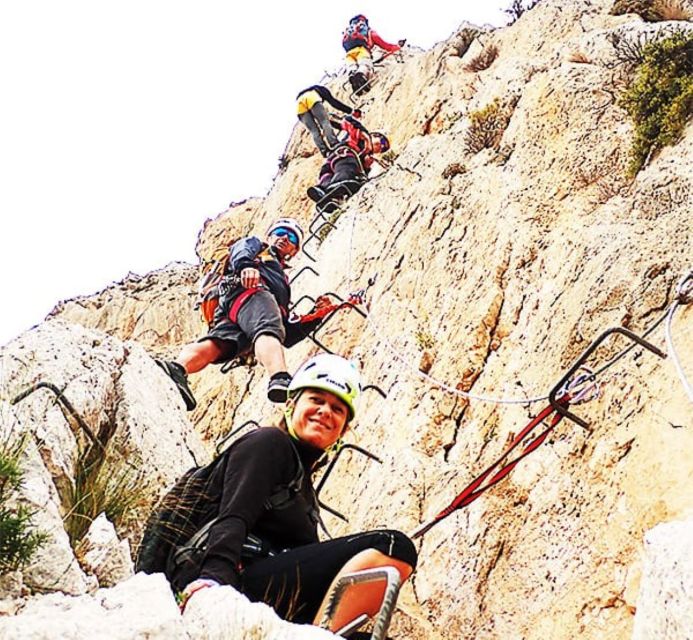
A via ferrata sits between hiking and rock climbing. You walk toward the cliff, then use fixed metal staples and a safety cable to move up sections of rock. You are not relying on a rope system in the same way as a traditional climbing lesson, but you do use a Ferrata kit attached to the cable for protection.
That distinction matters. You do not need to arrive as an expert climber, but you do need to be comfortable using your arms and legs for a sustained climb. The route is described as K4, and the activity information is clear that the climb is nearly vertical in places. I would treat the rating as a warning to prepare properly, not as a challenge to ignore.
The guide-led format makes this more approachable. You are fitted with safety equipment, shown the basic technique, and accompanied throughout the route. Past participants singled out the patient explanations and calm manner of guides such as Osmar and Frank. Guide assignments can change, but the feedback points to a useful quality: the guides appear to focus on helping people feel secure while still keeping the adventure intact.
More Guided Treks in Spain:
- La Palma: Tajogaite Volcano Guided Trek
★ 4.8 · 1,810 reviews - Caminito del Rey: Trekking Tour with Hiking Guide
★ 4.1 · 295 reviews - Fuerteventura: Guided Trekking Tour with Island Goats
★ 4.9 · 146 reviews
Meeting at Parking Vía Ferrata Ponoig
Your meeting point is Parking Vía Ferrata Ponoig, where the guide will hold a visible sign. This is important because the activity does not begin from a city-center office or a large visitor center. You need to reach the parking area yourself, and the supplied details do not include transport from Alicante or another town.
The location information uses both Alicante and Andalusia in different places, so I would pay close attention to the exact booking map and navigation details before setting out. The named parking point is the most useful reference. Allow enough time to find it, park, and arrive ready rather than turning up at the last minute with your boots still in the car.
You should bring hiking shoes, water, and clothing suited to the weather. Shoes are not provided. A small rucksack is a sensible choice, especially since one past participant recommended carrying water, suncream, and sweets such as Haribo for quick energy. Keep the bag compact so it does not interfere with the harness or catch on the rock.
The safety briefing and practice wall
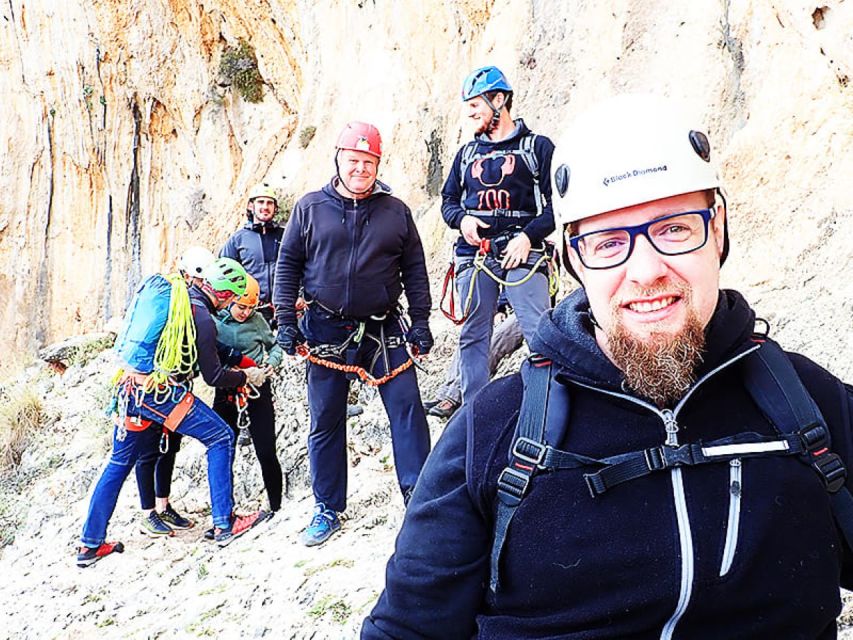
The first part of the outing is about getting comfortable with the equipment and movement. You receive a helmet, harness, and Ferrata kit, then learn the basic principles of wall climbing with the guide. This practice section is one of the strongest parts of the format because it gives you a chance to understand the system before the cliff becomes steep.
Expect the guide to explain how to use the thick metal staples, how to move alongside the security cable, and how to position your body on the rock. The exact instruction style depends on the guide, but the purpose is clear: you should know what to do with your hands, feet, and safety equipment before the main ascent.
I especially like this step for first-time via ferrata participants. The first few minutes on a fixed climbing route can feel awkward, even if you are fit. A short practice session lets you test your balance and find a rhythm. It also gives the guide a chance to see how the group is coping.
Still, do not mistake the practice for a full climbing course. The activity is an adventure outing, not a long technical lesson. If you are nervous around heights or unsure about the physical demands, say so early. The guide can then help you judge the pace and your comfort level before you are far up the route.
Climbing the metal staples up Ponoig
Once the group is ready, you begin the upward route using metal staples fixed into the rock. These steps provide handholds and footholds as you move higher, while the Ferrata kit connects you to the new security cable. The climb is described as steep, aerial, and spectacular, so you should expect sections where the rock falls away beneath you.
This is where the experience earns its adventure label. You are not simply looking at a mountain from a path. You are using your body to gain height, one staple at a time, with your attention split between movement, safety, and the view.
The physical demand comes from the repeated upward motion. Your legs do much of the work, but your arms and grip also matter. You will need to keep moving carefully rather than pulling yourself up with your arms alone. Good hiking shoes are important because your feet need reliable contact with the rock and metal steps.
The guide remains central here. The best part of a guided Ferrata is not just having someone in front of you. It is having someone who can explain the next movement, keep the group organized, and notice when a participant needs a slower pace. One past participant praised Osmar for being patient and explaining the instructions clearly. Another highlighted Frank’s ability to work with the group and use a comfortable level of English.
The activity is offered in Spanish and English. If language is important to you, confirm that your preferred language is available when booking, though the stated tour languages are Spanish and English.
A few more treks around Spain worth a look
- Lanzarote: Timanfaya Natural Park Trekking Tour
★ 4.8 · 766 reviews - Volcano Trekking Tour (Timanfaya eruptions)
★ 5.0 · 339 reviews - La Palma: Guided Trekking Tour to El Roque de los Muchachos
★ 4.6 · 104 reviews - Caminito del Rey Trekking Walkway
★ 4.0 · 100 reviews
Views over the Guadalest Valley and Mediterranean
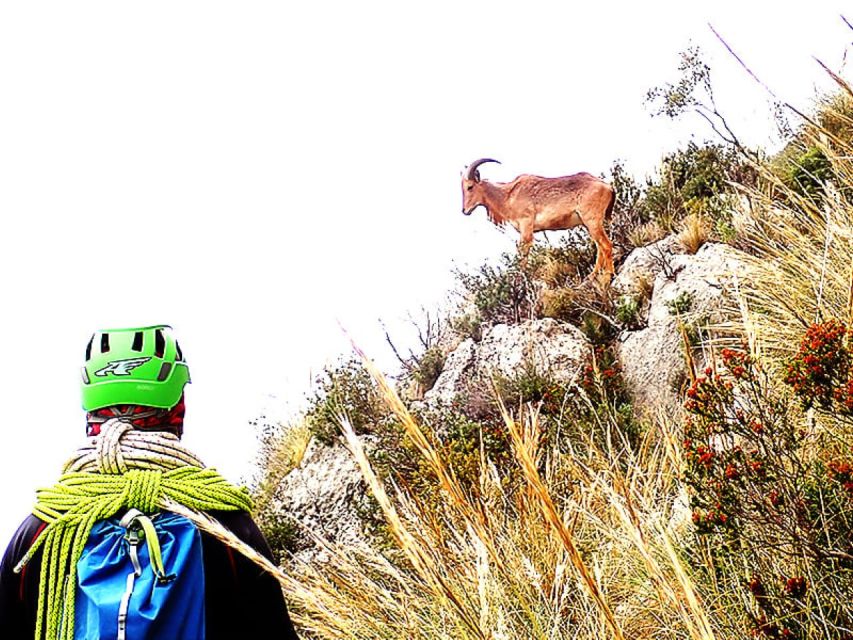
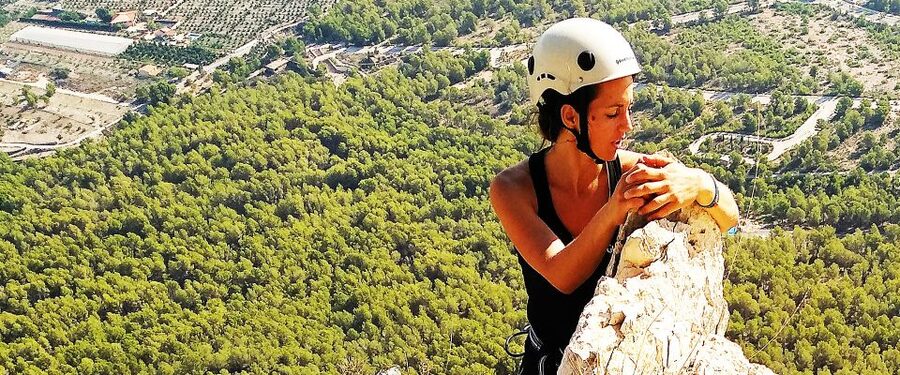
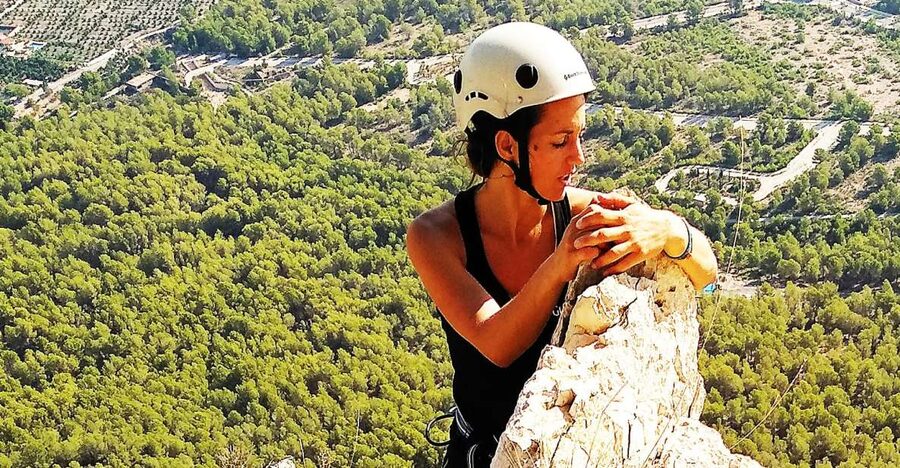
The scenery changes as you climb. From the route, you can look across the Valley of Guadalest and toward the Sierras de Aixortá and Bernia. The Mediterranean coast forms the wider backdrop, giving you a strong sense of height and distance.
The views are not an afterthought here. They are the reward for the effort and a good reason to choose this Ferrata over an ordinary mountain walk. You get a perspective that is hard to match from a road or low valley path, particularly when you pause on the rock and look across the surrounding ranges.
Take care with your timing, though. On a near-vertical route, you cannot always stop exactly when you want. You may need to wait for a safe place or follow the guide’s instructions before reaching for your camera. Photos are included, which is useful because handling a phone while climbing can be awkward and distracting.
The activity information does not promise a particular summit viewpoint or a long rest at the top, so I would not book it expecting a leisurely mountain picnic. The focus is the climb itself, with the views appearing as you gain height. Food and drinks are not included, so carry your own water and snacks.
How hard is a K4 via ferrata?
The supplied details classify the route as K4 and describe significant physical activity with a nearly vertical climb. That makes it best suited to adults who are reasonably active and comfortable with a serious outdoor challenge.
You do not need to arrive with a long list of climbing qualifications. The guide provides an introduction and safety equipment, and the format is suitable for beginners who can manage the physical demands. One past participant recommended it to both beginners and people with prior experience, which fits the guided design.
The bigger question is how you feel about height and sustained effort. This is not suitable for people with vertigo, mobility impairments, or anyone who is pregnant. Children under 18 are also not accepted. If you are simply unsure because you have never tried a via ferrata, the practice wall and guide support may help. If you already know that heights make you freeze, choose a lower-level walk instead.
Your clothing matters as much as your confidence. Wear weather-appropriate layers and sturdy hiking shoes. Suncream is a smart addition, especially because you may be exposed for several hours. Water is essential, and a few compact snacks can help during a five-hour activity.
Five hours, a small group, and the $65 price
The total duration is five hours, with about four hours listed for the guided route and safety briefing. That is a substantial half-day, not a quick photo stop. You should keep the rest of your schedule flexible, particularly because mountain activities can feel tiring even when the official finish time is clear.
At $65 per person, the value is good if you want an active experience rather than passive sightseeing. The price includes the climbing guide, safety equipment, and photos. You would otherwise need to arrange technical Ferrata equipment yourself, and the guide is the part that makes the route more accessible to people who are new to this type of climbing.
The cost does not include shoes, food, drinks, or transportation to the parking area. Those omissions are easy to manage, but they affect your real budget. You need suitable footwear and supplies before arrival, and you need to organize your own way to the meeting point.
A group limit of 10 is another positive. It is not a private climb, but it is small enough for the guide to give individual help. If everyone moves at different speeds, there may still be waiting, especially on a fixed route. That is normal for a group Ferrata and part of the tradeoff for the lower price.
What I like most, and what gives me pause
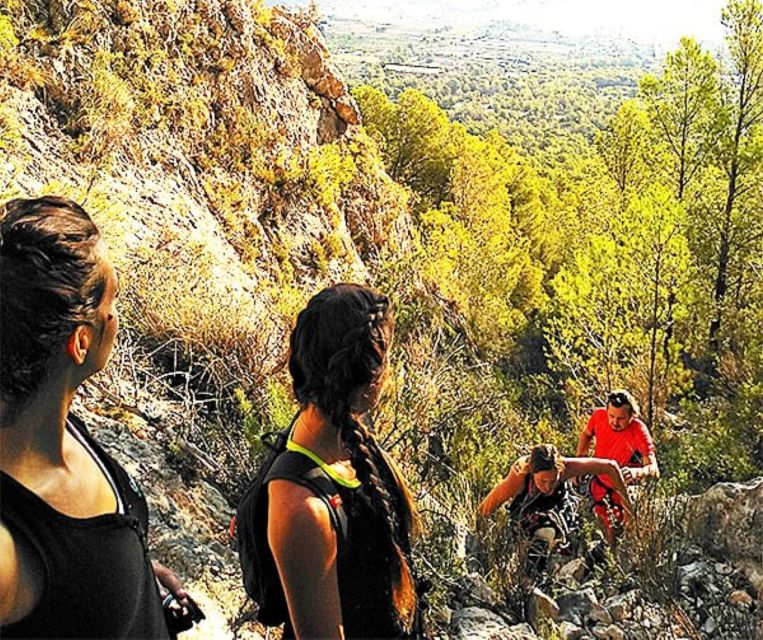
I like the balance between instruction and adventure. You are not simply handed a helmet and pointed toward the rock. The practice wall gives you a chance to understand the equipment, while the guide stays with you during the main ascent.
I also like the scenery. The combination of mountain ranges, the Guadalest Valley, and the Mediterranean coast gives the climb a strong visual payoff. You are working for those views, which makes them feel more satisfying than a lookout reached by car.
The main drawback is the narrow audience. A K4 route with a near-vertical section will not suit every fit person, and fitness alone does not remove the issue of height. The activity also requires you to bring your own hiking shoes, water, clothing, food, and transport, so it takes more preparation than a standard guided walk.
The 4.9 rating from eight recorded bookings is an encouraging sign, especially since the comments repeatedly praise patient guidance, clear explanations, strong English, and impressive views. It is still a small sample, so I would use it as reassurance rather than proof that every group will have the same experience.
Who should book this Ponoig climb?
I would choose this for an adult who wants an active Alicante-area outing and likes the idea of combining a mountain route with basic climbing. It is particularly well suited to you if you are curious about via ferrata but want a guide, supplied safety equipment, and a small group.
It may also work for someone with prior climbing experience who wants a scenic half-day route rather than a formal climbing course. The guide support means you can concentrate on the route and views instead of managing every technical detail alone.
I would not choose it for a relaxed family outing, a quick morning activity, or anyone who dislikes heights. It is also a poor fit if you do not have suitable shoes or if you want food and transport included. The route asks for effort, attention, and a willingness to climb straight up rock.
Should you book the Via Ferrata del Ponoig?
Book it if you want a genuine physical challenge with a guide and some of the best mountain-and-sea views in the Alicante area. The $65 cost is reasonable for five hours, safety gear, instruction, and photos, and the small group helps keep the experience personal.
Skip it if the words nearly vertical make your stomach turn, or if you were hoping for a simple scenic hike. For everyone else, bring hiking shoes, water, suncream, weather-ready clothing, and a small rucksack. Arrive at Parking Vía Ferrata Ponoig ready to work, and you should get a memorable mountain day in return.
FAQ
Where does the Via Ferrata del Ponoig activity meet?
The meeting point is Parking Vía Ferrata Ponoig. Your guide will be holding a visible sign.
How long does the activity last?
The activity lasts five hours. The guided tour and safety briefing are listed as taking about four hours.
What is included in the price?
The price includes a climbing guide, safety gear, and photos.
Are hiking shoes provided?
No. Shoes are not included, so you need to bring your own hiking shoes.
What should I bring?
Bring hiking shoes, water, and clothing suitable for the weather. A small rucksack, suncream, and snacks are also practical choices.
Is the route difficult?
The Via Ferrata del Ponoig is categorized as K4 and includes significant physical activity with a nearly vertical climb.
Is safety equipment provided?
Yes. The activity provides a helmet, harness, and Ferrata kit.
What languages are available?
The live guide service is available in Spanish and English.
Can people under 18 join?
No. The activity is not suitable for children under 18.
Can I cancel for a full refund?
Yes. You can cancel up to 24 hours in advance for a full refund. You can also reserve now and pay later.
Recently added around Spain
- Trekking Torrent de Pareis★ 5.0 · 15 reviews
- Caminito del Rey Trekking Walkway★ 4.0 · 100 reviews
- Rent a Trekking bike: Full Day 24 hours★ 5.0 · 34 reviews
- Timanfaya National Park Trekking with a Typical Canarian Snack★ 4.5 · 13 reviews
- North Volcano Trekking Tour★ 5.0 · 15 reviews
- Hiking and Trekking Barcelona★ 5.0 · 5 reviews
- Mallorca: Torrent de Pareis trekking Adventure★ 5.0 · 3 reviews
- La Palma: Guided e-bike tour (trekking)★ 5.0 · 6 reviews
Spain Trekking Tours, compared.
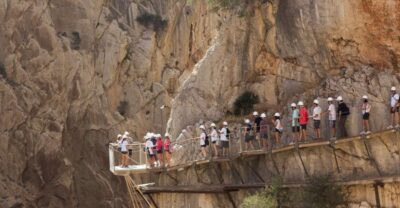
Caminito del Rey: Trekking Tour with Hiking Guide
Read our review →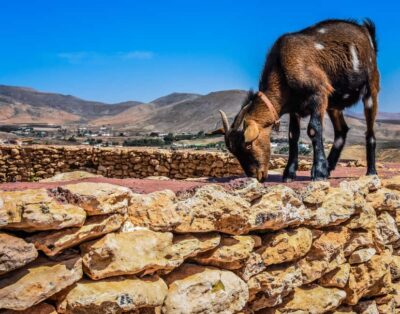
Fuerteventura: Guided Trekking Tour with Island Goats
Read our review →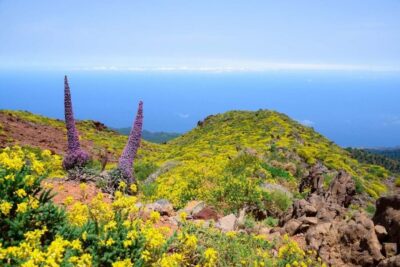
Guided Trekking Tour to El Roque de los Muchachos
Read our review →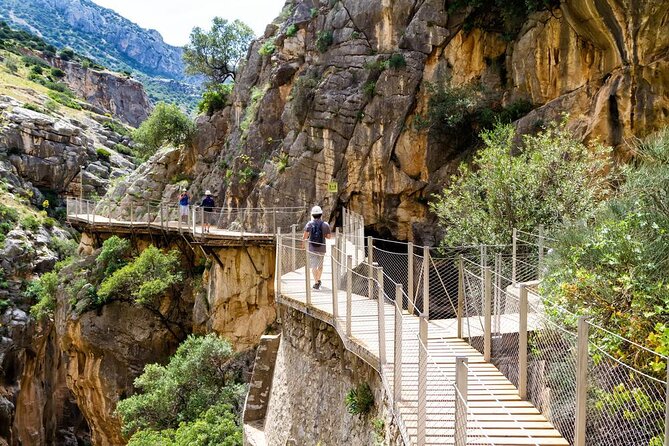
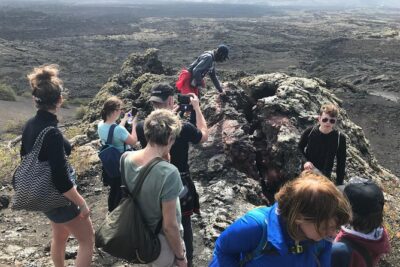
Trekking in the Volcanoes Natural Park in a small group
Read our review →Browse the lists this tour appears in